Women in Crypto Review
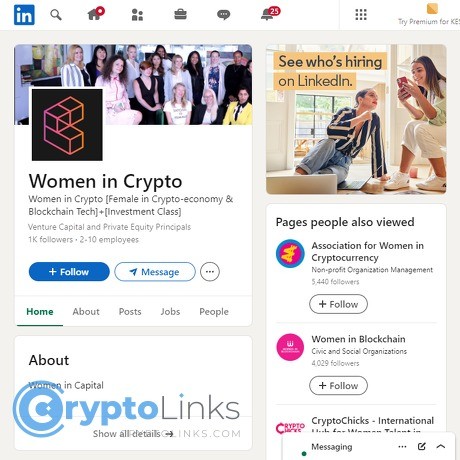
Women in Crypto
www.linkedin.com
Women in Crypto Review Guide: Why So Many Women Feel Shut Out of Web3 (And What to Do About It)
Ever feel like crypto is a boys’ club with the door half‑closed?
If you’ve ever opened a crypto Twitter thread, scrolled for 30 seconds, and thought, “Yeah… this is not for me,” you’re not imagining it.
Between the charts, the memes, and the “made 10x overnight” flexing, crypto can feel like a loud, male‑dominated room where everyone already knows the rules—and you’re the only one still trying to figure out what a wallet actually is.
Yet at the same time, crypto is everywhere:
- Friends talking about “getting in before it’s too late”
- News headlines about Bitcoin hitting new highs
- Job posts asking for “Web3 experience” even for non‑technical roles
So you end up stuck between curiosity and hesitation. You might be thinking:
- “Can I really start with $100 without getting burned?”
- “Is it even possible to make $100 a day, or is that just silly YouTube clickbait?”
- “Why does everyone talk like I already know what a Layer‑2 is?”
If that sounds familiar, stay with me. Because what pushes a lot of women away from crypto isn’t the technology itself—it’s the way the space is built, talked about, and gatekept.
Why so many women feel shut out of crypto
Let’s be real: crypto isn’t just “a bit confusing.” It often feels like a parallel universe with its own slang, heroes, villains, and unspoken rules.
When I talk to women who are curious about Web3—professionals, students, mothers, founders—what I hear is rarely “I’m not smart enough.” Instead, I hear things like:
- “I don’t know who to trust.”
- “Everyone either talks over my head or tries to sell me something.”
- “The culture feels… off. Like I’m crashing someone else’s party.”
Those aren’t personal insecurities. Those are systemic blockers. And they show up in a few very specific ways.
The education gap: everyone talks big, nobody explains basics
One of the biggest problems in crypto is that the extremes get all the attention:
- On one side, you’ve got deep technical threads talking about consensus mechanisms, rollups, zk‑proofs, and on‑chain metrics.
- On the other side, you’ve got “To the moon!!” hype, meme coins, and TikToks promising you can quit your job by next month.
What’s missing? The middle layer. The practical, plain‑English stuff that most people actually need:
- What’s a safe way to buy your first crypto?
- Is $100 a sensible starting amount?
- How do you choose an exchange without getting scammed?
- What happens if you send money to the wrong address?
There’s data behind this gap. A 2022 BlockFi survey found that only about 25% of women felt they had a solid understanding of crypto, yet nearly half were interested in learning more. So the interest is there; the education just isn’t connecting.
But when beginners ask simple questions like:
- “Is $100 enough to start?”
- “Which coin should I buy first?”
- “How do taxes even work on this stuff?”
they’re often met with:
- Condescending replies (“Just do your own research lol”)
- Or answers that assume you already understand all the jargon
- Or straight‑up shilling (“Buy this coin, it’s going to 100x!”)
So a lot of women end up lurking. Watching. Bookmarking things. But never really taking that first step, because asking questions feels risky.
This is why a focused, beginner‑friendly community matters so much. In a good space, questions like:
- “Can I make $100 a day?”
- “Is $100 enough to start?”
don’t get laughed at—they get unpacked. You get context, not judgment. You get told not just if something is possible, but how risky it is, and what a safer starting point might look like for you.
Fear of losing money and getting scammed
Now let’s talk about the elephant in the room: fear of losing money.
You probably didn’t wake up thinking, “I want to learn about blockchains.” You likely thought:
- “It’d be nice to have a side income.”
- “I don’t want to miss the next big thing again.”
- “Can I make an extra $100 a day or at least a few hundred a month?”
And then reality hits:
- Stories about rug pulls where creators vanish with millions
- Exchanges collapsing and freezing withdrawals
- Fake “customer support” stealing people’s funds
- Confusing tax rules that make you worry you’ll mess up a return
Chainalysis estimated that scammers stole over $5 billion worth of crypto in 2022 alone. That’s not just “some bad apples”—that’s an entire industry of people designing traps for beginners.
Now layer this on top of those income‑bait questions:
- “Can I make $100 a day from crypto?”
Yes, some people do. But they usually have:
- Experience
- Capital
- Risk management skills
- A high tolerance for volatility
Most beginners, trying to chase daily income right away, end up doing the exact opposite of what works: over‑trading, panic buying, and revenge trading after losses.
- “Is $100 enough to start?”
Technically yes—you can buy fractions of Bitcoin or Ethereum. But without any guidance, $100 often becomes tuition to the “FOMO & regret” school of crypto:
- Buying a random coin a friend shilled
- Selling at the bottom because the chart scared you
- Then swearing off crypto entirely
Where a community really changes the game is in how these questions are handled.
“Can I make $100 a day?”
Instead of “Yes, buy this and hold,” you might hear:
“Let’s talk about your risk tolerance, experience, and time. Here’s why targeting daily income can be dangerous, and here are slower, safer ways people build wealth in this space.”
Instead of someone handing you a shortcut that leads straight into a scam, the right space slows you down, teaches you to spot red flags, and keeps you from treating crypto like a casino.
Lack of representation and safe spaces
There’s another layer to all of this that doesn’t get talked about enough: who you see in the room.
When you look at panels, conference speaker lists, YouTube channels, or “top trader” leaderboards, you’ll notice a pattern: a lot of men. A World Economic Forum report noted that women make up less than 20% of crypto users in many regions, and even fewer in leadership or technical roles.
So if you’re a woman trying to get into Web3, the unspoken message can feel like:
- “You’re late.”
- “You’re the exception, not the default.”
- “Prove you know your stuff before we take you seriously.”
This lack of representation has real effects:
- Fewer role models – It’s harder to picture yourself as a founder, developer, investor, or executive in Web3 when you rarely see women in those seats.
- Less confidence to ask questions – In male‑dominated spaces, women are more likely to hold back basic questions for fear of being judged. That’s not speculation; it shows up repeatedly in studies on STEM participation and tech workplaces.
- Networking barriers – Informal deals, side projects, and job referrals often happen in “who you know” circles—Discords, Telegram groups, after‑hours events—where women are under‑represented or just not made to feel welcome.
This is why women‑focused communities matter so much. Not because men shouldn’t be in the conversation, but because:
- You need spaces where you don’t feel like a minority opinion.
- You need to hear women talking about money, risk, tech, leadership, and investing in their own voices.
- You need to see real examples of women:
- Building Web3 startups
- Leading dev teams
- Advising protocols
- Running marketing, product, and community at crypto companies
When you see those examples, something important happens: crypto stops being “that crazy thing some guys do” and becomes a legitimate field where you can learn, earn, and build a career.
Feeling late to the game
Let’s talk about timing, because this one quietly kills the motivation of a lot of would‑be crypto users.
Maybe you heard about Bitcoin when it was a few hundred dollars and shrugged it off. Then you saw it pass $60,000 and thought, “Well, I missed that.”
Maybe you watched friends talk about NFTs in 2021, decided it was silly, and then saw some of them flip JPEGs for what looked like insane profits.
Now you’re hearing that same buzz around Web3 salaries, AI + crypto, gaming tokens, and you’re wondering:
- “Is it too late for me?”
- “Did I miss the best opportunities?”
- “Is there any point starting with $100 now?”
Here’s the thing most hype accounts won’t tell you: in almost every major tech wave—from the early internet to social media to mobile apps—the people who did best weren’t just those who got in first. They were the ones who:
- Took time to actually understand what they were using
- Built skills around the technology (not just bought assets)
- Stayed long enough to see multiple market cycles
There’s research to back this up in investing too. Studies on stock markets show that long‑term, consistent investing tends to outperform frantic, short‑term trading for most people. Crypto is extremely volatile, but the same idea applies: skill and patience beat FOMO.
The “I’m late” feeling does real damage because it pushes you toward exactly the wrong behaviors:
- Chasing whatever pumped this week
- Throwing money into risky coins because they’re “cheap”
- Jumping into complex DeFi schemes you don’t really understand
And this is exactly where a healthy community can pull you back from the edge.
Instead of “You’re late, better YOLO into the next hype,” you get:
- “You’re early—for your own journey.”
- “Here’s how to build a long‑term plan that doesn’t rely on guessing the next pump.”
- “Here are women who started recently and are already working, investing, or building in Web3 in a sustainable way.”
Crypto isn’t just about being early to a coin. It’s about being early to your own education, network, and strategy. That part is still wide open.
So where does a women‑focused crypto community actually fit in?
All these problems—jargon, scams, bro culture, FOMO, tax confusion, feeling late—are not going away by themselves. But they’re exactly the kind of thing a good community is built to solve:
- It normalizes beginner questions.
- It shares real experiences, including mistakes and losses—not just wins.
- It gives you role models and peers, not just influencers.
- It helps you focus on skills and long‑term thinking, not just short‑term trades.
There’s a specific LinkedIn‑based community that’s working on doing exactly that for women in Web3—sharing education, visibility, opportunities, and conversations that don’t assume you’ve been trading since 2017.
Curious how it works, what they actually post, and whether it’s right for where you are now (whether you’re starting with $100 or planning a career shift into Web3)?
Next, let’s look at what this Women in Crypto community on LinkedIn really is, who it’s for, and how you can use it without getting pulled into the hype machine.
What is Women in Crypto on LinkedIn and who is it for?
When you land on the Women in Crypto page on LinkedIn, it looks simple at first glance: a branded company page, posts in the feed, some faces, some links.
But what’s actually happening there is much bigger than a random “women in tech” hashtag.
Women in Crypto is a LinkedIn-based community and brand focused on one thing: bringing more women into Web3 and helping them actually stay, grow, and lead in it.
Not through hype coins or secret Discords, but through visible role models, practical education, and constant networking.
It’s not an exchange, it’s not a trading bot, and it’s not one of those “pay $999 for our signals” groups.
It’s basically your public, always-on Web3 room on LinkedIn, where:
- You see smart women (and allies) talking openly about crypto, NFTs, DeFi, and blockchain careers.
- You get regular content that explains what’s happening in the space in words you don’t need a PhD to understand.
- You can quietly follow along at first, then slowly step into the conversation when you’re ready.
The people behind Women in Crypto use the brand as a kind of “signal boost” for women in Web3: highlighting speakers, founders, developers, marketers, analysts, and operators who would otherwise be buried in the algorithm behind yet another influencer meme.
There’s a reason this matters. Studies from places like BCG and Global Digital Finance have shown that women are underrepresented not only in crypto investing, but especially in leadership roles at Web3 companies.
When you never see people who look like you in those roles, your brain quietly files crypto under: “Not for me.”
Women in Crypto attacks that feeling directly.
Every new founder spotlight or panel announcement is a little reminder: “Yes, this is for you.”
“You can’t be what you can’t see.” – Marian Wright Edelman
On LinkedIn, that visibility isn’t just motivational wallpaper. It’s a direct path to other humans:
you can click through to profiles, hit connect, ask questions, and slowly build a network that makes this whole industry feel a lot less distant and risky.
Core mission: education, visibility, and community
If I had to break Women in Crypto down into three words, it would be: educate, amplify, connect.
Everything they post or promote usually fits one or more of these.
Here’s what they’re really trying to do:
- Onboard more women into Web3 – whether you’re totally new or already in tech/finance and curious about crypto, the content is designed to lower the learning barrier.
- Showcase female talent – founders, developers, legal minds, product leads, content creators. Seeing them front and center rewires that “boys club” picture you might have in your head.
- Share useful resources – articles, explainers, event recaps, panels, and sometimes practical guides that help you understand what’s actually going on behind the buzzwords.
- Support events and initiatives – conferences, workshops, AMAs, Twitter Spaces / LinkedIn Live sessions that put women on stage, not just on the attendee list.
Think of it as a public learning and networking hub anchored to LinkedIn, where most professional conversations already happen.
No need to figure out Discord channels or anonymous Telegram groups. You’re already on LinkedIn for your career – this just layers Web3 on top of that.
And again, because it’s important: this is not a trading platform.
Women in Crypto doesn’t hold your funds, give you buy signals, or promise returns.
What it offers is the social infrastructure you need before you even think of putting real money on the line: awareness, context, and people.
What kind of content do they share?
Let’s talk about the feed, because that’s where you’ll feel the value day-to-day.
On a typical week, you’ll usually see a mix of:
Educational posts
Short explainers on things like:
- what Web3 actually means beyond marketing slides
- how NFTs are used outside of art (tickets, membership, identity)
- what on-chain data is and why analysts care about it
- how DAOs work from a governance and career angle
These aren’t meant to turn you into a hardcore developer overnight. They’re aimed at getting you from “I have no idea what these acronyms mean” to “I can follow the conversation and ask smart questions.”
Industry news and commentary
You’ll often see:
- big regulatory updates translated into plain English
- major partnership or funding news explained from a “what does this mean for jobs and builders?” angle
- market narratives (like real-world assets, L2s, gaming) put into perspective
Instead of pure price talk, the focus is usually on how trends affect work, adoption, and opportunities – exactly what beginners and career switchers actually need.
Spotlights on women founders, devs, and leaders
This is where the page really shines.
You’ll see:
- short profiles of women building exchanges, wallets, NFT platforms, or infrastructure
- quotes from talks and panels about how they got started or what they wish they knew earlier
- links to their podcasts, newsletters, or GitHub repos
These posts quietly answer questions you might be afraid to ask out loud: “What does a Web3 product manager actually do?” “What does a ‘DeFi lawyer’ even look like as a job?”
When someone tells their real path – from marketing to community management to running their own Web3 agency, for example – it becomes much easier to picture your own path.
Event announcements, webinars, AMAs, and panels
Here’s where the feed becomes your event radar. You might see:
- a panel on “Breaking into Web3 without coding”
- a workshop on personal branding for women in crypto
- an AMA with a founder discussing how they raised funding
- conference side events or meetups with a women-first focus
These are the kinds of touchpoints where one comment or one question can lead to a new contact, a mentor, or even a job lead.
Career and hiring posts
Not every day, but you’ll often see:
- companies highlighting open roles and explicitly encouraging women to apply
- threads on salary expectations, negotiation tips, or what Web3 recruiters look for
- stories of women landing their first crypto job or freelance client
This kind of content matters because a lot of people still think “crypto careers” equals trading or coding only.
On the page you’ll see real examples of women thriving in:
- community and growth
- product management
- UX/UI design
- compliance and legal
- content, PR, and partnerships
If you’re just starting out, the feed basically becomes your personalized beginner stream:
not “Crypto 101” from some random YouTuber trying to sell you a course, but actual humans discussing where the industry is and where it’s going.
And if you’re already in the space, the content helps you spot trends early, meet collaborators, and position yourself better.
It’s not just about learning crypto; it’s about learning where you fit inside crypto.
Who should actually join Women in Crypto?
Let’s be real: not everyone needs to join every “community” out there.
So who is this actually useful for?
Complete beginners who are crypto-curious
If your current level is “I’ve heard of Bitcoin, I’m not sure what Web3 is, and I don’t want to get scammed,” the page is built for you.
You can:
- get a sense of how people actually use blockchain at work
- see honest conversations about risk, regulation, and careers
- start absorbing the language without feeling stupid for asking basic questions
Women in tech or finance thinking about a pivot
Maybe you’re a product manager at a SaaS company, a data analyst at a bank, or a compliance officer. You suspect Web3 could be your next big move, but you don’t know where to start.
On Women in Crypto, you’ll spot people who already made that exact jump.
You can study their paths, their posts, their skills, and even message them with specific questions.
Founders, marketers, devs, and designers already in Web3
If you have a project or you’re already deep in the space, the page is a platform to:
- find diverse speakers, collaborators, or advisors
- amplify your events or initiatives centered on inclusion
- stay plugged into what women in the industry are actually talking about and struggling with
In an ecosystem where a lot of attention still flows to the same loud accounts, having a dedicated community that surfaces new names is a serious edge.
Allies (yes, men too) who care about diversity
Men who genuinely want a healthier industry can – and should – follow as well.
It’s a place to:
- listen more than you talk
- learn where bias shows up in hiring, funding, and community culture
- spot opportunities to support, sponsor, or collaborate in ways that actually help
What you should not expect:
- No “secret altcoin that will 100x this week.”
- No “turn $50 into financial freedom in 5 days” promises.
- No gated, manipulative upsell path where every answer costs you another subscription.
The value here is slower, but much more real:
you learn, you connect, you build credibility, and then opportunities start opening up – whether that’s better investing decisions, new roles, or new collaborations.
How to join and how to engage properly
Joining is the easy part.
Getting actual value out of it is where most people mess up.
Here’s how to plug into Women in Crypto on LinkedIn in a way that actually moves you forward:
1. Follow the page
Go to Women in Crypto on LinkedIn and hit Follow.
Then click the bell icon and set notifications to “All posts” or at least “Highlight posts” so the content doesn’t get buried under random corporate updates in your feed.
2. Treat the feed like a learning log
When you see a post that teaches you something:
- Save it on LinkedIn so you can revisit it later.
- Copy terms you don’t understand into your notes to research later.
- Ask a clarifying question in the comments instead of just scrolling past.
Even a simple comment like, “This is helpful – can you explain how this works for someone outside tech?” can kick off a mini-lesson right there in the thread.
3. Engage with people, not just posts
Whenever the page tags a speaker, founder, or contributor:
- Click through to their profile.
- Skim their About section and recent posts.
- Send a short, thoughtful connection request referencing the Women in Crypto post you saw them in.
Something as simple as:
“I saw your panel shared on Women in Crypto. I’m new to Web3 and really appreciated your point about X – would love to follow your work.”
goes a long way. Most people are far more open to new connections in community contexts like this.
4. Watch for events and show up
When you see:
- a LinkedIn Live session
- a webinar link
- an in-person meetup or conference panel
Register if you can. During the event:
- ask 1–2 honest questions (especially beginner questions – they help everyone)
- connect with speakers right after with a quick thank-you note
- post a short takeaway on your own LinkedIn, tagging Women in Crypto and the speakers
This is how you stop being an invisible lurker and become “that person who always asks smart, honest questions.” People remember that.
5. Respect the space
This should go without saying, but:
- Don’t spam people with your project or token.
- Don’t slide into DMs promising returns or asking for money.
- Don’t hijack comment sections to argue price predictions.
Treat it like a professional, human-first space. The more we keep it that way, the safer it feels for newcomers – especially women who are already dealing with enough noise and skepticism.
Follow these steps for a month, and you’ll notice something subtle:
your feed will start to shift away from random hype and towards people, ideas, and opportunities that actually build your long-term crypto life.
And once you’re in that mindset, a new question naturally comes up:
Can a community like this actually help you make money from crypto – whether that’s $100 a day, your first $100 invested, or a real Web3 job?
That’s exactly what I’m going to unpack next.
Can Women in Crypto help me actually make money in crypto?
Let’s be honest: if you’re reading this, you don’t just want “empowerment” and inspirational quotes. You want to know if all this crypto learning and networking can actually lead to money in your account.
Here’s the straight answer:
Women in Crypto is not:
- a trading signals group
- a bot that prints you money while you sleep
- a “turn $100 into $10,000 in a week” scheme
But it absolutely can help you make money in a smarter, slower, and much more realistic way – by building your skills, your network, and your decision-making so you stop guessing and start acting like someone who takes their financial future seriously.
“Wealth is usually built quietly in the background, not loudly on social media.”
Every time I see a community like Women in Crypto, I don’t ask “Can they give me picks?” I ask, “Can they help me think better?” Because that’s where the real money is: how you think, not what coin you buy this Monday.
Can I really make $100 a day from crypto?
Yes, people do make $100 a day from crypto. Some make a lot more. But here’s the part most YouTube thumbnails conveniently skip:
- Many of them already have a large starting capital
- They’ve spent years learning markets and risk management
- They have a high tolerance for stress and losses
- For every “win” screenshot, there’s usually a quiet loss you never see
There was an internal study from a major European regulator a few years ago that found roughly 70–80% of retail traders lose money over time in leveraged markets. Crypto is even more volatile than traditional forex or stocks, so you can imagine the odds if you show up with no plan and a dream of “$100 a day”.
Is it possible? Yes.
Is it likely for a total beginner in their first few months? Honestly, no.
This is where a community like Women in Crypto quietly changes the game. Instead of hyping you into aggressive day trading, you get exposed to concepts that actually help you survive and stay in the game long enough to get good:
- Safer approaches – things like dollar-cost averaging (DCA), where you invest a fixed amount at regular intervals instead of trying to time the perfect entry
- Long-term thinking – conversations about holding quality assets for years, not hours
- Risk management – learning how people set position sizes, use stop losses, and protect capital
- Reality checks – real women sharing wins and losses, not just cherry-picked success stories
For example, I’ve seen people in similar communities share stories like:
- “I stopped trying to scalp $20 here and there, switched to DCA into BTC and ETH, and after 18 months I was up more than I ever made from short-term trading.”
- “I blew up two small trading accounts. A mentor in the group sat me down (virtually) and walked me through basic risk per trade. It changed everything.”
This is the kind of guidance you get when you’re surrounded by people who are actually doing the work, not just flexing screenshots.
So, can Women in Crypto be part of your path to $100 a day? Potentially yes – but not as a shortcut. It can:
- slow you down in a good way so you don’t blow up early
- help you meet traders and investors who are profitable and willing to share what actually matters
- shift your focus from “daily income” to “long-term growth,” which is how most serious investors operate
And if you’re still thinking, “But I really want that $100/day,” keep that desire – it’s your motivation. Just pair it with patience and guidance instead of rushing into the fire alone.
Is $100 enough to start with crypto?
Yes. $100 is absolutely enough to start. Not to get rich, but to get educated by doing.
Thanks to fractional coins, you don’t need to buy a whole Bitcoin or a whole Ether. You can own a small piece of them, just like you can own a fraction of a share in some stock apps.
On most major exchanges:
- you can start buying from $5–$10
- you can DCA with small recurring amounts
- you can test different features (spot trading, staking, etc.) with tiny sums
I like to think of the first $100 as tuition money, not investment money. If you profit – great. If you lose half of it – that’s a paid lesson on how this market actually behaves.
Where Women in Crypto fits in is making sure your $100 is used in a smart, steady way, not burned by the first “moonshot” tweet you see:
- Choosing safe on-ramps – people often share which exchanges they use, why they trust them, and what red flags they avoid
- Learning step-by-step – you see how others went from $50 to their first $1,000 allocation over months or years, not days
- Staying grounded – when the market pumps, it’s easy to feel like your $100 is too small to matter and start throwing in rent money; a grounded community keeps you honest with yourself
I’ve seen beginners share things like:
- “I started with $100 just to understand how exchanges work. That small amount stopped me from feeling paralyzed. Now I’m managing a few thousand, but the way I think about risk hasn’t changed.”
The real win with $100 is that you stop being a spectator. You learn how to:
- create and secure an account
- make your first trade
- move funds to a wallet
- check fees and confirm transactions
And you do it while the stakes are low enough that mistakes don’t ruin you. With Women in Crypto in your corner, you’re far less likely to waste that $100 on obvious scams or silly FOMO trades.
Which crypto should a beginner consider buying?
This is the question that fills comment sections everywhere. I see it on X, on LinkedIn, on Reddit: “What should I buy first?”
Most people who’ve been around a few cycles will give some version of this advice:
- Start by researching Bitcoin (BTC) – It’s the oldest, most established, and often seen as “digital gold.” It doesn’t do everything, but it set the foundation.
- Then look into Ethereum (ETH) – It’s the main smart-contract platform, which means a huge part of DeFi, NFTs, and Web3 apps run on it or its ecosystem.
- After that, if you’re curious, check out a few other large, well-known Layer 1 coins (things like Cardano, TRON, etc.), and learn what makes each one different.
You’ll hear people throw around names like Dogecoin, meme coins, or “the next big thing”. Cheap price per coin does not mean cheap risk. A coin can cost $0.0001 and still be insanely dangerous, because the question is not “How cheap is it?” but “Does this thing actually have a reason to exist?”
Basic rules I always encourage beginners to follow:
- Understand the project – What problem does it solve? Who is working on it? Are there real users?
- Check the market cap – A low price per coin with a giant supply might still be a massive market cap already.
- Study who’s building on it – Are devs, companies, or communities actually using it?
- Avoid “lottery ticket” thinking – Turning $10 into $100,000 makes a great story; it’s just not a strategy.
This is where Women in Crypto quietly shapes your radar. When you follow their posts, you’re not only seeing coin names – you’re seeing context:
- panel discussions where builders explain what they’re creating
- breakdowns of real-world use cases (payments, DeFi, NFTs, infrastructure)
- spotlights on founders and devs talking about long-term vision, not just short-term price moves
Instead of, “Everyone’s buying this dog coin, should I too?” you start asking, “Does this protocol solve anything? Is the team credible? Does this align with my risk level?”
And that shift – from chasing memes to understanding fundamentals – is usually the moment someone stops being a target and starts being a participant.
Job, freelance, and business angles: earning from Web3 without trading
Here’s something almost nobody tells you when you first show up in crypto: you don’t have to be a trader to earn from this industry.
In fact, a lot of people I know who are financially stable in Web3 rarely trade at all. They earn in ways that look a lot more like traditional careers, just plugged into a new ecosystem.
Some of the paths you can take:
- Get a Web3 job
Roles like marketing, content, community management, design, development, product, partnerships – all of these exist in crypto projects, exchanges, DeFi protocols, NFT platforms, and infrastructure companies.
- Freelance for crypto projects
Writers, translators, social media managers, graphic designers, video editors, devs – Web3 startups often live on flexible, remote work.
- Start your own service or product
That could be a newsletter, a niche consulting offer, a research service, a dev agency, an education initiative, or tools that solve specific pain points for crypto users.
This is exactly where a LinkedIn-based community like Women in Crypto is strongest:
- Hiring posts and opportunities – you’ll see companies and founders post roles, internships, and collaborations
- Panels and webinars – which introduce you to people leading teams, hiring, or building projects that need talent
- Networking in comments – when you show up consistently, comment thoughtfully, and connect with speakers, your name stops being “random person” and starts being “oh right, I’ve seen her before”
For example, it’s not unusual to see stories like:
- Someone attends a LinkedIn panel, asks a sharp question in the comments, connects with the speaker, and ends up getting a freelance content gig.
- A designer regularly posts their work under community threads, gets noticed by a founder, and lands a retainer deal.
- A marketer active in Women in Crypto gets tagged when someone asks, “Does anyone know a good Web3 marketer?” and that turns into a consulting client.
There’s also a subtle but powerful benefit: social proof. When people see you interacting with respected women in the space, sharing thoughtful takes, and participating in conversations, it signals that you’re plugged in – not a random DM sliding in asking to “work together.”
If you’re currently in a traditional job and wondering, “Could I move into Web3?” communities like this are often the bridge:
- you see what roles actually exist
- you hear how others made the switch from finance, marketing, law, tech, or design
- you pick up the language and references that make you sound like you belong – because you do
Trading isn’t the only way to make money in crypto. In many cases, it’s not even the easiest way. A strong network, like the one you can build around Women in Crypto, opens doors that a price chart never will.
Of course, once money is involved – whether from trading, investing, or a Web3 salary – there’s a whole other layer to think about: safety, scams, and taxes. That’s where a lot of beginners get blindsided.
So let’s talk about that next: what do you actually need to know about things like the 30‑day rule, taxes, and avoiding the tricks that separate you from your hard‑earned crypto?
Safety, taxes, and the 30‑day “wash sale” rule: what you really need to know
Before you think about making $100 a day, or even turning $100 into $150, there’s one boring-but-critical side of crypto you can’t skip:
Staying safe and not getting wrecked by scams, mistakes, or tax surprises.
Most people only learn this stuff after something painful happens – a hacked wallet, a fake “opportunity,” or a tax bill that shows up months later. I’d rather you hear it now, calmly, while your money is still under your control.
Let’s take this step by step, in plain English.
What is the 30‑day “wash sale” rule in crypto – and should you care?
If you’ve ever sold stocks, you may have heard of something called the wash sale rule, sometimes called the “30‑day rule.” It’s a tax rule that basically says:
If you sell an investment at a loss and buy the same (or very similar) one back within 30 days, you might not be allowed to claim that loss on your taxes.
That rule is clear for stocks and traditional securities. With crypto, things are a bit messier.
Here’s the current situation in simple terms (especially relevant if you’re in the U.S.):
- Right now, most cryptocurrencies are not clearly covered by the wash sale rule. They’re often treated as “property,” not traditional securities.
- That means: in many cases, you can sell a coin at a loss and buy it back quickly without losing the ability to claim that loss. Some traders call this “tax loss harvesting.”
- But: this is a moving target. Lawmakers and tax agencies have openly talked about closing this “loophole” for crypto.
- NFTs and some tokens may be treated differently over time. Different countries already treat crypto very differently.
Gordon Law, a U.S. tax law firm, explains the classic wash sale rule like this: if you sell a security at a loss and buy the same or “substantially identical” one back within 30 days, the loss is disallowed for that year. Crypto usually sits in a gray zone outside that rule – for now.
Here’s what actually matters for you:
- Keep records from day one. Every trade, every swap, every NFT flip:
- date and time
- what you bought/sold
- price in your local currency
- fees you paid
- Use a crypto tax tool once you’re doing more than a handful of trades. There are tools that plug into exchanges and wallets to track this automatically.
- If you’re trading often or moving serious money, talk to a tax professional. Especially one who actually understands crypto, not someone who still thinks Bitcoin is a gaming token.
- Stay plugged into trusted communities – including Women in Crypto – when regulations change. Changes usually show up in conversations, webinars, and posts long before mainstream news catches up.
Think of it like this: you don’t need a law degree. You just need good habits now, so future-you isn’t digging through old screenshots trying to figure out why the tax office is knocking.
Avoiding scams and bad actors (because they absolutely are looking for you)
Here’s a tough truth: scammers know that beginners, and especially women who say “I’m new to this,” are easier to target. They show up friendly, patient, even supportive… right until you send them money.
I’ve seen variations of the same story over and over:
- A “mentor” on social media who offers to “manage your crypto” for you.
- A Telegram/WhatsApp group promising 3–10% returns every day “risk free.”
- An Instagram “trader” flashing screenshots and asking you to send USDT to “get started.”
Here are some non-negotiable rules to protect yourself:
- Never send funds to strangers promising guaranteed returns. Guaranteed percent-per-day profits are a classic Ponzi pattern. Real traders brag sometimes, but they never guarantee.
- Avoid random DMs about “investment opportunities.” If someone messages you out of nowhere saying, “Ma’am, I can help you make $3,000 this week,” that’s not a gift, that’s a trap.
- Use only well-known, trusted exchanges and wallets. If an app has no history, no reviews, and no clear team behind it, don’t be the test subject.
- Double-check URLs before you log in or connect a wallet. Fake websites that look almost identical to real exchanges are everywhere. Even one wrong letter in the address bar can cost you everything.
- Verify smart contract addresses from official sources. If you’re buying a token from a decentralized exchange, get the contract address from the project’s official website or verified channels, not from a random comment or DM.
- Never share your seed phrase. Ever. With anyone. Not customer support, not your “coach,” not your partner.
- If someone asks for your seed phrase, they’re not helping you – they’re trying to clean out your wallet.
This is where a community like Women in Crypto becomes powerful:
- Members can share warnings about new scam patterns they’re seeing.
- You can sanity check offers by asking, “Has anyone heard of this platform?” before you send money.
- Women are often more willing to speak honestly about “I fell for this and here’s what happened,” which helps everyone else stay safer.
There’s a pattern I see a lot: the people who get scammed the hardest are often the people who felt too embarrassed to ask “basic” questions in public. A space that normalizes questions is a space that quietly saves people thousands of dollars.
Emotional safety: FOMO, pressure, and comparison
Financial risk is only half the story. The other side is emotional risk – and this one gets less attention, especially for women.
Crypto can feel like this constant loud party where everyone is shouting:
- “If you didn’t buy this coin last week, you’re too late!”
- “I turned $500 into $50,000 in three months.”
- “Why are you still poor? Just hustle harder!”
It’s exhausting. And if you’re not careful, it can make you make decisions from fear and shame instead of calm logic.
“Money decisions made from panic usually feel powerful in the moment – and terrible six months later.”
Here’s what emotional safety looks like in practice:
- Refusing to rush just because everyone else looks “ahead.” You’re not late. You’re on your timeline.
- Being okay saying “I don’t understand this yet.” That sentence alone can save you from most disasters.
- Ignoring brag posts and asking: “What’s this person not showing me? How much did they lose before this win?”
- Setting your own rules like “I will never invest more than X% of my savings in crypto” and sticking to it even when someone flaunts crazy gains.
In a group environment, things can go either way:
- Some spaces amplify FOMO – constant flexing, shaming people for being cautious, glorifying 100x gambles.
- Others, like what Women in Crypto aims for, can reduce pressure – people openly saying “I’m still learning,” “I got burned once, here’s how I recovered,” or “It’s okay to sit this one out.”
One study from the Financial Conduct Authority in the UK (about investment behavior) found that social proof and “hype” are huge drivers of risky decisions, especially among newer investors. People don’t want to “miss out like last time,” so they jump into the next thing even faster. Crypto amplifies that effect because everything moves 24/7 and social media never sleeps.
This is why having a space where women can ask:
- “Is it normal to feel anxious every time I open my portfolio?”
- “How do you decide when to stop reading and just stick to a plan?”
…is just as important as any technical tutorial.
Basic security habits you should build from day one
You don’t need to turn into a cybersecurity engineer. But there are a few simple habits that separate “I sleep at night” from “I’m constantly terrified my funds are gone.”
Start with this checklist:
- Use strong, unique passwords.
- No names, birthdays, or “Crypto123.”
- Use a reputable password manager to generate and store complex passwords.
- Turn on 2FA (two-factor authentication) for all exchanges and important accounts.
- Prefer an authenticator app (like Google Authenticator or Authy) over SMS.
- SIM swap attacks – where someone tricks your phone provider into giving them your number – are a real thing.
- Start small when you use something new.
- New exchange? New DeFi protocol? First NFT purchase?
- Send a tiny test amount first. Make sure it arrives. Then send more.
- Keep seed phrases and private keys offline.
- Write them on paper and store them somewhere safe.
- Don’t screenshot them. Don’t keep them in your email or cloud notes.
- Think before you click “Connect Wallet.”
- If a random site asks to connect your wallet, ask yourself: “Do I need to connect right now? What is this site allowing itself to do?”
- Read the permissions; some can spend or move your tokens, not just “view balance.”
- Separate “play money” from “serious money.”
- Many people use one wallet for experiments and degen stuff, another for longer-term holdings.
- Stay curious and keep updating your knowledge.
- New threats appear all the time. When you see someone in Women in Crypto posting “Watch out for this scam,” don’t just scroll. Read it, remember it, ask questions.
Safety isn’t a one-time task; it’s a set of habits that you build gradually. The upside? Once you build them, they protect you automatically in the background, like digital muscle memory.
And here’s the interesting twist: once you’re not constantly worried about “What if I click the wrong thing?” or “What if taxes eat all my gains?”, you finally free up mental space to do the fun part – learning, connecting, and spotting real opportunities.
So the next natural question is: how do you actually use a community like Women in Crypto to turn all this safety and knowledge into momentum – not just information sitting in your head?
That’s where things start getting practical, social, and honestly… a lot more exciting. Ready to see how to turn this into a 90‑day plan and a personal support system instead of just another feed to scroll?
How to get the most from the Women in Crypto community (and what to combine it with)
Following Women in Crypto on LinkedIn is a great start. But if you only scroll, hit “like” a few times, and disappear, you’re leaving 80% of the value on the table.
What actually moves the needle is using that community as your public classroom, networking engine, and accountability partner. Let me show you how I’d personally squeeze the most out of it if I were starting from scratch today.
From lurker to participant: how to engage smartly
Most people lurk. A tiny percentage participate. Almost all the opportunities go to that tiny percentage.
Here’s a simple way to move from silent observer to “oh yeah, I keep seeing her in the comments” – which is exactly where connections, invites, and messages start coming from.
1. Follow the page and turn on notifications
On LinkedIn, hit “Follow” on the Women in Crypto page and click the bell icon to turn on notifications. That way, new posts show up in your feed instead of getting lost.
2. Comment with substance, not just “great post”
Engagement isn’t about being loud, it’s about being useful. When you see a post about, say, self-custody wallets, instead of writing “:fire_emoji” or “so true,” try something like:
“I’ve only used centralized exchanges so far. For someone starting with small amounts (like $100–$200), would you still recommend setting up a hardware wallet, or is a reputable exchange wallet enough at the beginning?”
That kind of comment:
- signals you’re genuinely learning
- invites replies from experienced members
- puts your name in front of people in a positive way
3. Connect with speakers and featured guests
Whenever Women in Crypto spotlights a founder, developer, VC, or community leader, treat it like a curated list of people you should know.
Click through, check their profile, and send a short, honest connection request. Something like:
“Hi [Name], I found you through the Women in Crypto feature about [topic]. I’m just starting my Web3 journey and really liked what you said about [specific point]. Would love to stay connected and keep learning from your posts.”
This isn’t begging for a job. It’s respectful, specific, and low pressure – exactly the kind of message busy people actually accept.
4. Show up consistently on recurring formats
If they run recurring panels, AMAs, or a weekly post series (“Women in Crypto Wednesdays” type content), make those your regular hangouts.
Comment every week. Ask at least one thoughtful question. Over a month or two, you become a familiar name – which is how people start thinking of you when opportunities or collaborations pop up.
5. Join linked groups, newsletters, or events
Check their LinkedIn “About” and “Featured” sections for links to newsletters, Telegram/Discord groups, or event pages.
Each extra channel is another “surface area” where someone can notice you, answer your question, or remember you when they need a freelancer, teammate, or speaker.
If that sounds like a lot, remember: you don’t need to spend hours a day. Even 10–15 minutes of focused engagement, 3–4 times a week, adds up fast. In networking research, this kind of “weak tie” visibility is often what leads to new roles and offers – not cold applications.
Using Women in Crypto as your personal learning feed
You can treat the Women in Crypto feed like a messy social feed… or you can quietly turn it into your own structured course.
Here’s a simple system you can run on autopilot:
1. Save posts that teach you something
Any time you see a post that explains something clearly – what gas fees are, how staking works, why self-custody matters – click “Save.”
Once a week, open your Saved items and review them. Research shows spaced repetition (seeing info again after a few days) massively boosts retention. You’re basically building your own custom textbook.
2. Build a simple personal glossary
Whenever you bump into a term that feels fuzzy – “L1”, “rollup”, “DEX”, “TVL”, “DAO” – write it down in your notes with a one-sentence explanation in your own words.
Over a month, this turns into your personal crypto dictionary. The act of writing definitions yourself helps lock the concepts in, instead of just scrolling past them 20 times and staying confused.
3. Ask clarifying questions publicly
Instead of privately Googling everything, use the comments when you’re stuck:
“I’m not sure I fully get the difference between staking and lending in this context – is the main risk profile similar, or am I mixing things up?”
This does three things at once:
- helps you understand the topic
- signals to others that it’s okay to not know everything
- often triggers more detailed breakdowns from experts
4. Follow the educators they tag
Whenever Women in Crypto tags someone who shares threads, explainers, or market breakdowns, click “Follow.”
Slowly, your LinkedIn feed becomes less about random noise and more about curated crypto education from people the Women in Crypto team already considers worth highlighting.
5. Turn learning into output once a week
Once a week, post a short LinkedIn update about one thing you learned through the community:
“This week I learned the basics of self-custody vs keeping funds on an exchange from following @Women in Crypto. Key takeaway for me: if you don’t control the seed phrase, you don’t truly control the funds. Next step: testing a small amount in a non-custodial wallet.”
Posting your own summary forces you to really understand the idea – and it also makes people see you as someone who is actively learning, not passively scrolling.
That “learning in public” approach is underrated. In practice, it’s often what catches the eye of hiring managers and founders who are looking for people that are curious, consistent, and coachable.
What about tools, platforms, and deeper research?
A community gives you people, stories, and context. But when it’s time to move your own money, you also need boring but critical stuff: fee comparisons, security reviews, and neutral data.
This is where you don’t rely on one community alone – you combine it with external tools and resources.
Use review hubs to sanity‑check platforms
When you see an exchange, wallet, or tool mentioned by Women in Crypto or its members, don’t just jump in because someone smart used it.
Head over to neutral review hubs like Cryptolinks.com, where I list and review exchanges, wallets, news sites, tax tools, and yield platforms. Compare:
- fees
- security history (hacks, breaches)
- supported coins
- regulation and licensing (where relevant)
Use long‑form resources for structured learning
Community posts are great for sparks, but not for full frameworks.
Here’s a simple pattern that works well:
- See a topic mentioned on Women in Crypto (e.g., “layer 2 scaling”)
- Search that topic in your preferred long‑form resource to get a structured overview
- Come back and ask better, sharper questions in the community
Use tools to verify, not just to confirm your bias
If someone in the community is bullish on a token, that’s not your go‑signal. That’s your signal to research.
Check:
- market cap vs. fully diluted valuation
- actual user metrics (if available)
- wallet distribution (is it heavily concentrated?)
The goal is to protect yourself from getting swept into “group hype.” Communities are powerful – but that power cuts both ways if you don’t bring independent checking tools into the picture.
So think of it like this: Women in Crypto is your human filter and support system; resources like Cryptolinks.com are your data and due‑diligence stack.
Building your 90‑day “crypto confidence” plan
One of the biggest mistakes I see beginners make is trying to go from zero to “pro trader” in a week. That’s usually how people blow up accounts, burn out, and walk away saying “crypto is just gambling.”
Instead, here’s a simple 90‑day plan you can run alongside Women in Crypto that focuses on confidence, not quick wins.
Month 1: Learn publicly, spend nothing (or almost nothing)
Goal: understand the landscape and basic concepts without the pressure of having money on the line.
- Follow Women in Crypto and turn notifications on
- Spend 10–20 minutes, 3–4 days a week, reading posts and comments
- Save at least 3–5 educational posts per week
- Build your glossary of 20–30 key terms (wallet, DEX, gas, staking, etc.)
- Leave at least 2–3 comments per week asking thoughtful questions
If you really want to “touch” crypto in this phase, treat $10–$20 as pure tuition money to test a top‑tier exchange interface – but no aggressive trading, no chasing coins.
Month 2: Set up your infrastructure with tiny amounts
Goal: get hands‑on experience with minimal financial risk.
- Use reviews on Cryptolinks.com plus community recommendations to pick:
- one reputable exchange
- one non‑custodial wallet (e.g., browser or mobile, and maybe start reading about hardware wallets)
- Move a very small amount (like $20–$50) from your bank to the exchange
- Buy a tiny amount of a major coin (BTC or ETH) to understand how orders, spreads, and fees work
- Send a fraction of that to your personal wallet to experience:
- network fees
- transaction confirmations
- backing up your seed phrase (safely, offline)
- Ask Women in Crypto for feedback:
- “Does this fee structure look normal?”
- “Is this a reasonable first setup for someone just starting?”
The whole point of this month is doing small, boring things on purpose so they feel normal later when the amounts are larger.
- Use reviews on Cryptolinks.com plus community recommendations to pick:
Month 3: Create your first real allocation plan
Goal: move from random buying to a simple, written plan.
- Decide your total “learning capital” – for example, $100–$500 you can afford to lose without affecting your life
- Pick a basic strategy, such as:
- dollar‑cost averaging into BTC/ETH on a fixed schedule, or
- keeping most in a major coin and a very small portion for “experiments” with other projects
- Write down:
- what you’re buying
- why you’re buying it
- how long you’re willing to hold before judging the result
- Share a high‑level version (not your exact dollar amounts) in the Women in Crypto comments or a relevant thread:
“Over the next 3 months I’m planning to DCA small amounts into BTC/ETH while I keep learning, and avoid leverage or day trading. Any big beginner mistakes I should watch out for with this approach?”
- Adjust based on feedback, not hype
By the end of this month, you’re not just “in crypto.” You have:
- a basic stack set up
- real money (within your limits) at work
- a community that knows you as a serious beginner who asks smart questions
Three months from now, you can either still be “thinking about getting into crypto someday”… or you can be the person who understands what they own, why they own it, and who they can turn to when they get stuck.
Now, there’s one more piece most beginners obsess over that we haven’t fully unpacked yet: the money side. Not just “can I start with $100?” but the real questions like:
“Is it actually realistic to aim for something like $100 a day from crypto – and if so, how does a community like Women in Crypto really fit into that picture?”
That’s exactly what I’m going to look at next, along with the most common beginner questions about coins, income, and expectations. Ready to see how this all adds up in real numbers?
FAQ: Women in Crypto & Beginner Questions About Money, Coins, and Getting Started
Can I make $100 a day from crypto with help from Women in Crypto?
Short answer: not in any guaranteed, safe, or “copy‑paste this and profit” way.
Women in Crypto isn’t a signals group, it doesn’t run a trading bot, and it doesn’t promise you daily income. If anyone in your DMs claims that and uses their name or logo… that’s a red flag, not an opportunity.
Now, can some people make $100 a day from crypto? Yes. But here’s the uncomfortable reality that’s usually left out of the screenshots:
- Most consistent day traders use larger capital (often tens of thousands of dollars or more).
- They spend hours every day at the screen, tracking charts, news, and liquidity.
- They have gone through years of mistakes, losses, and emotional burnouts to get there.
There’s a study from the Brazilian stock market regulator that tracked tens of thousands of day traders over several years. Only about 3% were profitable, and an even smaller fraction made a meaningful income. Crypto is even more volatile than traditional markets, so the odds aren’t magically better just because it’s Web3.
So where does Women in Crypto help?
- Understanding risk – You’ll see thoughtful posts and discussions that explain why “I’m gonna quit my job and trade full-time” is almost never a smart first step.
- Meeting real practitioners – You might meet women who trade or invest professionally. Instead of flexing profits, they usually talk about process, risk limits, and how long it took to get comfortable.
- Shifting your time horizon – You’re more likely to see content about long‑term strategies, building skills, and sustainable investing than about 50x overnight wins.
Think of $100/day from crypto as something that might become realistic much later if you:
- Build solid skills (technical analysis, fundamentals, risk management).
- Grow your capital slowly and safely.
- Develop emotional control (no revenge trading after a loss, no FOMO after a pump).
But as a beginner, your goal is not daily income. It’s not “quit your job in 3 months.” Your goal is:
- Don’t blow up your account.
- Don’t fall for scams.
- Learn the basics while you still have your savings intact.
Women in Crypto is useful because it supports that journey. It gives you perspectives, examples, and role models who treat crypto like a real industry — not a casino.
Is $100 really enough to begin, or should I wait?
Yes, $100 is absolutely enough to start — as long as you treat it like tuition, not like money you need for rent, food, or debt payments.
I’ve seen a lot of beginners stuck in this loop: “I’ll start when I have $1,000… no, $5,000… no, I’m too late anyway.” Months go by and nothing happens. Meanwhile, someone else took $50–$100, opened a basic exchange account, bought their first small amount of BTC or ETH, and learned more in two weeks than the “I’ll wait” crowd learned all year.
Here’s how $100 can be used smartly:
- $10–$20 to test opening your first exchange account and making a small purchase.
- $10–$20 to send that crypto to a self-custodial wallet and learn how addresses, fees, and confirmations work.
- Whatever’s left to slowly build a small position in one or two major coins, just to practice tracking price, reading charts, and understanding what “volatility” actually feels like.
Is $100 going to turn into life‑changing money by itself? Very unlikely. But:
- It can help you learn how to avoid mistakes with $10 instead of making that same mistake later with $10,000.
- It forces you to pick and use real tools: exchanges, wallets, price trackers.
- It gives you skin in the game, which usually makes learning stick.
Where does Women in Crypto come in here?
- When you feel silly “just” starting with $100, you’ll see others who also started small and are open about it.
- When the internet is flexing 100x returns, that community can be the reminder that slow, small, and consistent is still a valid strategy.
- When you’re unsure about a step (e.g., “Is this wallet legit?”), you can often find people discussing the same tools and sharing experience.
So no, you don’t need to wait until you have a huge stack. You need to start intentionally, with money you can afford to lose, and with a clear goal: learn safely, not get rich instantly.
Which beginner‑friendly cryptos should I look into first?
I’m not going to tell you “buy X now.” That’s not the point, and it wouldn’t be responsible.
But if you’re just getting your feet wet, it makes sense to start with coins that:
- Have been around for years (not weeks).
- Have large, active communities and transparent teams.
- Are widely listed on major exchanges.
Typically, beginners look into:
- Bitcoin (BTC) – The first and largest cryptocurrency. Used mainly as “digital gold,” a store of value, and a way to move money without banks. It’s simple compared to newer blockchains, which is a good thing when you’re learning.
- Ethereum (ETH) – The main smart contract platform. A huge amount of DeFi, NFTs, and Web3 apps run on or connect to Ethereum. Learning ETH gives you a window into how most of Web3 works.
After that, people often start researching a few other big, well‑known layer‑1s or large‑cap projects, like:
- Cardano (ADA)
- TRON (TRX)
- Polygon (MATIC)
- Solana (SOL) (despite its ups and downs, it’s a major ecosystem)
The point is not “these are guaranteed winners.” The point is: they’re widely known, heavily discussed, and easier to research than a random new token with no track record.
A few rules that can save you a lot of pain early:
- Don’t buy something just because it’s cheap per coin. A $0.01 coin can still be massively overvalued. The total market cap matters much more than the price per unit.
- Avoid hunting for “low cap gems” as your first move. That’s where rug pulls and exit scams are most common. You’re basically mixing gambling with a topic you don’t understand yet.
- Understand what the project does. Can you explain its purpose in one or two sentences, in your own words, without copying marketing slogans? If not, you’re not ready to buy it.
Women in Crypto helps here by giving you access to people who:
- Actually work on some of these protocols or in their ecosystems.
- Share explainers, not just “number go up” memes.
- Discuss narratives (like DeFi, L2s, NFTs, AI+crypto) in plain language.
Use that as a starting point. Then cross‑check everything:
- Read the project’s official docs or website.
- Look at neutral data: market cap, volume, how long it has existed.
- See if independent sources or review hubs are warning about it.
In other words: listen to the community, but don’t let any community make the decision for you.
How does Women in Crypto compare to other crypto education options?
Think of your learning setup as three layers:
- Social layer – People, conversations, events, DMs, real stories.
- Content layer – Articles, courses, videos, tutorials.
- Tool layer – Trackers, exchanges, wallets, analytics dashboards.
Women in Crypto sits firmly in the social layer.
It’s strongest at:
- Networking – You discover founders, devs, marketers, and operators who you’d probably never bump into alone.
- Visibility – You see women leading in a space that often feels dominated by faceless avatars or loud influencers.
- Events & live learning – Panels, AMAs, webinars, and conferences where you hear people think out loud, not just read polished copy.
- Real‑world context – “Here’s how we ran this NFT project,” “Here’s what hiring for a Web3 role actually looks like,” “Here’s how we handled a hack or downturn.”
What it isn’t:
- It’s not a structured, step‑by‑step paid course where you get graded modules and quizzes.
- It’s not an all‑in‑one education portal with every topic neatly indexed.
- It’s not a platform that tests, audits, or certifies tools for you.
So the smart way to use it is like this:
- Use Women in Crypto for people and perspective.
- Use articles, PDFs, and YouTube series for structured lessons (wallet setup, blockchain basics, DeFi 101, etc.).
- Use neutral review hubs and analytics platforms to double‑check what you’re hearing and see if the numbers match the narrative.
When you treat Women in Crypto as your human support system — the place where you ask, “Does anyone have experience with X?” or “Is this event worth it?” — you get the best out of it. It fills the gap that static content can’t: it talks back.
Final thoughts: is Women in Crypto worth your time?
If you’ve ever looked at crypto content and thought:
- “This feels like it’s not really for me.”
- “Everyone already knows what they’re talking about except me.”
- “I’d love to see more women actually leading this conversation, not just as a token panel guest.”
Then yes, following and engaging with Women in Crypto on LinkedIn is worth it.
Here’s what you shouldn’t expect from it:
- A shortcut to instant wealth.
- Daily signals telling you exactly what to buy and sell.
- A magic shield that protects you from every mistake.
Here’s what you can reasonably expect:
- To feel less alone as you learn.
- To see women at every layer of the stack — founders, devs, product leads, marketers, investors.
- To get pointers to events, jobs, projects, and ideas you wouldn’t have seen on your own.
- To become more confident saying, “I’m in crypto,” even if you’re still just getting started.
The reality is, most people in this space are just winging it in isolation, bouncing between hype and panic. If you can instead:
- Anchor yourself in a community that talks openly about wins and mistakes.
- Use trustworthy tools to check fees, security, and track records.
- Set realistic expectations around money (starting small, protecting downside, learning first).
…you’ll already be in a better position than most.
If that sounds like the way you want to approach crypto, here’s a simple next step you can take right after reading:
- Open LinkedIn, search for Women in Crypto, and hit follow.
- Scroll through their recent posts and save three that teach you something new.
- Leave one genuine comment or question — not to impress anyone, just to start being part of the conversation.
Then, whenever you’re ready to compare platforms, check fees, and sort useful tools from useless ones, keep a tab open with the reviews and guides on Cryptolinks.com so you’re not guessing in the dark.
Learn with people, use good tools, protect your downside, and set your own pace. That combination won’t promise you $100 a day — but it gives you a real shot at making crypto work for you instead of happening to you.
CryptoLinks.com does not endorse, promote, or associate with LinkedIn groups that offer or imply unrealistic returns through potentially unethical practices. Our mission remains to guide the community toward safe, informed, and ethical participation in the cryptocurrency space. We urge our readers and the wider crypto community to remain vigilant, to conduct thorough research, and to always consider the broader implications of their investment choices.