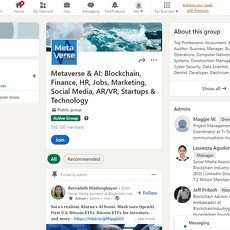
Software/Technology: AI, Marketing, Social Media, Startups, Blockchain, Human Resources & Metaverse Review
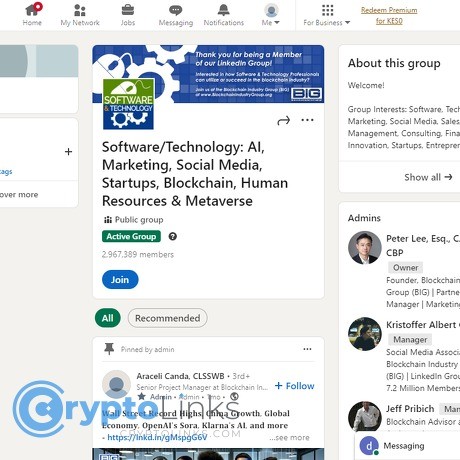
Software/Technology: AI, Marketing, Social Media, Startups, Blockchain, Human Resources & Metaverse
www.linkedin.com
Software/Technology: AI to Metaverse – An Honest Review of This LinkedIn Group (And How To Actually Get Value From It)
Have you ever joined a “top‑tier” LinkedIn group thinking, “This is where the serious AI and crypto people hang out”… and two days later your feed is a graveyard of copy‑pasted blog links, job spam, and zero real talk?
If you’re into AI, marketing, social media, startups, blockchain, HR, or the metaverse, the LinkedIn group called “Software/Technology: AI, Marketing, Social Media, Startups, Blockchain, Human Resources & Metaverse” sounds almost too perfect. The title alone feels like someone took every trending tech buzzword and stuffed it into one place.
But here’s the real question:
Is this group actually useful if you’re serious about crypto, Web3, or tech in general – or is it just another noisy room where everyone is shouting and nobody is listening?
In this guide, I’m going to talk to you exactly how I look at any community I join for research, networking, or crypto work: straight, no fluff, and focused on whether it’s worth your time.
I’ll walk you through what this LinkedIn group really is, who it’s secretly built for (even if the name says “everyone”), and how to avoid turning it into yet another tab you never open. I’m not interested in theory – I’m interested in whether this thing can actually help you learn faster, meet better people, or grow your projects.
Most People’s Experience With LinkedIn Groups
Let me guess if this sounds familiar.
- You join a shiny new group called something like “AI & Blockchain Innovators” or “Web3 & Startups Mastermind.”
- At first, the member count looks impressive. 50K, 100K, sometimes more. You think, “Nice, this is where things are happening.”
- Then your feed starts filling with:
- Cold job posts that look like they were mass‑posted to 50 groups at once
- People dropping links to their blog, YouTube video, or “groundbreaking” token sale with no context
- Endless “Good morning, happy Monday, stay positive” motivational wallpaper quotes
- You scroll, you skim, you notice something important: nobody is talking to each other.
This isn’t just a feeling. LinkedIn itself has hinted through various product changes that a lot of groups suffer from low engagement. In multiple user surveys over the years, the same complaint keeps coming up: too much broadcasting, not enough actual conversation.
Here’s the pattern I see again and again:
- 80–90% of posts = link drops. Someone shares a blog post, a press release, or a landing page with almost no context.
- Engagement is ghosted. 1–2 likes, usually from people who auto-like everything, and very few real comments.
- Networking is one-way. People “announce” what they’re working on, but rarely ask questions or interact.
When you’re into crypto, AI, or any fast‑moving tech, this is a problem. You’re already drowning in information. What you actually need is:
- Signal, not noise – real insights, not recycled headlines
- People you can talk to, not just profiles to scroll past
- Threads that make you smarter, not just hungrier for the “Mark all as read” button
So the core pain is simple: you want signal, but you get noise.
In crypto especially, this can be dangerous. If your feed is full of:
- Unvetted “investment opportunities”
- Shiny AI‑crypto mashups that never ship
- Hype around metaverse projects that only exist in pitch decks
…then a bad group doesn’t just waste your time – it can actively pull you towards low‑quality deals and weak information.
That’s why I never look at a group and think, “Nice, more content.” I look at it and think, “Is this going to sharpen my signal or blunt it?”
What I’ll Help You With In This Guide
So, what are we actually going to do with this LinkedIn group and this review?
Here’s what I’m going to walk you through in this article:
- What this specific LinkedIn group actually offers – not just based on the long, keyword‑stuffed title, but on what people tend to use these big umbrella groups for.
- Whether it’s worth your time if your main interests are AI, crypto, blockchain, startups, or HR tech – not just if you’re casually browsing.
- How to use a big mixed‑topic group in a smart way so:
- You get noticed without looking spammy
- You can share your Web3 or AI work without sounding like a shill
- You actually build relationships, not just impressions
- The key questions to ask yourself before you hit “Join,” so you’re not blindly adding yet another notification source to your life.
- How this group can sit next to other resources in your own “research and networking toolkit” – instead of trying to replace everything you already use.
I’m not going to tell you “This group is amazing” or “This group is useless” in one sentence, because that would be lazy. For some people, a group like this can be a goldmine. For others, it’s background noise. The difference is how you use it, and whether it matches what you’re actually trying to do right now.
Think of this guide as your filter: by the time you’re done reading, you should know exactly whether this group fits into your stack of tools – or belongs in the “no thanks” pile.
What People Usually Want To Know Before Joining
Every time someone sends me a link to a “must‑join” LinkedIn group or Telegram channel, I see the same questions hiding behind their message.
If you’re looking at this “Software/Technology: AI, Marketing, Social Media, Startups, Blockchain, Human Resources & Metaverse” group, you’re probably silently asking at least a few of these:
- Who is this group really for? Is it actually full of builders, founders, marketers, HR people, and crypto folks – or mostly random job seekers and link droppers?
- Is it active, or just another dead wall of posts? High member count means nothing if nobody is talking.
- Can it really help me with networking or opportunities? Can you meet:
- potential partners for your AI or Web3 startup?
- beta users for your product?
- clients for your consulting work?
- or employers if you’re hunting for a new role?
- How do I stand out inside such a broad group? When a group covers everything from HR to metaverse, it’s easy for your crypto or AI content to get lost.
- Is it good for beginners? Or will you feel like the only person who isn’t already running a startup, a fund, or a personal brand?
- Are there better alternatives? Should you be on LinkedIn at all for this, or are you better off on X (Twitter), Discord, or more niche communities?
These questions matter because a group isn’t just a place you “join.” It’s an input to your decision‑making. The quality of your inputs shapes the quality of your output.
If your feed is full of:
- shallow AI threads with no real numbers
- reposted crypto news that you already saw hours earlier on better sites
- metaverse hype without any mention of users, revenue, or actual usage
…then it doesn’t matter how many people are in that group. It’s not sharpening you. It’s just entertaining you.
On the flip side, if a group helps you consistently:
- find 1–2 new people per week you actually want to DM
- see patterns in AI, blockchain, and HR tech that affect how you build or invest
- spot early‑stage tools you can test before the crowd shows up
…then even a messy, broad LinkedIn group can be worth keeping in your rotation.
So here’s where we go next:
What exactly is this “Software/Technology: AI, Marketing, Social Media, Startups, Blockchain, Human Resources & Metaverse” group? Who’s behind it, what actually shows up in your feed once you join, and where does crypto/Web3 fit into that mess of topics?
If you’ve ever wondered whether these big “all‑in‑one tech” groups are actually useful – or just a buzzword salad – let’s take a look under the hood next.
What is the “Software/Technology: AI, Marketing, Social Media, Startups, Blockchain, Human Resources & Metaverse” LinkedIn Group?
On paper, this LinkedIn group sounds like the Avengers of tech: AI, marketing, social media, startups, blockchain, HR, and the metaverse all under one roof. The name is long, the promise is big, and if you’re into crypto or Web3, it instantly raises one key question in your head:
“Is this a serious place to learn and connect… or just another content landfill?”
Let’s break down what this group actually is, what it tries to be, and what you’re likely to see in your feed if you join.
Group overview and purpose
From the outside, the positioning is clear: this is a broad, cross‑industry tech community built around a handful of “hot” themes:
- AI – tools, automation, LLMs, productivity hacks
- Marketing & social media – growth tactics, content, performance ads
- Startups – fundraising, MVPs, scaling, SaaS, product‑market fit
- Blockchain & crypto – Web3, DeFi, NFTs, tokenized products
- Human Resources – hiring, HR tech, remote work, culture
- Metaverse – virtual worlds, XR, gaming, immersive experiences
The general “promise” you’ll see in the description is something along the lines of:
- Share news and resources
- Connect professionals across these fields
- Highlight jobs, tools, and collaboration opportunities
In practice, groups like this usually lean in one of four directions:
- News sharing hub – people posting links to articles, newsletters, and reports
- Networking space – intros, “who’s working on X?”, partnership requests
- Hiring board – job ads, “we’re hiring”, “looking for work” posts
- Thought leadership arena – people sharing their frameworks, case studies, and lessons
This specific group tends to sit right in the middle: part newsfeed, part soft‑sell networking, part job board.
You’re not going to see deep, academic research threads every day, but you will see:
- Big‑name AI or Web3 news pieces reposted
- Startup founders talking about their MVPs or early traction
- Recruiters quietly sliding in with “We’re hiring a blockchain dev in EU/US time zones”
- Consultants sharing breakdowns like “How we used AI to cut hiring time by 40%”
It’s not a niche Discord server where everyone speaks Solidity or only talks about liquidity pools; it’s more of a crossroad. And that’s both the strength and the weakness of it.
Who this group is actually aimed at
The title lists technologies and buzzwords, but the real target is people whose work sits at the intersection of those themes. Think of it as a place for “hybrid” operators rather than single‑topic purists.
Here’s who usually gets the most out of groups like this:
- Founders and startup teams
Early‑stage founders building AI tools, SaaS platforms, or Web3 products show up here to:
- Spot market shifts early (AI x HR, blockchain x supply chain, etc.)
- Look for marketers, advisors, or early team members
- Float soft pitches like “We’re building X, who wants beta access?”
For example, a founder building an AI‑powered crypto tax tool might post a short story about how users waste 10+ hours a year on tax prep, then invite feedback from accountants, traders, and HR/payroll people in the same thread.
- Blockchain and crypto builders
Not the pure “degen” crowd, but the people trying to plug blockchain into real‑world workflows:
- Web3 SaaS founders looking for beta users outside the classic crypto bubble
- Teams building token‑gated communities, loyalty programs, or payment rails
- Crypto products targeting HR (tokenized rewards) or marketing (NFT loyalty, on‑chain analytics)
This crowd typically wants partners and feedback, not just token buyers.
- HR and people‑ops professionals
HR folks come in to figure out what’s real and what’s hype around:
- AI tools for screening, onboarding, and performance reviews
- Hiring for AI, blockchain, and remote‑first roles
- Compliance and labor questions for distributed, sometimes pseudo‑anonymous teams
Studies from LinkedIn’s own talent reports show that AI and blockchain skills rank among the fastest‑growing “skills of the future”. HR people are here partly just to not get left behind.
- Marketers and growth people
This group is a natural playground for marketers who are:
- Testing AI‑generated content, ad creatives, and audience segmentation
- Figuring out how to describe complex things like DeFi, L2s, or “metaverse” to normal humans
- Learning how others run campaigns on newer channels like Web3 communities or VR events
You’ll often see posts like “We ran an AI‑assisted campaign for a Web3 SaaS tool – here’s what actually worked.” Those posts tend to pull strong engagement because they’re practical, not theoretical.
- Students and beginners
There’s always a layer of people who are early in their careers, usually asking:
- “How do I transition into AI/crypto from a non‑tech background?”
- “Which skills should I focus on in 2025?”
- “Is it realistic to start in Web3 without a computer science degree?”
Data from LinkedIn Learning has shown that people who actively engage in professional communities – not just passively scroll – tend to report faster skill growth and better job mobility. These beginners are trying to put themselves in that more active category.
So while the group looks like a random mash‑up of tech buzzwords, the real theme is this: people who are trying to connect the dots between technology, business, and careers.
“The most valuable rooms aren’t the ones where everyone knows the same thing – they’re the ones where different worlds collide and people are curious enough to ask questions.”
Topics you’ll really see in your feed
Let’s get honest about what shows up once you’re inside. LinkedIn groups have patterns, and this one is no exception.
Here’s the kind of content that tends to dominate:
- Articles & reports
People love posting links to:
- “McKinsey’s latest AI report”
- “Gartner’s hype cycle for emerging tech”
- “State of Web3 funding” breakdowns
Sometimes it’s just a link. The better posts add one or two sharp questions like “If AI really automates 30% of tasks, what happens to junior roles in crypto startups?” – that’s when real discussion starts.
- Job posts and “I’m hiring / I’m looking” updates
You’ll regularly see:
- “We’re hiring an AI engineer with blockchain experience (remote)”
- “Senior Solidity dev available for new project”
- “Looking for a growth marketer who understands both SaaS and Web3”
These posts sometimes look like spam at first glance, but mixed into the noise, there are often real, mid‑to‑high quality roles and candidates.
- Tool and product announcements
This can range from:
- AI writing or analytics tools
- HR software that uses machine learning for matching
- Web3 platforms – wallets, analytics dashboards, NFT tools, metaverse platforms
The smart ones don’t just say “Check out my product.” They show before/after numbers, mini‑case studies, or user stories. For instance: “We used our own product to automate KYC for a crypto exchange and cut manual review time by 60%.” Those posts attract questions instead of eye rolls.
- Events, webinars, and panels
Expect regular posts about:
- AI + HR webinars (“How to use AI in performance reviews without bias”)
- Web3 startup demo days
- Metaverse marketing workshops
Not all of them are worth your time, but this is where you occasionally find a small, under‑the‑radar session that turns into a serious networking opportunity.
- “Hot topic” discussion prompts
These range from insightful to clickbait. Examples:
- “Will AI kill junior developer roles in the next 5 years?”
- “Is the metaverse already dead, or just quietly maturing?”
- “Are crypto paychecks and tokenized equity the future of compensation?”
Good prompts often quote a stat or real experience. For example, referencing a survey that says over 60% of Gen Z workers are open to part of their salary in crypto, then asking HR and founders how they handle payroll, taxes, and volatility. That’s the kind of post that pulls in comments from finance, HR, and Web3 all at once.
Now, how balanced is the content across the topics in the title?
- AI – Shows up constantly. It’s the loudest topic right now and LinkedIn’s algorithm loves it.
- Marketing & social media – Very present, especially around AI tools, content, and growth frameworks.
- Startups – Always in the background; founders and operators posting what they’re building or asking for advice.
- HR – Pops up often, especially with AI in hiring, remote culture, and tech skills gaps.
- Blockchain & crypto – Present, but not dominating. It weaves in when people talk payments, asset ownership, Web3 products, or compliance.
- Metaverse – Less noisy than in 2021. You’ll still see it around gaming, VR events, digital identity, and brand experiments.
So where does crypto actually fit?
Crypto and blockchain tend to appear as “infrastructure” in this group, not the entire story. The pattern usually looks like this:
- An AI startup using blockchain to track data provenance
- A marketing agency running NFT‑based loyalty programs for mainstream brands
- An HR platform tracking global contractor payments on‑chain
- A metaverse project using tokens for in‑world assets and memberships
If you’re used to Telegram channels full of charts, on‑chain metrics, or meme coins, this will feel way more “business casual.” That’s the point: it shows you how non‑crypto people think about, misunderstand, or cautiously integrate blockchain into their normal workflows.
And that perspective is often where the biggest opportunities hide.
Of course, knowing what a group is and who it’s for is only half the story. The real question is whether it actually earns a place in your daily feed… or just becomes another tab you never open. So how do you judge that without wasting weeks inside?
I’ve got a simple way to test that – and yes, it can save you from a lot of “motivational quote + spammy link” torture. Let’s talk about that next.
Is This Group Worth Your Time? Pros, Cons, and Red Flags
Before you hit “Join” on any big LinkedIn group, you’re not really asking, “Is this group good?”
You’re asking, “Is this group good for me right now?”
Time is your sharpest asset in tech and crypto. So let’s break down what this LinkedIn group actually gives you, what can go wrong fast, and what I personally look at before I let something live in my feed.
The good stuff: reasons you might want to join
Even with the usual LinkedIn chaos, this group has some strong upside if you use it right.
Here’s where it can genuinely help:
- Big mix of professionals in one place
You’ll usually see:
- Startup founders testing products
- Developers building AI tools, Web3 apps, SaaS platforms
- Marketers running growth campaigns across Web2 and Web3
- HR and talent people hiring for AI, blockchain, and remote roles
- Analysts and consultants sharing reports and market reads
That mix is powerful. In smaller niche crypto communities, you often see “builder talking to builder.” Here you get something closer to “builder talking to user, marketer, and recruiter in the same thread.”
For example:
- A founder posts: “We’re building an AI assistant that helps recruiters assess dev candidates, early beta here.”
- In the replies you’ll see:
- Recruiters: “This is useful, but I’d need X and Y features.”
- Developers: “Here’s a performance issue you’ll hit with that model.”
- Marketers: “This positioning sounds like a feature, not a product… try framing it like this.”
That kind of cross‑feedback is hard to get in a pure crypto or pure AI bubble.
- Seeing how AI, blockchain, and metaverse show up in “normal” businesses
Most crypto people underestimate how the “regular” tech world actually uses blockchain or AI.
Inside this group, you’ll often see posts like:
- A logistics startup explaining how they use blockchain for document tracking, not for token speculation
- An HR team talking about using AI tools to screen applicants, and what worries them about bias and compliance
- A traditional brand testing a small metaverse activation or NFT-based loyalty experiment
These posts are gold if you’re building in Web3 or AI and want to understand how non‑crypto natives think. There’s a big gap between what looks cool on X and what an HR director or CMO will actually approve.
McKinsey, Deloitte, PwC – pick your favorite consulting logo – have all published reports saying the same thing: the business value of emerging tech comes from boring integrations, not headline hype. This group lets you see those boring integrations in the wild.
- Access to job posts, partnerships, tools, and events
Scroll a busy week in this group and you usually spot:
- Job posts for:
- AI engineers
- Web3 marketers
- Remote product managers
- HR people in tech‑heavy companies
- “Looking for a partner” posts from startups needing:
- Blockchain devs for a pilot
- Beta users for AI tools
- Marketing agencies who understand Web3
- Announcements for:
- Online conferences and webinars
- AI or blockchain hackathons
- Pitch events and demo days
Are all of these high quality? Of course not. Some are weak. But you don’t need 100 perfect posts; you need 1–2 that match what you’re doing.
There’s a LinkedIn statistic that gets thrown around a lot: most users rarely post, but they do read, click, and hire. In groups, that’s even more true. The most interesting people are often the quiet ones who see your comment once and then message you directly.
- Trend radar for both crypto and “traditional” tech
Because this group overlaps AI, blockchain, HR, marketing, startups, and the metaverse, it gives you a nice “macro view” of where things are headed.
You’ll start to spot patterns like:
- More AI tools popping up in HR posts → hiring workflows are changing fast
- Blockchain showing up more in supply chain, identity, and compliance threads → less talk about speculation, more about infrastructure
- Metaverse mentions shifting from “we’re launching land sales” to “we’re hosting internal training in virtual spaces” → less hype, more utility
One study from Gartner famously said emerging tech goes through a “hype cycle” – big excitement, big disappointment, then quiet, real adoption. This group tends to reflect where on that curve AI, blockchain, and metaverse are for actual businesses.
If you’re building products or researching investments, that kind of pattern recognition can be worth way more than any single post.
“The real edge isn’t secret information. It’s seeing ordinary information before everyone else understands what it means.”
This group can be a decent place to see that “ordinary information.” The edge comes from what you do with it.
The not‑so‑great stuff: what can go wrong
Now for the reality check. Because yes, the same things that make this group attractive can also waste your time if you’re not careful.
- Broad focus = shallow content
Any group that tries to cover AI, marketing, social media, startups, blockchain, HR, and the metaverse is walking a tightrope.
What you’ll often see:
- AI posts that are just “Top 10 tools” lists
- Blockchain posts that barely go beyond “we use smart contracts for transparency”
- Marketing posts that are just repurposed Twitter threads
- HR posts that are generic “remote work is the future” takes
If you want deep, code‑level, protocol‑level, or quant‑level content… this type of group will usually feel too shallow on each topic.
Think of it less as a specialized research hub and more as a wide radar. You spot what’s interesting here, then go off‑platform to research it properly.
- Promotional spam and low‑value links
I won’t sugar‑coat this. Large LinkedIn groups with “AI + Blockchain + Startups” in the title attract people who think blasting links equals marketing.
You’ll recognize it instantly:
- No context, just “New article: The Future of AI and Blockchain – read here”
- Landing page drops for products nobody asked about
- Copy‑paste “thought leadership” that’s obviously sent to 10 groups at once
The issue isn’t that people promote. Promotion is fine if it’s wrapped in real value, like:
- “We tried 3 AI tools to screen CVs, here’s what worked and what went wrong (screenshots inside). If you want to see the full breakdown, here’s the link.”
But most spammy posts skip the learning and go straight to the link. You’ll need to train your eyes to ignore those and focus on signal.
- Harder to stand out in a non‑niche crowd
In a narrow community (say, “Solana Devs” or “HR Analytics in SaaS”), posting one good insight makes it obvious who you are and what you do.
In a huge mixed group like this, your posts might land in a feed where:
- One person is a junior HR assistant learning about AI tools
- Another is a DeFi developer
- Another is a growth marketer for a SaaS product
- Another is a student trying to get their first job
That means:
- Your content has to be clear enough for non‑experts
- But specific enough to attract the right people
If you just post “blockchain is the future of HR” with no specifics, you’ll be forgotten in 10 seconds. If you post way too technical, most people will scroll past.
This is fixable (we’ll get into how to position yourself in the next section of the guide), but it’s something to be aware of.
- Crypto and blockchain posts can get buried
AI is currently the loudest kid in the room on LinkedIn. Studies from various social platforms have shown big jumps in engagement for AI‑related content since late 2022, while other topics get pushed down in the feed.
So in a broad group, you might see:
- 5 AI posts for every 1 blockchain post
- Marketing content framed around “AI‑powered” tools
- HR posts all about AI in recruiting, with zero mention of Web3 or metaverse
If you joined purely to see cutting‑edge blockchain content, you might feel like you’re swimming upstream.
The upside: when a blockchain or Web3 thread does catch attention in this group, it often gets engagement from people outside the usual crypto circle – recruiters, marketers, founders – which can be worth more than yet another “gm” from someone already deep into DeFi.
Red flags to watch for in any LinkedIn group
Forget this specific group for a second. Here’s the checklist I use for any LinkedIn group so I don’t end up wasting weeks on a dead community.
- High post volume, low comment volume
If you see 20–30 posts a day but almost every post has:
- 0–2 comments
- a handful of “likes” from the same people
…then you’re looking at what I call “ghost engagement.” Lots of posting, no real conversation.
A healthy group doesn’t need huge numbers, but it needs visible reactions:
- Threads with back‑and‑forth replies
- People asking follow‑up questions
- Members tagging others into the conversation
- The same few people always posting
If your feed from the group looks like it’s 80% the same 3–5 names, that usually means:
- The group has turned into their personal billboard
- Everyone else either gave up posting or feels ignored
Sometimes those “heavy posters” are actually good. But if their content is mostly self‑promo, that’s a bad sign for the group’s health.
- Repeated “job” or “investment opportunity” spam
This is especially important for anything with blockchain, crypto, or startups in the title.
Major red flags:
- Posts like “Invest $500 and get $5,000 back in 3 days” – classic scam pattern
- Too‑perfect “remote job” offers with no company details, asking you to pay for training
- “We guarantee 20% monthly from our crypto trading bot” type nonsense
In a well‑moderated group, these kinds of posts get removed quickly. If you see them hanging around for weeks with no admin reaction, that tells you everything you need to know.
- No visible moderation or rules
Scroll the group’s “About” section and recent posts and ask:
- Are there clear rules about promotion, spam, and behavior?
- Do you see admins or moderators commenting, pinning posts, or redirecting spam?
- Are any posts labeled as “Featured” or curated in some way?
If the answer to all of that is no, you’re probably in a “set and forget” group where the owner collected members and then walked away.
A strong group has at least light curation. Somebody is clearly watching. You feel like there’s a grown‑up in the room.
How I personally evaluate if a group is worth it
Here’s the simple system I use. You don’t need any tools for this, just attention and a bit of honesty with yourself.
- The 7‑day test
Once you join:
- Don’t mute it and don’t change your notification settings immediately
- For 7 days, whenever you open LinkedIn, take a quick mental note:
- How often do you see posts from the group?
- Do any of them make you stop scrolling?
- How many do you click, read, or expand the comments on?
By day 7, ask:
- Can I remember at least 3 specific posts from this group that were actually useful or interesting?
If the answer is no, the group is background noise for you right now.
- Track how many posts actually make you engage
In that same week, count (roughly):
- How many posts did you:
- Comment on?
- Save for later?
- Share or send to a friend/colleague?
If you engage with:
- 0–1 posts → probably not worth keeping
- 2–5 posts → borderline, depends how strong those posts were
- 5+ posts → there’s real value here, might be worth leaning in
You don’t need complex analytics. Just notice what actually makes you move your mouse or thumb.
- Look for 5–10 people you’d genuinely want to connect with
During that same week, whenever you see a smart comment or post, click the person’s profile and ask:
- Would I want to:
- Follow what this person posts?
- Jump on a quick call with them?
- Potentially collaborate with them later?
If after 7 days you can’t find at least 5–10 people who pass that test, the group might not match your current stage or interests.
On the other hand, if you quickly spot:
- A founder building something close to your idea (but in another market)
- An HR lead hiring for roles you understand deeply
- A marketer who clearly knows how to work in both Web2 and Web3
- A researcher posting charts and insights you haven’t seen before
…that’s a strong sign you’re in the right room.
- Know when to mute, leave, and move on
The last step is the one people struggle with emotionally: walking away.
If the group fails your 7‑day test, or turns into pure spam after a while, there is nothing noble about staying. You don’t get points for “being a member” of a dead community.
Here’s what I usually do:
- Step 1: Mute notifications from the group and see if you miss it over the next week
- Step 2: If you don’t miss it at all, leave the group
That’s it. No drama. No long goodbye post. Just reclaiming your attention for places that give you energy instead of draining it.
Because the whole point of groups like this is simple:
They should be giving you conversations, clarity, or connections you wouldn’t get on your own. If they’re not doing that, they’re just another noisy tab.
Now the real question is: if you do decide this LinkedIn group is worth keeping around, how do you actually use it so it gives you those conversations and connections – without turning into “just another scroll zone” in your day?
That’s where things get interesting, because the way you post, comment, and reach out inside a mixed tech group can quietly change who you meet and what opportunities land in your inbox. So let’s look at how to play this smart in the next part…
How to Get Real Value From This Group (Instead of Just Scrolling)
If you treat this LinkedIn group like a random news feed, it’ll pay you in random noise.
If you treat it like a targeted tool, it can pay you in new contacts, sharper insights, and maybe even paying users or a new role.
The trick is simple: don’t show up as “just another member”. Show up with a clear reason to be there and a light system for how you show up.
Setting Your Goal Before You Join
Before you click “Join”, answer one question honestly:
What do I want out of this group in the next 90 days?
Not “someday”, not “network more”. Something you can measure. That one decision shapes what you post, who you talk to, and what you ignore.
Think in terms of single-focus goals like:
- Learning: “I want to understand how ‘normal’ companies are using AI and blockchain in real products.”
- Hiring: “I want to find 3–5 qualified candidates for a blockchain/AI-related role.”
- Getting hired: “I want to start 10 real conversations that could lead to interviews in AI/Web3 startups.”
- Promoting a project: “I want 20 warm eyeballs on my MVP, not 2,000 random impressions.”
That goal tells you what to do next. Here’s how it might look by role.
Founders
- Goal: validate your idea and meet potential partners.
- Action: post 1 short case or problem per week (“Here’s what we’re seeing building an AI x Web3 tool for HR teams…”), then invite comments.
- Success metric: 5–10 meaningful replies or DMs from the right kind of people, not vanity likes.
Marketers
- Goal: collect examples of campaigns that actually worked for AI or crypto tools.
- Action: comment thoughtfully under any campaign breakdown or launch post; once a week share your own “here’s what we tried, here’s what flopped, here’s what worked”.
- Success metric: people asking follow-up questions or saving your posts, not just “Nice post!” comments.
HR / Talent People
- Goal: understand how teams are hiring for AI/blockchain and what skills matter now.
- Action: join discussions on skills, remote work, and tooling; once in a while post short insights from your hiring pipeline.
- Success metric: candidates or founders messaging you because your comments feel grounded and real.
Developers
- Goal: get closer to real-world problems, not just tech for tech’s sake.
- Action: reply to posts from founders and product people with solution-oriented questions, occasionally share a small build or experiment.
- Success metric: 2–3 people asking “Can we jump on a call?” instead of just liking your code screenshots.
Crypto Traders / Researchers
- Goal: see how non-crypto folks perceive blockchain, and spot adoption signals.
- Action: comment on posts that mention tokenization, metaverse, or “AI + blockchain”, asking for data, use cases, or traction details.
- Success metric: better context for your own theses and a few new sources you trust.
“The rarest skill in the age of infinite content is intentional attention.”
Once your goal is clear, everything else becomes easier: what to say, what to skip, and when to log off.
Posting Strategy: What Actually Works in Mixed Tech Groups
In broad groups like this, low-effort posts blend into the gray background. The good news: you don’t need to post every day. You just need to post things that feel like they came from a real person doing real work.
Here’s what tends to work when the audience is mixed (AI, marketing, startups, HR, blockchain, metaverse) and you still want to signal that you’re serious.
1. Case studies and “mini post-mortems”
These outperform generic news shares almost everywhere on LinkedIn.
Instead of:
- “Check out our new NFT marketplace!” + link
Try something like:
- “We launched an NFT marketplace targeting HR teams using digital badges for employee recognition.
What surprised us: only 9% of teams cared about ‘blockchain’, 73% cared about ‘portable credentials’.
Curious if any HR or L&D people here see this use case as real or just a nice-to-have?”
You’re giving context, data, and a question that makes sense to multiple crowds at once. That’s what makes people stop scrolling.
2. Simple experiments and numbers
People trust numbers more than adjectives. There’s research on social platforms showing that posts with specific metrics (“increased signups by 37%”) get more saves and replies than vague claims. On LinkedIn, I’ve seen this pattern play out again and again.
Examples you can use:
- “We tested AI-generated onboarding emails vs. manual ones for a Web3 wallet. Open rates were almost identical (32% vs. 34%), but replies dropped by half on the AI version. Has anyone found a way to use AI here without killing personal tone?”
- “We added one simple explainer to our DeFi dashboard: ‘Your risk in plain English’. Support tickets dropped 18% in a week. Anyone else seeing UX tweaks beat new features?”
This kind of post quietly says: I build, I measure, I’m not selling you a dream.
3. “What I learned” lists
Not the fluffy “10 lessons from success” kind. More like short, specific, and slightly vulnerable.
Example:
- “3 things I got wrong building an AI + blockchain tool for recruiters:
- I assumed they cared about the chain. They cared about time-to-shortlist.
- I talked about ‘model performance’; they talked about ‘fairness’ and ‘bias’.
- I thought they’d try a sandbox alone; almost everyone wanted a guided call first.
If you’re building for HR, what other blind spots should technical teams watch for?”
This attracts serious feedback instead of passive likes, because you’re not flexing — you’re learning in public.
4. Ask real questions, not fake ones
People smell it when the “question” is just a lead-in to your link.
Weak:
- “What do you think about our project? Link below!”
Stronger:
- “We’re stuck on one thing: should we keep our staking UX ‘power user’ style, or hide 80% of it for beginners? Any examples of tools that handled this well?”
You can still add your link at the end, but the heart of the post is the problem, not the promo.
5. How to talk about your crypto/Web3 project without sounding like a shill
In a mixed tech group, a lot of people have been burned by bad crypto promos. You have to separate yourself from that crowd fast.
A few rules that help:
- Lead with the user, not the token. “We help remote designers get paid on time using stablecoins” beats “Our new token is live!”
- Share process, not hype. Screenshots of your dashboard, your onboarding flow, or a piece of your whitepaper with a question are more credible than big promises.
- Admit limitations. “We’re in beta with 12 teams, focused only on EU for now” is far more trustworthy than “Global revolution coming soon”.
If you’re still worried about coming off as a shill, use this simple test: if you removed every link from your post, would it still be useful to someone?
6. Formats and frequency that don’t annoy people
You don’t need to go daily. In fact, it’s better if you don’t.
- Posting sweet spot: 1–2 thoughtful posts per week is usually enough to stand out in a group like this.
- Best formats:
- Short native text posts with 1 key point and a question.
- Occasional longer breakdown when you really have something to say (a launch, a big test, an event recap).
- Links only when necessary — LinkedIn’s algorithm generally prefers native content, and people do too.
Think of your posts as small “conversation starters”, not megaphones.
Engagement Strategy: Networking Without Being Annoying
Posting is maybe 30% of the game. The rest is what you do under other people’s posts.
Done right, comments are where real relationships start.
1. How to pick posts worth commenting on
Instead of spraying quick “Nice!” replies everywhere, be selective. Look for posts where:
- The topic aligns with your 90-day goal (e.g., hiring for AI, crypto UX, remote work, metaverse use cases).
- You actually have something useful, funny, or clarifying to add.
- The author is someone you’d be happy to connect with: a founder, a hiring manager, a marketer in your niche, etc.
A simple rule: if you can’t add at least 1 sentence of real value, scroll on.
2. Comments that make people check your profile
You want to show you understand the problem, not that you’re desperate for attention.
Weak comment:
- “Great post, thanks for sharing!”
Strong comments:
- “We saw the same thing when we tried adding AI to our support flow — response time improved, but trust dropped. Ended up adding a ‘Human-reviewed’ badge and saw complaints fall by 22% in a month.”
- “Curious: are you seeing more pushback on the ‘blockchain’ label with HR buyers? We’ve had better luck framing it as ‘portable credentials’ instead.”
Notice what’s happening here:
- You’re adding data or a concrete example.
- You’re asking a question that invites a reply.
- You’re quietly signaling what you work on without pitching.
People click profiles when they think, “This person gets it.” Not when they see you trying too hard.
3. Turning a comment into a DM (without being weird)
Once you’ve had a back-and-forth under a post, a DM is natural. Just don’t jump straight into selling.
Example message that usually lands well:
“Hey [Name], really liked your points on that thread about AI in hiring. We’re building something in a similar space for remote Web3 teams and have hit a lot of the same roadblocks you mentioned.
If you’re open to it, I’d love to swap notes for 15 minutes sometime next week. No pitch — just curious how you’re seeing the space evolve.”
This works because:
- You reference a shared context (the comment thread).
- You’re clear about what you want (swap notes).
- You explicitly remove pressure (“no pitch”).
Most serious people are happy to talk when they feel respected and not ambushed.
4. From DM to call or collab
If the DM flows, don’t overcomplicate the next step. Suggest something simple:
- “Want to jump on a quick 20-min call and compare what we’re seeing?”
- “If you ever want a second pair of eyes on your landing page before launch, happy to return the favor.”
Real partnerships and client work often start from these low-pressure offers. I’ve seen founders meet designers, marketers meet devs, and researchers meet data providers exactly this way.
5. Building a small circle of “regulars”
Every large group has a handful of people who consistently show up with signal, not noise. Those are your people.
Here’s an easy way to build your mini-circle:
- Identify 5–10 members whose posts always make you think.
- Turn on notifications for them (or create a short list in your notes).
- Engage on their posts regularly with solid comments, not flattery.
- Every month, DM 1–2 of them with a genuine “here’s something that reminded me of your work”.
Within a few weeks, you’re no longer “just another member” to them; you’re part of their mental map. That’s when opportunities start to feel natural, not forced.
Using the Group to Support Your Crypto/Web3 Work
This group is broad by design. That’s actually powerful if you’re in crypto or Web3, because adoption doesn’t happen inside crypto echo chambers — it happens when your stuff makes sense to marketers, HR, founders, and “regular tech” folks.
Here’s how to use that to your advantage.
1. Ask for feedback on products, whitepapers, or landing pages
Instead of dropping a bare link and begging for feedback, frame it so the right people know why you care about their view.
Example:
- “We’re building an AI + blockchain payroll tool for remote teams.
I’d especially love feedback from:- HR / People Ops
- Finance or ops leads
- Founders paying people across borders
Two specific questions:
- Is the value prop clear in the first screen?
- What’s missing that would make you trust this more?
Landing page: [link] — brutal honesty appreciated.”
This gives people a reason to help and clear instructions on how to do it.
2. Find non-crypto skills you probably don’t have in-house
Most crypto/Web3 teams are heavy on engineering and light on everything else: UX, brand, legal, HR. In a group like this, you have access to exactly those “missing pieces”.
You can post something as simple as:
- “Any UX designers here who’ve worked on complex dashboards or fintech-style products? We’re working on a DeFi interface and worried we’re overwhelming new users. Happy to pay for a short review or trade for dev work.”
Or:
- “Looking for someone with HR or legal background: how are you handling contractor agreements when paying in stablecoins? Not legal advice, just trying to understand what’s ‘normal’ out there.”
Cross-pollination like this is where serious Web3 projects quietly upgrade from “interesting tech” to “usable product”.
3. Spot AI and HR trends that hit crypto startups early
There’s a reason I watch AI and HR threads closely when I think about crypto.
Things like:
- How companies are managing fully remote teams.
- Which compliance tools they’re using for KYC, AML, or data privacy.
- What skills are suddenly “must-have” on job descriptions.
Those signals show up in these broader groups before they become obvious in purely crypto circles. If you’re building a Web3 product for remote workers or global payments, understanding HR and compliance headaches is not optional — it’s your moat.
4. Track how mainstream people see blockchain and the metaverse
It’s easy to forget this, but most people in tech don’t live inside Crypto Twitter. Their view of blockchain and metaverse is shaped by headlines, a few bad experiences, and maybe one or two success stories.
When you watch how they talk about it in a group like this, you learn:
- What confuses them (“Why does this need a chain again?”).
- What scares them (regulation, scams, complexity).
- What excites them (ownership, interoperability, transparency).
This is pure gold for your messaging. If you notice that marketers keep latching on to “ownership” and “portable rewards” but tune out “Layer 2”, you know what to lead with in your landing pages and pitches.
There are even studies on tech adoption that show a simple pattern: people adopt what they can explain to a friend. Your job in groups like this is to see what sticks in their language, then build your story around that.
You’ve now got a working system to turn this group from a noisy feed into a real asset: a clear goal, a posting style that attracts serious people, and a way to connect without feeling spammy.
The next question is obvious: who actually benefits most from playing this game… and who’s better off skipping the group altogether?
That’s exactly what I’ll break down next — so before you join (or leave) this group, let’s look at who it really serves and who should stay far away.
Who Should Actually Join This Group (And Who Should Skip It)
Not every shiny LinkedIn group is worth your attention. This one has a long title, a big promise, and a very mixed audience. That can be powerful for the right person… and a complete distraction for the wrong one.
So let’s get blunt: who actually wins here, and who’s better off closing the tab?
Best Fits: People Who Can Benefit Most
This group works best if you sit at the crossroads of AI, SaaS, blockchain, marketing, HR, or “general tech.” If that’s you, it can become a solid feeder for ideas, contacts, and even partnerships.
Here are the people I see getting the most out of it:
- Early‑stage startup founders blending AI, SaaS, and blockchain
If you’re building something like:
- an AI‑powered analytics dashboard with on‑chain data,
- a SaaS tool that uses blockchain for identity or payments,
- a B2B product that sells AI automation to “old‑school” companies,
then a broad LinkedIn group like this is actually your lab.
You’re not selling only to crypto natives; you need CMOs, HR leaders, ops people, and non‑technical founders to get what you’re building. This group is full of that kind of crowd.
Think in terms of small experiments:
- Post a short story of how a client saved 10 hours/week using your AI+Web3 product.
- Ask a practical question: “If you’re in HR, what scares you most about using blockchain for credentials?”
- Share a screenshot (no link) of your new feature and ask, “What’s confusing here?”
These posts pull in different roles and backgrounds. You get feedback not just from devs, but from the people who will actually approve the budget.
- Marketers learning how to run campaigns for Web3, AI tools, or tech products
If you’re a marketer trying to figure out:
- how to explain crypto or AI to non‑nerds,
- which channels actually bring results for tech products,
- how to avoid the “this is a scam” reaction to anything blockchain‑related,
this group gives you a real‑time testbed.
Scroll the feed and you’ll see a pattern: posts that try to push a product with zero context flop; posts that tell a simple, specific story often get more comments and saves.
There’s research behind that too. Marketing studies from places like HubSpot and Content Marketing Institute keep showing the same thing: case studies, original data, and clear “here’s what we learned” stories drive more engagement than plain promo posts.
Use the group to:
- Test different hooks for your AI or Web3 product in short LinkedIn posts.
- Watch which angles (ROI, time saved, risk reduction) get reactions from founders vs. HR vs. product folks.
- Spot phrases people actually use when they talk about AI and blockchain (then steal those phrases for landing pages and ads).
- HR and talent people hiring for AI, blockchain, or remote‑first teams
Recruiting for tech is already hard. Recruiting for AI and blockchain on top of remote work and shifting regulations? That’s a different game.
This group is a good place if you’re:
- hiring your first AI engineer or data scientist,
- trying to understand what a “Web3 marketer” should actually know,
- building processes for a remote‑first or globally distributed tech team.
Researchers from McKinsey and Harvard Business Review have shown how fast skill requirements are changing in digital roles. You’ll see that shift “in the wild” inside the group: people talking about prompt engineering, AI ethics, DAO governance, etc.
Practical ways to use it:
- Share a post asking, “If you’re an AI engineer/Web3 dev, what makes a job ad instantly unattractive?”
- Watch which job posts actually attract comments, not just likes.
- Connect with founders building remote teams and ask what’s working for them.
You get market feedback on your hiring strategy without paying for another “future of work” webinar.
- Tech generalists who want one hub to see many intersecting trends
Maybe you’re not wearing a narrow label like “Solidity dev” or “AI researcher.” You’re more like:
- a product manager watching AI, blockchain, and UX,
- a consultant who needs to understand several verticals at once,
- a curious generalist connecting dots across tech, HR, and business.
For you, a broad group is not a bug; it’s a feature.
Scrolling past a mix of AI, HR, and blockchain posts lets you spot patterns early:
- AI tools creeping into HR processes → useful if you’re thinking about on‑chain credentials.
- Marketing teams adopting generative AI for content → signals how Web3 teams might scale comms.
- Founders complaining about remote management → opportunity for tools or consulting.
Generalists often win by connecting ideas other people think are unrelated. This group gives you that raw material daily.
Not the Best Fit: When This Group Is Probably Not for You
On the other side, some people will scroll this feed and feel nothing but irritation. If that’s you, that’s not a failure—it just means the room isn’t built for your goals.
- Hardcore DeFi/NFT degens wanting purely on‑chain strategy and alpha
If your day looks like:
- reading contract addresses,
- hunting liquidity incentives,
- chasing early‑stage NFT mints,
then a big LinkedIn group will feel painfully slow.
You’re used to Telegram and X where information moves in minutes, not days. You want:
- on‑chain dashboards,
- testnet updates,
- whitelist spots,
- governance drama.
This group won’t give you that. You might get the occasional “DeFi and regulation” post or “enterprise NFT use case,” but not the tactical alpha you’re after.
- People who only want highly technical code‑level blockchain discussions
If “value” for you means:
- debating gas optimizations,
- comparing zk‑proof libraries,
- discussing client implementations and consensus changes,
this group will probably frustrate you.
LinkedIn in general is business‑tilted. You’ll see posts like:
- “How we used AI to automate our sales process,”
- “5 ways blockchain could disrupt HR,”
- “Metaverse as a new marketing channel.”
Technical content exists, but it’s much more high‑level. For serious engineering talk, you’re better off in:
- GitHub discussions and issues,
- project‑specific Discords,
- engineering‑focused Telegram groups,
- research forums and academic channels.
- Anyone who hates broad, cross‑industry conversations and just wants a niche
Some people get energy from cross‑pollination. Others want a tight room where everyone speaks the same language.
If you prefer:
- a “Blockchain in Supply Chain” group,
- a “Solana NFT marketers” chat,
- or a “Recruiters for AI engineers” community,
then a big catch‑all group like this might feel messy.
You’ll scroll through posts that are relevant, irrelevant, and semi‑relevant all mixed together. Some people enjoy pattern‑spotting in that chaos. If you don’t, you’ll just end up muting it.
- Users who never intend to comment or connect – lurkers get less value here
There’s nothing wrong with lurking. Reading, learning quietly, absorbing info—that’s fine. But LinkedIn groups aren’t like research sites or newsletters.
The value here is interaction: comments, DMs, invites, feedback loops.
According to LinkedIn’s own engagement stats, a tiny minority of users create content, a slightly bigger group comments, and the majority just scroll. The problem is: the people who get the biggest opportunities almost always sit in the first two categories.
If you’re 100% sure you will:
- never comment,
- never send a connection request,
- never post inside the group,
then you’ll likely see a noisy feed and nothing else. You’d be better off with good blogs, curated review hubs, and structured learning instead of another half‑muted LinkedIn group.
How This Group Compares to Niche Crypto/AI Communities
One thing that trips people up: they judge a LinkedIn group by the same standard as a hardcore Discord or Telegram. That’s like judging a university library by nightclub rules. Different place, different purpose.
Let’s line it up honestly.
- LinkedIn groups: business context and broad discovery
This group is best used as a:
- “top of funnel” discovery channel – where you spot new people, companies, and ideas from AI, marketing, HR, and blockchain at the same time;
- credibility layer – where you show up a few times with smart posts and comments, then pull people into deeper conversations;
- bridge between worlds – where crypto and non‑crypto professionals actually talk to each other.
You won’t get raw trading signals or deep technical debates here, but you can absolutely meet the CMO, HR head, or co‑founder who later joins your more “serious” channels.
- Discord/Telegram: speed, depth, and inside conversations
Discord and Telegram shine when you want:
- fast feedback from people who share your niche (NFT artists, DeFi quants, Solidity devs, etc.),
- project‑specific coordination (governance, launches, beta tests),
- close communities where everyone knows the acronyms and inside jokes.
In other words, they’re for the “middle and bottom of the funnel”: where serious work, testing, and decision‑making happens.
- X (Twitter): public narratives and early signals
X (Twitter) is where:
- narratives are born (“AI summer,” “L2 season,” “restaking,” “socialfi”),
- traders and founders throw ideas into the wild and see what sticks,
- public reputations are made or broken fast.
It’s amazing for catching early memes, trends, and drama. It’s terrible for nuance and follow‑through.
So where does that leave this LinkedIn group?
It’s the bridge. The lobby. The hotel bar where a Web3 founder, an AI consultant, and an HR director accidentally sit at the same table and realize they’re all stuck on similar problems.
“The best opportunities often show up at the edges of your world, not in the center.”
That’s why I rarely use groups like this as my only online “home.” I use them to:
- find interesting people,
- test if my ideas make sense outside the crypto bubble,
- spot which topics are starting to matter to “normal” businesses.
Then I bring the best of that into more focused spaces where real work gets done.
Now, if you’re going to treat this group as one piece of a bigger strategy, the next question is obvious: how do you build that bigger stack of tools and communities around it without drowning in noise?
That’s exactly what I’m going to walk through next—how to pair a broad LinkedIn group with the right tools, resources, and platforms so it actually pushes your AI/crypto/startup work forward instead of just filling your feed. Ready to see what that stack looks like in practice?
Tools, Resources, and Extras to Use Alongside This LinkedIn Group
If you hang around in this LinkedIn group long enough, you’ll notice a pattern:
People who actually make progress in AI, crypto, and startups never rely on just one platform.
The folks landing clients, getting hired, raising, or shipping products are usually the ones who treat the group as one signal in a bigger system, not their only “home.” Let me show you how to build that system around yourself.
Why You Shouldn’t Rely on Just One Community or Platform
There are three big reasons I never put all my networking and research energy into a single spot, no matter how active it looks.
1. Platform risk is real
LinkedIn changes the feed algorithm, a group owner goes inactive, or the member mix shifts and suddenly:
- Your posts get half the reach.
- The group turns into job spam overnight.
- The best people quietly move to other channels.
We’ve seen this over and over. Facebook groups in 2016. Crypto Twitter lists in 2020. Reddit subs after moderation wars.
A Harvard Business Review piece on professional networking (HBR, 2019) pointed out that people with “multiplex networks” – connections spread across several platforms and contexts – consistently see better opportunities than those stuck in just one place. Same logic applies here.
2. Different platforms are built for different jobs
Use LinkedIn for what it’s good at: profiles, credibility, professional intros, and public conversations.
But don’t expect it to be the best tool for:
- Fast tactical chat – that’s Discord, Telegram, or Slack.
- Deep research – that’s specialized crypto and AI tools, reports, and dashboards.
- Long-form learning – that’s newsletters, curated hubs, and proper courses.
When I review any crypto or tech community, I always ask: “What job is this platform actually good for?” If you try to force it to do everything, you burn time and get mediocre results.
3. You need a small “stack,” not a single magic group
Think of your AI/crypto/startup journey like building a product. You wouldn’t launch with just hosting and nothing else, right? You need analytics, monitoring, payment processing, etc.
Your “networking and learning stack” should be the same:
- One or two broad discovery channels (like this LinkedIn group).
- A couple of focused, high-signal resources for research and tools.
- At least one place where you can have fast, ongoing conversations with people who care about the same things you do.
Once you see it like a stack, the pressure on any single group disappears. If it slows down, you just rebalance the mix.
Helpful Resource Types to Use Together With the Group
So what actually pairs well with this “Software/Technology: AI, Marketing, Social Media, Startups, Blockchain, Human Resources & Metaverse” group if you want to be serious about crypto and tech?
Here’s what I’ve seen work for people in our space.
1. Crypto and blockchain review hubs (your research backbone)
Inside the group, you’ll often see posts like:
- “What’s the safest wallet for XYZ chain?”
- “Which analytics tool do you use for on-chain research?”
- “Is this exchange legit?”
Comment sections rarely give you the full story. That’s where curated hubs come in.
On Cryptolinks, for example, I’ve spent years listing and checking:
- Trusted crypto wallets
- Exchanges and DEX trackers
- Block explorers and data dashboards
- Learning platforms and news sites
So when someone mentions a new DeFi tool or NFT marketplace in the LinkedIn group, you don’t have to guess. You open a curated hub like Cryptolinks, check alternatives, compare security, reputation, and utility, and only then decide if that shiny new thing belongs in your stack.
This alone can save you from a lot of flashy-but-empty “opportunities” people share in public groups.
2. Industry newsletters (your trend radar)
The LinkedIn group is great for what people are shouting about right now. Newsletters are better for what actually matters over the next quarter or year.
Pick a handful across:
- AI – model updates, tooling, enterprise adoption stories.
- Crypto/Web3 – regulations, L2 growth, real-world adoption, infra plays.
- Startups/funding – who’s raising for AI + crypto, what VCs are writing about, which sectors they’re backing.
One study from the Reuters Institute showed that professionals still trust email newsletters more than social feeds for “serious” information. I’ve noticed the same in crypto: the best founders I know often say, “I saw this in a newsletter,” not “Random LinkedIn post told me this.”
Use the LinkedIn group to find new creators and analysts… then subscribe to the few who consistently teach you something.
3. Research tools for market data, on-chain activity, and AI trends
If you’re inside this group because you care about results, you can’t just live in opinions and hot takes.
At a minimum, you want access to tools that help you:
- Track on-chain volume, active addresses, and protocol usage.
- See token distribution and smart money flows.
- Monitor AI adoption, funding rounds, or tech stack choices across startups.
Here’s how this plays out practically:
- Someone posts in the group: “XYZ chain is the next big thing for gaming.”
- Half the comments agree, half don’t.
- Instead of arguing, you open an analytics tool, check daily active users, dev activity, and real game launches.
- Then you come back with a comment that includes numbers, not feelings.
That’s how you stand out. People in these broad groups are drowning in opinions. The few who bring real data become memorable fast.
4. Event platforms for online meetups, hackathons, demo days, and webinars
This LinkedIn group often acts like a bulletin board: webinar links, conferences, local meetups, hackathons, and pitch competitions pop up all the time.
Instead of letting those events scroll past you, have a system for them:
- Use platforms that list tech and crypto events (online and offline).
- Sort by topic: AI, Web3, HR tech, startup funding.
- Save the ones that line up with your current quarter’s goals (launch, raise, hire, learn).
Then when you see “We’re hosting a Web3 HR webinar” in the LinkedIn group, you don’t just react in the moment. You check if it fits into your pre-selected list. If yes, register and plan to show up ready to ask one sharp question that gets you noticed.
Events are where you turn weak group connections into strong ones: “Hey, saw your comment in the LinkedIn group and noticed you’re also at this event – want to sync after the session?” That kind of simple move is how real relationships start.
How to Plug These Resources into Your Daily Routine
All of this only works if it fits into your life without turning you into a full-time “consumer of content” who never ships anything.
Here’s a simple weekly workflow I use myself and often recommend.
Step 1: Use the LinkedIn group for discovery and conversation (not endless scrolling)
3–4 times a week, spend 10–15 minutes doing only this:
- Sort by “most recent” or “top” and scan the last day or two.
- Pick 2–3 posts that are:
- On your main topics (AI, blockchain, marketing, HR, startups, metaverse).
- Backed by something real (a case study, data, a question, not just a promo flyer).
- Leave one thoughtful comment on 1–2 of them.
- Send a connection request to 1 person whose post or comment impressed you, with a short note referencing the thread.
No doom scrolling, no jumping into every argument. Just focused touches.
Step 2: Use curated crypto/tech resources for deeper research
Once a week (I like Sundays), sit down for 45–60 minutes and actually research the stuff that caught your eye in the group.
- Open your notes from the week: links to tools, projects, topics mentioned in posts.
- Look them up on trusted hubs like Cryptolinks or other curated resources you trust.
- Check:
- Is this tool or exchange already listed somewhere reputable?
- How does it compare to alternatives?
- Is it aligned with what you’re actually building or trading right now?
This is how you move from “That looks cool” to “This is worth adding to my stack” or “Nice hype, not for me.”
Step 3: Use your own notes system to turn noise into actions
Information is useless if it just sits in your head. You need a tiny, personal system. Nothing fancy:
- One note for “People to watch” – names you keep seeing in the group who share good stuff.
- One note for “Ideas to test” – product tweaks, marketing angles, or research ideas inspired by posts.
- One note for “Resources to reuse” – threads, reports, tools, and frameworks worth revisiting.
Each week, ask yourself:
- Did I reach out to at least one new person from the group?
- Did I run at least one small experiment based on something I learned? (new landing page copy, a tweet thread, a cold outreach angle, a portfolio update, whatever fits you)
- Did I remove at least one resource or channel that’s not helping me anymore?
That last question is important. Avoiding content overload isn’t about more discipline, it’s about actively pruning. If a newsletter bores you for three weeks straight, unfollow. If the group turns into noise, mute it for a bit. If a “must-use” tool never shows up in your actual work, drop it.
What matters is not how many places you hang out in… it’s how many conversations, experiments, and shipped things you can trace back to them.
Now, here’s the real test: with this LinkedIn group and a small stack of supporting tools, can you actually get clients, collaborators, or investors out of it – or is that just wishful thinking?
That’s exactly what I’m going to talk about next, along with the questions people quietly ask before they hit “Join.” Ready to see what’s realistic and what’s just hype?
FAQ, Next Steps, and My Honest Take
Let’s wrap this up by answering the questions people usually message me about, then I’ll give you a quick checklist and my blunt verdict.
FAQ: Common Questions About This Kind of LinkedIn Group
I’ll keep these tight and practical, based on what I’ve actually seen people get from broad tech/AI/blockchain groups like this one.
Is this LinkedIn group free to join?
Yes, it’s free.
In some cases you’ll see a “Request to join” button instead of “Join”. That just means the admin manually approves members. They usually accept most people who have:
- A real photo
- Some work/education history
- A short “About” section that isn’t pure hype
If your profile still looks like a ghost account, fix that first. You don’t need a perfect LinkedIn, just not an empty one.
Can I promote my crypto / AI / startup project there?
Yes, but there’s a big difference between smart promotion and noise.
Here’s what tends to work in a group like this:
- Case study style posts – “We used GPT + on-chain data to reduce manual KYB time by 40%. Here’s how we set it up and what broke along the way.”
- Experiment recaps – “We ran 3 metaverse onboarding flows for non-crypto users. Here’s what they understood, what they hated, and what surprised us.”
- Data-backed insights – “We analyzed 100+ Web3 job posts. These 5 skills show up the most often.”
- Honest questions – “If you’re in HR, what scares you most about hiring for blockchain roles?”
What doesn’t work:
- “Check out my project” + link
- Generic “Next big coin / metaverse / AI” hype
- Pastable whitepaper chunks with zero context
There was a LinkedIn study shared at Social Media Marketing World a while ago that showed posts without external links often perform better in terms of reach. I’ve seen the same pattern in crypto and AI circles. Short lesson: tell the story first, then add your link in the comments if people ask for it or at the end after you’ve shared value.
Is this group good for beginners in AI or blockchain?
It can be – under one condition: you’re willing to be curious and consistent.
Here’s how beginners usually mess it up:
- They lurk forever and never ask questions.
- They try to sound “expert” too early instead of being honest about where they are.
- They follow whatever hype topic is hot that week, jump between AI, NFTs, DeFi, and metaverse and never build depth.
If you’re early in your journey, I’d use the group like this:
- Each week, pick one theme (e.g., “AI tools in HR”, “Web3 marketing funnels”, “startup funding in AI”).
- Sort posts by “Recent” and read 10–15 related ones.
- Leave at least 3 comments that are genuinely curious, like:
- “I’m new to AI and working in recruiting. Which part of your workflow changed the most when you added this tool?”
- Connect with 2–3 people per week who post in that theme and say exactly why you’re reaching out.
I’ve seen total beginners go from “no clue what a smart contract is” to landing a junior role in 6–9 months just by consistently hanging around the right mix of LinkedIn groups + GitHub + a couple of Discords. The group itself isn’t magic, but it can be your “front door” to people and ideas.
Can I actually find clients, users, or investors there?
Yes, it’s possible. But the path is indirect.
Here’s a realistic funnel I’ve seen work:
- You post a short story about how your Web3 analytics tool helped a non-crypto SaaS cut churn.
- That post gets 10–30 relevant reactions and a few comments because it’s about business outcomes, not token price.
- You reply thoughtfully to every comment.
- You DM 3–5 of those people with something like:
“Thanks for your comment on my post about churn. I saw you’re working on an AI-enabled CRM. Happy to share how we instrumented the funnel if that’s useful, no pitch.”
- One of those DMs becomes a short call. That call might turn into a pilot, referral, or a small angel intro months later.
This is relationship-building, not “post once and wait”.
In my own network, I know a fintech founder who consistently pulled 20–30% of their early demo calls from LinkedIn groups over a year. The key pattern was:
- Posting every 1–2 weeks with real numbers and screenshots
- Commenting on others’ posts twice as much as he posted his own
- Never cold-pitching in DMs, just offering help and asking real questions
So yes, you can find clients or users here, but only if you’re okay with slow, steady compounding, not quick wins.
Is my time better spent in smaller, more focused communities?
Often, yes.
Here’s how I think about it:
- Broad groups like this = discovery, cross-industry ideas, light networking
- Niche communities (e.g., a DeFi dev Discord, an AI safety forum, a Telegram for DEX traders) = depth, tactics, and real “in the weeds” answers
The average LinkedIn user spends around 8–10 minutes per visit, according to several usage reports. You’re probably not going to get hardcore Solidity help or tokenomics design feedback in that tiny window. What you can get from a big group is:
- Signals about what normal businesses care about in AI/blockchain this month
- Non-crypto perspectives that make your messaging less “inside baseball”
- First contact with people you then move to Telegram/Discord/Zoom for deeper work
I wouldn’t treat this group as your “home base”. Think of it as a busy tech conference lobby you walk through daily. You’re there to see who’s around, say hi to a few people, and grab the ones who matter for a longer chat elsewhere.
Quick Checklist Before You Hit “Join”
Instead of overthinking it, take 5–10 minutes and run through this simple checklist.
- 1. Check the last 10–20 posts.
- Are they recent (within the last few days)?
- Or is the group basically on life support with one post every two weeks?
- 2. Look at the engagement quality, not just the numbers.
- Do posts have real comments like “We tried something similar and here’s what happened”?
- Or are they mostly “Great post” / “Thanks for sharing” / emoji spam?
- 3. Scan who is posting.
- Is it always the same 2–3 people blasting content?
- Or do you see a healthy mix of founders, marketers, HR folks, devs, analysts from different countries and industries?
- 4. Check if the topics line up with what you actually care about right now.
- If you’re deep into DeFi yields and all you see is “How AI will change HR onboarding”, that’s a mismatch.
- If you’re building an AI-enabled HR or marketing tool, mixed posts can be gold for you.
- 5. Try to identify 5–10 people you’d connect with today.
- Click a few names you see posting smart stuff.
- If you struggle to find even 3 people you’d message, that’s a sign this group might not match your lane.
- 6. Ask yourself one simple question:
“Am I actually willing to comment, ask questions, or share something once in a while – or will I just scroll?”
- If you’re going to be a silent lurker everywhere, no group will fix that.
You don’t need a scientific framework. Just a quick gut check using the points above will usually tell you if it’s worth a 1–2 week experiment.
Final Thoughts: How I’d Personally Use This Group
Here’s my honest view:
If you care about the crossroads of AI, marketing, social, startups, blockchain, HR, and the metaverse, this group can be a pretty decent signal stream in your feed. It’s not niche. It’s not hardcore. It’s not where you’ll get a full technical breakdown of a new L2 or a PhD-level paper on AI alignment.
But that’s not a bug. That’s the point.
Used well, a group like this can:
- Show you cross-industry patterns – e.g., you notice HR people complaining about “AI skills inflation” while founders complain about “Web3 marketing talent scarcity”. That’s a hint there’s room for training or tooling between those two worlds.
- Expose your crypto/Web3 ideas to non-crypto people – super useful if you’re building anything that targets normal users or enterprises, not just DEX power users.
- Broaden your network beyond your bubble – your next hire, beta user, or content partner might be an HR manager or growth marketer who barely touches Web3 yet.
Used lazily, it’s just another noisy LinkedIn tab where you scroll, feel vaguely productive, and nothing in your actual life or business changes.
Here’s how I’d use it in a focused way:
- Step 1 – Join and set a short test window.
- Give yourself 7–14 days. Literally put a reminder in your calendar: “Review this group: keep or leave?”
- Step 2 – Engage with intent, not volume.
- Comment on 1–2 posts per day that are truly relevant to what you’re building or learning.
- Aim for comments that could stand alone as mini-posts: 3–5 sentences with a clear point, not “Nice!”
- Step 3 – Post 1–2 things of your own.
- One piece about something you learned (a result, a failure, a small insight).
- One piece where you ask for input (feedback on a landing page, messaging angle, or problem you’re stuck on).
- Step 4 – Build a mini inner circle.
- From the people you see repeatedly adding value, connect with 5–10 of them.
- Send short, specific messages like:
“Saw your comments about AI hiring in fintech. I’m working on a Web3 product with similar challenges. Happy to swap notes if you’re up for it.”
- Step 5 – Review after your test period.
- Ask yourself:
- Did you have at least 2–3 conversations that felt real, not shallow?
- Did you save or bookmark at least 3–5 posts because they were actually useful?
- Did you discover at least one trend, tool, or idea you wouldn’t have seen otherwise?
- If the answer is “no” across the board, just leave the group. No drama, no guilt.
- Ask yourself:
One thing I’ve noticed over the years is this: people underestimate the cost of low-quality noise on their attention. Every extra scroll in a dead or spammy group is time you didn’t use to:
- Ship a feature
- Write that outreach DM
- Fix a tiny onboarding bug
- Research an actual protocol or market
Communities are tools, not trophies. You’re not collecting group badges; you’re collecting outcomes.
So my suggestion is simple:
- Join the group.
- Give it a fair, intentional shot for 1–2 weeks.
- Use it to find a handful of smart people and cross-industry ideas.
- Pair it with a small stack of solid crypto/AI/startup resources you trust outside LinkedIn.
- If it consistently feeds you good conversations or opportunities, keep it in your rotation. If not, walk away.
Your time is the sharpest asset you have in this space. Guard it, invest it, and don’t be afraid to “unsubscribe” from anything that isn’t pulling its weight – including this group.
CryptoLinks.com does not endorse, promote, or associate with LinkedIn groups that offer or imply unrealistic returns through potentially unethical practices. Our mission remains to guide the community toward safe, informed, and ethical participation in the cryptocurrency space. We urge our readers and the wider crypto community to remain vigilant, to conduct thorough research, and to always consider the broader implications of their investment choices.