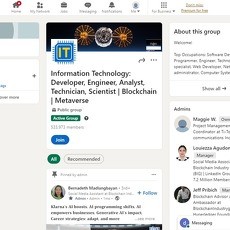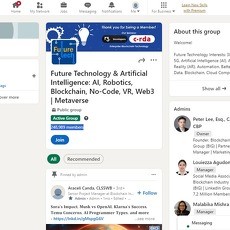
Metaverse & AI: Blockchain, Finance, HR, Jobs, Marketing, Social Media, AR/VR, Startups & Technology Review
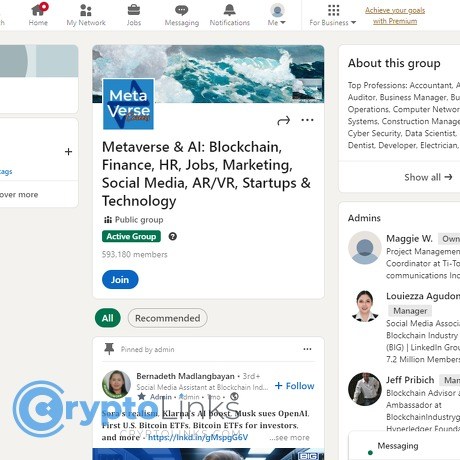
Metaverse & AI: Blockchain, Finance, HR, Jobs, Marketing, Social Media, AR/VR, Startups & Technology
www.linkedin.com
Metaverse & AI: Your No‑BS Guide To Blockchain, Jobs, Marketing, Startups & That Big LinkedIn Group Everyone’s Talking About
Have you ever caught yourself scrolling LinkedIn, seeing “Metaverse”, “AI”, “Web3”, “NFTs”, that long group name “Metaverse & AI: Blockchain, Finance, HR, Jobs, Marketing, Social Media, AR/VR, Startups & Technology”… and thought:
“Is any of this actually useful for my career or my business, or is it just people trying to sound smart?”
If that sounds familiar, you’re in exactly the right place.
The Metaverse and AI are not just tech buzzwords anymore. They’re quietly reshaping how we work, hire, build products, raise money, run campaigns, and even hang out online. But the way they’re marketed makes it hard to see where the real value is versus the nonsense.
Let’s be honest:
- You don’t want another fluffy “future of work” think piece.
- You don’t want to gamble your time on a dead LinkedIn group full of spam.
- You do want to know: “Where are the real jobs, clients, users, and revenue in all this?”
That’s exactly what this guide is here to sort out.
Most People Are Confused And Overwhelmed
Right now, the Metaverse + AI conversation feels like walking into a conference where all the booths are screaming at you:
- Metaverse – virtual worlds, avatars, land sales, gaming
- AI – ChatGPT, image generators, “AI‑powered” everything
- DeFi – yield, staking, lending pools, on‑chain trading
- NFTs – art, collectibles, access passes, “community”
- Web3 – tokens, DAOs, wallets, protocols
- AR/VR – headsets, filters, virtual offices, training
Put together, it sounds exciting. But most people I talk to are thinking:
- “How does any of this connect to a real job, a real client, or a real paycheck?”
- “Which communities are actually worth my time?”
Let’s break down the main pain points instead of pretending everyone “gets it”.
Buzzwords Everywhere, But No Clear Path To Real‑World Wins
You’ve probably seen headlines like:
- “XYZ brand launches in the Metaverse”
- “Startup raises $10M for AI Metaverse play”
- “New Web3 game with NFTs and ‘play‑to‑earn’ economy”
Then you click in and it’s either:
- A flashy PR stunt with no real users.
- A complex token model that only makes sense if you already live on Crypto Twitter.
- Or just a rebranded old idea with “AI + Metaverse” slapped on the front.
So of course people ask:
- “Where is the real demand? Who is actually paying?”
- “Is this where I should invest my time and skills, or will it fade in a year?”
There’s data behind the confusion. For example, after the big 2021–2022 hype spike, search interest for “Metaverse” dropped hard on Google Trends, but funding into gaming, AI infrastructure, and virtual experiences didn’t just vanish. It shifted into more focused areas: virtual training, enterprise AR, AI‑assisted design, and on‑chain gaming economies.
The surface hype cooled. The building moved underneath.
LinkedIn Groups: Goldmine Or Graveyard?
Now let’s talk about LinkedIn — especially that long, oddly specific group:
“Metaverse & AI: Blockchain, Finance, HR, Jobs, Marketing, Social Media, AR/VR, Startups & Technology” (Group ID: 2881314).
If you’ve used LinkedIn for more than a week, you know the problem:
- Some groups are completely dead — last post from 2018.
- Others are wall‑to‑wall self‑promotion and bots.
- And a few rare ones are actually useful: real job leads, smart discussions, honest feedback.
The tricky part? They all look similar from the outside.
This is why a lot of people just ignore LinkedIn groups altogether… and quietly miss out on:
- Niche job openings that never make the main job boards.
- Early‑stage projects asking for beta users, advisors, or co‑founders.
- Signals about what skills and tools are heating up before everyone else notices.
In the Metaverse + AI space, that signal matters. A lot. The difference between “noise” and “alpha” is usually the quality of the community posting and engaging.
Founders & Marketers: Is Metaverse + AI A Real Lever Or A Distraction?
If you’re building a startup, working in marketing, or running a product team, you’re probably being hit with questions like:
- “Should we launch an NFT?”
- “Should we have a virtual space in some metaverse?”
- “Can we plug AI into our onboarding, content, or customer support?”
The fear is very real:
- Fear of missing out – you don’t want to be the last brand to adopt something that later becomes normal.
- Fear of wasting time – you don’t want to blow quarters on a Metaverse or AI experiment that gets zero users.
Some concrete examples of where this actually works:
- Virtual events & conferences: Companies are running private VR meetups and product demos where clients walk through 3D spaces instead of watching yet another Zoom presentation.
- AI‑powered customer flows: Startups are using chatbots and recommendation engines to guide users through virtual stores, learning hubs, or NFT collections.
- On‑chain loyalty systems: Brands are testing tokenized access passes and NFT‑based memberships that connect on‑chain identity with in‑world benefits.
Done right, these experiments bring in higher engagement and more time spent with the brand. Done wrong, they’re expensive gimmicks. The challenge is knowing which is which before you jump in.
Job Seekers: Which Skills Are Real… And Which Are Pure Hype?
If you’re thinking about your next career move, a few questions naturally pop up:
- “Are Metaverse jobs actually a thing, or did they die with the 2022 hype?”
- “Do I really need to learn solidity, 3D, and machine learning at the same time?”
- “What’s the difference between a Web2 product designer and a Metaverse product designer?”
The noise level here is high. You’ll see a ton of vague job titles in this space:
- “Metaverse Evangelist”
- “AI Web3 Strategist”
- “Crypto Metaverse Visionary”
Yet behind the fluff, there are very real, very practical roles paying real money:
- Developers who can ship smart contracts, backend APIs, and game logic.
- 3D artists & designers who understand real‑time engines like Unity or Unreal.
- Marketers & community leads who can grow engaged, global communities around tokens, games, or platforms.
- Data and AI specialists who make these worlds smarter and safer.
LinkedIn groups around Metaverse & AI can be a quick way to see what skills keep coming up in job posts and project pitches, long before they show up in mainstream “top skills” lists.
HR & Recruiters: How Do You Even Screen For Web3 / AI / Metaverse Talent?
If you’re on the hiring side, there’s another set of problems:
- Resumes are full of buzzwords and side projects that are hard to verify.
- Traditional job boards don’t show you who’s actually active in Web3/AI communities.
- Many candidates are self‑taught, with non‑linear paths and unusual portfolios.
It’s not just a theory problem; it shows up in real-world data. For example, several Web3‑focused recruitment agencies have reported that:
- Many “Web3 engineers” lack production‑level experience with smart contracts.
- Non‑technical roles—community, growth, partnerships—are harder to fill than pure dev roles because few candidates understand the culture and the tech.
Groups like the Metaverse & AI LinkedIn community end up becoming informal “filters”:
- Who is consistently sharing real work, not just reposting hype?
- Who can explain tech in clear language?
- Who engages thoughtfully in threads about security, design, or token models?
For HR and recruiters, this kind of environment is gold — if you know what to look for, and if the group itself has enough real signal.
What This Guide Will Actually Do For You
I’m not here to sell you on some magical Metaverse future or shame you for not learning AI fast enough. My goal is much simpler: give you a clear, practical map so you can decide where this all fits into your life and work.
Here’s What You Can Expect From This Guide
As you read through the full series, you’ll see a few things happen:
- Clarity on that LinkedIn group: You’ll understand what the group “Metaverse & AI: Blockchain, Finance, HR, Jobs, Marketing, Social Media, AR/VR, Startups & Technology” is really about, who hangs out there, and what kind of posts actually show up.
- Plain‑English explanations: You’ll see how Metaverse + AI connect to:
- Blockchain and crypto
- Finance and new money flows
- HR, recruiting, and real jobs
- Marketing, social media, and AR/VR experiences
- Startups and product building
- The wider tech stack that makes all of this run
- A simple decision framework: By the time you’re done, you’ll know:
- Whether this LinkedIn group should be part of your daily / weekly workflow.
- What to actually do inside it: learn, network, recruit, promote, or collaborate.
- Answers to the real questions people Google, like:
- “What is the Metaverse in simple terms?”
- “How is AI actually used in the Metaverse?”
- “Is there real money here or is it just theory?”
- “Which skills and jobs are relevant?”
- “How can startups and marketers benefit without burning budget?”
- A few trusted resources: I’ll point to some solid external links — newsletters, docs, tools — so if you decide to go deeper into any sub‑topic, you’re not starting from zero.
The idea isn’t to turn you into a full‑time AI/Metaverse expert. It’s to give you enough understanding and context to make smart moves.
What You’ll Walk Away With
A Clear Map Of How Metaverse + AI + Blockchain Fit Together
Instead of thinking of “Metaverse”, “AI”, and “crypto” as three separate hype trains, you’ll see how they slot together as a stack:
- Metaverse: the environment where people interact — games, worlds, virtual offices, training spaces.
- AI: the brain that makes those spaces smarter, more personalized, and more efficient.
- Blockchain: the ledger that tracks ownership, identity, and value flows inside those spaces.
Once that picture is clear, you can spot opportunities faster:
- “Oh, this project is missing a real token economy.”
- “This one has great AI, but no real community or use case.”
- “This job wants a Web3 marketer who understands on‑chain behavior and virtual worlds.”
Concrete Ways To Use The LinkedIn Group
Instead of joining the group, posting once, and forgetting it exists, you’ll get specific use cases, like:
- Networking – how to spot people worth connecting with, and how to reach out without sounding spammy.
- Learning – how to use group posts to keep up with important updates without getting sucked into endless scrolling.
- Recruiting – how HR and founders can quietly watch who’s adding value and approach them for roles or advisory work.
- Promoting – how to share your work (products, case studies, research) in a way that adds to the group instead of annoying everyone.
- Finding collaborators – how to test interest for ideas, side projects, or partnerships.
A Realistic View Of Where Money, Jobs & Growth Are Happening
You’ll see where there’s actual traction — not just fluffy “this will change everything” talk.
We’ll look at things like:
- On‑chain game economies that are still generating revenue even after the play‑to‑earn hype cooled.
- Virtual training, events, and education platforms using AI + immersive tech for measurable ROI: better retention, lower training costs, higher engagement.
- Brands testing NFTs and tokenized communities in ways that drive repeat purchases and long‑term loyalty, not just a one‑time mint.
The point is not to promise overnight success, but to help you see where real businesses and careers are being built.
A Simple FAQ At The End
By the time you reach the end of the whole guide, there’ll be a straightforward FAQ that mirrors what people actually type into Google and ask on LinkedIn:
- Is the Metaverse dead?
- How is AI actually changing this space?
- Can I make a living here without being a hardcore coder?
- Is that big Metaverse & AI LinkedIn group worth the click?
No fluff, no vague “it depends” cop‑outs — just honest, grounded answers based on what’s happening right now.
Who This Guide Is Really For
Crypto & Web3 People Who Want The Bigger Picture
If you’re already comfortable with wallets, tokens, and maybe even smart contracts, but keep hearing “Metaverse” and “AI” bolted onto everything, this guide will help you connect the dots:
- How your existing DeFi/NFT knowledge applies to immersive worlds.
- How AI tools can make your trading, research, or community work more efficient.
- How LinkedIn communities like this one act as on‑ramps for Web2 professionals you might want to work with.
Job Seekers, Freelancers & Remote Workers
If you’re looking for your next role or trying to future‑proof your skills, you’ll get a realistic view of:
- What kind of roles actually exist at the intersection of Metaverse, AI, and blockchain.
- Which skills are transferable from your current work — design, marketing, data, management.
- How to use LinkedIn groups as living job boards and trend radars instead of passive feeds.
HR, Recruiters & Talent People
If you’re tasked with “finding Web3/AI talent” but don’t want to be fooled by buzzwords, this guide will help you:
- Understand the main role types and what good portfolios look like.
- Use LinkedIn groups as a quiet research tool to see which tools, frameworks, and platforms are actually being used.
- Spot the difference between someone talking Metaverse/AI and someone who’s really building or contributing.
Startup Builders & Marketers
If you’re building something and wondering whether Metaverse + AI is a growth channel, a positioning angle, or a distraction, you’ll get:
- Examples of how other founders use virtual spaces, NFTs, and AI in a way that supports their core product — not replaces it.
- Ideas for campaigns, funnels, and experiments you can run without a massive budget.
- Ways to use the LinkedIn group for early user discovery, feedback, and visibility.
Curious Professionals On The Fence About That LinkedIn Group
Maybe you’re not “in crypto” or “in AI”. Maybe you’re just seeing that group name pop up over and over and you’re wondering:
- “Is this worth joining?”
- “Will I learn anything, or is it just shilling?”
- “Is this actually relevant for me as a recruiter, consultant, PM, marketer, or analyst?”
This guide is written with you in mind. By the time you’ve gone through the full series, you’ll know exactly how — or if — that community fits into your personal strategy.
So here’s the next logical step: if all of this still feels a bit abstract, the fastest way to make it click is to strip the jargon and talk about the basics in plain language.
What exactly is the Metaverse, beyond the memes and the marketing slides? How does AI actually plug into it in a way normal people can understand?
That’s where we’re heading next.
Ready to see what “Metaverse & AI” really means in practice — and how that big LinkedIn group fits into it all? Let’s unpack that in the next part.
Metaverse & AI 101: What This LinkedIn Group Is Actually About
Let’s strip the buzzwords and talk about what’s actually happening behind that long group name: “Metaverse & AI: Blockchain, Finance, HR, Jobs, Marketing, Social Media, AR/VR, Startups & Technology” (LinkedIn Group ID: 2881314).
In plain terms: this group sits at the exact intersection where new 3D internet experiences meet smart automation, real money, and real careers.
To understand why it matters, we need to get two things straight first: what the Metaverse really is (outside of memes) and what AI actually does inside it.
Metaverse in Simple, Non‑Nerdy Terms
If I had to explain the Metaverse in one sentence, I’d say this:
The Metaverse is a network of digital spaces where you can show up as an avatar instead of a username – and actually work, learn, play, build, and trade there.
Not “one app.” Not “just Meta.” Not “only gaming.” Think of it more like the next layer of the internet that feels 3D, persistent, and social.
Here’s the simple version:
- 3D virtual worlds: Places like Roblox, Decentraland, The Sandbox, or corporate VR campuses where teams meet in virtual offices instead of Zoom grids.
- AR (augmented reality) overlays: Digital layers sitting on top of the real world – filters, lenses, virtual furniture try‑ons, location‑based quests. Think Snapchat filters or Pokémon GO, but more useful and more connected to value.
- Digital assets that actually belong to you: Skins, land, membership passes, collectibles, in‑game items – but instead of being locked inside one game, they’re stored on a blockchain as NFTs or tokens.
Here’s where blockchain quietly becomes the backbone.
- Ownership: When you buy “land” in a virtual world like Decentraland, you’re not just trusting a company database. You own an NFT on Ethereum that proves that land parcel is yours and can be traded on marketplaces.
- Skins and wearables: Avatars, fashion, in‑game items are minted as NFTs, so you can sell or lend them. Some projects already let you wear the same item across different virtual worlds if they support the same standards.
- Identity: Wallets and on‑chain profiles act as your persistent “ID,” letting apps and worlds recognize you without needing 50 logins.
- Economies: Metaverse platforms use tokens for in‑world currencies, marketplace payments, staking rewards, and governance votes.
A good example: During the 2020–2022 period, we saw virtual land in projects like Decentraland and The Sandbox sell for millions. Brands like Adidas, Snoop Dogg, and JP Morgan all bought virtual plots or opened experiences there. According to McKinsey’s 2022 report on the Metaverse, the space could generate up to $5 trillion in value by 2030 – with e‑commerce, virtual learning, and marketing leading the charge.
Is every land sale rational? Of course not. But the pattern is clear: we’re building persistent online spaces where assets, identity, and money are programmable. That’s the playground this LinkedIn group cares about.
Where AI Fits Into the Metaverse Puzzle
Metaverse without AI is mostly “pretty 3D chat rooms.” The magic happens when worlds stop being static and start responding intelligently to you.
Here’s what AI is actually doing behind the scenes.
- Smart NPCs and virtual agents:
Instead of dumb background characters that repeat one line, AI turns NPCs into conversational agents that remember context, react to your choices, and even help you onboard.
Some studios are already using large language models to power in‑game characters so you can talk to your quest giver like you’d talk in WhatsApp. This is not sci‑fi – projects like Inworld AI are building exactly that.
- Personalized experiences and recommendations:
AI looks at your behavior – where you spend time, what you buy, which events you attend – and then:
- Recommends worlds, communities, or events that match your profile
- Curates marketplaces so you see relevant NFTs, not random spam
- Adapts difficulty, quests, or learning paths in real time
The same “you might like this” logic that powers Netflix and Spotify gets applied to 3D spaces, events, and assets.
- Automated content generation:
This is where the cost of building virtual worlds collapses:
- AI tools generate 3D objects and environments from text prompts
- Avatars get auto‑rigged, animated, and customized with minimal manual work
- Marketing copy, quest text, scripts, and lore can be drafted in minutes
Internal studies from game studios (and public case studies from tools like MetaHuman and generative 3D platforms) suggest AI can cut certain asset production times by 50–80%. That’s massive when building large virtual experiences.
- Security, fraud detection, and moderation:
Metaverse spaces are social, and where people interact, you get spam, bots, scams, and abuse. AI is used to:
- Flag suspicious wallet activity, wash trading, and fake volume around NFTs
- Detect toxic behavior and hate speech in voice or chat channels
- Spot bots trying to farm tokens in play‑to‑earn ecosystems
Chain analysis companies already combine machine learning with blockchain data to identify suspicious addresses; similar models are now being plugged into virtual worlds and NFT markets.
Put it all together and you get a simple formula:
AI + Metaverse = worlds that don’t just look different, they react differently to every person.
That creates new user experiences (AI‑powered guides, adaptive learning, smart NPCs), new business models (personalized storefronts, dynamic pricing), and new job categories (prompt engineers for 3D tools, AI content directors, data‑driven world designers).
This is exactly the kind of thing people in the LinkedIn group are exploring: not just “Metaverse” as a cool trailer, but Metaverse with AI as an engine for products, marketing funnels, recruitment, and real‑world business workflows.
The Role of the LinkedIn Group (ID: 2881314)
Now that the concepts are clearer, here’s what this specific LinkedIn group actually does in the real world.
Think of it as a cross‑industry town square where everyone who touches Metaverse + AI from a different angle shows up in one feed:
- Blockchain & Web3: DeFi founders, NFT project leads, protocol devs
- Finance: fintech folks, analysts, fund managers, tokenization startups
- HR & jobs: recruiters, HR leads, talent platforms, career‑switchers
- Marketing & social media: brand strategists, agencies, content teams
- AR/VR & product: Unity/Unreal devs, 3D artists, XR studios
- Startups & tech: founders, operators, SaaS tools building for this stack
The result is a feed that might look chaotic at first glance, but that’s also its strength: you get to see how the same Metaverse + AI wave hits different departments and industries at the same time.
Typical posts you’ll see:
- News and trends:
Announcements about big partnerships (e.g., a luxury brand opening a virtual store), new regulations affecting tokens, or new AI tools for 3D generation.
- Job posts and hiring calls:
“We’re hiring a Unity dev for a VR training platform.”
“Looking for an AI/ML engineer with NFT marketplace experience.”
“Need a community manager for our Metaverse gaming guild.”
- Events and product launches:
Virtual conferences, AR/VR meetups, webinars on token economics, launches of AI‑powered creation tools or Metaverse platforms.
- Thought leadership threads:
Posts from founders, VPs, or senior devs breaking down:
- How they used a virtual event to get B2B leads
- What actually worked in an NFT‑based loyalty campaign
- What kind of AI tools boosted their design or dev process
- Collaboration and partnership requests:
“Looking for a Metaverse partner for our fashion brand.”
“Seeking early‑stage projects using AI for 3D asset generation for investment.”
Who tends to get the most out of this kind of group?
- Builders and founders:
They show up to watch what’s trending, share product updates, look for early users, and quietly scout talent. A single comment from the right person on your product post can lead to a pilot deal or a co‑marketing campaign.
- Job seekers and career‑switchers:
They use the group as a radar for which skills are popping up again and again. If they see “Unity,” “Solidity,” “prompt engineering,” or “AI‑assisted content production” repeated in posts, that’s a signal where to aim their learning.
- Investors and analysts:
They lurk (and sometimes post) to see:
- Which sectors are getting traction – game studios, learning platforms, virtual events, NFT infrastructure, AI tools
- Which founders consistently share progress instead of just hype
- How sentiment around things like “play‑to‑earn,” “on‑chain identity,” or “AI companions” is changing
- Marketers and content people:
They treat the group as a distribution channel and a learning lab:
- Testing thought‑leadership posts to see what resonates
- Watching what case studies others share and borrowing patterns
- Finding guests for podcasts, webinars, and AMAs
In a way, the group functions like an early warning system for where Metaverse + AI are moving next, but filtered through the lens of real companies, not just theoretical reports.
How This All Relates to Crypto and Web3
If you already live in the crypto/Web3 world, the missing piece might be this: how does all of this actually extend what we already know, instead of replacing it?
Here’s how the puzzle fits together.
- Token economies inside virtual worlds:
Most serious Metaverse projects don’t want to run closed, fake‑money systems. They:
- Use tokens as in‑world currencies (for land, items, services)
- Reward creators with tokens for building content, hosting events, or driving traffic
- Let players earn tokens through game mechanics (play‑to‑earn, create‑to‑earn, work‑to‑earn)
This is just crypto economics with a 3D interface on top.
- NFTs as identity and access passes:
In Web3, NFTs started as art and collectibles. In the Metaverse + AI context, they’re also:
- Access keys to private worlds, premium experiences, or token‑gated learning groups
- Wearable identity – your avatar’s look, badges, and reputation all backed by tokens in your wallet
- Loyalty and membership layers for brands running virtual events or community programs
- On‑chain governance and DAOs for virtual communities:
Instead of a central operator making every decision, some Metaverse projects use DAOs to vote on:
- What gets built in common areas of a virtual city
- How marketplace fees are distributed
- Which creators or events get grant funding
Token voting, multi‑sig treasuries, proposal systems – all the familiar DAO tools – are being used to steer virtual worlds and their economies.
Where does the LinkedIn group come into this?
It acts as a front door for people who mostly live in Web2 roles (HR, marketing, finance, corporate innovation) and are just now stepping into Web3, Metaverse, and AI.
Inside the group, you’ll see:
- Traditional HR leads learning what it means to hire a “Solidity dev” or a “DeFi analyst” for a Metaverse project
- Marketing directors asking how to use NFT access passes for virtual events without scaring non‑crypto audiences
- Finance professionals trying to understand how virtual real estate or tokenized game assets fit into broader investment theses
For Web3‑native people, this is actually a big opportunity. While everyone else keeps fighting on X or Discord, this LinkedIn group gathers a different crowd: decision‑makers from enterprises, agencies, HR, and finance who are trying to plug Metaverse + AI + blockchain into existing business models.
If you can speak both “crypto” and “corporate” – or if you’re willing to learn – this is one of the few places where those worlds regularly talk to each other in the same comment thread.
And that’s where things start to get interesting: once you mix immersive worlds, smart automation, and on‑chain money, you get brand‑new ways to handle value, risk, and revenue. That’s exactly what comes next.
So here’s the real question: if these virtual economies are getting smarter and more automated, where is the actual money flowing – and how can you see that in advance instead of reading about it a year later?
Let’s look at that next.
Blockchain, Finance & Real Money in the Metaverse + AI World
If there isn’t real money at stake, most people eventually lose interest. So let’s talk about where the actual dollars, tokens and business models are hiding when Metaverse, AI and blockchain collide – and how conversations in the “Metaverse & AI” LinkedIn group quietly mirror those trends.
Forget the pitch decks for a second. Think in simple terms:
“A Metaverse without money is just a prettier chat room.”
What turns it into an economy is blockchain, smart contracts, and a layer of AI that keeps it running, priced and (mostly) fair.
How Blockchain Actually Powers Metaverse Economies
Under the hood, most serious Metaverse projects use blockchain as their economic engine. Not as decoration – as infrastructure.
Here’s what that usually looks like in the real world:
- NFTs for land, avatars and wearables
Instead of renting a “skin” from a central game server, you get a token that proves ownership. You can sell it, lend it, or move it to another compatible world.
Concrete examples:
- Decentraland and The Sandbox use NFTs to represent virtual land parcels and in‑world items. Land has sold for hundreds of thousands of dollars during peak cycles.
- Luxury brands like Gucci and Nike tested NFT wearables and sneakers that work as status symbols in virtual spaces and sometimes unlock benefits in the physical world.
- Tokens as in‑world currencies and governance
Most Metaverse worlds have a native token used for payments and sometimes voting.
- MANA in Decentraland, SAND in The Sandbox, or AXS/SLP in Axie Infinity are not just game points. They trade on exchanges, can be staked, and often give holders a say in updates or treasury decisions.
- In some projects, tokens double as shares in future revenue – which is where regulators start paying attention.
- Smart contracts for renting, revenue share and royalties
This is where things get interesting for builders and investors. You can hard‑code economic relationships instead of relying on middlemen.
- Virtual land owners can set up smart contract rental agreements so brands can host experiences on their plot for a fixed fee or a % of in‑world sales.
- Artists and 3D creators can earn automatic royalties every time their NFT asset is re‑sold, thanks to standard NFT royalty mechanisms.
- Game studios can share revenue with guilds, streamers or partners right from the contract logic.
Then AI comes in as the quiet assistant making the economy less chaotic:
- AI‑driven pricing: dynamic pricing for land, cosmetics or ad slots based on demand, engagement and on‑chain data. Think “Airbnb smart pricing” but for virtual venues.
- Fraud detection: models trained on transaction patterns to flag wash trading, bot activity and suspicious NFT transfers.
- Game balance: AI agents simulate thousands of player behaviors to test token emissions, in‑game rewards and sink mechanisms before going live.
Inside the LinkedIn group, you’ll often see founders asking for feedback on token models, devs linking to their smart contract audits, or analysts sharing dashboards on in‑world economic activity. Those threads are usually where the real signal lives.
Finance Use Cases: From DeFi to Virtual Banking
Once you accept that these worlds run on real, tradable assets, the next question is obvious: where does broader finance fit in?
Short answer: everywhere.
- Metaverse‑native DeFi
DeFi doesn’t stop at flat dashboards. It’s already bleeding into virtual spaces.
- Projects are experimenting with borrowing against NFT land and high‑value in‑game items. Protocols like NFTfi and BendDAO showed that lenders are willing to accept JPEGs and game assets as collateral when the liquidity and pricing data are strong enough.
- We’re seeing early versions of “DeFi lobbies” – virtual buildings where your avatar walks up to a branded terminal and interacts with lending pools or yield vaults in VR, while under the hood it’s just a known protocol.
- Tokenized real‑world assets inside virtual spaces
Traditional finance is testing tokenization hard right now – and that naturally leaks into Metaverse environments.
- Banks and asset managers are experimenting with tokenized bonds, funds, and real estate. A 2023 report from Boston Consulting Group projected tokenized assets could hit the tens of trillions by 2030.
- Imagine visiting a virtual branch where you can browse tokenized US Treasuries, carbon credits or real‑world real estate, and allocate capital from your wallet. That’s not sci‑fi anymore – pilots are already underway.
- On‑chain credit scoring with AI
In permissionless finance, you usually borrow against collateral because nobody knows who you are. AI is slowly changing that.
- Startups are building on‑chain reputation scores from wallet history, protocol interactions and repayment behavior.
- AI models sift through that data to estimate risk, making it possible to offer under‑collateralized loans to avatars with strong histories, even if they never KYC’d in the traditional sense.
So who in finance actually cares enough to hang out in a LinkedIn group about all this?
- Crypto fund managers & analysts hunting for early‑stage Metaverse tokens, NFTs with real utility, and infrastructure plays.
- Traditional finance professionals at banks, payment companies and fintechs watching how tokenized assets and virtual banking could hit their roadmap.
- Risk and compliance people trying to stay ahead of new fraud patterns and regulatory questions.
- Fintech founders looking for partners: wallet providers, on‑ramp services, KYC tools, analytics.
Scroll the group feed and you’ll see posts like “We’re testing NFT‑backed lending for gaming guilds – partners wanted” or “Looking for a bank to pilot tokenized deposits for our VR branch.” Those aren’t theoretical questions; they’re early deal flow.
Revenue Models You’ll See Discussed in the Group
Now to the part everyone can relate to: how people actually make money.
In Metaverse + AI projects, most revenue models are just twists on things we already know – ads, subscriptions, e‑commerce – but re‑packaged for immersive spaces and token economies.
- Selling NFTs, skins and digital goods
This is the most visible model. It can be a goldmine or a graveyard, depending on execution.
- Brands sell limited edition wearables that give owners status, access to private events, or special abilities in a game.
- Creators sell 3D environments, furniture, emotes or avatar packs to world builders on marketplaces.
AI fits nicely here by helping teams generate concept art, test multiple designs and even auto‑create variations for different user segments.
- Subscriptions to virtual communities and spaces
Think Discord server, but spatial.
- Education projects run paid “campuses” in VR where members attend workshops, office hours and networking events.
- Startups host members‑only virtual offices or clubs for customers, with on‑chain passes controlling access.
Smart contracts handle recurring payments; NFTs or soulbound tokens handle permissioning.
- Brand sponsorships and virtual events
Brands already spend billions on events and campaigns. Moving part of that into the Metaverse is a logical experiment.
- Virtual concerts, conferences and product launches sell sponsorship slots, booths and branded experiences.
- Some projects sell ad inventory on in‑world billboards or inside games, priced by views, interactions or foot traffic.
AI helps by matching brands with the right audiences, optimizing placements and measuring engagement more accurately than legacy ad platforms.
- Play‑to‑earn, work‑to‑earn, create‑to‑earn
These “X‑to‑earn” models took a hit when speculative money cooled, but the core idea remains: reward useful actions with tokens or assets.
- Play‑to‑earn: players earn tokens for hitting achievements or contributing to a game’s ecosystem. The lesson from Axie Infinity is that the economy has to be sustainable, not just pay early users from new users’ money.
- Work‑to‑earn: users get paid for moderation, event hosting, support roles, testing or data labeling inside virtual worlds.
- Create‑to‑earn: designers and storytellers earn from assets, experiences and quests they publish into a shared Metaverse, with smart contracts sharing revenue automatically.
AI amplifies all of these models:
- Targeting: recommend the right experience or asset to the right user at the right time, based on behavior, wallet history and preferences.
- Personalization: tweak environments, NPCs and offers so every session feels “made for you”, which tends to bump engagement and conversion.
- Dynamic pricing: prices adjust in real time based on scarcity, demand, past sales, and even predicted churn risk.
Inside the LinkedIn group, founders often share revenue screenshots, case studies like “Our virtual event generated $X in sponsorships and NFT sales,” or questions such as “Anyone testing dynamic pricing for land rentals?” That’s where patterns emerge long before they hit mainstream reports.
Risks, Scams & Red Flags to Watch
Of course, where there’s new money, there’s new nonsense.
Metaverse + AI + blockchain is a perfect storm for buzzwords, and it attracts both ambitious builders and opportunistic scammers. If you’re active in the LinkedIn group, you’ll see both in your feed.
Some of the biggest red flags:
- Pump‑and‑dump tokens
Tokens with no clear utility, no revenue model, and no transparency around supply or unlock schedules – but flashy marketing and “Metaverse + AI” written everywhere.
Common patterns:
- Heavy shilling in groups, almost no technical or product discussion.
- Very short vesting for insiders, long locks for the community.
- Charts that spike out of nowhere on thin volume and collapse just as fast.
- Fake NFT land sales and unverified worlds
Random sites claiming to sell “official” plots in famous Metaverses, or in worlds that don’t actually exist outside their landing page.
- Always check if land is sold through a known marketplace (OpenSea, Blur, or an official in‑app marketplace) and verify the contract address from the project’s official site.
- If the “Metaverse” has no working demo, no screenshots that match on‑chain assets, and no real community, that’s a big sign to walk away.
- AI‑washed projects
Teams that rebrand overnight by adding “AI” to their name and whitepaper without a single AI engineer or clear use case.
- Look for concrete descriptions like “we use AI for XYZ (fraud detection, asset generation, NPC behavior)” instead of vague lines like “AI‑powered future of everything.”
- Check if they reference real models, frameworks or partners – or just buzzwords.
- Copy‑paste whitepapers
It’s shockingly common to see projects plagiarize tokenomics or whole sections from well‑known protocols.
- Run suspicious sections through a quick search. If you find identical paragraphs from another project, that’s your answer.
- A team that cuts corners on the docs will probably cut corners everywhere else.
So how do you use a large LinkedIn group without getting burned by the noise?
- Evaluate projects by their builders
Click through to team profiles. Are they active elsewhere? Have they shipped anything before? Do people you respect interact with them?
- Read beyond the announcement
If someone posts a launch or token sale, look for:
- A clear product (even if it’s MVP), not just a token.
- Transparent tokenomics with unlock schedules and use of funds.
- Any audits or public code repositories.
- Watch how the community reacts
In comments, do you see thoughtful questions and honest answers, or just “When moon?” spam? Healthy skepticism from members is usually a good sign.
- Use external research tools
When something catches your eye in the group, validate it outside LinkedIn:
- Check on‑chain data using analytics platforms.
- Look for independent reviews, long‑form analyses or GitHub activity.
- Ask in other communities you trust before committing serious money or time.
The truth is, the quality of your feed depends on the quality of the people you listen to. In a group like this, you’ll find both sharp builders and relentless hype machines. Curating who you follow is half the game.
Now, here’s the real twist: all these money flows don’t exist in a vacuum. Behind every NFT land sale, virtual bank, or play‑to‑earn economy, there are humans building, hiring, getting promoted, or burning out.
So the obvious question becomes: if the Metaverse + AI world is already reshaping how value moves, how is it reshaping work, careers and hiring?
That’s exactly where we’re heading next.
HR, Jobs & Careers: How Metaverse & AI Change the Way We Work
If you strip away the buzzwords, the Metaverse + AI wave is really about one thing: a new labor market quietly forming on top of the internet we already use.
Not just “future of work” slides. Actual roles. Actual salaries. Actual teams being built right now.
I see it every week: job posts, recruiter DMs, founders hunting for that one person who “gets” Web3, AI and product… and can still ship on time.
Let’s make this concrete.
What kind of jobs exist around Metaverse & AI?
Think of Metaverse + AI as its own little economy. Economies need builders, storytellers, people-people, and operators. Here’s what that looks like in practice.
1. Technical roles
These are the folks wiring the whole thing together:
- Blockchain developers & smart contract engineers – writing contracts for NFTs, in-world currencies, DAOs, and royalty systems. Typical stack: Solidity, Rust, TypeScript, hardhat, Foundry. When you see a virtual land sale or a token-gated space, someone like this wrote the logic.
- AI / ML engineers – building recommendation engines for virtual stores, training NPC behavior models, or plugging LLMs into virtual assistants and support bots. A 2023 McKinsey report estimated generative AI could add up to $4.4 trillion in value annually across industries – and a chunk of that will be in customer experiences that feel “alive”, including virtual ones.
- Game / AR / VR developers – using Unity, Unreal Engine, WebXR to build the actual worlds and experiences. If you’ve tried VR training or a browser-based 3D showroom, a team like this was behind it.
- 3D artists & technical artists – creating avatars, wearables, environments, and props. Increasingly, they’re also wrangling AI tools like Stable Diffusion or 3D generative tools to speed up asset creation.
In a lot of Metaverse/AI projects, these roles blend. A “Unity dev” is suddenly expected to understand NFTs; a data scientist is tuning ML models that act as in-world shop assistants.
2. Business & creative roles
You don’t have to write code to be valuable here.
- Community managers – the social glue. Running Discords, Telegram groups, and yes, LinkedIn communities. They handle onboarding, AMAs, user feedback, and keep the vibe from turning into spam and scams.
- Product managers – connecting the vision (“virtual coworking with AI assistants”) to reality (MVP features, sprints, usage metrics). They sit at the intersection of user behavior, tech limitations, and business goals.
- Growth & performance marketers – turning Metaverse experiences and AI tools into actual user numbers and revenue. Think: funnel experiments, content, performance ads, running collaborations with other projects.
- UX / interaction designers – obsessing over how a human actually moves through a 3D environment, claims an NFT, or uses an AI assistant without wanting to throw the headset out the window.
- Content creators & storytellers – explaining complex stuff in a way normal humans care about: launch videos, lore for game worlds, “how it works” threads, in-world quests, and brand stories.
In one Metaverse training startup I follow, their highest-impact early hire was a content lead who turned dry product features into a narrative about “cutting onboarding time in half.” That story closed their first big enterprise client.
3. HR, people & operations roles
This is the underrated category, but it’s growing fast:
- Tech recruiters focused on Web3/AI – sourcing and screening people who can handle distributed teams, token compensation, and experimental products. They need to understand GitHub, on-chain contributions, and AI portfolios.
- Culture & community leads – owning both the “internal Metaverse office” experience (virtual HQs, offsites, team rituals) and the external community presence.
- Remote operations / virtual office managers – setting up workflows, tools, and etiquette for teams that spend a surprising amount of time in spatial apps, VR, or asynchronous environments.
The push toward remote + hybrid work after 2020 didn’t fully reverse. A 2023 survey by Gallup showed over 50% of U.S. employees working at least partly remote in white-collar jobs. That’s the exact environment where virtual workspaces and AI copilots become normal – and someone has to run that show.
How HR and recruiters are using LinkedIn groups like this
From the outside, a big LinkedIn group can look like chaos. From an HR or recruiter’s perspective, it’s actually a living radar screen.
1. Posting roles where the right people actually hang out
Traditional job boards are a mess for niche skills. In Metaverse + AI, it’s easier (and faster) to post in a focused community and let the right crowd self-select.
Inside a group like “Metaverse & AI: Blockchain, Finance, HR, Jobs, Marketing, Social Media, AR/VR, Startups & Technology”, you’ll often see roles for:
- Senior Solidity or Rust engineers for NFT/DeFi-heavy worlds
- Unity devs with blockchain integration experience
- AI researchers focused on generative agents or simulation
- Heads of community for Web3 gaming or virtual brands
Many of these never make it to generic boards. They get filled from DMs and comment threads.
2. Listening for skills and tools that matter
Smart HR people don’t just post and vanish. They read.
They watch which tools keep coming up: Unreal vs Unity, Lens vs Farcaster, Polygon vs Arbitrum, OpenAI vs open-source LLMs. They see which frameworks people actually use, not just list in their bios.
That gives them a clearer idea of:
- What to put in job descriptions (real stacks, not buzzwords)
- What to ask in interviews (“Tell me about the last on-chain game economy you balanced”)
- Which profiles stand out from the noise
3. Spotting signal in how you act, not just what you claim
This is the part people underestimate.
When you’re active in a group like this, recruiters aren’t just glancing at your headline. They’re looking at:
- Portfolio links – GitHub, artstation, live demos, whitepapers, Notion pages with case studies.
- How you comment – are you breaking down a problem, sharing results, asking sharp questions… or writing “Great post!” under everything?
- Consistency – showing up over months beats a sudden spam burst whenever you’re job hunting.
I’ve watched people go from “random commenter” to “hired as a lead dev” because they kept dropping thoughtful responses and small demos under technical threads. The recruiter already “knew” them by the time the role opened up.
“In a space moving this fast, your portfolio is not what you claim you can do. It’s what people have already seen you do – in public.”
How to position yourself for Metaverse/AI roles
You don’t need a fancy degree or a 10-page CV. You need proof of work that tells a simple story: “I understand this world, and I can ship.”
1. Build a small, focused portfolio
Think of it as your personal Metaverse/AI “trailer” – a short highlight reel, not a full documentary.
- For developers
- A GitHub repo with a basic NFT project or on-chain game mechanic
- A small prototype of an AI agent interacting in a virtual scene or chat-based world
- Contributions to an open-source Web3 or AI project (even docs or tests count)
- For designers & artists
- 3–5 strong 3D scenes, avatars, or UI flows for immersive apps
- Before/after examples of UX improvements in a wallet, marketplace, or game
- Experiments with AI-assisted asset creation – and how you refined the results
- For marketers, PMs & community people
- Case studies showing metrics: “Grew Discord from 1k → 10k with X strategy”
- A breakdown of a campaign involving NFTs, virtual events, or AI-generated content
- Write-ups of user research for a Metaverse/AI product, with screens and key insights
Even 2–3 strong, real examples beat a long skills list.
2. Use the LinkedIn group as your “practice field”
Instead of scrolling and lurking, treat the group like a semi-public lab where you test your thinking and show your work.
- Comment with insight, not fluff
If someone posts about AI NPCs, don’t say “Interesting!” Say:- What you’ve tried (“We tested GPT-4 NPCs in a small RPG; here’s what users loved and hated”)
- What you’re curious about (“Has anyone solved the latency issue for in-world voice agents?”)
- Share tiny case studies
Screenshot a dashboard, anonymize data if you need to, and write:- What you did
- Why you did it
- What happened
It could be as simple as A/B testing onboarding into a Web3 game, or comparing engagement between AI-generated and human-written events copy.
- Spot repeated skill keywords in job posts
When you start seeing the same 3–5 tools, frameworks, or soft skills across different listings, that’s your learning roadmap. Not a generic “learn AI” goal, but “get comfortable with Unity, C#, and basic Solidity over the next 3 months.”
This approach is a lot less overwhelming than trying to “learn everything Metaverse + AI” from scratch.
3. Reach out to founders and hiring managers the right way
Random “Hi sir, any openings?” DMs get ignored. But thoughtful, context-aware messages stand out.
Here’s a structure that works surprisingly well:
- Reference something real: a post they made in the group, a product demo they shared, or a job they listed.
- Add a short, specific note: what you liked, what you’d change, or a quick idea.
- Attach proof: a relevant portfolio piece, GitHub repo, or slide with a case study.
- Ask for something small: feedback on your approach, a quick call, or permission to send a more detailed proposal.
For example:
“I saw your post about using AI agents as in-game guides. I built a simple GPT-based quest NPC for a Roblox prototype – 5-minute Loom here. Curious if that aligns with where you’re headed. Open to a 15-minute chat?”
Messages like that don’t feel like begging for a job. They feel like collaboration.
Common questions about jobs & pay in Metaverse & AI
Let’s tackle the big questions people quietly Google.
“Are Metaverse jobs real or just temporary hype?”
Yes, there was a hype spike around 2021–2022. And yes, a lot of speculative projects vanished when the market cooled.
But two things quietly stayed:
- Gaming & virtual worlds as a long-term category. People still play, socialize, and spend money in digital spaces every day.
- AI adoption going mainstream. Companies are under pressure to integrate AI into products and workflows, not in 10 years, but this year.
Jobs at “pure hype” projects come and go. Roles that combine solid categories (training, entertainment, collaboration, e-commerce) with realistic Metaverse/AI layers tend to stick.
Look for anything tied to:
- Virtual training and education
- Remote collaboration and virtual offices
- Gaming / interactive entertainment
- Digital fashion / collectibles with real communities
Those aren’t going away. They’re just maturing.
“What skills do I actually need?”
Think in layers:
- Core skill – your main engine. For example:
- Backend / smart contract development
- Game / AR / VR development
- AI / ML engineering
- Product, UX, or growth marketing
- Metaverse/AI awareness – you don’t have to be an expert in everything, but you should:
- Understand how NFTs, tokens, or virtual economies work at a basic level
- Know what modern AI can and can’t do (so you don’t promise magic)
- Follow a few projects in your niche to see real examples
- Collaboration & async communication – remote-first, international teams are standard here. Clear writing, basic project management, and owning your work without hand-holding matter a lot.
That’s the pattern I see across nearly every serious job post in this space: one strong craft, one foot in Metaverse/AI, and good communication.
“How much do Metaverse/AI roles pay?”
Numbers obviously vary by region and seniority, but here’s the general pattern from what I’ve seen across real listings and market reports:
- Technical roles (blockchain devs, AI engineers, senior game devs):
- Often on par with or slightly above traditional tech in the same region.
- In the U.S./EU, senior talent can see total comp in the low-to-mid six figures, sometimes higher when tokens or equity are involved.
- Design, product & growth roles:
- Usually close to standard SaaS/product salaries, with potential upside from tokens/equity.
- Early-stage startups might pay a bit less in cash but add strong upside if they hit.
- Community & operations roles:
- Wide range. Some underpay and expect you to be “in it for the vision.” Others treat it as a core function and pay competitively.
The trade-off is clear:
- More stability, less upside – larger, better-funded companies building serious virtual training, collaboration tools, or established games.
- More volatility, more upside – early Web3/AI startups, experimental worlds, token-heavy projects.
It’s a bit like early crypto: the risk isn’t just financial; it’s emotional. Projects pivot, tokens drop, founders burn out. If you’re going to play in that zone, be honest with yourself about your tolerance.
Here’s the interesting twist:
For a lot of Metaverse + AI products, the biggest challenge isn’t hiring brilliant engineers or artists… it’s getting people to actually show up, care, and stick around.
That’s where marketing, social media, and AR/VR experiences kick in – the part of the story where attention, storytelling, and growth experiments matter as much as code.
So the real question is:
If jobs and careers are one side of this new world… how are brands, creators, and startups actually using Metaverse + AI to attract users and build communities?
That’s exactly what I’ll unpack next – from virtual events and NFT campaigns to how AI is quietly rewriting the marketing playbook.
Marketing, Social Media, AR/VR & Startups: Where the Action Is
If you want to see where Metaverse + AI actually *touch real customers*, this is it: marketing, social media, AR/VR, and early‑stage startups trying to get noticed without burning all their runway.
This is where the theories turn into campaigns, conversions, and paying users – or into very expensive lessons.
Marketing in a Metaverse + AI World
Right now, the most interesting conversations I see around Metaverse + AI marketing usually orbit four things:
- Virtual events and conferences
- Brand activations inside virtual worlds
- NFT drops as marketing campaigns
- AI‑generated content at scale
Let’s break those down without the buzzword fog.
1. Virtual events and conferences
Traditional webinars are boring. Metaverse‑style events add something simple but powerful: presence.
Think of things like:
- VR meetups where your avatar can literally walk up to a booth
- Product launches in 3D showrooms, not just Zoom slides
- Workshops where people can interact with objects, not just watch a screen
Platforms like Decentraland and Spatial have already hosted big‑name events for brands and creators.
There’s data to back this up: Forrester reported that well‑designed virtual experiences can boost engagement time by up to 400% compared to flat web content, simply because people hang around longer and interact more.
AI then adds a second layer:
- Smart matchmaking – recommending booths, talks, or people to meet based on your profile and behavior.
- Real‑time analytics – spotting which zones are “hot” and dynamically changing layouts or content.
- Automated recap content – AI summarizing sessions into posts, clips, and email follow‑ups.
When marketers in the Metaverse & AI space talk about “ROI on virtual events,” they’re not just counting registrations. They’re tracking:
- Time spent in specific areas
- Interactions with branded objects
- Connections made or wallets linked
- Post‑event conversions (sign‑ups, on‑chain actions, purchases)
2. Brand activations inside virtual worlds
Brands used to fight for poster space on highways. Now they’re fighting for space in virtual city centers.
You’ve probably seen examples like:
- Nike’s “NIKELAND” in Roblox – an interactive world where players can try virtual gear and play branded games.
- Gucci Garden – a time‑limited experience in Roblox where virtual items resold for more than the real‑world versions.
- Coca‑Cola NFT wearables inside virtual worlds – digital merch that moves across experiences.
Why does this matter? Because people remember experiences, not banner ads. A lot of brands are quietly testing this, even if they don’t shout about it in every press release.
AI pushes it further by helping brands:
- Personalize worlds – scenes adapt to user behavior (e.g., sports themes for sports fans, music‑heavy spaces for audiophiles).
- Generate 3D content fast – AI tools create props, environments, and NPCs without months of manual modelling.
- Test creative variations – think A/B testing, but for entire virtual spaces.
3. NFT drops as marketing campaigns
Early NFT drops were often “get rich quick” plays. Smart marketers now use NFTs more like:
- Loyalty cards – holders get early access, discounts, or gated content.
- Event tickets – tokens as passes for virtual or hybrid experiences.
- Proof of participation – POAPs (Proof of Attendance Protocol) that track who actually showed up.
Examples:
- Starbucks Odyssey – NFT‑style “Journey Stamps” tied to rewards and experiences, not speculation.
- Adidas Into The Metaverse – NFTs with early access and physical perks.
For campaigns like these, AI is handy for:
- Segmenting audiences (who should get the rarest drops?)
- Detecting bots and wash trading
- Generating on‑brand, unique artwork or traits
In practice, the marketers getting real value here don’t scream “NFT” first. They start with the question: “What’s the experience and why would someone care?” The token is just infrastructure.
4. AI‑generated content at scale
You’ve seen the explosion of AI‑written posts, images, and videos. In the Metaverse/AI marketing world, it goes further:
- In‑world NPC dialogue that actually responds to user questions.
- Dynamic storylines in experiences, adapting based on past actions.
- Localized campaigns where the entire scene, copy, and offers change per region or segment.
According to a 2023 McKinsey report, generative AI could add up to $4.4 trillion in value annually to marketing and sales alone, mostly by cutting production time and improving personalization. Metaverse‑style campaigns simply sit at the sharp edge of that curve.
The core challenge is the same as always: attention. AI and virtual worlds just give you new ways to earn it – or lose it.
“People ignore ads, but they remember worlds they’ve walked through and conversations they’ve had.”
Social Media as the “Pre‑Metaverse” Layer
Before anyone joins a virtual world, they usually do something simple: scroll.
LinkedIn, Twitter/X, Discord, Telegram – these are the “pre‑Metaverse” layers where curiosity is born, content spreads, and communities form long before someone fires up a headset or connects a wallet.
Here’s how I see it play out in practice:
- Twitter/X – fast‑moving ideas, announcements, and early experiments.
- Discord – deep community, support channels, and live experimentation with features or governance.
- Telegram – quick updates, trading talk, investor and trader groups.
- LinkedIn – where this all gets translated into “serious” language for professionals: jobs, partnerships, case studies.
A Metaverse/AI LinkedIn group fits in as the bridge: it connects professionals from HR, finance, marketing, AR/VR dev, and startup land who might never meet in a Discord server full of on‑chain memes.
The people who get the most value from this “pre‑Metaverse” layer treat it like a set of tools, not a place to shout blindly.
Smart ways to use a LinkedIn group in this niche without spamming:
- Share mini case studies – “We tested a virtual showroom with 200 users; here’s what worked and what fell flat.”
- Post real data – engagement rates, retention curves, conversion numbers from virtual campaigns or AI tools.
- Ask sharp questions – “Has anyone here actually seen better LTV from NFT‑based loyalty versus traditional points?”
- Summarize experiments – short threads about “what we learned running a VR training pilot for a remote team.”
Every group has people who just link‑drop: random Discords, vague “metaverse” tokens, recycled Medium posts. You’ve seen them. They blend into the wallpaper.
The posts that stand out are the ones that say, in effect, “We tried this. Here’s what we expected. Here’s what really happened.” That’s the kind of signal the better founders, marketers, and investors quietly track.
AR/VR and Product Experiences
AR, VR, and “the Metaverse” often get thrown into one basket, but they’re not the same thing.
- AR (Augmented Reality) – digital layers over the real world (filters, lenses, overlays).
- VR (Virtual Reality) – fully immersive environments, usually via headsets.
- Metaverse‑style experiences – persistent, shared digital spaces with identity, economies, and social presence (can use AR, VR, or just a browser).
Here’s what interesting startups and brands are actually doing:
1. Virtual showrooms and offices
Think Shopify store meets video game lobby.
- Fashion startups letting people walk through digital showrooms and inspect items on avatars before buying.
- B2B SaaS teams hosting “office hours” in virtual offices instead of standard webinars.
- Real‑estate companies showing off digital twins of buildings to international buyers.
According to PwC, VR‑based product experiences can increase product confidence and purchase intent, partly because people feel like they’ve “touched” the product, even when they haven’t.
AI slots in by:
- Auto‑generating product mockups and staging scenes.
- Recommending layouts based on which configurations have converted best in the past.
- Powering conversational assistants inside the space.
2. VR training for HR and education
This is one of the most grounded Metaverse use cases right now:
- Safety training for manufacturing and logistics, where mistakes in real life are expensive or dangerous.
- Soft‑skills training – handling difficult conversations, negotiations, or customer support in simulated environments.
- Onboarding remote employees via virtual offices and guided tours.
Studies from PwC and Accenture have shown that VR learners can be faster to train and more confident in applying what they learned compared to traditional e‑learning. That’s not sci‑fi – it’s companies cutting training costs and ramp‑up time.
AI boosts this by:
- Creating adaptive scenarios based on performance.
- Powering lifelike NPCs for roleplay (e.g., angry customers, managers, clients).
- Analyzing performance metrics in real time.
3. AR filters and interactive ads linked to NFTs or on‑chain rewards
AR is already mainstream via Instagram, TikTok, and Snapchat filters. The interesting twist is when you connect those effects to on‑chain logic.
Examples of what teams are experimenting with:
- AR “try‑ons” where scanning a product unlocks an NFT badge or discount token.
- Location‑based AR quests that reward check‑ins with on‑chain collectibles.
- Interactive billboards where scanning a code drops a limited‑edition digital item into your wallet.
AI helps by:
- Auto‑generating filter variations for different markets and demographics.
- Optimizing which rewards to offer based on user behavior.
- Detecting fraudulent activity or fake engagement.
The thread connecting all this: we’re shifting from static ads to live, responsive, interactive experiences – and the combination of AR/VR + AI + blockchain is what makes that possible at scale.
Startups & Founders: How They Use This Ecosystem
If you’re building something in this space, the Metaverse + AI ecosystem isn’t just a buzzword playground. It’s your distribution, user research lab, and fundraising radar, all in one messy but powerful bundle.
Here’s how I see serious founders use these communities and channels.
1. Announcing MVPs and testing ideas
Good founders don’t show up with “the final product.” They show up with:
- A basic MVP (even if it’s ugly).
- One clear, sharp use case.
- A specific question for the right audience.
For example:
- “We built an AI tool that auto‑generates 3D in‑world props from text prompts. Looking for 10 game studios to break it.”
- “We’re testing AR‑based NFT loyalty for coffee shops – who’s running physical retail and wants to experiment?”
- “Prototype: VR soft‑skills training for remote sales teams; need 5 B2B founders willing to test with their reps.”
Notice the pattern: specific problem, specific audience, specific ask.
2. Finding beta users, mentors, and advisors
The fastest‑moving early‑stage teams use groups and social channels to short‑circuit the usual “networking” grind.
They use posts and comments to:
- Spot people who consistently share good insights (potential mentors or advisors).
- Invite niche users into private betas.
- Filter out noise by watching who actually engages with technical or data‑driven posts.
Instead of vague “let’s connect,” they send messages like:
- “I saw your breakdown of VR training for HR. We’re testing a related tool. Would you be open to a 15‑minute feedback call if I send a short Loom first?”
That combination of context + respect for time gets 10x better replies than blanket outreach.
3. Connecting with investors who are watching this space
Investors who care about Metaverse/AI don’t just wait for warm intros. They sit in these groups and feeds to:
- Track what builders are actually shipping.
- See which teams can communicate clearly (huge green flag).
- Spot patterns in what users and other founders are excited or frustrated about.
From the founder side, you want to appear in that feed as someone who:
- Ships early and often.
- Shares real screenshots, metrics, or learnings.
- Asks smart questions and gives useful answers.
That’s how you turn a generic LinkedIn group or social channel into a passive, long‑term investor funnel – without ever posting “Looking for funding!”
4. Standing out from buzzword soup
The harsh reality: a lot of “Web3 metaverse AI” projects are just word salads stapled to a landing page.
The ones that stand out tend to do a few simple things right:
- Clear language – “We help brands host virtual showrooms and track who actually buys” beats “AI‑powered omniverse for experiential commerce.”
- Visible product – screenshots, short videos, demos; not just pitch decks.
- Honest scope – one or two solid use cases instead of trying to “redefine the future of everything.”
- Proof of work – pilot results, small wins, or even failed experiments with honest post‑mortems.
In a noisy ecosystem, clarity is marketing.
And here’s the twist: most founders over‑optimize for new tools and under‑optimize for the basics. They chase the latest AI model, the newest chain, or the flashiest headset – but forget to build a simple system for learning the right tech stack in the right order.
So the real question becomes:
How do you choose which Metaverse, AI, and blockchain tools to actually learn and use – without ending up overwhelmed and paralyzed?
That’s where things start to get interesting in the next part, when we look at the underlying tech stack, the must‑know tools, and a simple way to pick your lane without trying to learn everything at once.
Tech Stack, Tools & Learning Resources (Without Getting Overwhelmed)
If the Metaverse + AI world feels like an endless wall of acronyms and “you should learn this” posts, you’re not alone. I see founders, job seekers and even senior tech people freeze simply because they don’t know where to start.
Let’s strip it down to the actual stack that powers all this – and then I’ll show you how to pick a lane instead of trying to master everything at once.
Core technologies behind the Metaverse & AI wave
Forget the buzzwords for a second. Under the hood, most serious Metaverse + AI projects sit on four layers:
1. Blockchain & crypto layer
This is where ownership, payments, and incentives live.
- Smart contract platforms: Ethereum, Layer‑2s like Arbitrum, Optimism, and sidechains like Polygon power NFT markets, in‑world tokens, and DAOs. Big Metaverse projects (e.g., Decentraland, The Sandbox) either use Ethereum directly or EVM‑compatible chains for cheaper fees.
- Wallets: Tools like MetaMask, Phantom, or mobile wallets (Trust Wallet, Rainbow) act as your “identity + bank account” in virtual worlds. If you’re building, you’ll often integrate these via SDKs or APIs.
- NFT infrastructure: Standards like ERC‑721 and ERC‑1155 define how land, avatars, wearables and access passes actually exist on‑chain. Marketplaces (OpenSea, Blur, Magic Eden) are the liquidity layer.
- DeFi protocols: Things like lending, staking, AMMs (Uniswap, Aave, MakerDAO) quietly sit behind Metaverse economies. You’ll see models where players borrow against NFTs, stake governance tokens, or swap in‑game currencies on DEXes.
One real‑world example: in 2021–2022, land in The Sandbox and Decentraland generated hundreds of millions in total NFT volume. When that cooled down, projects that had real utility (events, games, IP collabs) kept some traction while tiny “me‑too” land projects died. That’s the pattern: the blockchain layer is powerful, but only when it backs something people actually want to use.
2. AI layer
This is the “brain” that makes virtual worlds feel smarter, faster, and more personalized.
- Language models: Think GPT‑style models for NPC dialog, in‑world support chat, quest design, and dynamic storytelling. Some teams use them to auto‑generate lore, missions, or personalized onboarding flows.
- Image & 3D generation: Tools like Stable Diffusion, Midjourney, and newer 3D‑focused models can generate textures, concept art, even base 3D meshes in minutes. That slashes content production time and lets small teams ship like big studios.
- Recommendation engines: Same idea as Netflix or Spotify – just applied to worlds, experiences, and assets. “Worlds you might like,” “avatars that fit your style,” “quests that match your play pattern.”
- Moderation & security: AI models filter toxic chat, flag scams, detect suspicious transaction patterns and bot behaviour. Given how many Web3 scams we’ve all seen, this is not “nice to have” – it’s survival.
McKinsey estimated that generative AI alone could add between $2.6 and $4.4 trillion of value annually across industries. A slice of that will come from games, virtual events, and digital experiences – exactly the areas the Metaverse plays in. Teams that use AI to cut costs and speed up iteration in content and UX are the ones that usually survive the next bear market.
3. Immersive layer
This is where all the “Metaverse feel” comes from: 3D, interaction, presence.
- Game engines: Unity and Unreal Engine are the main workhorses. Many Metaverse projects are basically “multiplayer games with crypto” built on top of these. Even non‑game use cases (virtual showrooms, training simulators, digital twins) lean on the same engines.
- AR/VR hardware: From Meta Quest and Apple Vision Pro on the high‑end to simple phone‑based AR (Instagram/Snap filters, WebAR). A lot of “Metaverse” right now is actually accessed through a browser or phone – VR is a bonus layer, not a requirement.
- 3D tools: Blender, Maya, 3ds Max, and web‑friendly tools like Spline or Webflow + 3D embeds. These tools are used to create avatars, props, scenes, animations and cinematic content for marketing.
A nice pattern I see in the LinkedIn group: small studios using Unity, plugging in a Web3 wallet kit, and then layering AI on top to auto‑generate NPC dialog or side quests. That stack lets a 3–5 person team build something that would’ve taken 20–30 people a few years ago.
4. Networking & infrastructure
This is the unsexy but critical layer that keeps everything online and in sync.
- Cloud & edge computing: AWS, GCP, Azure for backend logic, matchmaking, databases. Edge networks (Cloudflare, Fastly) keep latency low so multiplayer doesn’t feel laggy.
- Identity solutions: OAuth, auth providers, and increasingly decentralized identity (DID) tools. The goal: letting one avatar / account move across apps while still letting users control their data.
- Data & storage: Traditional databases (Postgres, MongoDB), off‑chain storage, plus decentralized storage like IPFS, Arweave, Filecoin. NFT images often live on IPFS, while fast‑changing data (leaderboards, session states) is kept off‑chain for performance.
When you see “Metaverse” in a pitch, the question to ask is: which of these layers does this project actually touch, and how mature is their stack? Good answers usually signal a serious build, not a buzzword demo.
How to choose what to learn (without trying to learn everything)
This is where most people burn out. They open 25 tabs: Solidity tutorial, Unity basics, Python for AI, Blender crash course, DAO governance papers… and then do nothing.
Instead, I like to think in two simple tracks. Pick one, then go “one layer deep” from there.
Track 1: Developer / builder
Here you focus on one core technical lane and add Metaverse + AI context around it.
- Blockchain dev: Solidity or Rust (for Solana, NEAR, etc.), smart contracts, testing, security basics. Good if you like protocols, tokens, and financial logic.
- AI/ML engineering: Python, PyTorch / TensorFlow, working with APIs for LLMs and generative models. Good if you enjoy models, data, and tooling.
- Game / AR/VR dev: Unity C# or Unreal C++, multiplayer networking, performance optimization, interaction design. Good if you like building experiences and gameplay.
Once you’ve picked one, the next step is to add one complementary skill:
- Blockchain dev → learn how Unity/Unreal integrate wallets and NFTs (so you can work with game teams).
- AI/ML → learn basic APIs for Unity or web apps to embed AI NPCs or tools.
- Game dev → learn how to call smart contracts or integrate Web3 login so your worlds can actually have on‑chain economies.
The LinkedIn group is useful here as a “radar”: watch which stacks and tools are actually mentioned in job posts and product announcements, then prioritize those over whatever random tutorial YouTube throws at you.
Track 2: Business / creator
If you’re not a coder, you’re not “late.” You just pick a different anchor.
- Community & growth: Running Discords, Telegrams, LinkedIn groups, social accounts. You’ll focus on user acquisition, retention, partnerships, campaigns.
- Product / strategy: Shaping features, roadmaps, pricing, and positioning. Translating between users and dev teams, often as a PM or founder.
- Content & creative: Copywriting, video, 3D assets (if you’re visual), storytelling, brand strategy. Using AI tools to produce more and experiment faster.
Your “one layer deeper” move looks like this:
- Community / growth → learn how wallets, NFTs and tokens work so you can design on‑chain funnels and loyalty loops.
- Product / strategy → understand basic dev constraints (block time, gas, VR performance) so your ideas are actually buildable.
- Content / creative → get comfortable with AI tools for writing, image, and maybe 3D so you can punch above your weight as a one‑person studio.
Again, the LinkedIn group is good for directional data: which skills do founders and recruiters keep repeating? “Unity + Web3,” “Solidity + game economy design,” “community with Web3 experience,” “AI + UX writing” – those patterns tell you where to focus.
Some useful resources worth checking
You already know how easy it is to drown in an endless list of “best tools.” Instead of spamming you with 100 links, I prefer a small, high‑signal toolkit you can grow from.
Here’s how I’d break it down by path:
For developers
- Blockchain: Official docs for Ethereum, Polygon, or your chain of choice; security checklists from reputable audit firms; analytics dashboards to see real on‑chain usage and avoid building on ghost chains.
- AI: Provider docs for major language models and image generators; hands‑on tutorials that walk you through building chatbots, agents or content tools instead of just theory.
- Game / AR/VR: Unity and Unreal learn portals; sample projects; SDKs from wallet providers and NFT infra teams that show “hello world” integrations with Web3 components.
For marketers, founders & HR
- Metaverse & AI newsletters: A few consistent, non‑shilly newsletters that track product launches, funding rounds, and case studies. They’re perfect to pair with the day‑to‑day pulse you get from the LinkedIn group.
- Blockchain analytics tools: Good for checking real user numbers, transaction volumes, and holder concentration before you spend money on a partnership or hire around a project.
- Training & courses: Short, practical programs that get you shipping something – a basic smart contract, a simple avatar scene, a small AI tool – rather than 20 hours of slides.
On top of that, I always keep a couple of “anchor” sites bookmarked so I’m not lost when new projects hit my inbox: communities like the Metaverse & AI LinkedIn group for people and conversations, and curated hubs like Cryptolinks.com for vetted crypto/Web3 tools. That way, when some new shiny project shows up, I can cross‑check it against real infrastructure and usage, not just marketing.
Staying sane as things move fast
The most common mistake I see: people try to consume everything, get overwhelmed, and disappear for six months. Then they come back, feel even more lost, and repeat.
A simple system beats “motivational sprints” every time. Here’s one that actually works in this space:
- 2–3x per week – scan your signal sources: Spend 10–15 minutes in the Metaverse & AI LinkedIn group. Sort by “Top” posts. Save anything that directly relates to your chosen track (dev, business, creative). Ignore the rest without guilt.
- Weekly – build or analyze one small thing:
- If you’re technical: a tiny smart contract, a basic AI NPC demo, a prototype scene in Unity, a script that calls an AI API.
- If you’re non‑technical: a landing page concept, a growth experiment, a content series, a short research note on a project that caught your eye in the group.
- Weekly – talk to 1–3 people: Reply thoughtfully to a post, send a short DM with a specific question or offer, or hop on a 15‑minute call. Relationships compound faster than any single skill.
- Monthly – adjust your learning path: Look back and ask: “Which skills showed up most often in job posts and pitches I saw this month? Am I moving closer to that or sideways?” Then tweak your next month’s focus.
Harvard Business Review has written for years about how “learning in public” – sharing small experiments and getting feedback – accelerates career growth. The Metaverse & AI space is a perfect sandbox for that. The bar is still low, and the people actually building appreciate signal over polish.
So the real question isn’t “Can I understand all of this?” It’s much simpler:
Which tiny, useful thing are you going to build, test, or share next week – and who in the Metaverse & AI community is going to see it?
In the next part, I’m going to answer the questions most people are quietly Googling – including whether this whole Metaverse story is already dead, how AI is really changing it, and if you can actually make money or land a career here. Curious what the honest answers look like?
FAQ, Group Strategy & Final Thoughts
FAQ: Straight Answers To What You’re Probably Thinking
Let’s finish by clearing up the questions everyone secretly Googles but rarely asks out loud.
Is the Metaverse still a thing or already dead?
Short answer: it’s not dead. The hype cycle is.
Here’s what’s actually happening:
- Gaming: Epic Games (Fortnite) and Roblox keep reporting huge user numbers and virtual item sales. Roblox did over $3B+ in bookings recently, built mostly on virtual experiences and digital goods.
- Virtual events & training: Accenture created a virtual campus called the “Nth Floor” and onboarded tens of thousands of employees inside VR. That’s not a promo stunt – that’s HR budget being spent in a “metaverse‑style” environment.
- Digital ownership: NFTs went through a brutal crash, but big brands didn’t just walk away. Nike, Starbucks, Adidas, Reddit and others are still experimenting with on‑chain items and loyalty.
The loud, casino‑style token parties are quieter now, but that’s usually when the serious building happens. Think of it like crypto in 2018–2019: memes gone, infrastructure being built.
How is AI actually changing the Metaverse?
AI isn’t just “making things smarter” – it’s changing the economics of building and running virtual worlds.
- Smarter NPCs and virtual agents: Instead of one‑line bots, we’re getting AI characters that remember you, hold real conversations and act like in‑world assistants, guides or even shop owners.
- Faster content creation: Studies in game development workflows show AI tools cutting 3D asset creation time by 30–50% in some pipelines. That makes it cheaper to build worlds, scenes, props, and avatars.
- Personalization: AI recommends rooms, events, items, and even people to meet, based on your behavior. It’s like Netflix recommendations, but across entire 3D spaces.
- Moderation & safety: AI content filters are now standard in big social platforms. Similar models scan chats, voice and content in virtual worlds to reduce harassment and fraud. Imperfect, but much better than trying to moderate everything manually.
All of that means companies can launch richer worlds with fewer people – which is exactly what early‑stage startups and lean teams need.
Can I actually make money or build a career here?
Yes – but treat it like early crypto or early internet: high upside, high noise, lots of nonsense to filter out.
Here’s where real money is already flowing:
- Dev & tech roles: Blockchain devs, AI engineers and game/AR/VR devs are still among the best‑paid people in tech. Plenty of them work on “metaverse‑adjacent” products – wallets, infra, DAOs, 3D tools, not just shiny worlds.
- Creative work: 3D artists, environment designers, storytellers, virtual event producers. Brands pay for these skills when they run activations or campaigns inside games or VR spaces.
- Product & growth: PMs, marketers, growth leads, community managers, partnership builders – almost every serious project needs them.
Pay ranges vary a lot, but to give you a feel (based on market averages and what I see in job posts):
- Senior blockchain / smart contract dev: often $120k–$250k+ (or more with tokens/equity)
- AI/ML engineer in this space: similar ranges to top tech companies, sometimes higher if tokens are involved
- Mid‑level marketer / community lead: ~$60k–$120k+ depending on region and token upside
Just remember: some of that “pay” may be in tokens or equity that can go up, down, or to zero. Don’t ignore risk just because the numbers look big.
Do I need to know coding to get involved?
No. Coding helps, but it’s not a requirement.
Non‑technical roles are growing fast:
- Content & storytelling: explain complex stuff simply, run newsletters, threads, community updates.
- Marketing & growth: manage campaigns, ads, collabs, influencer relations, funnels, analytics.
- Operations & bizdev: partnerships, sales, onboarding brands into virtual worlds, investor relations.
- HR & talent: recruiting for Web3/AI, building remote/virtual culture, organizing events.
What you do need is:
- a basic understanding of blockchain, tokens, NFTs, and AI use cases
- proof that you can learn new tools quickly
- something tangible to show: a case study, campaign, doc, research, or community you helped grow
Coding is a leverage multiplier, not a gatekeeper.
Is the “Metaverse & AI: Blockchain, Finance, HR, Jobs, Marketing, Social Media, AR/VR, Startups & Technology” LinkedIn group worth joining?
It can be – if you treat it like a tool, not a feed to zombie‑scroll.
When people tell me “LinkedIn groups are useless,” what they usually mean is “I joined, never posted, never commented, and saw some spam.” That’s like joining a gym, watching other people exercise, then saying the machines don’t work.
Used well, this group can give you:
- Signal on trends: you’ll see what founders, devs, HR people and marketers are actually talking about, not just what the headlines say.
- Early looks at projects: MVPs, betas, funding announcements, hiring pushes – useful if you’re job hunting or investing your time/capital.
- Warm intros: it’s easier to DM someone after you’ve commented thoughtfully on their post than out of nowhere.
If you only want “breaking news,” follow media. If you want “where people building this stuff hang out,” groups like this are worth having in your mix.
How I’d Personally Use This LinkedIn Group
If I were starting from scratch in Metaverse+AI today, here’s exactly how I’d use the group.
1. As a learning feed (not a time sink)
- Follow people who post original thoughts, not just reshare headlines.
- Save posts that:
- show real user numbers or revenue (even rough ones)
- break down a product launch or campaign
- compare tools or stacks they’ve actually used
- Once a week, skim your saves and ask: “What skills or tools come up again and again?” That’s your mini roadmap.
Example: if you keep seeing posts mentioning Unity + AI + on‑chain wallets, that’s a clue. If you’re non‑technical and see “community, retention, tokenomics, partnerships” over and over – that’s your lane.
2. As a networking hub (not a contact‑hoarding contest)
The worst strategy is “connect with everyone.” The best is “connect with a few people you’d genuinely collaborate with.”
What I’d do:
- Pick 5–10 people:
- 1–2 founders
- 1–2 developers or designers
- 1–2 marketers/community folks
- 1–2 HR / recruiters in this niche
- Engage with them first: comment with a specific thought, question, or small example from your own experience.
- Then send a short connection note like:
“Saw your post on using AI agents for onboarding in VR spaces. I’m working on [short context] and found your breakdown on [specific point] really useful. Would love to stay connected as I explore this area.”
That’s it. No pitch. No “can I pick your brain?” Especially not on day one.
3. As a testing ground for your work
The group is a good lab to see what actually resonates.
Ideas to post (even if you’re early):
- Mini case studies: “We tried a small AR campaign with on‑chain rewards for a local brand. Here’s what worked / flopped.”
- Build logs: “Week 3 of building a small Unity scene with NFT login – here’s where I got stuck and what fixed it.”
- Side‑project screenshots: even if it’s ugly, showing progress signals that you’re someone who actually builds.
Watch what gets comments and thoughtful responses. That’s your compass for where your contribution is most valuable.
4. As a job and deal‑flow channel
Don’t just wait for a perfect job ad. Use the group to line up options before you need them.
- Create a saved search on LinkedIn for roles using keywords you see in the group (e.g. “Web3 community”, “XR developer”, “AI gaming”, “tokenomics”).
- When someone posts: “We’re hiring…” but doesn’t list a role that fits you, DM them anyway with:
“Saw you’re hiring for X and Y. I specialize in Z (quick 1–2 lines). If you ever open a role in that direction or need freelance/part‑time help, happy to share examples of past work.”
- For deals/partnerships, wait until you have a concrete offer:
- a small tool they can try
- a collab idea with clear value for them
- access to a community or audience they don’t already reach
People ignore “let’s collaborate” messages with no specifics. They reply to “here’s something I can do for you, starting next week.”
One More Thing Before You Join Or Ignore It
A LinkedIn group is just infrastructure – like a Discord server or a Telegram channel. The value comes from your behavior, not the logo at the top.
The smartest people I see in this space don’t rely on one platform. They stack:
- LinkedIn: for professional signal, roles, founders, HR, B2B relationships.
- Twitter/X: for fast‑moving alpha, hot takes, public debates, early narratives.
- Discord/Telegram: for deep project communities, governance, support, day‑to‑day chatter.
- GitHub / product repos: for code and real shipping activity.
- Curated hubs: sites that filter tools, platforms and resources so you aren’t stuck testing every shiny thing yourself.
The LinkedIn group we’ve been talking about works best as part of that mix. Use it to:
- spot projects → then jump into their Discord
- find people → then move deeper conversations to calls, docs, GitHub, or DM threads
- discover tools → then check reviews, docs, and independent coverage
And most importantly: don’t treat it as a one‑way information firehose. Treat it as a place to practice showing your work in public.
So Where Do You Go From Here?
Let’s keep this simple.
The whole point of everything we’ve talked about is this:
Metaverse + AI + blockchain isn’t just buzzword soup. It’s a new layer of the internet that’s quietly rewriting how we handle:
- jobs and remote work
- money and digital assets
- marketing and customer experience
- HR, training, and collaboration
- social spaces and online identity
You don’t need to buy every token, wear a headset all day, or become an AI researcher. But ignoring this whole shift is like ignoring mobile apps in 2010 or social media in 2012. Eventually, it stops being optional.
The LinkedIn group sits right in the middle of that shift. It’s messy, like any real community, but it’s a good lens into what people across finance, HR, jobs, marketing, social media, AR/VR, startups and tech are actually trying, not just theorizing about.
If this world lines up with your goals, here’s a practical next step list:
- 1. Join the group – and mute notifications if you need to. You want controlled exposure, not another distraction loop.
- 2. Fix your profile for this niche:
- headline that mentions your angle (e.g., “Web3 & AI marketer” / “3D artist for virtual worlds” / “HR for blockchain & AI teams”)
- about section that says what you actually do and who you help
- 3–5 bullet points of concrete outcomes (numbers, shipped projects, communities grown, products launched)
- 3. Engage a few times a week:
- comment on 2–3 posts with something useful
- share 1 small insight, screenshot, or lesson from what you’re building or learning
- 4. Build or research one small thing a week:
- test a new tool and post what you liked / hated
- mock up a simple concept for a campaign or product
- summarize a useful report or study in your own words
- 5. Keep a couple of trusted bookmarks:
- the LinkedIn group – for people and signals
- cryptolinks.com/news – for straight‑up guides, reviews, and curated links as this space keeps shifting
You don’t need a 5‑year master plan. You need one small, consistent way to plug into this ecosystem and prove (to others and to yourself) that you’re not just watching from the sidelines.
Pick your angle. Join the right communities. Share real work, not buzzwords.
The Metaverse and AI aren’t waiting for permission from LinkedIn or from the headlines. They’re already reshaping money, products, and careers in the background. The only real question left is whether you’ll be someone building inside that shift – or someone reading about it later in a case study.
CryptoLinks.com does not endorse, promote, or associate with LinkedIn groups that offer or imply unrealistic returns through potentially unethical practices. Our mission remains to guide the community toward safe, informed, and ethical participation in the cryptocurrency space. We urge our readers and the wider crypto community to remain vigilant, to conduct thorough research, and to always consider the broader implications of their investment choices.