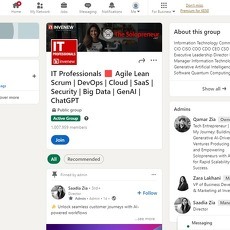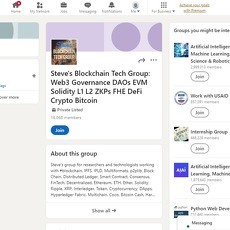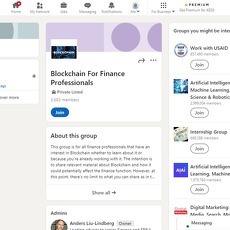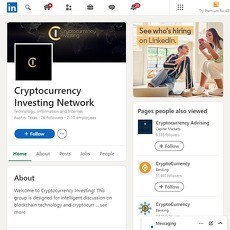
GLOBAL DIGITAL PROJECTS, INSIGHTS & NEWS: Innovation, Financial, FinTech Bitcoin Ethereum Blockchain Review
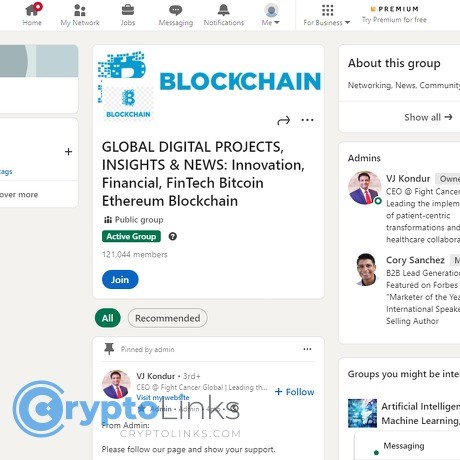
GLOBAL DIGITAL PROJECTS, INSIGHTS & NEWS: Innovation, Financial, FinTech Bitcoin Ethereum Blockchain
www.linkedin.com
GLOBAL DIGITAL PROJECTS, INSIGHTS & NEWS: Full Review Guide – Is This LinkedIn Crypto Group Worth Your Time?
Ever catch yourself scrolling through endless crypto posts and thinking, “Okay, but where’s the actually useful stuff?”
One minute you’re reading a smart thread about Bitcoin and macroeconomics, the next minute someone is shilling a coin named after a frog, a dog, or a random fruit. It’s chaotic. And if you’re trying to learn, invest responsibly, or build a serious career around blockchain, that chaos isn’t just annoying — it’s dangerous.
That’s where the LinkedIn group “GLOBAL DIGITAL PROJECTS, INSIGHTS & NEWS: Innovation, Financial, FinTech Bitcoin Ethereum Blockchain” steps in and says: “Let’s try to be the grown‑up room.”
In this guide, I’m going to walk you through what this group tries to solve, who it’s actually useful for, and how it can fit into a smart, realistic crypto strategy — whether you’re starting with $100 or already working in finance or tech.
By the time you finish, you’ll know if this is a group you should join… or just another notification you’ll happily ignore.
The core problems crypto learners & investors face today
Let’s be honest: the biggest problem in crypto right now isn’t “not enough information.” It’s the opposite.
You’re hit with:
- Thousands of coins and tokens.
- Endless news feeds, blogs, YouTube channels, and “experts.”
- Shill posts, fake promises, and charts that only show the part where everything goes up.
Researchers have actually looked at this kind of thing. Studies on retail trading behavior in crypto and stocks show that when people are bombarded with noisy information and hype, they’re more likely to chase trends, overtrade, and lose money. It’s not a knowledge problem — it’s a signal problem.
Crypto today feels like trying to learn investing by walking into the loudest casino in Vegas.
Too much noise, not enough signal
If you’ve tried to “get serious” about crypto, you’ve probably hit at least one of these walls:
- You don’t know who to trust. One influencer says Bitcoin is going to $1M, another says it’s going to zero. You’re not sure if they’re trading against you while you’re watching.
- Every project sounds like “the future.” DeFi, Web3, GameFi, AI + blockchain, real‑world assets, CBDCs — everything is positioned as revolutionary. But which of these are actually being used in real projects and partnerships?
- Your feeds are full of memes and tribal wars. On many platforms, especially anonymous ones, it’s 80% jokes and 20% real insight. Fun, yes. Useful for a real strategy? Not so much.
The result: it’s incredibly hard to tell the difference between real innovation and pure marketing spin.
“Is $100 enough?” and other questions that quietly paralyze beginners
If you’re just starting out, your questions are probably simple and very human:
- “Is $100 even worth putting into crypto?”
- “Should I just buy Bitcoin? Or Ethereum? Or that cheap coin everyone’s talking about?”
- “Can I actually learn this stuff on my own, or do I need some expensive course?”
These sound basic, but they’re exactly where many people get stuck for months.
Here’s what usually happens:
- You have $50–$500 you’re willing to risk.
- You start searching around. You see ten different “top 10 altcoins for 2025” videos.
- Someone on social media says, “You’ll never make it with only $100, go all in or don’t bother.”
- Another person says, “Just pick the cheapest coin — it has more room to grow.”
Under pressure, people often skip the boring part (learning) and rush into a coin because it’s trending. Then, when they inevitably see ‑40% on their screen, they quit — not just the coin, but the entire idea of learning crypto.
That’s a tragedy, because in reality:
- $100 is perfectly fine to start — not to get rich, but to learn with a small, controlled amount.
- What matters most early on is your education curve, not your portfolio size.
- The difference between a random Telegram tip and a professional discussion can literally be the difference between losing $100 blindly and using it as tuition for a real skill set.
Even professionals struggle to find grown‑up crypto conversation
This isn’t just a beginner problem. I see it with people who work at:
- Banks and payment companies.
- Consulting firms and big tech.
- FinTech startups and B2B SaaS platforms.
They’re not asking “What is Bitcoin?” anymore. They’re asking:
- “What does tokenization actually change for capital markets?”
- “Which CBDC pilots are serious and which are just PR?”
- “How are regulators in Europe vs the U.S. treating DeFi and stablecoins?”
When these people look for content, they often land in noisy spaces full of:
- Memes and price predictions with no data.
- Anonymous accounts arguing, not discussing.
- Zero context on how this all fits into real‑world finance and regulation.
That’s why a lot of serious professionals quietly move their crypto/info hunting to platforms where their real name and job are visible — because it naturally raises the quality of conversation.
Promise: turn one LinkedIn group into a signal hub, not a time sink
So here’s the big question this review is built around:
Can one LinkedIn group actually help you cut through the noise and become a reliable hub for serious crypto and FinTech insight?
The group we’re looking at — “GLOBAL DIGITAL PROJECTS, INSIGHTS & NEWS: Innovation, Financial, FinTech Bitcoin Ethereum Blockchain” — is trying to be exactly that:
- A place for global digital transformation stories, not just coin pumps.
- A mix of Bitcoin, Ethereum, FinTech, banking, and blockchain infrastructure in one feed.
- A community tied to real LinkedIn profiles, not burner accounts.
By the time you’re done reading this whole guide, you’ll know:
- What this LinkedIn group actually offers in terms of content and connections.
- Whether it matches your goals — learning, networking, deal flow, career, or all of the above.
- How to use it as a tool in a safe and realistic crypto journey, instead of letting it become another distracting feed.
I’m not here to hype this up as some magic shortcut. No group, no channel, no newsletter can replace your own research and discipline. What I’m interested in is simple:
Does this community offer enough signal to justify your attention in a world where attention is your most valuable asset?
Who this review is really for
To make this actually useful for you, let’s be clear about who benefits most from a group like this.
1. Curious beginners with $50–$500 to start
If you’re at the “watching YouTube, reading a few blogs, maybe own a tiny bit of BTC or ETH” stage, this group can be:
- A way to see how professionals talk about Bitcoin and Ethereum — not just influencers.
- A constant reminder that crypto is part of a bigger financial and tech story, not a lottery ticket.
- A source of educational articles, reports, and analysis you might never find on TikTok or Reddit.
For someone starting with $100, exposure to this kind of thinking can completely shift your approach from “Which coin will 100x?” to “How do I build real knowledge and not get wrecked?”
2. Active crypto investors who want quality macro & FinTech news
If you already own a portfolio and check the markets every day, you probably don’t need basic definitions. You need:
- Signals on regulation, institutional adoption, and global projects.
- Context on how Bitcoin and Ethereum fit into macro trends like inflation, interest rates, or tech regulation.
- Insight into what banks, payment giants, and governments are actually doing, not just saying.
In that case, a LinkedIn group built around innovation, finance, and blockchain can be a helpful top‑layer filter: instead of reading 50 random news stories, you see what serious people in the space think is worth sharing.
3. Builders: devs, founders, and marketers in Web3, DeFi, and FinTech
If you’re building something — protocol, product, SaaS tool, wallet, analytics platform — your needs are different again:
- You want to know which infrastructure, partners, and use cases are getting traction.
- You care about case studies and real adoption, not just token hype.
- You’re looking for investors, collaborators, early users, and talent.
For you, a group like this is less about “What coin should I buy?” and more about “Who is working on interesting problems in my corner of the ecosystem?” LinkedIn is uniquely good at that because you see job roles, companies, and mutual connections right next to someone’s opinion.
4. Professionals from banks, payments, and consulting
Finally, there’s a big and fast‑growing segment: people working in more traditional industries who know digital assets aren’t going away and don’t want to be left behind.
Think of:
- Bankers watching CBDCs and digital asset custody.
- Payment specialists tracking stablecoins and cross‑border settlement.
- Consultants and strategists advising clients on “blockchain adoption.”
These people often use LinkedIn as their main professional news feed already. For them, a focused group like this can be:
- A way to keep up with crypto without leaving their professional context.
- A source of reports, pilots, and case studies they can actually share internally.
- A channel to quietly explore career shifts toward FinTech/Web3 without living on Telegram all day.
Each of these groups — beginners, active investors, builders, and traditional professionals — will use the same LinkedIn group in completely different ways. That’s a feature, not a bug. The question is whether the content is strong enough to support all of them without turning into yet another noisy feed.
How this guide is structured (so you can skim smart)
I know your time is limited. You don’t need another 5,000 words of random thoughts — you need a clear map.
Here’s how the rest of this review is set up, so you can jump straight to what matters most to you in the upcoming sections:
- First, we’ll look at what this LinkedIn group actually is, how it works, and what makes it different from Telegram, Discord, or X.
- Then, we’ll break down the real content inside: Bitcoin, Ethereum, DeFi, global digital projects, reports, and thought leadership — and who each type of content really helps.
- After that, we’ll get practical: how to use this group to actually learn, build a strategy, and network, whether you’re starting with $100 or already deep into crypto.
- Finally, we’ll talk about strengths, weaknesses, who should join, who can skip, and answer common questions like:
- “Is $100 enough to start?”
- “What could be the next Bitcoin‑like theme?”
- “Can I really learn crypto by myself using communities like this?”
If you’re the kind of person who likes to skim, that structure is your shortcut. If you prefer to read everything, you’ll get a full, honest picture before you decide whether to hit the “Join” button on LinkedIn.
Now the big question is: what exactly happens inside this group on a daily basis, and is it any different from the usual social media chaos you’re trying to escape?
Let’s take a closer look at that next…
What is “GLOBAL DIGITAL PROJECTS, INSIGHTS & NEWS” on LinkedIn, exactly?
This LinkedIn group with the long name – “GLOBAL DIGITAL PROJECTS, INSIGHTS & NEWS: Innovation, Financial, FinTech Bitcoin Ethereum Blockchain” – is not your usual anonymous crypto chat.
Think of it as a mix of:
- Professional networking hub – people post under their real names and real job titles.
- News and insight stream – curated links, trends, and project updates instead of meme spam.
- Global digital finance radar – not just coins, but the whole shift in money, payments, banking, and infrastructure.
That alone already makes it very different from the classic crypto haunts on Telegram, Discord, or X (Twitter).
On Telegram, you usually see anonymous avatars, 24/7 chatting, and a lot of “next gem” noise. On Discord, you get deep into specific communities, but it’s easy to lose the big picture. On X, the feed mixes serious research with pure engagement farming.
LinkedIn works in another way: your profile is tied to your career. If you post nonsense, it’s attached to your name, your company, and your future employer. That social pressure pushes discussions in a more serious direction.
In this group, you’ll often see:
- Founders sharing product launches or partnership news.
- Banking and payments professionals discussing regulation and digital assets.
- Analysts posting reports on Bitcoin, Ethereum, CBDCs, and tokenization.
It’s less “Wen Lambo?” and more “How will tokenization change capital markets over the next 10 years?”
“In a 2023 survey, 52% of financial professionals said they use LinkedIn as their primary channel to follow industry insights and thought leadership.”
That’s the energy you feel in this group: people who actually have something to lose if they post nonsense.
Group’s main focus and topics
The name is long for a reason. The group doesn’t just look at coins going up and down – it focuses on the entire digital finance shift. The main themes you’ll see again and again are:
Global digital transformation projects
These are real initiatives where companies, governments, or startups are changing how money, identity, or data moves.
For example:
- A post about a national digital ID platform tying into cross-border payments.
- A case study from a telecom company adding mobile wallets in emerging markets.
- Updates on infrastructure projects connecting traditional banks with blockchain rails.
FinTech and digital banking
Instead of pure “crypto maximalism”, you’ll see posts about:
- Neo-banks adding crypto services or stablecoins.
- Embedded finance – payments and lending integrated into non-financial apps.
- Open banking APIs and how they interact with blockchain-based services.
This is useful if you want to understand how your bank, payment provider, or favorite app might quietly integrate crypto under the hood.
Bitcoin, Ethereum, and leading crypto assets
Yes, the classics are here. But the lens is different: less “10x by Friday”, more “What does this asset mean for global finance?”
Typical posts include:
- Research on Bitcoin as an inflation hedge (with data, not just slogans).
- Ethereum updates – L2 scaling, staking, institutional access.
- Breakdowns of how big funds or companies are using BTC/ETH.
If you’re trying to make sense of whether BTC or ETH are worth even a small allocation, this kind of content helps you build a long-term view instead of just following short-term hype.
Blockchain infrastructure, enterprise use cases, CBDCs, and tokenization
This is where things get interesting if you care about real-world adoption.
- Enterprise blockchain: supply chain tracking, trade finance, settlement systems.
- CBDCs (central bank digital currencies): pilot projects from Europe, Asia, Africa, and the Americas.
- Tokenization: converting real-world assets – bonds, real estate, funds – into on-chain tokens.
There’s growing research suggesting tokenization could reach trillions in market value over the next decade. Groups like this help you see early signals: which institutions are experimenting, where pilots are running, what regulators are saying.
This combination is perfect if you want to understand not just what you can trade, but where the actual money, regulation, and infrastructure are heading.
If you’ve ever felt that pure price charts are only 20% of the story, this group tackles the other 80%: how Bitcoin, Ethereum, and blockchain sit inside the wider financial system.
Who typically joins this group
One thing that makes any community valuable is who is in the room. In this group, the mix of people tends to look like this:
FinTech founders and product managers
They’re building apps, wallets, payment platforms, or digital lending tools. When they post, it’s often:
- Announcements of new features or integrations (e.g., “We just added USDC payouts for freelancers”).
- Lessons learned from real launches and user feedback.
- Questions about regulation, compliance, or partnerships.
Blockchain project leads and developers
These are the people actually writing code, shipping smart contracts, or running infrastructure. You might see:
- Breakdowns of how they solved a technical challenge.
- Use cases for L2s, rollups, or cross-chain bridges.
- Posts about hackathons, grants, and open roles.
Crypto investors, analysts, and traders
Not the “anonymous avatar calling 100x microcaps” type – more like:
- Research analysts at funds or firms sharing public notes.
- Strategists commenting on macro trends (interest rates, regulation, ETFs).
- Investors highlighting themes they’re tracking – L2s, real-world assets, payments.
Bank, payments, and regulatory professionals
These are the people who work in:
- Traditional banks exploring digital assets.
- Payment processors integrating crypto rails and stablecoins.
- Compliance, legal, or policy roles looking at risk and regulation.
When they share or comment, you get a grounded view: what’s actually slowing things down, what regulators care about, where the real bottlenecks are.
Curious learners using LinkedIn as their main social feed
This group is often overlooked but very important. A lot of people aren’t on Telegram or Discord at all; they live on LinkedIn. For them, this group is:
- A safe starting point to follow Bitcoin, Ethereum, and blockchain without falling into spammy rabbit holes.
- A bridge between their current job (IT, marketing, consulting, finance) and the digital asset world.
Because members usually show their name, company, and role, there’s a natural quality filter. If a banking VP comments on a CBDC pilot, you know it’s coming from someone who actually sits in relevant meetings. If a founder talks about a failed experiment, it’s a real story, not made-up engagement bait.
This mix doesn’t guarantee every post is amazing, but it raises the average level of discussion compared to anonymous, anything-goes channels.
How the group works on a daily basis
Let’s talk about what your everyday experience looks like if you join.
1. Frequency and style of posts
The group runs in a steady, professional rhythm – not a firehose.
- Most days you’ll see several new posts: articles, reports, project updates, or opinion pieces.
- Many posts link to external sources: research from big consultancies, central bank papers, protocol blogs, or serious news outlets.
- Occasionally, members share their own content – whitepapers, product announcements, webinars.
A typical day might include:
- A link to a BIS or IMF paper on cross-border CBDCs.
- A blog post explaining a new Ethereum L2 scaling milestone.
- A FinTech partnership announcement (for example, a bank integrating a stablecoin on-ramp).
- An opinion thread on how MiCA or US regulation will affect exchanges.
2. Comments and discussions
LinkedIn groups have a specific style of interaction:
- Discussions are usually threaded and slower than chat apps – think replies over hours and days, not seconds.
- Many comments are from people sharing how a topic affects their sector: “We’re seeing the same thing in remittances” or “This lines up with what regulators told us last quarter.”
- There’s room for respectful disagreement: people often challenge each other with data, not insults.
You won’t get 500 comments under each post. Some posts will have strong engagement with thoughtful threads; others will be more like quiet “signal drops” you just bookmark for later.
This is normal for professional groups: the value comes from the quality of the few people who speak up, not the volume of noise.
3. What engagement you can realistically expect
When you start posting or commenting yourself, here’s what usually happens:
- Well-framed questions or insights can get attention from senior people you’d never randomly meet elsewhere.
- Some posts will feel ignored – that’s just how LinkedIn’s algorithm and timing work.
- Over time, as you comment consistently on high-signal threads, people start to recognize your name and send connection requests.
There was an internal LinkedIn stat mentioned a while ago that “only a small percentage of members actually post or comment regularly”. That works in your favor: even a few thoughtful comments per week can stand out in a group like this.
4. LinkedIn notifications as part of your workflow
One underrated advantage: you don’t need another app.
- Group posts show up in your LinkedIn feed and notifications.
- You can save posts, share them, or comment without leaving the platform you already use for work.
- When someone from the group reacts to your comment, it appears like any other LinkedIn notification – easy to manage.
Instead of bouncing between Telegram, Discord, X, and email, you can keep this group inside the same ecosystem where you handle hiring, networking, and your professional profile.
And there’s another subtle psychological advantage: when you scroll LinkedIn, your brain is already in “career and learning” mode, not “casino” mode. That alone can save you from a lot of reckless FOMO decisions.
“The best investors aren’t the ones with the fastest feed, but the ones with the cleanest signal.”
This group aims to be part of that signal. News, yes. Hype, not so much.
Now, knowing what the group is and who is inside is one thing. But what will you actually see in your feed once you join – especially around Bitcoin, Ethereum, DeFi, and global digital projects? That’s where things start getting really useful for your own strategy.
Let’s look at the actual content types you can expect – and how each one can help you, whether you’re starting with $100 or planning your next career move.
Content you’ll actually see: from Bitcoin & Ethereum to global digital projects
Scrolling a crypto group and seeing nothing but “100x soon” is exhausting.
What makes this LinkedIn group different is the type of content that actually shows up in your feed – it’s closer to a curated industry briefing than a random shill wall.
Let’s break down what you’ll really see once you’re inside, and what each content style actually does for you as an investor, learner, or professional.
Bitcoin & Ethereum: market insights vs blind hype
Inside the group, Bitcoin and Ethereum are not treated like lottery tickets. They’re treated like serious infrastructure and macro assets. You’ll see posts that ask, “What role does Bitcoin play if inflation stays sticky?” instead of “When moon?”
A typical week might include:
Macro Bitcoin pieces – links to research from firms like Fidelity Digital Assets, Glassnode, or ARK, breaking down:
- Bitcoin as “digital gold” and how it’s correlating with equities or gold right now
- On-chain data about long-term holders vs short-term speculators
- How ETFs, corporate treasuries, or regulations are shaping demand
Ethereum and scaling updates – posts around:
- Layer 2 growth (Arbitrum, Optimism, Base, zkSync, etc.)
- Staking data and institutional custody solutions
- Enterprise pilots using Ethereum or EVM-compatible chains
One example I liked: a member shared research that compared how a small Bitcoin allocation (1–5%) affected a traditional 60/40 portfolio over the last few years. The key takeaway wasn’t “get rich quick” – it was about risk-adjusted returns and volatility. That’s the kind of lens you want if you’re thinking beyond the next 24 hours.
This directly helps with that classic beginner question: “Is $100 enough to start with crypto?”
When you read about long-term holders, halving cycles, and macro narratives, you realise:
$100 is not about turning into $10,000 overnight. It’s about learning how this asset behaves.
You see posts where professionals allocate 1–5% of their portfolios, not 100% YOLO bets. That subtly teaches you that:
- Starting small is normal
- Surviving long enough to learn is more important than hitting a jackpot
There’s a big emotional shift when you read better content. Instead of feeling like you’re late and underfunded, you start to think, “I can use my $100 as tuition – not a lottery ticket.”
“In bull markets, everyone looks like a genius. In bear markets, education is the only thing that compounds.”
That’s the tone most Bitcoin/Ethereum posts lean toward here: perspective, not panic. And once you’ve seen that a few times, it changes how you approach every other part of crypto.
Next‑wave themes: DeFi, Web3, and “the next Bitcoin‑like” ideas
If you’re secretly wondering, “Okay, but what’s the next Bitcoin?” this is where it gets interesting. The group doesn’t usually push one magic coin. It tends to highlight sectors and use cases that serious builders and investors are watching.
Expect posts around:
DeFi protocols and models – not just token tickers, but:
- How lending/borrowing platforms work under the hood
- Case studies of protocol failures (like high-profile hacks) and what we learned about risk
- Discussions on liquidity, yields, and why “too good to be true” usually is
Web3 applications – think:
- NFTs with real-world rights (tickets, IP, memberships), not just pictures
- Decentralized identity and login solutions
- Creator tools that share revenue transparently on-chain
Tokenization & real-world assets (RWA) – posts on:
- Tokenized Treasury bills or bonds being used for on-chain yield
- Private credit, real estate, or commodities represented as tokens
- How banks and asset managers are piloting RWA platforms
When someone asks “What’s the next Bitcoin?” in that environment, the better answer you start hearing is:
- Bitcoin was a category creator. Expecting another Bitcoin is like expecting another “invention of the internet.”
The more realistic path is to look at
where value could accumulate next:
- Smart contract layers (like Ethereum) for programmability
- Layer 2 networks for scalability and cheaper transactions
- RWA tokenization and DeFi infrastructure for new financial rails
I’ve seen members share institutional reports on tokenization forecasts, where banks estimate trillions of dollars in assets could be tokenized by 2030. Whether they hit those numbers or not, it frames your thinking in a healthier way:
Instead of “Which random micro-cap might 100x?”, you start asking:
- “Which sectors are solving real problems?”
- “Which protocols or tools are actually getting enterprise or developer adoption?”
- “How early am I to a theme, not just a ticker?”
That’s the real edge: being early to a trend, not blindly early to a token.
Global digital & FinTech projects: beyond pure crypto
One thing I really like about this group: it doesn’t act like the world starts and ends with tokens. You’ll constantly see posts about the rails around crypto – the financial plumbing that actually lets money move.
Common themes:
Banking & payments transformation – articles on:
- Banks modernizing their tech stacks to support instant payments
- Partnerships between card networks and crypto companies
- Embedded finance (banking inside apps you already use)
CBDCs and digital currencies from central banks – discussions like:
- What the ECB, PBoC, or other central banks are testing with CBDCs
- How digital currencies could change cross-border transfers and remittances
- Privacy, control, and policy debates around state-issued digital money
RegTech, compliance, and KYC/KYB tools – posts on:
- Travel Rule solutions for crypto businesses
- Blockchain analytics used for AML and fraud monitoring
- How regulators are adapting (or failing to adapt) to digital assets
Why does this matter for you, even if you “just” want to invest a few hundred dollars?
You get context. Crypto stops being an isolated casino, and becomes part of a
bigger story about how money, identity, and value move around the world.
If you’re thinking about career or business opportunities, this is gold:
- Developers see where enterprises are actually experimenting
- Consultants and banking pros spot new service lines and products
- Founders can see pain points in payments, onboarding, or compliance
Put simply: this group makes sure you’re not that person who only knows meme coins but has no idea what’s happening with CBDCs, stablecoins, or instant payment networks. In a few years, that difference in understanding could be the difference between “I caught a random pump” and “I built a career in this space.”
Educational posts, reports, and thought leadership
The last big content pillar you’ll notice is pure education – the stuff that quietly compounds your understanding over time.
You’ll see:
Whitepapers and research notes – not just from crypto-native teams, but also:
- Consulting reports on blockchain in supply chains, trade finance, or capital markets
- Risk breakdowns of different DeFi strategies
- Studies on user adoption, UX bottlenecks, and security issues
Beginner-friendly explainers – posts like:
- “What is a hardware wallet and why should you care?”
- “How staking actually works, in normal language”
- “What is an L2, and why are gas fees cheaper there?”
Market overviews and risk frameworks – things like:
- Pyramids of risk (from BTC/ETH at the base up to experimental micro-caps)
- Checklists for evaluating new projects or protocols
- Case studies on what went wrong in famous crashes, hacks, or rug pulls
If you’re wondering, “Can I actually learn crypto by myself?” these posts are a big part of the answer.
Here’s how they help:
You’re not randomly Googling in the dark. You’re seeing what experienced people think is worth reading enough to share with their professional network.
You don’t just read resources – you see comments underneath:
- People agreeing, disagreeing, or adding nuance
- Practitioners pointing out what works in the real world vs on a slide deck
Over time, you start noticing patterns:
- Which risk factors show up again and again
- Which narratives are recycled every cycle
- Which metrics actually matter to pros (TVL quality, revenue, users, not just “community hype”)
Self-learning works when you have three things:
- Good sources – reports, guides, and explainers that aren’t written to sell you something shady
- Context – how smart people interpret those sources
- Repetition – seeing similar ideas in slightly different ways until they click
This group quietly provides all three. No one will hold your hand, but the raw material is there if you’re willing to read, save links, and follow threads.
And that raises the real question: if you’ve got all this content – macro Bitcoin insights, Ethereum scaling updates, DeFi and tokenization trends, global FinTech projects, and solid educational resources – how do you actually turn it into skill instead of just endless scrolling?
That’s where things start getting practical: what you actually do with what you see.
Ready to turn that feed into a personal learning engine and a smarter way to invest, even if you’re starting with just $100? Let’s look at that next.
How to use this LinkedIn group to actually learn crypto (not just scroll)
Most people join a crypto community, scroll for a week, like a couple of posts, then… nothing in their life changes.
The difference between someone who actually learns crypto and someone who just consumes headlines is simple:
The first person treats communities as a classroom and a lab. The second treats them as Netflix.
This LinkedIn group can be either one. It depends on how you use it.
Let’s turn it into your classroom and your lab.
For beginners: from $100 to a real crypto education
If you’re starting with $100–$300, your money is not your “ticket to riches”. It’s your tuition fee.
Think of the first 30–60 days as “crypto school” where you mostly pay with your attention, not your capital.
Here’s a simple way to use the group without getting dragged into hype.
Month 1: Read only – no trades, no FOMO
- Join the group and mute the urge to buy anything. For the first month, your only goal is to understand the language people use: volatility, L2s, gas fees, staking, custody, CBDCs, tokenization.
- Scroll with intention, not boredom. Each time you open LinkedIn, give yourself one small mission:
- Find one post about Bitcoin or Ethereum’s long-term role (not price predictions).
- Find one post about security (wallets, scams, regulation, risk).
- Find one post about real-world projects (payments, banks, CBDCs, tokenization, digital ID).
- Save and categorize posts. Use LinkedIn’s “save” feature and add simple tags in your own notes:
- “BTC – macro” for posts about Bitcoin as “digital gold” or store of value.
- “ETH – tech” for L2s, staking, upgrades, DeFi.
- “Security” for anything that talks about scams, wallets, KYC, regulation.
- “Real-world use” for posts showing how companies or governments are using or testing blockchain.
Notice what you’re not doing here: you’re not asking “Which coin should I buy?”
You’re asking something far more powerful: “Which topics do serious people keep returning to?”
Research from behavioral finance keeps showing the same pattern: new retail investors underperform not because they’re stupid, but because they act too quickly on noise and underestimate risk. One 2021 study on retail trading behavior showed that frequent, emotional trading is strongly linked to lower returns, especially in volatile markets like crypto.
So in Month 1, you do the opposite: you slow down.
When you finally buy your first $50 of BTC or ETH, you should already:
- Expect price swings of 10–30% without panicking.
- Understand that Bitcoin and Ethereum are networks and ecosystems, not lottery tickets.
- Recognize shill behavior: anonymous accounts, no real job, huge promises, no substance.
- Have at least a basic idea of self-custody and security (even if you’re still on a centralized exchange for now).
That alone already puts you ahead of a big part of the market, where people still throw $100 into the first TikTok or Telegram pump they see and wonder what went wrong.
“In crypto, your first goal is not to double your money. Your first goal is to not lose your curiosity to one stupid mistake.”
For self‑learners: build your learning path from group content
If you’re the type who likes to teach yourself, this group can be a live feed of “what to learn next.” But you need a simple system, or you’ll just keep scrolling.
Here’s one that actually works.
Step 1: Each week, pick 3–5 posts you don’t fully understand
- Maybe someone mentions “rollups” and you only half get it.
- Maybe there’s a discussion about tokenizing real estate or bonds.
- Maybe a bank report talks about “MiCA regulation in the EU” or “Basel rules for crypto exposure”.
Those posts are gold. They show where your knowledge gap is and what the real world is actually working on.
Step 2: Research those concepts outside the group
- Google the exact term from the post (e.g. “Ethereum rollups beginner guide”, “what is RWA tokenization crypto”, “what is MiCA regulation crypto EU”).
- Look up proper explainers on YouTube from channels that are educational, not shill-heavy. If they show charts and Lambos in the first 10 seconds, skip.
- Check if serious brokers, universities, or regulated exchanges have free short courses on that topic. Many do, especially on:
- Blockchain basics
- DeFi 101
- Crypto risk & security
- Institutional adoption & regulation
Educational research consistently shows that mixing “live” content (like social posts and discussions) with structured learning (courses, tutorials) increases retention and understanding, because you see concepts in theory and in practice.
Step 3: Keep a living knowledge base
It doesn’t have to be fancy. A Google Doc, Notion page, or even a notes app works. For each week:
- List the 3–5 concepts you picked from the group.
- Write a 2–3 sentence explanation in your own words. If you can’t explain it simply, you don’t really get it yet.
- Add 1 link:
- Either to a post from the group, or
- To an article / video that really clicked for you.
After a month, you’ll have a mini “crypto notebook” that’s 100% aligned with what the market is actually talking about, not some old syllabus from 2018.
Yes, you can absolutely learn crypto by yourself. You just need:
- A stream of good questions (the LinkedIn group).
- Decent sources to answer them (courses, articles, serious platforms).
- A place to collect and refine your understanding (your notes).
The group is your question generator and context machine. You’re responsible for the rest – and that’s where the growth happens.
For professionals & founders: networking and positioning
If you already work in finance, tech, consulting, or you’re building something in Web3/FinTech, you’ll use this group very differently.
For you, it’s less about “What is a blockchain?” and more about:
- Who here actually knows what they’re doing?
- Who might I eventually hire, partner with, or learn from?
- How do I show I’m not just another buzzword profile?
Here’s how to turn the group into a quiet growth engine for reputation, deal flow, and hiring.
Comment where it matters
- Forget “Nice post” comments. They signal nothing.
- Instead, pick 1–3 high-signal posts per week (research, real partnerships, thoughtful analysis) and add:
- A short, clear insight from your own experience.
- A data point (“We saw something similar with X clients / Y market”).
- A question that moves the discussion forward.
- People notice consistent, grounded comments far more than self-promotional posts.
Share useful, not flashy, content from your own work
- Case studies: “Here’s what we learned rolling out crypto payments in 3 countries.”
- Lessons: “3 mistakes we made with a DeFi integration and how we fixed them.”
- Signals: “We’re seeing more banks ask about X and less about Y – here’s why that might matter.”
Even simple, honest posts like “Things I wish I knew before building a crypto product for enterprises” tend to get good traction with professionals, because they’re hungry for real experience, not polished PR.
Connect privately with people who impress you
- If you see someone consistently posting solid analysis, don’t just like and move on.
- Send a connection request with a short note:
- “I’ve been following your posts in the group – especially your breakdown of XYZ. Happy to connect, I work on [your area] and would love to stay in touch.”
- This is how you quietly build a list of:
- Potential partners
- Future hires
- Mentors or peers you can spar with
Over time, the group can become:
- A lead source – people reach out because they see your comments and case studies.
- A hiring channel – you notice talent by how they think, not just their resumes.
- A reputation layer – when someone Googles you, they see a consistent pattern of smart, grounded contributions.
In a space full of noise, that’s a huge edge.
Turning insights into action (without getting rekt)
Now for the part that saves you money and headaches.
No matter how smart or senior someone looks in the group, their posts are not financial advice.
That includes:
- Charts with arrows to the moon.
- Predictions about “the next 100x”.
- Confident-sounding macro takes.
The group is amazing for ideas. It’s terrible if you treat it as a signal service.
Here’s a simple filter to run before you act on anything you see.
1. Who is saying it?
- Is it a real person with a real job history, or a half-empty profile?
- Do they consistently post research, or only hype?
- Do they acknowledge risk and uncertainty, or do they sound 100% sure about everything?
Trust people who are specific, transparent, and okay with saying “I don’t know.” Be very careful with “gurus” who have zero skin in the game beyond their follower count.
2. Is there any evidence behind the claim?
- Look for links to:
- On-chain data
- Official project docs and GitHub
- Reputable research reports or news outlets
- Partnership announcements from both sides (not just one project claiming it)
- If a post is making big claims with no references, no data, and no nuance, treat it as marketing, not insight.
3. Can you cross‑check it in 10–15 minutes?
- Search the project on independent news sites.
- Check if on-chain analytics or explorers show actual usage (active addresses, volume, real liquidity).
- Look for critical takes, not just positive ones. If nobody is critiquing it, either it’s brand new or nobody cares yet.
This extra 10–15 minutes is exactly what most people skip. That’s also why most people get hurt by the same patterns, again and again.
4. Decide your action type
After all this, everything you see in the group should fall into one of three buckets:
- Learn: “Interesting, I’ll add this to my notes and keep watching the theme.”
- Test small: “Maybe I’ll experiment with $10–$20 just to understand how this works.”
- Ignore: “Too hypey, too complex for me right now, or not aligned with my goals.”
That simple separation is how you use communities as an idea sourcing tool, not as a remote control for your portfolio.
Because the truth is, the group will expose you to powerful ideas and real opportunities… but it will also expose you to noise, overconfidence, and the occasional grifter. Your filter is what turns it into an advantage.
Now that you know how to actually get value from the group – for learning, for networking, and for staying safe – the obvious question is:
Is this particular LinkedIn group strong enough to deserve a spot in your daily routine, or are there flaws that might waste your time?
Let’s take a brutally honest look at what it does well, where it falls short, and who will genuinely benefit from joining in the next part…
Strengths and weaknesses of the group (honest review)
What the group does really well
Let’s start with the good stuff, because that’s probably why you’re here: is this LinkedIn group actually useful, or just another “blockchain thought leader” echo chamber?
The biggest strength is the professional setting. This isn’t a random Telegram channel where “CryptoKing420” tells you to buy a coin he secretly holds 80% of. On LinkedIn, you see:
- Real names
- Real job titles
- Real companies and track records
That instantly changes the tone. When a Head of Digital Transformation at a bank comments on CBDC pilots, it carries a different weight than an anonymous avatar yelling in all caps.
In practice, the group shines in a few important areas:
Macro and long‑term narratives
You’ll often see posts and shares around:
- How Bitcoin fits into inflation, monetary policy, or geopolitics
- Ethereum’s role in tokenization and institutional DeFi
- Regulatory shifts and how they might shape the next 3–5 years
Think of it as a lens on the “big picture” rather than “what will pump tomorrow”. This is the kind of content McKinsey or BCG consultants quietly read before they brief a client.
Real projects and partnerships instead of vaporware
You’ll regularly see:
- FinTech startups sharing pilot results or partnership announcements
- Banks talking about live blockchain experiments, not just PR fluff
- Payment companies showing how they’re testing stablecoins or digital wallets
For example, it’s common to spot posts about things like a major bank testing tokenized deposits, or a PSP experimenting with on‑chain settlement. That’s quite different from “we’re launching the next Doge” nonsense.
Enterprise and B2B angles most crypto Twitter never touches
If you care about the intersection of:
- Blockchain
- Payments and banking
- Compliance and regulation
- Cross‑border trade and settlement
…this group gives you material you rarely see in meme‑driven spaces. Posts about tokenizing invoices, improving KYC with on‑chain identity, or using permissioned chains for trade finance aren’t “sexy”, but that’s where a huge amount of real money is quietly moving.
Signal over memes
There are no moving dog GIFs every 10 seconds. The rhythm is slower, but the signal per post is much higher. Think of it like comparing:
- A noisy trading floor (Telegram/Discord) versus
- A good industry conference hallway (LinkedIn group)
One tires you out. The other actually gives you ideas.
“In a world of endless noise, the rare advantage is knowing where to listen – not just what to buy.”
This group is far from perfect, but as a listening post for serious crypto, FinTech, and financial innovation talk, it punches above its weight.
What might annoy you or limit the value
Now the flip side. Every platform has friction. LinkedIn is no exception, and this group inherits some of that personality.
It’s not chatty like Discord or Telegram
If you’re used to firing off a question like “GM, where do I stake this token?” and getting replies in 30 seconds, you’ll probably feel the pace here is slow.
LinkedIn culture is different. People:
- Read between calls and meetings
- Post less often, but usually with more context
- Avoid rapid‑fire back‑and‑forth comment battles
So you won’t get that “group chat” feeling. You’ll get more of a curated feed with occasional deeper comment threads.
Not ideal for deeply technical debugging or code talk
If you’re trying to:
- Fix a Solidity bug
- Debate gas optimizations
- Compare zk‑proof implementations line by line
…you’ll probably feel under‑served. Some members are technical, but LinkedIn in general leans more towards business, product, regulation, and strategy conversations.
Some posts will feel like corporate buzzword salad
Let’s be honest: LinkedIn is also home to phrases like “synergistic blockchain‑enabled digital transformation at scale”. You will see:
- Self‑promotional posts framed as “thought leadership”
- Deck screenshots with lots of arrows and circles but no hard numbers
- Updates that say a lot without really saying anything concrete
The good news is: this is usually easy to filter. Once you follow a few people who consistently share practical or data‑backed insights, your personal group feed gets cleaner over time.
The usual self‑promo and link drops
Any open community attracts:
- Founders dropping links to their product launches
- Agencies pushing webinars or lead magnets
- Random “we just listed on XYZ exchange” announcements
Some of these are genuinely useful – real products, real pilots, real research. Others are just noise. A good habit is to check:
- Does the post provide any insight beyond “look at us”?
- Is there data, a case study, or a real customer story?
- Is the profile behind it clearly active and credible?
If not, keep scrolling. You’re in control of your feed more than you think.
If you crave trading signals or meme coin hype, you’ll be bored
There’s almost no:
- “Buy this now 100x” style content
- Chart spam with endless indicators
- “Next Pepe” or “this will moon by Friday” posts
Depending on your goals, that’s either a huge plus or a deal‑breaker. This group is about understanding systems, not chasing lotto tickets.
So yes, there’s some corporate fluff, slower engagement, and the occasional spammy post. But once you accept LinkedIn’s nature, you can work around most of these limits by being selective about what you follow and engage with.
Who should definitely join – and who can skip
This is where it gets practical. Not every crypto community is for everyone, and that’s fine. Here’s who tends to get the most value out of this group.
You’re likely a great fit if:
You care about Bitcoin/Ethereum and how they plug into the wider financial system
You’re not here just for price talk. You’re curious about:
- How banks might use stablecoins or tokenized deposits
- How Ethereum might underpin real‑world asset markets
- How regulators are shaping what’s allowed and what’s not
You work in – or want to move into – FinTech, banking, consulting, or Web3
Maybe you’re:
- In a bank, trying to understand what your “digital assets” team is actually doing
- At a startup, looking for enterprise angles and real partnership examples
- In consulting, needing a constant drip of insights to sound sharp with clients
- In Web3, wanting to talk to people who understand both smart contracts and balance sheets
In all of these cases, the group acts like a quiet radar for where serious people are moving, hiring, and building.
You already use LinkedIn as your main professional network
If LinkedIn is open on your laptop all day anyway, this group is almost a free upgrade:
- Relevant posts show up in your existing feed
- You don’t have to install another app or join another noisy channel
- Networking is just a connection request away when someone’s post impresses you
You might want to skip it if:
You can’t stand LinkedIn
Some people just don’t like the platform – the tone, the “humblebrag” culture, the corporate polish. If every LinkedIn notification raises your blood pressure, forcing yourself into a LinkedIn group probably isn’t the move.
You only want short‑term trading calls
If your current strategy is purely:
- Looking for daily scalp trades
- Hunting for low‑cap gems against all odds
- Living inside TradingView and meme channels
…this group will feel slow and “too high level”. It’s like reading a long‑term investment report when you really just want a 5‑minute scalp – wrong tool for the job.
You prefer anonymous, chaotic, high‑speed chats
Some people learn best from messy, fast conversations with no filters. Think:
- Anonymous Discord servers
- Reddit comment storms
- Ultra‑casual Telegram groups
This LinkedIn group is calmer, more curated, and attached to real identities. If that kills the fun for you, it’s okay to skip and stick to platforms where you feel more at home.
But here’s the interesting part: even if the group isn’t your “home base”, it can still be a powerful add‑on if you use it the right way.
The real question is not just “Should I join?” but “If I do join, how do I plug this into the rest of my crypto toolkit so it actually moves me forward?”
That’s where things start to get strategic – and that’s exactly what comes next. How would your learning, investing, or career plan change if this group became your quiet “narrative radar” rather than just another feed to scroll through?
How this LinkedIn group fits into your wider crypto toolkit
One professional LinkedIn group – no matter how good – will never be your entire crypto edge. The real power comes when you plug this group into a simple “crypto stack” you control: news, data, education, and community all working together.
Think of the LinkedIn group as the smart layer that tells you what matters right now, and then you use other tools to check, verify, and act.
Use the group as your “news and narrative” layer
Every crypto decision you make sits on top of a story:
- “Institutions are coming into Bitcoin.”
- “Real‑world assets are moving on‑chain.”
- “Regulators are tightening or loosening the rules.”
This LinkedIn group is where you constantly see those stories being built – by people who have real jobs, real titles, and reputations attached to their names.
Here’s how I personally use a group like this as my narrative layer:
- Scan for big-picture signals, not noise.
When you see the same topic pop up from different people – say, “tokenized treasury bills” or “MiCA regulation in Europe” – that’s a hint the narrative is heating up. In 2023, for example, tokenized T‑bills quietly passed $600M in value locked, and groups like this were discussing the major players long before retail traders started talking about it.
- Watch what serious professionals care about.
If a Head of Digital Assets at a bank shares a report on CBDCs, that’s very different from an anonymous account shilling a coin on X. LinkedIn’s real‑identity layer gives you an automatic credibility filter. That doesn’t mean they’re always right – but it does mean you can see which themes are commanding attention in boardrooms.
- Turn posts into starting points – never final answers.
Say someone shares a thoughtful thread on Ethereum restaking and liquid staking tokens. Instead of “Oh, I should buy that token,” the smarter flow is:
– Bookmark the post.
– Check price and liquidity on a charting site or exchange.
– Look at on‑chain data: is usage actually growing, or is it pure narrative?
– Read at least one neutral research report before touching your money.
The group gives you the “what’s happening”. Then you plug in your own tools for the “what does this mean for me?”:
- Price data: exchanges, CoinGecko, CoinMarketCap – places where you can see actual volume and history, not just headlines.
- On‑chain analytics: platforms like Glassnode, Nansen, IntoTheBlock, etc., that show active addresses, flows, and real usage.
- Education: structured courses and explainers that translate buzzwords like “ZK rollups” or “L2 liquidity fragmentation” into something your brain – and later your portfolio – can use.
When you connect these layers, you avoid the classic trap: acting on a story you don’t fully understand.
Other resources that pair well with this group
The people who progress fastest in crypto rarely rely on just one channel. They build a “learning stack” that looks something like this:
- 1. Professional signal (this group).
Your window into what founders, bankers, regulators, and builders are thinking about. That’s your narrative layer.
- 2. Curated resource hubs.
Instead of chasing random links on social media, use curated collections where someone has already filtered the junk out. On Cryptolinks, I constantly track and review:
- Beginner‑friendly learning platforms.
- Crypto trading and investing education sites.
- News aggregators and research dashboards.
- Wallets, explorers, tax tools, and more.
This way, when you see a topic in the LinkedIn group – say, “DeFi lending risks” – you can jump straight to a vetted guide or course that explains the mechanics behind it, instead of guessing.
- 3. Focused news feeds.
You don’t need 20 news sites. You need 2–3 reliable ones plus one good aggregator. Many group members will share links from places like The Block, CoinDesk, Messari, or official project blogs. Use those as “anchor sources” and ignore random Medium posts that look like they were written yesterday by a new account.
- 4. Long‑form education.
Once you notice you keep seeing the same theme (e.g., “Ethereum L2s” or “Bitcoin halving cycles”), that’s a sign to go deeper:
- Take a short structured course from a reputable platform.
- Read one or two full reports instead of 20 short tweets.
- Use free academies from exchanges or brokers as a starting point, then cross‑check with independent content.
One mindset shift that helps: treat the group as your “radar,” not your library. It shows you where to look next. Your real understanding comes from the tools and resources you plug in behind it.
Turning community insights into a long‑term plan
Most people scroll, nod, and forget. A small percentage quietly turn what they see in communities into a clear plan – and those are usually the ones still around five years later.
Here’s a simple way to do that with this LinkedIn group as one of your main inputs.
- 1. Turn posts into a written strategy – even if you’re starting with $100.
Whenever a post hits you – a Bitcoin macro thread, an Ethereum roadmap update, a CBDC case study – ask yourself: “Does this change how I should behave with my money?”
Over time, write down a one‑page plan:
- What % you want in BTC, ETH, stablecoins (if any).
- What time horizon you’re thinking in (months vs years).
- What you will never do (e.g., no leverage; no meme coins; no chasing random Telegram calls).
Studies on retail trading behavior show that people who pre‑commit to rules and time horizons tend to panic less and churn less, which usually translates into better results than constant impulsive tweaking.
- 2. Build a “skills to learn” list from what the group is talking about.
Instead of feeling overwhelmed, use the group as a map. When you keep seeing:
- “DeFi risk management”
- “Self‑custody and hardware wallets”
- “Regulation and tax reporting”
…turn each of those into a skill line in your notes:
- DeFi basics – how lending/borrowing protocols actually work.
- Security – how to store coins safely and avoid common scams.
- Compliance – basic idea of how taxes work in your country.
Then, for each skill, link 2–3 trusted resources (a course, a guide, a podcast). The next time someone in the group mentions “smart contract risk,” you’re not lost – you’re already halfway there.
- 3. Turn the group into a real network, not just a feed.
The quiet power move is this: use the group to find 10–30 people you can actually talk to, not just “follow.”
- Notice who posts the most helpful comments under threads that interest you.
- Send a short, honest connection request: “Saw your comments on X topic in the group – I’m learning about Y and found your view useful. Would love to stay connected.”
- Once in a while, ask a specific, respectful question, not “Teach me everything about crypto.”
Over time, those 10–30 people can become:
- Peers you bounce ideas off before making a move.
- People who flag red flags you might miss.
- Potential collaborators, employers, or even investors.
The point is simple: the group isn’t just a stream of posts. It’s raw material for three things that actually change your trajectory:
- A written investing approach that keeps you from reacting emotionally.
- A clear roadmap of skills, so you’re always leveling up, not standing still.
- A small, real network of humans you can reach out to when something feels unclear.
Now, here’s the interesting part: once you start doing this, certain questions naturally pop up…
Is $100 really enough to start? Is there any realistic “next Bitcoin‑like” angle worth watching? And can you honestly teach yourself this whole world without a mentor – just using groups, resources, and small experiments?
Those are exactly the questions I’m going to tackle next – along with how this LinkedIn group fits into each answer. Ready to see what a sane, realistic starting path actually looks like?
FAQ: common questions people ask about crypto – and where this group fits
Let’s finish by clearing up some of the questions I see over and over again from beginners, professionals, and even “quiet lurkers” in crypto communities.
These are exactly the kind of questions that pop up in your head while you scroll LinkedIn or news sites… but you don’t always ask them out loud. I’ll answer them straight, and show how the LinkedIn group “GLOBAL DIGITAL PROJECTS, INSIGHTS & NEWS: Innovation, Financial, FinTech Bitcoin Ethereum Blockchain” can actually help.
Is $100 enough to start in crypto?
Short answer: yes — as long as you see that $100 as a tuition fee for your crypto education, not a lottery ticket.
Here’s how I’d think about it:
- You can buy fractions of Bitcoin or Ethereum. You don’t need to buy a whole BTC or 1 ETH. On most exchanges, you can start with $10–$20.
- The goal with $100 is learning with real consequences, not turning it into $10,000. When you have a tiny bit of your own money at stake, you’ll pay more attention to security, fees, and volatility.
- Fees matter a lot at this scale. Paying a $12 network fee on a $50 transaction is just bad math. Use:
- Centralized exchanges with low fees to start (as long as they’re reputable and regulated in your region).
- Cheaper networks if you test transfers (e.g. Bitcoin via Lightning on supported platforms, or Ethereum L2s like Arbitrum/Optimism, or even other low-fee chains).
There’s a useful mental shift here:
Stop asking “Is $100 enough to get rich?” and ask “Is $100 enough to learn how this actually works without wrecking myself?”
From research done by several European and US regulators, a huge percentage of retail traders lose money in speculative trading products, mainly because they jump in before they understand basic risk. The same pattern repeats in crypto. Starting with a small amount and a clear goal of learning puts you outside that “casino crowd”.
Where the LinkedIn group helps:
- As you read posts about Bitcoin’s macro story, Ethereum’s roadmap, and regulatory news, you start to see why people care about these assets long term instead of just chasing 100x coins.
- When someone shares a project, you can click through to their profile. Is it a real person at a real firm, or a throwaway account shouting “next gem!!!”? That habit alone can save you from wasting that $100 on pure hype.
- You can quietly watch how more experienced members think about risk, cycles, and time horizons. That mindset is worth far more than the $100 itself.
If you use that first $100 as a structured test — learn how to buy, secure, maybe move a small amount, and track it for a few months — it’s absolutely enough to get started the right way.
What could be the “next Bitcoin‑like” opportunity?
This is the question everyone secretly wants answered, right?
Here’s the honest take: the odds of another asset repeating Bitcoin’s exact story are tiny.
Bitcoin was first, emerged out of the 2008 crisis, had a mysterious creator, and grew from nerd forums to global asset over more than a decade. That mix of timing, tech, and narrative is extremely hard to copy.
But that doesn’t mean there are no big opportunities. They just look different. Instead of one single “next Bitcoin”, what you have are strong themes and infrastructure plays:
- Ethereum and smart contract platforms
These power DeFi, NFTs, tokenization, on-chain gaming, and more. You’re not just betting on a coin, but on a programmable financial and application layer.
- Layer 2 scaling
Rollups and L2s (Arbitrum, Optimism, Base, etc.) aim to scale Ethereum’s throughput while inheriting security. Think of them as toll roads built on top of a major highway.
- DeFi infrastructure
Lending, borrowing, DEXs, liquidity protocols. Many will come and go, but the concept of on-chain financial primitives is a powerful long-term trend.
- Real-world asset tokenization
Tokenized treasuries, bonds, real estate, funds. Large institutions are already experimenting here. For example, several major asset managers have launched tokenized Treasury funds on public chains — that’s not a meme; that’s Wall Street quietly testing new rails.
- Payment rails and stablecoin infrastructure
Stablecoins already settle more value on-chain than many card networks process in volume. Companies building compliance layers, wallets, and APIs around this space may have “picks and shovels” potential.
Rather than hunting for one magic asset, it’s smarter to ask:
- Which sectors are getting real adoption, regulation attention, and institutional interest?
- Which projects actually ship code, sign partnerships, and survive bear markets?
Where the LinkedIn group helps:
- You see which themes professionals actually talk about. If bankers, FinTech leads, and policy people are all posting about tokenization or CBDCs, that’s a signal those areas matter.
- When a project keeps showing up because they announce real collaborations (with banks, payment companies, or regulators), you can note that down as “serious research material,” not just a random ticker symbol from a Telegram shill group.
- You get a sense of the long-term narratives, which is where the bigger, slower opportunities usually sit.
The “next Bitcoin-like” opportunity is probably a combination of these trends, not a single coin that appears out of nowhere on a list of top gainers.
Can I really learn crypto by myself?
Yes, you can — but “by yourself” shouldn’t mean “alone in a corner with 100 open tabs and no feedback.”
The people who actually stick around in crypto long term usually have three things:
- Curated information – not just whatever the algorithm throws at them.
- Some structure – a plan for what to learn first and what to ignore for now.
- A community lens – places where they can see how smarter people interpret the same news.
Self-learning in crypto could look like this:
- Phase 1: Foundations
Learn what Bitcoin is, what Ethereum is, how private/public keys work, how to use a wallet, basic security rules. This can be done via free guides, YouTube, and high-quality beginner courses.
- Phase 2: Hands-on practice
Put a small amount (like that $100) into BTC/ETH on a reputable platform. Learn to withdraw to your own wallet, send a small transaction, and read a blockchain explorer.
- Phase 3: Context and narratives
Start following how crypto fits into the wider financial system: regulation, institutional adoption, DeFi, CBDCs, tokenization. This is where professional communities and news sources shine.
- Phase 4: Specialization
Maybe you lean into trading, maybe into DeFi, security research, NFTs, or building products. You deepen that lane with focused courses, docs, and more technical communities.
There are studies from behavioral finance showing that people learn better when they see others reasoning in public and can compare perspectives, rather than just reading facts alone. Crypto is no different: watching pros debate CPI numbers, regulatory changes, or protocol upgrades teaches you how to think, not just what to think.
Where the LinkedIn group helps:
- It gives you that social layer without throwing you into anonymous chaos. People post under their real names and companies, so you see actual professional incentives and reputations at work.
- You can collect a list of high-signal profiles whose posts teach you something. Over time, that becomes your personal “mini faculty” for crypto + FinTech + macro.
- If you’re stuck on a concept, you’ll often find someone sharing a report, explainer, or case study that fills that gap. You don’t need to message anyone; you just need to pay attention.
So yes, you can absolutely learn crypto on your own — as long as you build a small framework, use communities like this group for context, and keep your real-money exposure small until your understanding catches up.
Wrapping it up: is this LinkedIn group worth joining?
Let’s keep this simple.
If you want to understand how global digital projects, FinTech, Bitcoin, Ethereum, and blockchain mesh together in the real economy — not just on price charts — this group is worth your time.
Here’s what it realistically gives you:
- A professional signal feed – posts and discussions from people anchored in banking, payments, Web3 startups, consulting, and tech.
- A sanity check for narratives – you see what serious players actually care about (CBDCs, tokenization, regulation, infrastructure), which helps you filter the noise from more speculative spaces.
- A soft on-ramp to networking – you can start by reading, then liking, then leaving thoughtful comments, and later connect with a few people whose work you respect.
What it will not do for you:
- It won’t hand you guaranteed winning trades or secret “alpha.”
- It won’t replace proper research, structured courses, or your own note-taking.
- It won’t fix bad habits like over-leveraging or chasing every shiny coin you see on other platforms.
So here’s a simple way to use it:
- Join the group and don’t post anything for the first week or two. Just watch.
- Save posts that:
- Explain something clearly (e.g. a CBDC pilot, a new Ethereum upgrade, a DeFi risk report).
- Show real-world projects, not just marketing.
- Come from people with obvious domain experience.
- After a few weeks, start:
- Asking one or two specific questions in the comments under high-signal posts.
- Connecting with people whose work lines up with your own goals (career moves, building a product, or simply leveling up your understanding).
And don’t treat this group as your entire world. See it as one more reliable signal source in your broader stack:
- Use the group for narratives, case studies, and professional context.
- Use price trackers, on-chain analytics, and wallets for hands-on practice.
- Use curated resources and tools you’ll find on Cryptolinks.com and across the main site for structured learning and safer exploration.
If you approach it like that — curious, skeptical, and focused on learning — this LinkedIn group can become a quiet but powerful edge in your crypto journey. Not a shortcut. A smarter path.
CryptoLinks.com does not endorse, promote, or associate with LinkedIn groups that offer or imply unrealistic returns through potentially unethical practices. Our mission remains to guide the community toward safe, informed, and ethical participation in the cryptocurrency space. We urge our readers and the wider crypto community to remain vigilant, to conduct thorough research, and to always consider the broader implications of their investment choices.