Information Technology: Developer, Engineer, Analyst, Technician, Scientist | Blockchain | Metaverse Review
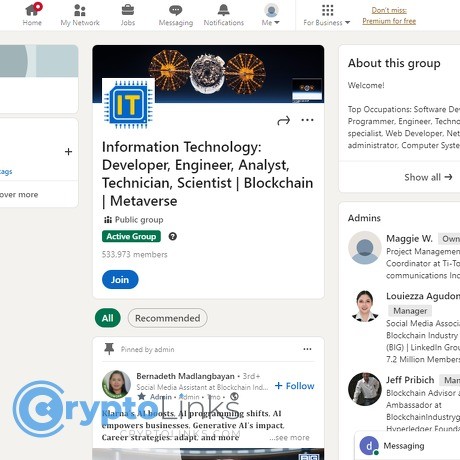
Information Technology: Developer, Engineer, Analyst, Technician, Scientist | Blockchain | Metaverse
www.linkedin.com
Information Technology & Blockchain Careers: Developer, Engineer, Analyst, Technician, Scientist – What Do They Actually Do?
Have you ever scrolled through LinkedIn and thought:
“What on earth is the actual difference between a Blockchain Developer, a Web3 Engineer, a Data Scientist and some Metaverse Analyst… and which one should I even try to be?”
If that sounds familiar, you’re not alone.
The tech and crypto job market is full of shiny titles, big salaries in the job ads, and buzzwords stacked on buzzwords. But when you’re trying to pick a real career path, that noise becomes a problem, not a benefit.
Most People Feel Lost in the Buzzwords
Let’s be honest: the average person who opens LinkedIn or a crypto job board right now is confused, not inspired.
Here’s what I constantly see from readers who message me:
- “I don’t know the difference between a developer, an engineer, an analyst, a technician or a scientist.”
They all sound smart. They all sound “IT-ish”. But what do these people actually do from 9 to 5? - “I want to work in blockchain or the metaverse, but I have no idea what skills are actually required.”
One ad says “just learn Solidity”, another screams “Kubernetes, Rust, zero-knowledge proofs, DeFi, AI”. Which is real, and which is HR word salad? - “I keep joining crypto groups and LinkedIn communities that are just spam and shilling.”
You join a Telegram or Discord, and it’s all “airdrop soon”, “to the moon”, and zero serious learning. Same story in a lot of LinkedIn groups: link dumping, no real conversation. - “I’m scared I’ll pick the wrong path and waste years.”
Maybe you’re 25 and just starting, or 35+ and switching careers. The fear is the same: choosing something that either dies with the hype or doesn’t fit your brain at all.
If that’s how you feel, you’re not failing. The system is just noisy.
Tech and crypto hiring has gone through cycles of insane hype. During the 2021 bull market, for example, a LinkedIn report showed job postings mentioning “blockchain” and “crypto” exploding year over year. Companies started stretching titles to stand out: “Metaverse Ninja”, “DeFi Wizard”, “Senior Web3 Visionary”.
That might look cool in a tweet, but it’s a disaster when you’re trying to understand what actual work looks like and how to get there.
What You’ll Walk Away With
By the time you’re done with this full guide, my goal is very simple: I want you to have job clarity, not just job inspiration.
You’ll get:
- Plain-English explanations of each role
What a developer, engineer, analyst, technician and scientist actually do all day – without hiding behind jargon. Think: “this is what their Monday morning looks like”, not “this is the corporate definition”. - Concrete examples from blockchain and metaverse projects
For example:- What a smart contract developer really ships on a typical project
- What a Web3 analyst tracks when a new NFT collection launches
- What a technician actually does when a validator node keeps crashing
- A realistic sense of where you might fit
Not everyone is born to code 8 hours a day. Some people love numbers and dashboards. Some love hardware and hands-on problem solving. Some love research and theory. You’ll see which role matches which style. - A basic learning roadmap for each direction
I’ll outline where coding is mandatory, where it’s optional, what tools keep showing up in real job ads, and what you can realistically learn in your first 3–6 months. - Clear answers to the classic questions:
- Is coding mandatory to work in blockchain?
- Which of these roles tends to pay more?
- Can you switch into this at 30, 40, or older?
- Is data analysis a smart entry point into web3?
- A practical way to use communities like LinkedIn groups
Not as time-wasting scroll traps, but as tools for networking, feedback and job discovery.
My aim is: when you see a job titled “Blockchain Data Analyst” or “Metaverse Backend Engineer” again, you’ll actually know what that human does, which skills are non-negotiable, and whether it sounds like something you’d enjoy doing for years.
Why This Guide Will Feel Different From the Usual Career Advice
Most career advice around IT and web3 falls into two extremes:
- Motivational fluff: “Just learn to code, bro, there’s huge demand!” with no nuance and no mention of the hard parts.
- Course sales pitches: 20 paragraphs about how confusing the world is, then a big “Buy my $997 bootcamp” button.
I want to take a different path.
Here’s how I’m going to approach this for you:
- No course to sell, no upsell waiting at the end
I’m not trying to push you into a specific platform, bootcamp, or “guaranteed job” program. That means I can be honest when a role is overcrowded, overhyped or simply not realistic for someone with 2 hours a day to learn. - Realistic, not romantic
A lot of people glamorize blockchain work. Yes, you can work on cool problems and good pay is real. But there are also:- long debugging sessions for one weird on-chain bug
- stress around security and irreversible transactions
- projects that fail because the tokenomics were a mess
I’ll highlight the upside and the downside, so you can choose with open eyes.
- Connecting traditional IT roles to crypto work you actually see online
Instead of treating “blockchain careers” like some totally separate universe, I’ll show how each classic IT role maps into this space. For example:- A “normal” backend developer vs. a smart contract dev
- A classic BI analyst vs. an on-chain analytics specialist
- An infrastructure engineer vs. someone managing validator fleets
Once you see the mapping, the whole thing feels much less mysterious.
- Evidence where possible, not just vibes
When there are useful numbers, I’ll mention them. For instance, salary trackers like Payscale and some web3 recruiting firms show blockchain developers often earning above typical software dev medians, especially with security or smart contract experience. That doesn’t mean “easy money”, but it does show there’s real demand behind the hype. - A focus on combining resources instead of chasing every trend
One problem I keep seeing: people bounce between YouTube tutorials, random Discords, and LinkedIn groups with no real plan. They feel busy but don’t move forward.
I’m going to show you what actually works better:- one main learning track (for your chosen role)
- one or two serious communities where you ask and answer questions
- a few small public projects or case studies to show what you can do
That combination gets you noticed much faster than joining 20 groups and never posting anything useful.
To make this concrete, we’re also going to look at a specific LinkedIn group built around these roles and around blockchain/metaverse topics. Not just in theory, but in terms of:
- what kind of people actually hang out there
- whether it looks like signal or spam
- how you could use a group like that to speed up your progress instead of wasting time
Because a good community can cut your learning curve in half… and a bad one can burn six months of your life on noise.
So here’s the next question we need to answer:
When you see a LinkedIn group called something like “Information Technology: Developer, Engineer, Analyst, Technician, Scientist | Blockchain | Metaverse” — is that actually a goldmine for your career, or just a buzzword magnet?
Let’s unpack that next.
The LinkedIn Group at the Center of It All: What Is It Really?
Every week I see people bouncing between Discords, Telegrams, and random “crypto career” chats, hoping one of them will magically unlock a real job. Most of them don’t. They’re noisy, shilly, and full of recycled content.
That’s why a group like “Information Technology: Developer, Engineer, Analyst, Technician, Scientist | Blockchain | Metaverse” on LinkedIn catches attention. It looks serious. It sounds broad enough to include everyone but focused enough to be useful.
But what is it actually?
At its core, this group is a shared hallway where a specific type of person hangs out:
- Developers shipping code
- Engineers thinking about systems and infrastructure
- Analysts tracking data and on‑chain metrics
- Technicians keeping hardware and networks running
- Scientists and researchers experimenting with new models, cryptography, AI, tokenomics
On top of that, you’ll often see:
- Traditional IT folks trying to understand how their skills plug into blockchain or metaverse work
- Students and career switchers quietly watching, liking, and occasionally asking “is this realistic for me?”
- Startup founders and project leads looking for talent, feedback, or sometimes validation
The content usually falls into a few familiar buckets:
- Job posts – junior roles, mid‑level web3 positions, contracts for short gigs
- Tech breakdowns – articles, threads, or posts explaining new tools, protocols, or frameworks
- Questions and threads – “What stack are you using for X?”, “Anyone here worked with Y?”, “How would you handle Z?”
- Events and webinars – hackathons, online meetups, niche conferences
- Showcases – people sharing repos, dashboards, or small products they’re building
Think less “crypto hype room” and more “hallway at a tech meetup where conversation sometimes gets very specific, very fast.”
One thing I appreciate about groups like this is that the posts are usually attached to real identities. On LinkedIn, you’re not hiding behind “MoonHunter847”; your employer and colleagues can see what you write. That alone tends to raise the level of seriousness, or at least cut down on the most obvious scams.
“You’re not just looking for information. You’re looking for the right room to be wrong in public and still grow.”
In a space where mistakes can be expensive (especially on-chain), having a semi‑serious environment to ask “stupid” questions is far more valuable than it sounds.
Who This LinkedIn Group Is Meant For
If you strip away the buzzwords, the group is aimed at people who either:
- Already work in IT and want to push into blockchain, web3, or metaverse projects
- Are new to tech and trying to pick a lane that isn’t a dead end
- Build or hire for crypto/metaverse products and need talent or peer feedback
Here’s how it tends to play out for different types of members:
- Developers & Engineers
They usually share:- Short posts about a problem they solved (“here’s how I optimized our contract gas usage by 20%”)
- Links to GitHub repos or open issues they want feedback on
- Opinions on tools – “is this L2 SDK stable enough yet?”, “which indexing solution are you using?”
- Analysts
They show up with:- Screenshots of dashboards (Dune, Power BI, custom analytics tools)
- Breakdowns of on‑chain behavior (“here’s what whale wallets did after the last upgrade”)
- Questions around metrics – retention in a metaverse, NFT volume, TVL shifts
- Technicians
Their posts are more hands‑on:- Node setup experiences (“this validator configuration saved us from random downtime”)
- Hardware and network tips – especially for VR/AR, mining (where it still matters), or validators
- Basic troubleshooting notes or checklists
- Scientists & Researchers
They bring:- Links to papers on cryptography, zero‑knowledge proofs, consensus, tokenomics
- Early ideas – “we’re testing this incentive model, here’s what’s breaking already”
- Occasional calls for data, collaborators, or experiment participants
- Students & Career Switchers
You’ll often see:- “I built this small project, can someone critique it?”
- “Is it realistic to move into web3 if I’m coming from X?”
- “What skills do I actually need to get a junior role?”
From time to time a founder or hiring manager will jump in with posts like:
- “We’re hiring a smart contract dev with at least one audited project on mainnet.”
- “Looking for a part‑time analyst who understands on‑chain data and can build dashboards.”
- “Anyone experimented with user analytics inside VR environments? Need feedback.”
That’s where the group starts to feel less like “another social feed” and more like a live job board crossed with a study group.
There are some interesting backing trends here. LinkedIn’s own data has shown year‑over‑year growth in job titles mentioning “crypto”, “blockchain”, and “metaverse”, especially for software roles and data roles. Groups like this sit exactly at that intersection: people who sense a shift happening and don’t want to be last in line when the serious roles fill up.
Why Groups Like This Matter for Your Career
Most people underestimate how much of a tech career is shaped by the rooms they hang out in. Not just the companies, but the inboxes, group chats, and communities where they spend their time.
A group focused on IT roles plus blockchain/metaverse matters because it quietly solves a few problems at once:
- Networking without awkwardness
Instead of “networking events” and forced introductions, you get:- Natural conversation: you comment on someone’s post, they respond, now you’re on each other’s radar.
- Soft introductions: “tagging X because they’ve solved something similar.”
- Real context: people can see your posts, projects, and comments before they talk to you.
There’s research showing most job offers still come through “weak ties” – people you know lightly, not your closest friends. A group like this is basically a weak‑tie factory.
- Learning what tools actually matter
Crypto and metaverse marketing is loud. Every week a “game‑changing” framework appears. In a focused LinkedIn group, you can see:- Which tools practitioners keep mentioning
- Which stacks appear in real job descriptions
- What engineers complain about – often the most honest kind of feedback
That beats guessing from random tweets or paid ads.
- Seeing the unpolished side of work
Company blogs show success stories. Groups show the messy middle:- “Our contract upgrade bricked this feature, here’s what we missed.”
- “We misread this metric and made a bad product decision.”
- “This metaverse event crashed our infra for 3 hours, here’s what we’re changing.”
Those stories teach you what actual projects look like far better than any “intro course.”
- Spotting skill patterns
If you scroll with intention for a week or two, you’ll notice repetition:- Developers: Solidity / Rust / security basics / Git / React
- Engineers: cloud infra / Kubernetes / monitoring / node ops
- Analysts: SQL / dashboards / on‑chain tools
- Technicians: Linux / networking / servers / VR hardware
- Scientists: math / ML / cryptography / research background
That pattern recognition helps you build a realistic skill roadmap, instead of chasing every new “hot skill” you see on X or Reddit.
There’s also a confidence piece no one talks about. Seeing people post incremental wins – a small contract, a dashboard, a rig setup, a research note – makes your own small progress feel normal. You’re no longer comparing your first GitHub repo to a unicorn’s product launch.
How to Tell If This Group Is Worth Your Time
Not every group is worth your attention, even if the title looks perfect. Time is the one asset you can’t re‑earn, so you have to treat groups like tools: keep what works, drop what doesn’t.
Here’s how I’d stress‑test a group like “Information Technology: Developer, Engineer, Analyst, Technician, Scientist | Blockchain | Metaverse” for myself.
- Check the activity, not the member count
Big number of members means nothing if the last real discussion was months ago.- Are there recent posts in the last 24–72 hours?
- Do posts have comments with actual sentences, or just “Great post” spam?
- Do you see follow‑up conversation, or just link dumping?
If everything feels like a wall of links with zero replies, that’s a bad sign.
- Scan for signal vs shilling
Scroll the last 20–30 posts and ask:- How many are clearly promoting a token, course, or service… and nothing else?
- Is there any code, charts, diagrams, or technical detail?
- Do people ever admit mistakes or share challenges, not just wins?
A little promotion is normal – everyone needs work. But if your eyes glaze over from generic “to the moon” language, that’s not where careers grow.
- Look at moderation and rules in action
Most groups say they don’t allow spam. The real question is:- Are obvious scammy posts still up days later?
- Do moderators step in when things get off‑topic?
- Are there clear rules pinned at the top, and are they enforced?
Good moderation is an invisible career booster. It protects your focus.
- Measure relevance to your actual goal
This is the part most people skip. Ask yourself:- If you want to be a developer, how many posts are about code, stacks, tools, or real projects?
- If you want to be an analyst, are people sharing dashboards, SQL snippets, or data questions?
- If you want to be a technician, do you see practical hardware, infra, or support talk?
- If you aim for a scientist role, do people mention research questions, papers, or models?
If 80% of the content is off your path, you’ll end up scrolling instead of learning.
One smart way to check all this without getting sucked into endless browsing is to set a small “listening sprint” for yourself:
- Week 1–2: Don’t post anything yet. Just:
- Scroll 10–15 minutes a day
- Save posts that are genuinely useful
- Write down recurring tools, skills, and problems you see in your role of interest
By the end of those two weeks you’ll know, very clearly, whether this group is:
- A background tab you never open again
- A decent news feed but not worth engaging
- Or a room you actually want to show up in and contribute to
Here’s a simple gut check I use: if you removed all job posts from the group, would it still be worth being there for the conversation alone? If the answer is yes, you’ve probably found a keeper.
Now, of course, knowing whether the group is useful is only half the story. The other half is figuring out which role you actually see yourself in when you scroll through those posts: are you more drawn to the code snippets, the diagrams, the dashboards, the hardware photos, or the research threads?
That’s exactly what I’m going to break down next: what developers, engineers, analysts, technicians, and scientists actually do all day – and how to spot quickly which one fits the way your brain likes to work. So, when you look at that LinkedIn feed again, you’ll know: “those are my people.”
Out of those five paths, which one do you secretly hope is “yours” – even if you’re not sure you’re ready for it yet?
Understanding the Core IT Roles: Developer, Engineer, Analyst, Technician, Scientist
If words like “developer”, “engineer”, “analyst”, “technician”, and “scientist” all blur into the same thing in your head, you’re not alone.
From the outside, every tech person just looks like “someone behind a screen”. But inside blockchain and the metaverse, these roles feel very different day to day: what they do, what they worry about, how they think, and what kind of person usually enjoys the work.
Let’s translate the titles into real human work, with examples straight from crypto, web3, and virtual worlds.
Developer: the builder of features and apps
When people say “I work in tech”, they’re often talking about this role.
A developer’s life is basically:
- Turning ideas into code
- Fixing what breaks
- Improving what already exists
On a typical day, a developer might:
- Read a task like “Let users connect their MetaMask wallet”
- Write or edit code in an IDE (VS Code, IntelliJ, etc.)
- Use Git to commit and push changes to GitHub
- Run tests, squash bugs, and review others’ code
Common tools and languages:
- Git and GitHub/GitLab for version control
- JavaScript/TypeScript for web apps and many DApps
- Python for scripts, tools, bots, APIs
- Solidity, Rust, Move for smart contracts
In blockchain and the metaverse, developers are the ones you “see” the most:
- Smart contract developer – Writes the logic that runs on-chain: DeFi protocols, NFT minting contracts, staking logic.
- Frontend DApp developer – Builds the website or interface that talks to wallets and smart contracts.
- Game / metaverse feature developer – Adds new gameplay mechanics, quests, or in-world tools inside virtual worlds.
Real example:
- A smart contract dev working on a DeFi platform might spend the morning writing Solidity for a new lending feature, and the afternoon writing tests to make sure no one can drain the funds by calling functions in a weird order.
Who usually loves this path?
- You enjoy solving puzzles and debugging problems.
- You like seeing something that didn’t exist in the morning become real by the evening.
- You get a kick out of shipping features and hearing users say “this is awesome”.
“Programs must be written for people to read, and only incidentally for machines to execute.” – Harold Abelson
In web3, this hits hard: great developers aren’t just code robots. They’re translators between messy human needs and unforgiving blockchain logic.
Engineer: the architect and systems thinker
Developers are focused on features. Engineers zoom out.
Think of an engineer as the person asking:
- “How does everything fit together?”
- “What happens when we have 10x more users?”
- “Is this secure, reliable, and scalable?”
They still write code, but their main job is to design and maintain systems that don’t fall apart under pressure.
Typical engineer roles:
- Software engineer – Builds and designs larger pieces of systems, not just single features.
- DevOps / Site Reliability Engineer (SRE) – Keeps infrastructure running, automates deployment, monitors uptime.
- Security engineer – Hunts for vulnerabilities, hardens systems, reviews smart contracts and backend code.
- Blockchain core engineer – Works on the blockchain protocol itself: consensus, mempool, networking, clients.
In blockchain and metaverse projects, engineers touch things like:
- Node infrastructure – Setting up and maintaining validator nodes, RPC nodes, indexers.
- Performance optimization – Reducing transaction bottlenecks, improving API response times, lowering latency in virtual worlds.
- High-load backends – Handling login, inventory, trades, leaderboards, and chat for thousands of concurrent metaverse users.
Real example:
- During a hyped NFT mint, a core engineer might work on scaling the system so it doesn’t crash when tens of thousands of users hit “Mint” at the same second, while a DevOps engineer tunes autoscaling in the cloud and sets up alerts in case anything starts failing.
This role fits you if:
- You like thinking in systems and architecture diagrams.
- You ask “what if the traffic doubles?” or “what if this node fails?”
- You enjoy reliability, performance, and long-term stability as much as new features.
Analyst: turning data into decisions
Analysts don’t usually obsess over the codebase. They obsess over the numbers.
An analyst’s work sounds like:
- “What happened?”
- “Why did it happen?”
- “What should we do next?”
Day-to-day tasks include:
- Collecting data from databases, APIs, and blockchain explorers
- Cleaning and joining datasets
- Creating dashboards and reports for product, marketing, or risk teams
- Answering ad-hoc questions like “Why did user activity drop last week?”
Common tools:
- SQL for querying databases
- Excel / Google Sheets for quick analysis
- BI tools like Tableau, Power BI, or Looker for dashboards
- Sometimes Python / R for more advanced analysis
In blockchain and the metaverse, analysts touch some very specific data:
- On-chain analytics – Tracking wallet behavior, protocol TVL, trading volume, active addresses.
- Growth and product analytics – Measuring user funnels: from visiting a DApp to connecting a wallet, making their first transaction, and returning later.
- Metaverse analytics – Session length, in-world purchases, player retention, economy health.
A study from Chainalysis and several on-chain analytics firms shows how powerful this work is: by tracking wallet clusters and behaviors, analysts helped identify billions in illicit flows and hacks across multiple chains. That’s not just charts for fun; it literally drives law enforcement decisions and risk policies at exchanges.
Real examples:
- An on-chain analyst monitors a DeFi protocol’s liquidity pools and notices unusual movements in a small token pair. They warn the team, which then finds a vulnerability being quietly exploited.
- A metaverse data analyst sees that players who complete a short tutorial quest stay 3x longer and spend more. The product team makes that quest more visible, and retention lifts across the board.
Does this sound like you?
- You’re more drawn to patterns and trends than to building big software systems.
- You enjoy asking “so what?” after every graph.
- You want to influence product and business decisions, not just code.
And yes, this can be a great route into crypto if you’re not in love with heavy coding but you’re good with logic and numbers.
Technician: hands-on support and infrastructure
While everyone else argues about protocols and frameworks, technicians keep the physical and basic digital world running.
This role is more hands-on than theoretical. You’ll often touch real hardware:
- Setting up and repairing computers, servers, and networks
- Helping teams with VPNs, Wi-Fi, and access issues
- Managing operating systems (Windows, macOS, Linux)
- Sometimes maintaining small-scale cloud or on-prem setups
In blockchain and metaverse projects, technicians can be the quiet heroes:
- Maintaining rigs and nodes – Whether it’s older mining setups, validator machines, or local dev servers.
- Supporting VR/AR and metaverse hardware – Headsets, sensors, high-refresh monitors, network equipment.
- Local environment support – Helping developers run test networks, configure Docker, or troubleshoot connectivity.
Real example:
- A small crypto startup runs several validator nodes and in-house servers. The technician makes sure firmware is updated, UPS batteries are working, monitoring agents are installed, and network issues are fixed before anyone notices downtime.
Research from multiple IT salary and job reports consistently shows that technician roles are often people’s first real entry into tech. Over a few years, many move into sysadmin, DevOps, or even security engineering once they understand how systems behave in the real world.
This might be your path if:
- You like tangible work: plugging in cables, installing hardware, setting up networks.
- You enjoy troubleshooting: “why is this not connecting?” is a fun puzzle, not a headache.
- You want to get into tech without immediately jumping into heavy programming.
Scientist: research, models, and advanced problem-solving
Scientists in IT are less about shipping features every week and more about solving hard problems that might take months — or years — to crack.
“Scientist” can mean different things, but usually it involves:
- Designing experiments and models
- Reading and writing technical or academic papers
- Testing new methods on real or simulated data
- Collaborating with engineers to turn research into usable systems
Common areas:
- Data science / Machine Learning – Predictive models, recommendation systems, anomaly detection.
- Cryptography – Secure protocols, zero-knowledge proofs, encryption schemes.
- Economics / Tokenomics – Designing token models, incentive systems, and virtual economies.
- Security research – Formal verification, protocol attacks, defensive strategies.
In blockchain and the metaverse, this role can be incredibly deep:
- Designing new consensus mechanisms – Proof-of-Stake variants, leader election algorithms, Byzantine fault tolerance optimizations.
- Building fraud detection models – Spotting suspicious transaction patterns, wash trading, or sybil attacks.
- Modeling in-game economies – Ensuring that token rewards don’t cause hyperinflation, that items stay valuable, and that players have sustainable incentives to stay engaged.
- Scaling and privacy research – Working on zk-SNARKs, rollups, and next-gen L2/L3 designs.
Studies from major research labs and organizations like the Ethereum Foundation, StarkWare, and academic groups show how quickly this space is moving: many of the scaling and privacy techniques used today were pure research topics just a few years ago. Now they power real protocols with billions locked on-chain.
Real example:
- A cryptography researcher spends months working on a new zero-knowledge proof system, publishes a paper, then collaborates with engineers to implement it in a rollup that lets users transact privately but still verifiably on Ethereum.
You’ll probably feel at home here if:
- You genuinely enjoy math, probability, and reading academic-style writing.
- You like pursuing questions that might not have a clean answer today.
- You’re patient enough to improve a model 1% at a time.
It’s not the fastest entry path into web3 for most people, but if you’re already in a quantitative or research-heavy field (physics, economics, CS, math), this can be a very natural transition.
So now you’ve got a clearer picture: the builder, the architect, the storyteller-with-data, the hands-on fixer, and the deep researcher all exist under the big “IT” label — and all of them already play huge roles in crypto and the metaverse.
The next obvious question is: what actually changes when you take these roles and plug them into blockchain and virtual worlds? The stakes, the tools, even how mistakes behave are very different on-chain.
That’s where things get interesting — and that’s exactly what comes next.
How These Roles Change Inside Blockchain and the Metaverse
The biggest mistake I see people make is assuming a “Blockchain Developer” or “Metaverse Analyst” is just a normal IT role with a fancy word slapped in front. It’s not.
When you bring real money, permissionless systems, and 24/7 virtual worlds into the picture, your responsibilities, tools, and even the psychology of the job change fast.
Let’s break down how each classic IT role actually looks once you step into crypto, web3, and metaverse projects.
Blockchain Developer vs “Regular” Developer
On paper, a blockchain developer still writes code, fixes bugs, and ships features. In reality, the pressure and constraints are totally different.
Traditional backend vs smart contracts
In a normal web app, if you push a broken update, you roll back, hotfix, restore from backups. It sucks, but it’s fixable.
On-chain, your smart contract is usually:
- Immutable (can’t be changed or can only be upgraded in very controlled ways)
- Public (anyone can read your code, copy it, or attack it)
- Custodian of real money (people locking life savings in your protocol)
One small bug can erase millions. That’s not an exaggeration. The Ronin bridge hack in 2022 lost over $600 million in crypto because of security weaknesses in the setup and contracts. In regular SaaS, that level of blast radius is rare.
Irreversibility changes how you test
In web2, tests are important. In web3, they’re survival.
- You write extensive unit and integration tests for every contract function.
- You simulate edge cases: flash loans, reentrancy, oracle manipulation.
- You rely on testnets (Goerli, Sepolia, etc.) and local chains (Hardhat, Foundry, Ganache) as if they’re rehearsal stages before a live money performance.
There’s no “we’ll patch it on Monday.” If it’s broken on mainnet, it’s broken in front of the entire world.
New languages and mental models
As a blockchain dev, you’re rarely just using Node or Java only. You usually learn:
- Solidity (Ethereum, EVM chains)
- Rust (Solana, Near, Polkadot, Cosmos SDK, etc.)
- Move (Aptos, Sui)
These languages push you to think like a financial engineer:
- How is state stored?
- Who can call each function and when?
- What are the incentives if someone tries to “game” this contract?
Wallets, gas fees, and UX realities
You don’t just build APIs. You build flows that go through wallets like MetaMask, Phantom, or Ledger. That means:
- Designing for transaction fees (gas) – users hate paying extra for your sloppy code.
- Managing signing flows so users know what they’re approving.
- Avoiding patterns that get people scammed or phished through malicious signatures.
A simple example: If a DeFi app asks a user to approve an “unlimited” token allowance, you need to understand the risk and maybe build safer defaults. That’s code + ethics in one decision.
Security audits become part of your life
A serious blockchain dev:
- Reads audit reports (Trail of Bits, OpenZeppelin, Quantstamp, etc.).
- Implements patterns like checks-effects-interactions, access control, and rate limits.
- Often works with external auditors before shipping major upgrades.
Studies of smart contract hacks consistently show the same issues repeating: reentrancy, improper access control, integer overflows, missing input validation. In web3, you’re paid to not repeat those mistakes.
Real-world snapshot
Think of:
- Uniswap smart contract devs designing automated market makers used by millions.
- Axie Infinity contract devs managing in-game assets that turned into a global economy.
You’re not just “pushing features”; you’re helping define rules for entire ecosystems.
Blockchain / Metaverse Engineer: Systems on Top of Systems
If developers are writing the logic, engineers are making sure the entire machine actually runs under real-world pressure.
Running nodes, validators, and indexers
Instead of just spinning up a typical web server, you might be:
- Managing full nodes for Ethereum, Bitcoin, or other chains.
- Running validators for proof-of-stake networks (Ethereum, Solana, Cosmos, etc.).
- Operating indexers (like The Graph, custom ETL pipelines) so apps can query on-chain data fast.
Every node you run has to:
- Stay in sync with the network.
- Handle forks, upgrades, and client bugs.
- Stay secure against attacks and misconfigurations.
Handling traffic spikes and unpredictable load
In metaverse and NFT worlds, you can’t perfectly plan load. One viral tweet and your mint or event explodes.
You might have to handle:
- Token mints with thousands of transactions in a few minutes.
- NFT drops where people are racing each other and the bots.
- Concerts or game events with tens of thousands of concurrent users in a virtual space.
Here, rate limiting, queue systems, backpressure, and caching are not “nice-to-have.” They’re the difference between a legendary launch and a public meltdown on X.
Financial systems + live worlds = zero tolerance for downtime
You’re not just serving cat pictures. You’re dealing with:
- Assets that have real market value traded 24/7.
- Communities that gather in real time in a metaverse world.
Uptime targets are brutal. A DeFi protocol or exchange going down for a few hours can cause:
- Liquidations
- Panic selling
- Permanent reputation loss
So engineers lean heavy on:
- Multi-region infrastructure
- Redundancy for nodes and APIs
- Robust monitoring (Prometheus, Grafana, custom alerts) and on-call rotations
Cross-chain architecture and interoperability
Much of web3 now lives across multiple chains. As an engineer, you might be:
- Building bridges between networks (Ethereum ↔ L2s, Solana ↔ Ethereum, etc.).
- Designing multi-chain wallets and API layers.
- Handling consistency and reconciliation between on-chain and off-chain data stores.
Every bridge or cross-chain setup increases your attack surface. Bridges have been some of the most heavily exploited pieces in crypto, with multiple billion-dollar losses in total. That’s the environment you’re engineering for.
Metaverse infrastructure in practice
Think about a large virtual world:
- Game servers syncing positions, states, interactions.
- Streaming assets and scenes as users move between zones.
- Connecting to blockchain for ownership, identity, economy.
You’re orchestrating a stack that runs from GPU-heavy rendering to distributed systems to smart contracts. It’s not boring.
Web3 & Metaverse Analyst: The Data Looks Different
The job title might still be “data analyst” or “product analyst”, but your data sources and questions shift a lot.
On-chain vs off-chain data
You’re often stitching together:
- On-chain data: transactions, events, wallet interactions, smart contract logs.
- Off-chain data: web/app analytics, user profiles (when available), marketing campaigns, social metrics.
On-chain data is public and permanent, but:
- One person can own dozens of wallets.
- Bots can simulate “usage.”
- Labels are sparse – you don’t get a neat “user_id = 123” everywhere.
Specialized analytics tools
You might still use SQL, Excel, Tableau, but you’ll increasingly touch tools like:
- Dune – SQL-based dashboards over blockchain data.
- Nansen – wallet labeling, money flow intelligence.
- Glassnode – macro on-chain metrics for BTC, ETH, etc.
- Custom blockchain explorers and internal data warehouses built from node exports.
You might write queries such as:
- “Show daily active wallets interacting with our contract, grouped by first-touch date.”
- “Track wallets that bridged more than $10k to our chain in the last 30 days.”
Metrics inside metaverse products
In a virtual world or game-like metaverse, you’re obsessed with how people actually behave:
- DAU/MAU (daily/monthly active users)
- Session length and concurrent users
- In-world spending and NFT usage (buying, selling, renting, staking)
- Retention curves and cohort analysis: “Are players who earn early more likely to stay?”
When “play-to-earn” was booming, studies and internal dashboards showed a brutal pattern: if token prices dropped, engagement dropped almost in sync. Good analysts were often the first to warn, “Our economy is not sustainable; these users are more speculators than fans.”
Typical questions you’ll be asked
- “Who are our whales?” Which wallets drive most of the protocol’s volume or NFT buying?
- “What actually drives retention?” Is it quests, social features, token rewards, or something else?
- “Are bots inflating our numbers?” Are a big chunk of “active users” actually scripts farming rewards?
- “Which features bring users back?” What do returning wallets do differently from one-time visitors?
Your edge as an analyst is not just charts, but honest storytelling: “Here’s what’s really happening in our world, and here’s what we should change.”
Technician in a Crypto / Metaverse Environment
If you like hands-on work, the crypto + metaverse combo adds some very specific toys to your toolbox.
Supporting mining rigs or validator hardware
Mining has changed a lot (especially after Ethereum’s move to proof-of-stake), but there’s still work around:
- Bitcoin mining farms – racks of ASICs that need power, cooling, networking.
- Validator setups – servers and backup machines maintaining consensus.
Your day might include:
- Replacing faulty GPUs or ASICs.
- Monitoring temperatures and power usage.
- Tuning network configs so nodes keep stable connections.
In proof-of-stake networks, poor uptime = lost rewards or penalties. Keeping hardware stable directly affects income.
VR/AR and high-bandwidth setups
In metaverse projects, technicians often:
- Set up VR headsets, motion tracking, haptic gear for teams or events.
- Handle network layouts for demo booths, conference stands, gaming arenas.
- Diagnose lag and connection issues that ruin the immersive experience.
If a big brand launches a metaverse experience at a physical event and the hardware fails, that’s a disaster. The technician is usually the quiet hero preventing that.
Nodes, servers, and local test networks
You might be the one who:
- Sets up local testnets for developers.
- Deploys and maintains internal nodes so the team doesn’t rely on public endpoints.
- Manages logging and basic monitoring so issues are caught early.
It’s still “IT support,” but with a web3 twist: your machines might be part of a global consensus system, not just an internal LAN.
Scientist in Blockchain and Metaverse Projects
This is where math, research, and long-term thinking rule. If you enjoy whitepapers and models, this world can feel like a playground.
Cryptographers building secure systems
Modern crypto runs on heavy math:
- Zero-knowledge proofs (ZK-SNARKs, ZK-STARKs, etc.) for privacy and scaling.
- New signature schemes (BLS, threshold signatures) to improve security and efficiency.
- Consensus algorithms that decide how a network agrees on state.
A cryptography scientist might:
- Propose a new protocol in a formal paper.
- Prove security properties under well-defined assumptions.
- Work closely with engineers to implement and benchmark it.
Zero-knowledge systems like zkSync, StarkNet, and Polygon’s ZK efforts are full of researchers doing exactly this every day.
Data scientists spotting fraud and anomalies
Blockchain is a public goldmine of behavioral data. Data scientists use:
- Machine learning for anomaly detection (weird transaction patterns).
- Clustering to group wallets into entities (exchanges, market makers, scammers).
- Graph analysis to trace money flows in hacks or laundering schemes.
Exchanges, analytics firms, even regulators now hire data scientists to monitor for:
- Wash trading on NFT marketplaces.
- Sybil attacks on airdrops and incentive programs.
- Suspicious flows from exploits to mixers to exchanges.
In 2021–2022, several major hacks were partially traced or contained thanks to on-chain analysis, not just traditional security. That’s data science directly protecting money.
Economists and tokenomics experts
Metaverse and DeFi projects often live or die based on their economic design. A “scientist” here might be:
- Modeling token emission schedules and inflation.
- Running agent-based simulations to see how different user types behave.
- Testing in-game economic loops (earn, spend, upgrade) for long-term sustainability.
We’ve seen this clearly: projects that promised insane yields without realistic models ended up collapsing when new money stopped coming in. Solid tokenomics research cannot guarantee success, but it helps avoid obvious death spirals.
Researching new scalability and privacy tech
Scientists are behind much of the innovation everyone else builds on:
- Layer 2 rollups – finding ways to move transactions off main chains while still inheriting security.
- Sharding – splitting networks into sub-parts that still coordinate.
- Private smart contracts – letting users interact without revealing everything on-chain.
A lot of this starts as academic-style research, then slowly becomes production software. If you like working on things that might only reach mass adoption in 3–5 years, this path fits.
“The future is already here – it’s just not evenly distributed.” – William Gibson
In blockchain and metaverse work, you feel that quote every day. Some roles feel like a regular job with new tools. Others feel like you’re pulling pieces of the future into the present, one commit or one model at a time.
So the big question becomes: given how these roles actually change in crypto and virtual worlds, what exact skills and tools should you focus on first – and which ones can you safely ignore in the beginning?
That’s where the next part comes in: a clear breakdown of skills, tools, and realistic learning paths for each role, so you can stop guessing and start planning your move.
Skills, Tools, and Learning Paths for Each Role
If job titles are the headlines, skills are the fine print that actually decides whether you get paid or ignored.
Forget big promises for a second. Here’s the simple truth:
“Your career in blockchain or the metaverse is built on the skills you practice in boring, regular days – not the hype you retweet.”
Let’s break down what you actually need to learn as a developer, engineer, analyst, technician, or scientist – with real‑world tools, realistic paths, and examples you can copy.
Key skills for developers and engineers
Whether the title says “developer” or “engineer”, the foundation is very similar: you build and maintain things that actually work. The difference is mostly in scope – developers usually focus on features, engineers on whole systems – but the skill stack overlaps a lot.
Core foundations you can’t skip
- Programming fundamentals: variables, loops, functions, error handling
- Algorithms & data structures: arrays, lists, hash maps, trees, sorting, searching
Why it matters: Everything from NFT marketplaces to DeFi protocols uses these under the hood. Faster code = cheaper gas, happier users. - Version control with Git: branching, merging, pull requests
Real world: Every serious blockchain repo on GitHub runs on Git. If you don’t know it, teams won’t even look at you.
Web skills that show up in almost every blockchain project
- HTML & CSS: structure and style of web pages
- JavaScript: the language of the browser
- Frontend frameworks: React is the most common for DApps, followed by Vue and Next.js
- Connecting to wallets: using libraries like web3.js or ethers.js
Look at almost any popular DeFi interface or NFT marketplace – Uniswap, OpenSea, Blur, whatever’s trending this quarter – and you’ll see the same pattern: React frontend + wallet connect + smart contracts underneath.
Backend & infrastructure basics
- APIs: building and consuming REST or GraphQL APIs
- Databases: relational (PostgreSQL, MySQL) and sometimes NoSQL (MongoDB)
- Cloud basics: using AWS, GCP, or Azure for simple deployments
- Authentication & security basics: JWTs, OAuth, secure password storage
Even strongly “on‑chain” products still keep a lot of logic and data off‑chain for performance and cost reasons. That’s where backend skills make you valuable.
Blockchain & metaverse specifics for devs/engineers
- Smart contract languages
- Solidity (Ethereum, Polygon, BNB Chain)
- Rust (Solana, NEAR, some L2s)
- Move (Aptos, Sui) – still niche, but interesting
- Wallets & transactions
- Public/private keys and how signing works
- Gas fees, nonce, chain IDs
- Using testnets (Goerli, Sepolia, etc.) safely
- Smart contract security basics – this is huge:
- Reentrancy attacks
- Integer overflows / underflows (less common now, but still important context)
- Access control and role management
- Front‑running and MEV risks
Consistently, post‑mortems of hacked protocols show the same thing: someone didn’t respect the basics. A bug that would just crash a normal app can cost millions when it’s on‑chain. That’s why smart contract security is one of the most in‑demand skill sets in web3.
Metaverse‑specific extras
- Game engines: Unity (C#) or Unreal Engine (C++) if you want to build 3D worlds
- Real‑time systems: websockets, multiplayer sync, latency handling
- 3D basics: meshes, textures, physics – even at a conceptual level
Plenty of metaverse projects hire regular Unity devs and then teach them how to handle blockchain SDKs. So if you already come from gaming, learning web3 is a very natural upgrade.
A realistic learning path for future devs/engineers
- Month 1–2:
- Pick one general‑purpose language: JavaScript or Python
- Learn Git and push your code to a public GitHub repo
- Build 2–3 tiny projects: a to‑do app, a simple API, a basic website
- Month 3–4:
- Learn React, build a simple front‑end project
- Connect it to an API (even a mock one)
- Month 5–6:
- Pick Solidity or Rust and follow an official tutorial
- Rebuild something simple:
- ERC‑20 token
- NFT collection
- Very simple staking contract
- Connect your contract to a React front end on a testnet
You don’t need to invent the next Uniswap on day one. Copy existing patterns, ship small public projects, and let people see your progress. That’s what gets you messages from recruiters, not “learning in secret” for two years.
Skills for analysts
If you like numbers more than code, but you still want to be close to the action, analytics is one of the best ways into crypto and metaverse work.
Protocols want to know who’s using them, where the money flows, and which users they’re losing. Analysts answer those questions.
Data basics every analyst needs
- Spreadsheets: Excel or Google Sheets – formulas, pivot tables, charts
- SQL: the language of databases
Most jobs will expect you to be able to write SELECT, JOIN, GROUP BY without thinking too hard. - Data cleaning:
- Handling missing values
- Standardizing formats (dates, currencies)
- Spotting obvious outliers or bad data
Turning data into something non‑boring
- Visualization tools:
- Tableau or Power BI
- Open‑source options: Metabase, Apache Superset
- Basic statistics:
- Mean, median, variance
- Correlation vs causation (and not confusing the two)
- Storytelling with data:
- Structuring findings into “Here’s what we see → here’s what it probably means → here’s what we should test next.”
Teams keep analysts who can explain insights in plain language. If you can tell a product manager, “We’re losing 40% of new users at the wallet connection screen, here are three possible reasons and one quick test,” you’re already ahead of most dashboards.
Optional but powerful: coding for analytics
- Python:
- pandas for data manipulation
- matplotlib / seaborn for plotting
- scikit‑learn for basic machine learning
- R: also popular in data teams, especially for statistics‑heavy work
Blockchain‑specific skills for analysts
- Understanding on‑chain data:
- Addresses, transactions, blocks
- Events/logs from smart contracts
- Token transfers, liquidity pool movements
- Key metrics you’ll see constantly:
- TVL (Total Value Locked)
- Trading volume
- Active addresses and new addresses
- Retention: how often users come back
- Tools used in real jobs:
- Dune – SQL on top of blockchain data, with public dashboards
- Nansen, Glassnode – labelled addresses, macro trends
- Custom analytics stacks using BigQuery + blockchain datasets
Many analysts I see hired into web3 start by publishing public dashboards on Dune. Hiring managers love being able to look at your queries and visualizations directly.
Metaverse‑specific analytics
- User behavior:
- DAU/MAU (daily/monthly active users)
- Session length and frequency
- Churn (how many users never return)
- Economy metrics:
- In‑world currency inflow/outflow
- NFT trading volume, floor prices, listing rates
- Distribution of assets (are a few whales owning everything?)
- Funnels & cohorts:
- From “joined the world” → “bought first asset” → “became a regular spender”
- User cohorts by signup month and their retention curves
Simple learning path if you want to be an analyst
- Month 1:
- Get very good at spreadsheets
- Finish a basic SQL course and practice daily
- Month 2–3:
- Pick Tableau or Power BI, build 3–5 dashboards
- Use a free dataset (crypto or gaming) and write a short “insights” summary for each
- Month 4–5:
- Create a profile on Dune
- Rebuild a few public dashboards, then design your own (for example, “Top NFT wallets interacting with a specific collection”)
Remember: your portfolio is your proof. No one cares you “like data” unless they can see charts you’ve actually created.
Skills for technicians
If you’re the person friends call when their laptop dies or their router acts weird, technician work might fit you better than endless lines of code.
In crypto and metaverse projects, technicians keep the physical and low‑level stuff alive so devs and analysts can do their job.
Core IT skills for technicians
- Hardware basics:
- Building and upgrading PCs
- Replacing components (RAM, SSD, GPU, PSU)
- Diagnosing common hardware issues
- Operating systems:
- Windows: installation, troubleshooting, drivers
- Linux: basic shell commands, permissions, service management
- Networking:
- IP addresses, DNS, basic routing
- Wi‑Fi vs wired, bandwidth/bottlenecks
- Diagnostic tools like
ping,traceroute
- Basic security hygiene:
- Firewalls, antivirus/EDR tools
- Backups and restore processes
- Safe remote access (VPN, SSH)
Blockchain & metaverse duties for technicians
- Node setup and maintenance:
- Running full nodes or validators for Ethereum, Cosmos, etc.
- Keeping them synced, monitoring disk space, CPU, RAM
- Applying updates safely and on time
- Mining/validator rigs (where relevant):
- Handling GPUs, power, cooling
- Monitoring temperature and performance
- Replacing failing components before they take a system down
- VR/AR hardware support for metaverse teams:
- Setting up headsets (Quest, Vive, etc.)
- Troubleshooting tracking issues, lag, connection problems
- Making sure demo setups don’t break right before investor meetings
- Logging & basic monitoring:
- Using simple dashboards (Grafana, Prometheus, or SaaS tools)
- Reading logs to spot obvious errors
- Knowing when to escalate to engineers
Teams remember the technician who quietly kept everything running during a big token launch or event. Reliability is your personal brand in this role.
Learning path if you’re more hands‑on than code‑heavy
- Month 1:
- Build or upgrade a PC from parts (even used parts)
- Install Windows and a Linux distro, practice switching and troubleshooting
- Month 2–3:
- Take a basic networking course
- Set up a small home lab: router, a couple of old machines or VMs, some services running
- Month 4+:
- Run a real blockchain node or validator on a testnet
- Document your setup and publish a guide – this is portfolio material too
Skills for scientists
This is the most “deep thinking” role of all of them. Scientists are the ones inventing new cryptographic schemes, building models for token economies, or researching fraud detection algorithms.
You don’t need a PhD for every scientist‑style role, but you do need patience, solid math, and curiosity that doesn’t die when things get hard or slow.
Core scientific toolkit
- Mathematics:
- Linear algebra (vectors, matrices, eigenvalues)
- Probability and statistics
- Discrete math (graphs, combinatorics, logic)
- Programming for research:
- Python: NumPy, pandas, SciPy, PyTorch or TensorFlow
- C++ or Rust for performance‑critical pieces
- Reading & writing technical papers:
- Understanding proofs, assumptions, and limitations
- Summarizing complex ideas in your own words
Blockchain & metaverse focus areas
- Cryptography:
- Hash functions, digital signatures, Merkle trees
- Zero‑knowledge proofs (zk‑SNARKs, zk‑STARKs) – even at a conceptual level
- Secure multi‑party computation and related primitives
- Game theory & mechanism design:
- Incentive design for consensus (proof‑of‑stake, etc.)
- Avoiding collusion, Sybil attacks, and economic exploits
- Econometrics & tokenomics:
- Modeling supply, inflation, and user behavior
- Simulating outcomes of different parameter choices
- Machine learning on blockchain data:
- Anomaly detection for fraud or hacks
- Clustering addresses by behavior
- Predictive models for liquidity, volume, or risk
Realistic path if you’re drawn to research
- Step 1: Strengthen your math. If your high‑school algebra feels shaky, fix that first. Then add probability and linear algebra.
- Step 2: Get comfortable with Python and one ML framework (PyTorch or TensorFlow).
- Step 3: Start reading one research paper a week:
- Summarize it in your own words
- Post a short explanation thread or blog – this puts you on the radar of people doing similar work
- Step 4: Reproduce a simple result:
- Rebuild a basic fraud detection model on an on‑chain dataset
- Simulate a simple token economy under different user behaviors
Even junior contributors who can say “I read this paper, here’s what it means, here’s a small experiment I ran” tend to stand out in early‑stage research teams.
How to pick a role based on your personality
Now for the part most people quietly worry about:
“What if I pick the wrong path and waste years?”
The good news is, skills you learn in one lane often transfer to another. But starting in a lane that matches your natural style makes everything easier.
Take a second and notice which of these feels most like you:
- You enjoy building things and getting quick feedback
If you love the feeling of “I wrote code, refreshed the screen, and something changed,” that’s pure developer energy.
Start with: frontend or full‑stack development, then add blockchain when you’re comfortable. - You think in systems and hate fragile setups
If you naturally ask “What happens if this fails?” and enjoy planning for scale and reliability, you think like an engineer.
Start with: backend development and DevOps basics, then move into blockchain infrastructure or metaverse backend work. - You see stories in numbers
If charts, metrics, and “why did this happen?” questions excite you more than writing full apps, analytics fits you.
Start with: SQL + dashboards + simple on‑chain analytics, then decide if you want to go into deeper data science later. - You like fixing things with your hands
If assembling rigs, fixing network issues, and solving physical problems feels satisfying, technician work will probably feel natural.
Start with: PC building, OS and networking basics, then learn how to maintain nodes and VR setups for teams. - You love deep questions and longer projects
If you’re the kind of person who reads long threads, research papers, or tries to model “what if” scenarios for fun, scientist roles are your playground.
Start with: strengthening math and Python, then explore cryptography, tokenomics, or machine learning on crypto data.
You don’t have to get this choice 100% right. Many people I see in crypto moved from one role to another:
- Technician → DevOps engineer
- Analyst → Data scientist
- Developer → Security engineer / auditor
- Game dev → Metaverse world builder with blockchain integration
The best question to ask yourself right now isn’t “What do I want to be forever?”
It’s much lighter:
“Which role do I feel curious enough about to spend the next 90 days learning?”
Once you choose that, everything else becomes easier: which tools to learn, which people to follow, which communities to join.
And speaking of communities… knowing what to learn is just one side of the game. Where you hang out online heavily affects how fast you actually grow.
So here’s the interesting part: how do you use LinkedIn groups, Discord servers, and other communities without getting drowned in noise and spam?
That’s where we’re going next – including how to use that specific LinkedIn group in a way that actually helps you land real work instead of just more notifications.
Using Online Communities and Resources the Smart Way
Most people treat online communities like Netflix: scroll, skim, maybe “like” a post, then close the tab and feel weirdly tired and behind.
That’s how you waste years.
If you want a real career in IT, blockchain, or the metaverse, you can’t use the LinkedIn group “Information Technology: Developer, Engineer, Analyst, Technician, Scientist | Blockchain | Metaverse” (and other communities) like a feed to consume. You have to use them like a gym: a place where you train in public.
Let me show you how I’d do it if I were starting again today.
How to Actually Use the LinkedIn Group (Not Just Scroll)
Before you touch the keyboard, answer one honest question:
“What exactly do I want from this group in the next 90 days?”
Not “find a job” in some vague way. That’s too blurry and leads to desperation posts that everyone ignores.
Pick one specific target, for example:
- “Understand what hiring managers look for in junior blockchain developers.”
- “Find 2–3 analysts who can critique my on-chain dashboards.”
- “Get feedback on a small metaverse side project I’m building.”
- “Figure out which skills I’m missing to move from technician to engineer.”
Once you have that, here’s how to work the group like a pro instead of a lurker.
Week 1: Silent Researcher Mode
For the first few days, don’t post. Just watch.
- Scan job and project posts – Note the tech stacks, tools, and soft skills that come up again and again (for example: Solidity, Rust, SQL, React, Docker, “smart contract security”, “on-chain analytics”). That’s a free syllabus.
- Identify 5–10 seniors in your target role – Developers, engineers, analysts, technicians, or scientists who post with real substance: code, architecture diagrams, dashboards, case studies, incident reports.
- Save the best posts – Use LinkedIn’s “save” feature and keep a simple note: “This is how they structure a bug report”, “This is how they explain a tokenomics model”, “This is how they present a portfolio project.”
There’s a reason for this: in a study by LinkedIn and the Adler Group, about 85% of jobs are filled through networking, but most people network badly. They pitch themselves before they understand what the other side actually needs. Your quiet week is where you fix that mistake.
Week 2: Visible, But Not Needy
Now you start showing up, without begging for a job.
- Comment with value, not fluff
Instead of “Nice post” or “Thanks for sharing”, try things like:- “I ran into a similar issue with gas fees when testing a Uniswap fork on a local network, this fix helped…”
- “Curious: when you say ‘active wallets’, do you filter out contracts and obvious bots?”
People remember sharp questions and specific experiences.
- Share small learning notes
Short posts work well:- “Today I broke my smart contract three times. Here’s what I learned about reentrancy and why it matters.”
- “Built my first SQL query to track NFT secondary sales over time. This is what surprised me…”
You’re signaling that you’re serious, coachable, and already doing the work.
Week 3 and Beyond: Post Like a Builder, Not a Beggar
Once people have seen your name a few times, you can start asking for help the right way.
Here’s the wrong way (I see this daily):
“Hi everyone, I’m looking for a remote job in blockchain. Please check my profile and connect.”
Nobody knows you, there’s nothing to work with, and it smells like spam.
Here’s the right way:
“I’m learning smart contract development and built a small staking contract on a local testnet. Goal: understand safe reward calculations and basic security. Stack: Solidity, Hardhat, OpenZeppelin. GitHub: https://github.com/example Question: If you had 10 minutes to review one part of my code, where would you look first for common beginner mistakes?”
This kind of post:
- Shows you’re already building.
- Respects people’s time with a focused question.
- Makes it easy for seniors to give quick, targeted advice.
I’ve seen juniors go from “unknown” to “I’ve got 3 DMs from hiring managers” just by repeating this pattern for a few weeks around one or two solid projects.
Follow the Right People and Reverse-Engineer Their Moves
When you find a senior dev, engineer, analyst, technician, or scientist whose posts always teach you something, treat their profile as a case study:
- Check how they describe their role – Notice the keywords: “on-chain analytics”, “zero-knowledge proofs”, “metaverse economy design”, “infrastructure reliability”, “incident response”. You’ll see what the market values.
- Note the kinds of projects they share – Security audits, dashboards, benchmarks, VR/AR prototypes, token models. These are blueprints for your own portfolio.
- Watch how they answer questions – Pay attention to structure: “problem → context → approach → result”. That’s exactly how you should talk about your work in interviews and posts.
Think of it as free mentoring with no calendar invites.
Other Resources That Help You Grow Faster (Without Overwhelm)
Communities are for connection and feedback. Skill-building still happens mostly off-screen, in your editor, your notebook, or your terminal.
To avoid “resource FOMO”, keep a simple stack: one main learning path, one or two deep resources, and the LinkedIn group as your social layer.
- Official Documentation & Tutorials
For any blockchain, framework, or tool you’re using, the official docs are your first stop. Most serious teams invest heavily in docs and sample projects:
- GitHub Repositories with Real Code
Reading production or near-production code will train your eye for structure and style:- Look for repos related to smart contracts, NFT marketplaces, DeFi protocols, or metaverse engines.
- Study the
README, folder layout, test suites, and commit messages. These teach you how professionals think.
- Blogs & Newsletters Focused on Blockchain, Data, and Security
Pick 1–3 that consistently go deeper than price talk:- On-chain analytics breakdowns.
- Post-mortems on hacks and exploits.
- Smart contract security write-ups.
- Metaverse economy and user-behavior analyses.
This keeps your mental model fresh without drowning you in noise.
- Structured Learning Platforms
Use these for fundamentals:- Programming basics (Python, JavaScript) for developers, engineers, and analysts.
- SQL and data visualization for analysts.
- Networking and OS foundations for technicians.
- Math, statistics, and cryptography foundations for scientist-type roles.
Here’s the key: for any resource you touch, try to turn it into a micro-output you can share in the LinkedIn group:
- Read a post about a DeFi exploit? Summarize what went wrong in 5–7 lines and what a junior dev should learn from it.
- Completed a tutorial on NFT minting? Share your repo and one thing you changed from the tutorial to make it your own.
- Built your first user analytics dashboard for a metaverse game? Post a screenshot and describe the two metrics you’d track first to improve retention.
This is how you transform theory into visible proof that you’re serious.
How I Personally Evaluate Crypto and Tech Communities
Because I review crypto tools and communities all the time, I’ve built a quick mental checklist. You can use the same one for any Discord, Telegram, LinkedIn group, or forum.
Red Flags: When a Community Is Just Noise
- Constant token shilling
If every second post is “Next 100x gem!” or “Guaranteed passive income”, I’m out. Serious devs, engineers, analysts, and scientists don’t talk like that. - No code, no data, no architecture
If nobody is showing actual work—no GitHub links, no dashboards, no logs, no diagrams—then it’s mostly entertainment, not a career accelerator. - Copy-paste motivational spam
Endless “You can do it bro” or generic hustle quotes with zero technical detail. Encouragement is nice, but it won’t get you hired. - Zero moderation
Bots, scams, fake airdrops, phishing links… and nobody cleans them up. That tells you the admins don’t care about your time or safety.
Green Flags: When a Community Is Worth Your Time
- Real problem-solving threads
People post specific errors, strange metric spikes, node issues, security findings—and others answer with steps, logs, snippets, or diagrams. That’s gold. - Honest post-mortems
Someone breaks something, admits it, and explains how they fixed it. This is how you learn what actually goes wrong in blockchain, infra, analytics, and metaverse projects. - People at different levels
You see beginners asking basic questions, mid-levels sharing projects, seniors dropping deep insights. That mix is healthy. - Clear rules & active moderation
The group description and pinned posts explain what’s allowed and what isn’t, and you see moderators actually enforce it. That structure keeps the quality up.
The 30-Day Community Test
Before you emotionally commit to any community (including the LinkedIn group we’re talking about), run a simple 30-day experiment:
- Days 1–7: Observe
Just watch. Is the content aligned with your target role? Are there people clearly ahead of you in skill? - Days 8–14: Engage lightly
Comment, ask one or two small questions, react to interesting posts. Do you get real responses? Or does everything vanish into the void? - Days 15–30: Share a small project
Post something you made or analyzed:- A minimal smart contract.
- A SQL query and chart on on-chain data.
- A network or node setup you configured.
- A simple model for an in-game economy.
Measure the signal: are you getting useful feedback, connections, or at least thoughtful questions?
If the answer is “yes”, double down and make it one of your main hangouts. If not, unsubscribe guilt-free and find a better signal-to-noise ratio.
Time is your scarcest resource. Treat communities like tools, not like background noise.
Putting It All Together
Everything here leads to one core idea:
Your career will be shaped less by how much content you consume and more by how consistently you create small, public proof of work—and how smartly you share it with the right people.
The LinkedIn group “Information Technology: Developer, Engineer, Analyst, Technician, Scientist | Blockchain | Metaverse” can absolutely be one of those “right places” if you treat it like a workshop instead of a feed.
In the next part, I’m going to answer the questions almost everyone has but rarely asks out loud:
- Do you really need to code to work around blockchain and the metaverse?
- Which roles tend to pay more—and why?
- Is it too late to switch if you’re 30, 40, or older?
- And how do you get experience when nobody seems willing to give you a first shot?
Before we go there, ask yourself this: if you had to share one small piece of work in that LinkedIn group this week—code, analysis, setup, or research—what would it be?
Keep that in mind, because in the next part I’ll show you exactly how to turn that one thing into your first real stepping stone.
FAQs and Final Thoughts: Choosing Your Path in IT, Blockchain, and the Metaverse
Common questions people ask (and simple answers)
Let’s finish with the questions I see again and again in my inbox, in that LinkedIn group, and across crypto communities. I’ll keep the answers short and practical so you can actually use them.
1. “What is the difference between a developer and an engineer in IT?”
In real teams, the job titles mix a bit, but here’s the simple way I look at it:
- Developer → focuses on building specific features.
“We need a wallet connect button.” “We need this NFT marketplace page to work.” Developers are on it. - Engineer → thinks more about the whole system.
“How do we scale this to 1 million users?” “How do we keep nodes online?” Engineers care about structure, reliability, and performance.
In blockchain projects, someone titled “Blockchain Engineer” might write code all day just like a “Developer”, but they’re also expected to think about security, architecture, and infrastructure.
If you’re just starting out, don’t overthink the title. Learn to build things. Once you’re comfortable shipping real features, you’ll naturally pick up the “engineering” mindset over time.
2. “Do I need to know coding to work in blockchain or the metaverse?”
No, not always. Coding is powerful, but it’s not the only way in.
Roles where coding is basically required:
- Developer / Engineer (smart contracts, backend, frontend)
- Most Data Scientist roles
- Some Security / Research positions
Roles where you can start with little or no coding and add it later if you want:
- Analyst – SQL + spreadsheets can take you a long way. Many on-chain analysts start there, then slowly add Python.
- Technician – hardware, networking, node setup, VR equipment.
- Product / Community / Marketing – these are also real jobs in web3, not just buzzwords.
That said, basic technical literacy (even simple scripting or understanding APIs) gives you a huge edge. A 2023 LinkedIn report showed that digital and data skills noticeably increase hiring chances across tech roles, even outside pure engineering.
If you’re unsure, learn basic HTML/CSS/JavaScript or basic SQL. Both open a lot of doors.
3. “Which IT role is best paid in the blockchain space?”
Based on what I see from job posts, recruiter messages, and salary reports:
- Top of the chain:
- Senior Smart Contract Developers / Engineers
- Senior Security Engineers / Auditors
- Senior Research Scientists (cryptography, zero-knowledge, protocol research)
- Very strong pay:
- Backend / Core Blockchain Engineers
- Experienced Data Scientists working on fraud, risk, or growth
- Good, but usually a bit less than top dev roles:
- Analysts (on-chain, product, growth)
- Technicians with strong infrastructure skills
Glassdoor, Levels.fyi, and a few 2023–2024 web3 salary reports all point to the same pattern: security + smart contracts + research tend to lead pay, especially when paired with experience and a strong track record.
But here’s the honest take: “Best paid” is useless if you hate the work. You’re far better off picking a role you can stick with and get very good at. Deep skill in a slightly lower-paid role often beats shallow skill in a top-paid one.
4. “Can I move into IT or blockchain if I’m 30, 40, or older?”
Yes. People do it all the time. In that LinkedIn group alone, I’ve seen:
- A 42-year-old accountant become a DeFi analytics specialist by starting with Excel + SQL, then learning on-chain tools.
- A 35-year-old electrician move into technician-style roles setting up mining/validator hardware and then learn Linux admin.
- A 38-year-old marketing manager move into product + growth at a metaverse game studio, then pick up enough tech knowledge to talk with devs.
Age is not the main blocker. The real blockers are:
- Pride – being unwilling to be a beginner again.
- Consistency – giving up after 3 weeks of tutorials.
- Isolation – trying to learn alone and never asking for feedback.
There’s also some data backing this up. A well-known study from the Kauffman Foundation years ago found that a large share of successful founders were 35+ when they started. Tech isn’t just a 22-year-old’s game. Web3 is no different: experience in finance, law, marketing, operations, or design is often a big plus.
5. “Is data analysis a good way into crypto and web3?”
Yes, 100%. Data roles are one of the best “side doors” into crypto because:
- Teams are desperate for real numbers. They need to know who’s using their DApp, what drives volume, which whales matter, and whether bots are faking activity.
- The tools are accessible. Platforms like Dune, Flipside, and others let you query on-chain data with SQL and share dashboards publicly.
- You can prove skill without permission. Nobody has to “hire” you just to start. You can build public dashboards on protocols you like, then show them to founders or teams.
I’ve seen people go from “I know some SQL and like crypto” to “I’m doing paid analytics work for a protocol” in under a year by:
- Picking 1–2 chains or DeFi protocols to specialize in.
- Building public dashboards about usage, whales, or risks.
- Sharing them on Twitter, in Discord, and in that LinkedIn group.
If you enjoy numbers and stories, this is a very realistic entry path.
6. “How do I get experience if nobody will hire me without experience?”
This is the classic loop. The trick is to stop thinking “experience = job title” and start thinking “experience = proof I can do the work.”
Here are practical ways I see people break this loop in blockchain and metaverse:
- Build tiny public projects
- One small smart contract (even if it’s just a simple token) + a short write-up.
- A basic DApp frontend that talks to a testnet contract.
- A small metaverse scene/experience using a free engine or SDK.
- Do micro-case studies as an analyst
- “How many new wallets used Protocol X last week?”
- “Which NFT collection has the most repeat buyers?”
- Turn it into a 1–2 page PDF or a dashboard, share it publicly.
- Help in open-source
- Fix one bug, update one part of docs, write one test.
- This shows you can read other people’s code and work with a team.
- Volunteer on realistic, time-boxed tasks
- “Can I build a basic dashboard for your community data?”
- “Can I help you document your node setup?”
All of this is real experience you can put on a CV and your LinkedIn profile:
“Built and shipped 3 small smart contract projects on Polygon testnet, including X, Y, Z.”
“Created on-chain analytics dashboards for Protocol A and B using SQL/Dune.”
When a hiring manager sees proof like that, “no job yet” stops being a dealbreaker.
7. “Is the LinkedIn group ‘Information Technology: Developer, Engineer, Analyst, Technician, Scientist | Blockchain | Metaverse’ good for beginners?”
Short answer: Yes, with the right mindset.
Here’s how I’d recommend using it if you’re new:
- First 1–2 weeks: just listen
Watch what people post, who gets real engagement, and which skills keep coming up. Notice which roles are actually hiring. - Follow the people who post value
Look for members who share code snippets, real breakdowns of problems, analytics threads, or research summaries. Save their posts. - Ask specific, narrow questions
Instead of “How do I get a blockchain job?”, ask “I’m learning SQL + Python and built this dashboard on Protocol X – what’s the next skill I should add?” - Share small wins, not just needs
“I just finished my first smart contract on testnet, here’s the repo, would love a quick review on X or Y.” This shows you’re doing the work, not just asking for shortcuts.
Beginners who show they’re taking action usually get better responses than people posting vague “any jobs for me?” messages. That group can absolutely help you, but you have to meet it halfway.
A simple action plan for the next 30 days
If you’ve read this far, don’t let it stop at “interesting article.” Here’s a 4-week plan you can literally copy and paste into your notes and follow.
Week 1 – Choose your main role and set up your environment
- Pick one main direction for now:
Developer, Engineer, Analyst, Technician, or Scientist. You can change later, but you need a starting point. - Join the LinkedIn group and just observe for 7 days.
- Clean up your LinkedIn profile:
- Add a headline like: “Aspiring Blockchain Developer | Learning Solidity & React” or “Junior On-Chain Analyst | SQL, Dune, DeFi”.
- Write a 3–4 sentence “About” section explaining what you’re learning and what kind of problems you want to work on.
Week 2 – Build your learning feed and collect resources
- In the group, follow 5–10 people who clearly know what they’re doing in your chosen role.
- Bookmark 3–5 core resources for your role:
- Developers/Engineers → one blockchain’s official docs, one basic Solidity or Rust tutorial, one frontend or backend guide.
- Analysts → one SQL tutorial, one on-chain analytics platform, one guide to crypto metrics (TVL, volume, etc.).
- Technicians → docs on node setup for a popular chain, one basic Linux/networking course.
- Scientists → one intro cryptography or ML resource, plus a few recent web3 research articles to get a feel for the space.
- Spend at least 30–60 minutes per day actually using these resources, not just collecting links.
Week 3 – Create a tiny project or case study
- Decide on one small, realistic project tied to blockchain or the metaverse:
- Developer/Engineer → a simple token, a basic NFT contract, or a DApp interacting with testnet.
- Analyst → a dashboard answering one clear question like “How has Protocol X’s usage changed over the last month?”
- Technician → document step-by-step how you set up and monitored a full node or validator on a testnet.
- Scientist → re-create a basic result from a public research paper or run a simple anomaly-detection experiment on on-chain data.
- Keep scope small enough to complete in 7 days. Don’t plan your life’s work. Plan a “weekend-grade” project.
- Document everything:
- What you tried
- What broke
- What you learned
Week 4 – Share, get feedback, and adjust
- Package your work:
- GitHub repo, a short README, maybe a simple Loom video walkthrough.
- Or a public dashboard + 1–2 page write-up for analysts.
- Post it in the LinkedIn group with a specific ask, for example:
- “Here’s my first ERC-20 smart contract on testnet. Could someone check if I handled access control correctly?”
- “I built this Dune dashboard for Protocol X. Are there 1–2 metrics I should add to make it more useful for a product team?”
- Note the feedback and update your project or learning plan based on what people say.
- At the end of the month, answer for yourself:
- Did I enjoy this role’s type of work?
- What felt natural? What felt painful?
- What’s the most logical next skill or project?
If you can do this for 30 days, you’re already ahead of most people who just watch videos and never ship anything.
Conclusion: Your path won’t be perfect, but it can be intentional
You’re not going to map out a 10-year blockchain or metaverse career in one evening. That’s fine. You don’t need a perfect plan; you need a clear next step and a feedback loop.
Here’s what I want you to remember:
- You don’t have to guess forever. Pick one role that fits your brain right now and test it with small projects.
- Real work beats endless research. A messy smart contract on testnet, a simple dashboard, or a basic node setup teaches you more than 20 hours of theory.
- Communities, including that LinkedIn group, are tools, not entertainment. Use them to ask targeted questions, share what you’re building, and spot what skills are in demand.
- This space is still early. Every month, I see people go from “I’m curious” to “I’m useful” to “I’m paid for this” by doing exactly what we just walked through.
Your path will have wrong turns, half-finished projects, and awkward questions. That’s normal. The people who end up with real IT, blockchain, or metaverse careers aren’t the ones who got it right on the first try. They’re the ones who kept adjusting while staying in motion.
So pick your lane, plan your next 30 days, join the conversations, and build something small. If you keep doing that, the titles – developer, engineer, analyst, technician, scientist – will eventually stop being buzzwords and start being accurate descriptions of the work you actually do.
CryptoLinks.com does not endorse, promote, or associate with LinkedIn groups that offer or imply unrealistic returns through potentially unethical practices. Our mission remains to guide the community toward safe, informed, and ethical participation in the cryptocurrency space. We urge our readers and the wider crypto community to remain vigilant, to conduct thorough research, and to always consider the broader implications of their investment choices.