Best Crypto Gambling Sites & Bitcoin Casinos in 2026
Reviewed by Nate Urbas, CryptoLinks
Last editorial review: September 25, 2026
Crypto gambling gets marketed as if adding Bitcoin magically fixes everything people dislike about online casinos. It doesn't.
A casino can accept BTC, USDT or ETH and still have ugly withdrawal limits, surprise KYC, confusing bonus rules, weak player protection or a licence that gives you less recourse than you expected. A slick homepage and a giant welcome bonus don't change any of that.
That's why I use this page differently from a normal "top 10 casinos" list. I'm comparing crypto gambling sites by the stuff that actually matters once real money is involved: who operates the site, licensing, location restrictions, KYC rules, withdrawal conditions, supported crypto and networks, game fairness, account security and responsible-gambling controls.
CryptoLinks tracks dozens of Bitcoin casinos, crypto-first gambling sites, casino/sportsbook hybrids and provably fair platforms. Some are genuinely interesting. Some are average. Some have features I like but trade-offs I wouldn't ignore. And I definitely wouldn't pretend that one casino is automatically "best" for everybody.
If you're mainly here for the list, start with the comparison below. If you're planning to deposit, keep reading. The boring stuff — withdrawals, verification and terms — is usually where the important differences hide.
18+ only. Gambling involves financial risk. Check whether online gambling is legal where you live, set hard spending limits, and never gamble with money you need for everyday life.
My Quick Take on Crypto Gambling Sites
Here's the short version.
I care more about getting money out than getting a bonus in.
A 300%, 500% or ridiculous-sounding welcome offer doesn't impress me if the withdrawal rules are buried three menus deep. "No KYC" doesn't impress me if the terms still allow verification whenever the operator chooses. And "provably fair" is useful only when I can actually understand what is being verified and which games it applies to.
For most people, I'd compare crypto casinos in roughly this order:
operator and licence → country availability → KYC → withdrawal rules → security → game fairness → crypto/network support → bonuses.
Most casino marketing flips that list completely upside down.
That's probably not an accident.
Crypto Gambling Sites I Think Are Worth Comparing First
I don't treat these as universal winners. They represent different types of crypto gambling platforms and different trade-offs.
| Site | Why I'd Compare It | What I'd Check Before Depositing |
|---|---|---|
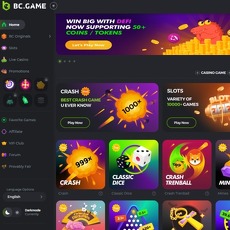
BC.Game | Broad crypto-first casino and sportsbook setup with originals and third-party games. | Current restricted countries, KYC triggers, withdrawal limits and which promotions affect cash-outs. |
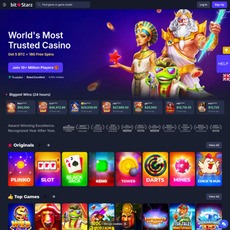
BitStarz | More traditional casino feel combined with cryptocurrency payments, which may suit people who care more about slots and casino catalogue than a heavily Web3-style interface. | Don't assume crypto means no verification. Check the current KYC requirements, withdrawal rules and country restrictions. |
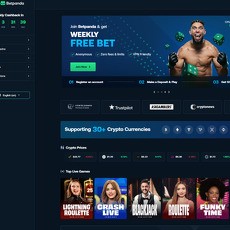
Betpanda | Crypto-focused casino and sportsbook option with a streamlined crypto angle. | Exactly when verification can be requested, current jurisdiction rules and withdrawal conditions. I wouldn't treat "no-KYC" positioning as an absolute promise without reading the terms. |
Roobet | Well-known crypto casino and sportsbook format with originals plus third-party gambling content. | Location first. Check the current restricted-territories list before opening an account or sending funds. |
Bitsler | One of the more relevant options to compare if provably fair in-house games are the main reason you're looking at crypto gambling. | Check which games actually use the provably fair system and how the verification process works. |
Stake | Large casino and sportsbook style platform with a strong crypto identity and a wide product range. | Geographic eligibility, verification requirements, withdrawal conditions and the current terms applying to your country. |
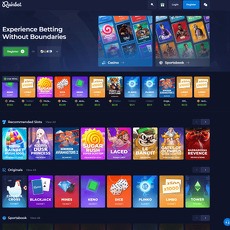
Rainbet | Crypto-oriented casino and sportsbook worth comparing with other newer crypto-first platforms. | Read current KYC terms rather than relying on "no-KYC" shorthand. Pay attention to when verification can be requested. |
Wild.io | Casino-focused crypto option already included in the CryptoLinks directory. | Verification requirements, current terms, withdrawal conditions and jurisdiction restrictions. |
None of those points means "deposit without thinking."
It means these are useful starting points for comparison.
The individual CryptoLinks reviews go deeper into each platform. This category page is where I want the differences to become obvious before you waste an hour opening ten casino tabs that all say basically the same thing.
Full List of Crypto Gambling Sites
This section matters. I want the actual directory visible before burying readers under thousands of words of educational content.
Why? Because somebody searching for a list of crypto gambling sites isn't secretly asking for a university lecture on gambling licences. They want the list first. Then they want enough information to separate decent options from questionable ones.
For every site in the directory, I'd eventually show these fields where they can be verified:
Platform type · Operator · Licence · KYC position · BTC · USDT · Supported networks · Provably fair · Restricted regions · Main limitation · Last checked · Full CryptoLinks review
If something cannot be confirmed, I'd rather write "not verified" than make up a reassuring answer.
That's a feature, not a weakness.
How I Evaluate Crypto Gambling Sites
I don't think casino rankings need fake mathematical precision.
Giving one casino 9.3 and another 9.1 looks scientific, but unless somebody can explain exactly how every decimal was calculated, it's mostly decoration.
I prefer judging the areas that materially change the risk and user experience.
1. Who Actually Operates the Casino?
First question: who's taking custody of the money?
I want to see the legal entity, relevant company information, terms, licence information and a sensible route for disputes.
A logo saying Licensed & Regulated isn't enough.
I want the operator name and licence details to make sense together. Where a regulator provides a public register or verification page, that's what should be checked.
I also pay attention when ownership, domains or legal entities suddenly change. That isn't automatically bad, but it's something I'd want explained rather than quietly buried in a footer.
2. Withdrawals Matter More Than Deposits
Depositing crypto is usually the easy bit.
Funny how that works.
When I'm evaluating a crypto casino, the important questions begin on the other side:
- How long does the casino say internal approval takes?
- Is there a pending period?
- What are the minimum and maximum withdrawals?
- Are there daily, weekly or monthly caps?
- Can KYC be triggered during withdrawal?
- Does bonus wagering block the balance?
- Are there casino fees on top of network fees?
- Does the withdrawal network have to match the deposit network?
- Can larger withdrawals trigger extra checks?
"Fast crypto withdrawals" can mean almost nothing if the casino holds the request for two days before broadcasting the transaction.
Bitcoin isn't the slow part if the operator hasn't approved the payment yet.
3. KYC: I Don't Trust the Phrase "No KYC" by Itself
This is one of the messiest parts of crypto gambling.
A casino may let you create an account without uploading a passport. That does not necessarily mean identification can never be requested.
Verification can appear because of withdrawal size, AML monitoring, account behaviour, payment method, location, source-of-funds questions or a manual compliance review.
So when I see No KYC Casino, I read it as a claim that needs context, not a magic privacy guarantee.
The question isn't simply:
"Do I need KYC to sign up?"
The better questions are:
"When can you request KYC?"
and
"Can you stop my withdrawal until I provide it?"
That's the part I'd understand before depositing.
4. Licensing Helps, but a Licence Isn't a Force Field
I like verifiable licensing more than vague offshore anonymity.
But I don't treat every gambling licence as equivalent, and I definitely don't translate "licensed" into "nothing can go wrong."
Different licensing regimes have different standards, complaint procedures, enforcement powers and player protections.
A legitimate licence can tell me something useful about who operates the site and what regulatory structure exists.
It doesn't guarantee:
- a player will never have a dispute;
- a withdrawal will always be instant;
- every bonus term will be generous;
- the operator can legally serve every country;
- or the player can recover money easily if things go wrong.
Useful signal? Yes.
Magic shield? Nope.
What Is a Crypto Gambling Site, Exactly?
A crypto gambling site is an online gambling platform that accepts cryptocurrency for deposits, withdrawals or both.
That's the simple definition.
The messy part is that the category includes several quite different products.
Crypto-First Casinos
These platforms are built around Bitcoin, stablecoins and other cryptocurrencies from the start.
They often lean heavily into crash games, casino originals, crypto promotions, VIP systems and blockchain-style branding.
Traditional Casinos That Added Crypto
These feel more like conventional online casinos with cryptocurrency added as another payment method.
For somebody who mainly wants familiar slots, table games and live dealers, that can actually make more sense than choosing the most aggressively "Web3" looking site.
Casino + Sportsbook Platforms
A lot of major crypto gambling sites now combine casino games, originals, sports betting, esports and sometimes racing in the same account.
Convenient? Sure.
But casino bonuses, sportsbook bonuses and withdrawals can still have completely different rules. If sports betting is your main reason for signing up, I'd compare the dedicated
CryptoLinks crypto sportsbook list
rather than choosing a platform mainly because its casino happens to look good.
Provably Fair Crypto Casinos
This is one of the genuinely interesting crypto-native ideas.
A provably fair game can use cryptographic data such as server seeds, client seeds and nonces to let players verify individual results.
That's useful.
But don't stretch the claim too far.
Proving that a dice result wasn't changed after the fact does not prove the company is financially healthy, licensed where you live or guaranteed to approve your withdrawal.
Those are separate questions.
Decentralized Gambling Apps
Then there are gambling applications using smart contracts or more genuinely on-chain mechanics.
Here the trade-offs shift.
You may get more transparent transaction activity, but you also introduce smart-contract risk, wallet-signing risk, weaker customer support and potentially messy legal questions.
A website doesn't become decentralized just because its logo has a Bitcoin symbol on it.
How Crypto Casino Deposits and Withdrawals Actually Work
A normal crypto deposit sounds easy:
choose the coin, copy the address, send funds.
And technically, it can be.
The problem is that crypto transfers are unforgiving. If wallet addresses, private keys, networks and self-custody still feel unfamiliar, I'd get comfortable with the basics first using the
CryptoLinks crypto wallet guide
before sending funds to any gambling platform.
Before sending anything, I check:
- the asset;
- the network;
- the full receiving address;
- any memo or destination tag;
- the minimum deposit;
- whether the casino accepts my jurisdiction;
- whether the sending wallet or exchange has restrictions related to gambling transactions.
USDT is a perfect example.
"USDT supported" doesn't tell me enough. I want to know which USDT network.
Sending a token over the wrong chain can turn a basic deposit into a support nightmare, and sometimes the money simply isn't recoverable.
For an unfamiliar platform, I'd rather send a boringly small first transaction than learn an expensive lesson.
Why Withdrawals Can Take Longer Than the Blockchain
Casino withdrawal time can involve:
request → pending period → security review → KYC → bonus check → internal approval → transaction broadcast → blockchain confirmation.
Only the last part is really the blockchain doing blockchain things.
This is why I don't automatically believe phrases like instant crypto withdrawals unless it's clear whether they mean casino approval or only network settlement after approval.
They're not the same thing.
Crypto Casino Bonuses: The Big Number Usually Isn't the Important Number
Casino bonus marketing has one job: make the offer look huge.
My job is to look at the annoying little numbers underneath it.
Before accepting a bonus, I check:
- wagering requirement;
- whether wagering applies only to the bonus or deposit + bonus;
- maximum allowed bet;
- eligible games;
- contribution percentages;
- promotion expiry;
- maximum cashout;
- restricted countries;
- minimum deposit;
- withdrawal restrictions.
Say a casino gives a $100 bonus with 35× wagering on the bonus.
That's $3,500 in qualifying bets before meeting the requirement.
If 35× applies to the combined $100 deposit + $100 bonus, that's $7,000.
Same shiny "35×" marketing number. Very different reality.
For a first deposit on an unfamiliar casino, there's a decent argument for skipping the bonus entirely.
Less excitement, sure.
Also fewer bonus clauses standing between you and a clean withdrawal test.
Are Crypto Gambling Sites Safe?
"Safe" is too broad a word here.
I prefer splitting it into separate questions.
Is the Operator Identifiable?
Can I tell which company holds the player relationship and controls the platform?
Is the Licence Verifiable?
Does the claimed licence connect to the right operator and domain?
Is My Account Reasonably Protected?
Can I use things such as 2FA, login monitoring, withdrawal confirmation or other sensible account controls?
Are the Games Fair?
For traditional games, what providers or testing systems are involved?
For provably fair originals, can results actually be independently checked?
Can I Get My Money Out Under Understandable Rules?
This one gets underestimated.
A casino can tick the first four boxes and still be a terrible place to keep a large balance if the withdrawal terms are restrictive or unclear.
And that's another rule I follow:
A casino account is not a crypto wallet.
Money sitting inside a custodial gambling account is controlled by the operator until it is successfully withdrawn.
I wouldn't use it as long-term storage. If you're holding crypto rather than actively using it, compare proper self-custody options and
hardware wallets
instead.
Crypto Casino Red Flags I Take Seriously
Some warning signs are obvious. Others aren't.
No Clear Operator
If a company wants custody of player money but can't clearly explain which legal entity runs the service, that's not something I'd shrug off.
Licence Details That Don't Add Up
A licence logo is easy to display.
Check the licence record rather than admiring the badge.
Hidden Withdrawal Limits
I'd want important limits visible before depositing, not discovered after winning.
"Deposit More to Unlock Your Withdrawal"
That's one of the nastiest patterns I watch for across the wider crypto space, not just gambling.
If somebody claims you must send additional funds purely to "release", "verify" or "unlock" an existing balance, stop before sending anything else. I keep a broader
CryptoLinks crypto scam and suspicious-sites database
for exactly these kinds of warning patterns.
Moving Goalposts With Verification
Real KYC and AML checks exist.
What bothers me is when requests keep changing without a clear reason and the player can't get a straight explanation of what's required.
Giant Bonuses With Tiny Cashout Limits
A massive bonus can become pretty silly when the maximum withdrawable winnings are heavily capped.
Read the cashout rule.
Guaranteed Profit
It's gambling.
Anybody guaranteeing easy profit from casino play is selling fantasy.
Pressure to Chase Losses
VIP treatment isn't a benefit when it turns into somebody pushing you to deposit more after losing.
That's where "personal account manager" stops sounding fancy.
What I'd Personally Watch Out For
Here are the things I think newer crypto gamblers underestimate most.
"No KYC" Doesn't Mean "Nobody Can Ever Ask Who You Are"
I've already beaten this horse, but it matters.
If the terms reserve the right to request identification, assume that possibility exists.
Fast Blockchain ≠ Fast Withdrawal
Solana, Litecoin, Bitcoin Lightning or some other fast payment method cannot approve your casino withdrawal.
The operator does that.
A Good Casino Can Still Be Wrong for Your Country
This is where people get themselves into pointless trouble.
A site loading in your browser is not proof that you're legally allowed to use it.
Neither is successful registration.
A Huge Coin List Isn't Automatically Useful
I'd rather have five well-supported crypto options with clear network information than fifty logos where I'm guessing which chain the cashier expects.
Bonuses Can Make Simple Things Complicated
Sometimes the cleanest first experience is:
deposit → play without bonus → request modest withdrawal → see what actually happens.
Boring is underrated when testing money movement.
How I Would Choose Between Crypto Gambling Sites
If I were narrowing down this directory, I'd use this decision framework.
If Regulatory Protection Matters Most
Start with the operator, licence, country eligibility and dispute route.
Don't begin with the bonus.
If Privacy Matters Most
Read the actual verification policy.
Look at when KYC can be requested, not just whether registration starts without documents.
If Fast Withdrawals Matter Most
Look for clear processing rules, limits and verification triggers.
Don't confuse blockchain speed with casino approval speed.
If Provably Fair Games Matter Most
Check which games are verifiable and whether the platform gives you a usable verifier.
If You Mainly Want Sportsbook Betting
Use the dedicated CryptoLinks crypto sportsbook comparison rather than assuming a casino with a sports tab automatically has the strongest odds, limits or betting product.
If You Mainly Want Normal Slots and Live Dealers
A traditional casino that handles crypto sensibly may fit better than a platform built mainly around crash games and casino originals.
Who Crypto Gambling Sites Are For — and Who Should Probably Skip Them
Crypto casinos make the most sense for adults who already understand cryptocurrency transactions and specifically want to use digital assets for gambling.
They're less compelling if you:
- don't understand wallet addresses and blockchain networks yet;
- need strong local consumer protection;
- are uncomfortable with conditional verification;
- want easy chargebacks;
- struggle to control gambling spending;
- are mainly looking for a way to make money from crypto.
That last one matters.
Gambling is not crypto investing.
If your actual goal is simply to buy or accumulate Bitcoin or another cryptocurrency, I'd start with the
CryptoLinks comparison of cryptocurrency exchanges
instead of trying to turn casino play into an investment strategy.
Common Mistakes I See Around Crypto Casinos
Choosing by Bonus Size
Fix: Compare withdrawal and bonus conditions before the headline reward.
Assuming Crypto Means Anonymous
Fix: Read the KYC and AML policy.
Using a VPN to Bypass Restrictions
Fix: Don't. Apart from legal issues, breaching location terms can create exactly the kind of withdrawal dispute you don't want.
Sending the Wrong Network
Fix: Confirm both token and chain before every transfer.
Depositing Big Before Testing Anything
Fix: Start with a small practical amount.
Leaving Winnings Sitting on the Casino
Fix: Subject to sensible fees and withdrawal rules, move funds you don't plan to use to a wallet you control.
Believing Every "Provably Fair" Claim Covers Every Game
Fix: Check the actual scope.
Treating Casino Tokens Like Guaranteed Value
Fix: Look at liquidity, withdrawal conditions and actual marketability before valuing token rewards like cash.
Are Crypto Casinos Legal?
There is no global yes-or-no answer.
Online gambling law depends on where the player is located and can also depend on the operator, licence, gambling product and local regulations.
Crypto doesn't bypass that.
A casino accepting your registration isn't legal advice.
Neither is the fact that a website loads normally.
Before playing, check current rules where you live and the casino's own restricted-country policy. If the legal position isn't clear, use an appropriately qualified local professional or authoritative regulator guidance.
And no, I wouldn't recommend disguising your location to get around a casino's restrictions.
That's a pretty creative way to create a withdrawal problem for yourself.
Responsible Crypto Gambling
I like crypto.
I do not like pretending crypto removes the basic maths of gambling.
Casino games are entertainment products designed with an operator edge, fees, commissions or other economics that keep the business alive.
Add cryptocurrency and you may also add:
- token-price volatility;
- network fees;
- irreversible transfers;
- custody risk;
- extra friction around compliance.
Set the budget before playing.
Decide how much you're willing to lose, not how much you'd like to win.
Don't borrow to gamble. Don't chase losses. Don't turn rent money into a "quick BTC casino session." And if gambling stops feeling optional, use cooling-off, self-exclusion and professional support rather than trying to win your way back out.
Frequently Asked Questions
What are crypto gambling sites?
Crypto gambling sites are online casinos, sportsbooks or other betting platforms that accept cryptocurrencies such as Bitcoin, stablecoins or other digital assets for deposits, withdrawals or both. Some are crypto-first platforms, while others are conventional online casinos that added cryptocurrency payment options.
What is the best crypto gambling site?
I don't think one casino is best for everybody. The better choice depends on your location, preferred games, crypto and network, verification expectations, withdrawal requirements and how much regulatory protection you want. I would compare those factors before looking at bonuses.
What should I check before using a Bitcoin casino?
Check the operator, current licence, restricted countries, KYC policy, withdrawal limits, processing rules, supported networks, bonus terms, security controls and responsible-gambling tools. If one of those is impossible to find, I'd want to know why before depositing.
Are there crypto casinos without KYC?
Some platforms may allow registration, deposits or ordinary play without immediate document verification. That does not necessarily mean KYC can never be requested. Read the current terms to understand verification triggers and whether withdrawals can be paused pending identity checks.
Are Bitcoin casino withdrawals instant?
Sometimes they can be fast, but "instant" is often oversimplified. The casino must approve and broadcast the payment before the blockchain can confirm it. Security reviews, KYC, bonus checks, withdrawal limits and network congestion can all affect total time.
What does provably fair mean?
Provably fair gambling uses cryptographic information to allow players to verify selected game results. A typical system may combine a server seed, client seed and nonce. It can improve game-result transparency, but it doesn't verify an operator's solvency, licence or withdrawal behaviour.
Is USDT better than Bitcoin for gambling?
It depends on what you're trying to avoid. Stablecoins can reduce ordinary price volatility while funds are being used, but network choice, issuer risk, fees and platform support still matter. Always verify the exact USDT network before sending.
Are crypto casino bonuses worth it?
Sometimes. But I'd calculate the wagering requirement, maximum bet, game contribution, expiration, withdrawal restrictions and maximum cashout before deciding. A large percentage on the homepage can be much less impressive after reading the conditions.
Can a crypto casino ask for KYC when I withdraw?
Yes, depending on its terms and compliance procedures. Some operators reserve the right to request identification or source-of-funds information during withdrawals or after specific risk triggers. That's why I read verification rules before depositing rather than after winning.
Should I keep crypto in a casino account?
I wouldn't treat a gambling platform as long-term crypto storage. Funds held in the account remain exposed to operator and custody risk until successfully withdrawn.
My Final Take
The biggest mistake you can make on a page like this is looking for one giant green BEST CASINO button and switching your brain off.
That's not how I want CryptoLinks to work.
I'm much more interested in helping you eliminate bad fits.
Wrong jurisdiction? Cross it off.
KYC policy you're not comfortable with? Cross it off.
Withdrawal limits don't work for you? Gone.
Licence can't be properly understood or checked? Keep digging or move on.
Bonus looks amazing but the cashout rules are garbage? Ignore the bonus.
What's left after that filtering process is a much more useful shortlist than whatever operator happens to be paying the highest commission this month.
Use the CryptoLinks directory to compare the market, then open the individual reviews for the platforms you're genuinely considering. After that, recheck the operator's current terms, country restrictions and cashier details yourself.
Casino rules change.
Crypto networks change.
Licences change.
Websites change.
Your ability to read the boring bits before sending money shouldn't.
Gambling should stay entertainment. If it stops feeling controlled, stop playing and get help.
Affiliate & Editorial Disclosure
CryptoLinks may receive compensation when readers visit or register with certain third-party platforms through links on this page.
That relationship does not determine what I say about a platform.
An affiliate link doesn't make weak withdrawal terms better. It doesn't make a questionable policy clearer. And it definitely doesn't turn a casino into the right choice for everybody.
Listings, licences, bonuses, KYC policies, supported cryptocurrencies and country restrictions can change. Material information should be checked against the operator's current terms and, where applicable, the relevant regulator before depositing.