BLOCKCHAIN BUSINESS | Building Web 3 Sovereign No Code Platforms & dApps Review
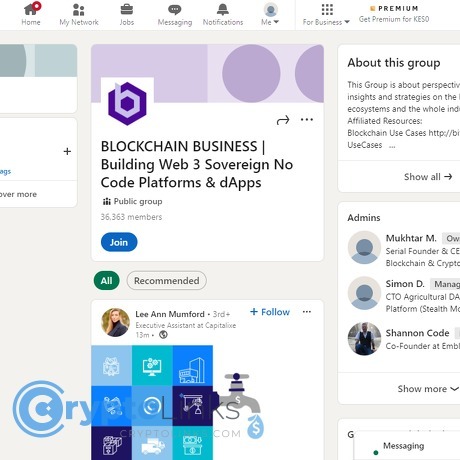
BLOCKCHAIN BUSINESS | Building Web 3 Sovereign No Code Platforms & dApps
discordapp.com
BLOCKCHAIN BUSINESS: Building Web3 Sovereign No‑Code Platforms & dApps – The Ultimate Review & Guide
Have you ever scrolled past some flashy Web3 thread, seen words like “sovereign chain”, “no‑code dApp”, “tokenomics”, and thought:
“I actually like this idea of a user‑owned internet… but where on earth do I start if I can’t code?”
If that sounds familiar, you’re in the exact spot this article is written for.
There’s a LinkedIn group called “BLOCKCHAIN BUSINESS | Building Web 3 Sovereign No Code Platforms & dApps” that promises to be a home for people like you: founders, operators, consultants, and curious builders who want to create something real in Web3 without needing to become Solidity wizards first.
In this guide, I’m going to walk you through:
- What problems this group is actually trying to solve for Web3 builders
- What kind of person it’s built for (and who probably won’t like it)
- What you can expect to learn about Web3 business, sovereignty, and no‑code platforms as you follow along
Think of this as your “friend who’s been around crypto for a while” sitting down with you and saying:
“Forget the noise. Here’s what matters if you want to build something that actually works in Web3.”
The real problems Web3 builders and founders are facing
Let’s be honest: most people who say they want to “build in Web3” aren’t actually blocked by ideas.
They’re blocked by confusion.
I keep seeing the same pattern over and over:
- Information overload: Thousands of articles, Twitter threads, YouTube channels… and yet, you still can’t answer a basic question like “Where do I start if I want to build a Web3 platform?”
- Tech intimidation: Solidity, Rust, smart contracts, oracles, rollups… The stack feels like a full‑time CS degree. If you’re not a developer, it’s easy to assume “this isn’t for me.”
- Jargon without execution: “Sovereign chains”, “trustless systems”, “hyperstructures” – sounds epic, but most content stops at theory. When you look for business answers — pricing, users, legal, monetization — things go silent.
- Community spam: There are hundreds of “crypto groups”, but a huge chunk are:
- Signal / trading groups
- Memecoin rooms
- Low‑quality airdrop channels
Not exactly where serious founders go to design a product, talk about governance, or compare no‑code tool stacks.
- Non‑coders feel locked out: Even though no‑code tools are finally catching up, a lot of non‑technical founders still believe they “can’t really” launch something serious in Web3.
Yet the data tells a different story.
According to multiple startup reports from recent years, a growing share of early‑stage SaaS and marketplace MVPs are now built using no‑code tools like Bubble, Webflow, Adalo, and similar visual builders. In the crypto space, we’re starting to see the same thing happen: founders using visual tools to launch NFT platforms, token‑gated communities, or DAO dashboards without ever touching bare smart contract code.
So the gap isn’t that Web3 is “too technical” forever.
The gap is that there aren’t many places where business‑minded, non‑technical people can talk Web3 in a serious, execution‑focused way — without getting drowned out by charts and memes.
The promise: A practical Web3 business hub for non‑coders (and coders too)
This is where the “BLOCKCHAIN BUSINESS | Building Web 3 Sovereign No Code Platforms & dApps” group comes in.
On paper, its mission is pretty clear: bring together people who care about
- Web3 as a business platform, not just a speculative asset class
- Sovereign platforms – where you actually control your own rules, governance, and upgrades
- No‑code tools that let you ship faster, test ideas, and own your stack without learning a new programming language from scratch
- dApps that real users can touch, not just whitepapers and promises
In other words, it aims to be a place for:
- Founders who want to build Web3 businesses
- Operators and consultants who help companies move from Web2 to Web3
- No‑code builders looking to plug into Web3 ecosystems
- Developers who are okay talking business models, not just gas optimizations
What you’re reading right now isn’t a promo. It’s a straight‑up review and guide. I’m treating this LinkedIn group the same way I treat any crypto resource I look at:
- What does it actually offer?
- Who really benefits from it?
- How does it fit into a serious Web3 learning and building path?
As you keep reading, you’ll see clear, practical answers to questions like:
- How do you start a Web3 business if you can’t code?
- What exactly is a “Web3 startup” in normal language?
- What does “sovereign” actually mean when people talk about blockchains or platforms?
- Where do no‑code tools come in if you want to build dApps?
- And can a LinkedIn group really help you get from idea to MVP?
The goal is simple: by the time you’ve gone through the full guide, you should be able to answer for yourself:
“Is this the right place for me to plug in, ask questions, share progress, and actually move my Web3 idea forward?”
Who this guide is for (and who it’s not for)
Let’s set expectations right away so you don’t waste time.
This guide — and the group it focuses on — makes the most sense if you see yourself in one of these:
- You’re a non‑technical founder with a Web3 idea.
Maybe you’re thinking:- “Could I build a token‑gated learning platform?”
- “Can I turn my existing membership site into an NFT‑based ownership model?”
- “What would a Web3 marketplace for my industry look like?”
You’re not trying to write code yourself, but you’re serious about understanding how the pieces fit together.
- You’re a Web2 founder or operator looking to “go Web3”.
Maybe you already run:- A SaaS platform
- A membership community
- A marketplace or agency
And now you’re asking:
“How do I add Web3 features — tokens, wallets, on‑chain proof, user ownership — without rebuilding my entire stack from scratch?”
- You’re part of an early‑stage Web3 startup team.
You might already have a dev or two, but you need:- Clear thinking around business models
- Real talk on tokenomics vs revenue
- Examples of what other builders are doing with no‑code tools
In other words, you want less hype, more execution.
On the flip side, this probably isn’t the content you’re looking for if:
- You’re only here to trade tokens.
If your main interests are:- Signal groups
- Short‑term charts
- Pump‑and‑dump plays
…this kind of community and guide will likely feel “too slow” or “too business‑y”.
- You’re a hardcore protocol dev only wanting deep code debates.
You love:- Arguing about consensus algorithms
- Reviewing EIPs
- Optimizing gas at the assembly level
You might still pick up some interesting business context here, but it’s not a replacement for niche dev forums, GitHub discussions, or research‑heavy channels.
So if you’re somewhere between “I’m curious about Web3” and “I’m ready to launch or grow a Web3 product”, you’re in the sweet spot this guide is written for.
How this guide is structured (so you actually get value, not fluff)
There’s already plenty of vague Web3 content out there. This one is designed to be practical and easy to use.
Here’s what you can expect as you keep going:
- First, a clear review of the LinkedIn group itself.
You’ll see:- What the group is actually about
- What kind of posts and people you can expect inside
- How active and useful it really is if you’re trying to build
- Then, straight answers to the big questions people keep Googling:
- “How do I start a Web3 business?”
- “What is a Web3 startup in simple terms?”
- “What does ‘sovereign’ mean in the blockchain world?”
- “How can no‑code tools help me build dApps?”
These aren’t going to be long academic definitions — they’ll be practical explanations you can map directly to your own ideas.
- Throughout, you’ll see how to use a community like this in a smart way.
Communities are powerful when you:- Ask specific, practical questions
- Share what you’re working on
- Listen to how other builders solved similar problems
They’re a waste of time if you treat them like passive entertainment.
The big picture: this isn’t just “another review”. It’s a roadmap you can use to move from:
- “I like the idea of Web3…”
- to “Okay, here’s my first Web3 business plan and MVP path.”
And the LinkedIn group we’re talking about? Think of it as one of the key “community tools” you can tap into along the way.
So here’s the question that really matters right now:
If there was a focused LinkedIn group built around Web3, sovereignty, and no‑code — could it realistically help you go from idea to a working dApp or platform?
That’s exactly what we’re going to look at next. In the next part, we’ll take a closer look at what the “BLOCKCHAIN BUSINESS | Building Web 3 Sovereign No Code Platforms & dApps” group actually is, who’s behind it, what happens inside, and whether it’s worth your attention.
Ready to see if this community can become your unfair advantage in Web3? Keep reading…
What is the “BLOCKCHAIN BUSINESS | Building Web 3 Sovereign No Code Platforms & dApps” group?
The name is long, but the intention is sharp. “BLOCKCHAIN BUSINESS | Building Web 3 Sovereign No Code Platforms & dApps” is a LinkedIn group built around one core idea: help people actually build Web3 businesses – without needing to be hardcore developers.
On the surface, it looks like yet another LinkedIn community with blockchain in the title. Once you look closer, a different pattern shows up. This isn’t a meme page or a trading room. It points at four specific things: Web3, sovereignty, no‑code, and business execution. That combination is rare.
The positioning is very intentional too. Instead of being a generic “crypto” group where everything from memecoins to mining rigs gets thrown together, it narrows the focus to:
- People who want to build or run products, not just trade tokens
- Founders who care about control and sovereignty, not just quick listings
- Builders who prefer moving fast with no‑code tools instead of getting stuck hiring engineers they can’t afford yet
In other words, it leans more toward “How do I launch something real?” than “What’s the next 100x coin?” That’s exactly the kind of filter that makes a Web3 community worth looking at.
As Nassim Taleb put it:
“The most important thing in the world is to know what you want and what you are willing to give up to get it.”
This group signals what it wants: builders, operators, and no‑code creators who are willing to trade hype for actual progress.
Group focus: Web3 + Sovereignty + No‑Code + Business
The easiest way to understand this LinkedIn group is to break it into its four pillars. Each one removes a blocker that usually stops non‑technical founders from doing anything in Web3.
1. Web3 – the user‑owned internet
Forget buzzwords for a second. Web3, at its core, is about:
- Decentralization – your product isn’t controlled by a single company’s server
- Blockchain – data and transactions are recorded on shared, tamper‑resistant ledgers
- Tokenomics – value and incentives can be shared with users, not just investors
- Privacy and ownership – users actually own wallets, assets, identities
A Web2 marketplace rents users access to their own accounts. A Web3 marketplace can let them actually own their identity and their assets, then take them elsewhere if they want. That shift sounds small, but it completely rewires how future businesses can be built.
2. Sovereign – control over your own rules
“Sovereign” is the word that separates hobby projects from serious platforms. In blockchain language, a sovereign chain or platform:
- Sets its own rules and upgrade paths
- Decides fees, governance models, and feature changes without asking a parent chain for permission
- Can respond to attacks or bugs by coordinating its own community
You can think of it like the difference between:
- Building a business entirely inside a closed platform (like a Facebook page)
- Owning your own domain, stack, and community, where you decide what changes and when
This group leans toward that second path: founders who want more say over what they’re building, instead of just being another app in someone else’s walled garden.
3. No‑code – building without writing everything from scratch
This is where things get exciting for non‑technical people. No‑code tools let you:
- Connect wallets, smart contracts, and frontends using visual builders
- Launch dApp interfaces, dashboards, or marketplaces using templates and drag‑and‑drop blocks
- Automate workflows (on‑chain events triggering off‑chain actions) without touching raw Solidity
We’ve seen this story before:
- Shopify let non‑coders run serious e‑commerce stores
- Webflow let designers launch production websites without engineering teams
- Bubble enabled full SaaS apps without traditional coding
No‑code is doing the same thing to Web3. A 2023 survey from Bubble’s no‑code report found that a large chunk of no‑code founders had zero prior programming background and still shipped working products. Web3 is just a more complex playground – but the logic holds.
This group doesn’t just talk tools in isolation. It connects no‑code with the reality of token flows, wallets, and smart contracts – the things that make Web3 special in the first place.
4. Business – not just tech for tech’s sake
The last pillar is the one too many crypto communities skip: actual business thinking. Inside a “business‑first” Web3 group, you’re more likely to see people asking:
- “Who is the customer?”
- “Why would anyone choose this instead of the Web2 option?”
- “How do we make money, and how do users benefit?”
- “What about regulation, KYC, or tax?”
It lines up with the hard truth McKinsey highlighted in their tech research: most digital projects fail not because of the technology, but because of weak business models and execution. Web3 is no different.
Put together, these four pillars are powerful for non‑technical founders because they answer the three silent fears most people have:
- “I’m not technical enough.” → No‑code lowers the barrier.
- “What if everything changes under me?” → Sovereignty and Web3 infra give you more control.
- “Is this actually a business, or just a token?” → The business focus forces you to think in terms of value, not vibes.
Who’s inside and what kind of content you should expect
The people inside a group matter more than the description at the top. If you scroll through this one, you’ll usually notice a mix like:
- Founders and co‑founders – often coming from Web2 SaaS, marketplaces, or agencies, now testing Web3 angles
- Consultants and strategists – helping clients with token models, DAO structures, or go‑to‑market
- No‑code builders – the Bubble, Webflow, and Tally/Quest users experimenting with on‑chain integrations
- Product and ops people – the ones who actually ship features and run communities
- Some developers – usually the kind who enjoy translating between “founder language” and “tech reality”
That blend matters. Completely dev‑only chats tend to end up in GitHub debates and compiler errors. Completely non‑technical chats turn into vague “blockchain will change everything” statements. This sits somewhere in between: technical enough to be useful, practical enough to be understood.
In terms of content, expect things like:
- Links to no‑code Web3 tools
Examples: posts highlighting platforms that connect wallets to Webflow frontends, or tools that let you mint NFTs and gate content without custom code. - Discussions around regulation and structure
Think: “How are others handling KYC for tokenized assets in the EU?” or “Anyone here structured a DAO with a foundation or LLC wrapper?” - Token and business model breakdowns
Not speculative price calls, but “This is how this project designed staking rewards, this is what broke, this is what users actually did.” - Event, webinar, and workshop announcements
Online sessions about no‑code stacks, token launches done responsibly, or case studies of sovereign appchains. - Case studies and mini‑postmortems
Short write‑ups like “We tried launching X using Y tool, here’s what worked, here’s what was a nightmare.” These are gold for saving you months of painful trial and error.
What you probably won’t find in abundance:
- Line‑by‑line protocol code reviews
- Pure meme trading signals
- Hardcore research threads on zero‑knowledge proofs or consensus implementations
It’s not that those things aren’t valuable. They’re just not what this group is optimized for. Think of it as a working room for builders who care about “How do we make this live, legal, and useful?” rather than “How do we optimize a new consensus variant?”.
How active and useful is it really?
Every group sounds good in theory. The real test is whether there’s enough activity – and the right kind of activity – to make it worth your time.
When I look at a LinkedIn group like this, I typically check three things:
- Post frequency
Are there new posts most weeks, or does it feel like a ghost town where the last update was six months ago? - Comment quality
Are people asking thoughtful questions and getting real answers, or is it just generic “Nice post” replies and emojis? - Signal vs shilling
Is every other post a “Buy my token / join my presale”, or are there posts that clearly try to teach, explain, or unpack something?
Useful communities usually have a few telltale signs:
- Members posting “How do I build X using no‑code / low‑code?” and getting multiple tool suggestions or step‑by‑step ideas
- Founders openly sharing early‑stage screenshots, wireframes, or token models and asking for honest feedback
- People referencing each other’s previous posts when giving help – a sign they’re actually paying attention and not just dropping links
There was an interesting pattern reported in an online communities study by Deloitte: teams that actively participate in focused practitioner communities tend to move faster from idea to MVP and avoid repeating obvious mistakes others already hit. A group like this is essentially a Web3‑specific version of that – a filter where people show up because they want to build, not just talk.
So where does this LinkedIn group fit into a smart learning and building setup?
- Not your only learning source – you’ll still want docs, courses, and direct tool guides
- Not your only feedback loop – user interviews and real customer conversations matter more than group opinions
- But a strong community layer where you can:
- Compare no‑code stacks and frameworks
- Sense‑check Web3 business ideas before you burn money
- Spot collaboration opportunities with people at a similar or slightly more advanced stage
In simple terms: this group won’t build your product for you. But if you use it well, it can stop you from building the wrong thing, with the wrong tools, in the wrong way.
The real question now isn’t “Is the group good?” – it’s this: What exactly are you trying to build in Web3, and how do you turn that from a fuzzy idea into a clear, testable startup?
That’s where things get interesting next — when we break down what a Web3 startup actually is, and how to start a Web3 business step by step, even if you can’t code yet. Ready to see what you’re really building and how it all fits together?
Web3 business basics: What are you actually trying to build?
If you strip away the buzzwords, this is the only question that really matters:
What exactly are you trying to build in Web3 – a real business, or just a token with a logo?
Before talking tools, tokens, or communities, you need a clear picture of what a Web3 business actually is. Most people skip this part, then wonder why their “project” goes nowhere.
I like to think of it this way:
- Web2: you rent users’ attention and data.
- Web3: you share ownership, rules, and upside with the people who use what you build.
Everything else is just implementation.
What is a Web3 startup? (In plain English)
Let’s keep it simple.
A Web3 startup is a business that uses blockchain, decentralization, and tokens to give users real ownership, transparency, or new ways to earn and participate.
That usually shows up in a few practical ways:
- Tokens to align users and investors
Think of governance tokens in protocols like Uniswap or Aave. Early users and liquidity providers don’t just get “points” – they get tokens that can be traded and used to vote. It’s part loyalty program, part ownership, part coordination tool. - Logic that runs on smart contracts, not private servers
In Web2, your business logic lives in a backend you completely control. In Web3, big chunks of your business logic can live in smart contracts on a blockchain – rules that run automatically and transparently.
For example:- A DeFi lending protocol that automatically liquidates risky positions.
- An NFT marketplace that enforces creator royalties on-chain.
- Users actually own assets and data
In Web2, if the platform shuts down, your assets often vanish with it. In Web3, your NFTs, tokens, or identity can live in your wallet, not locked in one database.
Look at games like Axie Infinity: players own in-game assets as tokens and can trade them outside the game’s own marketplace. That’s a big mindset shift.
The contrast is sharp:
- Web2: You “have an account” on a platform. They own the rails, the rules, the data, and usually most of the upside.
- Web3: You connect a wallet. You own assets. You can often move to another interface or fork the code if the original platform goes rogue.
“In Web2, you are the product. In Web3, you can be a partner.”
That’s the core idea a lot of people feel emotionally, even if they can’t always explain it technically. They’re tired of platforms changing rules overnight, freezing accounts, or taking 30% cuts just because they can.
How to start a Web3 business: the 7‑step path
Let’s answer the classic “How do I start a Web3 business?” question in a way that actually maps to building a company, not just launching a token.
Here’s a practical 7‑step path I’ve seen work best, from idea-stage founders up to funded teams.
- 1. Understand the Web3 sector and its real potential
Forget the slogans like “blockchain will change everything.” Focus on what it actually changes:- Ownership – users own assets, not just accounts.
- Transparency – rules and transactions can be verified publicly.
- Automation – smart contracts run rules without needing a middleman.
- Global access – anyone with a wallet and internet can join.
For example, a 2022 report from the World Bank highlighted how digital assets and open finance rails can improve financial inclusion in emerging markets. That’s not “number go up” hype – that’s real-world impact.
- 2. Identify a problem and a Web3‑powered solution
Start with a real pain, then ask: “Does Web3 give me a better tool to solve this than Web2?”
Problems Web3 is actually good at:- Creators not getting fairly paid or easily tracked royalties.
- Communities that want shared ownership over platforms (DAOs, co-ops).
- Markets that need transparent rules (DeFi, on-chain fundraising, revenue sharing).
- Use cases where censorship-resistance really matters (journalism, remittances, activism).
For instance, protocols like Mirror give writers tools to tokenize content and crowdfund directly from their audience – something that’s almost impossible with traditional publishing rails.
- 3. Develop a Web3‑aware business plan
This is where most “projects” stop being serious. A Web3 business still needs:- A clear revenue model – fees, subscriptions, revenue share, NFTs, SaaS + tokens, etc.
- A token model (only if needed) – what’s the point of the token beyond speculation?
- User acquisition – how do you get people to care enough to use it?
Quick check: if you remove the token and your idea collapses, you’re building a token, not a business.
- 4. Build a small, complementary team
You don’t need an army, you need balance:- Business / product brain – understands customers, markets, and distribution.
- Technical mind – dev or technical advisor who gets blockchain basics.
- No‑code / ops person – can wire tools together, automate workflows, build frontends fast.
A 2021 CB Insights study on startup failures showed “no market need” and “not the right team” are two of the top reasons startups die. Web3 doesn’t escape that. If your team is all token talk and no product or operations, you’re stuck.
- 5. Build a Minimum Viable Product (MVP)
This is where no‑code becomes your unfair advantage.
You can often:- Use a no‑code platform to build the frontend (like Bubble, Webflow, Framer).
- Plug into Web3 APIs (wallet connections, NFT minting, token balances).
- Use existing contracts or templates instead of custom Solidity from scratch.
I’ve seen founders validate NFT membership clubs, token‑gated communities, and revenue‑sharing dashboards with nothing but no‑code tools and a few audited smart contract templates – and then raise on the back of real user traction, not just a PDF deck.
- 6. Launch, learn, and scale based on real use
Your first users are not “community members,” they are your best feedback engine.
Smart moves here:- Launch quietly with a small group that actually cares about the problem.
- Watch how they use it: what confuses them, where they drop off.
- Refine your incentives – are tokens, points, or benefits driving the right behavior?
Remember: people don’t show up because it’s Web3. They show up because it’s easier, cheaper, fairer, or more fun than what they had before.
- 7. Fundraising: pick the right fuel for your stage
You’ve got options:- Angel investors – especially those with Web3 experience.
- Crypto-native funds – for token models and protocol plays.
- Grants from ecosystems like Ethereum, Polygon, Near, etc.
- Community funding – NFT sales, token sales (careful with regulations!), or crowdfunding platforms.
Plenty of serious projects have started with grants and small angel checks while they proved out real usage before touching public tokens. That de-risks things both for you and for your future community.
Where no‑code comes in: from idea to prototype without writing Solidity
If you’re non‑technical, this is where the story stops being frustrating and starts getting exciting.
No‑code tools act like power-ups for founders who understand business and users but don’t want to spend a year learning Solidity or Rust just to test an idea.
Why no‑code is a game‑changer for Web3 builders:
- Speed – you can build something clickable and usable in days or weeks, not months.
- Cost – you don’t have to burn your entire budget on custom dev work for v1.
- Focus – you can spend brainpower on customer problems and business logic instead of syntax.
Realistically, here’s what you can build with no‑code plus existing Web3 infrastructure:
- Simple dApp frontends
Connect a wallet (MetaMask, WalletConnect), show balances, let users trigger contract actions – all from a visual builder that talks to Web3 APIs. - Dashboards and marketplaces
Pull on-chain data (like NFT ownership, protocol stats) and display it in real time. Or build a lightweight marketplace where users list and buy NFTs using existing marketplace contracts or third‑party APIs. - DAO tools and membership systems
Token‑gated communities, access passes, voting dashboards – these are all achievable without custom contract engineering when you plug into tools like Snapshot, Gnosis Safe, or existing DAO frameworks.
Here’s where a group focused on Web3 business and no‑code becomes extremely useful:
- People share their tool stacks: which no‑code builder, which wallet integration, which contract templates.
- You can post your planned MVP flow and ask for feedback before you build.
- You meet collaborators who understand both value creation and Web3 mechanics, not just code.
Instead of sitting alone trying to glue together 10 random tools, you see real examples from people a few steps ahead of you.
Common mistakes first‑time Web3 founders make
I’ve watched so many promising ideas quietly fail because founders got pulled into the wrong priorities. If you’re early in your journey, avoid these traps.
- Starting with a token instead of a customer problem
Launching a token is easy. Getting someone to care about your product is hard. If your whitepaper is 20 pages on tokenomics and one vague paragraph on the problem you solve, that’s a red flag. - Building for hype, not for utility
Chasing “meta” trends (AI + DeFi + NFTs + metaverse) without a clear use case almost always ends the same way – a short burst of hype and a long, silent tail. Utility isn’t a buzzword; it’s the reason someone comes back tomorrow. - Ignoring regulations and compliance
If you’re dealing with tokens, payments, or yield, you’re playing near regulated territory. Projects that pretended the law didn’t exist in 2020–2021 are getting letters now. Even a basic talk with a crypto‑aware lawyer early on can save you a lot of pain later. - Underestimating UX (user experience)
To most people, “Web3” is just “confusing wallets, gas fees, and weird error messages.” If you want real adoption, hide the complexity:- Use clear language, not protocol jargon.
- Offer email or social login on top of wallets, if it makes sense.
- Explain what’s happening when they sign a transaction.
Users don’t care what chain you’re on. They care that it feels safe and simple.
- Building in a vacuum
The worst projects are often the ones that never leave a founder’s head or private Notion. You need peers who can say:- “This won’t work because users won’t do X.”
- “This looks like a security or legal risk.”
- “Here’s a simpler way to test this in 2 weeks instead of 6 months.”
That’s why communities focused on business and no‑code matter so much. They keep you grounded in reality while you experiment with new tech.
“Most failed Web3 projects didn’t collapse because the chain was too slow. They collapsed because the business wasn’t real enough.”
If you can avoid these mistakes and use no‑code to ship fast, you’re already ahead of most “ideas” that never leave a Discord channel.
Now here’s the next big question you’ll face once you start building: How much control do you actually want over your platform – and what happens when you need to change the rules?
The answer lives in a concept you’ve probably seen thrown around but rarely explained clearly: sovereign blockchains and sovereign platforms. Let’s unpack that next and see how it shapes the long‑term strategy of your Web3 business.
Sovereign blockchains and sovereign platforms: what does “sovereign” really mean?
If you’re serious about building in Web3, this word is going to come up again and again: sovereignty.
People talk about “sovereign chains”, “appchains”, “sovereign platforms” – and it can sound like some grand political concept. In practice, it’s a much simpler (and way more practical) question:
Who really has the power to change the rules of your platform – you and your community, or someone else?
That’s it. Sovereignty in Web3 is about control, responsibility, and the ability to adapt when things go wrong or opportunities show up.
Quick definition: Sovereign blockchain
Let’s start with the base layer: the chain itself.
A sovereign blockchain is a network that:
- Sets and controls its own rules – block size, gas fees, transaction formats, governance processes.
- Isn’t “under” a parent chain – it doesn’t need Ethereum, Solana, or any other base chain to approve upgrades.
- Evolves through its own community and social consensus – node operators, token holders, and users decide what’s valid and what changes over time.
Celestia popularized this idea by separating data availability from execution. In their model, you can have many execution environments (the “brains” of your app or chain) that are sovereign while still inheriting some shared infrastructure. The key idea they stress is:
A sovereign chain can choose its own rules and upgrade path, based on the will of its own community, not the politics of a parent chain.
Think of it like this:
- Non-sovereign: You rent space in someone else’s building. If the landlord changes the rules, you live with it.
- Sovereign: You own the land and the building. You’re also responsible if the roof leaks.
This matters when things get ugly.
- If your dApp is just a smart contract on Ethereum, and something critical breaks, you’re bound by Ethereum’s governance and upgrade cycle.
- If you run your own sovereign chain, your community can coordinate a fork, reverse transactions (in extreme cases), adjust gas models, or roll out emergency patches.
We’ve already seen this “social consensus first” logic in practice:
- Ethereum vs Ethereum Classic (2016 DAO hack) – one community decided to change history to protect users, the other chose immutability at all costs. Two sovereign communities, two different answers.
- Cosmos appchains – projects like Osmosis run their own chains with their own parameters, while still being part of the broader Cosmos ecosystem.
The common thread: sovereignty gives you the power to react – but also the burden of deciding what “the right thing” is when the pressure hits.
Sovereign apps and platforms in practice
Now let’s talk about where most people reading this actually live: the application layer.
You might never launch your own L1 or L2. But you can absolutely build what I’d call a sovereign platform – even if it runs on top of someone else’s chain.
A sovereign app/platform usually means:
- Your governance lives on-chain – token holders, DAO members, or a council can vote on upgrades and parameters.
- Your rules are transparent and enforceable – no hidden “terms of service” that can be changed overnight without user input.
- You’re not locked into one company’s API – if an infra provider shuts down, you can move, fork, or replace that part of your stack.
Concrete examples help here:
- Uniswap: runs on Ethereum and other chains, but the Uniswap DAO governs key parameters (fees, incentives, treasury). The app itself doesn’t “belong” to a single company in the Web2 sense – its contracts and governance are public.
- Aave: similar story. DeFi lending protocol, governed by Aave DAO. Parameters like collateral ratios, interest models, and new asset listings are controlled by token-based governance.
- Small community marketplaces: I’ve seen no-code powered NFT or membership markets where:
- Creator fees are decided by token votes
- Ban lists and dispute processes are written into on-chain or DAO logic
- The front-end can be forked by the community if the original team disappears
This is “sovereign thinking” at the app layer: your users aren’t just customers; they’re stakeholders with a say.
Of course, this isn’t free.
- You may need to design governance mechanics (how votes work, who proposes changes, quorum thresholds).
- You probably need at least a basic tokenomics model if governance is token-based.
- You’ll be expected to handle the “boring but critical” stuff: documentation, proposals, transparency reports.
That’s the tradeoff:
- More control and community trust vs more responsibility and complexity.
If your app ever holds real value, those tradeoffs stop being theoretical very fast.
How this connects to Web3 business strategy
Sovereignty isn’t just a technical choice; it’s a business model decision.
Founders usually end up choosing between two broad paths:
- Path A: Build on a shared chain (Ethereum, Solana, Polygon, Base, etc.)
- Path B: Launch your own sovereign chain or appchain (Cosmos SDK, Substrate/Polkadot, rollup-as-a-service, Celestia-based setups)
Why choose a sovereign chain or appchain?
- Custom rules – you can design fee markets, gas models, and execution rules tailored to your use case (e.g. gaming, high-frequency trading, social apps).
- Full control over governance – you’re not competing with a thousand unrelated dApps for attention in protocol-level governance.
- Predictable performance – no surprise fee spikes because a memecoin casino decided to clog the network.
- Brand and narrative – “our own chain” can be powerful for partners and investors if it’s justified.
We’ve seen this logic play out with:
- DYDX v4 – moving from StarkEx on Ethereum to a Cosmos-based appchain for custom control over trading logic and fees.
- Osmosis – a DEX that chose a sovereign Cosmos chain to fine-tune economics and upgrade cadence for its own community.
Why stay on shared chains?
- Liquidity – DeFi on Ethereum and major L2s lives or dies by composability with existing protocols.
- Users – it’s easier to onboard people where wallets, infra, and education already exist.
- Tools & no-code platforms – most no-code stacks right now target mainstream chains, not custom sovereign setups.
- Regulation and simplicity – sometimes it’s easier to say “we’re an app on Ethereum” than “we run an entire financial network.”
For no-code builders and early-stage founders, the common pattern I see looks like this:
- Stage 1 – Build on top of existing infra
- Use a popular L1/L2
- Leverage no-code platforms for contracts, frontends, and workflows
- Focus on proving there’s real demand
- Stage 2 – Gradually add sovereignty
- Introduce governance (DAO, token-based voting, or community councils)
- Move more rules on-chain in transparent smart contracts
- Decentralize infra: multiple frontends, multiple node providers
- Stage 3 – Consider full sovereignty (if it actually makes sense)
- If the app becomes systemically important or needs custom performance
- If fees and congestion on shared chains are killing you
- If your economic model really needs its own base layer
Notice the pattern: earn sovereignty by earning users first
What sovereign thinking changes in your planning
Even if you never ship your own chain, just thinking in “sovereign terms” changes how you plan your Web3 business.
You stop asking only “What can I build?” and start asking:
- Who actually controls my app today?
- Is it me? My team? A token? A DAO? A corporate board? An API provider?
- If my team disappeared for 6 months, what breaks?
- Can I change things when something goes wrong?
- Is there an emergency process if a bug locks user funds?
- Who can pause contracts? Under what conditions? For how long?
- How do my users participate in decisions?
- Do they just shout on Twitter, or do they have on-chain voting power?
- Is governance symbolic, or does it actually control something important (fees, treasury, access)?
- What happens if infra or partners turn hostile?
- If your RPC provider bans your region, do you have a backup?
- If a centralized API changes pricing or shuts down, can you route around it?
This is where communities that care about business + no-code + sovereignty actually start to shine.
You can learn a lot faster by asking people who’ve already hit the walls you’re about to walk into:
- “We launched our governance token too early; here’s how it backfired.”
- “Our on-chain voting had terrible participation; here’s what we changed.”
- “We got stuck waiting on base-chain governance; here’s why we’re considering an appchain now.”
- “We thought we needed our own chain – turns out we just needed a better fee model on an L2.”
There’s a big emotional side to this as well.
At some point, you realize you’re not just launching a product – you’re setting the rules of a small economy. And people will trust you (or not) based on how you share that power.
That’s a different level of responsibility than shipping another Web2 SaaS app with a cancel-anytime subscription.
In the next part, I’m going to get into something way more “nuts and bolts”: how that sovereignty actually shows up as rules on-chain – the business logic, smart contracts, and no-code tools that make your Web3 app “think.”
Because once your rules are locked into blocks, they’re not just your idea anymore… they’re your users’ reality. So how do you write those rules without shooting yourself (and your community) in the foot?
Business logic, smart contracts, and no‑code: how your Web3 app actually “thinks”
In Web2, your app “thinks” on a server you control. In Web3, your app “thinks” on a blockchain you don’t fully control – and that changes everything.
One of the most common questions I see is:
“What is the predefined business logic within a blockchain called?”
In simple terms, the answer lives in two layers:
- Network layer: the consensus algorithm
- App layer: smart contracts (your actual business rules)
Get these wrong, and you don’t just break a webpage – you can lock money forever, block users by accident, or blow up your token economy.
Consensus, contracts, and “predefined business logic”
Let’s separate the “brain” of a blockchain into what the network decides and what your app decides.
1. Consensus: the network’s core rulebook
The consensus algorithm is the network’s way of agreeing on truth. It’s the answer to the question:
“Which transactions are valid, and in what order do they go into blocks?”
Depending on the chain, this could be:
- Proof of Work (PoW) – used by Bitcoin; miners solve puzzles to add blocks
- Proof of Stake (PoS) – used by Ethereum, Solana and many others; validators stake tokens to secure the chain
- Variants like Delegated Proof of Stake, Tendermint, HotStuff, etc.
This is “predefined logic” at the network level – it decides things like:
- How blocks are created
- How finality is reached (when a transaction is basically irreversible)
- How hard it is to attack or censor transactions
As a founder or builder, you rarely change this. You choose
2. Smart contracts: your business rules in code
This is the part that should get your full attention, especially if you’re using no‑code tools.
Smart contracts are basically:
- Your terms and conditions, but enforced by code, not lawyers
- Your business logic: who can do what, when, and under which conditions
- Your money logic: who gets paid, how much, and when
Want users to pay a fee only when a trade succeeds? That’s in a smart contract.
Want creators to get royalties every time an NFT resells? That’s in a smart contract.
Want a DAO vote that automatically releases funds if a proposal passes? Again – smart contract.
A classic example everyone knows: Uniswap.
- Uniswap’s smart contracts define the formula that sets prices in the liquidity pools
- They also define the fee structure, who earns fees, and under what conditions
- That logic runs on Ethereum, not on some private server Uniswap can secretly tweak
When you use an app like this, you’re not “trusting a website”. You’re trusting the contract logic that’s already on-chain.
“Code is law” isn’t just a slogan – it’s a warning label. Once your business rules go on-chain, they stop being a draft and start being reality.
From code to blocks: where your business rules actually live
To keep it really clear, there are two layers at play:
- Network level: consensus algorithm
- How nodes agree what the “real” state is
- How secure, fast, and decentralized your base layer is
- Things you don’t rewrite, you choose by picking Ethereum, Polygon, Solana, etc.
- App level: smart contracts and app logic
- How your marketplace, DAO, game, or platform behaves
- Who can access what, the fees, the rewards, the edge cases
- Things you or your team actually define (directly or through no‑code tools)
Why this matters so much for non‑coders:
- On-chain rules are sticky. Once deployed, changing a contract can be slow, expensive, or impossible unless you built an upgrade path from day one.
- Edge cases become real losses. Forget to handle “what if this fails?” and you might lock funds, enable exploits, or leave users stuck.
- Governance is code too. How to ban a bad actor, pause a feature, or resolve disputes – all of that has to be baked into the logic somehow.
There’s real data backing up how unforgiving this is. A 2022 Chainalysis report estimated that DeFi protocols lost billions to smart contract exploits in a single year, often due to bugs or missing checks in contract logic. That’s not just “dev mistakes” – it’s business logic that wasn’t thought through deeply enough.
The point isn’t to scare you away. It’s to motivate you to treat your smart contracts (or the no‑code flows that create them) like you’d treat signing a legal contract with thousands of customers at once.
No‑code tools and templates for business logic
Now the good news: you don’t have to write Solidity or Rust to start shaping on‑chain business logic.
No‑code and low‑code tools are getting better every month. They don’t just draw pretty UIs – they let you plug into existing contract templates and tweak behavior visually.
Typical patterns you can build with no‑code today:
- Payments & subscriptions
- Gate content or access based on NFT ownership or token balance
- Set up one-time or recurring crypto payments using established payment rails
- NFT drops & marketplaces
- Launch a collection using audited minting contracts
- Configure royalties, supply limits, start/end dates, and whitelists from a dashboard
- DAOs and on-chain governance
- Create a token-gated community with voting rights
- Define proposal thresholds, quorum, and execution logic without touching raw code
- Access control
- Set “if user has X tokens, allow Y action” type rules
- Let different roles (admin/moderator/member) do different things in the same app
Under the hood, most of these tools are doing something like this:
- Using audited contract templates (ERC‑20, ERC‑721, ERC‑1155, DAO frameworks)
- Exposing safe parameters for you to customize (fees, limits, timing, roles)
- Generating or interacting with smart contracts via a visual interface
Benefits are obvious:
- Speed: you can go from idea to MVP in days, not months
- Cost: you postpone or reduce expensive custom dev work
- Safety: if the platform is using well-tested templates, you avoid many low-level bugs
But there are also clear limits you need to keep in mind:
- You are working inside presets. If you need highly custom behavior (complex derivatives, novel DeFi logic, weird incentive systems), you’ll eventually hit a wall.
- The tool can’t think for you. It can help you avoid syntax errors, but it can’t tell you that your incentive design will get farmed by bots, or that your fee model is unattractive.
- Upgrades and control vary. Some platforms deploy fully immutable contracts, others give you admin keys or upgradeability. That has massive implications for trust and governance.
A simple real-world pattern I keep seeing:
- A founder launches an NFT membership with a no‑code tool
- They get traction, people start actually using it
- Only then do they realize they didn’t design:
- A way to migrate members to a new contract
- A clear policy for bans/refunds
- Any on-chain governance mechanism for members
All of that is “business logic”. The tool didn’t fail them – the thinking process did.
How the group can help you design smarter logic
This is where plugging into a focused community around Web3, sovereignty, and no‑code starts to pay off.
Instead of building in a vacuum, you can treat the group as a kind of informal “business logic review board”. Before you push anything on-chain, you can ask:
- “Has anyone built something like this before?”
- For example: “I want to do NFT memberships with tiered access and revocable passes. Any gotchas?”
- You’ll often hear stories of what broke for others – from bots farming incentives to users being locked out after a contract change.
- “Does this token or fee structure make sense?”
- Is your fee model sustainable or will it kill usage?
- Are you accidentally creating a ponzi-like loop instead of a real product?
- Is there a way to simplify and not use a token at all at the start?
- “What’s my worst‑case scenario?”
- What if a user loses access?
- What if a whale dominates voting?
- What if gas spikes and transactions fail halfway?
There’s a reason experienced founders and Web3 operators hang out in these kinds of spaces: they’ve already paid tuition in the form of mistakes. You don’t have to repeat all of them.
Use the group to:
- Share your high‑level flows (e.g., simple diagrams or screenshots from your no‑code builder)
- Ask for feedback on your upgrade plan: “If I need to change this later, what’s my path?”
- Collect reference contracts and case studies: “Which NFT membership models actually held up over 12–18 months?”
If you think about it, you’re not just asking for tech help. You’re asking people to stress‑test your logic before it becomes irreversible public infrastructure.
The emotional side of this matters too. It’s one thing to ship a broken web form; you fix it and move on. It’s another thing to ship a contract that mishandles funds or locks people out of assets they paid for. That hits your reputation, your community’s trust, and your own confidence in building again.
That’s why I like to think of on‑chain business logic as a kind of public promise. Once it’s deployed, it’s you telling the world:
“These are the rules. I stand by them enough to etch them into a system I can’t quietly edit later.”
So here’s the key question:
How do you actually plug into a community like this and use it as a launchpad, not just a scrolling feed you forget about in a week?
That’s exactly what I’m going to walk through next – how to join, present yourself, and use the group strategically so it becomes an unfair advantage for your Web3 journey instead of just another notification source.
Using the “BLOCKCHAIN BUSINESS” Group as a Launchpad: Practical Tips & Expectations
If you treat the “BLOCKCHAIN BUSINESS | Building Web3 Sovereign No Code Platforms & dApps” LinkedIn group like a random crypto chat room, you’ll get random results.
If you treat it like your lightweight accelerator and signal filter for Web3 business, it can actually move you forward.
Here’s exactly how I’d use this group if I were starting a Web3, no‑code, sovereignty‑minded project today.
How to Join and Set Yourself Up Right
First step is obvious: hit “Request to join.” What actually matters is what you do in the 10–15 minutes after that.
Most people just join and lurk. The smart ones quietly position themselves so the right people notice them.
Here’s a simple setup that works well:
- Clean up your LinkedIn headline and “About” section
Make it ridiculously clear you’re in the Web3 + no‑code + startup lane. For example:
“Building a no‑code NFT loyalty platform for independent coffee shops | Web3 business & tokenomics learner”
That one sentence will attract founders, consultants, and tool builders who live in that space.
- Show one concrete thing you’re doing
Even if you’re early, put one specific project in your profile’s “Featured” section:
- a Notion roadmap
- a Figma mockup
- a landing page built with Webflow, Framer, or Carrd
People trust action way more than generic “interested in Web3” lines. In most startup communities I’ve watched, profiles with specific projects get several times more replies and DMs than “I’m exploring ideas.”
- Write a short intro post in the group
Keep it short, specific, and “builder‑ish.” Something like:
Hi everyone, I’m [Name] – background in [X], currently building/testing [one‑line description]. I’m here to:
- learn which no‑code stack makes sense for [your use case]
- connect with people who’ve launched MVPs on [chain/tool]
- share my progress and what I learn along the way
If you’re working on anything similar, I’d love to connect.
This does three things at once: tells people who you are, shows that you’re actually building, and makes it easy for “your people” to self‑select and DM you.
Think of this as setting the stage. The group is full of people scrolling quickly; your goal is to make them think, “Ah, this person is actually doing something I can relate to.”
What to Actually Do Inside the Group
Hanging around and silently liking posts won’t do much for you. The value in a community like this comes from specific, concrete interaction.
Here’s what tends to work well for Web3 founders and operators in similar groups.
- Ask focused, build‑oriented questions
Compare these two questions:
“What’s the best no‑code platform?”
vs.
“I’m building a subscription‑based NFT membership for creators. I need: – wallet login – recurring payments – token‑gated content What no‑code stack would you use for this in 2025?”
The second one almost forces experienced builders to reply with real stacks, like “use X for auth, Y for payments, Z for token‑gating.” You’ll often get answers that took people months of trial‑and‑error to figure out on their own.
- Share progress updates, not just pitches
Instead of spamming your landing page, try posting short “build logs” every week or two:
- What you tried (e.g. “tested three wallet onboarding flows”)
- What worked and what flopped (“users freaked out at seed phrases, social login got 3x signup rate”)
- What you’re deciding next (“deciding between Polygon and Base for fees + UX; any recent war stories?”)
People are way more willing to help someone who is clearly in motion. In one no‑code founder community I follow, builders who post consistent, transparent progress are the ones who get invited into private masterminds and early‑access beta tools.
- Give feedback before asking for favors
This is underrated. When you leave thoughtful comments on other people’s posts, you:
- prove you understand the space
- get remembered as “the person who helped me with X”
- build a network of people who feel like they “owe you one”
That social capital is exactly what you’ll need when you later post, “Looking for 5 people who’ve launched sovereign appchains to sanity‑check my approach.”
- Avoid the two big turn‑offs: spam and vague asks
Things that make people scroll past instantly:
- “Check out my token, 100x potential!” with no context or product
- “Looking for a mentor” without saying what you’re building or what help you actually need
Flip that by being specific: “Looking for someone who has shipped a no‑code dApp on Arbitrum using [tool]. Happy to trade notes on growth and onboarding.” That’s how real relationships start.
Blending This Group with the Rest of Your Web3 Stack
No LinkedIn group will teach you everything about Web3, sovereignty, tokenomics, UX, and regulation. It’s not supposed to. Think of it as one critical layer in a stack:
- Learning layer
You still need structured content: docs from your target chain, good explainers on smart contracts, case studies of token models that actually work, and so on. This is where you sit down and study.
- Tooling layer
This is your no‑code and low‑code toolbox:
- front‑end builders (Bubble, Webflow, FlutterFlow, etc.)
- Web3 integrations (wallet connectors, API gateways, indexers)
- specialized tools (NFT platforms, DAO tools, token‑gating services)
You experiment here, build small things, and see what actually works for your users.
- Community layer
The LinkedIn group sits here, alongside Discords, Telegram groups, and forums. Its advantage is that people use real identities and business profiles, which often leads to higher‑quality, longer‑term relationships than anonymous chats.
Used well, the group becomes the place where you:
- get unstuck when your no‑code stack isn’t behaving
- find testers for your MVP
- spot patterns (“everyone is struggling with X part of sovereign infra, maybe there’s a product here”)
Then you go back to your tools and learning resources to actually implement. Back and forth, like a feedback loop.
Red Flags and Limitations to Keep in Mind
No open community is perfect. The question is not “is there noise?” but “can I tune my experience so the signal dominates?”
- Expect some shilling and low‑effort posts
This is just reality in any crypto‑adjacent space. You’ll see:
- posts that are basically ads for random tokens or “AI‑blockchain‑metaverse” stuff
- people dropping links without context or real discussion
The solution is simple: ignore them. Spend your attention on threads where you see:
- people asking build questions with enough detail
- comments longer than one sentence
- back‑and‑forth conversation instead of link‑dumping
- Mixed skill levels is a feature, not a bug (if you handle it right)
You’ll find:
- people who are still figuring out what “on‑chain” means
- consultants and founders who’ve already shipped several products
If you’re early, learn to ask “dumb” questions in a smart way: show what you’ve already tried or read, then ask the next step. That shows respect for people’s time.
If you’re more advanced, answering beginner questions forces you to clarify your own thinking. A lot of top builders I know say their sharpest insights came from explaining hard concepts in simple language to newer founders.
- Curate your own “inner circle” inside the group
Don’t treat the group as one big mass. Use it like a discovery engine for your own “micro‑network.”
When you see someone:
- posting thoughtful breakdowns
- sharing real case studies (wins and failures)
- answering questions with specifics, not buzzwords
Follow them, comment on their stuff, send a short, respectful DM:
“Really liked your breakdown on no‑code token‑gating. I’m building X and your point about Y was super useful. If you’re open to it, I’d love to trade notes sometime.”
Over time, you’ll have a small set of people whose posts you always read and whose opinions you trust. That’s how you turn a public group into something that feels almost like a private mastermind.
- Remember what this group is (and isn’t)
It’s not:
- a replacement for legal, regulatory, or tax advice
- a full technical audit for your smart contracts
- a guaranteed source of investors
It is good for:
- pressure‑testing your business logic and incentives at the idea/MVP stage
- finding collaborators who understand both business and Web3
- staying close to what other builders are actually trying in the wild
If you go in expecting a magic button, you’ll be disappointed. If you go in expecting a pool of brains, experiences, and mistakes you can learn from, you’re much closer to the truth.
Now here’s where it gets interesting: once you’re inside a group like this and you’re actually building, a few practical questions always show up…
How do you know if your idea really counts as a Web3 startup? What does “sovereign” actually change in your roadmap? At what point does no‑code stop being enough and you need real devs and audits?
Those are exactly the questions I’m going to tackle next, along with blunt answers about whether this kind of community is actually the right home base for you — or just a stepping stone.
FAQ + Final thoughts: is this the right Web3 business community for you?
Let’s finish this off the same way you’d make a real business decision: clear answers, honest pros and cons, and a simple “what should I do next?”
FAQ: Fast answers to what people usually ask
These are the questions I see over and over again from people who want to build in Web3 but aren’t sure where to start.
How do I start a Web3 business if I can’t code?
You don’t need to start with code. You need to start with a problem.
- Step 1 – Pick a real problem: Something you (or people around you) already struggle with. For example:
- Creators not getting paid fairly
- Communities that live in a WhatsApp group but want shared ownership
- Local businesses that want loyalty programs without middlemen
- Step 2 – Map how Web3 helps: Ask, “Can ownership, transparency, or programmable incentives actually make this better?” If the answer is no, you don’t have a Web3 use case – which is useful to know early.
- Step 3 – Build a simple walkthrough: Use slides, Notion, or a Figma prototype to explain:
- Who your user is
- What they do in your app
- Where the wallet / token / NFT / smart contract actually matters
- Step 4 – Use no‑code for your MVP: Tools like:
- No‑code frontends (Bubble, Webflow, Softr)
- Web3 plugins / integrations (thirdweb, Moralis, WalletConnect, etc.)
let you connect wallets, trigger smart contract calls, and handle basic on‑chain actions without writing Solidity yourself.
- Step 5 – Use communities: This is where a group like the LinkedIn one shines. You can ask:
- “Does this token idea make sense?”
- “Which no‑code stack would you use for this marketplace?”
- “Has anyone solved KYC/AML for X type of users?”
There’s actually some data backing this approach. Product School and several no‑code vendors have reported that founders using no‑code to ship MVPs cut build time by 60–80% and reduce early dev costs dramatically compared to hiring a full team on day one. In Web3, where UX and regulation are still moving targets, that speed and flexibility are worth a lot.
What exactly is a Web3 startup?
Plain English: a Web3 startup is just a business that uses blockchain and decentralization to give people new ways to own, govern, or earn from what they do online.
That might look like:
- A game where players really own their items as NFTs and can trade them freely
- A loyalty system where points are tokens and can be used across multiple brands
- A community fund or DAO where members vote on how treasury money is spent
It’s not “a website with a token slapped on it.” It’s a product where the blockchain part changes the incentives, ownership, or transparency in a way that’s hard to fake with a traditional database.
What is sovereignty in blockchain?
Think of sovereignty as “who’s really in charge when things go wrong?”
- A sovereign blockchain has its own rules, validators, and governance. Its community decides on upgrades, forks, and how to react to hacks or bugs. Projects building on that chain accept those rules.
- A non‑sovereign app living on a big shared chain (like Ethereum mainnet) inherits that chain’s governance. You get security and users, but not 100% control over low‑level rules.
For founders, “sovereign thinking” means you actively decide where you want control and where you’re happy to outsource it. Early‑stage builders often start on shared infra, then move toward more sovereignty once they find real traction and need custom rules.
What is the predefined business logic within a blockchain called?
People mix this up a lot, so I like to separate it into two layers:
- Network level: The shared rulebook is the consensus algorithm (PoW, PoS, etc.). It decides:
- How blocks are produced
- Who gets rewarded
- How the network agrees on “truth”
- App level: Your business rules live inside smart contracts:
- Who can deposit, withdraw, vote, mint, or burn
- What happens when certain conditions are met
- How fees, revenue shares, or rewards are calculated
For a non‑coder founder, the second layer is where you’ll spend most of your mental energy. Whether you write the contracts yourself, use templates, or plug in no‑code logic blocks, you’re still designing rules that, once deployed, are hard (and sometimes impossible) to roll back.
Can I really build a serious Web3 product with no‑code?
You can absolutely build something serious enough to test on real users and in some cases run as a long‑term product.
Here’s how I’d frame it:
- MVP / early product: No‑code is perfect here:
- Landings, waitlists, and onboarding flows
- Marketplaces that interact with existing NFT contracts
- Dashboards that read on‑chain data via APIs
- Simple token‑gated access or memberships
- Scaling / high‑risk logic: As you get into:
- Complex DeFi logic
- Large treasuries
- Regulated assets
you’ll usually bring in experienced devs and auditors. Not because no‑code is bad, but because your risk surface is bigger and the custom edge cases multiply.
We’ve already seen Web2 companies like Bubble‑built startups raise real money and hit serious revenue before rewriting core systems. The same pattern is emerging in Web3: ship with no‑code, prove there’s demand, then harden the parts that need deep engineering.
So the realistic answer is: yes, you can build a “serious” product with no‑code – especially if you define “serious” as “real users, real value, and real learning,” not “unicorn on day one.”
When this LinkedIn group is a great fit
This community makes sense for you if you recognize yourself in at least one of these:
- You’re early, but not clueless. You’ve heard the Web3 buzzwords, maybe played with a wallet or two, and now you want to actually build something instead of endlessly scrolling Twitter threads.
- You care about business, not just charts. Token price talk is fine, but you’re more interested in:
- “How do I structure a freemium model with token incentives?”
- “What does a sane governance model look like for a small DAO?”
- “How can I use NFTs for access without turning everything into speculation?”
- You like practical examples. You want to see:
- Which tools other founders are actually using
- What went wrong when someone launched a token too early
- How others handled regulation in their region
- You’re comfortable learning in public. You’re willing to share:
- A Figma mockup of your idea
- A quick video walkthrough of your no‑code MVP
- A post saying, “Here’s what failed and what I’m changing”
Communities like this tend to work best for people who show up consistently, ask specific questions, and are okay taking feedback, not just applause.
When you might need more than this group
No single LinkedIn group will cover everything you need for a serious Web3 venture. Here are signs you’ll want to stack this group with extra support:
- You’re building protocol‑level tech. If you’re:
- Designing new consensus mechanisms
- Launching a rollup framework
- Writing custom smart contract languages
you’ll need deep technical channels, GitHub discussions, and probably specialised Discords or forums. A business‑oriented LinkedIn group is more of a “top‑of‑funnel” network and feedback source, not a place to argue about gas optimization techniques.
- You’re raising serious capital. Once you start talking:
- Seven‑figure rounds
- Multi‑jurisdiction token offerings
- Security vs utility token classification
you’ll need lawyers who actually understand Web3, plus tax and compliance specialists in your jurisdiction. Community advice is a great starting point, but not a replacement for professionals.
- You manage real user funds. If your product:
- Custodies assets
- Routes trades
- Controls a sizeable DAO treasury
then “we shipped this with a no‑code template and vibes” is not good enough. You’ll want audits, monitoring, and proper security practices.
- You’re hitting scale limits of your tools. At some point, no‑code platforms may cap you on:
- Performance
- Complexity of logic
- Regulatory / data residency requirements
That’s usually the moment to start planning a re‑architecture – and the group can still help you find agencies, devs, or partners who’ve already gone through that rewrite.
So think of the group as your “learning and networking layer,” not your legal firm, not your dev shop, and not your auditor.
Conclusion: my honest take
If I had to reduce it to one line, I’d say this:
This LinkedIn group is a solid, focused community layer for anyone who wants to build or explore Web3 businesses and no‑code platforms, especially at the idea and MVP stage.
It’s not a magic launchpad, and it won’t write your smart contracts for you. But if you’re willing to show up with real questions and a bit of hustle, it can save you a lot of time wandering through the noise.
Here’s how I’d use it starting today:
- Join the group and make sure your LinkedIn profile actually signals your interest in Web3, no‑code, or startups. People are far more likely to help when they know who they’re talking to.
- Post a short intro:
- Who you are
- What you’re working on (or want to work on)
- What kind of help or knowledge you’re looking for
- Engage with 3–5 posts a week:
- Ask a focused question (one per post is usually best)
- Share your progress or a small lesson you learned
- Give one thoughtful comment for every question you ask – that’s how you build relationships
- Use it alongside other tools:
- Learn fundamentals from docs, courses, and reputable research
- Experiment with no‑code tools to actually build
- Come back to the group to sanity‑check your thinking and find collaborators
Web3 is still early. Most people are either over‑hyping it or writing it off too quickly. The opportunity sits in the middle: using these new tools to solve boring but important problems for real users.
You don’t need to be a hardcore coder to start. You need a real problem, a willingness to experiment, and a community that keeps you grounded in reality instead of hype. This LinkedIn group can be that community layer – if you actually use it.
If you’re sitting there thinking “I’m interested” – this is your nudge to start moving toward “I’m building.”
CryptoLinks.com does not endorse, promote, or associate with LinkedIn groups that offer or imply unrealistic returns through potentially unethical practices. Our mission remains to guide the community toward safe, informed, and ethical participation in the cryptocurrency space. We urge our readers and the wider crypto community to remain vigilant, to conduct thorough research, and to always consider the broader implications of their investment choices.