Blockchain For Finance Professionals Review
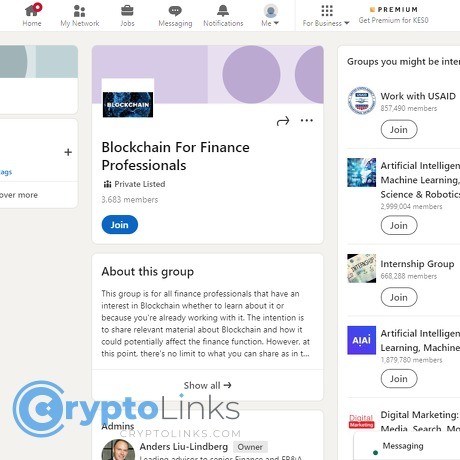
Blockchain For Finance Professionals
www.linkedin.com
Blockchain For Finance Professionals: Is This LinkedIn Group Actually Worth Your Time?
Have you ever opened LinkedIn, seen yet another blockchain headline, and thought: “I should probably understand this stuff… but I literally have zero spare mental bandwidth”?
If you work in finance, you’re not alone.
Most people I speak to in banking, corporate finance, accounting, or risk feel stuck between two uncomfortable thoughts:
- “If I ignore blockchain, I’ll look outdated in a few years.”
- “If I chase every blockchain trend, I’ll waste hours on fluff and crypto hype.”
That tension is exactly where something like the “Blockchain For Finance Professionals” LinkedIn group might help… or might just be one more noisy tab you regret opening. Before we get into what the group actually is, let’s talk about why so many finance pros struggle with blockchain in the first place.
Why Finance Pros Struggle With Blockchain (And How A Good Group Can Help)
On paper, blockchain sounds like something finance people should naturally “get.” It touches ledgers, settlement, custody, payments, compliance — the stuff you live and breathe.
In reality, most finance professionals tell me a different story:
- They’re bombarded with token names, NFTs, DeFi, Layer 2s, zk-proofs… and none of it connects clearly to their day-to-day work.
- They see bold claims: “everything will be tokenized,” “banks will be replaced,” “DeFi will eat TradFi,” but very few grounded examples from real companies they recognize.
- They’re already buried in regulatory updates, market moves, audit requests, budget cycles, and client calls — learning blockchain feels more like a guilt trip than a clear opportunity.
So what happens? Most people either:
- Ignore it completely and hope it’s a fad, or
- Jump into random crypto content and get turned off by speculation, jargon, and spam.
In that mess, a well-run LinkedIn group aimed specifically at finance professionals should act as a filter, not another source of confusion. It should:
- Cut out retail trading noise and meme coins.
- Focus on workflows you care about: settlements, reconciliation, reporting, compliance, capital markets, risk.
- Give you real examples from banks, fintechs, auditors, and regulators — not anonymous Twitter profiles shouting price targets.
But for that to matter, we first have to tackle the biggest enemy: the signal vs noise problem.
The Signal vs Noise Problem
Scroll through a typical crypto feed and you’ll see it instantly:
- 100+ altcoin “announcements” per day
- Endless NFT or “Web3” pitches
- Charts, pumps, and “alpha” threads focused on speculative trading
If you’re a CFO, risk officer, controller, or corporate banker, that world feels far removed from your reality. You’re not trying to 100x a meme coin; you’re trying to:
- Reduce settlement risk.
- Understand CBDCs and how they’ll affect liquidity management.
- Figure out if tokenization actually changes how assets are issued, held, and reported.
- Stay compliant with standards like IFRS, Basel, AML rules, and whatever your local regulator is cooking up next.
Most generic crypto communities don’t speak that language. They barely touch on:
- Accounting treatment for digital assets.
- Capital requirements for tokenized securities.
- AML/KYC complexity in on-chain transactions.
- Operational risk when smart contracts fail or protocols change.
Meanwhile, McKinsey, BCG, Deloitte, and others have been publishing reports for years on blockchain’s potential in trade finance, capital markets, and payments. The BIS has run multiple studies on CBDCs and wholesale settlement. Yet most of that serious research rarely reaches everyday practitioners in a clear, ongoing way.
This is exactly where a niche group like “Blockchain For Finance Professionals” promises to be different: instead of general crypto noise, it should function as a curated stream of content where posts are filtered through a finance lens.
Think of the difference like this:
Generic crypto group: “New token listed! Massive opportunity!”
Finance-focused blockchain group: “Here’s how a major European bank tokenized commercial paper, what regulators said, and what it meant for liquidity and reporting.”
That’s the kind of shift finance people actually need — from speculation to relevance.
Time Is Limited: You Can’t Learn Everything
Let’s be honest. If you’re responsible for P&L, balance sheets, portfolios, or regulatory filings, your calendar is already a game of Tetris.
You’re juggling:
- New regulatory guidelines and supervisory expectations.
- Market volatility that clients or internal stakeholders want explained.
- Budget reviews, board decks, internal audits, or risk committee meetings.
- Systems upgrades and digital transformation projects.
Then someone says, “Hey, you should really learn about blockchain.” And it sounds a bit like, “By the way, please pick up another degree in your spare time.”
No wonder so many finance pros treat blockchain like a vague “future thing” to be aware of, but not something to seriously invest time in.
But here’s the catch: the shift is happening quietly in the background:
- Major banks are running tokenization pilots for bonds, funds, and deposits.
- Central banks are experimenting with wholesale CBDCs for interbank settlement.
- Custodians and asset managers are building out digital asset arms.
- Accounting and audit firms are building internal teams around digital assets and on-chain data.
You don’t have to become a blockchain engineer — but you do need a mental map of where the industry is heading. The smart move is to look for shortcuts that respect your time:
- Plain-English explanations linked directly to finance workflows.
- Case studies from real financial institutions, not just crypto-native projects.
- Peers in similar roles who are already involved in pilots or projects.
That’s where a focused LinkedIn group can be useful: instead of adding another heavy course or 300-page report to your queue, you get bite-sized updates and examples that fit naturally into the tool you already check daily.
The risk, of course, is that this “shortcut” becomes another time sink. Which brings us to the emotional side of this: the constant pull between fear of missing out and fear of wasting time.
Fear Of Missing Out vs Fear Of Wasting Time
If you’ve ever thought any of these, you’re in good company:
- “What if blockchain ends up reshaping capital markets the way electronic trading reshaped them, and I’m the one who didn’t pay attention?”
- “What if CBDCs become reality and I can’t talk about them intelligently with clients or management?”
- “What if tokenization actually changes how we issue and settle securities, and I missed my chance to get ahead?”
That’s the FOMO side: the fear of missing a structural shift in your own industry.
On the other side, there’s a different fear:
- “I don’t want to become that finance person lost in Telegram channels and Discord servers full of scams and memes.”
- “I can’t justify hours reading whitepapers that never connect to real projects or regulation.”
- “If I go too far down this rabbit hole, it might not even matter for my actual job.”
This tension is real. In a 2022 survey by one of the Big Four firms on digital assets in financial services, many executives said they saw blockchain as strategically important but still felt unsure where to start and worried about regulatory uncertainty. That’s basically institutional FOMO and fear of wasting time, baked into the same mindset.
A niche LinkedIn group can act as a middle ground between these extremes:
- You’re not ignoring blockchain — you’re staying plugged into real-world moves.
- You’re not falling into the endless hype cycle — you’re filtering through a community of people with similar professional constraints.
- You stay close to how banks, regulators, auditors, and fintechs are talking about blockchain in public, without having to reverse engineer it from crypto Twitter.
In practice, that might mean:
- Skimming a discussion on a new CBDC pilot instead of reading the full 100-page technical paper.
- Seeing a short post from a risk officer who helped integrate on-chain data into existing risk frameworks.
- Noticing that several treasury professionals are talking about on-chain settlement windows and liquidity management.
Those tiny moments keep you current without demanding full-time researcher energy. But for any group to really be worth your attention, it has to match what finance professionals genuinely want from a blockchain community.
What Finance Professionals Actually Want From A Blockchain Community
If you strip away the buzzwords, most finance people are looking for a few straightforward things.
1. Clear explanations that connect to real workflows
You don’t want abstract talk about “immutable ledgers” and “trustless consensus.” You want someone to say, for example:
- “Here’s how using a permissioned blockchain shaved X days off trade finance settlement in a real bank, and what that meant for capital usage.”
- “Here’s what tokenizing fund shares changed in subscription/redemption, transfer agency, and reporting flows.”
- “Here’s how on-chain collateral works in practice compared to traditional collateral management.”
In other words: show the before/after in terms you can tie back to P&L, capital, risk, or operations.
2. Compliance and regulation talk, not just tech theory
Finance runs on rules. A blockchain community that ignores regulators, accounting standards, or risk frameworks is basically a hobby club.
Useful conversations might touch on:
- How MiCA in the EU affects stablecoins and tokenized instruments.
- What the SEC or other securities regulators are saying about tokenized securities.
- How FATF guidelines influence AML/KYC for on-chain activity.
- Accounting questions around impairment, fair value, and classification of digital assets.
These are the angles that make blockchain professionally relevant, not just academically interesting.
3. A real career angle
Beyond concepts, there’s the very practical question: “What does this mean for my career?”
People in finance want to know:
- Which roles are emerging in banks, fintechs, and consulting around digital assets, CBDCs, and tokenization.
- Which skills keep showing up in job descriptions: smart contract literacy? on-chain analytics? specific platforms?
- How colleagues in similar roles made the transition into projects related to blockchain.
A good blockchain-for-finance community should surface things like:
- Job posts for digital asset product managers, tokenization specialists, or CBDC project leads.
- Short posts from people working on real pilots, explaining what they actually do all day.
- Discussions comparing certificates, courses, or internal training programs.
That’s the kind of practical signal that helps you decide whether to stay where you are and simply “add blockchain literacy” — or whether it’s time to actively pivot your career.
So, the big question: does the “Blockchain For Finance Professionals” LinkedIn group actually offer any of this? Is it full of genuine case studies and thoughtful discussions, or is it just another buzzword-heavy echo chamber?
Let’s take a closer look at what this group is, who’s inside it, and how active it really is — that’s exactly what I’m going to unpack next.
What Is The “Blockchain For Finance Professionals” LinkedIn Group?
Before hitting that “Request to join” button, it helps to know what kind of room you’re walking into. Is it packed with serious finance people talking real projects… or just anonymous profiles throwing buzzwords around?
The “Blockchain For Finance Professionals” LinkedIn group sits right in the middle of two noisy worlds:
- Traditional finance: banks, corporates, auditors, risk teams, regulators.
- Crypto and blockchain: CBDCs, tokenization, DeFi, stablecoins, on-chain settlement.
In plain language, it’s a niche corner of LinkedIn where people who actually work with money, balance sheets, and regulators come to talk about how blockchain touches their reality – not just theory or speculation.
Think of it as a filter. Instead of “Which meme coin is pumping?”, the questions lean closer to:
- “How will tokenized funds affect our NAV calculations?”
- “What does MiCA compliance really mean for our European clients?”
- “Is on-chain settlement worth the operational change in a mid-size bank?”
As one consulting partner I heard speak at an industry roundtable put it:
“Blockchain stopped being ‘crypto-only’ the moment regulators, central banks, and fund administrators got involved. Now it’s just part of the financial plumbing conversation.”
That’s the type of mindset you tend to see reflected in a group like this.
Group Snapshot: Name, Focus, And Target Audience
On paper, the focus sounds simple: blockchain + finance professionals.
In practice, that turns into quite a specific crowd.
You’ll usually find a mix of:
- Bankers – corporate bankers, transaction banking specialists, innovation leads testing blockchain pilots.
- CFOs and finance directors – especially in mid-sized companies and fast-growing fintechs that are starting to touch digital assets.
- Controllers and accountants – people worried about how to book digital assets, recognize revenue from tokenized products, or handle audit trails.
- Auditors and risk managers – the ones asking, “How do we prove control, ownership, and compliance when the ledger is public?”
- Consultants – from Big Four and boutique advisory firms working on tokenization, CBDC experiments, or blockchain strategy.
- Fintech and product managers – especially in payments, wealth management, and digital custody.
- Tech folks who work next to finance teams – solution architects, blockchain PMs, and compliance-tech builders who need to speak “finance” fluently.
This mix matters. In generic crypto groups, people often talk past each other: developers want protocol details, traders want price targets, and marketers want clicks. Here, there’s usually a common anchor: financial workflows, regulations, and risk.
One typical thread might look like this:
- A product manager at a digital custody firm shares a short note about how they implemented on-chain proof-of-reserves.
- An auditor jumps in asking how they separate “view” vs “control.”
- A bank operations lead replies with their own experience running a pilot with similar tech.
No rockets, no moon talk. Just real people trying to figure out how to make this technology safe and workable inside regulated finance.
Main Topics Discussed Inside The Group
The conversations tend to circle around a few recurring themes, and that’s where the group can actually save you hours of random Googling.
Some of the most common topics you’ll see:
Central Bank Digital Currencies (CBDCs)
Think pilots like the ECB’s digital euro work, the BIS innovation hub projects, or wholesale CBDC tests in Asia and the Middle East.
You might see:
- Links to central bank reports with quick takeaways.
- Discussions around how CBDCs affect cross-border payments or bank deposits.
- Risk-focused comments: liquidity, monetary policy impact, AML.
Tokenization of assets
This is one of the most “hype vs reality” heavy topics in finance right now. McKinsey estimated in 2023 that tokenized assets could reach into the multi-trillion range by 2030 in optimistic scenarios, but the path there is messy.
Inside the group, you’ll often see:
- Case studies on tokenized money-market funds or bonds.
- Debates about how tokenization changes settlement, collateral, and liquidity management.
- Questions like, “Who actually wants this? Issuers, investors, or just infrastructure providers?”
On-chain settlement and payments
Here the focus is on speed, finality, and operational risk:
- Comparisons between traditional RTGS systems and blockchain-based rails.
- Examples where on-chain settlement reduced counterparty risk or cut reconciliation work.
- Concerns about intraday liquidity and how T+0 changes treasury processes.
DeFi vs TradFi
Not just tribal arguments, but “What can we realistically adopt?”:
- How AMMs or lending protocols influence thinking about market structure.
- Discussions about institutional DeFi experiments (like permissioned pools or KYC’d access).
- Questions on how DeFi models could change collateral management or prime brokerage.
Regulation and compliance
This one is huge. Expect posts and talk around:
- MiCA in the EU – what it means for stablecoins and crypto asset service providers.
- SEC and U.S. regulatory positions – securities classification, ETF approvals, enforcement actions.
- FATF guidelines – Travel Rule requirements, VASP definitions, and KYC/AML issues.
- Local regulations from MAS, FCA, BaFin, SFC, and others.
What makes these topics useful is that people usually anchor them back to concrete finance areas:
- Payments – instant settlement, cross-border corridors, stablecoins for B2B.
- Trade finance – blockchain-based letters of credit, digital bills of lading, document verification.
- Lending and credit – on-chain collateral, tokenized receivables, credit risk modeling.
- Asset management – tokenized funds, fund distribution, digital custody, NAV and reporting.
- Treasury – intraday liquidity with tokenized cash, managing stablecoin exposure, collateral optimization.
That link between “tech news” and “how it changes daily work” is exactly what most finance professionals crave. It’s one thing to read about a new DeFi protocol; it’s another to understand how a tokenized bond might change your end-of-day reconciliation or capital treatment.
How Active Is It Really?
Any LinkedIn group can sound great in the description. The real question is: is it alive, or is it just a list of names?
When I look at a group like this, I don’t obsess over the member count. I care about three things:
- Post frequency
- Comment quality
- Spam ratio
Here’s what I usually check before I mentally commit time to a group:
Recent posts
Scroll the last 2–3 weeks:
- Are there new posts almost every weekday, or does it jump from “busy” to “dead silence” for days?
- Are posts just link drops with no context? Or do people explain why something matters?
Comment sections
This is where you see if there’s a brain in the room:
- Do posts get thoughtful comments or just “Great post!” and a few likes?
- Do people challenge each other respectfully? Disagreement is a good sign – it means people are actually thinking.
- Are names and roles real and checkable, or mostly generic profiles?
Spam ratio
No group is 0% self-promotion, but there’s a difference between:
- Someone sharing a webinar and adding a short summary and their point of view.
- Random “Get 100x returns with this altcoin!” style posts that ignore everything about compliance.
In a healthy professional blockchain group, you’ll usually see:
- Regular posts from consultants, bank innovation teams, or fintech leaders.
- Questions from mid-career finance professionals trying to understand a use case for their market.
- Links to reports from BIS, IMF, World Bank, Big Four, or top-tier consultancies – often with short context or commentary.
If you scroll a week back and see almost no interaction – or you see nothing but “pump” talk – that’s your cue to be cautious with your time.
As a simple rule of thumb, if I can’t find at least a few:
- Saved-worthy posts in a week, and
- Comments that actually teach me something new
…then that group goes straight into the “background noise” bucket.
Who Actually Benefits From Joining
Not every blockchain resource is meant for everyone. This group is no exception.
You’ll probably get good value if you are:
A finance professional curious about blockchain
Maybe you work in corporate banking, asset management, treasury, or FP&A and keep hearing about tokenization, CBDCs, or crypto custody in meetings.
You don’t want to become a hardcore developer, but you want to understand what’s realistic, what’s hype, and what might affect your role.
A beginner-to-intermediate learner
You already know what a blockchain is. You may have read a few whitepapers or taken an online intro course. Now you’re trying to connect that knowledge to “How will this show up in my P&L, control processes, or compliance checks?”
The group is useful for filling in that gap with real examples and conversations.
Exploring a career shift
Maybe you’re a:
- Risk manager thinking of moving into digital asset risk.
- Auditor exploring crypto-focused advisory services.
- Operations lead interested in joining a blockchain-focused fintech.
Watching the roles, job titles, and projects that people mention in the group can be a quiet but powerful way to map where the market is actually moving.
In a “bridge” role between tech and finance
If you’re a business analyst, product manager, or solution architect constantly translating between developers and compliance/legal, you’ll recognize a lot of the friction discussed.
Posts and threads can give you language and examples to use in your own organization – which often makes you instantly more valuable.
On the other hand, this group might not be ideal if you are mainly:
A hardcore blockchain developer
If your day is all about consensus algorithms, EVM nuances, and protocol-level design, this group will probably feel too high-level and business-focused. You’ll see more talk about risk, regulation, and operations than bytecode or performance benchmarks.
A pure crypto trader or retail investor
If you’re here for entry/exit signals, meme coins, or high-frequency trading strategies, you’ll be disappointed.
The focus is on institutional adoption, regulation, and infrastructure. That can still help you understand macro trends (for example, how institutional stablecoin adoption might affect liquidity), but it won’t give you daily trade calls.
That’s actually a good thing. A professional space stays healthy when it respects its niche. When people come in for the wrong reasons – chasing 100x coins or pushing shady projects – the quality falls fast.
So if your main questions look like:
- “How will tokenization affect custody and fund distribution?”
- “What does a CBDC pilot mean for cross-border payments and correspondent banking?”
- “What roles are opening up in banks and fintechs focused on blockchain?”
…you’re probably in the right place.
But there’s still one big piece missing: how do you actually turn a LinkedIn group like this into learning, relationships, and real career movement, instead of just another place to scroll past headlines?
Let’s look at that next – because once you know how to use it properly, the same feed that feels “noisy” to others can quietly become one of your secret weapons.
How To Use This LinkedIn Group As A Finance Professional (Without Wasting Your Time)
If you’re in finance, your attention span is basically another line item on your P&L. Every notification, every “must-read” article, every shiny new blockchain announcement is trying to spend it.
The good news: a focused LinkedIn group can actually be useful. The bad news: only if you treat it like a tool, not a feed to scroll when you’re bored between meetings.
Here’s how to turn the “Blockchain For Finance Professionals” LinkedIn group into something that quietly works for your career in the background, without hijacking your day.
Set a simple goal before you click “Join”
Most people join groups with zero intention. They click, join, forget… then wonder why their feed feels like noise.
Before you hit that button, ask yourself one plain question:
“What will make this worth it for me in 30 days?”
Keep the goal small and measurable. For example:
- “Understand 3–5 real blockchain use cases in my sector.”
If you’re in corporate treasury, that might mean tracking posts on on-chain cash management, tokenized money market funds, or instant cross-border settlement. Any post that mentions those, you save. Anything else is optional.
- “Find 5 people working on CBDCs or tokenization that I can follow.”
That could be central bank researchers, product managers at custodians, or consultants who keep posting about pilot projects. Your goal is not to message all of them; it’s to build a clean list of people whose updates are worth reading.
- “Spot which skills and tools keep repeating in posts and job discussions.”
Maybe you keep seeing “smart contract auditing”, “on-chain analytics”, “ISO 20022”, “Solidity basics”, or “DLT-based trade finance platforms”. If the same 3–4 keywords keep appearing, that’s a signal you can build into your learning plan.
A 2023 LinkedIn internal study reported that professionals who set a specific learning goal were far more likely to complete learning paths than those who didn’t. The same logic applies here: if you know what you’re trying to get from the group, random scrolling suddenly feels uncomfortable—because you’ll feel you’re wasting your own rule.
“Clarity is the antidote to overwhelm. The moment you know what you’re looking for, everything else quietly becomes irrelevant.”
So ask yourself now: what’s your one-line goal for the next month in that group?
Treat posts as a curated reading list
The biggest trap with LinkedIn groups is mistaking the feed for the actual value. The feed is just the front door.
The value is in what the posts point to.
Most serious posts in a group like “Blockchain For Finance Professionals” don’t just share opinions. They link to:
- regulator consultation papers and guidance notes
- Big 4 and strategy firm reports on tokenization, CBDCs, DeFi vs TradFi
- case studies from banks, custodians, and fintechs
- webinars and panels with practitioners actually shipping things
- industry standards (like BIS, IOSCO, FATF recommendations)
That’s not noise. That’s a curated input stream that someone else already filtered for you.
Here’s a simple workflow I keep seeing work really well for busy finance folks:
- Step 1 – Scan, don’t read deeply (yet).
When you check the group, skim the last 10–20 posts. Ask:
“Does this link look like something that could end up in a board deck, internal memo, or client conversation?”
- Step 2 – Save, don’t decide.
If the answer is yes, hit “Save” on LinkedIn or drop the link into a folder called something like “Blockchain & Finance – Reading” in your browser or note-taking app. Don’t read it then and there.
- Step 3 – Batch your learning.
Once a week (maybe Friday afternoon when markets are calmer), open that folder and pick 1–3 items. Read them properly. Take 3–5 bullet notes on each: key points, risks, how it might touch your current role or clients.
There’s even some data behind this style of behavior. Research on “microlearning” from the Journal of Applied Psychology suggests that short, focused learning moments spread over time can increase retention by up to 17%. In other words: 15 minutes a week with a curated reading list often beats a 3-hour binge you’ll forget.
You’re not trying to “keep up with everything.” You’re building a small private library of serious, finance-relevant material that came to you through the group. That’s a very different mindset.
Ask smart questions, not broad ones
Open any professional group and you’ll see a pattern:
- Broad question: “Is blockchain the future of banking?” → 100 vague comments, zero insight.
- Specific question: “Has anyone here run a pilot for tokenized commercial paper with a European corporate treasury client?” → 2 replies… but from people who actually did something real.
The second type of question is where the group starts paying you back.
When you ask something inside “Blockchain For Finance Professionals”, aim for questions that are:
- Concrete – tied to a use case, process, or regulation.
- Scoped – narrow enough that a busy person can answer in a few paragraphs.
- Grounded in your world – so people know how to relate their experience to yours.
Here are examples that tend to get good responses:
- “Has anyone implemented blockchain for trade finance in a mid-sized bank?”
Add 1–2 details: region, typical client size, existing systems (e.g. SWIFT, Bolero, etc.). Ask what went wrong more than what went right; people love sharing lessons learned.
- “How are you handling on-chain KYC checks while staying compliant with FATF Travel Rule?”
Mention whether you’re in payments, brokerage, or custody. Ask which tools or vendors have actually passed internal compliance reviews.
- “For those working on CBDC pilots, how do you see this affecting corporate cash management workflows in the next 3–5 years?”
That’s forward-looking but still anchored in a real workflow: liquidity management, cut-off times, reconciliation.
If you’re worried about looking “basic”, you can do this:
- Read 1–2 posts or reports on the topic first.
- Pull out one sentence or stat and quote it in your question.
- Then ask: “In your experience, is this actually what you’re seeing on the ground?”
This signals that you’ve done your homework, which makes serious people far more likely to respond. In one Harvard Business Review piece on networking, executives said they were much more willing to help people who showed “pre-work” instead of asking lazy, general questions. The same psychology applies in any LinkedIn group.
The hidden upside: those who answer your specific questions are almost always the people you want in your network.
Network with intent
Most networking advice feels fake because it treats relationships like collectibles. That doesn’t work in a specialized group where members are busy, experienced, and protective of their time.
In this kind of community, networking is simple:
Talk to people who are already doing what you want to be doing in 2–5 years.
Here’s a practical process that doesn’t feel awkward or salesy:
- Step 1 – Watch who consistently adds value.
Scroll the group and notice:
- Who posts thoughtful breakdowns instead of just links?
- Who shares lessons from actual projects (not just theory)?
- Whose comments make you think, “I hadn’t looked at it that way”?
These are the people worth following closely.
- Step 2 – Engage publicly first.
Before sending any direct message, leave a short, specific comment on their posts:
- “That point about intraday liquidity risk with tokenized assets really hit home. Have you seen any frameworks banks are using to model this today?”
- “Interesting that your pilot failed due to reconciliation issues. We’re seeing the same thing on our side with legacy systems.”
One or two genuine comments already puts you on their radar.
- Step 3 – Send a respectful connection request that references the group.
Keep it short and clear. For example:
“Hi [Name], I’ve seen your posts in the Blockchain For Finance Professionals group about tokenized funds. I work in [your role/industry] and I’m exploring how this might affect [brief context]. Would love to connect and follow your updates.”
No pitch, no ask, just context.
- Step 4 – Ask for insight, not favors.
After a while, you can send a simple question:
- “If you were in [your role] and had 3–6 months to learn about blockchain in [your sector], what would you focus on first?”
- “What’s one mistake you see traditional finance people making when they enter blockchain projects?”
That’s easy to answer and often gives you better direction than a full-blown mentoring program.
Networking like this isn’t about “collecting” contacts. It’s about creating a small circle of people whose updates are genuinely worth your time, and who would recognize your name if you showed up in their inbox.
Protect your feed from noise
There’s one non-negotiable rule if you want any professional group to actually help you:
Your feed is your responsibility.
Even good groups will attract spammy posts from time to time. Promotions, thinly veiled token shills, “DM me for guaranteed returns”, low-effort link drops… they happen everywhere.
Here’s how to keep that under control so the group stays useful instead of becoming another distraction factory.
- Use mute and unfollow without hesitation.
If you notice a member constantly posting:
- vague hype without specifics,
- referral links with no real analysis,
- “secret strategies” or “VIP access” pitches,
mute or unfollow them. You’re not judging them as a human. You’re simply protecting your limited attention.
- Prioritize threads with real discussion.
Posts that are worth your time usually:
- reference a real project, regulation, or institution,
- have comments where people respectfully disagree,
- include data, frameworks, or comparisons (e.g. DeFi collateral vs traditional repo).
Click into those threads, ignore the rest.
- Use the group as one input, not your only input.
A professional blockchain group is great for:
- spotting early signals,
- seeing what people in the field are actually talking about,
- finding reports and case studies faster.
But it should sit alongside your other sources: internal memos, regulator updates, serious research, maybe a few good newsletters. That way, no single feed has the power to bias your view too much.
A survey from the CFA Institute showed that information overload was one of the top stressors for investment professionals, right up there with client demands. The trick is not to consume less information overall—but to force your feeds to compete for quality. Anything that doesn’t teach you, challenge you, or help your work gets quietly muted.
Over time, this turns your “Blockchain For Finance Professionals” feed into a lean stream of genuinely useful signals. And once that happens, spending 5–10 minutes a day there starts to feel less like scrolling—and more like a competitive advantage.
So now you know how to use a group without letting it use you: set one clear goal, treat posts as a curated library, ask sharp questions, connect with the right people, and guard your feed like you guard your capital.
But there’s still a big question hanging in the air:
Even if you use the group well, how relevant is blockchain really to traditional finance careers—and where should you focus your limited learning time?
That’s exactly what I’m going to unpack next: concrete answers to the questions finance professionals quietly ask themselves about blockchain, careers, skills, and whether any of this is worth the effort.
What Finance Professionals Really Want To Know: Common Questions Answered
Is blockchain really relevant for traditional finance jobs?
Short answer: yes, and usually in quieter, less flashy ways than social media makes it look.
When people think blockchain, they think “Bitcoin” or “crypto bros.” But the questions I see from finance pros are way simpler:
- “Will this change how we move money?”
- “Will my role in risk, treasury, or audit look different in five years?”
- “Is this just a buzzword for PowerPoint decks, or is anything real actually shipping?”
Here’s where it already touches traditional finance:
- Payments and remittances – Cross-border settlement is slowly shifting from multi-day SWIFT flows to near‑instant on-chain rails. Think of what Ripple started, followed by private stablecoin pilots from banks and fintechs. In 2023, McKinsey estimated that blockchain-based cross‑border solutions could cut transaction costs by up to 60% in some corridors. That’s not a rounding error for treasury teams.
- Custody and asset servicing – Banks like BNY Mellon, State Street, and major European custodians are building digital asset custody platforms. Even if you never touch a line of code, “How do we hold tokenized assets safely and report them correctly?” is becoming a practical question for operations, legal, and middle office.
- Trade finance and supply chain – Projects like we.trade (backed by several European banks) and Marco Polo showed that blockchain can track invoices, letters of credit, and shipments on a shared ledger. Some pilots died, some evolved, but the lesson stuck: shared, tamper‑resistant records can cut reconciliation work. If you’re in trade finance, this is already on your radar.
- Capital markets – Tokenized bonds, money market funds, and private equity are being issued on-chain. The BIS and central banks have run multiple experiments on wholesale CBDCs and on-chain settlement of securities. If you work in capital markets, corporate actions, or front-to-back flows, these pilots are tomorrow’s “standard process.”
- Compliance and reporting – Blockchain doesn’t magically remove rules; it changes how you prove you followed them. On-chain transaction histories can support AML, KYC, and audit trails in new ways. Consultancy reports from Deloitte and PwC keep repeating the same point: compliance teams who understand blockchain get a seat at the innovation table instead of just being the “no” department.
Not every role will become “crypto heavy,” but understanding the basics of on‑chain settlement, tokenization, and digital identity is turning into a competitive edge. The people who can say, “Here’s the risk, here’s the accounting treatment, here’s the operational impact,” will be the ones shaping projects, not just reacting to them.
Groups focused on blockchain in finance are useful here because you see where it’s moving first. You might notice:
- More discussions on tokenized deposits than on meme coins
- Regulators commenting on pilots instead of just enforcement actions
- Job titles like “Digital Assets Product Manager” or “Tokenization Lead” popping up in member profiles
“The future is already here — it’s just not evenly distributed.”
– William Gibson
Right now, blockchain in finance is exactly like that: unevenly distributed. Your job is to notice where it’s landing first.
Do I need technical skills to benefit from blockchain in finance?
Here’s the honest truth: you don’t need to be a developer, but you can’t stay completely “tech allergic” either.
You do not need to:
- Write smart contracts in Solidity or Rust
- Understand consensus algorithms line by line
- Run a node or set up your own blockchain network
But you absolutely benefit from understanding what those things mean at a business level. Think of it like risk models or pricing engines: you don’t have to build them to have an intelligent conversation about their assumptions.
If you come from finance, the sweet spot is to focus on how blockchain changes your world in terms you already know:
- Risk – What new operational risks appear (smart contract bugs, key management, protocol failures)? How does counterparty risk change if settlement becomes near‑instant? What about concentration risk in specific chains or service providers?
- Regulation – How do frameworks like MiCA (EU), the SEC’s stance on digital assets (US), or FATF guidance on VASPs affect products you might launch or clients you serve? You don’t need the code, you need the implications.
- Accounting and reporting – How do you classify and value tokens, stablecoins, or tokenized securities on the balance sheet? IFRS and FASB are still shaping guidance, which means accountants who understand the basics are in demand.
- Product and structuring – What does a tokenized bond or fund actually look like in terms of coupon, redemption, and secondary trading? How could on‑chain features (programmable coupons, instant settlement, 24/7 markets) change product design?
- Operations – How does on-chain settlement change reconciliations, cut‑off times, or exceptions handling? Who approves transactions? How do you control wallets internally?
When people in professional groups talk about “smart contracts,” for example, they rarely expect you to inspect bytecode. They’re asking questions like:
- “What happens if the contract triggers a payment outside business hours?”
- “Who signs off on changes to the contract?”
- “If something goes wrong, what’s the legal fallback?”
If you can think clearly about those topics, you’re already adding value.
One thing I’ve noticed: finance pros who keep a simple glossary for themselves (tokenization, public vs private chain, layer 2, custody, staking, CBDC, DeFi) ramp up faster than those who ignore the terms and hope they go away. They won’t.
Can a LinkedIn group replace formal training or certifications?
No. And anyone who tells you otherwise is selling you something.
Think of a LinkedIn group as a live radar, not a classroom.
Formal paths – like university programs, executive education, or certifications from places like the Digital Assets Council of Financial Professionals or the CFA Institute’s research on crypto and DeFi – give you:
- A structured curriculum
- Checked, peer‑reviewed materials
- Some level of recognition on your CV
A professional group gives you things those courses usually don’t:
- Real‑time reactions to regulation changes and big industry moves
- Practical war stories from pilots and internal projects
- Informal feedback when you’re trying to make sense of a use case
The best approach I’ve seen from readers and contacts is to combine both:
- Use a course or certification to build your foundation: terminology, frameworks, the main use cases, base‑level legal and risk understanding.
- Use a LinkedIn group to see how those concepts show up in real companies: case studies, RFPs, hiring trends, internal “lessons learned.”
One practical trick: whenever you see people in a group repeatedly mention the same course, certification, or institution, make a list. If smart, experienced people keep referencing it, it’s usually a signal that the material is worth checking.
Then the loop looks like this:
- Learn basics in a structured way
- Watch how they are applied (or challenged) in the group
- Bring your questions back to the community to stress‑test your understanding
That’s also how you avoid the classic trap: people who only take courses but never talk to practitioners, and people who only hang out in groups but never build a solid base.
Is this group useful if I’m mostly into DeFi and crypto trading?
It can be, but it probably won’t be your main playground.
If your current focus is:
- Yield farming and liquidity mining
- Short‑term altcoin trading
- NFT flipping or meme coins
Then a professional finance group will feel slower and more “serious” than the Telegram channels and Twitter feeds you’re used to.
Most discussions in a finance‑oriented blockchain community lean towards:
- Institutional adoption (banks, asset managers, insurers)
- Regulation, compliance, audits, risk frameworks
- Enterprise use cases (payments, tokenized securities, trade finance, treasury)
Here’s where it can still help you as a DeFi or trading‑focused person:
- Macro and regulation lens – Understanding how central banks, regulators, and large institutions think about stablecoins, staking, or on‑chain leverage can give you context for long‑term narrative shifts.
- “Where is the big money going?” – When you see recurring posts about tokenized real‑world assets, regulated DeFi, or institutional staking solutions, it’s a sign of where more conservative capital might flow over the next cycles.
- Career optionality – Many traders eventually look for more stable roles: risk, treasury, product, research. Being plugged into the institutional side of blockchain helps you see what those landing spots might look like.
That said, if you mainly want:
- Signals
- Alpha calls
- Low‑cap coin discussion
Then a group built around finance professionals will feel like bringing a racing car to a board meeting – wrong setting, different goals. You might keep it as a “background feed” for big‑picture context and use more specialized communities for your day‑to‑day trading questions.
How do I avoid scams and bad advice in blockchain groups?
Even in professional spaces, this is non‑negotiable. The money and hype in this industry attract all sorts of characters.
Here are some reliable red flags I watch out for in any blockchain‑related community:
- Guaranteed returns – If anyone promises “risk‑free,” “guaranteed,” or absurdly high fixed returns (“5% per week,” “3x in a month, no downside”), treat it as an instant exit sign.
- Unsolicited DMs after a simple comment – You leave a normal comment, and suddenly someone messages you with a “special opportunity,” VIP group, or secret trading bot. Classic funnel into schemes. Ignore or block.
- No clear disclosure – People hyping tokens, platforms, or courses without saying whether they’re paid, invested, or affiliated. In a professional environment, honest people usually add at least a short disclaimer.
- Pressure tactics – “Limited spots,” “you have to decide today,” or “only insiders know this.” Good opportunities in regulated finance don’t need to be sold like cheap infomercials.
- Too much jargon, zero substance – Long posts filled with buzzwords but no concrete examples, numbers, or case references often try to impress instead of inform.
The nice thing about LinkedIn groups is that real‑name profiles and corporate affiliations raise the bar a bit. When someone posts under their real identity with a visible employer, they generally think twice before pushing something obviously shady. It’s not bulletproof, but it’s already much safer than anonymous forums where nobody has anything to lose.
Still, I always recommend a few basic habits:
- Cross‑check everything – If someone mentions a pilot, partnership, or regulation, search for an official source (press release, regulator website, company announcement).
- Don’t mix learning spaces with investment decisions – Use groups to understand trends, risks, and concepts. Make actual investment decisions only after your own research and, if needed, with professional advice.
- Trust patterns, not one‑off claims – If multiple credible people across different organizations are saying similar things about a use case or risk, pay attention. If one enthusiastic profile pushes an obscure project nonstop, be skeptical.
The good news: in well‑run professional groups, obvious scammers often stand out quickly. They post low‑effort promotions, ignore genuine questions, and rarely show up in thoughtful comment threads. If you stick to high‑quality discussions and profiles with a track record in finance or tech, your signal‑to‑noise ratio stays much healthier.
Now that these big questions are out of the way, the real test is simple: is this specific group actually living up to its promise, or is it just another nice‑sounding community that doesn’t deliver? Let’s take a hard, honest look at that next.
Pros, Cons, And Red Flags: Honest Take On “Blockchain For Finance Professionals”
Let’s be honest: most LinkedIn groups in the crypto/blockchain space feel like walking into a crowded expo hall where everyone is handing you a flyer and nobody is actually having a real conversation.
This one is different some of the time – and that’s where it can be useful if you know what to expect and what to ignore.
What this group seems to do well
When it works, this group hits a niche that’s still badly underserved: people who actually live in balance sheets, risk reports, treasury dashboards, and regulatory memos, not just GitHub repos and token charts.
Here’s what it tends to do right:
It sticks to finance + blockchain instead of random crypto chatter.
Most posts orbit around topics like:
- Tokenization of real-world assets (funds, bonds, real estate)
- CBDCs and how central banks are experimenting with them
- On-chain settlement and post-trade infrastructure
- Compliance topics like MiCA, SEC rules, FATF travel rule
That might sound obvious, but in practice it filters out a ton of noise. You’ll rarely see “next 100x coin” nonsense. Instead, you get things like a product manager at a custodian bank sharing a link to a pilot on tokenized money market funds, or a consultant breaking down a BIS working paper.
You see how banks and institutions actually think about blockchain.
There’s a big gap between Twitter threads screaming “everything will be on-chain” and how risk committees and CFOs think in the real world. This group tends to lean toward the second camp.
Example: I’ve seen discussions where people unpacked why a mid-tier European bank paused its trade finance blockchain project. It wasn’t because “blockchain is useless”; it was because the legal department couldn’t get comfortable with jurisdictional issues on smart contracts, and the ROI vs integration cost didn’t add up yet.
That kind of nuance is gold if you work in finance and are trying to separate hype from what your own organization might actually adopt.
It’s a decent radar for regulation, pilots, and partnerships.
Multiple studies show that institutional adoption of blockchain is being driven less by retail speculation and more by regulation clarity and cost-saving pilots. For example, a 2023 Deloitte report found that over 80% of surveyed financial institutions had either launched or were planning blockchain-based initiatives, but most were still in pilot or early production phases.
In this group, I often see:
- Links to new consultation papers by regulators
- Announcements of tokenized bond issuances from major banks
- Partnerships between custodians, fintechs, and layer-1 or layer-2 platforms
- Commentary from people actually working on those projects
Is every post a gem? Of course not. But if you scan the feed once or twice a week, you’ll catch the kind of “institutional signal” that rarely shows up in retail-focused crypto communities.
“In finance, the edge rarely comes from being loud. It comes from seeing the shift a bit earlier than everyone else – and actually understanding what it means for your balance sheet.”
This group, at its best, gives you those early hints.
Where it can fall short
Now for the part nobody likes to say out loud.
Just because a group has a sharp title doesn’t mean every day in there feels like a private masterclass with the BIS, JPMorgan Onyx, and the SEC.
Engagement can be patchy.
Like most professional groups on LinkedIn, activity tends to come in waves. You might get a week where someone posts a thoughtful breakdown of tokenized collateral in repo markets and it triggers 20+ solid comments. The next week? Three press release reposts and a webinar announcement with one like.
If you expect constant debate and deep breakdowns, you’ll be disappointed. It’s better to treat it like a radar: you scan, you save the good stuff, and you move on.
Plenty of posts are “headline + link” with little analysis.
A lot of members share links to:
- Vendor blog posts
- Press releases
- Consulting whitepapers
- Event announcements
Sometimes, someone adds a good comment like, “We tried something similar at a regional bank; here’s what actually happened…” – and that’s where the value really appears.
But many posts are just link drops. If you’re hoping for in-depth technical architecture breakdowns or step-by-step implementation threads, this group probably won’t fill that gap on its own.
Discussion quality depends heavily on who shows up that week.
I’ve seen excellent exchanges, like risk managers and blockchain product leads dissecting how to treat tokenized assets under IFRS/GAAP and capital rules. I’ve also seen threads where the comment section is just “Great post, thanks for sharing” ten times in a row.
That’s the nature of open professional spaces: the group sets the room, but the members decide whether it turns into a conference panel, a hallway chat, or a brochure stand.
So, if you join expecting a constant stream of genius, you’ll probably think, “Is that it?” If you join expecting a steady trickle of relevant headlines, early signals, and the occasional really valuable thread – that’s more aligned with reality.
Red flags to watch for in any professional blockchain group
Even a solid group can go off track over time. Algorithms change, admins get busy, and suddenly the tone shifts. I always keep an eye out for a few warning signs – not just here, but in every blockchain community that claims to be “for professionals.”
Token shilling sneaks in.
It usually starts small: someone posts a “thought leadership” piece that just happens to center around an obscure token. Then you see a few comments that mysteriously repeat the ticker and call it “undervalued.”
If the feed starts filling with:
- Charts with arrows promising insane upside
- “Underrated gems” lists with no real analysis
- Posts that name-drop institutions to legitimize a random token
That’s your cue to get skeptical. Real institutional blockchain work almost never looks like that.
Aggressive selling of courses, signals, or secret systems.
Reasonable education offers are normal. Everyone has something to sell. But watch for:
- “DM me for my private group, 95% win rate”
- “Limited time: my course will 10x your trading account”
- Comments that always nudge you to a Telegram group or WhatsApp “signal room”
These are classic hooks that play on fear and greed, not professional curiosity. A study from the UK’s FCA highlighted that social media “get-rich-quick” content is a major vector for financial scams – and blockchain buzzwords are often slapped on top to make it look modern.
No critical thinking, only cheerleading.
Healthy professional spaces have disagreement: people question assumptions, challenge ROI claims, and raise regulatory doubts.
If every post about a new pilot, tokenization platform, or CBDC project is greeted with 100% applause and zero critical questions, that’s not thought leadership – that’s a sales room.
In a real finance context, someone always asks:
- “How does this impact capital, liquidity, or P&L?”
- “What’s the legal risk here?”
- “What’s the actual business problem this solves?”
If those voices go quiet, it’s a red flag.
When you should absolutely skip or leave the group
No group deserves a permanent spot in your feed just because it sounded relevant once. Your time is too expensive for that.
Here’s when I’d say you’re better off hitting “Leave” and reallocating your attention.
Your feed feels cluttered, and you’re not actually learning.
Ask yourself, honestly: in the last two weeks, did you:
- Save any posts that you’d actually re-open later?
- Spot a trend or insight you could use in a meeting or project?
- Find at least one discussion that made you think, “I didn’t know that”?
If the answer is consistently “no,” then the group is just another notification source. That’s not what you need.
Your main interest is consumer crypto, meme coins, or day trading.
This group sits squarely in the institutional lane. If your world is:
- Short-term trading strategies
- DeFi farming, NFTs, meme coins
- Retail exchanges and community-driven coins
you’ll probably find the content slow, cautious, and sometimes even boring.
It’s not that one world is “better” than the other; they just serve different goals. Here, people think in terms of risk-weighted assets, operational resilience, and regulators. If you want fast-moving trading chatter, this will feel like watching a compliance meeting.
The tone shifts from peer learning to pure marketing.
When a group is healthy, you see people sharing:
- Lessons from pilots that went well and pilots that failed
- Questions about implementation, accounting, risk
- Comparisons between different approaches and vendors
When it starts going bad, you see:
- Only polished announcements, no messy realities
- Endless “launches,” “partnerships,” and “thought leadership” pieces
- Comments that feel like they were written by PR teams, not practitioners
If you reach the point where you scroll and think, “This feels like everyone is pitching and nobody is learning,” it’s probably time to leave and spend that attention somewhere that respects it more.
The good news? You don’t have to guess blindly. You can test the group for a couple of weeks, use it as a soft radar, and if it doesn’t deliver, move on with zero regret.
The better question is: if this group is just one noisy signal in a huge information storm, how do you actually build a clear, reliable learning system around blockchain in finance – one that doesn’t depend on any single LinkedIn feed at all?
That’s where things get a lot more strategic… and that’s exactly what comes next.
Other Useful Places To Learn Blockchain For Finance (Beyond LinkedIn)
One LinkedIn group, no matter how good, will never be enough to really understand how blockchain is changing finance.
If you want an actual edge in your career, you need two things working together:
- Fast context – what people are talking about right now (that’s where the LinkedIn group helps)
- Deep structure – solid explanations, case studies, and frameworks you can actually use in your job
This is where outside resources become essential. Think of the LinkedIn group as your “front page of what’s happening” and the rest of your learning stack as the “playbook that actually makes you good.”
Combine the group with trusted long-form resources
Short LinkedIn posts are great for discovering ideas, but they rarely give you enough detail to really understand why something matters, how it works, and what the risks are.
That’s where long-form resources come in. They usually give you:
- Structured explanations – so you stop Googling definitions every five minutes
- Case studies – so you see how real banks, asset managers, and fintechs are using blockchain
- Data and references – so you can back up your ideas in meetings, not just say, “I saw a post about this”
Here’s a simple way to make the combination work in your favor:
- Step 1 – Spot real problems in the group
Notice what keeps coming up: on-chain settlement? tokenized funds? CBDC pilots? For example, if you see multiple threads about T+1 settlement and blockchain helping intraday liquidity, write that down.
- Step 2 – Use long-form content as your “explain it to me properly” layer
Open a report or chapter from {{longresources}} on that exact topic. You’ll usually get charts, process diagrams, and concrete numbers.
A BIS study, for instance, showed that distributed ledger systems in wholesale payments can reduce reconciliation steps and settlement risk by cutting intermediaries out of the messaging chain. A LinkedIn post might just say “DLT reduces settlement risk.” A proper resource shows you how and under what assumptions.
- Step 3 – Loop back to the group with better questions
After reading, go back to the group and ask something specific like:
“Has anyone actually measured reduction in failed trades or operational cost after moving some settlements onto DLT?”
Now you’re not asking for definitions; you’re testing reality vs theory. That’s where real learning happens.
If you repeat this cycle over a few months, you’ll notice a shift: instead of feeling like you’re just “catching up,” you start recognizing patterns and thinking in use cases, numbers, and trade-offs. That’s what separates casual observers from people who actually influence decisions.
Cryptolinks.com: how I personally find and filter blockchain resources
The hardest part of learning anything in this space isn’t motivation. It’s filtering.
Type “blockchain in finance report” into Google and you get:
- Outdated PDFs from 2018
- Marketing-heavy “whitepapers” that are really just sales brochures
- Random SEO content written by people who have probably never seen a balance sheet
That’s exactly why I started building curated directories of crypto and blockchain resources. I got tired of wasting time on weak content that looked authoritative but wasn’t actually useful.
Here’s how I approach it:
- Relevance first – I look for resources that speak to real finance workflows: payments, custody, treasury, compliance, lending, capital markets. If something doesn’t connect to an actual process or decision, it doesn’t make the cut.
- Author credibility – I favor content from:
- Central banks, regulators, and international bodies
- Major consultancies and accounting firms that work with big financial institutions
- Academic and industry collaborations that share data or methodology
- Signal over showmanship – good resources admit limits, show risks, and discuss what didn’t work. When a paper only talks about upside and never about implementation headaches, I treat it as marketing, not learning material.
The idea is simple: use the LinkedIn group as your “daily context feed” and treat curated directories as your “organized library.”
You scroll the group to see what’s hot this week. You open structured resources when you’re ready to truly understand or present something at work.
This combo works especially well when you’re preparing for:
- Internal presentations – you pick up the hot topics from the group, then pull real data and charts from curated reports so your slides don’t look like they came from Twitter.
- Job interviews – if a role mentions “tokenization strategy” or “DLT for post-trade,” you’ve probably seen those terms in the group. Then you dig into vetted resources to talk actual architecture, key players, and regulatory angles.
- Strategy discussions – you can say things like, “The ECB and BIS have tested X, but here’s where pilots got stuck,” instead of, “I think blockchain might help because I keep hearing about it.”
Once you experience the difference between random Googling and working from a filtered library, it’s very hard to go back.
Other channels worth checking
Not everyone learns best from reading. Some people absorb more from hearing real stories, asking questions live, or seeing problems debated in real time. If that sounds like you, it’s worth adding a few more channels on top of the LinkedIn group and long-form content.
Here are three categories that consistently help finance professionals get a clearer view of blockchain without going down pointless rabbit holes:
- Industry conferences and webinars
Look for events that specifically sit at the intersection of finance and blockchain, not generic “crypto expos.” Good signs:
- Speakers from central banks, commercial banks, asset managers, custodians, and regulators
- Topics like “tokenized collateral,” “on-chain KYC,” “DLT in trade finance,” “CBDC pilots,” “T+0 settlement”
- Panels that include both tech and compliance/risk people
There’s a reason these events matter: hearing a head of operations from a major bank explain why a DLT pilot stalled can save you months of fantasizing about solutions that don’t fit reality.
- Research from consulting firms, central banks, and regulators
These are often long reads, but they’re gold for seeing how decision-makers think. For example:
- Central bank reports on CBDCs and wholesale settlement
- FATF and FSB guidance on AML, travel rule, and VASP regulations
- Big Four and top consultancies’ case studies on tokenized funds, digital bonds, or blockchain trade finance platforms
Many of these papers include survey data—how many banks are testing tokenization, which regions are furthest along, what risks executives care most about. That’s exactly the kind of information you can quote in boardrooms or strategy calls.
- Podcasts and newsletters that focus on the finance angle
The key is to avoid shows that only talk about “the next hot token” and look for ones that bring in:
- CROs, CFOs, heads of compliance, product leads at banks and fintechs
- Policy makers and regulators talking about what they’re actually planning
- Builders of institutional-grade platforms (custody, settlement, tokenization, on-chain analytics)
A 45-minute interview with a bank’s digital assets lead can teach you more about real constraints—legacy systems, internal politics, risk appetite—than a dozen articles. And newsletters give you a manageable, recurring snapshot so you don’t have to chase every headline.
Here’s the real unlock: when you combine all of this—the LinkedIn group, curated resources like {{longresources}}, serious reports, and smart podcasts—you start to see the same themes from multiple angles.
At that point, you’re no longer asking, “Is blockchain important?” You’re asking far better questions, like:
- “Where in my institution’s value chain could shared ledgers actually remove friction?”
- “What skills do I need so I’m not just watching these projects from the outside, but actually working on them?”
Those questions are exactly what the next section is going to help you with: how to turn all this input—groups, resources, and channels—into concrete career moves, role changes, and a learning plan that doesn’t fall apart after two weeks.
So, if you’re serious about not just understanding blockchain in finance, but using it to move your career forward, what should your very next step look like?
FAQs About “Blockchain For Finance Professionals” & Blockchain In Finance Careers
How do I know if this group is worth my time after joining?
If you’re like most finance people I talk to, you don’t measure value in “likes” – you measure it in outcomes. So here’s a simple, no-BS way I test whether any professional group (including “Blockchain For Finance Professionals”) deserves space in my daily feed.
Give yourself 1–2 weeks and use this checklist:
- Did you save at least 3–5 posts?
Posts that you bookmarked, sent to yourself, or added to a reading list. These might be:
- a case study on tokenized bonds from a major bank,
- a BIS or IMF report someone linked and summarized,
- a webinar recording on CBDCs and cross-border payments,
- a thoughtful breakdown of MiCA, SEC, or FCA guidance.
If nothing felt “worth saving”, that’s already a sign.
- Did you learn at least one thing you could explain to a colleague?
For example:
- “I saw an example of how on-chain settlement cut FX reconciliation time for a treasury team.”
- “There was a discussion on how auditors treat stablecoins on balance sheets.”
If you can’t point to even one “aha” moment, the group might be too shallow or too noisy for you.
- Are there comments that add real insight instead of just “Great post”?
I look for:
- people challenging assumptions (“Why would a permissionless chain make sense here?”),
- practitioners sharing constraints (“Our compliance team blocked this approach because…”),
- someone linking to standards or regulations instead of giving opinions only.
Healthy disagreement and concrete examples are very good signs.
- Did you connect with 2–3 relevant people?
I don’t mean random adds, but people where you think:
- “I’d like my CV to look like theirs in 3–5 years”, or
- “They’re working on exactly the use case I care about.”
If you scroll for a week and nobody feels worth connecting with, the group might not match your niche.
If you answer “no” to most of these after 10–14 days, you’re probably better off unfollowing the group and staying in touch with blockchain through other channels.
How can I use the group to move my career forward?
Think of the group less as a news feed and more as a career radar. Here’s how I’d use it if I were a finance professional sharpening my blockchain edge.
1. Track which roles keep showing up
Pay attention to job titles and signatures under posts and comments. You’ll often see roles like:
- “Digital Assets Product Manager – Global Markets”
- “Blockchain Strategy Lead – Corporate & Investment Banking”
- “Director, CBDC & Payments Innovation”
- “Risk Manager – Digital Assets & Tokenization”
Make a small list of titles that repeat. This tells you which seats are actually being budgeted for in banks, fintechs, and consultancies.
2. Note the skills and tools that keep coming up
When people talk about their projects, look for repeated patterns. You might see things like:
- “We use smart contract audits as part of our risk assessment.”
- “Our team works with ISO 20022, SWIFT gpi, and a permissioned blockchain for settlement.”
- “We had to update our AML/KYC procedures for on-chain activity.”
- “We’re evaluating tokenization for private credit / real estate / trade receivables.”
Turn those into a skills list for yourself: regulations, frameworks, tools, and concepts you should at least be familiar with. Even a McKinsey study in 2023 on digital assets highlighted exactly this mix of regulatory literacy + product understanding as a core skill cluster that banks now expect.
3. Reach out for short, focused conversations
If someone clearly works in a role you’d like to move towards, don’t just “like” their post and disappear. Send a short, focused message such as:
“Hi [Name], I saw your comment in the Blockchain For Finance Professionals group about tokenized bonds. I’m currently a [your role] at [your company] and I’m trying to understand what skills matter most for moving into a digital assets role in a bank.
Would you be open to a 15-minute chat sometime this month? I’d love to ask how you transitioned and what you’d prioritize learning if you were starting today.”
Most people in emerging areas like this have had to figure things out the hard way and are surprisingly open to sharing, especially if you’re respectful of their time and ask specific questions.
4. Share small, real things you’re doing
You don’t need to be “a thought leader” to post. In fact, posts that perform well in professional groups are often simple and honest, for example:
- “I’m a corporate treasurer exploring how tokenization could impact our liquidity management. Here’s a 2-page summary I made for our CFO – feedback welcome.”
- “I just compared three recent central bank reports on CBDCs. Here are the 3 things they all agree on and 2 areas where they differ.”
This does two powerful things:
- You signal that you’re not just reading – you’re actually thinking and applying.
- You make it easier for people in similar roles to find you and connect.
Studies on professional networks (for example, LinkedIn’s own research on “economic graph” data) consistently show that weak ties and visible project work are key drivers of new opportunities. Sharing small, concrete work in this group can position you for exactly those opportunities.
Extra tip: create your own “blockchain in finance” learning plan
If you just “follow the feed”, you’ll eventually get overwhelmed or bored. The people who actually get value from communities like this usually do one thing differently: they treat the group as fuel for a clear plan, not as the plan itself.
Here’s a simple 3–6 month roadmap you can build around the group.
Step 1: Collect ideas from the group (weeks 1–2)
- Create a notes file or Notion page called “Blockchain x [My Role / Industry]”.
- Every time you see something relevant in the group, drop it in:
- use cases (“on-chain collateral management for SMEs”);
- interesting posts or reports (with URLs);
- questions you don’t fully understand yet.
After 1–2 weeks, you’ll start to see patterns. Maybe everything you saved is about trade finance, or tokenized funds, or CBDCs.
Step 2: Months 1–2 – Get the basics and vocabulary
Based on the patterns you saw, spend the first two months getting comfortable with the core language. That usually means understanding:
- how distributed ledgers differ from traditional databases,
- what tokenization actually means in legal and accounting terms,
- the basics of smart contracts and why they matter for processes,
- key regulatory themes (AML, KYC, securities law, prudential concerns).
Use the group to:
- find beginner-friendly explainers or recorded webinars that people recommend,
- ask clarifying questions when you hit a confusing term in a post,
- save any “101” style infographics or summaries into your notes.
Step 3: Months 3–4 – Pick 1–2 use cases in your industry
Resist the urge to “learn everything”. Choose one or two use cases that actually touch your world. For example:
- If you’re in corporate banking: tokenized trade finance, supply chain finance, or on-chain guarantees.
- If you’re in asset management: tokenized funds, tokenized real-world assets, or on-chain NAV reporting.
- If you’re in treasury: on-chain cash management, stablecoins for payments, programmable payouts.
- If you’re in audit or accounting: on-chain proof of reserves, treatment of digital assets, revenue recognition for token-based products.
Inside the group, systematically:
- search for keywords related to your chosen use cases,
- follow people who consistently talk about them,
- save any case studies, pilot announcements, or implementation notes.
Your goal in this phase is to build a “mini-briefing” you could explain to your manager in 10 minutes: what’s happening, who’s doing what, and where the risks and opportunities are.
Step 4: Months 5–6 – Turn it into a small project or visible output
This is where career value kicks in. Take what you’ve learned and turn it into something real, such as:
- a short internal memo or slide deck on “How tokenized assets could impact our [business unit] over the next 3 years”;
- a proposal to run a simple internal workshop on blockchain in your team;
- a research note or article you publish on LinkedIn, referencing industry reports and examples you discovered via the group;
- a small side project – for example, mapping out how your current process might change if parts of it moved on-chain.
Use the group during this stage to:
- sanity-check your ideas (“Has anyone here seen tokenization used in mid-market lending this way?”),
- ask for examples from people who’ve already tried similar things,
- share your finished piece and invite feedback, which can then turn into deeper conversations.
Once you do this, the group stops being “just content in your feed” and becomes a support system around a real learning and career move.
From Curious Scroller To Confident Finance Pro In The Blockchain World
Here’s the honest verdict: “Blockchain For Finance Professionals” is not going to magically turn you into a digital assets expert just by joining. No LinkedIn group will. But it can be one of the lowest-friction ways to stay plugged into how serious people in finance are actually using blockchain today.
Used well, it gives you:
- a steady stream of real-world examples instead of generic crypto hype,
- a window into the roles, skills, and projects that are quietly becoming “the new normal” in banks and fintechs,
- access to practitioners who are already a few steps ahead of you on the same journey.
Whether it ends up being valuable for you comes down to how you use it:
- Set a simple goal before you join – what do you actually want out of it?
- Watch for real signals: saved posts, useful comments, and meaningful connections.
- Turn what you see into a learning plan and a small project, not just more scrolling.
As you do that, pair the group with stronger, structured resources – in-depth reports, books, and quality courses (like the ones you’ll find through curated tools and learning platforms) that go deeper into the concepts and case studies you keep running into.
If you approach it with intention instead of passively consuming, a simple LinkedIn group stops being “just another notification” and becomes something much more valuable: a quiet advantage for your finance career in a world where blockchain is moving from buzzword to basic infrastructure.
CryptoLinks.com does not endorse, promote, or associate with LinkedIn groups that offer or imply unrealistic returns through potentially unethical practices. Our mission remains to guide the community toward safe, informed, and ethical participation in the cryptocurrency space. We urge our readers and the wider crypto community to remain vigilant, to conduct thorough research, and to always consider the broader implications of their investment choices.