
Blockchain Intelligence Group Review
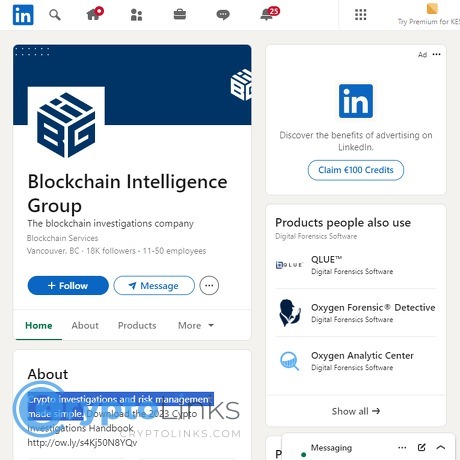
Blockchain Intelligence Group
www.linkedin.com
Blockchain Intelligence Group: What They Actually Do (And Why Crypto Users Should Care)
Have you ever had a crypto withdrawal suddenly “under review” and thought: what exactly are they checking?
Or maybe you’ve seen stories like “Ransomware gang tracked and arrested thanks to blockchain analysis” and wondered how anyone could follow money on a chain that’s supposed to be “anonymous.”
Welcome to the world where companies like Blockchain Intelligence Group (BIG) quietly decide which coins look “clean,” which look “dirty,” and which wallets get flagged before your transaction ever hits the bank.
Most people never think about these companies. But if you:
- Send or receive crypto on centralized exchanges
- Run a crypto or fintech business
- Trade larger amounts and eventually cash out to a bank
- Care about staying on the right side of regulation
…then you’re already affected by blockchain intelligence tools, even if you’ve never logged into them or heard the brand names.
Let’s start with the core problem they’re trying to solve, because that explains why this industry even exists.
The problems: dirty crypto, blind spots, and rising regulation
People love to say “blockchain is transparent.” And technically, that’s true. Every Bitcoin, Ethereum, or similar transaction is written to a public ledger that anyone can inspect.
But here’s the catch: that raw data is basically gibberish to normal humans and even to most businesses. At the same time, criminals figured this out early and used that gap to their advantage.
Crypto crime is not a myth (but it’s not the whole story either)
Crypto is used for a lot of good things: cross-border payments, remittances, DeFi, NFT markets, you name it. But there’s a darker side that regulators and law enforcement obsess over:
- Scams and rug pulls – fake projects, phishing sites, and “too good to be true” investments that run off with user funds.
- Exchange and DeFi hacks – protocol bugs or social engineering attacks that drain millions in minutes.
- Ransomware – attackers encrypt company data and demand payment in Bitcoin or other crypto.
- Darknet markets – online markets selling illegal goods, paid for in crypto.
Analytics firms like Chainalysis estimated that in 2022, “illicit crypto addresses” received around $20 billion+ worth of crypto. That’s still a small slice of total volume, but it’s enough to keep regulators awake at night.
When there are headlines like:
- “$600M DeFi protocol exploit”
- “Ransomware gang collects millions in Bitcoin”
- “Crypto used to evade sanctions”
governments feel pressure to act, and that’s where companies like Blockchain Intelligence Group step in.
Transparent… but feels anonymous: the illusion most users live in
If you open a block explorer, all you see is long hexadecimal wallet addresses moving coins around. No names. No faces. Just:
bc1qxy… sent 0.563 BTC to bc1qmz…
To most people, that feels anonymous. But it’s really more like using a bank account number without your name printed on it. With enough context, patterns, and external data, those strings of characters can often be linked to:
- Centralized exchanges
- Payment processors
- Mixers and tumblers
- Darknet markets
- Individual users or groups
The problem is that this “linking” doesn’t happen automatically. It requires:
- Collecting huge amounts of blockchain data
- Tagging and labeling known wallets and services
- Spotting patterns across thousands or millions of transactions
That’s way beyond what a compliance officer at a small exchange can do with a spreadsheet. So without specialized tools, most players are basically flying blind.
Why exchanges, banks, and DeFi projects struggle with compliance
Regulators don’t care that on-chain data is hard to read. From their perspective, if you’re moving money you should be able to answer questions like:
- “Where did this customer’s funds come from?”
- “Are you letting sanctioned individuals use your platform?”
- “What are you doing to prevent money laundering?”
That’s where the pain starts for exchanges and crypto businesses.
Here’s what they’re up against:
- Massive data volume – Bitcoin alone has hundreds of millions of addresses. Ethereum has far more if you include tokens and smart contracts.
- Complex behavior – Funds route through mixers, cross-chain bridges, DeFi pools, OTC desks, and multiple exchanges.
- Global rules – FATF, EU AML regulations, US FinCEN guidance, local licensing laws, sanctions lists… it’s a maze.
- Real stakes – Get this wrong and you face fines, license issues, banking problems, or even criminal exposure.
DeFi projects and wallets feel the heat too, especially if they’re trying to stay “compliant enough” to work with regulators or traditional finance later.
So they need a way to look at a wallet or transaction and say, in simple terms:
Is this low, medium, or high risk — and why?
That’s exactly the gap Blockchain Intelligence Group is trying to fill.
Regulators and law enforcement want receipts, not vibes
Think about a big hack where $100M is stolen from an exchange. The thieves don’t just leave it in one address forever. They start moving it:
- Through multiple wallets
- Into mixers to break the trail
- Across chains via bridges
- To high-risk exchanges or P2P markets for cash-out
Years ago, this often worked. Today, law enforcement agencies around the world are working more closely with blockchain analytics firms to follow those funds step by step.
You’ve probably seen stories like:
- US authorities recovering a big chunk of Colonial Pipeline ransomware funds
- Funds from the Bitfinex hack being tracked years later, leading to arrests
- Stolen NFT or DeFi exploit funds frozen when they hit centralized exchanges
Behind almost all of those stories, there’s at least one blockchain intelligence platform doing the heavy lifting. The investigators don’t want “it looks shady”; they want:
- Transaction graphs
- Labeled wallets
- Behavior patterns
- Evidence that holds up in court
So regulators now pretty much expect serious crypto businesses to use tools like this. It’s gone from “nice to have” to “how do you not have this?”
The gap between raw blockchain data and human understanding
Let’s say you work at a small exchange and a regulator asks:
“Show us that you’re not facilitating sanctions evasion or laundering scam proceeds.”
In theory, you could:
- Export raw blockchain data
- Pull CSVs of every deposit and withdrawal
- Manually check addresses against sanctions lists
- Try to draw your own transaction graphs
But in practice, this is impossible at scale. Even for a single suspicious customer, it might mean reviewing hundreds of transactions and wallet hops.
That’s the reality:
- Blockchains store everything…
- …but give you almost no context by default.
The missing piece is turning that low-level, messy data into something a human can reason about in seconds:
- “This wallet is tied to a known darknet market.”
- “These funds trace back to a 2021 exchange hack.”
- “This address has heavy exposure to mixers and high-risk services.”
That’s where Blockchain Intelligence Group comes in. Their entire business is about building this “translation layer” on top of blockchains.
Promise: how Blockchain Intelligence Group turns blockchain chaos into usable intelligence
So, what’s the core promise of a company like Blockchain Intelligence Group?
In simple terms:
They take raw blockchain data and turn it into clear, actionable intelligence that non-technical people can actually use.
Think of it this way:
- A compliance officer wants to know if they should block, allow, or review a transaction.
- An investigator wants to follow stolen coins across 20+ hops and multiple chains.
- A bank wants to understand whether a crypto business client is running high-risk activity or staying clean.
Blockchain Intelligence Group builds tools that answer those questions through:
- Visual tracing – showing where funds have come from and where they’re going
- Risk scoring – tagging wallets or transactions as low/medium/high risk based on exposure
- Entity labeling – identifying that a wallet belongs to an exchange, mixer, darknet market, etc.
- Reports – packaging investigations into something you can show auditors, banks, or courts
They’re not alone in doing this (there’s a whole industry), but their goal is very specific:
- Make cryptocurrency “safer” and more understandable for:
- Compliance teams
- Investigators
- Businesses handling crypto
- Regulators and law enforcement
In the rest of the article, I’m going to break down:
- Who Blockchain Intelligence Group actually is as a company
- How this whole “blockchain intelligence” thing works at a high level
- What specific tools and services they offer
- What that means for you as a regular user or a crypto builder
But before that, there’s a key question: even if you’re just sending coins from Binance to your hardware wallet and back, why should you care about any of this?
Why this matters for you (even if you’re “just” a user)
Here’s the uncomfortable truth: you can be 100% honest, pay your taxes, and still end up with a “suspicious” account in the eyes of an exchange or a bank.
Why? Because analytics tools don’t know your intentions. They only see money flows and historical connections.
How analytics tools affect KYC, withdrawals, and account flags
When you:
- Send coins to an exchange
- Withdraw to your personal wallet
- Cash out to your bank account
there’s a strong chance that behind the scenes, something like Blockchain Intelligence Group is scoring those addresses and transactions.
That can mean:
- Instant approval – if the funds look clean and come from reputable sources.
- “Under review” delays – if there’s some exposure to risky services or unclear origins.
- Additional KYC requests – “Please explain the source of funds,” “Send proof of origin,” etc.
- In extreme cases: account closure or frozen funds – if they believe there’s a link to crime, sanctions, or very high-risk activity.
Those decisions are rarely random. They’re driven by risk rules that use data from blockchain intelligence platforms.
Why a clean transaction history starts to matter when you touch banks
If you never leave crypto, things are a bit easier. But the moment you move serious money off-chain, banks and regulators want a story that makes sense.
Imagine two scenarios:
- User A – buys BTC on a regulated exchange, sends to a hardware wallet, trades occasionally, then sends back to a major exchange and cashes out.
- User B – receives BTC from an unknown peer, sends it through a mixing service, trades on a high-risk overseas exchange, then tries to cash out to a local bank.
Even if both people are honest, User B’s history is way more likely to trigger questions. Why?
- Funds touched a mixer (which often raises a red flag)
- There’s exposure to high-risk exchanges
- There’s no clear fiat on-ramp (no obvious “I bought this BTC here with KYC” story)
Analytics tools can’t see your intent, only your trail. So having a traceable, sensible money path is becoming just as important as holding your own keys.
How law enforcement uses tools like BIG to follow stolen funds and scams
If you ever get scammed or hacked, this is the part you’ll care about the most.
When victims file reports, investigators often turn to platforms like Blockchain Intelligence Group to:
- Identify the scammer’s wallet
- Track the movement of stolen funds
- Flag funds when they hit centralized exchanges that cooperate
- Build a timeline and evidence trail for potential recovery or prosecution
There’s no guarantee of getting funds back, of course. But without this type of tooling, the chance would be close to zero for most cross-border, multichain cases.
On the flip side, if your coins accidentally pass through shady addresses without you knowing, those same tools might cause you headaches later.
Why understanding this space helps you avoid “tainted” funds
Here’s a scenario that’s becoming more common:
- You sell something for crypto (a service, an NFT, whatever)
- The buyer pays you from a wallet that previously received funds from a scam or a hack
- You later send those coins to an exchange and suddenly you’re asked:
- “Where did this crypto come from?”
- “Who paid you?”
- “Can you prove this wasn’t related to a crime?”
From your perspective, you just got paid. From the exchange’s perspective, their analytics tool is screaming “high-risk funds” and they’re trying not to get in trouble.
That’s why it helps to:
- Use reputable platforms when moving bigger amounts
- Keep basic records (invoices, messages, contracts) for large P2P payments
- Understand that some services (like certain mixers) are automatically treated as high risk, even if you use them for privacy
You don’t have to obsess over every transaction. But simply knowing that blockchain intelligence exists — and how it shapes exchange behavior — can save you a lot of stress later.
So we’ve set the stage: there’s dirty crypto, blind spots, and growing regulatory pressure. Tools like Blockchain Intelligence Group are stepping in as the translators between messy blockchains and strict compliance rules.
The next question is obvious: who exactly is this company, how do they position themselves, and where do they sit in this growing industry?
That’s what I’ll break down next.
Who is Blockchain Intelligence Group? Origins, mission, and what they actually are
If you’ve ever had a crypto withdrawal randomly “under review” for hours, there’s a good chance a blockchain intelligence platform was quietly involved in that decision.
One of the players behind that sort of background check is Blockchain Intelligence Group (often shortened to BIG). They’re not an exchange, not a wallet, not a trading platform. They sit one layer below all of that, in the plumbing of the crypto world.
Think of them as the people who try to answer questions like: “Where did these coins come from?” and “Is this wallet connected to scams, hacks, or sanctions?” — but with proper tooling, data, and a very specific mission.
Quick profile: founded in 2015 to make crypto safer
BIG started back in 2015, which in crypto feels like ancient history. That’s the same era when Bitcoin was still mostly a niche experiment, the term “DeFi” didn’t exist, and regulators were just starting to notice that criminals had found a new toy.
From the beginning, their pitch has been simple: use data and software to make cryptocurrency safer and more accountable.
In practice, that has turned into two main product directions:
- Compliance tools – helping companies stick to AML/KYC rules and manage crypto risk (transaction screening, wallet checks, risk scores).
- Investigation and intelligence tools – helping people trace funds, map wallets, and understand who might be behind which on-chain fingerprints.
They’re not building stuff for retail traders. Their customers are the people and institutions that sit between users and regulators:
- Crypto exchanges & OTC desks – they use BIG to monitor deposits and withdrawals so they don’t become a laundromat for stolen or sanctioned funds.
- Banks & fintechs – especially those that let customers buy, sell, or hold crypto. If a neobank offers “Buy Bitcoin” in their app, there’s often a blockchain analytics vendor in the background.
- Law enforcement & regulators – cybercrime units, financial intelligence units, sanctions teams that need to follow the money on-chain.
- Professional services – forensic accountants, legal firms, incident response teams that get called when, for example, a Web3 project loses $20M in a bridge exploit.
A fairly typical situation for their tech might look like this:
- A centralized exchange gets a deposit of 2 BTC.
- The address that sent it has previously been linked (via analytics tools) to a ransomware payout address from a known strain.
- BIG’s software flags the transaction with a high-risk score.
- The exchange pauses withdrawals for that user, files a suspicious activity report, and maybe reaches out to law enforcement.
To the user, it just feels like “Why is my withdrawal stuck?”
Behind the scenes, a company like BIG is providing the evidence and risk scores that drive that decision.
“Crypto never forgets. The real question is: who can actually read what it remembers?”
BIG’s entire business lives in the gap between those two sentences.
LinkedIn snapshot: how they present themselves to the world
If you open LinkedIn and look up Blockchain Intelligence Group, you won’t see memes, trading calls, or price charts. You’ll see language like:
- Risk management
- Crypto investigations
- Compliance solutions
- Education and training
Their posts typically cover things like:
- Breakdowns of recent hacks or ransomware cases and how funds moved on-chain.
- New regulations around AML, sanctions, or MiCA-style rules and what they mean for exchanges.
- Case studies about how law enforcement used blockchain analytics to follow funds from darknet markets or scams.
- Announcements of webinars or courses for compliance officers and investigators.
This kind of “professional, regulatory, risk-focused” branding isn’t accidental. LinkedIn is where:
- Compliance officers at exchanges scroll during lunch.
- Bank executives quietly figure out how to deal with crypto without wrecking their reputation.
- Investigators and regulators look for tools, training, and partners.
BIG’s audience isn’t traders chasing the next altcoin. It’s the people who decide whether a bank will freeze or accept your crypto cash-out, or whether a hack will just be “sad news” or something that actually leads to arrests.
There’s a kind of emotional tension in how they position themselves too. A lot of their messaging leans on words like trust, security, compliance, and public safety. That plays directly into how governments and big financial institutions think: they don’t care if your favorite token goes 10x — they care that it doesn’t end up in the next sanctions report.
And LinkedIn is the perfect stage for that message. For crypto retail users, Twitter/X is where the noise is. For companies like BIG, LinkedIn is where the deals and regulations take shape.
How they fit into the wider “blockchain intelligence” industry
BIG isn’t alone in this field. Over the last few years, a whole ecosystem of blockchain analytics companies has grown up, including very visible names that regularly show up in DOJ press releases or FATF-related workshops.
Each of these companies tries to do similar core things:
- Collect and structure on-chain data across major blockchains.
- Tag and categorize addresses (exchanges, mixers, darknet markets, gambling sites, DeFi protocols, etc.).
- Score risk and track suspicious money flows.
- Provide investigation tools for following funds hop-by-hop.
Where BIG fits in is as one of the players trying to be part of the “default stack” for regulated crypto activity. The story of the industry over the last decade is basically:
- Phase 1 – Wild West: early days of Bitcoin, Silk Road, barely any KYC, no real structured analytics. Transactions were public, but practically unreadable for most people.
- Phase 2 – Oh, this is serious now: big hacks, major scams, ransomware booms, and increasing political pressure. Regulators start asking tough questions about AML and terrorist financing.
- Phase 3 – Data as core infrastructure: exchanges, neobanks, and custodians cannot operate at scale without some form of on-chain analytics. That’s where companies like BIG become “must-have” tools rather than “nice-to-have” extras.
A good way to think about it:
- In 2013, you could spin up a Bitcoin exchange with a few devs and a payment processor.
- In 2025, if you try that without a blockchain intelligence partner, you’re basically asking for a regulator to shut you down.
This is why people sometimes call platforms like BIG “crypto compliance infrastructure”. They’re part of the hidden layer that serious businesses and institutions rely on to:
- Show they’re not facilitating money laundering.
- Detect and report suspicious transactions.
- Work with banks that demand proof of robust risk controls.
- Cooperate with law enforcement after a hack or a fraud case.
There have already been multiple real-world examples where blockchain analytics companies (this whole category, not just BIG) appeared in public cases:
- Major ransomware groups having their on-chain flows mapped hop-by-hop, leading to partial or full recovery of funds.
- Darknet market operators getting arrested after investigators linked bitcoin addresses to their services and cash-out points.
- Sanctions enforcement cases, where analytics data showed specific wallets tied to sanctioned entities or regions.
Every time one of those cases makes headlines, the message to institutions is loud and clear: if you’re serious about handling crypto, you need this kind of visibility. That’s exactly the gap Blockchain Intelligence Group and its competitors rush to fill.
For regular users, this shift often feels like a loss of the “old crypto freedom” — but for regulators, banks, and large companies, it’s what finally makes them comfortable touching digital assets at all.
And here’s where it gets really interesting: understanding what these companies do means you’re ready to understand what they actually see on-chain. Because when a firm like BIG says they offer “blockchain intelligence,” what does that intelligence actually look like under the hood?
That’s where things get technical, and honestly, a lot more eye-opening.
So the real question is:
How do they turn billions of raw transactions into something that can flag a single “suspicious” deposit on your exchange account?
I’ll walk through exactly how that transformation works next — from raw blocks to patterns, labels, and entities — so you can see what “blockchain intelligence” really means behind the buzzword.
What is “blockchain intelligence” anyway?
If you’ve ever stared at a blockchain explorer and thought, “Cool… but what am I actually looking at?” — that confusion is exactly why blockchain intelligence exists.
On a public chain like Bitcoin or Ethereum, every transaction is technically visible. That sounds transparent, but in practice it’s like staring at a wall of random bank account numbers without names, context, or story. You see movement, but not meaning.
Blockchain intelligence is the process of turning that raw, chaotic transaction firehose into something humans can understand and act on: patterns, risk levels, and real-world connections.
“Data is not information, information is not knowledge, knowledge is not understanding.” – Clifford Stoll
On-chain data by itself is just “data.” Companies like Blockchain Intelligence Group try to move it all the way up that ladder — to understanding.
From raw blocks to patterns: making sense of on-chain data
Think of a blockchain as a public ledger that never shuts up. New blocks are added every few seconds or minutes, each filled with:
- Sender addresses
- Receiver addresses
- Amounts
- Timestamps
- Transaction fees
On paper, that’s perfect transparency. In reality, it’s noise until someone organizes it. That’s where blockchain intelligence comes in.
At a high level, it means:
- Organizing and analyzing on-chain data
Turning raw transactions into structured databases that machines and humans can search and filter. - Mapping trends and behavioral patterns
Spotting things like “this address is hoarding funds,” “this cluster is a typical exchange hot wallet,” or “this looks like mixer-style behavior.” - Identifying risks and suspicious activity
Flagging flows that look like ransomware payments, hacks, darknet activity, or sanctions evasion.
For example, when the Colonial Pipeline ransomware attack hit in 2021, analysts followed the Bitcoin ransom payments through the blockchain step by step. They didn’t have private keys; they had patterns:
- Incoming funds from multiple victim wallets
- Consolidation into a few addresses
- Attempts to move through services that look like mixers or high-risk exchanges
The U.S. Department of Justice later announced they had recovered a chunk of that Bitcoin. That kind of story only happens because someone can look at raw blocks and say, “This set of movements is not normal — let’s track it.”
Without this layer of structure and pattern recognition, everything on-chain is just one endless spreadsheet where every row looks the same.
Labels, clusters, and entities: the secret sauce
The real magic of blockchain intelligence isn’t in the raw data — it’s in the labels.
Once you start attaching meaning to addresses and transactions, everything changes. Suddenly, it’s not “address A sent funds to address B,” it’s “a known darknet market payout moved funds into a major exchange.” That’s the difference between noise and a red flag.
Here’s how that typically works.
1. Address clustering
Most users and services don’t use a single address forever. They use many addresses that, together, act like one identity. Blockchain intelligence tools look at patterns to guess which addresses are controlled by the same person or service.
For example:
- Inputs that are always spent together might belong to the same wallet
- Change addresses that keep showing up in a similar way reveal the same owner
- Typical withdrawal patterns show exchange hot wallets and cold storage behavior
On Bitcoin, this kind of clustering is powerful. A paper from the University of Luxembourg years ago showed how they could identify users across thousands of addresses just by combining clustering techniques with a bit of external info. Once you see enough of these patterns, you realize “one person, many addresses” is not as anonymous as people think.
2. Tagging known entities
Next step: tools attach actual labels to clusters and addresses. For example:
- Centralized exchanges – Binance, Coinbase, Kraken, etc.
- Mixers and tumblers – classic tools used to obscure the trail of funds
- Darknet markets – marketplaces for illegal goods and services
- Payment processors – BitPay-style services, merchant processors
- DeFi protocols – Uniswap pools, lending protocols, yield aggregators
This tagging doesn’t happen magically. It comes from a mix of detective work, user reports, blockchain patterns, and sometimes the services themselves publishing addresses.
Once a tool knows “this cluster is a major exchange,” suddenly every inbound and outbound transaction connected to it becomes much easier to interpret:
- Victim wallet → Darknet market address → Mixer → Exchange hot wallet
That chain tells a very different story than just “random address → random address → random address.”
3. Risk categories and scoring
After you have clusters and labels, you can start assigning risk categories. Common ones include:
- Scams and fraud – Ponzi schemes, rug pulls, phishing wallets, giveaway scams
- Hacks and theft – exploited DeFi contracts, drained exchange wallets
- Sanctioned entities – wallets linked to individuals, companies, or countries on sanctions lists
- High-risk jurisdictions – regions with weak AML rules or known money-laundering hubs
- Mixers and obfuscation services – tools commonly used to “wash” funds
When you hear “this address has a high risk score,” it usually means the tool has seen one or more of these connections in its labeled graph.
This is why labels are so powerful — and scary. A label can be the difference between:
- “You can withdraw as usual,” and
- “Your account is frozen pending review.”
And yes, sometimes those labels are wrong or incomplete. I’ve seen users get flagged simply because they unknowingly received funds that passed through a mixer years ago. That’s the emotional side of this world: a system built to catch criminals can snare regular people if the labels and context aren’t handled carefully.
Where this data comes from
So where do companies like Blockchain Intelligence Group actually get all this information? They’re not hacking wallets. They’re building a giant, constantly updated puzzle from a bunch of different data sources.
1. Public blockchains
This is the foundation. Everything starts with public chains like:
- Bitcoin
- Ethereum
- Litecoin
- Bitcoin Cash
- And, increasingly, chains like Polygon, Tron, BNB Chain, and others
Nodes are constantly ingesting new blocks, parsing transactions, and feeding them into structured databases. For smart contract chains, that includes:
- Token transfers (ERC‑20, BEP‑20, etc.)
- DeFi interactions (swaps, liquidity provision, borrowing, staking)
- NFT movements
On Ethereum, there are now millions of contracts and tokens. Without analytics, it’s impossible to know if a random contract address is a legit DeFi protocol or a “rug pull factory” smart contract that has drained users before.
2. Open-source intelligence (OSINT)
This is where things get surprisingly human. OSINT means pulling data from:
- Project websites and documentation
- Forums like Reddit and Bitcointalk
- Social platforms like X (Twitter), Telegram, Discord
- Github repos and code comments
- News articles and research reports
- Government seizure notices and court filings
Example: a scam project might publicly post a “team wallet” address in their documentation, or angry victims might share the scammer’s receiving address on Reddit. That address then gets picked up, verified, and fed into analytics platforms as a known scam label.
Major enforcement actions usually come with press releases that name and sometimes list the addresses involved. Over time, this creates a web of anchors: known bad actors that other addresses can be measured against.
3. Partner data and internal investigations
Analytics companies also work with:
- Exchanges and payment processors
- Wallet providers
- Fintechs and banks
- Law enforcement and regulators
A victim exchange might share details of a hack with a blockchain intelligence firm: timestamps, internal wallet IDs, logs of login attempts, and so on. Investigators then use that context to zero in on which on-chain addresses belong to the attacker and how funds flowed out.
Over months and years, these individual case files turn into a rich knowledge base. “We know this pattern belongs to this threat group, because we’ve seen them in four previous investigations.”
4. Constant updates
Crypto doesn’t sleep, and neither do new scams. Chainalysis, TRM Labs, and similar firms have reported in different studies that illicit crypto activity tracks broader market cycles: more volume, more scams. Every bull run brings:
- Fresh fake investment schemes
- New DeFi exploit techniques
- Copy‑paste “shitcoins” with built-in rug mechanics
That means risk labels and intelligence can’t be a “one and done” job. Addresses that were harmless last month might suddenly receive funds from a sanctioned entity or a hacked protocol.
This constant churn is why these tools matter for both regulators and legit users: the threat map is always changing.
Why regulators and law enforcement love (and rely on) this stuff
There’s a reason regulators quote blockchain analytics data in their official reports and why police units now send officers to crypto tracing trainings.
For them, blockchain intelligence is not “nice to have” anymore. It’s core infrastructure.
1. Supporting AML and CFT work
Anti‑money laundering (AML) and counter‑terrorist financing (CFT) rules basically say: banks and financial services need to know where money is coming from and where it’s going, especially when it crosses borders or behaves strangely.
In traditional finance, that means monitoring wire transfers, bank accounts, and card payments. In crypto, the blockchain is the raw data source — but it’s useless without analytics.
With tools like Blockchain Intelligence Group, compliance teams can:
- Screen incoming deposits for links to known bad actors
- Monitor outgoing withdrawals to high‑risk destinations
- Generate reports that show, “We checked this, here’s what we found, here’s why we took action.”
Regulators love this because it aligns crypto with how they already think about financial crime. When an exchange can show they’re using blockchain intelligence in their AML workflow, it quietly signals: “We’re taking this seriously.”
2. Following ransomware and stolen funds
Ransomware gangs used to be almost impossible to track in the fiat system. With crypto, ironically, they left a public trail. That’s why so many official reports on ransomware now reference blockchain analytics data.
Across different cases, investigators use tools to:
- Spot the initial victim payments on-chain
- Follow how attackers split, merge, and move the funds
- Identify when dirty coins hit exchanges or fiat off‑ramps
In several high‑profile hacks and ransomware incidents, authorities have managed to freeze or seize millions in crypto because someone was watching those flows in real time, or close to it.
3. Making it harder to “wash” stolen crypto
Old advice in shady circles used to be, “Just run it through a mixer” or “Send it across chains a few times and you’re safe.” That’s far less true today.
Analytics platforms now track:
- Patterns typical of mixing (lots of small, random outputs, complex splitting/merging)
- Cross‑chain bridges used right after a hack
- DeFi protocols abused to obscure origin (flash loans, swaps, liquidity loops)
When Tornado Cash was hit with sanctions, part of the justification was built on years of tracing that showed billions in hacked and illicit funds moving through its contracts. Tools had the receipts.
For law enforcement, that means:
- They may not stop the first move, but
- They can make the later moves much harder to cash out quietly.
For everyday users, that’s both comforting and slightly unsettling. Comforting, because criminals don’t get a free ride. Unsettling, because it highlights how traceable your own activity can be when it intersects with regulated platforms.
And that brings us to the big question hanging behind all of this: if blockchain intelligence is the engine, what exactly are companies like Blockchain Intelligence Group building on top of it — and how does that touch your deposits, withdrawals, and even your chance of opening a crypto-friendly bank account?
I’ll break that down next, tool by tool, and show how an actual investigation or compliance check might look from the inside. Ever wondered what your exchange really sees when you hit “withdraw”?
What does Blockchain Intelligence Group actually do? Their tools and services
When people hear “blockchain intelligence,” they often imagine some mysterious black box plugged into every crypto exchange on earth. In reality, what Blockchain Intelligence Group (BIG) does is much more practical – and a lot closer to everyday crypto life than most users realize.
Think of BIG as a set of binoculars for on-chain money. Their tools don’t change the blockchain itself; they change how clearly people can see what’s happening on it.
Crypto investigations platforms
The core of BIG’s business is their investigation platform – software that makes it possible to follow money on-chain and turn that trail into something a human can actually use in a report, a police file, or a court case.
Here’s what that looks like in plain English.
- Tracing stolen funds from a hacked exchange
Imagine a centralized exchange gets hacked and loses $20 million in Bitcoin. The attacker quickly starts moving the BTC through:
- Fresh wallets created on the spot
- A couple of mixers
- Some gambling sites
- Two or three smaller exchanges to cash out
On a raw block explorer, this turns into thousands of addresses and dozens of hops. You can scroll Etherscan or a Bitcoin explorer until your eyes bleed, but it still looks like random noise.
An investigator using BIG’s tools sees something very different:
- A visual flow chart of the stolen funds, hop by hop
- Colored lines for different risk paths (for example, direct to exchanges vs through mixers first)
- Labels on major entities like “Exchange A,” “Mixer X,” “Casino Y,” “OTC Broker Z”
- Aggregation of all the attacker’s addresses into likely clusters controlled by the same person or group
Now they can say to a specific exchange: “Here are the 14 addresses where those stolen funds landed. Freeze anything linked to them.” That’s the point where losses sometimes get recovered or at least stopped from spreading further.
There are plenty of public cases that show how powerful this type of tracing is. For example, U.S. authorities have tracked and recovered chunks of funds from high-profile hacks like the Bitfinex-related laundering case and several ransomware operations. Different analytics companies were involved, but the logic is always the same: structured, labeled on-chain data plus good investigative work.
- Connecting a suspect wallet to real-world services
Let’s say law enforcement is investigating a romance scam. They only have one thing: a Bitcoin address the victim sent money to.
On their own, that address is just a string of characters. With BIG-style tools, an investigator can:
- See every incoming and outgoing transaction from that address
- Spot that most funds end up in a known exchange or OTC desk
- Notice patterns like:
- Funds always pass through the same intermediary wallet
- Regular withdrawals to a specific centralized exchange
- Mixers or privacy tools used right after large receipts
Each of those steps gets mapped out visually and timestamped. The output isn’t just “this address is risky”; it’s a story: this address is part of a larger scam network using this exchange, this mixer, and these side wallets.
When investigators combine that with KYC data from the exchange (which can be requested through legal channels), the blockchain address trail stops being anonymous at all.
- Building cases that stand up in court
Good investigations aren’t just about finding the money. They’re about documenting the steps so thoroughly that a judge, jury, or senior compliance officer can understand and trust what happened.
Tools like those from Blockchain Intelligence Group are designed to:
- Export clear PDF or visual reports of fund flows
- Show exactly how much money went from point A to point B, and when
- Reference labeled entities and risk categories in a structured way
- Store audit trails so someone else can reproduce the analysis if needed
There’s a big difference between saying “we think this is the hacker” and “here is a provable chain of transactions from the victim’s wallet to an exchange account in this person’s name.” BIG sits on the side of that line that courts actually care about.
“On-chain data is permanent, but justice only happens when someone can explain that data in a way non-technical people can trust.”
That’s the role these investigation platforms play—turning raw blockchain trails into something that looks like evidence, not spaghetti.
Risk management and compliance solutions
Outside of headline-grabbing hacks, most of BIG’s impact on the crypto world happens through day-to-day compliance: monitoring transactions, screening wallets, and checking whether flows of funds look “clean enough” for banks and regulators.
- Transaction monitoring & risk scoring
If you’ve ever had a withdrawal “under review” or a bank ask extra questions about a crypto cash-out, there’s a good chance some analytics tool in the background flagged a risk.
BIG and similar companies plug into exchanges, OTC desks, and neobanks to:
- Give every transaction a risk score (for example, 0–100)
- Highlight if the funds:
- Recently came from a sanctioned entity
- Are tied to known scams or hacking incidents
- Passed through high-risk services like mixers or darknet markets
- Have a pattern consistent with money laundering techniques
- Trigger alerts when a transaction crosses a risk or size threshold
A study from Chainalysis estimated that in 2022, about 0.24% of all crypto volume was tied to illicit activity. That sounds tiny, but in dollar terms it’s billions. Compliance teams don’t want those billions flowing through their order books unnoticed, which is exactly why they lean on tools like BIG.
- Wallet screening before sending or receiving
Wallet screening is basically: “Should we touch money linked to this address or not?”
Before an exchange accepts a deposit, or before a fintech app lets a user send funds on-chain, their system can quietly ask a blockchain analytics provider:
- Is this address associated with:
- Known hacks or ransomware groups?
- Sanctioned individuals or entities?
- Darknet markets or illegal services?
- High-risk offshore exchanges with no KYC?
- What’s the risk score for interacting with this wallet?
- Has this wallet recently received funds from risky sources?
If the result looks bad enough, a few things can happen:
- The transaction is blocked automatically
- The user is asked for more information about the source of funds
- The case is escalated to an internal compliance officer for manual review
For users, this can feel frustrating. For the businesses, it’s survival – especially if they want to keep their banking relationships and licenses.
- Plugging into KYC/AML workflows
Most serious exchanges and fintech apps already run Know Your Customer (KYC) checks using things like ID scans and proof of address. What companies like BIG add is the “Know Your Transaction” layer on top.
BIG-style tools can be integrated into:
- Case management systems used by compliance teams
- Automated rules engines that hold or release transactions
- Bank reporting tools for suspicious activity reports (SARs)
So instead of a compliance officer manually copying and pasting tx hashes into random explorers, everything comes into one dashboard: user data, transaction risk score, origin of funds analysis, and recommended action.
That’s how this tech quietly shapes your user experience when you send, receive, or cash out crypto – the whole thing runs in the background, but the effects are very real when something gets flagged.
Education, training, and advisory
The tools alone don’t make anyone safer if the people using them don’t understand how crypto actually works. That’s why a big part of BIG’s work is human-focused: training, workshops, and advisory services.
- Training regulators and law enforcement
On the public side, they often run or contribute to courses for:
- Police cybercrime units
- Financial intelligence units (FIUs)
- Regulators and supervisors
- Prosecutors and other legal staff
Typical topics include:
- How to identify which blockchain you’re even looking at
- Following the money across multiple chains and services
- Common patterns in ransomware, sextortion, SIM-swap theft, and phishing scams
- How to preserve evidence from exchanges and wallet providers
The goal is simple: fewer cases where authorities say “we can’t do anything, it’s crypto.” As more of these teams get up to speed, we’ve already seen more arrests and asset seizures tied to on-chain crime across multiple countries.
- Helping compliance teams stay sane
On the private side, BIG and similar firms are usually busy with:
- Workshops for exchange compliance staff on how to read risk signals correctly
- Helping new fintechs design realistic AML policies around crypto
- Explaining new regulatory expectations to product and legal teams
- Case reviews where they walk through past incidents and what could be done better next time
This matters because poor understanding cuts both ways:
- Too strict, and you end up blocking tons of innocent users
- Too relaxed, and your platform becomes a magnet for money laundering
Education is what keeps those extremes in check and pushes platforms toward reasonable middle ground.
Who typically uses BIG’s products in the real world
When you look at who actually pays for blockchain intelligence, you start to see how deeply this stuff is woven into the modern crypto landscape.
- Law enforcement cybercrime units
From national police agencies to specialized cyber units, these teams use tools like BIG’s to:
- Work ransomware and extortion cases
- Follow exchange hack funds as they move between chains
- Link “anonymous” wallets to KYC’d centralized exchange accounts
- Prepare evidence for prosecutors and courts
Without structured analytics, a lot of these cases would stall. With them, crypto looks less like wild chaos and more like a different kind of bank statement.
- Crypto exchanges and fintechs
Centralized exchanges, OTC desks, and app-based neobanks use BIG-style services for:
- Deposit screening (is this money radioactive?)
- Withdrawal checks (where is this customer sending funds?)
- Ongoing monitoring for suspicious patterns
- Internal investigations when something goes wrong
If you’ve ever had an exchange ask, “Can you explain the source of these funds?” that question probably didn’t come out of thin air. Some analytics tool somewhere in the background spotted something worth a closer look.
- Banks that touch crypto at all
Traditional banks are extremely sensitive about compliance. When they open accounts for:
- Crypto companies
- High-volume traders
- Funds with digital asset exposure
They often want to see that those partners are using proper analytics tools, and some banks even run their own screening based on data from firms like BIG.
That’s one of the hidden levers in this whole market: if you want good banking as a crypto business, you usually need to show you take blockchain intelligence seriously. No tools, no bank account. No bank account, no business.
- Legal, forensics, and incident response firms
Finally, there’s a growing ecosystem of:
- Forensic accounting specialists
- Law firms focused on crypto disputes
- Incident response teams that jump in after a hack
These players often lean on platforms like BIG’s to:
- Map out losses for insurance claims
- Support civil lawsuits and asset recovery efforts
- Document “who lost what and where it went” after protocol or bridge hacks
So even if you never log into a BIG product yourself, there’s a decent chance someone working on your behalf someday will—especially if large sums or serious disputes are involved.
Impact on everyday users (even if you never sign up)
Now to the part most people actually feel: how all of this lands in the lap of a normal crypto user who’s just trying to move their coins around without drama.
- Why withdrawals or deposits sometimes get flagged
If your exchange suddenly holds your withdrawal or asks for extra documents, it’s usually not random. Somewhere in the background, a risk engine said:
- The wallet you’re sending to has previous exposure to mixers or hacks
- The funds you’re depositing recently came from a high-risk service
- The size and pattern of your transactions changed in a way that looks unusual
The compliance team then has three main options:
- Release the transaction after a quick review
- Ask you for more context (source of funds, purpose, etc.)
- Block or even close the account if the risk is too high or unexplained
From your side, this feels like “my exchange is being annoying.” From their side, it’s “our analytics tools are telling us this might be a problem, and regulators will ask why we ignored it if we do nothing.”
- How risk scores shape whether platforms want your business
Every address and transaction can be seen as sitting somewhere on a spectrum from “very clean” to “absolutely toxic.” That’s the invisible layer behind phrases like:
- “We can’t process this transaction”
- “We are unable to serve you due to our risk policies”
- “We need additional information about this activity”
Some platforms are stricter than others, but they’re all looking at similar underlying signals. Over time, that means:
- Funds with clear, traceable histories are easier to cash out or move through regulated platforms
- Funds with messy or tainted histories hit more walls, questions, and delays
If you’re just trading small amounts on big exchanges, you might barely notice this. Once you start moving larger amounts or interacting with riskier parts of the ecosystem, this invisible scoring layer suddenly matters a lot.
- Why thinking about “source of funds” is no longer optional
A few practical realities that tools like BIG make impossible to ignore:
- If you accept a large payment from a stranger directly from a sketchy source (for example, a mixer that just handled hack funds), that history comes with the coins
- Even if you’re totally innocent, your next big deposit to an exchange might trigger questions because of that past exposure
- Keeping at least a basic record of where your major funds came from (old exchange receipts, OTC deal notes, emails) is starting to look like common sense
This isn’t about turning everyone into an accountant. It’s more about understanding that in a world where on-chain activity is constantly being labeled and scored, “I didn’t know” stops working as a defense pretty quickly.
So yes, Blockchain Intelligence Group mostly sells tools to institutions. But the ripple effects land directly on regular users: how fast your withdrawals go through, whether your bank questions your cash-outs, and how simple or painful it is to move your wealth around.
The big question is: does all this make crypto better, or just more controlled? That’s where things get interesting – and it’s exactly what I’ll explore next when I look at the benefits, the worries, and where BIG really sits in the bigger crypto picture. Are you ready to see both sides of that coin?
Benefits, concerns, and where Blockchain Intelligence Group fits in the bigger crypto picture
The upside: safer markets, fewer scams, more institutional trust
Let me start with the part a lot of people underestimate: tools like Blockchain Intelligence Group actually make it easier for legit users and businesses to survive in crypto long term.
Think about what happens in every big hack or scam you see on Twitter (sorry, X):
- A bridge gets drained.
- Thousands of users get wrecked overnight.
- Funds are scattered across mixers, exchanges, and random wallets.
Without blockchain analytics, that’s usually where the story ends. With companies like BIG in the picture, it often doesn’t.
We’ve already seen this in the real world. After the 2016 Bitfinex hack, US authorities followed the stolen BTC for years across multiple wallets and services before eventually arresting suspects and recovering a chunk of the funds. Different analytics providers were involved, and while BITFINEX didn’t name every vendor, the message is clear: on-chain tracing isn’t just theory, it works.
Same thing with ransomware. In 2021, when Colonial Pipeline got hit, US law enforcement publicly said they used blockchain tracing to identify and seize part of the ransom. Again, not a sci-fi story – real money, real seizures, real victims getting at least some relief.
BIG plays in that same crime-fighting arena.
Here’s what that means practically for the ecosystem:
- Higher odds of tracking and recovering stolen funds
When law enforcement or private investigators use platforms like BIG, they can map out where stolen coins move, which exchanges they touch, and which services are being used to hide them. It doesn’t magically fix every hack, but it raises the cost of being a crypto criminal. And that alone filters out a lot of opportunistic scams. - Less dirty money flowing through major exchanges
Compliance teams plug analytics tools into their onboarding and transaction monitoring systems. If a deposit comes in from a wallet heavily linked to previous hacks or darknet activity, the system can flag it before the funds move any further. That means less risk for exchanges, and less chance your favorite platform wakes up to a surprise “regulatory issue” that shuts them down. - More confidence for banks and institutions
A big reason traditional banks stayed away from crypto was simple: “We can’t see what’s going on, so we don’t trust it.” Blockchain intelligence flips that. Now a bank can say, “Show me your monitoring, your risk scoring, and how you handle tainted funds.”
When a startup says, “We use tools like Blockchain Intelligence Group to monitor flows,” that’s something risk committees actually understand. It looks a lot closer to the AML standards they already know from traditional finance. - Cleaner reputation over time
The old narrative – “crypto is only for criminals” – is getting weaker every year. A 2023 report from Chainalysis, for example, estimated that less than 1% of total crypto transaction volume was linked to illicit activity. Yes, the absolute dollar amount is still big, but proportionally, it’s shrinking as analytics, regulation, and enforcement tighten up.
Tools like BIG are a big part of that story: they help regulators separate real crime from normal user activity instead of treating everyone as suspicious by default.
So there’s a strong upside: less chaos, more accountability, and a better chance that your exchange or project actually survives regulatory pressure instead of getting crushed by it.
The downside: privacy worries, false positives, and overreach
This is where things get uncomfortable – and where most “official” marketing glosses over the problems.
Blockchain intelligence is powerful. Any time you have powerful monitoring tools, you also have the risk of:
- mass surveillance
- bad data
- overzealous compliance
And crypto users are usually the ones who pay the price when things go wrong.
1. The surveillance finance problem
On paper, “track bad guys” sounds harmless. In practice, if every transaction you make on-chain is constantly scored, profiled, and logged, we’re getting closer to a world where financial privacy barely exists.
Imagine:
- Your self-custody wallet gets labeled as “medium risk” because at some point it received funds from a pooled address that once saw small amounts from a known mixer.
- Your exchange account starts getting random manual reviews.
- Your bank questions your withdrawal, not because you did anything wrong, but because someone three hops back in your transaction history touched something “suspicious.”
None of that is theoretical. I hear stories like this from Cryptolinks readers all the time:
“I sold some legit coins I’d been holding for years, sent the money to my bank, and suddenly they wanted proof of where I got the crypto, when I bought it, screenshots of old wallets, everything.”
That pressure doesn’t come out of thin air. It’s driven by risk reports, scores, and analytics platforms signaling “possible risk” based on on-chain history.
2. False positives and messy data
No risk-scoring model is perfect. And blockchain data can be noisy.
- Addresses get reused in weird ways.
- Hackers sometimes push small amounts into big known wallets to “taint” them or create confusion.
- Heuristics (like clustering) are guesses – often very good guesses, but still guesses.
So what happens when an analytics platform marks a cluster as “associated with mixing” or “connected to scam activity,” and your address gets pulled into that cluster by mistake? Most of the time, you’ll never know. You’ll just feel it as:
- withdrawals taking longer
- more KYC questions
- accounts randomly frozen until you send extra documents
There’s research highlighting this risk too. Academic papers have shown that address clustering can produce inaccurate links if heuristics are applied blindly, especially with newer protocols and privacy tools. And if that flawed link gets baked into a risk engine, it can haunt users for years.
BIG and other serious players know this, and they usually emphasize human review, context, and ongoing corrections. But once data is labeled and shared across institutions, it’s hard to fully clean up errors. That’s the real danger: bad data can travel a long way.
3. Innocent users caught in the blast radius
Here’s a very normal scenario:
- You sell an NFT on a marketplace.
- The buyer sends payment from a wallet that, unknown to you, previously received coins from a sketchy source.
- That payment hits your wallet.
- Later you send that crypto to an exchange and try to cash out.
From your perspective: all good.
From a risk engine’s perspective: “This address is just one or two hops away from funds linked to X mixer / Y scam / Z sanctioned entity.”
Now the exchange freezes the deposit and asks questions like:
- “Where did you get these funds?”
- “Do you know this sender?”
- “Can you prove the origin of this crypto?”
You didn’t launder anything. You just accepted a payment. But analytics doesn’t “know” your intent, it only sees history.
4. Tension with the original crypto ideals
Crypto was born with a clear promise: open access, censorship resistance, and the ability to hold value without needing permission from a bank or government.
Now we’re in a world where:
- Regulators expect detailed risk monitoring.
- Exchanges rely on blockchain intelligence to avoid fines.
- Banks demand proof that your crypto isn’t “dirty.”
That doesn’t kill the crypto vision, but it creates a serious philosophical and practical tension:
How do we keep money permissionless on-chain, while every major on/off-ramp runs rigorous surveillance-grade analytics in the background?
BIG sits right in the middle of that tension. They’re part of the infrastructure that makes crypto “safe” for regulators – but that safety comes with trade-offs regular users should understand.
How to stay on the safe side as a user or builder
So what can you actually do about all this if you’re not a regulator or an analytics vendor?
Let’s split it into two groups: users and builders.
If you’re a user:
- Stick to reputable exchanges and wallets
When you use shady services to save a small fee, you often pay for it later with blocked withdrawals, lost funds, or exposure to tainted coins. Big, regulated platforms are far from perfect, but they usually play nicer with banks and law enforcement – and they’re more likely already integrated with tools like BIG. That means fewer surprises when you move funds around. - Be picky about large incoming payments
For small amounts, most people don’t care. But if someone wants to send you a big chunk of crypto and you know nothing about them, slow down. Ask questions. If it’s a business deal, use invoicing tools or platforms that leave a trail. Some OTC desks and payment processors even use wallet screening to check risk before funds move. - Keep simple records of where your funds came from
I’m not saying run a full accountant-style ledger. Just keep:- screenshots of major buys and sells
- exchange statements
- saved emails for big deals
- notes on OTC trades
When a bank or exchange asks for “source of funds,” being able to quickly send a clean, coherent trail can turn a scary review into a short email exchange. - Understand that mixers and high-risk services leave marks
Whether you like it or not, many analytics providers treat mixers, certain gambling sites, and some “no-KYC” platforms as elevated risk. If you route your funds through them, don’t be shocked if later withdrawals get flagged. That doesn’t mean you’re a criminal, but the system might treat you as extra work.
If you’re a builder or founder:
- Assume you’ll need blockchain analytics at some point
If your product ever touches:- fiat on/off-ramps
- institutional clients
- regulated jurisdictions
then expect this question sooner or later: “How do you monitor on-chain risk?”
Saying “We don’t, because freedom” might sound noble on Telegram, but it won’t help when a bank compliance officer is deciding whether to give you an account. - Think about compliance from day one, not year three
It’s much cheaper and safer to:- design basic KYC/AML flows early
- plan how you’d respond to law enforcement requests
- set policies for high-risk users or geos
than to bolt on patchy compliance after you’ve already triggered red flags. - Use analytics as a shield, not a weapon
The better founders I speak with see tools like BIG as defensive tech:- protecting their platform from becoming a laundromat
- making regulators less suspicious
- giving banks comfort so they don’t cut them off
That mindset usually leads to more balanced policies instead of nuking users at the first hint of risk. - Stay educated on this world
If you’re building anything serious in crypto, it’s worth understanding the basics of blockchain intelligence, compliance, and safer crypto usage. I keep a running list of deeper background material and practical guides here: {{longresources}}. It’s not light bedtime reading, but it can save you from very expensive mistakes later.
The game has changed: on-chain freedom and off-chain compliance now live side by side. The trick is knowing how companies like Blockchain Intelligence Group shape that reality – and how you can navigate it without getting crushed in the middle.
So here’s the real question: if these analytics tools are quietly sitting behind your exchange, your bank, and maybe your own startup… how should you actually think about them in your day-to-day decisions? In the next part, I’m going to break down when you’re most likely to “meet” BIG (directly or indirectly) and what smart next steps look like from there.
How to think about Blockchain Intelligence Group as a crypto user or builder
By this point, you’ve already seen what Blockchain Intelligence Group does and why tools like this exist. Now the real question is: how should you actually think about them in your day-to-day life — whether you’re just stacking sats, running a DeFi app, or sitting in a compliance chair at an exchange?
This isn’t some abstract “institution-only” topic. Companies like Blockchain Intelligence Group (BIG) quietly sit in the background of almost every serious crypto platform. You may never log in to their dashboard, but your money, your startup, or your bank relationship can still be touched by their data.
When you might directly or indirectly “meet” BIG
You probably won’t see a popup that says, “Hey, we just scored your wallet with Blockchain Intelligence Group.” But you will feel the effects in situations like these.
As a regular user
Here’s where BIG-type tools often appear in your life, even if you never see their logo:
- Your withdrawal suddenly goes under review
If you try to send funds from an exchange and the transaction is “pending compliance review,” there’s a decent chance the platform ran your destination wallet through a blockchain intelligence engine.
Example:
You’re cashing out some ETH that originally came from a DEX trade. Unknown to you, one of the wallets upstream in that liquidity pool was later tied to a phishing scam. Your address might get a slightly higher risk score because of that connection.
The exchange doesn’t automatically block you, but their tool (maybe BIG, maybe a competitor) might flag it for a manual check. That’s when you see emails like:
“Please provide information on the source of funds for this withdrawal.” - Your deposit triggers extra questions
Let’s say a friend sends you 0.5 BTC to your exchange deposit address. Unknown to both of you, that friend earlier used a mixer. Many analytics platforms automatically treat mixed coins as higher risk.
If the analytics system sees:
“Funds came from a wallet that previously interacted with a mixer + some scam-linked address two years ago”,
you could face:- Temporary account lock
- Questionnaires about source of funds
- Requests for supporting documents or screenshots
- Your bank doesn’t like your crypto cash-out
Banks are getting much more serious about on-chain transparency. In Europe and the US especially, many banks now ask for:- Transaction histories from your exchange
- Proof of how long you’ve held assets
- Screenshots or statements for major trades
Behind the scenes, banks (or the crypto platforms they integrate with) may be pulling in risk info from companies like BIG to decide whether they’re comfortable with your funds.
As a builder or founder
If you’re building anything that touches money, you’ll eventually bump into the “So what are you doing about AML?” question. That’s where blockchain intelligence goes from background noise to a checklist item.
- Your banking or payment partner asks hard questions
Banks and payment processors now regularly ask crypto startups:- “How do you monitor crypto transactions for sanctions and money laundering?”
- “Which analytics provider do you use?”
- “Can you show us sample reports or your policies?”
Having a name like Blockchain Intelligence Group (or another recognized player) in your answers can literally be the difference between:
“Yes, we’ll open an account for you” and “Sorry, we’re not comfortable with your risk profile.” - Regulators expect a real system, not spreadsheets
If you’re applying for a license (VASP, exchange license, EMI, etc.), most regulators now assume:- You can track on-chain exposure to sanctioned entities
- You can identify high-risk wallets and transactions
- You can produce audit trails if they ask questions
That’s exactly the kind of thing BIG sells: tooling that turns “raw blockchain mess” into reports that make regulators nod instead of frown. - Your corporate clients ask about your stack
If you’re a B2B crypto company — say, providing custody or fiat ramps — larger clients might ask:
“Which blockchain intelligence tools are you integrated with?”
Mentioning a well-known provider like BIG helps signal that you’re not flying blind. It’s part of your credibility stack, right next to “we use a reputable custodian” and “we have penetration tests done regularly.”
As an investigator, lawyer, or accountant
If you work in legal disputes, fraud, cybercrime, or forensic accounting, this is where blockchain intelligence becomes your day-to-day toolbox.
- Tracing scam or hack funds for a client
A client gets their wallet drained, or a company suffers a phishing attack. They want answers:
“Where did the funds go? Can we get them back? Can we sue someone?”
Blockchain Intelligence Group’s tools are built exactly for this: mapping transaction flows, clustering wallets, and showing which exchanges or services touched those funds.
That’s the kind of evidence that can support:- Freezing orders at exchanges
- Recovery attempts
- Civil lawsuits and criminal cases
- Supporting law enforcement or court processes
Multiple public cases — from ransomware to darknet markets — have involved blockchain analytics in some form.
One study from Europol highlighted how blockchain tracing helped identify the infrastructure behind major ransomware gangs by following BTC payouts to exchanges, OTC desks, and cashout points.
Tools like BIG are designed to generate visual maps and reports that make those money trails understandable to judges, juries, and non-technical investigators.
Practical next steps if this stuff touches your world
Depending on who you are, the “right move” here looks very different. Here’s a simple breakdown.
If you work in compliance or investigations
This is your playground. Ignoring blockchain intelligence isn’t really an option anymore.
- Test multiple platforms, not just one
If you’re in an exchange, fintech, or bank, it’s worth actually trialing BIG and a couple of their competitors. You’ll want to compare:- Coverage for the coins and chains you care about
- Quality of risk scoring (false positives vs. catching real bad actors)
- How easy it is to generate internal or regulatory reports
- Support, training, and response times when something breaks
- Build internal playbooks around the tools
Just having BIG plugged in isn’t enough. You need:- Clear thresholds: when is a transaction “watch,” “review,” or “block”?
- Steps for escalation to senior compliance or legal
- Templates for documenting why you took (or didn’t take) action
That’s the stuff regulators actually look at when they inspect you. - Invest in training, not just software licenses
Big mistake I see: teams buy an analytics subscription, then let it sit in the corner.
Companies like BIG often provide structured training for:- AML analysts
- Fraud teams
- Law enforcement partners
Use that. Better-trained staff means fewer dumb blocks, fewer missed red flags, and a lot less drama when audit season comes around.
If you run a crypto startup or protocol
Even if you’re currently “small,” this space catches up to you fast.
- Treat blockchain intelligence as part of your banking and licensing strategy
When you talk to banks or investors, being able to say:
“Here’s how we’re planning to handle AML and transaction monitoring. We’re evaluating tools like Blockchain Intelligence Group for wallet screening and risk checks.”
puts you miles ahead of the classic:
“We’ll just deal with that once regulation shows up.” - Think about UX around compliance from day one
Risk scoring doesn’t have to mean a horrible user experience.
Some builders now:- Flag risky incoming transactions quietly, then ask for more info only when needed
- Show users “status bars” for verifications rather than sudden hard blocks
- Offer clear why explanations when a withdrawal is delayed
You can use intelligence tools in a way that feels respectful, not hostile. - For DeFi and protocols: think about your frontends and integrations
The smart contract might be permissionless, but:- Your UI can still include wallet screening for certain features
- Your off-ramp / ramp partners will care about risk scores
- Your DAO or foundation might face questions about exposure to sanctioned addresses
Even “pure DeFi” teams are starting to keep at least a loose eye on blockchain intelligence data to avoid obvious reputational landmines.
If you’re “just” an investor, trader, or long-term holder
You don’t need to become a full-time chain sleuth. But a little hygiene goes a long way.
- Use reputable platforms for big amounts
Whether it’s CEXs, OTC desks, or fiat ramps, stick to places that:- Are regulated or at least well-established
- Have a track record of not being constantly in trouble
- Have clear terms about AML and withdrawal reviews
These are the ones most likely to work smoothly with banks and avoid sudden shutdowns. - Be careful about accepting large random payments
If someone you barely know wants to send you a big chunk of crypto “as a favor” or “for a quick OTC swap,” you’re on the hook if that money is tied to:- Scams
- Ransomware payments
- Sanctioned entities
You don’t need to run professional analytics on every $50 transfer, but for life-changing amounts, be cautious. That “free money” can become a compliance headache when you try to cash out. - Keep a simple record of your major transactions
This is boring, but it works:- Screenshots of big buys and sells
- Exported CSVs from exchanges once in a while
- Notes on OTC deals (who, when, how much)
If a bank or exchange ever asks “source of funds?”, you’ll thank your past self for having this ready instead of digging through old emails and block explorers.
Final thoughts: safer crypto without losing the soul of the space
There’s an obvious tension here.
On one side, tools like Blockchain Intelligence Group help:
- Track stolen funds from hacks and scams
- Stop sanctioned or genuinely dangerous flows
- Make banks and regulators less terrified of crypto
On the other side, they raise fair questions about:
- Financial privacy
- Over-blocking and false positives
- Whether open, permissionless money can coexist with heavy monitoring
The truth is: this layer is not going away. We’re moving into a phase where crypto is part of the global financial system, not a separate underground world. That means more analytics, more rules, and more expectations from institutions.
My own view is simple:
- Pretending this doesn’t exist puts you at a disadvantage.
Regulators, banks, and serious businesses already rely on blockchain intelligence every day. If you’re the only one at the table who doesn’t understand it, you’re the one at risk — not them. - Understanding how these tools work lets you push for better use of them.
If you know what risk scoring actually does (and doesn’t do), you can:- Challenge bad decisions
- Argue for better policies
- Design products that balance safety with user respect
- We can still fight for privacy and openness — just in a more informed way.
One example: there’s growing research on “privacy with compliance hooks,” like selective disclosure proofs or ways to show regulators you’re clean without leaking your entire history.
Those ideas only get stronger when both sides actually understand how current analytics work.
Blockchain Intelligence Group is one of the key players pushing crypto into a more data-driven, regulated era. You don’t have to love that, but you should at least know it’s happening and factor it into how you move, build, and store value in this ecosystem.
If you care about where crypto is going — not just price charts, but the actual infrastructure that decides who gets blocked, who gets banked, and who gets trusted — then keeping an eye on companies like BIG is part of understanding the full picture.
I’ll keep tracking and reviewing the tools, platforms, and educational resources that shape this side of crypto on Cryptolinks.com. The more we understand this layer, the better chance we have of building a future where crypto can be both safer and still true to its roots.
CryptoLinks.com does not endorse, promote, or associate with LinkedIn groups that offer or imply unrealistic returns through potentially unethical practices. Our mission remains to guide the community toward safe, informed, and ethical participation in the cryptocurrency space. We urge our readers and the wider crypto community to remain vigilant, to conduct thorough research, and to always consider the broader implications of their investment choices.