Blockchain Council Review
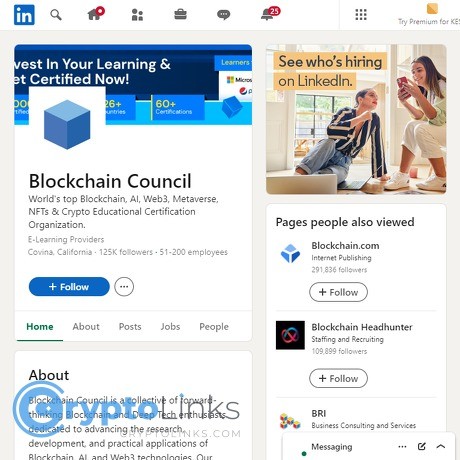
Blockchain Council
www.linkedin.com
Blockchain Council Review Guide: Is Their Certification Really Worth It? (2025 Deep Look)
Have you ever stared at a “Become a Certified Blockchain Expert in 5 Hours” ad and thought: “Is this actually worth paying for, or am I about to burn money on a fancy PDF?”
If that sounds familiar, you’re not alone.
Right now, there are more blockchain courses, “academies,” and certification programs than legit junior roles on some job boards. Everyone promises:
- “Industry-recognized certification”
- “Guaranteed career upgrade”
- “Become job-ready fast”
But when you look closer, things get messy:
- You see mixed reviews and Reddit posts calling some certs “just marketing.”
- You’re not sure if companies even care about these certificates.
- You can’t tell if the platform is real or just a slick landing page with stock photos.
Blockchain Council is one of the biggest names in that space. Their certificates are all over LinkedIn profiles, portfolios, and “I’m learning Web3!” posts. Some people swear by them. Others say, “It’s just a badge, nothing more.”
So what’s real?
In this guide, I’m going to walk you through Blockchain Council from a practical, crypto-user point of view. Not as an affiliate trying to make a commission, not as a random marketer, but as someone who spends a lot of time testing crypto products, tools, and education platforms and watching what actually helps people get ahead.
The real problems people have with Blockchain Council (and blockchain education in general)
Before judging any platform, it helps to be honest about what people are actually struggling with. It’s not just “Is this good or bad?” It’s a pile of smaller, annoying problems that all stack together.
1. Confusion: Blockchain Council vs Blockchain.com
One of the funniest (and most frustrating) things I see is people asking:
“Is blockchain a legitimate company?”
And then mixing up:
- Blockchain Council – an education and certification platform
- Blockchain.com – a crypto wallet and exchange company
Two very different things. One sells courses and certificates, the other lets you store and trade crypto.
I’ve seen people read news about Blockchain.com getting funding or regulators checking exchanges, and then assume it has something to do with Blockchain Council’s certificates. That alone already confuses the “is this legit?” question, because Google searches mix both together.
So first big problem: people are not even sure which “blockchain” they’re asking about.
2. Fear of scams and empty certificates
Crypto has a trust problem. We’ve all seen scams: rug-pull tokens, fake trading bots, Telegram “gurus,” and low-effort course reskins sold under new names every few months.
Because of that, whenever someone sees:
- “Blockchain Expert Certification”
- “Metaverse Pro Path”
- “Web3 Mastery Badge”
…their first thought is often: “Is this real, or just another way to charge me for information I can get on YouTube?”
That fear is not irrational. A 2023 Course Report survey found that a lot of learners regret buying online tech courses that overpromised job outcomes or used terms like “job guarantee” without delivering. Blockchain is even more vulnerable to that, because the hype is louder and the jargon sounds magical to beginners.
So people hesitate. They don’t want to spend hundreds of dollars, finish the classes, and then realize:
- Recruiters barely recognize the brand.
- The content is outdated (especially in fast-moving niches like DeFi).
- The certificate looks nice but doesn’t change interview outcomes.
3. “Is this certification actually recognized anywhere?”
Another huge question I see in forums and DMs is:
“Do companies actually care about Blockchain Council certifications?”
Most people don’t expect magic. They know a certificate isn’t a Harvard degree. But they do want at least:
- Proof the platform isn’t random.
- Signal that hiring managers won’t laugh at it.
- Something that adds weight to their LinkedIn and CV, not just decoration.
The problem? There’s no single universal authority for “official blockchain certificates.” It’s not like traditional accounting or medicine where certain licenses are clearly required.
So when someone sees “Certified Blockchain Developer” from Blockchain Council, they ask:
- Is this an industry thing?
- Is it just a private company stamp?
- Does anyone outside their own marketing care about this?
That uncertainty makes it tough to hit “buy,” especially if you’re a student or career switcher managing a tight budget.
4. Information overload and analysis paralysis
Even if you trust the platform, there’s another headache: there’s too much content.
You search for “learn blockchain” and you get:
- YouTube playlists, Medium articles, GitHub repos
- University-backed Coursera / edX courses
- Paid bootcamps
- Standalone platforms like Blockchain Council
All of them promise some variation of:
- “Everything from basics to advanced in one place”
- “Hands-on projects”
- “Industry-ready”
It’s like trying to pick a restaurant from 200 options when you’re already hungry. In the end you either:
- Buy nothing and keep watching random short videos.
- Buy something at random, hope for the best, and regret it later.
I’ve seen people bounce between 4–5 platforms in a year, never really finishing anything because they’re constantly second-guessing if they picked the “best” or “most recognized” one.
5. Worrying about actual job prospects
Let’s be honest. Most people are not learning blockchain just because they think hashes are cool. They’re asking:
- “Can this actually help me earn more money?”
- “Is there still demand for blockchain devs in 2025?”
- “Is this going to be another hype cycle that collapses on my CV?”
Reports from sites like Glassdoor and LinkedIn still show demand for blockchain and Web3 skills, but it’s not the anything-goes gold rush of 2017. Companies are more picky now. They want:
- Real project experience
- Clear understanding of security, gas optimization, and protocols
- Evidence you can work beyond toy examples
That’s where certifications become a bit tricky. If the course:
- Stays very surface-level
- Doesn’t push you to build anything substantial
- Focuses more on passing quizzes than solving problems
…you get a certificate but still freeze when a recruiter asks, “Walk me through how you’d structure a simple NFT marketplace,” or “How would you handle reentrancy risk in a smart contract?”
So the fear is real: you don’t want to pay for just theory when the job market wants proof of ability.
6. You can’t test-drive the course before paying
If you buy a physical product and it sucks, you return it. With a lot of blockchain education platforms, it’s not that simple:
- Refund policies are limited or unclear.
- You often don’t see full lesson videos before paying.
- You can’t really judge instructor quality from one promo clip.
That’s risky. A 2022 study on online learning satisfaction from Bay View Analytics showed that students value “course transparency” (clear syllabus, previews, instructor background) almost as much as content quality itself when deciding to enroll.
When you don’t have that transparency, you’re gambling. And in crypto, people are already tired of gambling.
My promise: an honest, practical review from a crypto user’s perspective
Given all that, here’s what you can expect from this guide.
This is not:
- A sponsored piece
- A hype article trying to make every certificate sound like a guaranteed job ticket
- A hit piece trashing the platform just for clicks
What you’re going to get is a blunt, practical breakdown of:
- What Blockchain Council actually is (and what it is not)
- Where their certifications actually help in the real world
- Where they fall short and who will feel disappointed
I’ll talk about questions people really ask in DMs, comments, and forums, like:
- “Is Blockchain Council certification legit?”
- “Will this help me get hired?”
- “Is blockchain still a high-paying field in 2025, or did I miss the boat?”
I’ll also sprinkle in actual patterns I’ve seen:
- People who used these certificates as a good stepping stone
- People who treated them as shortcuts and got stuck anyway
You won’t see any “instant success” fairy tales here. But you will see clear, realistic expectations, and how these certifications fit into the bigger picture of learning blockchain in 2025.
What we’ll cover in this guide
To make this as useful (and honest) as possible, I’ve broken the full guide into simple parts you can scan or read in order, depending on where you are in your journey.
Here’s the roadmap of what’s coming next:
- What Blockchain Council actually is and who’s behind it – So you can tell if you’re learning from random marketers or real professionals, and finally separate it from Blockchain.com in your head.
- How their courses and certifications work – The structure, the paths (Developer, Expert, Architect, etc.), and how they present career titles that look good on LinkedIn.
- How legit and recognized they really are – Not just “do they exist,” but how employers see them compared to university-backed certificates or self-taught portfolios.
- Career value in 2025 – Realistic thoughts on blockchain salaries, roles you can aim for, and what part a Blockchain Council certificate actually plays in getting in the door.
- Brutally honest pros and cons – Where theyactually shine, where they’re just okay, and where free resources beat them.
- Alternatives and how to mix them – How you can combine paid certs, open-source projects, and free learning content into a stack that actually gets you closer to your first or next blockchain job.
- Rapid-fire FAQ – Fast answers to the Google-style questions you might be typing right now, from “Is this legit?” to “Can this alone get me a job?”
I’ll keep the language simple and direct. Think of this like a friend who’s already waded through the marketing noise, tested things, seen what works, and now hands you the unfiltered summary so you can stop guessing.
So the next logical question is obvious:
What exactly is Blockchain Council, who’s running it, and how is it different from that other “Blockchain” everyone talks about?
That’s where we’re heading next — because until you know who you’re actually dealing with, it’s impossible to decide if any certification from them is worth your time or your money.
Ready to untangle that confusion and see what’s really behind the logo?
What is Blockchain Council, really? (And how it’s different from Blockchain.com)
Let’s clear up the first big misunderstanding right away:
Blockchain Council is not a wallet, not an exchange, and not a place to buy crypto.
It’s an online education and certification platform that focuses on:
- Blockchain fundamentals and development
- Web3, DeFi, and smart contracts
- Crypto, trading, and tokenomics
- NFTs, Metaverse, and digital assets
- AI + blockchain and “future of work” type roles
Think of it as one of those niche training portals that went all-in on blockchain, while other platforms try to be everything for everyone.
Their business model is pretty simple: they create structured online courses, bundle them into “certifications,” and then sell access. After you finish the modules and pass their exam, you get a certificate you can show on LinkedIn or your CV.
The confusion comes because so many people type things like “is blockchain legit?” into Google and then land on totally different things:
- Blockchain Council – education and certification
- Blockchain.com – crypto wallet and exchange company
If you’ve ever clicked something expecting to manage your Bitcoin and ended up on a course sales page instead, you’re not alone.
Here, I’m talking only about Blockchain Council – the training platform, not the wallet company.
Quick background: who founded Blockchain Council and why it matters
One of the fastest ways I filter “random crypto sites” from “okay, this might be legit” is simple:
Who’s actually behind it?
In this case, Blockchain Council was founded by Toshendra Sharma and a group of blockchain professionals. Toshendra has been active in the blockchain space for years, involved in training, consulting, and product building. He’s not a mysterious, anonymous avatar with a cartoon PFP and a Telegram handle.
If you check their LinkedIn company page, you’ll see:
- They list real team members with public profiles
- They post regularly about new courses, webinars, and events
- They’ve collected a decent number of followers and interactions
This stuff matters more than people think. In online education, you’re basically paying for trust before anything else.
When I evaluate platforms like this, I always look for:
- Named founders – not “a group of anonymous experts”
- Visible instructors – with real histories in tech, blockchain, or business
- Public footprint – LinkedIn, GitHub, talks, conference panels, blog posts
Once you see real people attached to the platform, with reputations they probably don’t want to burn, it becomes easier to take their courses seriously.
“In crypto, anonymity can build protocols. But when it comes to education, anonymity mostly builds doubt.”
I’d actually suggest you pause for 2 minutes and do this yourself:
- Open LinkedIn
- Search “Blockchain Council”
- Skim their posts, check who works there, click a few instructor profiles
You’ll instantly get a feel for whether this looks like a real training organization or just a landing page trying to cash in on the blockchain hype.
Blockchain Council vs Blockchain.com: clearing up the confusion
Here’s where tons of people get lost.
They search:
- “Is blockchain legit?”
- “Blockchain review”
- “Is blockchain a real company or scam?”
And they’re not even sure which “blockchain” they’re asking about.
Let’s untangle this once and for all.
- Blockchain Council
- Online training and certification platform
- Sells courses like “Certified Blockchain Developer”
- Focus is on education, not financial services
- Blockchain.com
- Private crypto company with its own leadership and history
- Offers wallets, exchange services, and sometimes yield products
- Has its own Wikipedia page and separate reputation
So when someone says, “I heard blockchain is a scam”, they might mean:
- They lost money on an exchange
- They got phished using a fake wallet site
- They paid for a course that overpromised
Completely different issues, completely different companies.
Just to be crystal clear: what you’re reading right now is about Blockchain Council’s certifications and training programs. Not the wallets, not the exchange, not any investment product.
This matters, because the next logical question is: even if they’re “real”, are their certifications actually worth anything? That’s what a lot of people are really trying to get at when they ask if “blockchain is legit.” I’ll get to that soon, but first, let’s look at what they actually offer inside the platform.
What types of courses and certifications they offer
If you browse their catalog, you’ll notice a pattern fast: lots of big, bold titles with job-style names.
Stuff like:
- Certified Blockchain Developer
- Certified Blockchain Architect
- Certified Blockchain Expert
- Certified DeFi Expert
- Certified NFT Expert
- Certified Web3 Expert
- Blockchain for Finance / Supply Chain / Healthcare
They also have:
- Crypto and trading-related certifications
- Specialized “industry” tracks (e.g., blockchain in banking or logistics)
- Shorter courses for people who want to get a taste without going all-in
It’s very much built around career-branded titles. That’s not a coincidence. Platforms like this know exactly what beginners are trying to solve:
“How do I go from ‘I’m curious about blockchain’ to having something a recruiter can actually recognize on my profile?”
So instead of just naming a course “Intro to Blockchain Development,” they call it “Certified Blockchain Developer.” The second one sounds way better when you paste it into LinkedIn or your CV.
If you’re early in your journey, that branding can help you stand out from people who only list “watched 30 YouTube videos about crypto.”
On the inside, the structure usually looks something like this (it can vary by course):
- Self-paced video lessons
- Chapter quizzes
- Final exam or assessment
- Certificate issued on completion
Some tracks promise hands-on components like building sample smart contracts or basic dApps. The amount of real, practical work you do will depend on the specific course, but the marketing pitch is almost always the same: learn a complete path from zero to job-ready in blockchain X.
Is that realistic? Not fully – no online course can replace months of building real stuff. But having a structured flow from “here are the basics” to “here’s what a developer/architect/expert should know” can definitely stop you from getting lost in random tabs and half-watched videos.
Who Blockchain Council says it’s for (and who it’s actually good for)
On paper, they position themselves for a pretty wide audience. The most common buckets are:
- Students and fresh graduates
People who want to “get into blockchain” but aren’t sure where to start. They like the idea of having a certificate they can add to their CV right away.
- Software developers
Web2 devs (JavaScript, Python, Java, etc.) who want to pivot into Web3 – smart contracts, DeFi protocols, on-chain apps.
- Finance, legal, and business professionals
Bankers, consultants, lawyers, PMs, and analysts who need to understand blockchain enough to talk to clients, regulators, or technical teams without sounding lost.
That’s the official pitch.
Here’s how I see it based on how people actually learn and get hired in this space:
- Best fit: beginners and early-career people
If you’re in your first few years of your career or switching fields, the structure helps a lot. You don’t want to guess what to learn next. You want someone to say: “Start here, then here, then here.”
- Good fit: junior devs trying to add blockchain to their toolbox
If you already know how to code, the right course can give you the specific concepts, tools, and mental models you need to move from Web2 into Web3. Then you reinforce that by building things.
- Useful: business and finance people who need literacy, not mastery
You might not want to become a Solidity wizard. You just need to understand token models, smart contracts, blockchain risks, and where it fits into your industry.
- Not ideal: very senior engineers already shipping on-chain
If you’re already building production smart contracts, working with major protocols, or maintaining DeFi infrastructure, these courses will probably feel too basic. You’re better off with advanced docs, whitepapers, and protocol-specific resources.
- Bad fit: anyone hoping for a “magic job ticket”
If the plan is “buy certificate → instantly land a 6-figure blockchain job,” you’re going to be disappointed, regardless of platform.
One thing I’ve noticed is that people who get the most value from Blockchain Council are the ones who treat it as a starting framework, not the entire journey.
They’ll do the course, earn the certification, and then immediately move on to:
- Building small dApps or NFT projects
- Contributing to open-source repos
- Participating in hackathons
That combination – structured training + real projects – is what ends up looking great in interviews and recruiter filters.
So yes, Blockchain Council is “for” quite a broad audience, but it really shines for those who are either just entering the field or shifting their career direction and need someone to map out the first part of the road.
So now you know what Blockchain Council actually is, who’s behind it, how it’s different from Blockchain.com, and what kinds of courses they pack into those shiny certifications.
The big question hanging in the air is the one most people silently care about:
Are these certifications actually seen as legit and worth something in the real world, or are they just good marketing with a PDF at the end?
That’s where things get interesting – and a bit uncomfortable – and it’s exactly what I’m going to break down next.
Is Blockchain Council legit and recognized? (The credibility question)
If you’re anything like me, you’ve stared at flashy certification pages and thought:
“Is this actually worth money… or am I just buying a PDF and a shiny badge?”
That’s the core question with Blockchain Council: not just “is it real?” but “is it real enough to matter for my career?”
Let’s break that down in a way that actually matches how hiring and learning work in 2025.
Is Blockchain Council a scam or a real platform?
First, the basic trust test: is Blockchain Council an obvious scam? In my experience and research, no — it’s a real education platform, not a rug pull hiding behind crypto buzzwords.
Here’s what stands out when I look at it with my usual skeptical reviewer brain:
- Real people behind it: It was founded by professionals like Toshendra Sharma, who has an actual public track record in tech and blockchain. You can see his profile and activity on LinkedIn, which is always step one in my “is this a ghost company?” check.
- Active digital footprint: Their company presence on LinkedIn, regular posts, webinars, and community interactions look like what you’d expect from a real training brand, not a random one-page site that appeared last week.
- Plenty of public reviews: There are student reviews on course aggregators, YouTube, and independent blogs. When I see hundreds or thousands of people talking about a platform across different sites, that’s usually a sign there’s an actual business, not a one-off scam.
- Third‑party reviews calling it legit: For example, external writeups like the “Blockchain Council Review 2025 — Is It Worth?” on Mission: Graduate consider it legitimate as an online training provider. That aligns with what I’ve seen too.
Could it be perfect? No. Could some marketing copy feel a bit too salesy? Sure. But that’s miles away from “scam.” You’re not wiring crypto to a mystery wallet and hoping for enlightenment. You’re paying for structured courses and certificates that actually exist.
“The question isn’t ‘Is it real?’ — it’s ‘Is it real enough to move my career forward?’”
How “official” are their certifications? (Honest expectations)
This is where a lot of people get quietly disappointed — not because Blockchain Council is fake, but because expectations are unrealistic.
Here’s the straight truth:
- It’s an industry certificate, not a degree. It’s not a government-accredited diploma. It’s not a university-backed program. You can’t use it to apply for visas, student loans, or HEI-based roles that explicitly require accredited degrees.
- Hiring managers don’t rank it above a CS degree. If a job post says “BSc in Computer Science or equivalent,” this certificate is not a 1:1 replacement. It can support your profile, but it’s not a magic loophole around formal education.
- It shines as a signal, not a ticket. Think of it like this:
- It shows you’ve taken structured time to learn blockchain concepts.
- It gives recruiters a quick visual signal on LinkedIn: “this person is serious enough to study and finish something.”
- It can give you talking points in interviews: consensus mechanisms, smart contracts, use cases, etc.
What it does not do on its own:
- Guarantee a job offer.
- Override a weak portfolio or zero hands-on practice.
- Turn a complete non-tech person into a senior blockchain engineer in a few weeks.
There’s some data to back this up from the broader online learning world. In a Coursera survey on professional certificates, a significant chunk of learners reported improved job prospects — but the ones who really benefited were the people who combined certificates with real projects and consistent learning, not the ones who just collected digital badges.
Blockchain Council follows the same pattern: it’s a plus on your profile, not the main course.
Instructor quality and course content: good enough for serious learning?
A certificate is only as useful as what you actually learn while earning it. So I always ask three questions:
- Who’s teaching this?
- How up to date is it?
- Can I apply this to real-world scenarios?
From what I’ve seen on their platform and from learners who’ve shared their experiences with me:
- Instructors usually have tech/blockchain backgrounds. Many come from software, security, or blockchain consulting. You’re not getting random Fiverr presenters reading Wikipedia articles. But like any multi-instructor platform, quality varies by course.
- Theory vs practice is mixed. Some tracks (especially the “Expert” or “Developer” ones) balance conceptual explanations with “how it works in practice.” Others can feel more slide-heavy and less hands-on, which might frustrate you if you’re already code-oriented.
- Fast-moving topics can lag. Areas like DeFi, NFTs, and Layer 2s change constantly. I’ve seen students mention that a few modules felt a bit behind the latest tools or platforms, which is honestly a problem across almost all Web3 courses, not just this one.
To protect your time (and money), here’s how I’d sanity-check any Blockchain Council course before buying:
- Check the “last updated” date. If it’s a DeFi or NFT course from two years ago with no updates, be careful. Foundation topics age better (consensus, cryptography basics, blockchain architecture); tool-specific content goes stale quickly.
- Read the syllabus like a roadmap. Compare it to where you are:
- If you’re brand new, look for clear basics: what is a blockchain, smart contracts, wallets, on-chain vs off-chain, etc.
- If you’re a developer, look for real coding content: frameworks (like Hardhat, Truffle), languages (Solidity, Rust), testing, and deployment.
- Look for sample videos or previews. Even a 3–5 minute clip will tell you:
- Is the instructor clear or just reading slides?
- Do they show real tools and code, or only diagrams?
- Does the pace match how you like to learn?
A real-world example I’ve seen: a junior dev used a “Certified Blockchain Developer” course as a structured starter, then went beyond the videos by rewriting the sample smart contracts in his own style and pushing them to GitHub. When he later interviewed, the certificate got him some initial interest, but it was the code and his ability to explain how he’d secured his contracts that actually convinced the hiring manager.
The course gave him language, structure, and direction. His extra work gave him credibility.
Where Blockchain Council’s reputation stands vs other platforms
Online education today is crowded. You’ve got:
- Big MOOC platforms: Coursera, edX, FutureLearn — often partnered with universities or major companies like IBM or Google.
- Open marketplaces: Udemy, Skillshare — huge variety, but inconsistent quality and no unified “brand” behind certificates.
- Free technical resources: official blockchain docs, YouTube channels, GitHub repos, community-built tutorials.
Where does Blockchain Council sit in this mess?
- More specialized than generic course sites. It focuses tightly on blockchain, Web3, AI+blockchain, and related tracks. You’re not wading through guitar lessons and cooking classes to find what you need.
- Less academically recognized than university-backed certificates. A course stamped with a big-name university still tends to “sound” more impressive to traditional employers, especially outside tech-focused companies.
- More branded than random Udemy instructors. A Udemy certificate is tied to a single instructor’s course. Blockchain Council certificates are part of a unified brand that people see more regularly in the blockchain education space.
From what I’ve seen in actual hiring stories and recruiter feedback:
- A blockchain-specific cert from a known brand like Blockchain Council can help you stand out compared to a completely blank “no learning, no projects” profile.
- It sits in that middle zone: solid for signaling interest and basic competence, but not the kind of heavyweight credential that replaces a CS degree or years of engineering experience.
- What gets people hired tends to look like this:
- Portfolio: GitHub repos, smart contracts, dApps, audits, or at least well-documented experiments.
- Proof of learning: certificates, consistent study, hackathon participation.
- Communication: ability to explain what you built and why you built it that way.
The certificate plays a supporting role in that stack — helpful, visible, but not the star of the show.
So yes, Blockchain Council is a legitimate player in the blockchain education space. The more interesting question, though, is this:
Given the current job market and salary ranges in 2025, does having one of these certificates actually move the needle on your earnings and your chances of getting hired?
That’s where things get a lot more real — and that’s exactly what I’m going to walk through next: how these certifications connect (or sometimes fail to connect) to actual jobs, paychecks, and career moves in the blockchain world today.
Will a Blockchain Council certification actually help your career?
Let’s be honest: nobody buys a blockchain certification just because the logo looks cool.
You’re thinking about it because you want one (or more) of these:
- A better job
- A higher salary
- A way to switch careers into crypto/Web3
- Or at least, to stop feeling lost when people talk about smart contracts and DeFi
The real question isn’t “Is the certification legit?” anymore. It’s:
“If I put my time and money into Blockchain Council, does it actually move my career forward?”
Let’s break that down in a practical, money-and-opportunity way.
Is blockchain still a high-paying career path in 2025?
There’s a lot of noise out there – some people say “Web3 is dead”, others say “it’s the future of everything”. The truth, like always, sits in the middle.
Here’s what the numbers say.
According to a Coursera article referencing Glassdoor India’s 2025 data, a blockchain developer in India earns around:
- ₹5,00,000 to ₹10,00,000 per year on average (junior to mid-level)
Convert that into a global context and you’ll find that in bigger tech hubs (US, EU, Singapore, Dubai), strong blockchain engineers can still land:
- Mid-level roles: roughly $80,000–$140,000/year
- Senior roles / protocol-level work: often $150,000+ (sometimes a lot more when you add tokens, bonuses or equity)
Is every blockchain job like that? Absolutely not. Some roles are underpaid, some are more like “Web2 developer who occasionally touches crypto”. But serious blockchain skills are still well-rewarded.
Here’s the catch though:
- The market is more mature now – no one is hiring just because you say “Solidity” on your CV.
- Companies have been burned by “certified experts” who can’t actually build anything.
- In bear markets, hiring slows, but the people who really know what they’re doing still get picked up first.
I like stats, but I trust behaviour more than numbers. When you scroll through job boards like LinkedIn, Wellfound (ex-AngelList), or CryptoJobsList, a pattern shows up fast:
- Roles are fewer than in the 2021 mania.
- Requirements are stricter: GitHub, real projects, hands-on tools like Hardhat, Foundry, Ethers.js, Subgraph, etc.
- “Certificate-only” profiles get filtered out quickly.
“In tech, certificates get you seen. Skills get you paid.”
So yes, blockchain is still a high-paying path in 2025 – but you can’t cheat your way into it with a PDF. You need proof you can build or contribute something real.
How much does a Blockchain Council certificate help with getting hired?
Think of a Blockchain Council certificate as a signal, not a guarantee.
Here’s the realistic upside when you use it right:
- You stand out among total beginners. If a recruiter sees two fresh grads, one has “Certified Blockchain Developer” plus a couple of projects, the other has nothing blockchain-related, guess who gets the callback?
- You get structure and vocabulary. When an interviewer asks, “Explain the difference between a public and private blockchain” or “What’s the role of a consensus mechanism?”, you’ll actually have language for it.
- You have built-in talking points. Good interviewers don’t care about the certificate logo; they care about what you did while learning. If you can say, “During my certification I built a basic NFT marketplace on testnet with Solidity and Web3.js,” that’s something they can dig into.
But here’s where people get disappointed: they expect the certificate to do the heavy lifting. Hiring managers are usually thinking something like this:
- “Can this person ship?” → Show me your GitHub, repos, contributions, hackathon results.
- “Do they understand the fundamentals?” → Explain gas, state, finality, security assumptions, key management.
- “Can I trust them not to ship vulnerable contracts?” → Have they studied common exploits? Re-entrancy, integer overflow, access control mistakes, etc.
A Blockchain Council certificate helps most when it becomes a bridge to those things, not a replacement for them.
Let me give you a very real type of scenario I’ve seen play out:
- Candidate A: Has Blockchain Council “Certified Blockchain Developer” on LinkedIn, no GitHub link, no projects mentioned. Just the word “passionate about Web3”.
- Candidate B: Same certificate, but also:
- GitHub with a simple ERC-20 token, a basic NFT minting contract, and a small React dApp that reads on-chain data.
- Short write-up on LinkedIn about what they built and problems they hit (gas issues, ABI confusion, etc.).
Both paid for the same course. Only one turned it into career “ammo”. Guess which one ends up with more interview invites?
So yes, the Blockchain Council certificate can help you get hired – but only if you treat it as a starting point and stack visible proof of your work on top of it.
Who gets the most value from Blockchain Council certifications
Not everyone squeezes the same value out of the same course. Some people honestly don’t need it. Others can get a huge boost from it.
Here’s who tends to benefit the most.
- Career switchers (non-tech → blockchain / crypto)
If you’re coming from marketing, finance, law, operations, or something totally outside tech, a certification gives you a clean story:
“I worked in X field for 5 years. In 2024, I started transitioning into blockchain. I completed Blockchain Council’s ‘Blockchain Expert’ track, built 2 small projects, and now I’m focusing on roles like [X, Y, Z].”
Hiring managers like coherent stories. The cert offers a clear milestone they can understand.
- Junior developers who know Web2 and want to step into Web3
If you already write JavaScript, Python, or Java, you’re not starting from zero. For you, a certification can be like an express lane:
- You learn the blockchain-specific bits (transactions, gas, wallets, ABI, RPCs).
- You map your existing skills to smart contracts and front-ends that talk to chains.
- You can quickly build a couple of showcase projects and apply for “junior blockchain dev” or “full-stack Web3 dev” roles.
These are the folks I usually see turn a cert into a job fastest, because they already know how to code – they just needed direction and context.
- Business / finance / product people who need blockchain literacy
If you’re a product manager, consultant, analyst, or in corporate finance and your clients keep asking “What about tokenization?” – then deep engineering knowledge might not be your main goal.
Here, a Blockchain Council certification can help you:
- Talk to technical teams without getting lost.
- Understand what’s realistic and what’s hype in proposals.
- Add a credible “blockchain literacy” badge to your resume for internal promotions or client-facing work.
In this case, the value is more about credibility + communication than direct coding roles.
So who usually doesn’t get much value?
- Very advanced developers already writing on-chain code.
If you’ve shipped production contracts, contributed to major protocols, or know your way around complex architectures, a basic or mid-level certification is going to feel too elementary. It won’t change how serious employers see you – your GitHub already does that. - People expecting instant job guarantees.
If you’re thinking, “I’ll buy this course, finish it in two weeks, and a $120K job will fall into my inbox,” you’re setting yourself up for disappointment. No serious company works that way anymore (if they ever really did).
If a landing page promises ‘guaranteed jobs’, read the fine print twice – and your bank balance three times.
How to maximize the value of your certification
If you’ve decided to go for a Blockchain Council course (or you’re halfway through one), here’s how to squeeze real career value out of it instead of just finishing the videos and forgetting everything a month later.
1. Turn each module into a tiny project
Finished a section on smart contracts? Don’t move on yet. Stop and build something with it:
- A simple ERC-20 token with custom minting rules
- A basic NFT collection (even if it’s just testnet cat pictures)
- A time-locked wallet or a simple multi-sig mock
Don’t worry if it’s basic. You’re not showing the world you’re Vitalik 2.0 – you’re showing you can learn, apply, and improve.
2. Build a small portfolio, even if you’re a total beginner
Create a GitHub account today if you don’t have one. As you go through your certification:
- Push your practice contracts to a public repo.
- Write a short
README.mdin plain language: what the project does, which tools you used, what you learned. - If something broke and you fixed it, mention that too. Recruiters love signs of persistence.
When you later drop your CV or LinkedIn link in front of a hiring manager, this is the difference between:
- “I completed the Certified Blockchain Developer course.”
- “I completed the Certified Blockchain Developer course, and here are 3 small projects I built while learning: [GitHub link].”
Guess which one sounds like someone who can actually execute?
3. Make your certificate work for you on LinkedIn
Don’t just click “Add certificate” and walk away. Use LinkedIn strategically:
- Add the certification under “Licenses & certifications” with the issuing organization clearly listed as Blockchain Council.
- Post a short update when you complete it:
- Share what you learned.
- Link to your favourite project from the course.
- Ask for feedback or open to collaboration.
- Join relevant blockchain/Web3 groups and comment on posts with actual thoughts, not just “nice”.
This is where a lot of networking quietly starts. Sometimes a simple comment like “I built something similar during my certification, here’s what I struggled with…” is enough to kick off a DM conversation with someone working at a Web3 company.
4. Plug into real communities
Blockchain is community-heavy. You don’t have to be an extrovert, but you do need to be visible somewhere.
- Join Discord servers for ecosystems you’re interested in (Ethereum, Solana, Polygon, etc.).
- Hang out in GitHub repos of tools you use. Even just opening a thoughtful issue is a step.
- Look for local meetups or online hackathons. Even virtual hackathons are great learning accelerators.
Many people land their first serious blockchain gig through:
- Hackathon participation
- Community building (translating docs, writing tutorials)
- Contributing small patches to open-source projects
Your certification studies give you the baseline knowledge. The community gives you visibility and opportunities.
5. Keep learning outside the platform
The blockchain world moves too fast for any single platform to always be fully up to date. While you study, mix in:
- Official docs (e.g. Ethereum, Solana, Bitcoin).
- Github repos from real projects you admire – scroll through their contracts, tests, and deployment scripts.
- Security reports and post-mortems of hacks (these are pure gold for understanding what not to do).
If your goal is a serious career, the certification shouldn’t be the ceiling – it should be the floor you stand on while reaching higher.
So, does a Blockchain Council certification help your career? It can – a lot – if you use it as fuel for projects, visibility, and real skills, instead of treating it like a magic ticket.
But that still leaves a big question hanging in the air:
Is Blockchain Council actually the best place to spend your money and focus… or are there better, cheaper, or deeper options you should pick first?
Next, I’m going to break down the real pros and cons from a user’s perspective, and compare Blockchain Council with other learning paths people overlook all the time. That’s where things get interesting.
My honest pros, cons, and best alternatives to Blockchain Council
If you’ve read this far, you already know I’m not here to sell you a fantasy of “6-figure blockchain job in 30 days.” I test tools, I pay for platforms with my own money, and I watch how they actually perform in the real world.
So let’s strip away the hype and talk about what Blockchain Council really gets right, where it stumbles, and how I’d personally use it alongside other resources.
What Blockchain Council does well
Let’s start with the good stuff, because there is real value here if you use it the right way.
- It’s laser-focused on blockchain and Web3
Some education sites are like supermarkets: you get everything from JavaScript to yoga. That’s fine, but it also means blockchain is just one aisle in a massive store.
Blockchain Council is more like a specialized crypto bookstore. Almost every course is about blockchain, Web3, NFTs, DeFi, metaverse, or related tech. If your brain likes staying inside one domain and going deep, that focus makes life easier.
- Clear, career-style certification labels actually help beginners
Their naming is simple and readable on a CV or LinkedIn:
- Certified Blockchain Developer
- Certified Blockchain Architect
- Certified Blockchain Expert
- Certified DeFi Expert, NFT Expert, etc.
Are the titles a bit “marketer-y”? Of course. But they also help recruiters and non-technical managers understand, at a glance, what you’re aiming for.
For example, I’ve seen junior developers in my network land interviews faster simply because their profiles looked more structured: “React Developer + Certified Blockchain Developer” reads better than “Interested in blockchain, learning on YouTube.”
- Structured roadmaps beat YouTube chaos for many people
I love free content. But let’s be honest: YouTube learning often looks like this:
Watch 3 random Solidity tutorials → half-finished dApp → new shiny NFT video → back to “What is a blockchain?” → burnout.
What Blockchain Council does well is give you a clear progression: modules, quizzes, a final exam, and a certificate at the end. It’s not perfect “university-level” structure, but it’s enough to keep a lot of beginners on track.
I’ve had readers email me saying things like:
“I tried learning Solidity from random videos for 6 months and kept restarting. I finally finished my first smart contract once I followed a single course path start to finish.”
That sense of “I know what to do next” is underrated. For many people, it’s the difference between giving up and getting to a portfolio-ready project.
- International access and flexibility
You don’t need to live in a big tech hub or attend a Western university to get in. As long as you have a stable connection and a credit card (or supported payment option), you can access the same content as anyone else.
This matters if you’re sitting somewhere outside the usual Silicon Valley / London / Berlin bubble. I’ve seen users from India, Nigeria, Brazil, Eastern Europe, and Southeast Asia use Blockchain Council as a stepping stone to remote Web3 work.
- It gives you a clear “finish line”
Humans love checkboxes and milestones. A certificate might not change the world, but the psychology is simple: when you see a defined end point, you’re more likely to stick with it.
That’s the same reason coding bootcamps, 30-day challenges, and hackathons work. Blockchain Council certifications tap into that same motivation loop: “If I push through these modules, I’ll have something shareable at the end.”
Where Blockchain Council falls short
Now for the parts many “review” sites gloss over. Nothing is perfect, and Blockchain Council is no exception.
- It’s not a replacement for a strong tech foundation
If your goal is to become a solid blockchain developer or architect, these certifications are not a shortcut around core skills like:
- Programming fundamentals (data structures, algorithms)
- Basic computer science concepts (networking, security)
- Good software engineering habits (testing, version control, architecture)
I’ve seen people with certificates who still struggled to build even a simple, secure smart contract because they tried to “skip” the fundamentals. No course platform can fix that for you.
- Some courses are too high-level for experienced devs
If you’ve already shipped production code or contributed to serious Web3 projects, a lot of content will feel introductory. You might find yourself thinking:
“Okay, I know what consensus is. Show me gas optimizations, advanced security patterns, or cross-chain design.”
The platform is strongest for beginners and early intermediates. Senior devs often get more value from official docs, research papers, and deep technical blogs.
- Quality varies between courses and instructors
This is a common issue on most online learning platforms, not just Blockchain Council. Some courses are structured, updated, and clearly taught. Others feel like they were recorded once and never revisited.
What this means for you:
- Always check the “last updated” date.
- Look at the syllabus to see if it actually matches today’s ecosystem.
- If possible, preview a lesson to judge the pacing and clarity.
For fast-moving areas like DeFi and NFTs, this “freshness” factor is critical. A course that still references only 2020 protocols and ignores new security risks is a red flag.
- It’s paid, and that’s a real barrier for some learners
I won’t sugarcoat it: you can learn blockchain for almost free if you’re disciplined enough. Between official documentation, GitHub repos, free tutorials, and community content, the knowledge is out there.
What you’re really paying for with Blockchain Council is:
- Structure
- Branding (the name on your certificate)
- Time saved from not having to curate your own learning path
For some people, that’s worth the money. For others (especially if your budget is tight), it might be smarter to start with free/cheap options and only invest once you’re sure blockchain is not just a passing curiosity.
- It can encourage “certificate collecting” if you’re not careful
I’ve seen profiles stacked with 6–7 different blockchain certificates and barely any projects. That’s a red flag for recruiters. More certificates aren’t always better; one or two plus solid proof-of-work beats a wall of badges with no real output.
Other resources you should check before you decide
Before you lock in your decision, it’s smart to zoom out and see what else is on the table. No platform should be your entire education strategy, especially in a space that moves as fast as blockchain.
- University-backed courses on Coursera and edX
These platforms often partner with universities and big tech companies. You’ll find things like “Blockchain Specializations” from reputable institutions. The upside is stronger academic backing; the downside is that some courses are slower to update and can be more theoretical.
- Skill-focused courses on Udemy
Udemy has a ton of blockchain and Solidity courses. The trick is filtering by:
- Recent update date
- Ratings and detailed reviews
- Instructor’s real-world portfolio (GitHub, LinkedIn)
Prices swing wildly with constant discounts, so you can often grab a decent course for very little money. Just remember: cheaper doesn’t automatically mean worse, but you need to vet thoroughly.
- Official documentation and technical docs
If you’re serious about building, at some point you have to go straight to the source:
- Ethereum docs – great for understanding smart contracts, gas, and the EVM.
- Solana, Polygon, Avalanche, Bitcoin, and other chain docs – each ecosystem has its own quirks and tools.
Docs aren’t as “sexy” as video courses, but the best blockchain developers I know spend half their lives in documentation and GitHub issues.
- GitHub and open-source projects
This is where theory becomes real. You can:
- Read production-grade smart contracts
- Study DeFi protocols, NFT contracts, DAO frameworks
- Open small issues and submit pull requests to learn by doing
Nothing will train you faster than trying to understand a real protocol and then breaking it on a testnet.
- Specialized crypto and Web3 resources I keep an eye on
On my side, I’m constantly testing and reviewing tools, exchanges, wallets, and education sites. If you like curated lists instead of hunting alone, check out the news and review section at https://cryptolinks.com/news/. I regularly point to solid learning resources there so you can compare Blockchain Council with what else is out there.
The key idea: **don’t marry one platform**. Think in terms of a learning stack where each source plays a role instead of trying to do everything with one subscription.
How I’d personally use Blockchain Council as part of a learning stack
If I had to start from scratch today, here’s how I’d combine Blockchain Council with other tools so I’m actually job-ready and not just certificate-rich.
- Step 1: Use Blockchain Council to set your foundation and structure
I’d pick one path that matches my goal:
- Developer → Certified Blockchain Developer / Solidity-focused track
- Business/finance → Blockchain Expert / Blockchain in Finance
- Product/strategy → High-level blockchain literacy + specific domain (DeFi, NFTs)
Then I’d treat it as my main roadmap for 4–8 weeks: finish the modules, take notes, and do every assignment, not just watch videos on 1.5x speed.
- Step 2: Go deeper technically using free and official resources
Once I finish the main course, I’d immediately reinforce it with:
- Official docs for the chain I care most about (Ethereum, Solana, etc.)
- Developer tutorials from trusted sources
- Reading actual protocol or dApp code on GitHub
This is where a lot of learners stop. They get the certificate and move on. But the jump from “course-level understanding” to “I can debug real issues” happens here.
- Step 3: Build 2–3 small but real projects
If I wanted the certification to actually help in interviews, I’d make sure I had at least a few visible projects, for example:
- A simple ERC-20 or ERC-721 contract with a small front-end
- A basic DeFi-style contract (lending, staking, or AMM simulation) on a testnet
- An on-chain tool or bot that interacts with a known protocol
Each project would go on GitHub, with a short README explaining:
- What it does
- What tech stack I used
- What I learned / what went wrong
That README often matters more to hiring managers than the certificate itself because it shows how you think and debug.
- Step 4: Plug into the ecosystem and keep learning
After the course and a few projects, I’d focus on people and real-world context:
- Join Discord servers and Telegram groups related to the chains I work with
- Attend local or online hackathons
- Follow project announcements and security incident reports to stay updated
That mix of structured learning (Blockchain Council), self-study (docs, GitHub), and community involvement is what actually builds a career.
- Step 5: Use the certificate strategically, not as a badge collection
On my LinkedIn and CV, I’d list the Blockchain Council certification, but I’d always pair it with:
- My projects (with links)
- Any contributions to open-source repos
- Relevant experience, even if it’s freelance or on testnets
Then when someone asks about the certificate, I can say:
“I used the course to structure my learning, then built X, Y, and Z on top of it. Here’s the code.”
That answer lands much better than “I watched some videos and got a badge.”
So the real question isn’t just “Is Blockchain Council good?” but rather: How are you going to use it? Because in the next part, I’m going to pin down exactly when this kind of certification is worth your money – and when it’s probably not. Are you ready to be brutally honest with yourself about your goals, budget, and learning style?
FAQ and final thoughts: is Blockchain Council worth it for you?
If you’ve read this far, you already know what Blockchain Council is, what it isn’t, and where it fits in the bigger education landscape.
Now let’s answer the questions people actually type into Google and then bring it home with a clear, no-BS verdict.
FAQ: fast answers to what people actually ask
Let’s keep this section tight and practical.
Q: Is Blockchain Council certification legit?
A: Yes. It’s a real, functioning education platform with actual instructors, structured courses, and industry-style certifications. You get:
- Verifiable certificates you can share on LinkedIn
- Course portals, quizzes, and recorded content
- Support and an actual ops team behind it
What it is not:
- A government-accredited degree
- An Ivy League stamp
- A guaranteed job ticket
Think of it the same way hiring managers think of things like AWS certifications or Google Cloud certs: useful signal, not a replacement for skills.
Q: Is Blockchain Council a real company, or is it the same as Blockchain.com?
A: Two different things that search engines like to mash together:
- Blockchain Council – education and certification platform for blockchain, Web3, NFTs, etc.
- Blockchain.com – crypto company that runs wallets and an exchange.
If someone on Reddit says “Is blockchain even legit?” you almost have to ask them, “Which one are you talking about?”
Q: Is blockchain still a high-paying job in 2025?
A: Yes, but it’s not 2017 anymore where any Solidity keyword on your CV got you interviews.
Quick reality snapshot:
- Reports like Glassdoor India’s 2025 data still put blockchain developer salaries around ₹5,00,000–₹10,00,000 per year for many roles, with experienced devs earning more.
- Globally, strong Web3 engineers can still hit six figures (USD) in established companies or funded startups.
- Bear markets cut hype, but they don’t erase demand for people who can actually ship smart contracts, protocols, or solid infrastructure.
The money is there, but it’s filtered through one simple question: “Can this person actually build or add value?”
Q: Can a Blockchain Council certificate get me a job on its own?
A: No. And you should run from any platform that promises otherwise.
Here’s how it really plays out in hiring:
- The certificate can move you from “random applicant” to “okay, let’s at least talk to this person.”
- What gets you hired is your:
- GitHub repos
- Code samples or products
- Clear understanding of blockchain basics (consensus, security, gas, etc.)
- Ability to talk through real problems you solved
I’ve seen people post their Blockchain Council badge on LinkedIn, get a bit more recruiter attention, and then still fail interviews because they never built anything real. The cert can open the door, but it won’t walk you through it.
Q: Is it worth paying for if there are free resources?
A: It depends on how you learn.
- If you’re self-motivated and comfortable building your own curriculum:
You can piece together amazing learning for free:- Official docs (Ethereum, Solana, etc.)
- Open-source repos to study
- YouTube tutorials and tech blogs
- If you need structure, a checklist, and a finish line:
A paid certification can be worth it because:- You get a clear start → middle → end
- You’re more likely to stick with it because you spent money
- You come out with a concrete credential to show
There’s no shame either way. Be honest about how you actually behave, not how you wish you behaved.
Q: Will Blockchain Council teach me “everything I need” about blockchain?
A: No single platform will. If any education site claims that, I mentally put them in the “marketing first, reality second” bucket.
What it can realistically do:
- Give you a solid foundation and vocabulary
- Introduce you to the main tools and workflows
- Point you in the right direction for further exploration
Your job is to push past the syllabus:
- Read real smart contracts from popular projects
- Recreate simple DeFi or NFT mechanics yourself
- Work on small projects until you hit real bugs and gas issues
Q: Is Blockchain Council better than Coursera / Udemy / university programs?
A: “Better” depends on what you want.
- University or Coursera-style programs: Great if you care about academic backing, research, and a brand name.
- Udemy and similar platforms: Great if you want cheap, cherry-picked courses and you’re okay sorting through uneven quality.
- Blockchain Council: Good if you want a blockchain/Web3-focused track with career-style certificates like “Developer” or “Expert,” and don’t need a university brand attached.
You don’t have to pick just one. People often:
- Take a Coursera or edX course for fundamentals
- Use Blockchain Council for a focused certification
- Grab 1–2 practical Udemy courses for a specific stack (e.g., Solidity, Hardhat, Rust, Anchor)
When Blockchain Council is worth it (and when it isn’t)
Based on what I’ve seen from users, emails, and just watching how people actually get hired, here’s who gets the most out of it.
It’s usually worth it if:
- You’re a beginner or early-career dev and need a clear starting point instead of jumping between random tutorials.
- You’re switching careers from finance, business, law, or a non-tech field and want a structured way to prove “I’m serious about this blockchain thing.”
- You like external structure – deadlines, modules, progress bars, a final exam, a certificate at the end.
- You’re ready to build projects in parallel:
- A simple NFT collection
- A basic token + crowdsale
- A tiny DeFi experiment like a lending or staking mockup
In those situations, a Blockchain Council certification often pays off by:
- Keeping you accountable
- Giving you talking points in interviews (“I built X during this course, here’s the repo”)
- Making your LinkedIn/profile look more focused and less “I just woke up and typed ‘crypto’ in my bio”
It’s usually not worth it if:
- You’re already an experienced blockchain dev. You’ll likely find the material too basic and should focus on:
- Advanced protocol design
- Security audits
- Deep dives into specific chains
- You want a magic shortcut. If your plan is “buy certificate → get 10x salary,” you’re setting yourself up to be disappointed, regardless of the platform.
- You never finish online courses. If you’ve bought 5 Udemy courses and completed none, think hard before buying another program. Maybe start with free resources and see if you can stick with them first.
In simple terms: it’s a good accelerator if you’re already willing to grind. It’s a waste of money if you’re hoping it will grind for you.
How to decide your next step
If you’re still on the fence, here’s a simple way to make a decision that isn’t based purely on hype.
1. Look at their public footprint
- Check their LinkedIn company page – see how active they are, how often they post, and what kind of content they share.
- Check their official site – look for:
- Course list and syllabi
- “Last updated” information if they provide it
- Instructor backgrounds
If everything looks frozen in 2021, that’s a red flag for any crypto education platform, not just this one.
2. Compare a couple of specific courses
- Pick 1–2 Blockchain Council certifications you’re interested in.
- Search for the exact same topic on:
- Coursera / edX
- Udemy
- Free developer docs or tutorials
Then ask yourself:
- Which syllabus looks clearer and more structured?
- Which one feels the most current with the 2024–2025 ecosystem?
- Which format would I actually stick with for 6–8 weeks?
3. Check your budget and timeline honestly
- Can you afford the course without stress? If paying for it means you’ll panic every time you miss a day of studying, it might backfire.
- How much time per week can you realistically give? 1–2 hours? 5–10? Be real here.
If you can’t commit at least a few hours per week for a month or two, you’re probably going to end up with “another unfinished course.”
4. Make yourself this promise
Before you pay for anything, say this out loud (or write it somewhere):
“If I buy this certification, I will build at least 2–3 real small projects alongside it, and I’ll publish them publicly.”
That one commitment changes everything. Suddenly the certificate isn’t the goal – the projects are.
Those projects are what you show to:
- Hiring managers
- Co-founders
- Clients
- Hackathon teams
The cert backs up the story; the work is the story.
Conclusion: my straight answer
Here’s the bottom line.
Blockchain Council is a legit, specialized blockchain education platform. It’s not perfect, and it’s not the only option, but it’s a reasonable piece of the puzzle if you:
- Like structured learning
- Want a blockchain-focused certification instead of a generic tech badge
- Are prepared to actually build and experiment while you study
What it’s not:
- A cheat code for six-figure salaries
- A replacement for hands-on practice
- A substitute for genuine curiosity about how these systems work
If you use it as one tool in a bigger stack – courses, docs, open-source projects, hackathons, and constant tinkering – it can absolutely be worth the money and time.
If you use it as a shiny logo to slap on your profile and then sit back waiting for offers to rain down, you’ll just end up frustrated.
If you want to see how it compares with other platforms, wallets, and learning tools, I regularly review and break things down in plain language over in the news section: https://cryptolinks.com/news/
Scroll around, compare a few options, and then choose the path that fits your:
- Budget
- Learning style
- Actual willingness to build stuff
Because in crypto and blockchain, it’s never the certificate that changes your life. It’s what you build after you get it.
CryptoLinks.com does not endorse, promote, or associate with LinkedIn groups that offer or imply unrealistic returns through potentially unethical practices. Our mission remains to guide the community toward safe, informed, and ethical participation in the cryptocurrency space. We urge our readers and the wider crypto community to remain vigilant, to conduct thorough research, and to always consider the broader implications of their investment choices.