
Cryptocurrency Advising Review
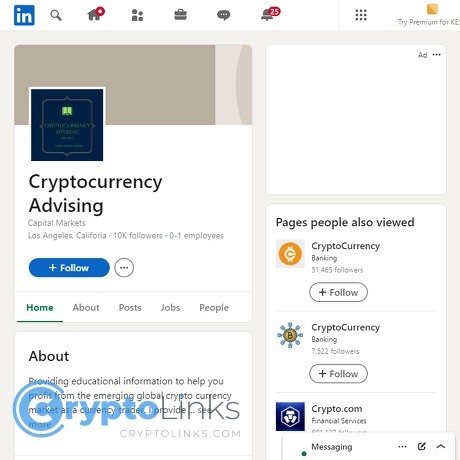
Cryptocurrency Advising
www.linkedin.com
Cryptocurrency Advising LLC Review Guide: Is This Crypto Coaching Worth Your Time (and Money)?
Ever sat in front of a crypto exchange screen thinking: “What the hell am I even looking at… and how do people not get wrecked doing this?”
If that’s you, you’re not alone. Every week I hear from people who are smart, successful in their normal jobs… and totally lost the moment words like “seed phrase,” “gas fees,” or “DeFi yield” show up.
That confusion is exactly why companies like Cryptocurrency Advising LLC pop up and say, “We’ll guide you step by step, just trust us.” Some of them genuinely want to help. Others are just polished versions of the classic “crypto guru” who made money in a bull run and now thinks they’re Warren Buffett on the blockchain.
Why People Turn to Crypto Advisors (and Where It Goes Wrong)
Let’s be honest: getting into crypto can feel like trying to learn a foreign language while people scream at you that you’re already late and the opportunity is almost gone.
On day one, you’re hit with:
- Wallets – hot, cold, custodial, non‑custodial… which one actually keeps your money safe?
- Exchanges – Coinbase, Binance, Kraken, KuCoin, and 20 more you’ve never heard of.
- Private keys & seed phrases – “Lose this and your money is gone forever.” No pressure.
- DeFi – staking, liquidity pools, APY, impermanent loss. Sounds like a finance exam.
- NFTs – pictures of monkeys selling for the price of a car… until they don’t.
- Scams – rug pulls, phishing links, fake airdrops, impersonator accounts, pump‑and‑dumps.
So it’s completely normal to ask questions like:
- “How should a beginner invest in crypto without blowing up their savings?”
- “What do I absolutely need to know before I click ‘Buy’ for the first time?”
- “Which coins are actually ‘safe’… or at least less insane?”
Under all those questions is one real fear:
“I don’t want to be the idiot who buys the top, gets scammed, or makes one stupid mistake and loses everything.”
That fear makes people highly vulnerable to any service that promises clarity, shortcuts, or a “done-for-you” plan.
How Crypto Coaching Becomes a Business (for Better or Worse)
When something is confusing and people are scared of losing money, a market appears for guides and “experts.” In crypto, that shows up as:
- “Crypto advisors” who do 1:1 calls
- Paid “mastermind” groups or Discord servers
- LinkedIn companies like Cryptocurrency Advising LLC offering structured coaching
- Influencers selling paid signal groups or private channels
Some of these are genuinely focused on education and realistic expectations. Others are basically casinos with better branding.
For example, I’ve seen “coaches” who:
- Promise to turn $1,000 into $10,000 with “secret altcoin strategies”
- Only show screenshots of winning trades, never the losers
- Ask beginners to send them crypto so they can “manage” the portfolio for them
On the other side, I’ve seen more responsible services that:
- Spend most of their time on security, risk, and basic education
- Refuse to promise returns or pick coins for you
- Help people set up wallets and exchanges safely instead of pushing moonshots
The problem is, when you’re new, it’s almost impossible to tell which is which just by scrolling a LinkedIn page or hearing a confident pitch.
What This Review Guide Will Actually Help You Decide
Let me set one thing straight right away:
This is not financial advice. I’m not here to tell you what to buy, when to buy, or how much to risk.
This is a review and orientation guide built to help you look at a service like Cryptocurrency Advising LLC with a clear head and the right questions.
Here’s what I’ll help you do as you read on:
- Understand what a company like Cryptocurrency Advising LLC appears to offer from their public presence
- Compare that to what beginners actually need in their first weeks in crypto
- Spot green flags (education, risk-awareness, honesty) vs. red flags (hype, guarantees, pressure)
- Frame big beginner questions like:
- “How should a beginner invest in crypto safely?”
- “What should I understand about how crypto works before paying anyone?”
- See what you can learn for free or at very low cost, so you don’t feel forced into any paid service
Think of this as your “advisor-checking toolkit.” By the time you’re done, you should be able to look at any crypto coach or advisory business and say, “Okay, I see exactly what you’re doing, and I know what to ask before I trust you with my time or money.”
Who This Guide Is Really For
If any of these sound like you, you’re in the right place:
- Total beginners who feel lost and don’t want their first crypto trade to be a horror story
- People considering hiring a crypto advisor, coach, or joining a paid group and want a sanity check before pulling the trigger
- Curious but cautious investors who keep seeing “crypto coaching” offers on LinkedIn or social media and wonder if any of it is real
- More experienced users who want a clear framework for judging advisory services they’re seeing everywhere now
You don’t need to be a tech person. You don’t need to know how a blockchain works at the code level. You just need a basic goal like:
- “I want to buy and store some Bitcoin or Ethereum safely.”
- “I want to understand what I’m doing instead of just copying someone’s calls.”
- “I don’t want to fall for an obvious scam.”
This guide is built on the same stuff I look at every day when I review crypto services, tools, and platforms: clarity, transparency, risk, and whether something actually helps users or just extracts money out of them.
A Quick Note on What I Can and Can’t Do for You
I want to keep expectations realistic, especially when we’re talking about a specific company like Cryptocurrency Advising LLC.
Here’s what I can’t do:
- I can’t see inside their private consultations, Zoom calls, or Telegram chats.
- I can’t read their client contracts or hear both sides of every success or complaint.
- I can’t guarantee they’re good, bad, honest, or dishonest.
What I can do is arguably more useful for you in the long run:
- Look at their public signals – LinkedIn posts, descriptions, claims, tone
- Compare those signals to what real beginner‑friendly, risk-aware guidance should look like
- Give you a checklist of questions to ask before you pay any advisor
- Help you build the mindset of “I’m hiring a teacher, not outsourcing my brain”
I want you to treat this guide like a filter. Any time someone offers to “help” you with crypto – whether it’s a LinkedIn company, a Telegram group, or a random person in your DMs – you can run them through the same mental checklist you’ll pick up here.
Used properly, that kind of filter can save you more money than most people ever make on their first year of crypto trades.
Now here’s the interesting part: what exactly is a company like Cryptocurrency Advising LLC actually offering behind the buzzwords? Are you paying for genuine education, or just a slick sales funnel wrapped in crypto talk?
Let’s break that down next, and you’ll see how to tell the difference way faster than most people do…
What is Cryptocurrency Advising LLC, really?
When you first land on the Cryptocurrency Advising LLC LinkedIn page, it looks like a growing, crypto-focused advisory business that’s trying to fill a simple gap:
Crypto is confusing. People are scared to make mistakes. So they offer to “walk you through it.”
From what’s publicly visible, it positions itself less like a hedge fund and more like a mix of:
- Crypto education for beginners and intermediates
- 1:1 coaching or strategy calls
- Ongoing support around portfolios and decision-making
You’ll see phrases like “helping clients understand cryptocurrency,” “guidance,” “education,” “strategy,” and similar language. That’s the branding a lot of LinkedIn-based crypto coaches use: not too technical, not too “trader bro,” somewhere in the middle.
That middle zone is exactly why you need to slow down and ask: What am I actually paying for here?
Because in crypto, “advisor” can mean very different things:
- Someone explaining how to open a Coinbase account and not lose your seed phrase
- Someone telling you “put 60% in BTC, 20% in ETH, and the rest in these small-cap gems I like”
- Someone low-key acting like a fund manager without any license, asking you to send them coins to “manage”
On the surface, those all sound like “help with crypto.” In reality, they sit in completely different legal and risk categories.
There’s a reason regulators worldwide keep repeating almost the same line:
“If someone is influencing your investment decisions for money, you need to know exactly which role they’re playing.”
So when you look at a business like Cryptocurrency Advising LLC, the first step isn’t “do they sound smart?” It’s, “are they offering education, coaching, or actual investment advice?” That answer changes everything about what you should expect from them.
Typical services a “crypto advisor” might offer
Most crypto coaches, consultants, and advisors online fall into a handful of predictable service buckets. Cryptocurrency Advising LLC seems to sit inside some of these, based on what they share publicly.
Here’s what you’ll usually see on offers like this:
1. General crypto education
This is the “Crypto 101” layer. Think of it like a private tutor for the basics:
- What Bitcoin and Ethereum actually are
- How blockchains work at a simple, non-technical level
- Why there are thousands of coins and what makes them different
- What terms like “gas fees,” “staking,” “DeFi,” and “NFT” mean
Sometimes this is delivered through:
- 1:1 calls
- PDF guides or slide decks
- Recorded video lessons
- Group Zoom sessions or webinars
Educational services are usually the safest and clearest: they explain how the system works, but they don’t tell you exactly what to buy, when, or how much.
2. Account and wallet setup help
This is where many beginners feel the most anxiety. You might see offers like:
- “We help you set up a Coinbase / Binance / Kraken account step-by-step”
- “We walk you through buying your first Bitcoin or Ethereum”
- “We assist with hardware wallet setup and security best practices”
In practice, that could look like a screen-share session where they guide you through:
- Verifying your identity on an exchange
- Connecting your bank card or account
- Making your first small purchase
- Sending funds to a private wallet (Ledger, Trezor, MetaMask, etc.)
Done correctly, this is actually very valuable. Studies on consumer adoption of financial technology show that onboarding friction (confusing setups) is one of the main reasons people give up before using a new product. Crypto is one of the most intimidating onramps out there, so a calm human walking you through it can be a big confidence boost.
The key here: they should never ask to log in for you, take remote control, or keep your seed phrase “just in case.” Education and guidance are fine. Direct control of your accounts is not.
3. Portfolio guidance and “strategy sessions”
Many crypto advisors offer something like a “strategy call” or “portfolio review.” This is where you need to pay extra attention.
A responsible version of this might include:
- Talking through your risk tolerance and time horizon
- Explaining why many beginners stick mostly to BTC/ETH
- Highlighting the difference between long-term holding and short-term trading
- Helping you think about position sizing (how much to put into each idea)
A risky version crosses into:
- “Put X% in Coin A, Y% in Coin B, here’s the ticker list, trust me”
- “This altcoin is going 50x. We’re early, don’t miss it.”
- “I’ll manage a structured portfolio for you, just follow my trades.”
In many countries, when someone starts telling you exactly what to buy and how to allocate your assets in return for payment, that’s considered investment advice, often requiring registration or licensing.
This is where the line between “education” and “personal financial advice” gets blurry. And that line is exactly where scams, bad incentives, and legal problems tend to show up.
4. Market updates, newsletters, and group access
Some services package ongoing access as part of their offer:
- Weekly market update emails or newsletters
- Private Telegram / Discord / WhatsApp groups
- Monthly group Q&A calls
- “Research reports” on specific sectors or narratives
These can be useful for staying in the loop, especially if they include risk warnings, bear market discussion, and honest case studies of both wins and losses.
On the other hand, if a group is 90% people posting profit screenshots, “my account is up 400%!” and almost zero discussion of risk management, stop-losses, or what happens when trades go wrong, you’re not getting information—you’re getting marketing dressed up as a community.
5. The key distinction: education vs. personal financial advice
Let’s make this crystal clear, because it’s the single most important filter you can use with any service, including Cryptocurrency Advising LLC:
- Education = teaching you how crypto works, how to use tools, what different strategies exist, and how to think critically. You still make your own investment decisions.
- Personal financial advice = telling you specifically what to buy, sell, or hold, in what amounts, and often at what times, tailored to your situation.
One study from the UK’s Financial Conduct Authority found that people were far more likely to take large, concentrated risks when advice came from someone they perceived as an “expert,” even if that person had no license or track record. Crypto is even more extreme, because there’s less regulation and more volatility.
That’s why promotional language matters so much. The same “advisor” can look safe or dangerous depending on how they talk about themselves:
- “We help you understand crypto so you can make your own decisions” → leans educational
- “We tell you exactly what to buy to beat the market” → leans into unlicensed investment advice territory
When you read anything from Cryptocurrency Advising LLC—posts, offers, content—keep that distinction in the back of your mind. It will tell you a lot about the role they want to play in your financial life.
What beginners actually need in their first weeks
Here’s the emotional trap many new people fall into:
You don’t actually want to learn crypto. You want to skip the headache and just “be in the right coins.” So any advisor who seems confident and says “I’ll show you what to buy” feels like a shortcut.
But in your first weeks, the things that protect you most usually have nothing to do with picking the next big altcoin. They’re much simpler.
1. A plain-English understanding of what crypto is
You don’t need a PhD in game theory. You just need to understand something like this:
- Cryptocurrency is digital money or digital assets.
- Instead of a bank verifying transactions, a network of computers does it using cryptography.
- That shared record of transactions is called a blockchain.
- No one can “reverse” or “cancel” a transaction once it’s confirmed.
That last line alone changes how seriously you treat sending coins to the wrong address or clicking a phishing link.
2. Basic security: keys, seed phrases, and scams
This is where a good advisor or coach can literally save you from catastrophic mistakes.
You should come away with crystal-clear answers to questions like:
- What is a private key, and why must I never share it?
- What is a seed phrase, and how should I store it safely?
- How do I recognize common scams (fake support chats, “airdrop” links, giveaway scams, fake wallet apps)?
- What’s the difference between keeping coins on an exchange vs. a hardware wallet?
Research from Chainalysis and other analytics firms keeps showing the same pattern every year: phishing, social engineering, and basic scam tactics are still responsible for billions in stolen crypto. Not complex “hacks.” Just fooling people.
An advisor who spends real time here is trying to protect you. An advisor who breezes past this to talk about “hidden gems” has the wrong priorities—especially for a beginner.
3. How to use a reputable exchange without stress
Your first practical steps in crypto are usually:
- Choosing a respected, regulated exchange in your region
- Completing KYC (identity verification) safely
- Making a small test purchase
- Learning how to withdraw to your own wallet (if you want to)
A coaching service can be very handy here if you’re not tech-savvy. Having someone calmly talk you through “click here, double-check this, write this down, don’t share this” can turn a scary 2-hour ordeal into a clear 30-minute process.
4. Why starting small with BTC or ETH is usually safer
You don’t need a complex portfolio to begin.
For most beginners, the classic “start simple” advice still holds up:
- Use small amounts of money you can afford to lose
- Focus first on Bitcoin and/or Ethereum rather than chasing tiny, unknown tokens
- Get used to volatility without panicking
- Only later consider diversification if you actually understand the risks
Quora-style answers, traditional financial educators, and many seasoned crypto users repeat the same core idea: the goal of your first months is to learn without blowing yourself up.
If a paid service skips all of that and wants to throw you straight into leverage trading, meme coins, or exotic DeFi products, that’s not coaching—that’s bait.
So when you’re looking at Cryptocurrency Advising LLC (or any similar company), ask yourself:
- Do they emphasize safety, basics, and gradual learning?
- Or do they emphasize speed, profits, and “catching the next big one”?
The answer will tell you whether they’re aligned with what beginners actually need or just aligned with what beginners emotionally want to hear.
How to check what category Cryptocurrency Advising LLC falls into
You don’t need insider access to understand the style and priorities of a service like this. You just need to read between the lines of what they already share publicly.
1. Look at their public content like you’re a detective
Start with the obvious:
- LinkedIn company page – what kind of posts do they share?
- Any personal profiles of team members – what do they talk about?
- Website or landing pages – how do they describe their services?
- Interviews, podcasts, guest posts – do they exist, and what’s the tone?
Then ask yourself a few simple questions:
- Do they post educational threads on security, wallets, and risk management?
- Or is it mostly market opinions, coin calls, and “this chart looks bullish” type content?
- Do they talk openly about losses, bear markets, and mistakes, or only wins and huge upside?
Honest educators show the boring parts. Hype machines only show the highlight reel.
2. Check how they talk about crypto outcomes
The language around risk and returns is a huge tell.
Read their phrasing closely:
- Responsible style: “Crypto is risky and volatile. Our goal is to help you understand it better so you can make informed decisions and avoid common mistakes.”
- Hype style: “Crypto is the greatest wealth transfer in history. Don’t miss your chance. Our clients are seeing huge returns following our strategies.”
One focuses on you making better decisions. The other focuses on them supposedly knowing where the money is.
3. Watch for coin-specific shilling
Another strong filter: How often do they push specific coins or trades?
- If most of their content is “Coin X is undervalued,” “Top 5 altcoins to buy now,” “New gem I’m accumulating,” they are positioning themselves as stock pickers in the crypto world.
- If their content is more like “Here’s how to evaluate a project,” “Here’s how to understand your own risk,” “Here’s how to avoid FOMO buys,” they’re positioning themselves as educators.
Both might be legal depending on jurisdiction and disclaimers, but they are not the same service, and the expectations you should have of them are totally different.
4. See if they teach you how to think or just what to follow
A simple test you can run on any text, video, or call:
- Do you come away more confident in your own ability to reason about crypto?
- Or do you come away feeling like you now “need” their next call or next signal to know what to do?
The first feeling means you’re getting genuine coaching. The second feeling means you’re becoming dependent.
Good advisors and teachers make themselves less necessary over time. Bad ones make themselves the center of your financial world.
5. Ask yourself: what role are they trying to play in my life?
At the end of the day, all of these checks lead to one key emotional question:
“Do I feel like they want to empower me, or do I feel like they want me to hand over my thinking?”
When you look at a company like Cryptocurrency Advising LLC through that lens—its posts, positioning, and promises—you start to see which category it’s leaning toward: teacher, strategist, or guru.
That’s only half of the puzzle though. Understanding what they offer is one thing. Figuring out whether they’re safe and legit is another game entirely, especially in an industry where anonymous founders and “DM me for details” are still everywhere.
So the real question is: if you were to seriously consider paying a crypto advisor, how would you check their legitimacy before sending a single dollar or satoshi?
That’s where things get interesting next.
Is Cryptocurrency Advising LLC safe and legit? Things I’d check
In crypto, you’re not just buying coins. You’re buying trust.
When you let someone “advise” you on crypto, you’re handing them emotional and sometimes financial power over your decisions. That’s why I treat every advisor, coaching program, and Telegram “mentor” with the same starting assumption:
Guilty until proven trustworthy.
That doesn’t mean Cryptocurrency Advising LLC is bad. It means I run it through the exact same safety checklist I’d use for anyone trying to sell me crypto guidance. You can copy-paste this process for any advisor you ever come across.
“Trust is earned in drops and lost in buckets.”
Let’s look at the drops that matter.
Online presence and transparency checklist
The first thing I check isn’t their “strategy.” It’s whether the people behind the brand look like actual human beings living real lives… or like ghosts with a logo.
Here’s how I break it down when I look at a company like Cryptocurrency Advising LLC:
- Real names and real faces?
Do they show the founders, coaches, or advisors publicly?
If all you see is a logo and some vague text like “Our team has decades of experience,” that’s a problem. Professional services in any industry—law, accounting, therapy—show you who you’re dealing with. Crypto shouldn’t be different. - Active and authentic LinkedIn presence?
Cryptocurrency Advising LLC is on LinkedIn, which is a good starting point. But I don’t stop at “they exist.” I look for:- Posts that are more than just hype or generic quotes
- Comments and discussions with actual people (not just bots or the same 3 accounts)
- Consistency over time, not a burst of posts and then silence
An advisor that truly cares about education often shares tips, warnings, or explanations for free. If their feed is only “DM me for access” and nothing useful, that’s a yellow flag. - Do the team members look legit?
Click through to any listed team members’ personal LinkedIn profiles:- Do they have a work history that makes sense? (finance, tech, security, education, etc.)
- Is their experience timeline realistic, or did they magically become a “crypto expert” in 2021 bull market season?
- Do they have endorsements, recommendations, or previous roles that you could actually verify?
I’ve seen scam “advisors” with photos stolen from random people and fake job histories. A reverse image search on profile photos can sometimes reveal that quickly. - Third-party mentions and appearances?
Real professionals tend to leave footprints:- Podcasts or YouTube interviews
- Guest articles on blogs or crypto media
- Talks at meetups or online webinars
You don’t need them to be influencers, but someone outside their own page should have interacted with them publicly at some point. When I can’t find any neutral mention of a company or its founders, I start asking why.
Think of it this way: if you wouldn’t trust a doctor whose only proof of existence is an Instagram bio, why would you trust a crypto advisor with less transparency than that?
How they talk about risk and returns
This is the big one. I don’t care how polished the branding is. If the language around risk and returns feels off, I’m out.
Here’s how I filter what I see from any advisory service, including something like Cryptocurrency Advising LLC.
Green-flag language (good signs):
- They emphasize risk and volatility.
Phrases I like to see:- “Never invest more than you can afford to lose.”
- “Crypto is highly volatile and can go down dramatically.”
- “No one can guarantee profits.”
This kind of language lines up with what regulated financial professionals are required to say. It’s grounded in reality. - They talk about process, not predictions.
Good advisors focus on:- Risk management
- Portfolio sizing
- Security practices
- Long-term thinking vs. gambling
If their content is about how to build a plan that fits your situation instead of “this is the next 50x”, that’s a strong positive sign. - They normalize losing trades.
Any serious market participant knows losses happen. If they talk about drawdowns, bad calls, or market crashes in a calm, honest way, it suggests they’re not selling fantasy.
Red-flag language (walk away fast):
- Guaranteed returns or precise promises.
If you see:- “Guaranteed 5% daily”
- “We’ll 10x your portfolio in 90 days”
- “Risk-free passive income”
that’s not just a red flag—that’s almost a neon sign for trouble. - Obsession with screenshots of profit.
I’ve tested countless groups and “signal” services. The pattern is always the same: they show winning trades and conveniently forget the losers. If an advisor’s feed is a wall of green PnL screenshots and zero talk about risk, ask yourself: what are they hiding? - FOMO-heavy messaging.
Things like:- “Last chance to catch this pump”
- “Only smart money is getting in now”
- “You’ll regret not joining”
are emotional hooks, not education. A solid educator lowers your anxiety. A manipulator cranks it up.
One study from the Financial Conduct Authority in the UK showed that people are significantly more likely to take risky investment decisions when exposed to “get rich quick” or FOMO-style messaging. Scammy advisors lean into that on purpose. Responsible ones actively work against it.
So when you look at how a company like Cryptocurrency Advising LLC communicates, ask yourself: are they calming you down and arming you with knowledge, or trying to get you hyped and impulsive?
Payment methods, contracts, and refund policy
Now we get into the boring but incredibly important stuff: how money and agreements are handled.
This is where you protect yourself from getting stuck in a bad situation.
- How can you pay?
I’m cautious when a service:- Only accepts crypto payments to random wallet addresses
- Refuses any traceable payment like credit card, PayPal (for services), or bank transfer
Paying in crypto isn’t automatically bad—this is crypto after all—but if there’s no invoice, no company details, and no paper trail, you’re basically wiring cash to a stranger. - Is there a clear scope of what you’re buying?
Before sending a cent, I want answers to:- How many calls or sessions do I get?
- How long is each call?
- Is there any written material, recordings, or follow-up support?
- What topics are in-scope and out-of-scope?
If all you get is “we’ll help you make money in crypto” and nothing more concrete, that’s a trap. For a company like Cryptocurrency Advising LLC, I’d want this laid out either on their website, in a PDF, or at minimum in an email or simple agreement. - Refunds and cancellations?
Things I look for:- A trial option or cheap “first session” before a big package
- Clear refund rules: is anything refundable? Under what conditions?
- Notice period for canceling ongoing membership or coaching
It doesn’t have to be overly legalistic, but “no refunds, no exceptions, pay in full upfront or miss out” is not the language of someone who expects you to be happy with the service.
Any time I see vagueness in payments or agreements, I assume it’s on purpose. Clarity protects you. Vague wording protects them.
Red flags with any crypto advisor (use this everywhere)
Even if a company looks decent on the surface, certain behaviors are universal warning signs. If I see any of these from a crypto advisor—whether it’s Cryptocurrency Advising LLC or a random Twitter DM—I’m hitting the brakes hard.
- Time pressure and urgency tricks.
Lines like:- “This offer closes tonight.”
- “Only 3 spots left at this price.”
- “You’ll miss the move if you don’t act now.”
Sure, real businesses run promos, but constant urgency around financial decisions is manipulative. Good advisors want you thinking clearly, not rushing. - Requests to send them your crypto to “manage.”
This is a massive no-go for me:- “Send me BTC and I’ll trade it for you.”
- “I’ll manage your wallet and share the profits.”
A legitimate advisor teaches you how to use exchanges, wallets, and strategies. They should not need custody of your funds. When someone controls your coins, they control your fate. - No written agreement at all.
Even a simple email that says, “For $X you get Y sessions covering A, B, C” is better than nothing. If they refuse to put anything in writing, they’re keeping it slippery on purpose. - Success stories with no context.
Be suspicious of:- Before/after screenshots with “Client made $25k in 2 weeks!”
- No explanation of market conditions, risk taken, or other outcomes
- No acknowledgment that results vary and losses happen
Real professionals talk about process and probability. Scammers talk about jackpots.
Stanford researchers found that people tend to overweight vivid anecdotes (like one huge win story) and underweight boring facts (like average performance or risk). Crypto scammers weaponize that bias with flashy screenshots and “this could be you” stories. Don’t let them hijack your brain like that.
So here’s the question I always come back to when I look at a service like Cryptocurrency Advising LLC:
Are they behaving like an educator, or like a lottery ticket salesperson?
Once you’ve filtered a service through all these lenses—transparency, risk language, payment structure, and red flags—you’ll have a much clearer sense of whether they deserve your attention (and money).
Of course, even if something looks safe and legit, that doesn’t automatically mean it’s actually good for beginners. Next, it’s worth checking if what they teach actually lines up with what a newcomer to crypto should be doing in the first place.
So here’s the real test: does their approach match what smart beginner investing and learning looks like, or are they pushing you towards complexity and risk before you’ve even got your feet under you? Let’s look at that next…
Does Their Approach Fit Beginner Best Practices?
If you’re brand new to crypto, the last thing you need is someone turning your first steps into a casino. Any advisory service – including something like Cryptocurrency Advising LLC – should be judged on one key question:
Do they protect beginners from dumb mistakes, or do they quietly profit from them?
That comes down to whether their approach actually matches what we know works best for new investors, not just what sounds exciting on LinkedIn.
Beginner Investing Basics vs. What an Advisor Should Be Teaching
Let’s anchor this in reality for a second.
Most people who do well in crypto over the long run don’t start with meme coins and 50x leverage. They start boring and simple, then learn as they go. A responsible crypto coach should reinforce that path, not drag you off it.
Here’s what beginner-friendly investing usually looks like in practice:
- Start small – amounts you can emotionally and financially afford to see go down 50% without losing sleep.
- Stick to established coins first – typically Bitcoin (BTC) and Ethereum (ETH). They’re not “safe” in the bank-account sense, but they’re much less chaotic than tiny altcoins.
- Use a reputable exchange – regulated in your region where possible, with a track record and clear security practices.
- Keep it simple – no leverage, no margin, no futures, no options. Just spot buying and holding to start.
- Slow diversification – once you truly understand the basics, then maybe add small positions in other projects you’ve researched.
- Never invest money you can’t lose – rent, food, emergency savings… these are not crypto fuel.
Research backs this up. Vanguard and other big investment houses have shown for years that for most people, steady, rules-based investing beats high-risk, high-turnover strategies. Crypto is even more volatile, so that logic matters even more here.
So when you look at something like Cryptocurrency Advising LLC, ask yourself:
- Are they encouraging you to start with BTC/ETH and small amounts, or are they hyping obscure tickers you’ve never heard of?
- Do they spend time on choosing a solid exchange and setting it up right, or skip straight to “this next coin is going to explode”?
- Are they talking about position sizing, risk, and long-term thinking, or about screenshots of 1,000% pumps?
A responsible advisor should be almost boring at the start. Things like:
- Helping you figure out a monthly amount you can safely invest.
- Showing you how to set up recurring buys of BTC/ETH on a reputable exchange.
- Helping you create a written plan so you’re not reacting emotionally.
If instead you’re hearing about margin trading, perpetual futures, or “high-yield DeFi” in your first week, that’s not “advanced coaching.” That’s someone feeding you into the meat grinder.
Huge warning signs for beginners:
- They recommend leverage or margin trading in your first month.
- They push you into complex DeFi protocols without proper security education.
- They talk about “this low-cap gem” more than they talk about risk and basic structure.
In other words, if a service like Cryptocurrency Advising LLC is doing its job for a true beginner, your first sessions should feel like a safety briefing, not a lottery pitch.
Beginner Knowledge Checklist: What You Should Understand First
Good crypto coaching doesn’t start with “Here’s what to buy.” It starts with “Here’s what you’re doing and why it matters.” If you strip away the buzzwords, there are a few foundations every beginner should get under their belt before they even think about “strategy.”
Here’s a simple checklist you can use on yourself – and on any advisor you talk to.
Before you start investing, you should have at least a basic handle on:
- What a blockchain actually is
Not in PhD detail, just:- It’s a public database (or ledger) that everyone can see.
- It records transactions in blocks that are linked together.
- No single company controls it; it’s maintained by a network of computers.
If a coach can’t explain this to you in under five minutes, in plain language, that’s not a great sign. - How transactions are verified
Again, keep it simple:- Miners/validators check that new transactions follow the rules.
- Once a transaction is confirmed in a block, it’s extremely hard to reverse.
- This is why sending to the wrong address is so dangerous – there’s no “undo.”
A good advisor will constantly remind you how permanent on-chain mistakes are. - Private keys and seed phrases
This is non-negotiable:- Your private key or seed phrase is what proves those coins are yours.
- Lose it and you lose your coins. Share it and someone else can take them.
- No legit advisor, not even Cryptocurrency Advising LLC or anyone else, should ever ask for it. That’s an instant deal-breaker.
Any service worth paying should hammer this home repeatedly. - Basic security habits
Think of this like your crypto hygiene:- Using two-factor authentication (2FA) on exchanges.
- Checking URLs carefully to avoid phishing sites.
- Knowing that support staff, coaches, and influencers will never need your seed phrase.
- Understanding the pros/cons of keeping coins on an exchange vs. in a self-custody wallet.
Studies of crypto hacks and scams show a huge chunk of losses come from very basic mistakes: phishing links, fake support, and sharing seed phrases. A solid advisor will focus on eliminating those risks first.
You don’t need to be a developer or a math genius. But you should be able to answer questions like:
- “If my phone is stolen, can someone get my coins?”
- “If this exchange disappears tomorrow, what happens?”
- “Where is my backup stored if my house burns down?”
Now, when you look at a service like Cryptocurrency Advising LLC, try to spot what they emphasize in their public content:
- Are they posting about wallets, security, and education?
- Do they share how-tos or just screenshots of profits?
- Do they mention seed phrases, hardware wallets, or risk management at all?
If the basics are barely mentioned and everything is framed as “opportunity,” that’s a mismatch with beginner best practices. A good coach doesn’t just give you answers; they give you enough understanding to ask better questions.
“In crypto, the most expensive lessons are usually the ones you never knew you needed to learn.”
A trustworthy advisor’s job is to help you learn those lessons safely, without blowing up your account first.
1:1 Coaching vs. Free/Self-Paced Learning
Here’s the uncomfortable truth: almost everything you need to get started in crypto is already free online.
There are YouTube playlists that walk you through setting up an exchange account, moving coins to a wallet, and understanding basic blockchain concepts. There are free intro courses on platforms similar to Coursera. Most big exchanges now have their own education hubs.
So why do people still pay for 1:1 coaching?
Because information isn’t the problem. Overwhelm is.
Let’s be real for a second. Free learning looks like this:
- Opening five tabs of “crypto beginner guide” and not finishing any of them.
- Watching a 20-minute YouTube video then realizing it’s secretly an ad for one token.
- Reading conflicting opinions on Reddit until your head hurts.
Paid advising, when it’s done right, offers something different:
- Personalized answers
You can ask “dumb” questions without being shouted down by strangers. Someone can look at your exact situation – your country, your income, your risk tolerance – and help you make sense of it. - Hands-on setup help
Screen-sharing while you:- Create your first exchange account.
- Set up 2FA properly.
- Install a wallet and record your seed phrase safely.
That kind of hand-holding can take you from “overwhelmed” to “okay, I get this” in an hour. - Accountability and structure
A good coach will structure your learning:- Week 1: accounts and security.
- Week 2: first small BTC/ETH purchases.
- Week 3: basic portfolio rules and long-term plan.
Instead of wandering around the internet for months, you follow a clear path.
On the flip side, if you’re the kind of person who:
- Enjoys researching.
- Is comfortable clicking around interfaces to figure them out.
- Doesn’t mind going slowly with tiny amounts of money at first.
…then you might not need to pay anyone at all. Free resources plus patience already put you in a stronger position than most new entrants who chase signals on social media.
So when you look at services like Cryptocurrency Advising LLC, ask yourself:
- Am I paying for something I genuinely need, or just for confidence and excitement?
- Is their offer mostly about education and structure or about access and tips?
- Could I realistically get 80% of this on YouTube and from exchange guides if I gave myself a few weeks?
It’s not wrong to pay for help. It is risky to pay for help you don’t actually need, especially if it’s packaged in hype.
How I’d Personally Use a Service Like This (If At All)
Let me be blunt: I would never pay a crypto advisor to “make me rich.” If I used a service like Cryptocurrency Advising LLC, it would be for one reason only:
A shortcut to understanding, not a shortcut to profits.
Here’s exactly how I’d approach it if I were in beginner shoes.
1. I’d come in with my own agenda
Instead of saying “Tell me what to buy,” I’d show up with a simple brief, something like:
- “I want to learn how to:
- Choose and set up a reputable exchange.
- Move small amounts of BTC/ETH safely to a wallet.
- Create a simple, boring plan I can follow for the next 2–3 years.”
This does two things:
- It forces the advisor to focus on education and structure, not hype.
- It reveals quickly whether they respect your goals or try to override them.
2. I’d watch their reaction to “boring”
If I tell an advisor, “I just want a low-stress BTC/ETH plan I can automate,” their response tells me everything:
- Green flag: They say, “That’s smart. Let’s get your security and structure right first, then see if you ever even need more complexity.”
- Red flag: They say, “Sure, but if you really want to grow fast, you should look at these small caps too…” in the first session.
If a service can’t support a slow-and-steady plan, it’s not aligned with beginner safety, no matter how professional the branding looks.
3. I’d refuse “mystery picks”
If an advisor suggests a coin or strategy, I’d always ask:
- “Why this, specifically?”
- “What are the main risks?”
- “What would make you change your mind and say it’s no longer a good idea?”
Any answer that sounds like, “Trust me, I’ve been in crypto for years” is useless. I want to come out of a paid session understanding the logic, not just the ticker.
4. I’d treat it as a trial, not a marriage
Personally, I’d start with the smallest package they offer – maybe a single session or a month – and use that to evaluate:
- Did they actually listen to my goals?
- Did I leave with more clarity and confidence, or just more FOMO?
- Did they push me toward overcommitting capital?
If I felt pressured, rushed, or confused, I’d walk away. No hard feelings, just a clear signal that our incentives don’t match.
5. I’d keep control of every button and every wallet
Under no circumstances would I:
- Let them control my exchange account.
- Send crypto to them “to manage” on my behalf.
- Share seed phrases, private keys, or full screenshots that reveal sensitive info.
A good advisor will empower you to push the buttons yourself. The moment someone wants to “do it for you,” my guard goes up.
So, back to the original question: does a service like Cryptocurrency Advising LLC fit beginner best practices?
The real answer isn’t on their LinkedIn banner or in their slogans. It’s in how they behave when you say things like, “I want to start small,” “I care more about safety than speed,” and “I’m okay with boring.”
If they lean into that, you may have found something useful. If they steer you away from it, you’ve just saved yourself a lot of pain.
Now, here’s the twist: what if you could build 80–90% of this “beginner blueprint” yourself, with the right tools and free resources, and only bring in paid help for the tricky pieces? That’s where things start to get really interesting. Ready to see what those options look like and how they stack up against paid advisors?
Alternatives, tools, and extra resources to compare
If you’re looking at a paid crypto advisor like Cryptocurrency Advising LLC, the smartest thing you can do first is simple:
Figure out what you’d actually be paying for… and see if you can get 80–100% of that elsewhere for free or cheap.
Not because advisors are bad. Some are great. But once you see what’s possible with the right tools and resources, it becomes much easier to judge whether any coaching offer is genuinely valuable or just selling you a nicely packaged version of what’s already out there.
Free and low-cost ways to learn what you’re paying an advisor for
Let’s be honest: a lot of “crypto coaching” sessions for beginners cover the same core topics:
- How to open and verify an account on a major exchange
- How to buy your first Bitcoin or Ethereum
- How to move funds to a wallet and back
- Basic security and scam awareness
You absolutely can pay someone to guide you through that 1:1. But you can also get most of it from places that either pay you to learn… or cost nothing at all.
Exchange “learn and earn” programs
Big regulated exchanges figured out a long time ago that confused users = fewer deposits. So they started building education centers that literally reward you with a few dollars of crypto for finishing lessons.
To give you an idea of what’s out there:
- Coinbase Learn & Earn – Short lessons and quizzes, and they airdrop tiny amounts of different coins for completing them. It’s very beginner-focused: what is crypto, what is staking, what is a wallet, etc.
- Binance Academy – No gimmicks necessary here; it’s basically a free crypto encyclopedia with structured paths from beginner to advanced DeFi concepts.
- Kraken Learn Center – Strong on security and risk explanations, with guides that read much closer to what a cautious advisor should be telling you.
Most advisors will tell you the same things these platforms cover. The difference is the format: with an advisor you get live conversation; with these, you learn at your own pace. For many people, that’s more than enough.
Structured beginner courses (without the guru vibes)
If you like a classroom feel instead of random YouTube rabbit holes, you can use structured intros similar to “Cryptocurrency 101” style courses you see on big platforms like Coursera, edX, or Udemy.
What I like about these:
- They usually start with how blockchains work, not “this meme coin will moon.”
- They explain volatility and risk in plain language.
- They often include quizzes and short projects, which is perfect for getting hands-on without putting a lot of money at risk.
From the studies side, there’s an interesting pattern: research on online education shows that people remember concepts better when they actively do something (even simple quizzes or mini-tasks) instead of being lectured at. That’s exactly what a decent course or guided platform offers—something many paid advisors skip in favor of monologues.
Communities where you can “think out loud” safely
Another thing people try to buy from advisors is the feeling that you’re not alone. The good news: you can often get that for free too, if you’re careful where you hang out.
Some places to consider:
- Reddit communities like r/CryptoCurrency and r/BitcoinBeginners – Tons of newbie questions already answered, plus you can post your own. The key is to read the sidebar rules and ignore people shilling random coins.
- Discord servers for reputable projects – Channels dedicated to support, education, and FAQs can be incredibly helpful when you’re trying to understand how wallets, staking, or DeFi protocols really work.
- Crypto forums and Q&A platforms – Long-form discussions where you can see not just answers, but debates and corrections. That back-and-forth is a great detector for nonsense.
Do communities have noise? Of course. But if you treat them like brainstorm rooms and always cross-check what you read, they become a powerful (and free) substitute for “pay to ask basic questions.”
Experimenting with tiny amounts
This one is underrated but incredibly effective:
Set a tiny “tuition budget” (like $20–$50) and use it purely to learn how things work.
You’ll learn more by actually:
- Buying $10 of BTC or ETH
- Sending a few dollars to a self-custody wallet
- Trying a small swap on a decentralized exchange
…than by listening to endless theoretical explanations. There are academic results in behavioral finance that show people grasp risk and volatility much better after real (even small) financial experiences compared with only “paper trading.” Crypto is no different.
This approach also gives you a built-in BS detector: anyone trying to sell you an expensive consulting package before you’ve even tested a small transaction yourself is probably not thinking in your best interest.
Using comparison and review sites to sanity-check services
One way I personally keep from getting hypnotized by a slick sales pitch—whether it’s from a crypto advisor, an exchange, or a wallet—is by running everything through a “compare before you commit” filter.
That’s exactly why I run Cryptolinks.com in the first place: to pull together trustworthy crypto tools and resources in one place so you don’t have to guess in the dark.
On the site, I regularly review:
- Exchanges – So you can pick safe places to buy crypto without relying solely on what an advisor suggests.
- Wallets – Software, hardware, mobile, browser… with pros and cons laid out clearly.
- Educational platforms – Sites that actually teach instead of hype.
- Market data tools – So you can look up charts, on-chain stats, and news yourself instead of waiting for someone to “interpret” everything for you.
Beyond my own reviews, there are broader resource hubs like {{longresources}} that give you a bird’s-eye view of the entire ecosystem: portfolio trackers, DeFi dashboards, NFT tools, security checkers, and more.
Why does this matter when you’re judging something like Cryptocurrency Advising LLC?
- If an advisor is just telling you to use tools and exchanges you discover in two minutes on review sites, they’re probably adding limited extra value.
- If they never mention wallet security tools, reputable data sources, or comparison sites at all, that’s a sign they might prefer you stay dependent on them.
- If they recommend obscure platforms that don’t show up in any reputable listings, that’s a huge signal to stop and research before going further.
Using multiple sources turns you from a passive “client” into someone who can say, “Okay, I already know the basics and what tools exist; what exactly are you adding on top of this?” That’s the question any serious advisor should be ready to answer clearly.
When a paid crypto advisor might actually be worth it
After all this talk about free options, you might be thinking, “So should I never pay anyone?” Not necessarily. There are situations where spending money on a good advisor makes real sense.
You have money, but not much time (or patience)
If you have a decent chunk of capital you want to allocate to crypto, but:
- You barely have time to read,
- You get lost in technical explanations, and
- You find yourself procrastinating for months…
…then a focused 2–3 session package with a solid advisor can compress weeks of scattered research into a few hours of guided clarity.
In that case, you’re not paying for secret information; you’re paying for structure, curation, and a tailored plan.
You’re overwhelmed by the tech setup
Some people are fine learning theory, but freeze as soon as the steps involve:
- Wallet installations and backups
- Hardware wallet setup and firmware checks
- Two-factor authentication and password managers
- Choosing network fees, understanding confirmations, etc.
If that sounds like you, then hiring someone to walk you through screen-sharing sessions, check your security setup, and make sure you’re not doing something dangerous can be a very reasonable expense.
Think of it like paying a professional to install a security system in your house instead of tying together random cables yourself.
You learn best through conversation
Some people simply don’t absorb information well from articles and videos. They need to ask questions, say “Wait, I didn’t get that,” and have someone rephrase things on the fly.
If that’s your learning style, 1:1 calls might be the fastest route to understanding. The key is making sure the advisor:
- Encourages questions instead of rushing you,
- Uses real-world examples, and
- Focuses on improving your understanding, not just showcasing how smart they are.
You’re very clear on what you’re actually buying
This is the most important filter of all:
If you go in expecting magic profits, you’ll almost always be disappointed. If you go in expecting faster learning and fewer beginner mistakes, you’re on solid ground.
In my mind, a paid crypto advisor is worth considering if:
- You can describe exactly what success looks like (for example: “By the end of this, I want to be able to buy, store, and move BTC/ETH safely and understand my risk.”)
- The advisor agrees with that goal and doesn’t spin it into “Let’s chase 100x coins instead.”
- They’re comfortable saying, “I can’t guarantee returns, but I can help you avoid common pitfalls and build a plan that fits you.”
This is exactly the lens I’d use to judge a company like Cryptocurrency Advising LLC: are they clearly in the business of empowering you, or are they mostly selling the dream of hot tips and easy money?
One more thing: paying for 1–2 sessions as a test is usually much smarter than committing to a big multi-month package right away. If someone insists on a huge upfront payment without any “starter option,” that should raise questions.
Now here’s something worth thinking about before you even message a single advisor: what should every beginner absolutely know and be able to do before they hand over a cent to anyone—no matter how convincing the pitch sounds? I’ll tackle that directly in the next part, along with the specific questions I’d ask any crypto coach before hiring them…
FAQ + Final Thoughts on Cryptocurrency Advising LLC and Crypto Coaching
Let’s finish with the questions people actually ask me the most whenever I review a crypto coaching or advising service like Cryptocurrency Advising LLC – and then I’ll give you my straight, no-BS closing thoughts.
FAQ: Common Questions People Ask About Crypto Advising
These are the four questions that come up again and again in my inbox, comments, and DMs. If you get these clear, you’re already ahead of most beginners.
1. “How should a beginner invest in crypto?”
If you’re new, think in terms of safety and survival first, not “catching the next 100x.” Here’s the simple framework I like:
- Start small. Think in hundreds, not thousands. You’re paying tuition to learn, not building a retirement fund on day one.
- Stick to established coins. For most beginners, that means Bitcoin and Ethereum only at the start. These are still volatile, but they’re not random lottery tickets launched last week.
- Use a reputable exchange. Think regulated and well-known (Coinbase, Kraken, etc., depending on your country). No sketchy Telegram links or “private” exchanges run from someone’s basement.
- Invest what you can afford to lose. That’s not a meme. It’s a stress test: if it went to zero tomorrow, would your life be ruined? If the answer is yes, it’s too much.
- Think long-term. There’s research from traditional markets showing that the more people check prices and try to time in and out, the worse they tend to perform on average. Crypto amplifies that effect because the swings are insane.
If you talk to a crypto advisor – including someone at Cryptocurrency Advising LLC – and they push you away from this basic, boring, risk-aware approach and straight into leverage trading, obscure altcoins, or “secret gems,” that’s a sign to slow down or walk away.
A good advisor should sound almost annoyingly conservative to a beginner who comes in excited about “going all in.”
2. “What should a beginner know about cryptocurrency before paying anyone?”
Before you hand money to any advisor, you should at least understand the basics. You don’t need to be a tech nerd, but you should be clear on a few key ideas:
- What crypto actually is: digital money or assets secured by cryptography and recorded on a blockchain – a public ledger run by a network of computers, not just one bank.
- Volatility is normal. Prices can move 10–20% in a day. A University of Cambridge report on crypto assets highlighted this extreme volatility years ago, and it hasn’t calmed down much. If that makes you panic, you need smaller position sizes.
- Security is on you. Private keys and seed phrases are the keys to your funds. Lose them and it’s gone. Share them and it’s gone. There is no “forgot my password” button for an on-chain wallet.
- No guaranteed profits. Any promise of fixed daily returns, “risk-free” yield, or guaranteed percentage is a giant warning sign. Even big funds with entire research teams can’t guarantee that.
- Scams are everywhere. The U.S. Federal Trade Commission reported that people lost billions to crypto-related scams in the past few years, with social media and “investment coaches” playing a big role. You have to assume anyone could be lying until proven otherwise.
If you understand these basics, it becomes much easier to tell whether a company like Cryptocurrency Advising LLC is treating you like an informed adult or trying to dazzle you with jargon and blind optimism.
3. “How do I know if a crypto advisor is legit?”
There’s no perfect guarantee, but there are patterns that show up over and over again. When I look at any service – including Cryptocurrency Advising LLC – I run it through a mental checklist like this:
- Transparency:
- Are real names, faces, and backgrounds visible?
- Do they have personal LinkedIn profiles that make sense, or is everything a faceless brand?
- Can you find them mentioned anywhere outside their own pages – podcasts, interviews, guest posts?
- Realistic language about risk:
- Do they openly talk about volatility, downsides, and the possibility of losing money?
- Do they emphasize security and long-term thinking?
- No guarantees:
- They should never promise a specific return, percentage, or “no-loss” strategy.
- They should say things like “we help you learn and understand,” not “we make you X% per month.”
- They never take custody of your funds:
- Legit educational advisors do not ask you to send them crypto to trade “on your behalf.”
- They teach you how to use your own accounts and wallets instead.
- Clear scope of service:
- Can they explain in one paragraph what you’re paying for?
- Is there a written breakdown of calls, topics, duration, and support?
When you look at Cryptocurrency Advising LLC, or any similar service, run them through this list. You’ll usually feel your gut reaction shift one way or another pretty quickly.
4. “Can a crypto advisor make me rich?”
Blunt answer: no one can promise that, and anyone who hints otherwise is playing a dangerous game with your expectations.
Here’s what a realistically good crypto advisor or coach can do for you:
- Cut your learning curve by answering your specific questions instead of making you piece things together from a hundred random YouTube clips.
- Help you avoid common beginner mistakes – sending coins to the wrong address, falling for obvious scams, YOLOing everything into one low-cap meme because of FOMO.
- Give you a structured way to think about risk, allocation, and security instead of chasing every shiny thing on Twitter.
Some people absolutely do make good money in crypto over time. But when you talk to the ones who stay around for years, not months, a pattern shows up:
They treat guidance and coaching as a way to become more independent and informed, not as a “signal service” that prints money while they switch off their brain.
If a service like Cryptocurrency Advising LLC positions itself as a teacher and guide, that’s promising. If it sounds like a magic money machine, it’s not.
One More Thing to Check Before Hiring Any Crypto Advisor
Before you book a call, pay a retainer, or sign up for any package – with Cryptocurrency Advising LLC or anyone else – do this one simple exercise:
Write down your goals in plain language.
Not what you think sounds smart. What you actually want. Examples:
- “I want to understand how to buy and store some BTC and ETH safely for the next 5–10 years.”
- “I want to learn how to move coins from an exchange to a hardware wallet without messing it up.”
- “I want a simple, low-stress plan that doesn’t require staring at charts every day.”
- “I want to learn enough to spot obvious scams and avoid being a target.”
Then, when you talk to the advisor, watch what happens:
- Do they listen? Do they repeat your goals back to you and suggest a path that actually matches them?
- Or do they instantly pivot to their favorite topic? Things like “you really need to be in this pre-sale,” or “we have a private group that front-runs big moves,” or anything that sounds like they’ve given the same pitch to everyone.
That interaction tells you almost everything you need to know.
Also, wherever possible:
- Start small. If they have a short introductory session, one-off consult, or smaller package, use that first. You’re testing alignment and communication style, not trying to solve your entire financial life in one transaction.
- Keep your commitment size in proportion to your portfolio. Paying a huge fee when your total planned investment is tiny rarely makes sense.
An honest advisor should be totally comfortable with you starting small. If they push hard for a big upfront payment, that’s useful information.
Conclusion: My Honest Take on Cryptocurrency Advising LLC–Style Services
So where does this leave services like Cryptocurrency Advising LLC in the bigger crypto world?
Here’s how I see it.
They can be genuinely useful if they tick a few important boxes:
- They’re transparent about who they are and what they do.
- They talk clearly about risk, not just upside.
- They focus on education, security, and building your understanding.
- They never ask you to send them funds to “manage” or make trades for you.
- They respect your goals and don’t push you into leverage or obscure coins you don’t understand.
In that case, you’re basically paying for a guided shortcut through the chaos – someone to sit with you, answer questions, help you get set up, and sanity-check your thinking while you learn.
But there’s a trap here too. The moment you start outsourcing your thinking – “this person will just tell me what to buy and I’ll be rich” – you’re in a danger zone.
We’ve seen this story play out in every bull market: paid groups, signal channels, “experts” who look brilliant in a rising market and then vanish when everything crashes. The pattern is so common that even academic papers on investor behavior point out how people chase past performance and charismatic leaders, only to bail at the worst possible time.
The way to avoid becoming one more statistic is simple:
- Use advisors as teachers, not remote-control traders.
- Stay in charge of your own accounts and decisions.
- Keep asking “why?” until you actually understand the answer.
When you look specifically at Cryptocurrency Advising LLC, or any similar LinkedIn-style advisory brand, run them through the checklists we’ve gone through:
- Do they look and sound like educators or hype merchants?
- Do they emphasize security and fundamentals or quick flips and secret picks?
- Do they respect your goals or override them with their own agenda?
If things feel off – even if you can’t articulate exactly why – you don’t owe anyone your trust or your money. Crypto will still be here tomorrow. There will always be another coin, another opportunity, another advisor trying to get your attention.
Your main job is to stay in the game long enough to actually benefit from the parts of this technology that are real and powerful.
That means:
- Protecting your capital.
- Protecting your private keys.
- Protecting your ability to think clearly, even when everyone around you is chasing the next big thing.
Whether you choose to work with a service like Cryptocurrency Advising LLC, learn everything yourself using free resources, or mix both approaches, the mindset matters more than the brand name:
You are responsible, you are in control, and anyone you pay is there to help you understand — not to think for you.
Keep that front and center, use the questions and checklists we walked through, and you’ll be in a much stronger position than most people who wander into crypto hoping someone else will do the hard work for them.
And whatever path you take, keep learning, stay skeptical, and respect the risk. That’s how you stick around long enough to enjoy the upside.
CryptoLinks.com does not endorse, promote, or associate with LinkedIn groups that offer or imply unrealistic returns through potentially unethical practices. Our mission remains to guide the community toward safe, informed, and ethical participation in the cryptocurrency space. We urge our readers and the wider crypto community to remain vigilant, to conduct thorough research, and to always consider the broader implications of their investment choices.