r/eos Review
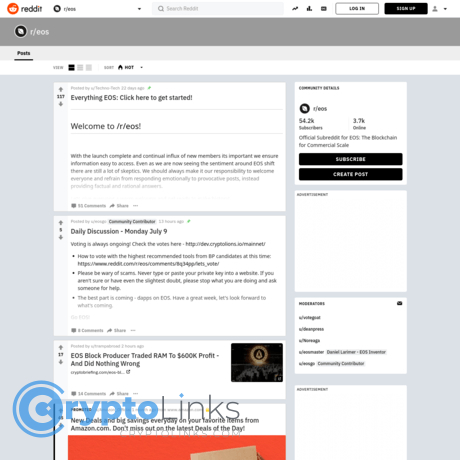
r/eos
www.reddit.com
r/eos Reddit Review & Guide: Is the EOS Subreddit Worth Your Time?
Wondering if the r/eos subreddit is actually helpful—or just another noisy crypto echo chamber?
I’ve spent a lot of time researching crypto communities, and this guide is built to help you get real value out of r/eos. If you want faster EOS news, honest user feedback on wallets and dApps, and a place where you can ask questions without getting roasted, you’re in the right spot.
Goal: help you cut through the noise, find credible info fast, and use r/eos as a smart research tool—not a hype machine.
Why crypto Reddit can waste your time
Let’s be real—Reddit is powerful, but it can be a time sink. In crypto subs, threads get shilled, legit dev updates are buried under price chatter, and newcomers often have no idea what’s current, what’s outdated, or who’s actually credible.
There’s also a well-documented social bias: early upvotes can snowball attention, even when the content isn’t strong. A randomized experiment on a large news platform (very similar to Reddit mechanics) showed that a single positive vote increased the final rating of a post by 25% on average—classic herding behavior (Muchnik, Aral, Taylor, PNAS). And across social networks, false news tends to spread faster than true news, especially on emotionally charged topics like markets and tech (Science, Vosoughi et al.).
Result: if you don’t have a system, you’ll scroll for 20 minutes and walk away with less clarity than when you started.
What I’ll help you do instead
I’ll show you how r/eos actually works, what content is worth your time, and how to use Reddit’s tools to get answers faster—without getting trapped in hype.
- Spot quality posts in seconds (sources, signals, and comment health)
- Use search and sorting like a pro to surface the best EOS threads
- Know which post types to read—and which to skip
Who this guide is for
- Newcomers who want EOS basics without the fluff
- Token holders tracking updates, proposals, and network changes
- Builders looking for dev chatter, tooling tips, and governance signals
What you’ll learn
- What r/eos covers and how active it is (so you know what to expect)
- Posting rules, flair types, and smart search tricks
- The kinds of threads that are consistently useful—and the ones to ignore
- How EOS works at a high level and the real risks people actually discuss
- Clear, simple FAQs with links to credible sources
Real example patterns you’ll see:
- Tooling or node setup questions that attract solid, technical replies
- Governance debates around DPoS and Block Producers with sourced arguments
- Scam/airdrop warnings flagged quickly by regulars
Quick note
This is not financial advice. Treat r/eos as a research layer—use it to learn, then verify with official docs and reputable sources before you act.
So, what exactly is r/eos and why does it exist—and where does it fit among X, Telegram, and Discord for EOS research? Let’s answer that next.
What r/eos Is (and why it exists)
r/eos is the EOS community’s open forum on Reddit where builders, power users, and curious readers swap what’s working right now and what needs attention. Think ecosystem news, upgrade threads, governance debates, wallet help, and security alerts you’ll want to see before you click any “claim” button.
You’ll regularly see posts like:
- Release notes and node ops tips: Leap (Antelope) updates, replay advice, and performance flags from operators keeping mainnet healthy. Example context: Antelope/Leap releases are tracked in the official GitHub, and devs often discuss hiccups and fixes in the sub.
- Ecosystem direction: EOS Network Foundation (ENF) funding rounds, grant announcements, and program updates. Reference: ENF blog for official announcements you’ll often see linked in threads.
- Governance chatter: Block Producer (BP) voting, decentralization concerns, and proposals that might affect staking, infrastructure, or resource costs.
- Wallet and EVM talk: EOS EVM compatibility notes, tooling, and wallet troubleshooting that saves hours of guesswork. See the EOS EVM portal for context: eosnetwork.com/evm.
- Security heads-ups: Phishing site reports, fake airdrop warnings, and “this domain is impersonating X” alerts that often surface on Reddit first.
“Strong communities don’t just cheer—they pressure-test ideas in public.”
That’s why this subreddit exists: to make signal easier to find in public, so you don’t have to piece it all together from scattered tweets.
Who should join r/eos
- EOS holders who want a quick read on catalysts, risks, and sentiment shifts without wading through price spam.
- Builders and node operators looking for Leap config help, RPC pitfalls, or SDK notes—plus honest feedback from people who’ve tried the same thing yesterday.
- Researchers and analysts who care about governance decisions and historical context you can actually search.
- Security-conscious users who want scam alerts and wallet safety threads before something becomes “yesterday’s lesson.”
- Traders who track tech and governance updates as catalysts, even if deeper market talk happens elsewhere.
Real example: when the community discusses resource model changes or BP standards, you’ll see seasoned accounts link to prior debates, GitHub issues, or ENF statements. That trail of sources is hard to replicate on fast-moving chat apps.
A quick EOS refresher (context matters)
EOS is a Layer-1 blockchain designed for high-throughput apps and value transfer. It originated from EOSIO and now runs on the Antelope protocol with the Leap implementation. The network emphasizes low-latency transactions, permissioned accounts, and flexible resource management.
- Core idea: Build and run dApps that need speed, predictable costs, and robust permissioning.
- Token utility: EOS is used to access network resources (CPU/NET/RAM), participate in governance, and secure the network. PowerUp and REX have been used to manage resource costs over time.
- Consensus: Delegated Proof of Stake (DPoS) with elected Block Producers—fast finality with real governance trade-offs that the subreddit discusses openly.
- Tooling today: Antelope/Leap for nodes, EOS EVM for Solidity compatibility, and a growing set of SDKs and middleware.
If you want to go straight to source material while you read threads:
- Antelope protocol repos: github.com/AntelopeIO
- Leap node software: github.com/AntelopeIO/leap
- EOS Network Foundation: eosnetwork.com
- EOS developer docs: docs.eosnetwork.com
Why this context matters for r/eos: it explains why you’ll see so much attention on node performance, BP behavior, and resource pricing posts—the mechanics directly affect app uptime, user costs, and governance power.
How r/eos compares to other channels
- Versus Twitter/X: X is fast but fleeting; r/eos wins on searchable context. Want to understand a “Leap replay” fix from a week ago? Reddit threads keep the steps, logs, and follow-ups in one place.
- Versus Telegram: Telegram is great for real-time chat, not for finding last month’s config tweak. On r/eos, you can filter by flair like Dev or Support and jump straight to the good stuff.
- Versus Discord: Discord servers (for example, ENF’s) host deep dev talk, but Reddit is easier to browse across time. If you’re new, Reddit’s history helps you catch up without asking the same questions.
Practical example: when EOS EVM gets an update, X has the announcement first, Discord has the dev chatter, and r/eos compiles a readable thread with links, context, and user Q&A you can still find a month later.
Want to save hours on your EOS research routine? Up next, I’ll show you the exact sort settings, search operators, and posting etiquette that cut through noise and get better answers. Ready to make Reddit do the heavy lifting for you?
How to use r/eos without wasting time
Reddit can feel like a firehose. The trick is to turn r/eos into a tight, high-signal feed you can scan in minutes. Here’s the simple system I use so I don’t miss real updates, fixes, or gotchas.
“Trust, but verify.”In crypto, that mindset pays you back every single week.
Read the rules and use flair
Before you post or binge, check the sidebar and pinned rules. They tell you exactly what flies (and what gets nuked by AutoMod). Then make flair your filter, not an afterthought.
- Filter by flair: tap Filter by flair under the subreddit name and pick News, Discussion, Dev, or Support. It’s the fastest way to cut noise.
- Post with the right flair: if you’re asking for help, choose Support. Sharing a node config or SDK note? Use Dev. Governance takes go under Discussion. You’ll get better eyes on your thread and avoid removals.
- Spot quality at a glance: posts with links to official blogs, GitHub, or ENF/Antelope repos usually stick. Screenshot-only claims often vanish.
Pro tip: save a filtered view (e.g., Dev + Top Week) as a bookmark so you can check it in one click: old.reddit.com/r/eos loads faster for scanning.
Sorting and search tips
Most people live in “Hot,” which rewards recency, not reliability. You want what’s survived the week.
- Sort by Top → Past Week or Month: this surfaces durable signal and reduces knee-jerk hype. Research on social platforms shows ranking and early visibility skew perception; using Top helps counter that “first mover” bias. See: Pew on social news habits for how people cluster around upvoted content.
- Google it smarter: pair Google’s site operator with precise EOS terms:
- site:reddit.com/r/eosAnchor wallet restore “missing tokens”
- site:reddit.com/r/eosAntelope Leap RPC “push_transaction” 500
- site:reddit.com/r/eosgovernance “block producer” voting
- Add a minus to mute noise: -price -moonshot -airdrop
- Scan user history: click a poster’s profile. Credible accounts usually:
- Link to GitHub, docs, or tooling repos
- Share EOS stack specifics (Antelope/Leap, node configs)
- Have comment history in EOS dev or governance threads
- Save your best queries: keep “RPC,” “Anchor,” “governance,” and “scam” searches in your browser bookmarks for quick checks.
Two-minute workflow that works: Top → Past Week → Flair: Dev → skim titles with external links → open three tabs → quick credibility check on authors → save or move on.
Posting and commenting etiquette
Clear info gets clear answers. Vague gets silence. When you ask for help or share findings, be specific and show your work.
- Bring receipts (sources): link the GitHub issue, official blog, or commit. Prefer source over screenshots.
- Mention your bias: if you’re a BP, wallet dev, or grantee, say it. Transparency builds trust fast.
- For support posts, include:
- Environment: OS, Antelope/Leap version, hardware
- Exact command/step: e.g., cleos push action … or wallet UI flow
- Error snippet and a short log excerpt
- What you’ve tried: cleared state, switched RPC, different wallet
- Relevant config lines: p2p-server-address, http-validate-host, chain-state-db-size-mb
- For wallet threads, add: wallet name/version (e.g., Anchor, Wombat, TokenPocket), permissions setup, and truncated TXID.
- Format for speed: short paragraphs, bullets, and bold your question. People help faster when they can scan.
Example of a high-quality support post:
- Title: Antelope Leap RPC returns 500 on push_transaction after upgrade
- Body: “Ubuntu 22.04, Leap 6.x, clean synced node, max-transaction-time = 30. Command: cleos -u https://rpc.example push transaction …. Error: 500 internal error with expired_tx. Tried new API endpoint, increased CPU stake, same result. Logs + config lines attached. Any known changes to trx_trace or ABI since last minor?”
That gets solved. “My TX failed help!!!” does not.
What to skip
- One-liners and price-only posts: if there’s no context or source, keep scrolling.
- Unverified airdrops: forms, mystery links, or “connect wallet to claim.” Hard pass. Crypto scam volume remains significant; see Chainalysis 2024 crime report. On r/eos, wait for confirmations from known contributors or official channels.
- “DM me” offers: classic phishing pattern. Keep it in public threads.
- Miracle “RPC fixes” from brand-new accounts: ask for steps, versions, and a reference issue. No details? No trust.
Quick gut-check: if a claim can’t survive three questions—“source?”, “repro steps?”, “who else confirmed?”—it’s not worth your time.
Bonus workflow tweaks that save hours each month:
- Use Old Reddit for speed: old.reddit.com/r/eos
- Create a Saved collection called “EOS Evergreen” for wallet guides, resource management explainers, and governance primers
- Turn on comment alerts for a few credible users so you don’t miss their replies in long threads
Once you’ve got this filter in place, the sub stops feeling noisy and starts working like a radar. Wondering which thread types almost always repay a click—and which I open in a new tab without thinking? That’s exactly what I cover next.
What you’ll actually find on r/eos
I keep r/eos open because it’s one of the few places where real builders, node operators, and long-time users talk shop in public. If you want to understand how EOS actually works today—beyond headlines—this is where the signal lives.
Developer and tooling threads
If you like concrete, reproducible info, this is the good stuff. You’ll regularly see:
- Leap/node upgrades: posts comparing config changes, performance notes, and upgrade gotchas. Smart threads link straight to Antelope Leap releases and paste exact flags (think state-history-endpoint, p2p-max-nodes-per-host, rocksdb tuning).
- Indexing and APIs: practical tips on Hyperion setup, pruning strategies, replay times, and how to shave hours off sync without breaking history queries.
- SDKs and CDT: common compile errors, ABI/RC fixes, and examples for Antelope CDT. Good posts include exact version numbers and a minimal repo so you can reproduce.
- EOS EVM specifics: RPC quirks, gas settings, endpoint reliability, and Solidity patterns that play nicely on EOS EVM. Look for links to official EVM docs and testnet RPCs.
Threads worth your time usually include:
- Inline logs and command snippets (cleos, leap options, docker-compose)
- A GitHub issue or PR link, not just a screenshot
- Benchmarks on CPU/RAM usage before vs. after a change
Example titles you’ll recognize: “Leap upgrade notes from production,” “Hyperion sync bottleneck and fix,” or “EVM RPC timeouts—here’s what helped.” When someone shares their config.ini and the exact error trace, you’re in the right thread.
Governance and DPoS discussions
EOS runs on Delegated Proof of Stake. That means Block Producer elections, vote decay, proxies, and decentralization are living, breathing topics. On r/eos you’ll see:
- BP rotations and incentives: debates on top-21 turnover and pay, with people linking explorers like Bloks.io or BP dashboards to back claims.
- Vote quality and participation: conversations about proxies, voter apathy, and the trade-offs between speed and decentralization.
- Policy and upgrades: threads unpacking network proposals, tokenomics tweaks, and how upgrades are coordinated across BPs and teams.
What I appreciate is the candor. You’ll see fans and critics mix it up, and the best comments bring receipts—charts, governance docs, or multi-sig details—so you can form your own view. DPoS isn’t just theory here; it’s a weekly reality check.
News, upgrades, and roadmaps
When something meaningful ships, this is where people post it with context. The stronger posts usually:
- Link to the EOS Network Foundation blog or Antelope announcements at antelope.io
- Include GitHub issues/epics so you can see what actually changed
- Summarize impact in plain language: what breaks, what improves, who needs to act
Expect updates on Antelope evolution, EOS EVM iterations, funding programs, and ecosystem partnerships. If a post only links to a single tweet without sources, I skim and wait for confirmations. When it’s real, someone almost always adds the official link and a short explainer in the comments.
Wallets, staking, and resources
New to EOS accounts and permissions? The community is good at practical, security-first guidance. Typical threads cover:
- Wallet choices and setup: step-by-step help for Anchor, mobile options, and hardware support. People will remind you to split owner and active keys—set and forget the owner key offline.
- Resource management: how CPU/NET/RAM work, how to allocate, and what to do when you hit limits. You’ll see clear examples and before/after screenshots.
- Staking and costs: realistic expectations for resource rentals vs. self-allocation, with notes on what’s changed over the years.
- EOS EVM vs native: clarity on addresses, fees, bridges, and common mistakes when moving value between EVM and native accounts.
Quick wins I see repeated (because they work):
- Test transactions with tiny amounts first—especially when bridging or changing permissions
- Back up keys plus a walkthrough of your recovery flow, not just the seed
- Bookmark at least one reliable explorer to verify everything on-chain before you celebrate
Security alerts and scam warnings
These threads can literally save you money. The community is fast to flag:
- Fake airdrops and phishing: “claim now” sites that ask for your seed or push malicious signatures
- Imposter wallet extensions: clones pretending to be Anchor or popular mobile wallets—always verify the publisher and official site links
- EVM approvals and drains: unlimited approvals on random contracts; people post revoke guides and known-bad contracts
- Support impersonators: DMs offering “help” after you post a tech question—real support won’t cold-DM you first
“If it feels urgent and wants your seed phrase, it’s a scam.”
Context matters: industry data shows scams and exploits remain a persistent threat even as patterns change. Chainalysis reported in 2024 that illicit crypto flows continue to be significant, with phishing and approval exploits common across ecosystems. If a r/eos warning includes contract addresses, screenshots, and a revoke link, treat it as a helpful red flag—then verify. Source: Chainalysis Crypto Crime Report.
I’ll be honest: the most useful threads feel like sitting next to the person actually running the node, shipping the contract, or recovering the wallet. But how do you separate expert signal from coordinated hype or low-effort noise? That’s where smart filters matter—want the checklist I use to trust (or ignore) a post?
Can you trust what you read? Moderation, bias, and quality signals
If you’re using r/eos as your EOS signal feed, you need a sharp filter. Great info lives there, but so do rumors, recycled “news,” and coordinated cheerleading. Here’s how I keep my head clear and my wallet safe.
“Trust is earned in threads, not in headlines.”
Mods and enforcement
Moderation on r/eos is active enough to keep the worst spam at bay, but it’s not a fortress. What I notice consistently:
- Stickies set the tone. When there’s an official upgrade or policy note, mods often pin a thread so newer posts don’t drown it out. If you’re short on time, check the sticky first.
- Automod catches lazy scams. “Airdrop,” “giveaway,” and brand-new accounts with link drops are frequently removed. You’ll often see “removed by moderators of r/eos” on low-effort posts.
- Sources survive, vagueness disappears. Posts that include links to the Antelope Leap releases, the ENF blog, or reputable explorers like Bloks.io and EOSAuthority tend to stick. Unattributed claims don’t.
If you’re unsure whether a claim is legit, check if mods or known contributors have weighed in. Silence on a big claim is often a signal to wait.
Bias and brigading
Every project subreddit leans positive—it’s human. The risk is when enthusiasm turns into echo. On crypto Reddit, that can look like:
- Sudden upvote spikes on thin content, especially from accounts created in the last few weeks.
- Dogpiles on critical but sourced comments. Smart skepticism should get engagement, not hostility.
- Cross-post waves from non-EOS subs known for speculation or “moonshot” hype.
The broader social science backs caution here. In a large-scale study, false stories spread faster than true ones on social platforms (Vosoughi, Roy, Aral, Science, 2018). And research on Reddit shows that moderation can curb abuse, but vigilance is still required (Chandrasekharan et al., 2017; Matias, 2019). Translation: don’t outsource your judgment to the vote counter.
How I check credibility
Here’s my 10-minute verification playbook when a post could matter:
- Source > screenshot. If it’s an image of text, I want the link. Official beats hearsay every time.
- Multiple confirmations > single tweet. I look for alignment across the AntelopeIO GitHub, the ENF blog, and a known block producer’s channel/site.
- Code > commentary. For upgrade claims (e.g., “Leap X.Y requires reindex” or “new finality feature”), I scan the actual release notes on GitHub and recent commit messages.
- Explorer checks. If someone posts a “whale move,” I verify the transaction ID on Bloks.io or EOSAuthority—amounts, memo, timing. Screens can lie, ledgers don’t.
- Account history matters. I click the author’s profile. Helpful patterns: consistent EOS activity, technical replies, older account age. Red flags: only hype posts, link-only history.
- Healthy debate > cheerleading. Posts with respectful pushback and data are usually closer to the truth than perfect agreement.
- Time helps. If I can’t verify within 10 minutes, I wait. Real news rarely expires in an hour.
Real example of how this saves time: when someone claims “new staking yields” or a “fee change,” I jump to the ENF blog and recent Leap releases. If neither mentions it, I treat it as rumor until proven otherwise. Nine times out of ten, that wait avoids acting on noise.
When to escalate research
Some posts should trigger a deeper check before you touch your setup or funds:
- Protocol upgrades or hardening steps. Verify via:
- Antelope Leap release notes (read the “Breaking Changes” section)
- Antelope blog and ENF blog for official context
- At least one established block producer announcement
- Tokenomics or governance changes. Look for:
- Formal proposals and implementation timelines
- On-chain evidence (e.g., distribution transactions, multisig approvals)
- Consistent messaging across multiple reputable EOS orgs
- Security alerts or wallet notices. Cross-check:
- Wallet’s official site and release feed
- Checksum/signature of new binaries
- Community confirmations from long-time devs or auditors
My last rule: if a claim could change how you store keys, sign transactions, or allocate tokens, don’t act until it’s confirmed in at least two primary sources you trust.
Curious about what EOS is actually used for today, the real risks people bring up, and the fastest way to verify “breaking news” without getting burned? Keep reading—the quick, honest answers are next.
EOS FAQs (the quick, honest version)
What is the EOS network used for?
EOS is built to run decentralized apps while keeping fees predictable and performance high. In practice, you’ll see it used for:
- Consumer-facing dApps: games, social tools, and marketplaces that need fast, low-latency actions.
- Value transfer: moving tokens cheaply and quickly without juggling gas fees.
- Resource-based development: teams stake EOS to secure CPU/NET and buy RAM, then run their apps without per-transaction fees hitting users.
- Account permissions: multi-signature setups, custom permissions, and recovery options that are friendly for teams and power users.
Real example: during high-usage periods, dApps leverage EOS resource staking (and tools like REX for renting resources) so users can interact without paying unpredictable gas. That’s attractive for apps that want Web2-level UX without surprise costs.
What are the risks of investing in EOS?
- Decentralization trade-offs (DPoS): EOS relies on a limited set of Block Producers. That can lead to power concentration and political friction. We’ve seen debates around vote incentives and alignment pop up in cycles.
- Governance complexity: Voting turnout and coordination matter. Low participation can stall changes; high coordination can trigger accusations of collusion. Early history included controversial account interventions and governance resets—useful context for newcomers.
- Regulatory and headline risk: Crypto sentiment swings quickly. A well-known example: Block.one’s 2021 class-action settlement (related to the ICO) highlighted how legal overhangs can linger and resurface in the news.
- Technical and ecosystem execution: Competing L1s push hard on performance and developer incentives. EOS must keep shipping. A notable stress test: the late-2019 EIDOS event saturated CPU and exposed how resource markets can be gamed—lessons that informed later resource design conversations.
I treat EOS like any high-risk crypto: position size sensibly, and always confirm details before acting on a thread or a tweet.
Is r/eos good for beginners?
Yes—if you use it right. The sub is helpful for real-user tips on wallets, staking, and account permissions. I usually:
- Search first, then read the most upvoted answers from the past month.
- Open threads with sources (GitHub, official posts) and skip screenshot-only claims.
- Ask questions with context (wallet, version, error messages) to get faster, accurate replies.
It’s not a textbook, but it’s great for practical problem-solving and gauging sentiment around upgrades or governance proposals.
Are exchange and price posts welcome?
Market chatter happens, but pure price spam gets buried. If you’re posting about an exchange listing or price action, add value:
- Explain why it matters to EOS (liquidity, staking implications, regional access).
- Link to actual announcements and data.
- Keep it relevant to tech, governance, or ecosystem health—not just lines on a chart.
How do I verify breaking news from a thread?
I use a simple checklist before I consider anything “real”:
- Source it: Look for official EOS/Antelope posts, recognized Block Producer updates, or reputable builder notes. Blog posts and GitHub activity beat screenshots every time.
- Cross-check: If only one brand-new account is saying it, wait. See whether known community members or BPs are discussing the same info across platforms.
- Look for code or commits: Upgrade and security claims should correlate with visible development activity and tagged releases.
- Check consequences: For anything that could impact your tokens or staking, wait for formal instructions or release notes before touching your setup.
Pro tip: Healthy threads usually have respectful pushback and sources on both sides. Echo chambers rarely age well.
Extra resources (curated)
When I research threads with real stakes, I like to balance Reddit with:
- Official project announcements and technical blogs.
- Antelope/EOS documentation and release notes.
- Recognized Block Producer updates and tooling docs (wallets, node guides, resource management).
- Public GitHub repos and issue trackers for what’s actually shipping.
- Neutral analytics dashboards to spot usage trends and anomalies.
Have a question I didn’t cover here, or want to know whether r/eos is worth your daily scroll? I’ve got the no-fluff verdict next—plus a simple setup to make the sub work for you instead of steal your time. Ready?
My verdict on r/eos (and how to make it work for you)
If you care about EOS beyond the ticker, r/eos is worth a spot in your daily scroll. It’s not a magic alpha feed, but it is a solid pulse check: real users, real code questions, and real governance pushback when things don’t add up. I keep it in my stack because I often see practical threads before polished blog posts—things like step-by-step node upgrade notes for Leap releases, calls for feedback on grant proposals, or heads-ups about phishing domains tricking wallet-connect pop-ups. That combination of timeliness and lived experience is hard to beat.
There’s a caveat. Reddit has social momentum built into it. A well-timed upvote can tilt visibility—this “first-vote bias” has been shown in peer-reviewed research on social platforms (see Muchnik, Aral & Taylor, Science). So treat hot takes and lone screenshots with caution. On the flip side, Pew Research has noted that Reddit’s news audience skews younger and tech-oriented, which tracks with what you’ll see here: more technical explainers, fewer generic price chants. Use that to your advantage.
Quick pros and cons
- Pros: Active community, fast dev/governance chatter, searchable history for recurring issues, frequent scam warnings with examples and mitigation tips.
- Cons: Occasional echo chambers, mixed post quality, heated decentralization debates, and the usual upvote-driven visibility quirks.
Who should subscribe
- EOS holders who want signal on upgrades, proposals, and risks before they hit glossy PR.
- Builders who value config snippets, SDK gotchas, RPC/node tuning, and real-world performance talk.
- Curious learners who prefer threaded, searchable discussions over fleeting chat rooms.
Your next steps
- Set your default view: Sort by Top → Past Week for a cleaner signal-to-noise ratio.
- Follow credible voices: Look for users who link to GitHub, the ENF blog, or Antelope docs. Consistency beats hype.
- Save the evergreen stuff: Wallet security checklists, resource management guides, and node setup posts are worth bookmarking.
- Harden your filters: Ignore posts with no sources; treat screenshots as opinions until verified.
- Verify before acting: Cross-check breaking threads with official channels like the Antelope project and the EOS Network Foundation blog.
Quick tip: When something could affect your wallet or your node, don’t rely on a single thread. Look for corroboration across official posts, code commits, and at least one independent summary.
Final thoughts
If you want a smarter filter for EOS updates and community knowledge, r/eos earns its place. Use it to spot upgrades worth reading, collect practical answers, and sample governance sentiment without drowning in noise. Get ideas there—then pressure-test them with sources. That’s how you stay informed, avoid scams, and actually learn something useful along the way.