
- Custodial and access risk: Your balance may still appear in an exchange account, but the platform controls when and how you can trade or withdraw it.
- Smart-contract control risk: An on-chain protocol can appear decentralized while powerful administrator privileges remain capable of changing contracts or issuing assets.
Here are the confirmed deadlines, the details behind the BMX crash, what happened to WEMIX, and the practical steps users should take before more problems emerge.
Key details in 2 minutes
- BitMart began gradually suspending new registrations, cryptocurrency and fiat deposits, new spot orders and new futures positions at 01:30 UTC on July 26, 2026.
- Futures accounts entered reduce-only mode, while copy trading, grid trading, API trading and other automated products began winding down.
- All spot, futures and other trading services are scheduled to stop at 01:00 UTC on August 26, 2026.
- BitMart recommends closing positions before the trading deadline and submitting withdrawal requests before 05:00 UTC on August 26.
- BitMart plans to formally cease trading-platform operations at 15:59 UTC on January 31, 2027.
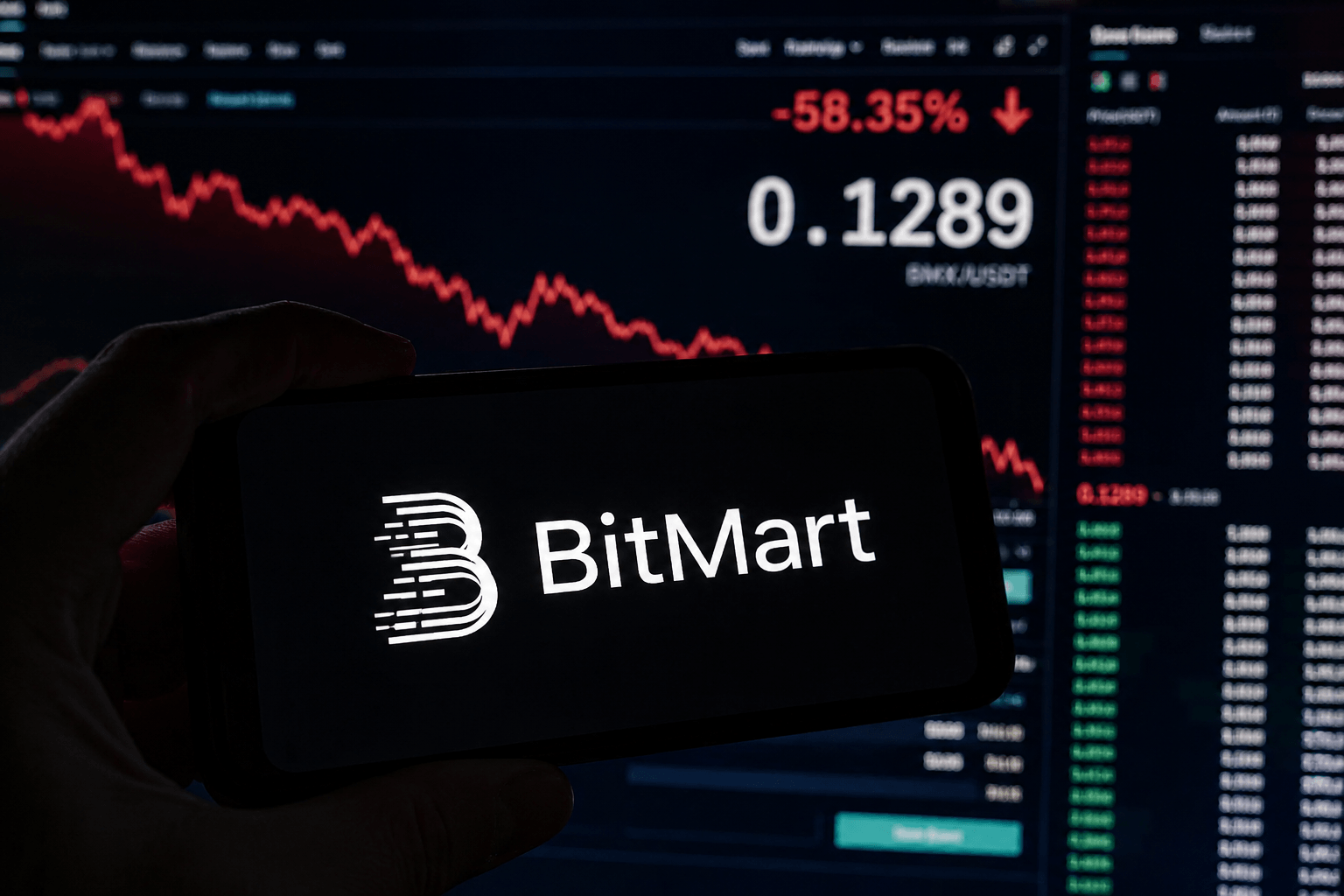
- BMX initially fell approximately 58% over 24 hours to around $0.08. Later reporting measured an approximately 81.5% seven-day decline, with BMX near $0.057.
- BitMart says withdrawals remain available, although identity, security, source-of-funds and sanctions checks may delay individual requests.
- Third-party observers and individual users have reported slow or pending withdrawals. These reports have not all been independently verified.
- WEMIX says a contract owner account was compromised and approximately 5.23 million WEMIX$ was issued without authorization.
- The unauthorized WEMIX$ was converted into approximately 30,736 WEMIX and 724,198.27 USDC.e.
- WEMIX suspended affected bridges, liquidity pools, its WEMIX$ Module, PNIX DEX and certain blockchain-connected services while investigating.
- Security firms disagree on the exact industry-wide loss total because they use different datasets. TRM Labs recorded 207 hacks and $972 million stolen in the first half of 2026, while Global Ledger counted 224 publicly disclosed incidents and approximately $1.32 billion in losses.
What exactly is happening to BitMart?
BitMart is not disappearing overnight. The company has announced an “orderly wind-down” that will take place in stages.
According to the official BitMart cessation notice, the decision followed an evaluation of the company’s operating conditions, market environment and future strategic direction.
The notice does not identify one specific regulatory, financial or technical event that forced the closure.
| Deadline | What happens |
|---|---|
| July 26, 2026, 01:30 UTC | New registrations, deposits and new trading orders begin stopping |
| July 26 onward | Futures enter reduce-only mode and automated products begin winding down |
| August 26, 2026, 01:00 UTC | All spot, futures and other trading services stop |
| August 26, 2026, 05:00 UTC | BitMart’s recommended withdrawal-request deadline |
| January 31, 2027, 15:59 UTC | Trading-platform operations formally cease |
Earn, staking, lending, Launchpad and other products will close under separate schedules. Users should not assume that assets locked inside those services will remain redeemable until the final January closure date.
BitMart says users will retain account access for a specified period after operations cease so they can review historical records and submit withdrawal requests under the applicable procedures. It has not yet stated how long that additional access period will last.
That missing detail is one reason January 31 should not be treated as a comfortable withdrawal deadline. The important deadline for users is August 26, and acting well before it leaves more time to resolve verification, network or support problems.
Why did the BMX token crash?
BMX is BitMart’s native platform token. Like other exchange tokens, much of its demand depends on the products, discounts, rewards and trading ecosystem provided by the issuing platform.
When the exchange behind that utility announces that its trading services will end, the market has to answer a simple question:
What will the token still be useful for after the platform closes?
The first major market snapshot following the announcement showed BMX falling approximately 58% over 24 hours to around $0.08, reducing its reported market capitalization to approximately $27 million.
Later reports placed BMX near $0.057 and down approximately 81.5% across seven days. These figures are not necessarily contradictory. They measure the token from different timestamps and over different periods.
The 58% figure is the cleaner measurement of the immediate 24-hour reaction to the shutdown announcement. The larger figure captures the wider decline leading into and following the news.
Exchange tokens should not be confused with shares in an exchange company. Holding BMX does not automatically give someone equity, ownership of BitMart’s reserves, bankruptcy priority or a guaranteed claim on future revenue.
An exchange token’s value can depend heavily on:
- Trading-fee discounts
- Staking rewards
- Launchpad access
- Token burns
- Promotional campaigns
- Liquidity on the issuing exchange
- Continued confidence in the platform
When those services disappear, the token’s utility and liquidity can deteriorate much faster than ordinary holders can react.

BitMart’s global CEO says he was not consulted
The wind-down became more unusual after BitMart Global CEO Nenter “Nathan” Chow said he was not involved in the decision.
According to reporting from The Block, Chow said he was informed on July 24 that his employment was being terminated and that his offboarding would begin immediately.
He said he learned about the platform wind-down when the public announcement appeared and had not been consulted about it.
This does not prove insolvency, fraud or financial misconduct. It does, however, create legitimate governance and communication questions.
When a company’s public-facing global CEO says he was excluded from one of the most important decisions in the exchange’s history, users have reason to seek clarity about who approved the decision, who currently controls operations and who is responsible for ensuring withdrawals are processed.
Users do not need to solve BitMart’s internal governance dispute before acting. The practical response is to reduce unnecessary exposure while official withdrawal channels remain available.
Are BitMart withdrawals still working?
Officially, BitMart says its withdrawal service remains available.
The exchange also warns that individual withdrawal requests may face additional review. These checks can include:
- Identity and KYC verification
- Login-device and IP-address reviews
- Withdrawal-address screening
- Source-of-funds documentation
- Trading-history reviews
- Travel Rule compliance
- Sanctions screening
- Proof that a destination wallet belongs to the user
Processing may take longer because of high withdrawal volume, network congestion, missing documentation or compliance and security reviews.
BitMart specifically states that submitting a withdrawal request does not mean the compliance review has been completed or that the transaction has been broadcast to the blockchain.
What about reports of stalled withdrawals?
Reports of slow or pending withdrawals appeared soon after the announcement.
CoinCentral and Blockonomi cited blockchain analytics account Lookonchain as reporting that 58 wallets withdrew approximately $805,000 during one observed 24-hour period. The account also reportedly observed an eight-hour period without a completed withdrawal.
Individual users posted complaints involving pending or apparently unprocessed transactions. Those individual claims were not independently verified.
A delayed withdrawal does not automatically prove that an exchange is insolvent. Compliance reviews, wallet maintenance, liquidity management, security controls and network conditions can all slow processing.
However, during a complete platform wind-down, every delay increases a user’s exposure to uncertainty. Holders should document their requests, use official support channels and avoid submitting repeated transactions or duplicate support tickets.

What BitMart users should do right now
1. Do not make another deposit
BitMart began gradually suspending cryptocurrency and fiat deposits on July 26.
Do not send funds simply because an old deposit address still appears in your account, wallet history or address book. BitMart warns that deposits made after suspension may not be credited automatically.
This includes small test deposits. Testing should be done in the withdrawal direction, not by sending additional assets into a platform that is closing.
2. Use only BitMart’s official website and application
Exchange closures create ideal conditions for phishing campaigns, fake support agents and fraudulent “priority withdrawal” services.
BitMart says it will not ask users through Telegram, WhatsApp, WeChat or private social-media messages to pay an expedited-processing fee, account-unfreezing fee or security deposit.
No legitimate support representative should request your:
- Account password
- Authenticator code
- SMS verification code
- Private key
- Recovery phrase
- Remote access to your device
Type the official domain manually or use a previously verified bookmark. You can also check suspicious names and domains against the CryptoLinks crypto scam and suspicious-site database before connecting a wallet or submitting information.
3. Cancel orders and close leveraged positions
Review every part of your account rather than looking only at the main spot-wallet balance.
Check for:
- Open spot orders
- Futures and perpetual positions
- Margin loans
- Copy-trading allocations
- Grid bots
- API-controlled strategies
- Earn products
- Staking balances
- Lending balances
- Launchpad allocations
Futures accounts are already entering reduce-only mode. BitMart warns that positions remaining open when trading ends may be settled under the mark-price, index-price or settlement rules in effect at that time.
Do not rely on forced settlement when you still have the opportunity to close positions under your own control.
4. Redeem Earn, staking and lending products
An asset displayed inside an Earn, lending or staking dashboard may not yet be available in the withdrawable spot balance.
Check each product’s redemption rules, pending rewards and waiting periods. Start redemptions early if an asset has an unstaking or settlement delay.
5. Complete account verification through official channels
Confirm that your legal name, address, identification documents and security settings are current.
If BitMart asks for additional documents, provide them only through the authenticated account interface, official ticket system, in-platform notification system or verified company email process.
Do not send identity documents to someone who contacts you privately.
6. Prepare a secure destination wallet
Decide where each asset will go before submitting a withdrawal.
For long-term holdings, consider a properly secured self-custody wallet. CryptoLinks maintains separate comparisons of the best non-custodial cryptocurrency wallets and the best crypto hardware wallets.
Self-custody is not automatically safe. It replaces exchange risk with personal responsibility. Losing a recovery phrase, installing a fake wallet or approving a malicious transaction can still cause permanent loss.
The CryptoLinks secure crypto storage guide explains how hot wallets, hardware wallets and other cold-storage methods fit different use cases.
7. Verify the blockchain network, address and memo
Before confirming a withdrawal, check that:
- The receiving wallet supports the asset
- The sending and receiving sides use the same blockchain network
- The destination address is correct
- Any required memo or destination tag is included
- The destination platform is accepting deposits on that network
- The wallet will have enough of the network’s native asset to pay future transaction fees
A USDT address on Ethereum is not interchangeable with every USDT address on Tron, Solana, BNB Smart Chain or another network.
When sufficient time remains, send a small test withdrawal first. Confirm that it arrives before submitting the main withdrawal.
Do not repeatedly duplicate a pending withdrawal request. BitMart’s notice specifically warns users against duplicate requests.
8. Save every account record
Download and securely retain:
- Account-balance records
- Deposit history
- Withdrawal history
- Trading history
- Earn and staking statements
- Tax reports
- Transaction IDs
- Screenshots of pending requests
- Support-ticket numbers
- Official correspondence
These records may become important for taxes, accounting, proving ownership or resolving a dispute after the normal trading interface is no longer available.
9. Remove API keys and third-party access
After positions are closed and assets are withdrawn, delete BitMart API keys from trading bots, portfolio trackers, tax applications, browser extensions and third-party dashboards.
An API key may not permit withdrawals, but leaving unused credentials active creates unnecessary risk.
10. Do not panic into another unverified exchange
Moving funds away from a closing platform does not improve your position if the destination is another poorly researched operator.
Compare security history, supported jurisdictions, withdrawal reliability, regulatory status and custody arrangements before depositing somewhere new. The CryptoLinks cryptocurrency exchange directory provides reviewed exchange options and explains which factors users should check before opening an account.

The WEMIX exploit is a different type of warning
While BitMart users were dealing with a centralized-exchange shutdown, WEMIX disclosed a separate on-chain security incident.
According to the official WEMIX incident update, abnormal transactions occurred on July 26, 2026.
WEMIX’s preliminary investigation found that ownership of a contract related to its WEMIX$ stablecoin had been compromised. The attacker used that access to issue approximately 5,225,525 WEMIX$ without authorization.
The tokens were then converted into approximately:
- 30,736 WEMIX
- 724,198.27 USDC.e
WEMIX said the USDC.e was transferred through bridges to Ethereum and BNB Smart Chain, exchanged into assets including ETH and USDT, and distributed across multiple addresses.
Some assets were reportedly deposited into centralized exchanges. WEMIX said it identified attacker addresses and requested assistance and asset freezes from exchanges and stablecoin issuers.
The project warned that its figures were preliminary and could change as the investigation continued.
Why some reports call it a $5.2 million hack
The attacker issued approximately 5.23 million units of WEMIX$, a token intended to maintain a value near $1. This is why several headlines describe the incident as an approximately $5.2 million exploit.
There is an important difference between:
- The nominal value of tokens issued without authorization
- The amount successfully exchanged for other assets
- The amount transferred outside the ecosystem
- The final unrecoverable loss after freezes or recoveries
The official preliminary report confirms the unauthorized issuance and the conversion into WEMIX and USDC.e. The final net loss remains under investigation.
Until a complete post-mortem is released, the most accurate description is that the exploit involved the unauthorized issuance of approximately 5.23 million WEMIX$, while the final recoverable and unrecoverable losses are not yet confirmed.
What WEMIX suspended after the exploit
WEMIX temporarily suspended or restricted several components connected to the affected ecosystem, including:
- Bridges connected to and from WEMIX3.0
- Chainlink CCIP transfers
- The PLAY Bridge
- Affected WEMIX and WEMIX$ liquidity pools
- The WEMIX$ Module
- PNIX DEX
- Certain blockchain-connected gaming services
- Some NFT marketplace functions
Foundation-provided liquidity was also withdrawn from affected pools as a precaution.
These emergency controls may limit further losses. They also demonstrate another form of access risk: even when users hold assets on-chain, bridges, liquidity pools and application interfaces may be paused after an exploit.
What WEMIX users should do
- Do not use a suspended bridge through an unofficial interface.
- Ignore private messages offering a manual bridge, migration or recovery service.
- Avoid swapping through pools that may have distorted or depleted liquidity.
- Confirm token contracts and networks through official WEMIX communications.
- Review wallet approvals connected to WEMIX applications.
- Record balances and transaction history before interacting with upgraded contracts.
- Treat unexpected tokens appearing in a wallet as potentially malicious.
- Wait for a complete post-mortem before assuming the underlying weakness has been fixed.
The key question is not merely whether one compromised owner account has been removed. Users also need to know whether similar contracts share the same administrative structure, credentials or security process.
BitMart and WEMIX reveal two versions of the same problem
The BitMart wind-down is primarily about custody, platform continuity and access.
The WEMIX incident is about privileged smart-contract control, administrator security and cross-chain infrastructure.
One event involves a centralized platform. The other happened through on-chain contracts. But the experience for users can become painfully similar:
- Deposits or bridges stop
- Trading routes disappear
- Withdrawals or transfers slow down
- Tokens lose liquidity
- Prices fall before users can react
- Fake support accounts target frightened holders
- Users discover they never prepared a backup exit route
This is why the statement “customer funds are safe” is not a complete risk assessment.
Security also includes whether an asset remains accessible and transferable when something goes wrong. The same issue appeared during the six-hour Coinbase outage in May 2026: an asset can remain present in an account while being practically inaccessible during the moment a user needs it most.
In crypto, access is part of security. A balance is less useful when the holder cannot move it as risks change.
The 2026 crypto hack wave is not slowing down
Security researchers agree that 2026 has produced an unusually high number of attacks, although their total-loss estimates differ.
TRM Labs recorded 207 hacks and approximately $972 million stolen during the first half of 2026. It described that as the highest six-month incident count in its dataset.
TRM found that smart-contract exploits accounted for most incidents, while infrastructure and operational compromises generated approximately 76% of total losses despite representing only about 15% of attacks.
Global Ledger used a broader dataset of publicly disclosed incidents and counted 224 hacks with approximately $1.32 billion in total losses.
Global Ledger found that only three incidents accounted for 63.9% of the period’s stolen value.
The difference does not necessarily mean that one company’s figures are wrong. Researchers may use different definitions for hacks, phishing incidents, individual-wallet compromises, recoveries and disclosure dates.
The conclusion is similar in both reports:
Crypto is experiencing a high volume of smaller smart-contract attacks alongside a limited number of catastrophic credential, infrastructure and key-control failures.
That makes the WEMIX ownership compromise especially relevant. Administrative keys and signing systems can sometimes bypass protections users assume are enforced by the underlying smart contract.
For historical context on exchange breaches, smart-contract failures and platform collapses, read the CryptoLinks guide to the biggest scams and hacks in cryptocurrency history.

My exchange-risk rules after BitMart
The lesson is not necessarily that nobody should ever use a centralized exchange. Exchanges remain useful for buying and selling crypto, converting fiat, accessing liquidity and executing trades.
The better lesson is to give an exchange only the amount of control it needs.
Keep trading funds separate from long-term holdings
An exchange account should be treated as an execution account, not automatically as a savings account.
Keep what you need for active orders, collateral and near-term transactions. Consider moving longer-term holdings into a custody setup you understand and can securely maintain.
Maintain more than one exit route
A user with only one exchange account can become trapped by a shutdown, outage, regional restriction or verification delay.
A backup does not require keeping large balances across multiple platforms. It means having a verified alternative account, known deposit information and a tested transfer route before an emergency.
Test withdrawals during calm periods
The first withdrawal from an exchange should not happen during a crisis.
Make a small withdrawal after opening an account. Test the process again after changing your password, device, two-factor authentication settings or destination address.
Treat withdrawal reliability as a security feature
Trading volume and token listings are easy to advertise. A more useful exchange test is whether the platform:
- Processes withdrawals consistently
- Clearly discloses fees and minimums
- Explains wallet maintenance
- Provides documented support responses
- Discloses custody arrangements
- Explains proof-of-reserves limitations
- Handles previous incidents transparently
Proof of reserves can provide useful information, but a snapshot of assets does not automatically disclose every liability, legal obligation or operational weakness.
Use stronger account security
Prefer:
- A unique password stored in a password manager
- An authenticator application instead of SMS where available
- A hardware security key for important accounts
- Withdrawal-address whitelisting
- Anti-phishing codes in official emails
- Login and withdrawal alerts
- A separate email address for financial accounts
The CryptoLinks guide to protecting your crypto assets provides a broader security checklist covering wallets, phishing, software updates and account protection.
Keep a personal custody map
Maintain a private record of where your assets are held, which networks they use and which recovery procedures apply.
Do not keep wallet inventories, recovery phrases and account passwords together in an ordinary cloud document.
Frequently asked questions
Is BitMart already closed?
No. BitMart has started a phased wind-down. New registrations, deposits and new orders began stopping on July 26, 2026. All trading is scheduled to end on August 26, while trading-platform operations are scheduled to cease on January 31, 2027.
Can users still withdraw from BitMart?
BitMart says withdrawals remain available. Individual requests may be delayed by identity, compliance, security, source-of-funds or blockchain-network reviews. The exchange recommends submitting withdrawal requests before 05:00 UTC on August 26, 2026.
Why did BMX fall 58%?
The shutdown announcement severely reduced confidence in the future utility of BitMart’s platform token. The 58% figure describes an approximately 24-hour move following the announcement. Later reports measured an approximately 81.5% decline across a seven-day period.
Was BitMart hacked in July 2026?
BitMart has not said that a new hack caused its wind-down. Its official explanation refers to operating conditions, the market environment and future strategic direction. Reports of slow withdrawals do not by themselves prove a hack or insolvency.
How much was lost in the WEMIX exploit?
The attacker issued approximately 5.23 million WEMIX$ without authorization. WEMIX says the assets were converted into 30,736 WEMIX and 724,198.27 USDC.e. The final net loss may change if assets are frozen or recovered.
Should BMX holders sell immediately?
That is an individual financial decision. Holders should first identify which platforms and networks still support BMX, evaluate available liquidity and spreads, and understand the risk of slippage. Moving through an unverified exchange or bridge can create additional risk.
What should I do when a crypto exchange announces a shutdown?
Stop depositing, close active positions, redeem yield products, update account verification, prepare a secure destination wallet, withdraw before the recommended deadline, save all records and ignore anyone offering paid or private withdrawal assistance.
Final take
BitMart’s wind-down is a reminder that an established exchange can change direction much faster than its users expect.
The BMX collapse shows what can happen when a token’s primary source of utility is scheduled to disappear.
The WEMIX exploit highlights a different weakness: smart contracts may appear decentralized while still relying on powerful ownership and administrator permissions that can be compromised.
The answer is neither blind panic nor blind trust.
Use exchanges for the services you actually need. Keep long-term assets under a custody setup you understand. Test withdrawal routes before a crisis. Save account records. Monitor verified announcements. Never let urgency push you into a fake support conversation, unverified wallet or unofficial bridge.
If you cannot move an asset when the risks change, you do not have as much control as the account balance suggests.
This article is provided for educational and informational purposes only. It does not constitute financial, investment, tax or legal advice. See the full CryptoLinks disclaimer.
Sources
- BitMart: Important Notice Regarding the Orderly Cessation of Operations
- CoinDesk report syndicated by CryptoNews.net: BitMart closure and 58% BMX decline
- The Block: BitMart global CEO says he was not consulted
- BeInCrypto: BitMart wind-down and initial BMX market reaction
- CoinCentral: Reported withdrawal delays and seven-day BMX decline
- Blockonomi: Reported withdrawal activity and BMX market data
- WEMIX: Official security-incident update and response measures
- CryptoNews.net: WEMIX attacker fund movements
- TokenPost: WEMIX unauthorized issuance and bridge suspensions
- TRM Labs: H1 2026 Crypto Hacks Report
- Global Ledger: Crypto Hacks H1 2026