r/Crypto Review
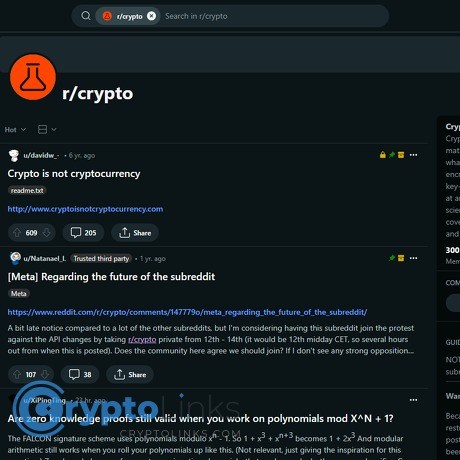
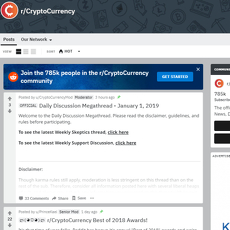
r/Crypto
www.reddit.com
r/Crypto Reddit Review Guide: How to Use the Subreddit Without Getting Wrecked
Ever scrolled through r/Crypto, seen a few moon emojis, some all-caps “THIS GEM WILL 100x” posts, a couple of memes, and thought: “Okay… what here is actually useful?”
If that sounds familiar, you’re not alone.
Reddit can be one of the best places to feel the pulse of the crypto market — but it can also be one of the quickest ways to lose money, time, and patience if you treat random posts like professional research.
In this guide, I want to show you how to look at r/Crypto in a more strategic way: as a noisy tool you can learn from, not a crystal ball you follow blindly.
The problems with using r/Crypto as a beginner
Let’s be honest: if you’re new to crypto and land on r/Crypto, it can feel like walking into a crowded casino where everyone is yelling a different “sure win.”
That messy feeling isn’t in your head. It comes from a few very real issues.
Why r/Crypto feels chaotic and overwhelming
Crypto itself is already fast, emotional, and jargon-heavy. Add an open subreddit on top of that and you get:
- Constant price noise – Every move in BTC or some alt gets turned into a “Is the bull run over?” or “We’re early!” thread.
- Mixed user base – Total beginners, experienced traders, trolls, bots, and scammers all posting in the same feed.
- No clear signal – A smart, well-researched post might sit next to a meme, next to a low-effort “Which coin to buy?” question.
There’s also the information overload side. A 2023 study from the University of Zurich looked at crypto subreddits and found that high activity and emotional language in posts often clustered around volatile price periods. In simple terms: when things get crazy, Reddit gets louder, not smarter.
If you’re new, that noise feels like urgency. You start thinking:
- “Everyone else is already positioned, I’m late.”
- “If I don’t react, I’ll miss the next big move.”
That’s exactly the headspace where bad decisions happen.
Fake “alpha,” recycled content, and low-effort posts
Scroll r/Crypto for a few days and you’ll start noticing patterns:
- The same “hidden gem” posts every week, just with a different coin ticker.
- The same beginner questions – “Is it too late to buy BTC?”, “Which coin will 100x?”, “Best exchange?”
- Armchair experts giving confident answers with zero proof or track record.
A lot of this is what people in trading circles call “pseudo-alpha” — information that sounds smart, feels exclusive, but doesn’t actually give you an edge.
Example you’ll recognize:
Post: “I’ve been in crypto since 2013. This ONE small-cap alt is the easiest 50x of your life. Here’s why…”
Reality: The “why” is usually a mix of vague claims, cherry-picked charts, and some buzzwords like “AI,” “layer 2,” or “real-world assets.” No real data, just hype.
Researchers have actually checked this kind of thing. A 2021 paper in the journal Finance Research Letters looked at social media crypto chatter and concluded that “popular” posts were often not predictive, just emotionally engaging.
In other words: the stuff that rises to the top gets there because it triggers feelings, not because it’s correct.
How shills, bots, and scammers blend in with real users
One of the biggest traps on any crypto subreddit is how professional the bad actors are getting.
This isn’t just “obvious spam” anymore. You’ll see:
- Fresh accounts that only talk about one coin or one project, but in a super positive way.
- Coordinated comments that repeat the same bullish phrases in slightly different wording.
- Overly polished “testimonials” about some trading bot, signal group, or Telegram “wizard.”
Here’s a pattern I’ve seen over and over:
Someone posts: “Anyone heard of Project X?”
Within minutes, you get 8–10 comments like:
“Yeah, legit team, huge partnerships coming.”
“I doubled my bag last month, still early.”
“Just DYOR but I’m all in on X.”
Different usernames, but the same energy: vague praise, no specific risks, no critical take.
A study by the University of Padua on social bots in crypto communities found that bot networks often focus on “amplifying visibility” of certain tickers or narratives, especially during token launches and pump attempts. On Reddit, that looks exactly like fake “organic” hype under seemingly normal posts.
When you’re new, that kind of thread looks like consensus. In reality, it can be manufactured sentiment designed to make you the exit liquidity.
Why following random Reddit advice can cost you real money
This is where the stakes become very real.
Unlike reading movie reviews or restaurant opinions, acting on crypto advice affects your net worth. And Reddit gives you:
- No risk management – People shout “buy” or “sell,” but rarely talk about position sizing, stop losses, or time horizon.
- No accountability – If a call fails, the thread gets buried and the user just posts a new “thesis” next week.
- No context – You don’t know if the person hyping a coin is sitting on a stack bought 90% cheaper.
There have been plenty of well-known cases across crypto social media where coordinated Reddit and Twitter hype helped pump tokens that later crashed over 90%. On-chain data analysts have tracked wallets that shilled a coin heavily, sold into the spike, then disappeared from the conversation.
From the outside, all you see is:
- “Reddit is bullish on this coin.”
- “Everyone’s saying this NFT is the next big thing.”
But you don’t see:
- Who bought early.
- Who is quietly selling.
- Who is just repeating what they heard without understanding anything.
If you treat r/Crypto like a group of vetted analysts instead of a random mix of strangers on the internet, you’re putting your capital in the hands of people who will never share your losses.
Promise: a simple framework to use r/Crypto safely
Now, here’s the good news: you don’t have to quit r/Crypto. You just need a simple way to filter it.
I’ll walk you through a framework that lets you quickly tell if a post is:
- Worth reading for context or new ideas.
- Good entertainment, but not actionable.
- A straight-up red flag that you should ignore or report.
You’ll see how to use a few quick checks like:
- Post and account quality – Is this a real human with a history, or a “born yesterday” shill?
- Comment pattern – Are there genuine debates, or just copy-paste hype with no pushback?
- Language signals – Is the post making bold promises and guarantees, or sharing balanced arguments?
That’s the exact lens I use: I treat r/Crypto as a stream of hints and sentiment, never as a buy/sell trigger. To actually act on something, I always bring in other tools and sources — charts, on-chain data, credible news, and independent reviews.
Used this way, r/Crypto becomes less like a casino and more like a noisy town square where you might overhear something interesting, then go home and research it properly.
Who this guide is for
Before going further, it helps to know whether this kind of approach is meant for you.
You’ll get the most value from this if you’re:
- New to crypto and trying to figure out where to even start on Reddit without stepping on landmines.
- A trader or investor who wants to check sentiment and narratives, but hates wasting time on garbage threads.
- A builder or dev looking for honest feedback on ideas or projects, without being buried in spam and bots.
- Someone who just wants straight talk about crypto without constantly being pushed toward scams or unrealistic promises.
If any of those sound like you, then learning how to handle r/Crypto properly is worth it. It’s not about becoming a skeptic of everything, it’s about knowing when to raise an eyebrow and say: “Okay, this looks more like marketing than information.”
What you’ll learn in this review guide
Here’s what’s coming next as we keep going through this guide.
- What r/Crypto actually is and how it compares to other big crypto subs like r/CryptoCurrency.
- The real strengths and weaknesses of the subreddit beyond what the sidebar or rules tell you.
- The main types of posts you’ll see every day — and which ones are usually not worth your clicks.
- A practical walkthrough of how to use r/Crypto as a tool in your crypto routine, not as your main decision-maker.
- Clear answers to common questions people search about r/Crypto: how safe it is, how it differs from other subs, and what to watch out for.
For now, just keep this idea in mind:
Reddit is great for understanding what people feel. It’s terrible if you treat those feelings as guaranteed outcomes.
So the key question becomes: what exactly is r/Crypto, how is it different from the other crypto subreddits you’ve heard about, and when should you actually pay attention to it?
Let’s answer that next…
What is r/Crypto and how does it work?
Open Reddit, type “crypto” in the search bar, and you’ll see a wall of subreddits: r/Crypto, r/CryptoCurrency, r/Bitcoin, r/Ethereum, r/cc, r/altcoin… it’s like walking into a Vegas casino where every room is playing a different game with the same chips.
r/Crypto is one of those rooms. It’s not the biggest, it’s not the most regulated, but it’s one of the places where people go when they just want to talk about “crypto stuff” without strict boundaries.
r/Crypto in a nutshell
Think of r/Crypto as a general-purpose lounge for anyone interested in digital assets. On any given day, you’ll see:
- News posts about Bitcoin ETFs, SEC lawsuits, new protocol launches
- Beginner questions like “Is Coinbase safe?” or “What wallet should I use?”
- Short-term price chatter — “Why is SOL pumping?”, “Is BTC going to 100k this cycle?”
- Memes and jokes whenever the market goes crazy (both up and down)
- Project mentions, from big names like Ethereum to tiny tokens you’ve never heard of
It’s open to all skill levels. You’ll see:
- Total beginners who just bought their first $50 of Bitcoin
- Casual investors checking in during bull markets
- Day traders and speculators chasing moves on altcoins
- Developers and builders asking for feedback on what they’re shipping
Because it’s so open, the quality swings a lot. One day you’ll get a thoughtful breakdown of how liquid staking works. The next day, the front page might be dominated by “Which coin will 100x?” posts and low-effort memes.
“The internet is a firehose of information. The skill isn’t finding info, it’s knowing what to ignore.”
That quote applies perfectly here. r/Crypto gives you reach and speed, not built‑in wisdom. The trick is learning how to use it without letting the chaos use you.
How r/Crypto fits into the wider crypto Reddit ecosystem
Reddit isn’t “one crypto community.” It’s a collection of micro‑communities, each with its own culture and rules. r/Crypto is just one node in that graph.
Here’s the rough ecosystem around it:
- r/Bitcoin – Laser-focused on Bitcoin only: philosophy, tech, macro, and price. Very ideological. If you post about random altcoins there, you’ll get shut down fast.
- r/Ethereum – All about Ethereum and its ecosystem: DeFi, NFTs, L2s, staking. The bar is higher for technical accuracy; people will call you out if you post nonsense.
- r/CryptoCurrency – Massive general crypto subreddit with stricter rules, recurring megathreads, and a more structured vibe. Think of it as “crypto Reddit with guardrails.”
- Niche subs like r/ethfinance, r/cc, r/defi, r/altcoin – These are more specialized: heavy on discussion, deep research, or specific niches of the ecosystem.
r/Crypto sits somewhere in between:
- Broader than coin-specific subs – You can talk Bitcoin, altcoins, NFTs, regulation, security, anything loosely connected to crypto.
- Looser than r/CryptoCurrency – Fewer recurring formal threads, more “whatever is happening today” style posts.
- More mixed crowd – You’ll see long‑term holders, gamblers, curious newbies, and occasionally someone who clearly just heard about crypto on TikTok yesterday.
From a research mindset, it helps to think of each subreddit as its own signal source. r/Crypto is one signal, r/CryptoCurrency is another, r/Bitcoin is another, and so on. Each one has its own type of noise, its own biases, and its own blind spots.
For example:
- If a new altcoin is being praised on r/Crypto but ignored or heavily criticized on r/CryptoCurrency, that contrast tells you something.
- If r/Bitcoin is talking about macro and self‑custody while r/Crypto is obsessing over meme coin pumps, that also tells you something about where attention is.
You don’t have to treat any single subreddit as “truth.” Instead, you can look across them like you’re scanning multiple radar screens.
r/Crypto vs r/CryptoCurrency: culture and rules
These two often get confused, but they feel very different in practice.
Here’s a simple comparison:
- Culture
- r/Crypto: More casual, more mixed, sometimes more raw. You’ll see memes, price posts, basic questions, and people venting about their wins and losses.
- r/CryptoCurrency: More structured and policy‑heavy. Mods enforce rules harder. There are daily threads (e.g. discussions, markets), and they push a certain level of quality.
- Moderation style
- r/Crypto: Rules exist, but borderline promotion and “what coin should I buy?” posts sneak through more often.
- r/CryptoCurrency: Stricter on low‑effort posts, repetitive content, obvious shilling. Posts that are pure hype usually get removed.
- Post patterns
- r/Crypto: You’ll see one‑off posts about random tokens, screenshots of portfolios, or people asking for emotional support after getting liquidated.
- r/CryptoCurrency: More megathreads, more serious discussion, more recurring formats (e.g. “Daily Discussion,” “Market Thread”).
When do I prefer each?
- I check r/Crypto when I want to see raw reactions and what the “average curious user” is thinking, especially during hype phases.
- I check r/CryptoCurrency when I want a cleaner environment and more curated discussions, especially for bigger market events or longer‑term debates.
Treat them like two different rooms at the same party. Same house (Reddit), same topic (crypto), totally different energy.
Typical content you’ll see on r/Crypto
If you scroll the “Hot” tab on a random weekday, you’ll usually find a mix of:
- News and headlines
Things like:
- “BlackRock spot ETF sees record inflows today”
- “Major exchange halts withdrawals for XYZ token”
- “New regulations announced in [country] – how bad is this?”
These posts often act as early alerts. They won’t be full research reports, but they’ll tell you that something is happening right now.
- Price talk and short‑term trading posts
Examples:
- “SOL up 20% in 24h, are we back?”
- “I sold my BTC at $40k, feeling sick now”
- “Is it too late to buy after this pump?”
These posts can be emotionally charged. Studies on retail trading behavior show that social media‑driven FOMO tends to correlate with worse performance over time, especially when people chase pumps based on crowd excitement instead of data. r/Crypto is no exception.
- Long‑term investing and “what should I buy?” threads
You’ll see:
- “Building a portfolio for the next bull run, what am I missing?”
- “Is DCA into BTC and ETH still a good strategy?”
- “I have $500 to invest, how would you split it?”
The answers range from sincere, well‑thought‑out replies to blatant shilling. Helpful patterns to watch: people explaining why they like something, not just posting ticker symbols.
- Project announcements and borderline promotions
These often look like:
- “We just launched [new DeFi project], feedback appreciated!”
- “New L2 with zero fees, what do you think?”
- “This low cap gem nobody talks about…”
Sometimes these are genuine builders trying to get feedback. Other times they’re coordinated campaigns trying to pump a token. Watch for fresh accounts, overly polished marketing language, or threads where every comment feels weirdly positive and similar.
- Memes, drama, and emotional cycles
Whenever the market moves hard, you get:
- Memes about “buying the top” or “selling the bottom”
- People boasting about turning $500 into $50,000 on some micro cap
- Rants about exchanges freezing, gas fees spiking, or governments “killing crypto”
These posts won’t make you a better investor on their own, but they’re great for seeing the emotional climate: are people euphoric, terrified, angry, or numb?
One thing I’ve learned: if a token is suddenly everywhere on r/Crypto — new posts, excited comments, meme spam — it usually means the easy money is already gone. Social platforms tend to lag real smart money moves; academic work on crypto Twitter and Reddit often shows that retail mentions peak after big price moves, not before.
How the subreddit is structured
The structure of r/Crypto is simple, but how you use it changes what you see.
Post sorting
- Hot – The default. Shows posts that are currently getting the most engagement (upvotes + comments), weighted by recency. Great for seeing what everyone is talking about right now, but it also boosts controversial or clickbait content.
- New – Pure chronology. Posts in the order they were created. If you want to catch things early — new token mentions, fresh news, questions that don’t yet have answers — this is where you go. It’s also where you’ll see the most spam, unfiltered.
- Top – Posts with the most upvotes in a given time range (past hour, day, week, month, year, all time). This is useful if you want “greatest hits” content or want to understand what kind of posts the community generally likes.
- Rising – Posts that are quickly gaining traction but aren’t at the top yet. Good for spotting emerging topics and narratives before they fully flood the front page.
A simple pattern I like:
- Use Hot to see the current conversation.
- Use Rising when I’m scouting for early “this might become a thing” discussions.
- Use Top (Week/Month) to find posts that are more likely to be thoughtful or valuable.
Sidebar rules (yes, you should read them once)
Most people ignore the sidebar, then get surprised when their post gets removed or when they fall for something the rules already warned about.
The sidebar usually covers:
- What kinds of posts are allowed (questions, discussions, news, memes)
- What’s not allowed (obvious scams, referral links, very blatant self‑promotion)
- How to format titles, tag posts, or request help
- Basic security reminders like “no one from this subreddit will ask for your seed phrase”
Reading this once takes under two minutes, but it helps you instantly filter out posts that clearly break the spirit of the rules, even if they technically slide past Automod.
Automod, flairs, and post types
Behind the scenes, there’s an automated system (Automod) plus human moderators. They try to keep spam and scams under control, but they’re not perfect — crypto is a high‑incentive environment for bad actors.
You’ll notice:
- Flairs on posts like:
- Discussion
- Question
- News
- Meme
- Technical or Research (depending on the sub’s setup)
These give you a quick preview of what you’re about to open. If you’re in “learning mode,” you might skip memes for a while and focus on discussions and questions.
- Automod comments under certain posts asking for clarification, adding warnings, or giving links to rules and FAQs. Don’t ignore those — they often contain safety tips or context.
- User flairs in some subs (less consistent on r/Crypto), where people can mark themselves as “dev,” “trader,” “long term holder,” etc. Never treat a flair as proof of expertise, but it gives you a hint about someone’s perspective.
One useful habit: when you see a post that looks interesting, scroll up and check the flair and the user’s profile before taking anything seriously. A brand‑new account posting a “life‑changing opportunity” with a “News” flair is a red flag, no matter how exciting it sounds.
The structure of r/Crypto is simple, but the psychology around it isn’t. The way posts are sorted and flaired shapes what you feel you should care about — and that’s where people often get pulled into hype, fear, or boredom scrolling instead of learning.
So the real question becomes: how do you turn this messy, emotional stream into something that actually helps you? The answer starts with understanding what r/Crypto is genuinely good at — and what it’s terrible at. That’s where we’re heading next.
The pros: why r/Crypto can actually be useful
If you scroll r/Crypto long enough, it’s easy to think it’s just noise, memes, and the occasional “this coin will 100x” nonsense.
But there is real value there if you know what you’re looking for. Think of it like a crowded market street — loud, messy, and a bit sketchy in corners, but also full of signals, stories, and early clues the polished news sites won’t show you yet.
Used right, r/Crypto can help you:
- Read the market’s mood in real time
- See different opinions clash around the same project
- Get fast answers to beginner questions
- Spot early narratives and small coins before they hit the mainstream feeds
Let’s break that down.
Real‑time sentiment and “vibe check”
Crypto moves on emotion as much as on math. Fear, greed, boredom, euphoria — they hit timelines before they hit price charts.
That’s where r/Crypto becomes surprisingly useful: it’s a live “vibe check” on how regular people are reacting to news.
When something big happens — an ETF approval, an exploit, a major listing — you’ll usually see it reflected on r/Crypto within minutes:
- Explosion of posts about the same topic (often with bad titles, but still… the signal is there)
- Comment sections full of “we’re going to zero” or “we’re all gonna make it” energy
- Shift in tone from cautious to aggressive, or from hype to “I’m out, I’m done”
There’s actually academic support for this kind of thing: multiple studies on crypto markets (including Bitcoin and Ethereum) have found that activity and sentiment on social platforms like Reddit and Twitter often correlate with short‑term volatility. They don’t reliably predict price, but they do show when people are emotionally heated — and emotional markets are dangerous markets.
So here’s how I use it in practice:
- News breaks? I check r/Crypto’s Hot or New tab and skim the top threads about it.
- Scan the comments: are people laughing it off, panicking, blaming each other, or calmly analyzing?
- Match that mood to the charts and volume on real data tools.
If the subreddit looks like a war zone of panic posts and the charts show a sharp move down with big volume, that tells me one thing: emotions are running the show. For me, that’s a signal to slow down, not speed up.
“In markets, the loudest emotion usually arrives just before the worst decision.”
Important: I never treat sentiment as a buy/sell signal. It’s context, not instructions.
If everyone on r/Crypto is euphoric about a coin, that doesn’t mean “buy now.” If everyone is screaming “crypto is dead,” that doesn’t mean “sell everything.” It just tells me which direction the emotional wind is blowing so I can avoid letting it blow me off my own plan.
Crowd knowledge and different viewpoints
One of the underrated strengths of r/Crypto is how varied the users are.
You’ve got:
- People from countries with strict capital controls who see crypto as survival, not speculation
- DeFi degens who live in Discords you’ve never heard of
- Long‑term holders who barely trade at all
- Beginner investors who just bought their first $50 of BTC on a mobile app
- Builders who’ve actually shipped smart contracts and know where the bodies are buried in DeFi
Put all of them in one thread about a specific project, and you’ll see something valuable: conflict.
For the same coin you might see:
- One comment hyping the tech
- Another pointing out shady tokenomics
- Someone warning about a region‑specific ban or regulatory risk
- A dev explaining why the codebase is forked and unimpressive
That mix is gold. Not because the crowd is always right — it’s not — but because you can quickly see what angles to research further.
For example, say someone posts:
“What do you think of XYZ Protocol? Thinking of going in big.”
In the comments you might find:
- One user: “Love it, great APY, I’m all in.”
- Another: “Token unlocks in 2 weeks, early investors will dump, be careful.”
- Another: “Team refused audits and deleted critical questions on their Discord.”
- Another: “Been using their product for 6 months, UX is good but liquidity is thin.”
That’s not a decision, but it’s an excellent checklist:
- Check token unlock schedules
- Look at audit history
- Review community management behavior
- Verify liquidity and on‑chain activity
So I treat r/Crypto threads like a brainstorming board. When I see good arguments on both sides, that’s a sign the topic is worth a deeper look outside Reddit.
Beginner questions and quick answers
If you’ve ever googled a basic crypto question and ended up on a Reddit thread, you already know: beginners live here.
Typical posts you’ll see on r/Crypto almost every day:
- “Which wallet should I use for long‑term holding?”
- “Is it safe to leave my coins on [exchange]?”
- “This project messaged me on Telegram, is it a scam?”
- “How do taxes work if I only swapped coins and never cashed out?”
Here’s why these threads can be helpful:
- You get practical answers from people who already made the mistakes you’re trying to avoid.
- You see common pitfalls people fall into over and over again.
- You learn the “unwritten rules” that don’t always show up in official guides.
But not all answers are equal.
When I’m looking at replies to beginner questions, I usually ask:
- Does the person explain why or just say “use this”?
“Use X wallet, it’s the best” is lazy. “Use X wallet, it’s open-source, non‑custodial, with a solid track record and no major security incidents so far” is better. - Is the account obviously shilling something?
New account, few comments, always recommending the same obscure wallet or exchange? That’s a red flag. - Is there disagreement?
If every reply to “is this project a scam?” says “No, it’s amazing, life‑changing, 100x coming,” I get suspicious. Normal discussions have at least some pushback.
There’s also a psychological benefit for beginners: just seeing others ask “stupid questions” makes you feel less alone. Crypto can be intimidating. Watching people fumble, learn, and figure things out in public is a reminder that you don’t have to know everything on day one.
That said, there’s a line.
Once money is on the line, I always move the question out of Reddit and into proper research:
- Official project docs and support pages
- Curated wallet and exchange lists from neutral sites
- Tax resources specific to your country
Reddit is fast, but it’s not accountable. Nobody refunding you because you trusted a random comment.
Finding smaller projects and early narratives
One of the more exciting uses of r/Crypto is spotting early narratives and lesser‑known projects before they hit mainstream crypto media.
Here’s how it often plays out:
- A new L2, DeFi protocol, or meme coin starts getting mentioned here and there in random threads.
- Then you start seeing standalone posts: “Anyone looking at XYZ? APYs are insane.”
- Next, someone posts a basic write‑up or “why I’m bullish on XYZ” thread.
- Eventually it spills over into other subs, Twitter, and YouTube.
By the time big influencers talk about it, the early noise usually started in places like r/Crypto.
So what do I do when I see a smaller coin or protocol mentioned for the first time?
- I don’t buy it. Not yet.
- I note it down in a list of “things to research properly.”
- I look for patterns: is this a one‑off mention, or are multiple unrelated accounts talking about it?
If it keeps popping up, that doesn’t mean it’s a gem. It can also mean coordinated shilling. So I run some quick sanity checks:
- Does the project have a real website and clear documentation?
- Is the team visible, or is everything anonymous and vague?
- What do on‑chain stats say? Any real volume or just wash trading?
- How concentrated is the token supply? Any giant whales holding most of it?
A lot of people get wrecked at this stage because they treat “I saw it early on Reddit” as a badge of honor and proof they’re ahead of the curve. That mindset is deadly. Early doesn’t mean safe. Early doesn’t even mean smart.
What early mentions can give you is time:
- Time to watch how the team behaves when nobody is watching.
- Time to see if usage grows organically or only through aggressive marketing.
- Time to research without the pressure of crazy pumps or crashes.
That’s the way I like to use r/Crypto for “alpha”: not as a trigger, but as a radar.
Funny thing is, the same mechanism that makes r/Crypto useful for spotting interesting stuff… also makes it very dangerous when hype starts to snowball. When the crowd realizes something “exists,” the incentives to manipulate that attention get very real, very fast.
So here’s the uncomfortable question you have to ask next: if r/Crypto can surface good ideas and sentiment, how exactly are people trying to twist that power — and what does manufactured hype actually look like in practice?
The answer isn’t pretty, but once you see the patterns, you’ll never unsee them… and that’s exactly what we’re going to unpack next.
The cons: noise, shilling, and hidden risks
Let’s be honest: hanging out on r/Crypto can feel like walking through a casino where half the dealers are drunk, the other half are working for the house, and everyone is telling you “this next spin is the one.”
Open crypto communities are powerful, but they’re also a perfect playground for people who want your attention, your clicks, or your money. If you don’t know what that looks like in practice, you’re basically wearing a sign that says, “Please manipulate me.”
I want to walk you through the darker side of the subreddit so you can spot the traps before they spot you.
Shills, bots, and coordinated campaigns
Some of the most “hyped” threads on r/Crypto aren’t organic at all. They’re built. Planned. Seeded.
There’s a pattern I see over and over again:
- Unknown coin suddenly appears — random low‑effort post: “Anyone else looking at $XYZ? This thing is about to explode.”
- Fast follow-up posts — a few hours later: “$XYZ just getting started” or “Did I just 5x in 3 days with $XYZ?!”
- Comments all saying the same thing — “Strong team,” “Huge potential,” “Not paid but this is my biggest bag.”
- Skeptics buried or attacked — anyone asking hard questions gets dogpiled or downvoted.
That’s usually not “community excitement.” That’s a shilling campaign.
Shilling can be:
- Paid or “incentivized” posts — People are given tokens to talk about a project.
- Coordinated brigades — Telegram or Discord groups organize “Reddit pushes” to pump visibility.
- Bot amplification — New accounts, almost no history, repeating the same phrases to make the hype look bigger than it is.
Here’s what I personally look for when I suspect a shill:
- Fresh accounts with sharp opinions
Click the username. If it’s days old, almost zero karma, and 90% of their activity is about one coin or one project, that’s a walking red flag. - Copy‑paste comments
Look for identical or near‑identical replies across different threads: “The team is fully doxxed and backed by tier‑1 VCs, this is a hidden gem.” When you see the exact sentence 5 times from different “people,” you’re not looking at organic discussion anymore. - Weird engagement spikes
A random project you’ve never heard of has a thread with 300 upvotes and 120 enthusiastic comments… but the rest of the subreddit looks normal. That mismatch is a clue. - Zero nuance
Real people have doubts. Shills rarely do. If every comment is “insane upside,” “no brainer,” “easy 100x,” with no mention of risk, that’s not how serious investors talk.
One academic study on crypto social media manipulation (for example, research around “pump-and-dump” coordination on Telegram and Twitter) found the same pattern: bursts of social chatter are often timed right before massive price moves, then silence. r/Crypto is just another surface where that game is played.
“In crypto, the loudest voices usually bought earlier than you — or are being paid to be loud.”
Here’s the mindset I keep: if a thread feels “too clean” — all hype, no criticism, lots of new accounts, no real arguments — I mentally tag it as marketing until proven otherwise.
Low‑effort content and recycled takes
Not everything on r/Crypto is malicious. Some of it is just… useless.
You’ll see the same types of posts over and over:
- “Is it too late to buy BTC?”
- “I put my life savings into [coin], did I screw up?”
- “Why is the market crashing???”
- Screenshot of a green portfolio: “We’re so back.”
- Screenshot of a red portfolio: “It’s over.”
These posts get engagement because they trigger emotions, not because they add insight. People pile in with sympathy, jokes, or the same recycled advice.
Why is this a problem for you?
- It wastes mental energy — Every low‑effort thread you read is bandwidth you could have spent on something that actually makes you smarter.
- It creates illusion of “activity” — You feel like you’re “doing crypto” by scrolling, but you’re just consuming noise.
- It pushes you into short‑term thinking — Endless “What’s next this week?” posts keep you focused on the next 24 hours instead of your actual plan.
Over time, this kind of chatter changes how you think about the market. A 2021 study on financial forums and trading apps found that constant exposure to short, emotional posts increases impulsive trading and reduces patience. That’s the opposite of what you want in a volatile asset class.
So I use a simple mental filter when I scroll:
- Does this post teach me something I didn’t know?
- Does it link to a real source (docs, research, data), or is it just vibes?
- Will I care about this information a week from now?
If the answer is “no” to all three, I keep scrolling without guilt. You’re not “missing out.” You’re protecting your attention.
Scams: DMs, fake giveaways, and sketchy links
If you make one post or comment asking for help on r/Crypto, there’s a good chance your inbox will start lighting up with “helpful” strangers. This is where things move from noisy to dangerous.
Here are the most common scam patterns I see:
- Fake support agents
You mention in a comment that you’re having trouble with Binance, MetaMask, Phantom, etc. Within hours, you get a DM from “Support” or “Agent_XYZ.” They’ll ask you to:- Share your screen
- Install remote-control software
- “Verify” your wallet
- Enter your seed phrase “in a secure portal”
Once you do, your funds are gone. No appeal. No refund.
- “Investment managers” and “trading gurus”
These usually start with: “Hey, I saw your comment and I used to be where you are…” They show you screenshots of perfectly timed trades and “clients” who 10x’d their portfolio. Then they ask you to send them money or connect your account so they can “trade for you.” There is no manager. Just a thief with a Canva template. - Giveaway and airdrop traps
Thread: “We’re giving away 5 BTC to our loyal community!” Rules:- “Send 0.05 BTC and we’ll send back 0.1 BTC.”
- “Connect your wallet here to claim your airdrop.”
The link goes to a fake site that asks for wallet permissions or your seed phrase. Your assets are drained in minutes.
- Malicious links hidden in “helpful” comments
Someone responds to your question with: “Here’s the official site, use this link: xyz-airdrop-claim.com” The domain is one letter off from the real one. There’s no obvious red flag until you sign a transaction you don’t fully understand.
The safety rules I personally follow are boring, but they work:
- I never trust anyone who messages me first
If they reached out to you, they have a motive. Assume it’s not in your favor. - I treat all “support” DMs as fake until I verify via official channels
If it’s really support, the contact link will be on the official website, in the app, or in verified social profiles. - I never share my seed phrase or private key, under any circumstance
No legit support, dev, or mod needs it. Ever. If someone asks, the conversation is over. - I manually type or Google official project names
Instead of clicking a random link in a Reddit comment, I search the project name and cross-check the URL from multiple sources. - I treat every “send X to get 2X back” as 100% scam
This includes any “Elon Musk,” “exchange promotion,” or “anniversary giveaway” from a random account.
The tough part is this: scammers target you most when you’re emotional — scared after a loss, excited after a win, or confused by a technical problem. That’s when your guard drops.
So any time I’m upset, stressed, or overly hyped, I make it a rule: I don’t click links, I don’t sign transactions, and I definitely don’t send coins to strangers.
Emotional traps: FOMO, FUD, and regrets
The biggest risk on r/Crypto isn’t even losing money directly to a scammer. It’s slowly letting the subreddit dictate your emotions and timeframes.
Here’s what that usually looks like.
FOMO (Fear of Missing Out)
You see a thread: “I turned $500 into $80,000 with this low-cap gem.” The comments are full of people begging for the ticker. Some already “aped in.”
Even if you know it’s probably risky, a small voice in your head asks: “What if this one is real? What if you’re missing the big one again?”
So you:
- Ignore your own plan
- Skip proper research
- Buy something you barely understand, at a bad entry
If it pumps, you might get addicted to that feeling. If it dumps, you feel stupid and chase the next one to “make it back.”
A lot of academic papers on investor behavior say the same thing: social proof + high volatility = impulsive decisions. r/Crypto is basically a machine that constantly produces both.
FUD (Fear, Uncertainty, Doubt)
The flip side is just as destructive. One scary thread can make you question everything:
- “Crypto is going to zero.”
- “This regulation will kill the entire industry.”
- “This bug means DeFi is dead.”
Sometimes there’s a kernel of truth. But the tone is designed to spark panic. You end up selling at the bottom, not because your thesis changed, but because a loud stranger posted a dramatic take at the worst possible moment.
Regret and comparison
One of the most toxic side effects of r/Crypto is constant comparison:
- You see posts from people who “made it” early on certain coins.
- You see portfolios way bigger than yours.
- You see unrealistically perfect entries and exits.
You don’t see:
- The losses they don’t screenshot
- The leverage that almost liquidated them
- The lucky timing they’ll never repeat
But your brain just registers: “They’re winning. I’m behind.” That’s how you slide into revenge trading — forcing trades to “catch up” to strangers who may not even be telling the whole truth.
“Read enough anonymous success stories, and your realistic goals suddenly feel too small.”
Here’s how I keep myself grounded when I’m on r/Crypto:
- I set my timeframe before I open Reddit
Am I here to check long‑term narratives, or just see short‑term chaos? Knowing that makes it easier to ignore posts that don’t match my plan. - I treat extreme emotions as warning signals
If a thread makes me feel urgent, jealous, or panicked, I take a break. Those are not good states to make decisions in. - I separate “entertainment scrolling” from “research time”
If I’m just browsing memes and hot takes, I accept that and don’t pretend it’s research. Real research happens elsewhere, with actual data, docs, and tools.
The goal isn’t to stop feeling things. The goal is to not let those feelings yank you around every time you open the app.
So the big question becomes: how do you keep all the upside of r/Crypto — the ideas, the sentiment, the community — without getting dragged into the noise, the games, and the emotional roller coaster?
That’s exactly what I’m going to walk through next: the actual way I use the subreddit step by step, what I ignore on sight, and how I turn random posts into structured, sane research instead of impulse trades.
Ready to see how to turn r/Crypto from a trap into a tool?
How I Actually Use r/Crypto (And How You Can Too)
If you treat r/Crypto like a signal to buy or sell, you’re going to have a bad time.
If you treat it like a noisy scanner for ideas, sentiment, and risk warnings, it suddenly becomes useful.
Let me walk you through exactly how I use r/Crypto so I get value from it without letting it mess with my wallet or my emotions. You can copy this approach, tweak it, or use it as a starting point to build your own routine.
My Daily/Weekly Routine for Checking r/Crypto
I don’t camp on the subreddit all day. In fact, the reason it works for me is because I treat it like a quick tool, not a home page.
Here’s my usual rhythm.
1. Quick daily scan: 5–10 minutes, max
Once a day (sometimes twice on big news days) I do a fast pass:
- Sort: I start with Hot. Hot shows what the crowd is reacting to right now.
- Scroll titles only: I scroll through the first 30–40 posts and read just the titles, nothing else.
- Open very selectively: I usually open maybe 3–5 posts total.
What makes me open a post?
- It’s about an unexpected event (“Major bug discovered in XYZ bridge”, “New regulation passed in EU affecting exchanges”).
- It’s a question I know many people struggle with (“How do I report crypto staking on taxes?”, “My ledger is lost, what now?”).
- It’s an unfamiliar project or narrative that keeps popping up (“What do you think about ABC chain?”, “L2 XYZ is gaining TVL fast”).
If the front page is mostly price memes, low-effort charts, and “We’re gonna moon” posts, I just close the tab. No doomscrolling allowed.
2. Deeper weekly check: usually on weekends
Once a week I spend a little more time, but still with guardrails.
- Sort: Top → This Week to see what the community pushed up over the last 7 days.
- I filter by flairs if available: things like “Discussion”, “DD”, “Question” instead of “Meme”.
- I look for longer posts with real effort: writeups, breakdowns, or story posts (“I lost $50k to this scam, here’s exactly how it happened”).
These weekly threads are often where you find:
- Well-thought-out critiques of popular projects.
- Real lessons learned from people who got burned.
- Emerging themes (like restaking, inscription hype, new L2s, etc.).
3. How I save and track interesting threads
When something catches my eye, I don’t act on it. I store it.
- I hit Save on Reddit, but I also know Reddit saves are easy to forget.
- For higher-value stuff (like a new project or a detailed risk thread), I:
- Drop the link into a simple note app under sections like “Narratives to research” or “Risk warnings”.
- Sometimes paste key quotes so I remember why it caught my attention.
This simple habit stops me from FOMO-ing and shifts my brain from “I need to act” to “I need to research”. That mental gap is where a lot of expensive mistakes die quietly before they happen.
A Quick Checklist to Judge Any Post
When I do open a post on r/Crypto, I run it through a quick filter in my head. It takes maybe 20–30 seconds, but it saves a ton of time and emotional energy.
1. Who is posting?
- Account age: Brand-new account created yesterday? Instant caution.
- Post history: Click the username.
- If their last 20 posts are all about the same coin: that’s marketing, not discussion.
- If they post across different subs, talk about normal life stuff, and have mixed interests: usually more genuine.
- Karma: It’s not perfect, but an account with years of activity and decent karma is less likely to throw it away on a blatant scam.
A simple example: during one meme coin wave, I saw a post titled “This token has only 3M market cap and is partnering with Binance soon!” The user’s profile showed:
- Account age: 3 days.
- Every single comment: pushing the same token.
- No other activity anywhere.
I didn’t even bother reading the comments. That’s time I kept in my pocket.
2. What’s the real motivation?
I always ask: “What does this person gain if I believe them?”
- Discussion post: They’re asking for opinions, sharing a story, or breaking down a topic. These can be very useful.
- Help post: “I got locked out of my exchange, what do I do?” These are more about support, but scammers love to jump into replies.
- Shill or clickbait: Over-the-top titles like “Guaranteed 100x”, “You’re early if you see this”, “I just found the next Solana”.
Any time a post sounds like a sales pitch, I treat it as one.
3. Are there real arguments, or just hype?
Legit posts usually contain:
- Specifics: “This protocol just shipped feature X, here’s why it matters.”
- Risks: “Here’s what I like, but here’s what could fail.”
- Links to verifiable sources: docs, GitHub, official announcements, reputable news sites.
Low-quality or manipulative posts often sound like:
- “Trust me, don’t miss this.”
- “Dev is based, community is strong, we’re all gonna make it.”
- “Team is doxxed, so it’s safe.” (Being doxxed means nothing if the fundamentals are trash.)
There’s an old line: “If someone can’t explain the downside, they don’t understand the upside.” I keep that in my head constantly.
4. What are the top comments saying?
The comments section is where the real signal often hides.
- If everyone is just yelling “We’re early”, “To the moon”, or posting rocket emojis, I write it off as pure speculation.
- If I see people:
- Posting counter-arguments (“Token distribution looks brutal, 40% to insiders”).
- Linking to audits, code, or documentation.
- Bringing up past failures by the same team or similar projects.
One interesting study from MIT and others found that people are more easily influenced by content that looks “socially validated” (lots of upvotes, lots of agreement). That’s why I actively look for pushback. If a post with huge claims has almost zero critical replies, that’s not “bullish” to me. It’s suspicious.
So my rule of thumb: if there’s no disagreement in the comments, I don’t trust the thread.
Using r/Crypto for Ideas, Not Decisions
Every time I read a post, I remind myself: “This is a lead, not a signal.”
Here’s how that plays out in practice.
1. Turning random mentions into structured research
Imagine I see a post titled: “What do you guys think about XYZ chain? Fees are insanely low.”
Instead of scrambling to buy XYZ, I do this:
- Step 1 – Note it down: I add “XYZ chain” to my “Projects to research” list.
- Step 2 – Check outside Reddit:
- Official site and docs.
- Basic tokenomics: supply, emission, unlock schedule.
- Who is backing it: real VCs/builders, or just anonymous Twitter accounts.
- Step 3 – Look at actual data: charts, liquidity, volume, on-chain activity.
- Step 4 – Search for criticism: I literally Google “XYZ chain scam”, “XYZ chain risks”, “XYZ chain problems”.
Sometimes this process confirms: “Okay, this is worth watching.” Other times I realize the entire hype cycle is built on thin air.
2. Always cross-check with numbers and neutral sources
Before I let anything from r/Crypto influence a decision, I make sure I have at least:
- A price chart from a reputable site (to see if I’m just buying the top).
- Volume and liquidity numbers (to know if I can even exit later).
- Basic on-chain stats if it’s a token that lives on a smart contract platform.
There’s a pattern I’ve seen again and again: by the time a coin is loudly hyped on Reddit, a lot of early players are already positioned. I don’t want to be the exit liquidity for someone else’s “alpha”.
So my personal rule: if Reddit is my first and only exposure to something, I never take action based on that alone. Not once.
3. Using sentiment as context, not a trigger
r/Crypto is great for one thing: checking how emotional people are.
- If everyone is euphoric, screaming about never selling, attacking anyone who raises a concern – that’s my hint to slow down, not speed up.
- If everyone is panicking, saying “crypto is dead”, “I’m out forever”, that tells me emotions, not logic, are in control.
I use that emotional temperature as a background signal. It helps me adjust my expectations and reminds me how easily crowds swing between extremes.
“Markets are a machine that transfers money from the impatient to the patient.”
Reddit is full of impatience. I use it as a reminder to be on the other side.
Posting on r/Crypto the Smart Way
You don’t just have to lurk. Posting can actually help you learn faster – if you approach it the right way.
1. How to ask questions that get real answers
Low-effort questions usually get low-effort replies. If you just post “What coin should I buy?”, you’ll be buried under shills and memes.
Instead, I structure questions like this:
- Give context: “I’m comfortable with high risk, small portfolio, time horizon 3–5 years.”
- Show what you’ve done: “I’ve looked into A, B, and C projects, here’s what I like and don’t like.”
- Ask something specific: “What am I missing about X? Are there obvious risks I’m overlooking?”
People are much more willing to help when they see you’re putting skin in the game in the form of effort, not money.
2. Sharing your own research or experience
If I share a breakdown of a project or a lesson learned, I keep a few rules in mind:
- Be transparent: If I hold a token I’m talking about, I say it upfront.
- Include pros and cons: If it reads like a brochure, it will get treated like one.
- Link official sources: Whitepaper, docs, audits, not random blog spam.
For example, a useful post might look like:
- “Here’s how I lost 40% of my stack chasing yield on an obscure DeFi protocol – here’s what went wrong and what I’d check next time.”
Those kinds of posts often get strong engagement because they’re honest and people see themselves in the story.
3. Handling trolls and low-effort replies
The more you post, the more you’ll encounter:
- People who mock any cautious approach.
- Shills trying to hijack your thread to push their bags.
- “This is FUD” comments when you bring up legitimate risks.
I treat it like this:
- Filter by value: I respond to comments that add information, ideas, or thoughtful questions.
- Ignore bait: I don’t argue with people who clearly aren’t interested in actual discussion.
- Use criticism as a tool: If someone points out a flaw in my thinking that I hadn’t seen, that’s gold. Even if they phrase it badly.
The goal of posting isn’t to “win” a thread. It’s to stress-test your ideas. Strong ideas survive criticism. Weak ones crumble – and it’s much better for your ego to take that hit in a Reddit thread than for your portfolio to take it on-chain.
And of course, when you start mixing Reddit with real tools, data, and trusted resources, the whole game changes – you’re no longer just another viewer in the crowd. So here’s the real question:
How do you pair what you see on r/Crypto with solid tools, charts, and curated sites so you’re not guessing in the dark? That’s exactly what we’re going to look at next.
Tools, sites, and extra resources to pair with r/Crypto
r/Crypto is great for taking the temperature of the crowd, but if you try to build your whole crypto strategy on one noisy subreddit, you’re basically trading with one eye closed.
What actually works is using r/Crypto as one input, then cross-checking everything with proper tools, market data, and real educational resources. That’s how you turn random posts into actual decisions instead of gambling on a meme with a good headline.
Here’s how I do it in practice and how you can plug the same tools into your own routine.
Using curated lists and research hubs
Reddit comments are one of the worst places to randomly click links. Half the time you’ll end up on:
- A fake wallet site that looks exactly like the real one
- A “new exchange” with no licenses and no real team
- A blog that exists just to push referral codes and trash projects
That’s exactly why I rely on curated resources instead of trusting whatever some throwaway account drops in a thread.
On Cryptolinks.com, I keep organized lists of:
- Wallets – so if someone on r/Crypto says “use X wallet, it’s so good,” I don’t have to guess. I look up if that wallet is listed, how long it’s been around, whether it’s open source, what platforms it supports, and what other users have reported.
- Exchanges – when a post pushes a new platform with “zero fees” or “instant KYC-free withdrawals,” that’s usually where people get burned. I use curated lists to see if this exchange has any history, real volume, or red flags like regulatory issues or frozen withdrawals.
- News sites and blogs – if some “breaking news” is being pushed hard on r/Crypto, I check whether serious news outlets or research sites are talking about it too. If it only exists on random Medium posts and low-effort blogs, I treat it as unconfirmed hype.
Curated hubs do one thing really well: they cut out a lot of the garbage. Instead of clicking blind on Reddit:
- You search for the wallet or exchange in a trusted list
- You compare a few alternatives side by side
- You avoid the sketchy stuff that nobody legit is willing to list
That’s a huge upgrade over “some guy in the comments said this link is legit.”
I also like using multiple news sources whenever r/Crypto starts screaming about some event – ETF rumors, exchange hacks, regulatory crackdowns, you name it. If a story is real and important, serious outlets will cover it quickly. If it only lives inside Reddit and Twitter for a while, I assume it’s either incomplete, misunderstood, or flat-out wrong.
One 2022 study from MIT Media Lab on information cascades showed how groups tend to copy early loud opinions instead of updating based on facts. That’s exactly what happens on Reddit threads that go viral. Curated hubs and external sites help you step outside that cascade and check whether the story actually holds up.
Market data, charts, and on-chain tools
Any time I see a coin getting hyped hard on r/Crypto, I do a quick reality check before even thinking about it as a trade or investment. It doesn’t have to be some PhD-level analysis; a few simple checks in 5–10 minutes can save you from most disasters.
Here’s the basic flow I use.
1. Check price, volume, and liquidity
- Price chart: Is this thing genuinely trending, or did it just spike 300% in two hours before the post was made? A sudden vertical pump with no previous history is a huge red flag.
- Volume: Is the trading volume real, or does it look like a thin market where a few thousand dollars can move the price a lot? Low volume = easy to manipulate.
- Liquidity: On DEXs, you can see how much liquidity is in the pool. If there’s only $50k of liquidity, and Reddit is full of “this will 100x,” someone is planning to exit on late buyers.
I’ve lost count of how many “next big thing” coins looked dead on a simple chart before they started trending on r/Crypto. The subreddit often reacts late or reacts only to the most extreme parts of a move. Market data snaps you back to reality.
2. Look at token distribution and lockups
This is where on-chain tools can save you from classic rug pulls.
- Top holders: Are a few wallets holding 40–80% of supply? If yes, you’re not “early,” you’re just exit liquidity waiting to happen.
- Team and investor allocations: Are there big unlocks coming soon? If vesting cliffs are close, any hype wave can be an opportunity for insiders to dump.
- Liquidity ownership: Has liquidity been locked or burned, or can the creators just yank it whenever they want?
On-chain data doesn’t care about narratives or memes. It just shows who owns what and how easily they can destroy late buyers if they decide to cash out.
Case in point: during the 2021 memecoin frenzy, on-chain analysts repeatedly showed that many tokens being shilled on social platforms had 80–90% of supply sitting in a handful of wallets. Reddit comments were screaming “to the moon.” The blockchain was quietly screaming “you’re being set up.” Guess which one was right.
3. Run quick sanity checks before you touch anything
My personal 5–10 minute checklist for any coin or NFT that shows up on r/Crypto looks like this:
- Is the project on a normal DEX or CEX, or are you being told to use some sketchy custom site?
- Does the contract have a verified source and basic audits, or is it just “trust us, bro” code?
- Is the team publicly known somewhere outside Reddit (site, LinkedIn, GitHub), or are they just Discord usernames?
- Are there independent write-ups or reviews, not just their own blog posts?
If a project can’t pass even this basic friction, I move on. There are thousands of other opportunities; you don’t need the one that collapses the moment you buy it.
Learning resources for building real knowledge
r/Crypto is great for seeing what real people are doing and feeling, but it’s a terrible place to learn the fundamentals from scratch. Threads are short, chaotic, and very often wrong. You get bits and pieces, but no real structure.
The people who survive long-term in this space aren’t just “lucky.” They usually have at least a working understanding of:
- How wallets and private keys actually work
- The difference between custodial and non-custodial setups
- Basic DeFi risks like impermanent loss, liquidation, smart contract bugs
- What “APY,” “TVL,” “slippage,” and “leverage” really mean in practice
You don’t pick that up just by scrolling hot posts.
What I like to do is use Reddit as a pointer, then switch to proper resources to actually understand what people are talking about. For example:
- If I see lots of talk about some new staking mechanism, I’ll go look for long-form articles and protocol docs that explain the logic instead of trusting a top comment summary.
- If tax threads show up (they always do around certain months), I’ll read country-specific guides from actual tax professionals or official documents instead of trusting “this worked for me bro.”
- If people are confused about security best practices, I’ll look for security checklists, hardware wallet guides, and reputable tutorials that walk through the process step by step.
There was an interesting bit of research from the University of Maryland showing that users who rely on short, informal content (like social media threads) for complex topics tend to overestimate how much they know and underestimate risk. Crypto is exactly that kind of topic. You feel like you understand because you’ve read 50 threads, but in reality, your knowledge is full of holes.
Long-form explainers, docs, and structured guides fix that. They might be less “entertaining” than a spicy Reddit thread, but they fill in the gaps that actually cost people money.
The way I see it, Reddit is where you get questions and ideas. External resources are where you get answers and frameworks.
The real edge comes when you combine them.
You’ve seen how to plug r/Crypto into a bigger toolkit. But how do you put all of this together in a simple way so you don’t get overwhelmed every time you open the subreddit? In the next part, I’ll break it down into clear, straight answers to the questions most people are quietly typing into Google right now.
Before you scroll away, ask yourself: are you using r/Crypto, or is it using you? Let’s clear that up next.
r/Crypto FAQ: everything you wanted to ask (but maybe didn’t)
Let’s wrap this up with straight answers to the questions people actually Google about r/Crypto. No fluff, no marketing, just what you need to use the subreddit without getting yourself into trouble.
Is r/Crypto legit and safe to use?
Short answer: yes, the subreddit is legit. The risk isn’t the platform – it’s what you decide to do after reading what’s on it.
r/Crypto is a real Reddit community. Posts are written by regular users, traders, devs, and, yes, scammers and shills mixed in. Reddit does not “verify” information. There’s no built-in quality control besides mods and upvotes.
So, is it safe? It’s safe to:
- Read posts and comments
- Ask questions (without sharing private info)
- Use it for ideas and sentiment, not direct trading signals
It becomes unsafe when you:
- Send money or crypto because a stranger told you to
- Click random links to “airdrops,” “giveaways,” or “staking dashboards” you’ve never heard of
- Share your seed phrase, private keys, or screenshots of your wallet’s recovery data
- Install random wallets or browser extensions pushed in a thread
There’s a well-known pattern across crypto communities: scammers often impersonate support staff. One common scam looks like this:
You post: “Help, my withdrawal from X exchange is stuck.” A “support” account replies or DMs: “Hi, I’m from X support. Please verify your wallet using this link or send a small test amount first.”
Legit support will never chase you inside Reddit DMs asking you to “verify” your wallet or share keys. That’s true for exchanges, wallets, and DeFi platforms.
There’s also data backing up how common this stuff is. The U.S. FTC reported that almost half of people who lost money to investment scams since 2021 said it started on social media. Reddit is part of that wider social space.
If you stick to this simple rule, you’ll avoid 90% of the danger:
Read on r/Crypto, decide outside r/Crypto. Use external tools, official sites, and your own research before you move a single coin.
How is r/Crypto different from r/CryptoCurrency?
These two subs are often treated as interchangeable, but they feel quite different when you actually hang out in them.
Here’s the basic comparison:
- r/Crypto: broader, looser, and more mixed. You’ll see everything from simple “Should I buy X?” posts to random altcoin talk, news reactions, memes, and occasional serious threads. The tone is more casual.
- r/CryptoCurrency: bigger, stricter, and more structured. They have rules about titles, post types, no price posts on certain days, specific daily threads, and a stronger moderation presence.
Think of it like this:
- r/Crypto is like hanging out in a large public bar where everyone talks at once. You might overhear something brilliant, and you might also get pitched a scam project between drinks.
- r/CryptoCurrency is more like a crowded conference. Still chaotic, but there’s more structure, scheduled talks (sticky threads), and people tend to be a bit more rule-aware.
When I want a fuller picture of what Reddit thinks about a coin or narrative, I usually:
- Check r/Crypto to see the casual, gut-reaction sentiment
- Check r/CryptoCurrency to see more structured posts, longer discussions, and how strict mods are being about a topic
If both subs are suddenly full of the same microcap name, that doesn’t mean “buy.” It means “this is now a crowd topic.” At that point, I assume I’m late, not early, and I get more cautious, not less.
Can I learn crypto just from r/Crypto?
You can learn a lot on r/Crypto – but if it’s your only teacher, you’re stacking the odds against yourself.
Here’s what the subreddit is actually good at teaching:
- Practical, real-life stuff: “How do I send from Coinbase to MetaMask?” “Why is gas so high?” “Is this hardware wallet legit?”
- Examples of mistakes: People share horror stories about getting rugged, losing seed phrases, or getting liquidated. Those posts are valuable.
- Sentiment and culture: You learn how different groups think – BTC maxis, DeFi degenerates, NFT traders, etc.
Here’s what it’s not great at:
- Teaching you how blockchains actually work
- Explaining risk management, position sizing, or portfolio construction
- Giving you reliable step-by-step frameworks for DeFi, staking, or security
The content is short, emotional, and very time-sensitive. Crypto knowledge shouldn’t be built only from whatever is hot this week.
What I recommend instead is:
- Use r/Crypto for examples, questions, and spotting common mistakes
- Use proper guides, docs, and long-form explainers to build real foundations
- Use curated resources so you’re not learning from random low-quality sites
For example, if you see people arguing on r/Crypto about self-custody vs exchanges, that’s your signal to:
- Read official docs from the wallet you’re considering
- Check neutral explainers about hardware vs software wallets
- Use curated lists like the wallet section on Cryptolinks to find reputable tools instead of whatever one person shouted about
There’s good research backing this approach. In behavioral finance, people who treat social media as their main decision source tend to trade more, take bigger risks, and underperform. They feel informed, but their decisions are still based on noise and emotion.
So use r/Crypto as your “field report,” not your textbook.
How do I avoid scams and bad advice on r/Crypto?
There’s no perfect filter, but there are some simple habits that make you extremely hard to scam.
1. Treat every DM as hostile by default
If you post a question and then get a DM offering:
- “Private mentoring”
- “Guaranteed returns” or “signals”
- “Portfolio management”
- “Technical support”
…assume it’s a scam and ignore it. Legit traders and devs don’t cold DM random users offering to manage their money.
2. Never touch “send X, get 2X back” offers
This one is classic. Fake giveaways, fake influencers, and fake support accounts will promise to double your coins if you send them first.
It’s never real. Real projects don’t run giveaways where you send first. If you see anything like:
“To celebrate our launch, send between 0.1 and 2 ETH and receive double back!”
That’s an instant report and scroll.
3. Check the account, not just the message
Before you take anything seriously:
- Click the username
- See when the account was created
- Check comment and post history
Red flags:
- Brand new accounts created yesterday
- Almost every comment mentions the same project or service
- History is just copy-paste hype across multiple subs
4. Look for disagreement in the comments
A healthy post has:
- People asking questions
- Critical comments challenging claims
- Nuance – pros and cons
A sketchy post often has:
- Only overly positive comments
- Accounts cheering the same narrative
- Very little pushback, despite big promises
When every comment feels artificially aligned, I treat it like a marketing campaign, not a discussion.
5. Cross-check everything important outside Reddit
If a post could affect your money, treat it as a starting point, not the final word. At minimum:
- Check the project’s official website and socials
- Search the project name plus “scam,” “rug,” or “exploit” on Google
- Look up market data on tools like CoinGecko, CoinMarketCap, or on-chain explorers
- Use curated links instead of random URLs in the comments
A common scam pattern is fake “official links” in the comments that differ slightly from the real URL (for example, replacing one letter, using a different domain ending, or adding a dash).
If I’m not 100% sure, I type the project name manually into Google and go from there. I don’t trust any link blindly, even if it has upvotes.
Final thoughts: using r/Crypto without getting wrecked
r/Crypto is not your enemy. It’s just noisy. Used well, it can actually make you smarter.
Here’s how I frame it in my own head:
- It’s a signal, not a script. The subreddit shows me what people are talking about, not what I should buy or sell.
- The edge is in how I react. Two people can read the same thread. One apes into a coin because of a comment. The other notes the idea, researches outside Reddit, checks charts, on-chain data, and independent reviews, and then maybe – maybe – takes a small, sized position.
- My decisions live outside Reddit. I can get ideas from r/Crypto, but I use tools, charts, docs, and curated resources before I risk anything.
If you treat r/Crypto as:
- A place for conversation, not commands
- A way to test sentiment, not your trading strategy
- One piece of your toolbox, not your compass
…then it stops being a minefield and starts being useful.
Scroll, read, question, verify. That alone will put you way ahead of most people who open Reddit, see a ticker, and smash the buy button.
CryptoLinks.com does not endorse, promote, or associate with subreddits that offer or imply unrealistic returns through potentially unethical practices. Our mission remains to guide the community toward safe, informed, and ethical participation in the cryptocurrency space. We urge our readers and the wider crypto community to remain vigilant, to conduct thorough research, and to always consider the broader implications of their investment choices.