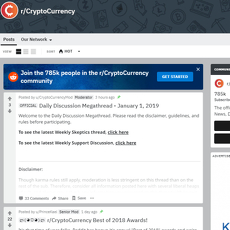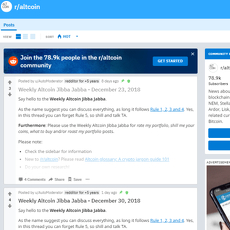
r/WallStreetBetsCrypto Review

r/WallStreetBetsCrypto
www.reddit.com
r/WallStreetBetsCrypto Review Guide: How This Wild Reddit Crypto Community Really Works (and Whether You Should Join)
Have you ever stared at a crypto chart, scrolled through Twitter and Reddit, and thought: “Why does everyone either sound like a Wall Street analyst… or a complete lunatic?”
Somewhere in between those two worlds sits r/WallStreetBetsCrypto — a Reddit community that tries to mix the chaotic energy of WallStreetBets with the 24/7 circus of crypto.
But here’s the real question: is it actually useful, or is it just memes, shills, and people gambling their rent money on cartoon coins?
In this guide, I’m going to break it all down in plain language. No corporate jargon, no fake guru energy. Just a clear, honest look at what this subreddit really is, how people use it, and how you can walk in without getting wrecked five minutes later.
Why People End Up on r/WallStreetBetsCrypto (and What Usually Goes Wrong)
Most people don’t just “wander” onto r/WallStreetBetsCrypto. They usually arrive after something specific happens:
- They watched a coin 50x and missed it.
- They’re bored of slow blue-chip coins and want action.
- They heard friends bragging about “WSB-style plays but in crypto.”
- They saw some viral screenshot where someone turned a tiny amount into a Lambo-looking portfolio.
So they search Reddit, find r/WallStreetBetsCrypto, and think:
“Finally… somewhere people stop pretending to be financial advisors and actually say what they think.”
That’s the dream. The reality is messier.
The Overload Problem: Too Much Info, No Clear Signal
If you’ve ever tried to research a coin and ended up with 30 tabs open, you already know the feeling. Crypto throws charts, whitepapers, tokenomics, influencers, and Discord shills at you all at once. It’s exhausting.
So a community like r/WallStreetBetsCrypto looks attractive because it feels raw and unfiltered. People say what they actually think. They’re not carefully protecting their “brand” or compliance team.
But that leads to a big issue:
- The loudest voices get the most attention, not the smartest ones.
Memes and outrageous claims are easier and more fun to upvote than a boring, detailed breakdown. That means you’re often seeing hype, not insight.
There’s actually a name for this in behavioral research: salience bias. We latch onto what’s loud, colorful, and emotional. On a subreddit like this, that usually means:
- “I just turned $200 into $40K in 2 days.”
- “If you miss this coin you will hate yourself forever.”
- “Only idiots aren’t buying this right now.”
Meanwhile, the posts that quietly say “here are the risks” or “this might be overvalued” often get buried.
Chasing Big Gains… Straight Into Pump-and-Dump Territory
Let’s be honest: not everyone joins r/WallStreetBetsCrypto to talk macro trends and regulatory policy. Most people are there for one thing:
Fast money.
This is where the subreddit becomes dangerous if you don’t have your guard up. The entire structure of a hype-driven crypto community is perfect for short-lived pumps:
- A new coin appears with a catchy ticker and meme potential.
- Someone posts a “YOLO” story or a “guys this is the next 100x” thread.
- People pile in because it feels like everyone else is piling in.
- The early holders quietly take profit while the late buyers get stuck.
That pattern isn’t unique to this subreddit — it happens across Telegram, Twitter, and other crypto corners — but a place that celebrates “degen” behavior amplifies it.
There was a study published in the Journal of Behavioral and Experimental Finance that looked at social media-fueled trading. One of the key takeaways: traders influenced by online hype tend to hold losing positions longer and sell winners too early. That’s the classic “I’ll just wait for it to bounce back” mindset… multiplied by memes.
On r/WallStreetBetsCrypto, this often turns into a loop of:
- Buying because others are excited.
- Panicking when the chart drops.
- Posting a loss screenshot for karma.
- Jumping into the next hype coin to “make it back.”
If you’re not careful, you don’t just lose money — you start treating your portfolio like a casino ticket.
Legit Discussion vs Pure Gambling: Harder to Tell Than You Think
At first glance, r/WallStreetBetsCrypto looks like a mix of:
- Funny memes
- Wild profit screenshots
- Occasional long “DD” posts (due diligence)
- Quick questions like “Is X a good buy?”
Here’s the tricky part: the line between “research” and “rationalizing a gamble” is very thin.
For example, you might see a post titled something like:
“My DD on $MOONRUG: Why this gem is insanely undervalued (100x potential)”
You open it expecting proper analysis and instead you get:
- A few screenshots from the project’s website.
- Copy-pasted marketing blurbs about “revolutionizing DeFi”.
- Random price targets with no clear reasoning.
- Comments filled with “I’m all in” and “this is it boys.”
This isn’t due diligence. It’s a justification for a risky bet, dressed up to look smart.
On the other hand, sometimes you’ll see a short, boring comment like:
“Liquidity is thin, contract isn’t renounced, ownership not clear, and no audit. Don’t put in what you can’t lose.”
That’s actually more valuable than the flashy “DD,” but it gets way less attention.
So the challenge for anyone visiting the subreddit is this:
How do you tell who’s genuinely analyzing a project and who’s just cheering for their own bags?
That’s one of the main things I’ll help with in this full guide.
Fear of Scams, Rug Pulls, and Bad Advice
If you’re wondering, “Isn’t a place like this packed with scams?” — you’re not wrong to be suspicious.
Crypto already attracts its share of shady behavior. Toss in a community that celebrates extreme risk and you get a perfect hunting ground for:
- Rug pulls – tokens where the creators drain liquidity and vanish.
- Coordinated shill campaigns – groups pushing a coin across multiple accounts.
- Fake screenshots – edited PnL pics to make a coin look like a guaranteed win.
There have been multiple on-chain reports and incident databases (like Rekt or DefiLlama’s hack tracker) that show just how often new tokens end badly. A huge share of them never recover after launch week.
Now imagine those same tokens being promoted in a place that openly jokes about losing everything “for the memes.” You can see the risk.
Upvotes don’t mean safe. A funny post doesn’t mean honest. And just because someone sounds confident doesn’t mean they have a clue.
“Wait… How Is This Different From r/wallstreetbets?”
This is another common confusion. People see the name and assume it’s just the original WallStreetBets, but with more Bitcoin talk.
It’s not that simple.
Yes, the energy is similar: YOLO bets, self-deprecating humor, wild screenshots. But the crypto side has its own flavor and its own risks:
- Coins can trade 24/7, so the madness never really stops.
- There’s no centralized “closing bell” like stocks, so moves can be brutal at 3 a.m.
- Many projects are barely regulated, if at all.
- Rug pulls and contract exploits are a thing — not just price volatility.
If you treat r/WallStreetBetsCrypto as “just the same as WSB but with coins,” you’ll underestimate how fast things can go wrong.
Stocks can crater; tokens can go to true zero and never come back.
What This Guide Will Actually Help You Do
I’m not here to tell you “never visit this subreddit” or “only buy Bitcoin and hold forever.” That’s not realistic, and it’s not what you’re looking for anyway.
What I want is for you to be able to open r/WallStreetBetsCrypto and:
- Enjoy the memes and chaos without losing your shirt.
- Spot real conversation buried under the hype.
- Use the subreddit as a tool for discovery, not a list of instructions.
Here’s how I’m going to help you do that in the rest of this guide:
- Explain what r/WallStreetBetsCrypto actually is and how it connects to the original r/wallstreetbets, so you know what kind of people and posts you’re dealing with.
- Show you how to read posts, comments, and “DD” without getting fooled by memes, fake confidence, or coordinated shilling.
- Walk through the culture, rules, and post types so you recognize red flags instantly.
- Give you a simple, repeatable safety framework you can apply to any coin or thread you see there.
- Point you to other resources and communities so Reddit is just one part of your research, not the entire thing.
By the time you’re done with the full guide, you should be able to look at a top post on r/WallStreetBetsCrypto and mentally ask:
- “Who benefits if I believe this?”
- “What’s missing from this screenshot or story?”
- “Is this information… or just entertainment?”
And then act accordingly.
What You’re Going to Learn Next
To make everything easier to follow, I’m going to walk you through this community step by step in the coming sections. Here’s what’s coming up:
- A quick refresher on the original r/wallstreetbets – how it started, why it exploded during the GameStop saga, and what parts of that culture carried over to crypto.
- How r/WallStreetBetsCrypto is actually structured – flairs, rules, mods, post formats, and what those labels really mean (and don’t mean).
- The real pros and cons of using it for crypto ideas – not sugar-coated, and not fear-mongering either.
- Practical tips to spot shill posts vs genuine discussion – patterns, language, and behaviors to look out for.
- Simple ways to protect yourself – from position sizing and risk management to emotional guardrails so you don’t trade just because you’re having a bad day.
- FAQ-style answers to questions like “Is this subreddit legit?”, “Can you actually get rich from tips there?”, and “Is it safe for beginners?”
Think of this guide as a tour before you walk into the casino floor. You can still play, you can still have fun, but at least you’ll know where the exits are and what games are rigged against you.
So, if you’re curious how this crypto spin-off of WallStreetBets really works under the hood — who hangs out there, what they’re chasing, and how different it actually is from the original — let’s move on and take a closer look at what r/WallStreetBetsCrypto is and how it was born out of that wild WSB culture.
Ready to see what kind of crowd you’re walking into? Let’s break that down next.
What Is r/WallStreetBetsCrypto? (And How Is It Different From r/WallStreetBets?)
If you’ve ever scrolled through Reddit thinking, “Okay, where are the completely unfiltered crypto degenerates hanging out?” – you’re basically describing r/WallStreetBetsCrypto.
It’s a crypto-focused offshoot of the legendary stock and options subreddit r/WallStreetBets, but with a twist: instead of YOLOing weekly options on meme stocks, people here are throwing money at coins, tokens, DeFi plays, and the latest “next SHIB” lottery ticket.
Think of it as the same chaotic casino energy of the original WSB, just wired directly into the 24/7, no-closed-market world of crypto.
Before we talk about how to use this subreddit without wrecking your account, you need to understand what culture you’re stepping into.
Quick recap: What is r/WallStreetBets (the original)?
The mother ship, r/WallStreetBets, is where the whole “YOLO trading” meme really exploded. It’s a subreddit where people talk about:
- High-risk stock trades
- Short-dated options with insane leverage
- Huge wins and even more brutal losses
Forget calm portfolio theory. This is “I put my rent money into weekly calls because a stranger on the internet posted a funny meme.”
The culture is built on:
- Memes and screenshots: Robinhood balances going vertical or straight to zero
- YOLO trades: “All in” options plays that either 10x or evaporate
- Self-mockery: People calling themselves “degenerates” and “bagholders” to make the pain easier to laugh at
It went truly mainstream during the GameStop saga in early 2021. A swarm of retail traders on WSB piled into $GME, squeezed hedge funds, and suddenly CNBC, hedge fund managers, and regulators were all trying to “understand Reddit.”
Analysts later pointed out that this wasn’t random chaos. It was raw crowd psychology, amplified by social media. One study from the University of Queensland looked at the GME event and found that the collective behavior on WSB was heavily driven by social reinforcement – people kept buying because they saw others posting wins and moral narratives, not just numbers.
That same crowd energy is exactly what spilled over into crypto – and that’s where r/WallStreetBetsCrypto comes in.
How r/WallStreetBetsCrypto spun out of that culture
As crypto got hotter, the original WSB started getting flooded with coin posts: Dogecoin, SHIB, microcaps, futures plays – you name it. Some loved it, some hated it. Stocks-only folks didn’t want their feed clogged with “this new BSC token will 1000x” posts.
The natural solution: create a separate playground just for the crypto degenerates.
So r/WallStreetBetsCrypto was born as a crypto-only echo of that same energy. The tone is very familiar if you know WSB:
- Jokes and memes: Elon Musk memes, “we’re all gonna make it,” screenshots of liquidations, charts with rockets and skulls
- Over-the-top risk-taking: Leverage on leverage. Tiny market cap tokens. Pre-sales and launches on obscure chains
- Irreverent language: No “good afternoon, esteemed investors.” It’s more “I just got rekt on this garbage coin, learn from my stupidity”
But here’s where it differs from the original:
- The playground is crypto-only: Coins, tokens, memecoins, DeFi farms, NFTs, futures, options on crypto – that’s the core content.
- No market hours: Crypto trades 24/7, so the chaos never sleeps. You’ll see posts at 3am about a token that just did 20x and another that rugged in 10 minutes.
- More “project risk” vs “company risk”: With stocks, at least there’s a company, reports, and regulations in the background. With some of these tokens? The “team” can disappear into thin air.
On the original WSB, the wildness is built on financial leverage and volatility. On r/WallStreetBetsCrypto, that same wildness adds smart contract risk, rug pulls, thin liquidity, and sometimes totally anonymous teams.
That combination is thrilling for some people – and absolutely terrifying for others.
Who is r/WallStreetBetsCrypto really for?
Let’s be blunt: this is not a quiet subreddit for patient index-fund investors.
The people who tend to feel at home here usually fit into a few buckets:
- Risk-loving traders: If you enjoy volatility, have no problem watching a position swing +80% to -70% in a day, and understand this is closer to gambling than investing, you’ll recognize the energy.
- Meme enjoyers who still want “alpha”: Some users are here for the memes, but also for early mentions of new tokens, narratives (“AI coins,” “real world assets,” “new L2s”), and speculative themes.
- Curious lurkers: A lot of newer crypto users hang back and watch. They want to see how people talk, what gets hyped, and what kind of mistakes others make before risking their own money.
On the other side, there’s a group that will almost certainly hate it:
- Conservative, long-term investors: If your idea of a good decision is DCA into BTC and ETH for 10 years and go outside, this subreddit will feel like watching people juggle chainsaws.
And that might be the healthiest response, honestly. Not every community is designed for everyone. This place attracts people who are okay with, or at least flirting with, very aggressive risk. There’s a reason terms like “degen” (degenerate gambler) are proudly used.
“The market is a device for transferring money from the impatient to the patient.” – Warren Buffett
r/WallStreetBetsCrypto is basically where the impatient crowd hangs out on purpose. That doesn’t mean you can’t learn from them – it just means you need to know what you’re walking into.
First impressions when you open the subreddit
Open r/WallStreetBetsCrypto for the first time and you’ll probably see a mix of:
- Memes: People making fun of themselves for buying the top, or mocking centralized exchanges for going down during volatility.
- Coin calls: “X token is the next 100x,” “Load up before Binance listing,” or “This microcap is criminally undervalued.” Often with no real evidence beyond a chart and enthusiasm.
- Wins and losses: Screenshots of 10x gains next to horror stories like “I leveraged my account and got liquidated in 30 minutes.” These posts are a big part of the emotional rollercoaster.
- Complaints and venting: People raging about rugs, failed trades, exchange liquidations, or missing a big move by selling too early.
Within a few minutes you’ll know if the vibe matches your personality:
- If you feel energized and think “these are my people,” you’ll probably keep scrolling.
- If you feel your pulse go up and think “this is stressing me out,” your brain is telling you something important about your own risk tolerance.
Regardless of which camp you fall into, there’s one thing I’d strongly suggest:
Start as a lurker.
Don’t post, don’t buy anything based on what you see, and definitely don’t FOMO into a token you just heard about five minutes ago. Spend some time noticing patterns:
- Which kinds of posts get upvoted?
- How often do “this will 100x” posts actually age well?
- Do the most confident people look knowledgeable – or just loud?
- Are the big “win” screenshots balanced by equally honest “I blew up my account” posts?
There’s a strange thing that happens when you observe a community without participating: you start seeing it more clearly. The hype loses some of its magic, and you begin spotting where entertainment ends and real information begins.
And that leads to the next big question: once you’re inside r/WallStreetBetsCrypto, how do you actually read the posts, understand the culture, and avoid getting played by shills and low-effort noise?
That’s where things get interesting – and that’s exactly what we’re going to look at next.
How r/WallStreetBetsCrypto Works: Rules, Post Types, and Culture
If you open r/WallStreetBetsCrypto expecting a clean, well-organized research forum… you’re going to have a bad time.
This place runs on chaos: loose rules, wild screenshots, questionable “DD”, and a sense of humor that’ll roast you and your portfolio at the same time.
That doesn’t mean it’s useless. It just means you need to understand how the machine works before you let it influence a single trade.
Subreddit rules and moderation
First thing I always check on any crypto community: the rules. They tell you more about the *real* risk level than any meme or pinned post.
On r/WallStreetBetsCrypto, you’ll usually see some version of:
- No obvious scams or illegal content
- Basic Reddit TOS: no hate, no doxxing, no extreme NSFW
- Limits on spam and low-effort posts (at least on paper)
- Some restrictions on direct referral links or blatant promo
Sounds reasonable, right? But here’s the catch: this is a “rule-light” subreddit by design.
That kind of environment tends to attract two types of people:
- The fun crowd – meme-makers, trolls, bored traders, people sharing ridiculous wins and losses
- The predatory crowd – shills, stealth marketers, low-cap coin promoters looking for fresh exit liquidity
Moderation exists, but it’s not the crypto equivalent of airport security. It’s closer to a bouncer at a nightclub who mostly checks if you’re wearing shoes.
Mods will remove obvious scams or spam floods, but subtle shilling, cherry‑picked screenshots, and “I’m just sharing my opinion” style promotion usually stays up. That’s standard for these kinds of subs and it’s why relying on mods to protect you is a bad strategy.
“On Reddit, moderation usually stops the worst abuse – not the worst financial decisions.”
In other words: if a post is live, that doesn’t mean it’s safe. It just means it wasn’t blatantly against the rules.
Post types you’ll see every day
To stay sane on r/WallStreetBetsCrypto, you need to recognize post patterns instantly. After a while, you can scroll like Neo watching the Matrix – you don’t see posts, you see categories.
Here’s what fills your feed most of the time:
“What should I buy?” and “Is X a good buy?” posts
These are the crypto equivalent of someone walking into a casino and asking, “Which machine is hot?”
They usually look like:
- “Got $500. Which coin will 100x this month?”
- “Is it too late to get into [popular coin]?”
- “Serious only: I need one coin to retire on.”
The replies are a mix of memes, random tickers, and the occasional thoughtful answer buried somewhere in the middle. The problem is simple: everyone suggesting something is talking their own book. They own the coin already or they want liquidity.
Meme posts about coins, rug pulls, or exchanges
Memes are the lifeblood here. You’ll see:
- Spongebob, Wojak, or Drake memes about missing a pump
- Jokes about getting “rugged” by a new token
- Mockery of exchanges freezing in peak volatility
These posts look like jokes (and they are), but they often track real sentiment. When you see 20 memes in a day about one coin getting rugged, that’s information. Not trading advice, but a signal that something actually happened and you should go check the news or on-chain data.
“I just lost everything” or “I turned $100 into $10k” screenshots
This is the emotional engine of the subreddit: profit and loss porn.
You’ll see:
- PNL screenshots from exchanges, sometimes cropped to hide the full story
- Screens from wallets showing insane gains on meme coins
- Balance going from $20k to $800 with the caption: “I deserve this”
Here’s the psychological trap: multiple studies in behavioral finance show we remember dramatic wins and losses far more than “normal” outcomes. Social media amplifies that. People post their extremes, not their averages.
So you might see 5 posts in a row showing crazy wins on some coin and your brain whispers, “Everyone is printing money but me.” Wrong. You’re just seeing the highlight reel. The quiet majority who lost 40% and logged off aren’t posting about it.
“DD” (due diligence) style posts
In theory, DD posts are educational breakdowns: tokenomics, team, roadmap, use case. In practice, most “DD” on r/WallStreetBetsCrypto is opinion dressed as research.
Typical format:
- A bold title: “Why [coin] is INSANELY undervalued (read before it 100xs)”
- A wall of text mixing actual facts with speculative leaps
- Hand‑picked charts, often ignoring volume, liquidity, or unlock schedules
- Price targets based on vibes, not real modeling
That’s not always malicious; a lot of posters are just excited and biased. But you should treat every DD as a starting point, not a verdict. If a post doesn’t link to docs, code, team pages, or on‑chain data, it’s barely DD – it’s a sales pitch with extra paragraphs.
Low-effort shill posts for unknown coins and presales
These are everywhere. You’ll recognize them fast:
- Brand new accounts with almost no history
- Weirdly similar phrasing: “Not financial advice but you guys are sleeping on this gem”
- Over‑the‑top promises: “Next 1000x”, “Better than SHIB”, “Retire early token”
- Links to Telegram or obscure presale sites instead of major exchanges
Plenty of these are part of organized campaigns. A marketing team spams 20 subs, hoping a few get traction. It works often enough that they keep doing it.
Always ask yourself: “If this is such an amazing opportunity, why are they shilling it this hard to random strangers?”
Once you can instantly categorize what you see, you stop reacting emotionally and start treating the subreddit like a noisy sentiment feed.
Understanding flairs and tags (if used)
On most days, flairs are your best friend on r/WallStreetBetsCrypto – if people use them properly.
You’ll usually see flairs like:
- Discussion – general talk, questions, rants
- Meme – jokes, image posts, reaction content
- DD – claimed research or breakdowns of a coin/project
- News – announcements, exchange listings, regulatory stuff, hacks
Here’s how I personally use them:
- Filter to “Discussion” + “News” when I want signal over entertainment.
- Open “Meme” when I want to feel what the crowd is feeling – bullish, salty, depressed, euphoric.
- Click “DD” selectively and treat each post as a biased pitch that might still contain interesting links or data.
But this is important: a flair is self-selected. Anyone can slap “DD” on a post after glancing at CoinMarketCap for five minutes. Flair ≠ quality.
The more bullish the title and the more aggressive the price target, the more skeptical you should be – no matter what flair is used.
The humor, language, and inside jokes
If you’re new to this scene, the language might sound like another planet. But once you understand the slang, you start to see what’s actually being communicated underneath the jokes.
Common words and phrases you’ll see constantly:
- “Degen” – short for “degenerate”, someone who takes reckless, casino-level risks and is proud of it.
- “Bagholder” – someone stuck holding a coin that pumped and then dumped, now down 80%+ but still holding.
- “Rekt” – completely destroyed financially on a trade. “I got rekt on that leverage long.”
- “Moon” / “to the moon” – massive price explosion. “This is going to the moon, boys.”
- “Rug” / “rug pull” – when developers or whales drain liquidity or abandon the project, leaving holders with worthless tokens.
The culture is built on self‑deprecating humor. People brag about how badly they messed up. You’ll see posts like:
- “Sold the bottom, bought the top. I’m the liquidity.”
- “I turned $10k into $600 in 3 weeks. Ask me anything.”
- “I deserve my bags. I saw the red flags and bought anyway.”
On the surface, it’s comedy. Underneath, it’s a coping mechanism. They’re masking real pain with jokes.
The tricky part is that memes can carry both:
- Serious warnings – people memeing about rugs or a shady dev might be hinting at real issues.
- Serious shilling – “ironic” meme hype around a coin can still be part of real coordinated promotion.
So when you see a coin being memed constantly, you have to ask: “Is this genuine community fun, or is someone turning memes into marketing?” Sometimes it’s both.
How often real information shows up among the noise
Let’s be honest: the signal-to-noise ratio on r/WallStreetBetsCrypto is low… but not zero.
Useful info usually shows up in specific patterns:
- In comment threads, not top posts
The original post might be hype, but scroll down and you’ll often find a few people poking holes in the narrative:
- “Team is anonymous, contract not renounced.”
- “Dev wallet sold 20% yesterday, check the address.”
- “Tons of fake volume; look at the order book.”
- From skeptical or “boring” users
The most valuable accounts usually don’t shout. They write short, dry comments with data points:
- “FDV is insane for this revenue.”
- “Unlocks coming in two weeks. Expect sell pressure.”
- “This is a fork of [project] with no new features.”
They won’t get nearly as many upvotes as “WE’RE ALL GONNA MAKE IT”. But long-term, those boring comments age better than 90% of the hype.
- Right when something breaks
When an exchange halts withdrawals, a big project gets hacked, or a major rug happens, this sub lights up fast. While you should always confirm with proper news or on-chain tools, you can often catch early whispers here.
One thing to keep in mind: social platforms are wired to reward engagement, not accuracy. A study of social news sharing found that emotionally charged headlines spread faster than neutral ones. That’s exactly what you see here – the loudest, craziest posts rise to the top, even if the best information is sitting in a quiet comment with 12 upvotes.
So if you want any shot at catching the “real stuff” in this chaos, you have to train yourself to:
- Read comments, not just titles
- Look for numbers, links, and sources – not just adjectives
- Assume confidence ≠ competence; the most certain people are often the least informed
Once you start seeing how the rules, post types, flairs, and memes fit together, the subreddit becomes less of a casino and more of a loud, messy dashboard of retail sentiment. The real question is: can this chaos actually help you find good trades, or is it just a fast track to becoming another bagholder with a funny story?
That’s exactly what I’m going to break down next: when r/WallStreetBetsCrypto gives you an edge… and when it quietly sets you up to get rekt. Ready for that?
Pros and Cons of Using r/WallStreetBetsCrypto for Crypto Trading Ideas
If you hang around r/WallStreetBetsCrypto long enough, you’ll see two types of people:
- The ones screaming “This place made me rich!”
- And the ones quietly deleting their posts after getting wrecked
The truth sits somewhere in between. The subreddit can be useful, but only if you understand exactly what it’s good at—and where it absolutely falls apart.
Let’s be brutally honest about both sides.
The upside: Why people love this subreddit
There are reasons so many traders keep coming back to r/WallStreetBetsCrypto, even after getting burned. Some of them are actually smart reasons.
1. Real-time sentiment firehose
On this subreddit, you don’t get polished analyst reports. You get raw emotion.
People are:
- Raging about a rug pull seconds after it happens
- Flexing a 20x pump while the candles are still green
- Piling into comment threads on any coin that starts trending
This “sentiment feed” is powerful. Academic work on social media sentiment and markets backs this up. For example, several studies have shown that spikes in Reddit or Twitter activity can correlate with short-term price moves, especially in thinly traded assets.
That doesn’t mean sentiment causes price action on its own, but it does mean:
- If everyone in the sub is suddenly screaming about a tiny meme coin, something is happening
- If you see the mood flipping from euphoria to panic in hours, that’s a warning about volatility
I don’t use those emotions as trading signals. I use them as alerts. The subreddit tells you where people are emotionally positioned, and in crypto, emotion matters a lot.
2. Early mentions of weird new coins and micro-trends
One of the best things about r/WallStreetBetsCrypto is that it often talks about stuff before it hits the more “serious” crypto places.
You’ll see early chatter around things like:
- Freshly launched meme tokens on Solana or BSC
- Obscure DeFi farms promising absurd APRs
- AI coins, dog coins, political coins, you name it
A real-world pattern I’ve seen more than once:
- A random ticker shows up on r/WallStreetBetsCrypto multiple times in a day
- Later that week, it pops up on mid-sized Telegram groups or X (Twitter)
- A few days after that, it finally appears in larger crypto subreddits or minor news outlets
If you treat these posts as “early warning” for attention flows—not “free money” signals—you can use the subreddit as a discovery tool.
3. Entertainment that actually teaches you something
This is underrated. The memes and loss screenshots aren’t just comedy; they’re free tuition. I’ve seen posts like:
- “Turned 3K into 250K, refused to sell, now back to 900. Learn from me.”
- “Leveraged long on an illiquid micro-cap, exchange went down, position liquidated, I am the clown.”
You don’t forget those stories. It’s one thing to read a risk management book saying “don’t overleverage”, it’s another to see someone’s account balance go from six figures to two digits overnight.
“We learn from history that we do not learn from history.” – Georg Hegel
On this subreddit, that quote feels painfully accurate. But if you consciously treat other people’s disasters as case studies instead of entertainment only, you’ll absorb lessons most people only learn the hard way.
4. That weird comfort of not being alone
Big losses feel humiliating—until you see an entire subreddit full of people posting worse ones, laughing at themselves, and moving on.
Scrolling through:
- “Lost my whole paycheck on leverage, here’s the carnage”
- “My friends think I’m rich, they haven’t seen this portfolio chart”
it hits you: okay, I’m not the only one who has made dumb choices.
That shared pain can be healthy, as long as it doesn’t normalize recklessness. It reminds you that this game is hard, and even people who sound confident are often just guessing in a louder voice.
The downside: Huge risks and common traps
If the upside is about energy and discovery, the downside is about distortion and self-deception. This is where r/WallStreetBetsCrypto can quietly wreck you.
1. Hype cycles that die in 24 hours
Many coins that get attention on this subreddit have a life cycle that looks like this:
- Anonymous account posts: “This low-cap gem is going 100x, don’t say I didn’t warn you”
- Others jump in, shilling the same thing, sharing quick gains
- Price spikes fast, new buyers pile in
- Original whales sell into the hype, liquidity dries up
- Subreddit moves on to the next coin, late buyers hold the bag in silence
By the time most people see a coin at the top of the subreddit, it may already be late. That’s the ugly side of social trading: timing is everything, and social platforms are slow compared to insiders and bots.
2. Groupthink everywhere
Reddit’s upvote system rewards what feels good, not what’s true.
On a coin thread, you’ll often see:
- Reasonable skepticism getting ignored or downvoted
- Bold, confident predictions getting pushed to the top
- Anyone saying “this seems risky” being labeled a “hater” or “FUD”
That’s classic groupthink. People are subconsciously voting for posts that confirm what they want to believe: “I didn’t just gamble – I’m a genius early investor.”
Psychology studies have shown this confirmation bias over and over: once people are emotionally invested in something, they pay more attention to information that validates their choice, and ignore what challenges it. On r/WallStreetBetsCrypto, you can see this in real time under almost any trending coin.
3. Survivorship bias: only winners get the spotlight
The subreddit is full of “I turned $500 into $50,000” screenshots. You rarely see “I turned $50,000 into $500” with the same enthusiasm.
This is survivorship bias: you only hear the stories of those who “survived” long enough to post big wins.
If 1,000 people ape into a risky coin:
- Maybe 20 of them exit at the right time and profit
- Those 20 might post their wins
- The other 980 either stay quiet or post once, then disappear
So your brain gets spammed with one type of story: “See, it worked!” You don’t see the hundreds of accounts that blew up, logged out, and never came back to celebrate their 90% drawdowns.
If you’re not careful, you start thinking those screenshots are typical outcomes instead of rare exceptions.
4. A brutally short-term mindset
Most content on r/WallStreetBetsCrypto is about:
- “What’s going to pump today?”
- “Which coin is the next 100x?”
- “Who bought this token an hour ago and is up 200%?”
Almost nobody is talking about:
- Adoption metrics
- Protocol revenue or real users
- Regulation risk, developer activity, long-term competitiveness
It’s “casino mode” by default. That’s not wrong if you know you’re playing a short-term game. The danger is when people convince themselves they’re “investing” while actually just chasing quick pumps and screenshots.
Crypto is wild enough already. Add a pure short-term mindset, and you end up holding projects you never understood, just because you got caught up in an emotional wave.
How shilling and hidden agendas show up
Not every post is organic excitement. Some are just straight-up marketing in disguise. The trick is learning to spot patterns.
1. New accounts obsessed with one coin
A classic red flag:
- Brand new Reddit account
- Almost all posts are about one unknown coin
- They always sound slightly too scripted or enthusiastic
They’ll say things like:
- “Not financial advice, but this coin is criminally undervalued, devs are KYC’d, audits done, 100x minimum.”
- “I’ve never been this confident about a project, the community is insane, this will be bigger than SHIB.”
Sometimes they reply to themselves with other new accounts backing up their claims. That’s not organic hype; that’s a campaign.
2. Over-the-top promises and emotional hooks
When you see phrasing like:
- “Guaranteed 10x before end of week”
- “Last chance to get in before Coinbase listing!” (with zero proof)
- “If you miss this you’ll regret it for life”
that’s not analysis, that’s manipulation. It’s designed to hit your fear of missing out, not your logic.
Legitimate discussion sounds more like:
- “Here’s the market cap, here’s the liquidity, here are the risks”
- “Short-term hype looks strong, but token distribution is a concern”
- “I’m in small, treating this like a gamble, not an investment”
If someone never talks about risk, they’re not sharing; they’re selling.
3. Coordinated comments and fake “I just found this” posts
Watch what happens under certain shill posts:
- Several accounts show up very fast, all saying variations of “Just bought, this is going to the moon”
- Someone posts a “totally random” question: “Anyone else looking at [coin]?” and instantly gets multiple glowing replies
- The language feels similar: same phrasing, same buzzwords, same bullet points
That’s likely astroturfing—an organized attempt to make a project look like it has real grassroots hype when it doesn’t.
It’s not always obvious, and yes, even normal-looking accounts with long histories can be involved if they’re paid or bribed with tokens. That’s the uncomfortable reality: you often can’t know who has a financial incentive to push a narrative.
When this subreddit can actually be useful
So with all the noise, why even bother? Because used correctly, r/WallStreetBetsCrypto can still be a useful tool. Not a trading oracle—but a tool.
1. A starting point, not the final answer
Think of the subreddit as a watchlist generator.
When a coin pops up repeatedly, I don’t think “I need to buy this.” I think:
- “Okay, this ticker is clearly getting attention, let me write it down.”
- Then I go off Reddit: check its site, whitepaper (if any), tokenomics, liquidity, volume, contracts, and social channels.
The subreddit gives me topics, not conclusions. If you flip that and let posts decide your trades directly, you’re delegating your money to strangers who might be lying to you.
2. A window into retail trader psychology
Sometimes I already hold a coin that suddenly becomes popular on r/WallStreetBetsCrypto. That’s useful information.
If I see:
- Tons of euphoric posts with no risk mentioned
- “This can only go up” comments getting hundreds of upvotes
that can be a warning sign the trade is getting crowded with late-stage optimism.
On the other hand, if I see:
- People capitulating, calling a project “dead forever” after a big dump
- Genuine-looking posts about losing faith and walking away
that tells me sentiment might be overly bearish in the short term. It doesn’t guarantee a reversal, but it helps me understand where the crowd’s head is at.
3. Catching news before headlines
Reddit often reacts to:
- Exchange listing rumors
- Hack reports or security issues
- Regulatory scares or screenshots of leaked announcements
way before polished news outlets do. The key is to verify everything, but the speed of raw information can still help.
I’ve seen situations where:
- A user posts a screenshot of a project wallet being drained
- Links to the on-chain transaction appear in the comments
- Reddit is screaming “Rug!” while the project’s official channels are still silent
If you’re involved in that token, even unconfirmed alerts like that are worth checking immediately.
4. Emotional support (with a big asterisk)
There’s something strangely healthy about seeing other people admit they blew it, especially when they turn their mistakes into lessons.
Posts like:
- “Here’s how I overtraded, here’s what I’m changing”
- “I chased green candles for months, now I’m writing a plan”
can remind you that one bad trade—or ten bad trades—don’t end your story. If you use the community to process frustration and learn, it can help you avoid shutting down completely or revenge trading out of anger.
Just be careful not to absorb the worst habits as “normal.” Laughing at losses is fine; repeating the same behavior that caused them is not.
So now you know the strengths and landmines of using r/WallStreetBetsCrypto for trading ideas. The real question is: how do you actually walk into this chaotic casino without torching your portfolio?
In the next part, I’ll show you practical rules for using the subreddit as a tool—how to filter posts, cross-check ideas, and manage risk so you don’t end up as the next “I lost everything” screenshot. Want to see how to turn all this chaos into something you can control?
How To Use r/WallStreetBetsCrypto Safely (Without Nuking Your Portfolio)
If you’re going to walk into a digital casino, at least keep your wallet in the front pocket.
r/WallStreetBetsCrypto can absolutely help you spot hot narratives and wild plays… but it can also tempt you into buying the top of a meme coin that’s already up 400% on the day.
Here’s how I treat that subreddit: not as a trading signal, but as a loud notification feed. It shows me what the herd is screaming about. What I do with that information is my responsibility.
Golden rule: Entertainment first, research second
If you remember only one thing from this entire section, let it be this:
“Assume every post is biased until you prove to yourself that it isn’t.”
Reddit is not a neutral place. On r/WallStreetBetsCrypto especially, you’re dealing with:
- People who are deep in bags and need you to buy so they can exit
- Marketers pushing coins they’re paid to shill
- Real traders… mixed in with gamblers and trolls
So when you see a top post screaming “THIS WILL 100x – LAST CHANCE,” here’s how to keep your brain switched on:
- Treat every post as a lead, not a green light.
Use it as something to look into, not something to act on immediately.
- Use the sub for discovery, not decision-making.
Find new tickers, narratives (like “AI coins”, “Restaking”, “RWA”), or platforms being discussed. That’s it. The heavy decisions come later.
- Never buy just because a post is mooning in upvotes.
Upvotes measure entertainment and emotion, not risk-adjusted return.
A common pattern I’ve seen:
- Coin appears in a few “low-effort” posts → early, risky, sometimes actually early alpha
- Coin gets a meme template, a few joke posts → sentiment is building
- Coin hits the front page with screenshots of huge gains → you’re probably late
By the time you’re seeing big green numbers and brag posts, many early buyers are already hovering over the sell button. That’s the trap. Entertainment is free. FOMO is incredibly expensive.
How to cross-check ideas from the subreddit
Let’s say you see a post about some random token like “MOONAPES” (making this up, but you’ve seen this movie before):
- Meme logo, crazy promises
- Chart screenshot that looks like a straight line up
- Comments saying “Just bought more” and “Don’t miss this”
Instead of smashing the buy button, here’s the process I use to filter signal from pure fantasy.
1. Check the project’s own house:
- Website: Does it look like it took more than 30 minutes to make? Are there clear docs, or just vague buzzwords?
- Team: Do they show real names, LinkedIn profiles, past projects? Or just cartoon avatars with no trace?
- Tokenomics: How is the supply split? If the team or insiders own a massive chunk, you’re holding the exit liquidity bag.
- Roadmap & docs: Is there an actual product or tech, or is it just “we will become the next SHIB”? Promises are free.
2. Look at neutral data:
- Market cap: Is this a $3M microcap or a $3B monster? A 100x from $3B isn’t realistic.
- Volume & liquidity: Can you get out if everyone decides to sell at once? Tiny liquidity is how you get trapped.
- Listings: Is it only on one obscure DEX, or are there solid CEX/DEX listings? A single DEX listing means huge slippage risk.
- Holders: Are there a few wallets dominating supply? Wallet distribution tells you who can crush the chart with one click.
There’s actual data to back this up: on-chain analytics firms like Chainalysis and Nansen have repeatedly shown how concentrated ownership and low liquidity are common fingerprints in rug pulls and coordinated pump-and-dumps. Those patterns are visible if you care enough to look.
3. Actively search for red flags:
- Google “[coin name] scam”, “[coin name] rug pull”, “[coin name] exploit”
- Look up the contract address and plug it into a token scanner that checks for common issues like:
- Minting functions (can they print infinite tokens?)
- Trading restrictions (can you even sell?)
- Owner privileges (can devs pause trading or drain liquidity?)
If you find even one serious red flag, the trade stops being “degen fun” and becomes “volunteering to be robbed.” There’s a difference.
4. See what other communities and tools say:
- Check more serious subs or forums to see if anyone is analyzing the project beyond memes.
- Look at basic analytics: number of active users, protocol revenue (if any), code audits, GitHub activity.
- If you can’t find anything outside the echo chamber of Reddit and Twitter shills, that’s information too.
When something is real, you usually find at least a few sober voices talking about it. When it’s pure vapor, the conversation lives and dies in hype zones.
Basic risk management when following “degen” ideas
Even if you do all the checks above, high-risk plays are still high-risk. You can do everything “right” and still lose money. That’s the game.
So instead of pretending you’ll avoid every bad trade, plan for them.
Only use money you can truly burn
I’m not talking about the cliché “only invest what you can afford to lose” in a vague way. I mean literally think:
- “If this went to zero tomorrow, would my life actually change?”
- “Rent, food, bills, emergency fund – untouched?”
- “Would I be angry… or embarrassed I broke my own rules?”
If losing that money stresses you out in advance, it’s too big for a Reddit-sourced degen play.
Treat these trades like lottery tickets, not your retirement plan
A simple rule of thumb I’ve seen work for people:
- Core, long-term portfolio: 80–90%
- Higher risk, but still researched plays: 5–15%
- Full degen “I found this on r/WallStreetBetsCrypto” bucket: 1–5% max
Inside that degen bucket, consider splitting across several ideas, not just one “all-in” bet. Studies from behavioral finance keep showing the same thing: people systematically underestimate downside and overestimate their own skill. A tiny, capped “degen budget” protects you from your worst impulses.
Decide your plan before you buy
Before you enter any trade you found on that subreddit:
- Set a target: “If this reaches 2x, I’ll take profit on at least half.”
- Set a max loss: “If this dumps 40–50% from my entry, I’m out, no “maybe it comes back” excuses.”
- Set a time limit: “If nothing interesting happens in 2–4 weeks, I’ll close it and move on.”
Gamblers decide in the moment. Traders decide in advance.
Accept you might be late by the time you see it on Reddit
This hurts, but it’s true: by the time something has enough attention to hit the front page of a hype-heavy subreddit, the early, asymmetric upside is often gone.
Instead of trying to squeeze the last 20% out of a parabolic chart, consider:
- Skipping late-stage pumps entirely, no matter how loud the crowd is
- Watching how the coin behaves after a crash – does it die, or does real demand show up at lower prices?
- Using what you learn to spot similar patterns earlier next time
The goal isn’t to FOMO into every rocket ship. It’s to become the person who sees the rockets before they even hit the launchpad.
Emotional safety: Handling FOMO and regret
Let’s be honest: most people don’t blow up their accounts because of lack of charts or tools. They blow up because of panic, greed, and comparison.
r/WallStreetBetsCrypto is engineered to trigger all of that. Huge wins. Screenshots. “I turned $500 into $80,000 in 3 days.” You see that enough times, and your brain whispers, “Why not you?”
Notice when FOMO is driving the bus
Some signs you’re about to do something dumb:
- You’re thinking “If I don’t buy now I’ll miss it forever.”
- You double your planned position size at the last second.
- You feel physically restless reading the thread – almost anxious.
When I catch that feeling, I have a rule: I don’t trade for at least 30 minutes. No exceptions. If it’s still a good idea after the emotions cool down, it can wait half an hour.
There was a study out of MIT and some smaller behavioral labs that basically showed: fast decisions + high emotional arousal = significantly worse outcomes in trading-like simulations. You already know this; you’ve probably felt it in your own history.
Remember: screenshots are the highlight reel
People rarely post, “Held 14 trash coins for 9 months and broke even after fees.” But that’s closer to the average experience.
- You see the guy who hit 50x on one meme coin.
- You don’t see his 18 other bags that went to near-zero.
- You see the timing that worked, not the dozens of times it didn’t.
Think about social media in general: you see vacations, not arguments. Crypto screenshots are the same. It’s curated fantasy unless you see the full portfolio and full history (you never do).
Keep a simple trading journal
This sounds boring, which is exactly why it works.
For each trade you take based on something you first saw on r/WallStreetBetsCrypto, write down:
- What you bought and when
- Why you bought (what did you actually believe?)
- Your plan (target, stop, time limit)
- How you felt (FOMO, fear, excitement, boredom)
Then, when you exit, note:
- How it ended (profit/loss %)
- Whether you stuck to your plan or ignored it
- What you’d do differently next time
Over just 10–20 trades, patterns jump out. Maybe you see that every time you chase a coin already up 200%, you lose. Or that your best trades came when you weren’t emotional at all. That’s not theory – that’s your personal data.
Take breaks when it starts to feel addictive
If you catch yourself refreshing the subreddit like it’s a slot machine:
- You check it multiple times per hour “just in case something pumps.”
- Your mood depends on what the top posts look like.
- You feel empty or anxious when you’re away from the feed.
That’s not trading anymore, that’s pure dopamine chasing.
There’s zero shame in stepping away for a few days or weeks. Hype cycles will still be there when you come back. The market never runs out of coins to speculate on. But your mental energy and focus are limited. Protect them.
If you can treat r/WallStreetBetsCrypto as a wild, emotional sentiment feed — entertainment first, potential research second — then it becomes a tool instead of a trap.
But this raises a bigger question: if you’re not supposed to trust the subreddit blindly, where should you look for more grounded info, better tools, and a calmer view of the same coins everyone’s screaming about?
That’s where things get interesting. In the next part, I’ll walk through the other communities, tools, and resources I use to balance the chaos of r/WallStreetBetsCrypto with actual signal. Want to see how to turn that noise into a real edge instead of just stress?
Alternatives, Complements, and Useful Resources Around r/WallStreetBetsCrypto
Any time I see people building their entire trading mindset around r/WallStreetBetsCrypto, I get nervous.
The subreddit is great for raw sentiment and chaos, but if that’s your only input, you’re basically trading inside a casino with no clocks and no windows. What you really want is a setup where Reddit is just one piece of a bigger system: some calmer communities, some hard data, and a couple of tools that don’t care about memes or hype.
Let me show you how I balance it out.
Other Communities to Check for Sentiment (Without the Full Chaos)
Think of r/WallStreetBetsCrypto as the loud friend at the party. Fun, yes. Balanced, no. So I like to “triangulate” sentiment by looking at a few different places before I treat any idea as serious.
Here’s where I go and why.
r/CryptoCurrency – the structured big brother
This is the biggest general crypto subreddit. It has stricter rules, more mods, and a lot less tolerance for pure gambling posts.
When a coin is pumping hard on r/WallStreetBetsCrypto, I’ll check r/CryptoCurrency to see what the more serious crowd is saying. If all I see over there are scam warnings and red flags, that alone has saved me from a few nasty rugs.
On the other hand, if you see:
- Thoughtful threads about the project’s tech or roadmap
- Discussions about the team, funding, or real-world use cases
- People arguing over pros and cons instead of just “to the moon” spam
…that’s usually a sign the project might deserve at least a deeper look.
r/Bitcoin, r/Ethereum, and other coin-specific subs – the “zoomed-in” view
If the discussion is about BTC, ETH, or another major coin, I like to see what the hardcore community is saying inside their own subreddits. For example:
- r/Bitcoin is mostly focused on macro narratives, sound money, regulation, and long-term views.
- r/Ethereum digs into upgrades, developers, and the ecosystem around DeFi, NFTs, and L2s.
These places are less about “What 100x coin should I buy today?” and more about what really moves the big assets. If WSB-style traders are panic-selling, but the core communities are relaxed, that tells me the drama might be short-term noise.
Discord and Telegram communities – direct line to the project (with a big asterisk)
Almost every crypto project has an official Discord or Telegram. Joining those can give you:
- Announcements from the team before they hit mainstream
- Clarity on what’s actually shipping and what’s just marketing
- A feel for how active, smart, or clueless the core community is
But you have to be extremely skeptical there. These spaces are marketing-heavy by nature. Mods often delete negative messages. Bots pump fake engagement. You’ll see a lot of “we’re early” and “ignore the FUD” even when the chart is a disaster.
I treat official chats like listening to a company’s earnings call: useful, but obviously biased.
Twitter/X – curated voices instead of anonymous crowds
On Twitter/X, I prefer to follow specific traders, analysts, and builders rather than the random trending feed. A few types of accounts I like:
- On-chain analysts who show wallet flows, smart money moves, and liquidity shifts
- Devs or founders who are building in the open and sharing progress transparently
- Traders who post both wins and losses, not just cherry-picked screenshots
There’s research suggesting that social media sentiment can sometimes lead short-term crypto price moves, but it also shows how fast that edge disappears once everyone piles in. So I don’t blindly copy anyone; I use them as data points, not gurus.
When you compare the tone across these places, you start to notice patterns. If only the most unhinged communities are excited about a coin, that’s usually a warning, not a green light.
Tools and Resources to Fact-Check What You See on Reddit
Reddit is emotion. You still need numbers.
Here’s how I pressure-test anything I see hyped on r/WallStreetBetsCrypto.
Market data and price trackers – the basics you should never skip
Before I even think about buying some random token I saw in a meme, I’ll check:
- Market cap – Is it a tiny micro-cap that can get wiped out by one whale?
- Liquidity – Is there enough volume to get in and out without insane slippage?
- Listings – Is it only on one sketchy DEX or also on reputable exchanges?
- Chart structure – Is this thing already up 1,000% in a week?
Multiple academic papers have shown that low-liquidity “lottery-style” coins attract gamblers and tend to underperform over time, despite a few legendary winners. You don’t need to read the research to feel that pain; you just need to get stuck holding one with zero buyers.
On-chain and contract safety tools – for when you’re touching new or degen tokens
This is absolutely non‑negotiable with new coins and memecoins. I always want to know:
- Is the contract verified and publicly viewable?
- Is trading somehow restricted (like only certain wallets can sell)?
- Is there a massive dev or marketing wallet that can dump on everyone?
- Are there obvious backdoors like mint functions or hidden fees?
Rug pulls are so common that multiple security firms have published studies showing thousands of scam tokens launched every year across chains like Ethereum and BSC. Most of them never get big enough to trend on Reddit, but some absolutely do.
That’s why any time I see “this is the next 100x” on r/WallStreetBetsCrypto, my first move isn’t to open an exchange. It’s to open a scanner and see if the token is even sellable.
News and fundamentals – the boring stuff that actually moves big money
For larger coins and serious projects, I want to know things like:
- What’s changed recently? Partnerships, product launches, chain upgrades?
- Is there any regulatory news that could hit hard in the short term?
- What’s the token actually used for beyond speculation?
There’s a pretty consistent pattern in crypto: retail traders often react to headlines they saw on social media, while big players move on the underlying fundamentals (liquidity, protocols going live, institutional adoption, etc.). If you only live in meme land, you’ll always be late to that second part.
Portfolio and tracking tools – so your decisions don’t turn into a blur
Another underrated way to protect yourself from Reddit-fueled chaos is simply to track what you’re doing. I use portfolio tools to monitor:
- How much of my stack is in “degen Reddit ideas” versus safer plays
- How those risky bets perform over weeks and months, not just one green day
- Whether I’m actually following my own rules or just getting swept up
When you see, in cold numbers, that two or three impulse buys wiped out months of careful gains, you start to treat hype posts very differently.
How I Personally Combine Reddit With These Other Resources
Let me walk you through how I actually use r/WallStreetBetsCrypto in my own process, because this is where a lot of people either get wrecked or start to level up.
Step 1: Reddit for sentiment and discovery
I treat the subreddit like a loud scanner:
- What coins are people suddenly screaming about?
- Are there a lot of “I’m ruined” posts about a specific exchange or token?
- Are memes clustering around one narrative – like AI coins, gaming, or some new chain?
I’m not looking for “buy signals.” I’m looking for themes, mood, and potential tickers to research.
Step 2: Check if the idea even passes a basic sanity filter
Before I sink any time into deeper research, I’ll do a fast filter:
- Is it obvious scam copy like “1000x guaranteed” or “dev is Elon’s cousin”?
- Is it only being talked about by brand new accounts with no history?
- Is the chart already parabolic and the liquidity paper-thin?
If the answer to any of those is “yes,” I treat it as entertainment only and move on. The best money you ever make is the money you don’t lose to scams and exit liquidity games.
Step 3: Cross-check in other communities
If something still looks interesting, I jump to:
- r/CryptoCurrency and any relevant coin-specific sub
- The project’s official Discord/Telegram, just to see activity (but with my guard up)
- Twitter/X mentions to see what non-anonymous voices are saying
Here’s the key: I want disagreement. If every place is pure hype, that scares me. When I see thoughtful critics alongside believers, that tells me the idea is at least serious enough for smart people to argue about.
Step 4: Use tools to check the numbers and risk profile
This is where the emotion stops and the math starts:
- Market cap, liquidity, and exchange listings
- On-chain checks for contract risks and token distribution
- Any recent news, updates, or fundamental changes
Only after that will I decide whether this idea deserves a tiny “lottery ticket” allocation or just a spot on my watchlist.
Step 5: Never execute based on one platform alone
I never, ever place a trade because a single subreddit, tweet, or video “convinced” me. If I can’t explain to myself:
- Why I’m buying
- How much I’m willing to risk
- What would make me sell, both for profit and for loss
…then I’m not investing, I’m just reacting. And reacting is exactly what most people on r/WallStreetBetsCrypto are doing in real time.
Over time, this mix of Reddit for sentiment and external tools for verification has made a huge difference. I still catch wild ideas early sometimes, but I dodge far more landmines than I used to. It doesn’t make things risk‑free, but it makes them survivable.
Now, all of this still leaves one big question hanging in the air:
If r/WallStreetBetsCrypto is this chaotic, is it even “legit,” and can a normal person use it without blowing up?
That’s exactly what I’m going to tackle next — the straight answers, the uncomfortable truths, and who should probably stay far away. Ready for that?
r/WallStreetBetsCrypto FAQ and Final Thoughts
FAQ: Is r/WallStreetBetsCrypto legit? Can I get rich there? Is it safe?
Let’s clear this up right away: yes, r/WallStreetBetsCrypto is a real Reddit community. It’s not a scam website pretending to be Reddit or anything shady like that. It’s a subreddit, hosted on Reddit, run by mods, with real users posting real content.
But “legit” doesn’t mean “safe” or “smart” or “reliable.” It just means the community exists and works as intended: people post, comment, and vote.
The actual content? That’s a different story.
You’ll see:
- Wild speculation on micro-cap coins that can move 50–90% in a day
- YOLO screenshots showing people turning a few hundred dollars into five figures (and the reverse)
- Shill posts disguised as “I just found this gem” or “This will 100x, thank me later”
- Memes making fun of people who got rekt, including the person posting
So can you get rich there?
Technically, you can catch huge moves that get mentioned in places like r/WallStreetBetsCrypto. A classic example: early meme coins, low-cap narrative plays, or stuff that later gets attention on bigger platforms and centralized exchanges. Some users do show real screenshots of catching early pumps.
But there are three harsh truths you need to keep in mind:
- You mostly see winners, not losers. This is classic survivorship bias. People love posting “I turned $200 into $30k.” Very few will post “I turned $30k into $200.” Yet, in reality, those outcomes happen at roughly the same rate (or worse) in high-risk trading.
- By the time a coin is a top post, the early money is usually already in. Academic studies on social trading and crowd behavior show that retail traders often arrive late to trends. Social media tends to amplify trends that already happened, not forecast what will happen. You see the smoke after the fire has already started.
- Nobody is responsible for your loss except you. That sounds harsh, but it’s the truth. Reddit users are anonymous. They don’t owe you accuracy, honesty, or risk warnings. Inside their heads, many are thinking, “If you ape into this because of my meme, that’s on you.”
Is it safe?
In crypto, “safe” is never absolute. But here’s the realistic version:
- The subreddit itself is “as safe” as Reddit gets: you browse, you read, maybe you post.
- The advice you act on from there can be toxic if you don’t have a risk plan.
- Your level of safety is entirely tied to:
- How skeptical you are
- How small your positions are
- How good you are at saying “no” to obvious hype
If you treat r/WallStreetBetsCrypto as a casino floor: fine. If you treat it as a professional research terminal: you’re setting yourself up for pain.
Simple rule: the subreddit is legit as a community. It is not a legit financial advice source. That distinction will save you a lot of money.
FAQ: How is it different from r/wallstreetbets and r/CryptoCurrency?
There’s some overlap between all three, but they’re built for different types of people and different moods.
r/wallstreetbets (the original):
- Focus: Stocks and especially options (SPY calls, weekly YOLOs, that kind of thing)
- Vibe: “I just put my entire net worth into weekly options, here’s the screenshot”
- Culture: Memes, extreme risk, some legendary wins, many brutal losses
- Crypto: Shows up sometimes, but it’s not the main topic
r/WallStreetBetsCrypto:
- Focus: Crypto only – coins, tokens, NFTs, DeFi, exchanges, degenerate alt plays
- Vibe: Same YOLO + meme energy, but applied to tokens instead of stocks
- Content: Pump-and-dump candidates, meme coins, small-cap narratives, “this new launch is going to moon” stuff
- Risk Level: Very high. Most plays are speculative, short term, and often built around hype rather than fundamentals
r/CryptoCurrency:
- Focus: General crypto – Bitcoin, Ethereum, major altcoins, news, regulation, tech, and occasionally memes
- Vibe: More structured, more moderated, more educational
- Content: Long-term discussions, debates on tokenomics, security, adoption, project fundamentals
- Risk Level: Still crypto, still risky, but the mindset is usually less “YOLO this micro-cap” and more “Is this project legit?”
Here’s how I usually think about which place fits what you want:
- You want chaos, adrenaline, and entertainment? r/wallstreetbets or r/WallStreetBetsCrypto.
- You want to learn how crypto works and follow major narratives? r/CryptoCurrency.
- You want to gamble on tiny coins and laugh at your own pain when it goes wrong? r/WallStreetBetsCrypto.
One isn’t “better” than the other; they just serve different roles. A lot of people actually use both types of communities: one for serious research, one for the circus.
FAQ: Should beginners even be on r/WallStreetBetsCrypto?
Short answer: yes, but not as traders. As observers.
If you’re brand new to crypto and your first stop is r/WallStreetBetsCrypto, here’s what usually happens:
- You see a post claiming “This coin will 100x.”
- You see a screenshot of someone making $20k on some random token.
- You think, “If I just put $500 in, maybe I’ll catch one of these.”
- You skip the basics (wallet safety, market structure, how tokens actually work) because you’re focused on catching “the big one.”
This is how a lot of new users get wrecked. The problem is that you’re playing a game where everyone else already knows the tricks:
- Some posters are early insiders or part of marketing pushes.
- Some are experienced traders using Reddit sentiment as exit liquidity.
- Some genuinely think they’ve found the next gem but are just guessing.
If you’re a beginner, I’d treat r/WallStreetBetsCrypto like this:
- Lurk only. Read, watch, learn the slang and patterns.
- Don’t trade directly from what you see there. Not yet.
- Spend most of your actual learning time elsewhere:
- How wallets and private keys work
- How to spot obvious scams (no liquidity, anonymous devs, no audit, copied contracts)
- The difference between spot trading, margin, and perpetuals
- Basic risk management: not putting all your funds in one token or trade
There’s some research showing that inexperienced traders in highly speculative environments tend to overestimate their skill and underestimate risk. Social proof (likes, upvotes, comments) amplifies this. A top-voted post feels more “true,” even if it’s just more entertaining.
If you’re just starting out, that’s a dangerous combo: low experience + high confidence + high leverage (or high-risk micro caps) is exactly how people blow up accounts fast.
If you’re new: use r/WallStreetBetsCrypto as a warning label and a learning lab. Watch what others do. Don’t rush to copy them.
Final thoughts: How to make this subreddit work for you, not against you
Here’s the way I personally look at r/WallStreetBetsCrypto, and how I’d recommend you approach it if you want to keep your sanity (and your capital).
1. Treat it like a sentiment machine, not a crystal ball.
r/WallStreetBetsCrypto is fantastic for seeing what the loudest part of retail is excited or angry about right now. That’s valuable, but it’s not the same as “good trade ideas.”
If I see 10 posts in a day screaming about one coin, I don’t think, “I need to buy this.” I think:
- “Is this already overextended?”
- “Who is trying to exit while these posts are pumping it?”
- “Why are people suddenly talking about this now?”
Sentiment is data. It’s not a signal by itself. It becomes useful when you cross-check it with price action, on-chain data, liquidity, and basic fundamentals.
2. Use it for ideas, not instructions.
When a coin or project name keeps popping up, I don’t go straight to an exchange. I go to:
- The project’s official site and docs
- Block explorers and data platforms to check holders and liquidity
- Security tools to see if the contract has known red flags
- More serious communities or analysts to see if anyone credible is talking about it
If it still looks interesting after that, then it might be worth a tiny speculative position. The key word is tiny. If a play comes from a high-noise place like r/WallStreetBetsCrypto, I automatically treat it as a lottery ticket, not an investment.
3. Set your own rules before you press buy.
If you’re going to act on something you saw there, you need rules that protect you from yourself:
- Max risk per trade: “I’ll never put more than X% of my portfolio into anything from this subreddit.”
- Exit plan: “If it drops Y% I’m out, or if it pumps Z% I take profit, no questions asked.”
- Time limit: “If nothing happens in N days/weeks, I’m closing the position.”
Without pre-set rules, you’ll end up holding bags because you get emotionally tied to the memes and the community around the coin. The joke becomes your jail cell.
4. Guard your emotions: FOMO is the real enemy.
You will see posts of people making insane gains on random stuff you never heard of, and your brain will whisper, “You missed it. Don’t miss the next one.”
That’s where the problems start.
A simple habit that helps a lot: whenever you feel an urge to buy something immediately because of a post, force yourself to:
- Write down why you want to buy it
- Write down what would make you sell it
- Wait at least 15–30 minutes and check non-Reddit info
Even that small pause breaks the impulse loop and saves you from pure FOMO trades. If after that you still like the trade and the risk is small, at least it’s a conscious decision, not emotional autopilot.
5. Remember who’s responsible at the end of the day.
It’s easy to blame shills, influencers, or anonymous Reddit accounts when a trade goes wrong. But none of them are going to send you money back. None of them will sit down and rebuild your portfolio with you.
The moment you act on a post, it’s your trade. Own it. That mindset makes you far more careful about:
- What you believe
- How big you size your positions
- How much work you do before clicking “confirm”
The upside of that responsibility is this: when you get better, the credit is yours too. You went from blindly following the crowd to using noisy places like r/WallStreetBetsCrypto as just one part of a smarter setup.
The bottom line: r/WallStreetBetsCrypto isn’t your enemy or your savior. It’s just a very loud room full of emotions, memes, and mixed quality information. Use it as a radar for what the crowd is thinking, not as a map for where you should go.
If you treat it as entertainment first, research fuel second, and never a substitute for your own work, it can actually be a useful piece of your crypto toolkit instead of a shortcut to getting rekt.
CryptoLinks.com does not endorse, promote, or associate with subreddits that offer or imply unrealistic returns through potentially unethical practices. Our mission remains to guide the community toward safe, informed, and ethical participation in the cryptocurrency space. We urge our readers and the wider crypto community to remain vigilant, to conduct thorough research, and to always consider the broader implications of their investment choices.