r/NFT Review
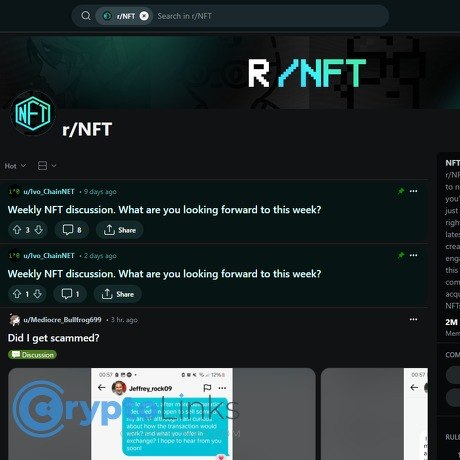
r/NFT
www.reddit.com
r/NFT Reddit Review Guide: How to Use the Biggest NFT Subreddit (Without Getting Wrecked)
Have you ever opened the r/NFT subreddit, scrolled for a few seconds, and thought, “Is this just scams, spam, and people yelling that NFTs are dead?”
If yes, you’re not alone.
One minute you see someone pushing a low-effort collection. Next, there’s a genuine artist sharing years of work. Then a post saying “NFTs are over,” followed by someone asking how to mint their first piece. It feels chaotic, confusing, and honestly a bit exhausting.
But here’s the thing: chaos doesn’t mean useless.
Used right, r/NFT can help you:
- Understand what’s actually happening in the NFT world (not just what influencers tweet)
- Learn how creators, collectors, and skeptics really think
- Spot common scams before they hit your wallet
- Get honest feedback on your art or ideas
Used wrong, it can waste hours of your time and push you into terrible decisions.
The Main Problems People Face With NFTs (and With r/NFT)
Let’s be blunt: a lot of people who land on r/NFT feel completely lost. Not because they’re stupid, but because the NFT space is still messy by design.
When people say “NFTs are dead” or “r/NFT is full of spam,” what they’re really bumping into are a bunch of very real problems:
- Low liquidity – Most NFTs never sell. On r/NFT, you’ll see countless posts like “Why won’t my NFT sell?” or “100 listings, 0 buyers.” This isn’t rare. It’s the norm.
- High fees – Especially on Ethereum, gas fees can kill any enthusiasm. Beginners post screenshots of $10–$40 gas for a basic action and ask, “Is this normal?” Sadly, many times, yes.
- Jargon overload – Minting, floor price, royalties, ERC-721, burn, bridge, chain, liquidity… New users scroll r/NFT and feel like they’ve walked into a foreign language exam.
- Scams everywhere – Fake “support,” phishing links, DM collab offers that are just wallet drains. r/NFT is full of stories like “I lost my whole collection because I clicked one link.”
- Information overload – Mixed threads about art, tech, flipping, and drama. No structure, no clear starting point. It’s like trying to learn driving on a highway at rush hour.
Put all that together and it’s no surprise people walk away thinking:
“NFTs are dead.”
“It’s all manipulation.”
“This is just for insiders.”
But the reality is more nuanced.
NFT interest did cool down after the crazy 2021–2022 hype. Trading volumes dropped, headlines moved on, and the “get rich overnight” crowd mostly left. What’s left in places like r/NFT is a mix of:
- Artists who genuinely care about their work
- Collectors who are still curious (but much more careful)
- Builders focused on utility, gaming, memberships, and tickets
- Burned ex-participants who now shout “scam” at everything
This shift is actually backed by the data. NFT trade volume fell massively from peak levels, but on-chain activity and new NFT use cases (especially gaming and membership passes) kept going. That contrast – fewer moon stories, more quiet building – is exactly what you’ll see reflected in r/NFT posts today.
The problem isn’t that there’s no valuable information. The problem is that it’s buried.
Promise: How This Guide Will Actually Help You
This isn’t another “NFTs will change everything, buy now!” piece. That era is gone, and that kind of content is one reason so many people got wrecked in the first place.
Here’s what you can actually expect from this guide as you keep reading:
- Honest look at r/NFT – The good, the bad, and the ugly. I’ll point out where the subreddit is genuinely useful and where it’s a trap.
- Different paths for different goals – Whether you’re:
- a creator trying to sell or just share your art
- a collector curious about value and risk
- a crypto user who just wants to understand the NFT mess
you’ll see how to use r/NFT differently, not just scroll blindly.
- Real-world questions, straight answers – I’ll tackle things people search every day, like:
- “Why are NFTs no longer popular?”
- “How do I start NFT as a beginner?”
- “Can an NFT be converted to cash?”
using real patterns, discussions, and mistakes you can observe on r/NFT.
- A practical checklist – Not theory. Simple steps you can take right after reading, so r/NFT feels like a tool you control, not a noisy feed that controls you.
Think of this guide as your “friend who’s been in the space long enough to see the BS,” walking you through a very loud room and pointing at what’s worth your time.
Who This Article Is For (and Who Should Skip It)
Before going further, let’s be clear about who will actually benefit from this.
This is for you if:
- You’re a beginner who keeps hearing about NFTs but has no idea where to start without getting scammed or embarrassed. You’ve maybe clicked on r/NFT once or twice and bounced right off.
- You use Reddit already but ignore NFT subreddits because they look like a mess of shilling and arguments. Deep down you still feel like you’re missing some bigger picture.
- You’re a creator – artist, photographer, musician, coder – who wants feedback, not just silence. You want to understand why some posts get real engagement and others get ignored or flagged as spam.
- You’re a skeptic who doesn’t want to fall for hype but also doesn’t want to be stuck in “NFTs are stupid, end of story” mode. You want to see what’s actually happening in the trenches.
On the other hand, this is probably not for you if:
- You’re only looking for “The next 100x NFT pick.” That doesn’t exist, and anyone promising it on r/NFT is either lying or gambling.
- You want guaranteed profit. NFTs are risky. Most collections do nothing. Most art never sells. That’s just reality.
- You only want hype and validation. If your goal is to post “I’m early, we’re all gonna make it” and ignore anything that challenges that, this kind of structured approach will just annoy you.
If you’re still reading, you’re probably in the group that wants to understand, not just participate blindly.
So here’s the next step: before you treat r/NFT as a resource, you need to know what it actually is, who’s talking there, and why it feels like chaos when you first land on it.
Curious who’s really behind those posts – creators, flippers, trolls, or something else entirely – and how to tell them apart just by how they talk?
Let’s look into that next.
What r/NFT Actually Is: Purpose, Vibe, and Who Hangs Out There
If you scroll r/NFT for the first time, it feels a bit like walking into a noisy street market at midnight.
Somebody’s yelling “Check my new collection!”, someone else is arguing that NFTs are dead, one person is asking a genuine beginner question, another is posting their art for feedback… and at the same time you’ve got random trolls throwing tomatoes from the sidelines.
That chaos is exactly why a lot of people bounce off the subreddit and think, “Nah, this isn’t for me.” But once you understand what r/NFT actually is, it starts to make sense — and becomes genuinely useful.
Think of it like this:
r/NFT is not a curated NFT gallery. It’s the public town square of NFT culture — messy, loud, and surprisingly honest.
Let’s pull back the curtain on what’s really going on there.
A quick overview: stats, size, and typical activity
Numbers change, but here’s the general scale so you know what kind of beast you’re looking at:
- Hundreds of thousands of members subscribed (think mid–six figures, not a tiny niche forum).
- New posts every few minutes at peak times, plus a constant stream of comments.
- Traffic spikes when:
- Big projects launch or rug-pull,
- Major news hits (like OpenSea policy changes, SEC headlines, or gas fee spikes),
- Crypto prices pump or crash.
The content falls into a few repeatable buckets. Once you recognize them, it becomes much easier to filter what you want.
1. Shill posts (promotion posts)
- These are the “Check my collection!”, “Mint live now!”, or “Roadmap to the moon!” threads.
- Most are low effort: single image, no story, no context, sometimes even AI-generated art spammed across multiple subs.
- Every now and then, you see a creator who actually explains their concept, process, and pricing. Those posts get better engagement and real feedback.
An actual pattern you’ll see: posts titled something like “My first NFT collection, feedback appreciated” tend to do better than pure “buy this” titles. Reddit hates being sold to but doesn’t mind being invited into a story.
2. Questions and beginner guides
- “How do I start NFT as a beginner?”
- “Is this marketplace legit?”
- “Why won’t my NFTs sell?”
- “What’s the best chain for low fees?”
Some of these are lazy one-liners, but others turn into gold — long comment chains where experienced users break down gas fees, walk through minting on different chains, or share mistakes they made.
Reddit’s own research into community behavior has shown that Q&A post types get higher meaningful engagement than pure self-promotion, and r/NFT fits that pattern perfectly.
3. Market discussions and sentiment posts
- “Are NFTs dead?”
- “Volume is down 90%, what now?”
- “Why is nobody buying anything?”
These are like real-time sentiment checks. People share screenshots of empty sales dashboards, OpenSea analytics, or news headlines, then argue about whether it’s over, or we’re just in a “build phase.”
What’s interesting is how the tone has shifted over time. If you scroll back to 2021 via “Top posts of that year,” you’ll see a lot more flexing and hype. Now, you see more frustration, realism, and long-term thinking. That tone tells you more than any chart.
4. Tech talk: gas, chains, and tools
- “Should I use Ethereum or Polygon?”
- “Why are gas fees so high?”
- “Anyone used Manifold vs Zora?”
- “Is Solana better for beginners?”
This is where the more technical users hang out. You’ll see quick explanations of ERC-721 vs ERC-1155, mint-on-demand vs pre-minting, and practical tips like:
- Mint on Polygon for cheap experimental drops,
- Use a burner wallet for testing new platforms,
- Avoid signing random contracts you don’t understand.
5. Moderation and spam control
Mods do remove outright scams and obvious spam runs (you’ll sometimes see meta posts complaining about stricter rules). But with a subreddit that size, some stuff always slips through:
- Low-effort promos that technically follow the rules,
- Copy-paste “support” bots offering to fix your wallet,
- Links to shady collections that haven’t been flagged yet.
This is important: r/NFT is semi-moderated chaos, not a tightly curated resource. Treat it more like a busy street where you need to watch where you step.
The main tribes inside r/NFT
You’ll enjoy the subreddit a lot more once you realize that people there are not one big group with the same agenda. There are “tribes” — and each one talks with a different bias.
1. Creators
These are artists, photographers, designers, small teams, and indie devs. Their posts usually look like:
- “Here’s my first collection, I’d love your honest feedback.”
- “I’ve been grinding for 6 months and still no sales. What am I doing wrong?”
- “Is it worth moving from OpenSea to my own contract?”
Typical traits:
- They care about art, visibility, and validation as much as money.
- They often underestimate how hard marketing is.
- They’re sensitive to criticism but crave real opinions.
You’ll see people share emotional posts like, “I spent 80 hours on this piece and got 2 likes.” That’s real. It’s also a useful reminder that minting an NFT doesn’t magically create demand.
2. Collectors and flippers
These folks are focused on value, rarity, and upside. Their language is different:
- “Is this project a rug?”
- “Thoughts on this floor price?”
- “I bought the top, now what?”
They often talk about:
- Floor prices and sales volume,
- Rarity traits and ranking tools,
- Short-term flips vs long-term holds.
Bias alert: they tend to justify their positions. If someone holds a bag in a certain collection, they might talk it up, defend it in comment threads, or try to find “bullish” signals others don’t see.
Anecdotally, when markets are hot, these voices dominate; during bear phases, many of them go quiet or turn bitter. Watching that shift tells you a lot about where we are in the cycle.
3. Newbies
New users are usually easy to spot. Posts often start with:
- “Sorry if this is a dumb question…”
- “I’m totally new, please help.”
- “I don’t understand how this works.”
They ask about:
- Setting up wallets (MetaMask, Phantom),
- Transferring funds from exchanges,
- Gas fees and why they’re paying so much,
- Whether a random DM offer is legit (hint: usually not).
Their biggest risks:
- Clicking sketchy links shared “to help,”
- Sending money first to supposed “buyers” or “promotion managers,”
- Trusting anyone who promises guaranteed sales.
If you’re new yourself, watching what happens to other beginners in the comments is one of the fastest ways to learn what not to do.
4. Skeptics and trolls
Every NFT thread anywhere has its share of skeptics, and r/NFT is no exception. You’ll see comments like:
- “This whole thing is a scam.”
- “Money laundering with extra steps.”
- “Why would anyone pay for a JPEG?”
They range from thoughtful critics (who bring up real issues like wash trading or environmental impact) to straight-up trolls who post the same jokes under every thread.
Why this matters:
- They’re a good reality check when hype gets too loud.
- But constant negativity can also blind you to real innovation.
Understanding which tribe you’re reading helps you judge the signal:
- A creator posting “Nobody’s buying, NFTs are dead” might be burned out, not objectively analyzing the market.
- A collector saying “This project is the next blue-chip” might be trying to pump their own bags.
- A skeptic shouting “It’s all scams” might be ignoring the utility side of NFTs entirely.
Once you start mentally tagging posts — “Okay, this is a creator venting”, “this is a bag-holder coping”, “this is a newbie who needs a safety warning” — the subreddit becomes a lot easier to read.
What r/NFT is good for (and what it’s not)
Now, here’s the key: r/NFT is powerful if you use it for the right things. It’s terrible if you use it for the wrong ones.
What it’s actually good for
- Seeing how people really use NFTs
Not in polished marketing copy, but in raw posts:
- Artists trying to fund their work,
- Gamers trading in-game items,
- Indies experimenting with membership passes,
- People testing ticketing, access keys, and more.
You get to see use-cases that don’t always make headlines.
- Spotting real problems in the space
If something is broken, it shows up in r/NFT repeatedly:
- “Gas fees ate my profit.”
- “My buyer’s funds got stuck in a bridge.”
- “My wallet was drained after I connected here.”
That repetition is a huge signal. When you see the same problem weekly, you know it’s a real issue, not just FUD.
- Finding tutorials and community knowledge
You’ll see threads where someone lays out:
- Step-by-step minting on Polygon for cheap experimentation,
- How to create a collection with your own contract using platforms like Manifold,
- How to properly set royalties or split earnings with collaborators.
The gold is often in the comments — users correcting each other and sharing “I tried this, here’s what went wrong.” That’s real-world field testing you don’t get in platform marketing.
- Getting early feedback on your ideas or art
When used respectfully, r/NFT can act like a brutal but honest focus group.
- Share your concept and ask, “Would you buy this? Why or why not?”
- Ask which chains people would prefer for your type of project.
- Test different pricing ideas and get unfiltered opinions.
People on Reddit are not shy. If your idea feels shallow or derivative, they’ll say it. That can sting, but it’s better than learning it after a failed launch.
What it’s absolutely not good for
- Finding guaranteed profitable projects
Any post that sounds like:
- “100x potential,”
- “Guaranteed returns,”
- “Next blue-chip, don’t miss out”
should set off alarms in your head. Nobody has guaranteed profits in this space. If they did, they wouldn’t be sharing it on a giant public subreddit.
- Getting unbiased investment advice
On r/NFT, everyone has a role and a bag:
- Creators want their projects to succeed.
- Collectors want their collections to pump.
- Traders want liquidity and hype.
Even well-meaning advice is colored by personal experience. If someone made money on a certain chain or marketplace, they’ll naturally favor it. That doesn’t mean it’s right for you.
- Replacing proper research on platforms and wallets
You’ll see comments like:
- “I’ve used this site for months, no issues.”
- “Just connect your wallet, it’s safe.”
That’s not a security audit. It just means they haven’t been burned yet. Always double-check:
- Official documentation,
- Independent reviews,
- Security reports when available,
- Community reputation across multiple sources.
r/NFT can give you a starting list of platforms to check out, but not the final verdict.
Used right, r/NFT is like a big, messy focus group where everyone’s talking at once, but you can still pick out patterns, warnings, and new ideas.
Used wrong, it’s a fast path to wasting time, chasing random mints, and trusting the loudest voice in a thread instead of your own judgment.
Now, here’s where things get really interesting: if the subreddit is this active, why do so many people say “NFTs are dead” every other day? Is that actually true, or is it just what it feels like when the hype fades?
Let’s take a look at what changed, why people scream “RIP NFTs” so often, and what the reality actually looks like in the next part.
Why Do People Say NFTs Are “Dead”? The Reality Behind the Hype on r/NFT
If you hang around r/NFT for even a few minutes, you’ll see the same phrases over and over:
- “NFTs are dead.”
- “Nobody is buying anything.”
- “I miss 2021.”
At the same time, you’ll see people quietly shipping collections, building tools, and talking about new use cases like gaming, tickets, and memberships.
So what’s actually going on? Are NFTs truly finished, or did the noise just move somewhere else?
Let’s be honest about what changed, why the mood on r/NFT feels so different from the peak, and what that actually means for you.
From hype to hangover: what changed
Think back to the 2021–early 2022 cycle. Even if you weren’t in NFTs yet, you probably saw the headlines:
- JPEGs selling for six or seven figures
- Celebrity “drops” every other week
- Everyone on Twitter suddenly calling themselves “NFT collectors”
On r/NFT, that era looked like:
- Tons of “I just sold out my collection!” posts
- Threads full of FOMO – people asking, “Is it too late to start?”
- Lots of low-effort art still getting bids simply because the market was overheated
Then the music slowed down.
Crypto prices dropped. Liquidity dried up. Mainstream media stopped treating NFTs like the future of everything and started treating them like a punchline.
There’s data behind the mood swing too. For example:
- Analytics sites like NonFungible and Dune dashboards showed NFT trading volume dropping by more than 90% from peak levels in 2021–2022.
- Floor prices of big collections shrank hard, some by 70–90% in dollar terms when you combine lower ETH/SOL prices with lower demand.
On r/NFT, that shift shows up in very human ways:
- More complaints about low sales – you’ll see posts like “Listed 50 pieces, zero sales, what am I doing wrong?”
- Fewer victory laps – the classic “I sold out in 10 minutes!” posts are much rarer now.
- More long-term voices – the loud speculators who only wanted a quick flip mostly left; the people still posting tend to be builders, artists, or stubborn believers.
One comment I saw recently summed it up perfectly:
“NFTs aren’t dead. The casino closed early and the tourists went home. The people still here are the ones actually trying to build something.”
That’s the vibe now. Less fireworks, more quiet work. The mood feels “dead” if you only measure it by how many people are bragging about overnight wins.
Real issues: liquidity, costs, and UX
The hype didn’t just fade because people got bored. There are real, structural problems with NFTs that you’ll see discussed constantly on r/NFT.
Let’s talk about the three that come up the most: liquidity, costs, and user experience.
1. Low liquidity: “I minted 100 NFTs and sold… none”
Scroll r/NFT for a while and you’ll notice a pattern: creators posting their collections and then returning weeks later with some version of:
- “Why is nobody buying?”
- “Is OpenSea dead?”
- “I have 0 sales after 6 months, should I quit?”
This isn’t unusual. In most markets, the majority of items never sell. NFTs just make that reality public and painful.
Liquidity is simply “how easy is it to buy or sell something at a fair price?” In NFTs, liquidity is very uneven:
- A tiny number of “blue-chip” collections still see active trading.
- The overwhelming majority of new collections have almost no buyers.
On r/NFT you’ll see creators posting screenshots of their dashboards: 40, 80, 150 items listed… with maybe 1 or 2 sales, or none at all. That’s not them being bad artists necessarily. It’s a market where there are thousands of pieces chasing a handful of serious collectors.
So when someone says “NFTs are dead,” what they often mean is: “It’s way harder to sell low-profile NFTs now than it was during the mania.” And on that front, they’re right.
2. High transaction costs: gas fees killing small experiments
If you’re new, “gas fees” are the network costs you pay to put transactions on a blockchain like Ethereum.
On r/NFT you’ll see posts like:
- “I tried to mint but the gas fee is higher than my art price, is this normal?”
- “Why did I pay $40 just to list something?”
This is a real barrier. When the network is busy, Ethereum fees can jump to tens of dollars per transaction, sometimes more. That’s brutal if you’re trying to sell a $5 or $10 piece.
So you see users in the subreddit constantly steering beginners toward cheaper options:
- Polygon on OpenSea for near-zero gas mints
- Solana with wallets like Phantom and marketplaces like Magic Eden
- Other chains like Tezos, Avalanche, or custom L2s
There’s usually at least one comment saying something like: “If you’re paying more in gas than the NFT price, you’re doing it wrong.” The tech is improving (Layer 2, rollups, etc.), but while that builds out, beginners feel the pain immediately—and then call the whole space “dead” or “rigged.”
3. Bad UX: wallets, seed phrases, bridges… and confusion
Here’s the part most crypto people underestimate: NFTs are terrible UX for normal humans.
If you read r/NFT as an outsider, it can look like a foreign language:
- “Bridge your assets, watch out for approvals, never sign blind transactions, always back up your seed phrase, revoke permissions…”
Beginners post threads like:
- “I lost my seed phrase, can support help me?” (The answer is always no.)
- “I clicked a link and now my wallet is empty.”
- “Why do I need three wallets just to mint something?”
This is the UX problem in action: the technology is powerful, but it’s not forgiving. One wrong click, one fake site, one lost seed phrase, and it’s gone. That scares people, and understandably so.
In response, many r/NFT regulars recommend:
- Keeping a “hot” wallet for small experiments and a safer wallet (often hardware) for anything valuable
- Double-checking every URL and avoiding links sent in DMs
- Practicing with tiny amounts first, to learn the flow before risking real money
When you put it all together—low liquidity, high costs on some chains, and confusing UX—it’s clear why casual users checked out once the hype faded. The fun of quick wins vanished, and the friction stayed.
Is “no one wants NFTs anymore” actually true?
This is the big one. You see it in search results, headlines, and r/NFT threads: “Nobody cares about NFTs now.”
The short answer: people still care, but they care about different things.
1. The collectible/JPEG bubble popped
Speculative collectible NFTs — 10,000-profile-picture drops, random animals, low-effort generative collections — are the ones most people think of when they say “NFTs.” That part of the market absolutely cooled down.
On r/NFT, you’ll see it in posts like:
- “Are PFPs over?”
- “Nobody buys my 10k collection, is the meta dead?”
Many of those projects were never meant to last. They were lottery tickets. Once the “easy money” phase was gone, so was the crowd that only wanted quick flips.
2. Utility-based NFTs are still being built
What you notice if you read r/NFT a bit deeper is a shift in focus. Less “I made a cartoon animal collection,” more:
- “I’m working on an NFT pass that includes real-world membership perks.”
- “We’re using NFTs as tickets for events.”
- “Any feedback on this game where items are NFTs?”
Some of this is still early and rough, but it’s a different energy. Builders are asking how to make NFTs:
- Useful beyond speculation
- Less painful to interact with for non-crypto people
- Connected to things people already care about (games, shows, communities, brands)
The public doesn’t see those threads, because they’re not sensational. But they’re there, and they’re consistent.
3. Fewer brag posts, more honest conversations
The mood on r/NFT today is quieter and more honest. Instead of endless flexing, you see:
- Creators sharing their failure stories and what they learned
- Collectors admitting they bought tops and are stuck holding bags
- People openly discussing scams, rug pulls, and mistakes
Emotionally, that can feel like “everything is dead.” In reality, it’s what most markets look like when they’re not on sugar high.
When a trader turns $100 into $10,000, they rush to post screenshots. When they turn $10,000 into $100, they usually go quiet. r/NFT now has a lot more of the quiet, reflective posts than the euphoric ones, which makes sentiment look worse than it is.
4. How to read sentiment on r/NFT without getting trapped
If you only read the new posts feed, you’ll swing between extremes:
- One thread saying “NFTs are dead, nobody buys anything.”
- Another saying “We’re still early, everything is going to the moon.”
The trick is to treat r/NFT like a mood thermometer, not a crystal ball.
- When there are a lot of “NFTs are dead” posts, it usually means the speculative side is cold and people are frustrated.
- When there are lots of “this collection is the next big thing” posts, it usually means speculation is overheated again.
Neither extreme is fully right. Both tell you how people feel, not what will happen next.
I like to think of it like this:
“NFTs aren’t dead or alive. They’re a tool. The question isn’t ‘Is the tool dead?’ but ‘What are people actually using it for now?’”
And if you look closely at r/NFT, you’ll see plenty of people still using that tool — just in quieter, less flashy ways.
So if the hype is gone, what should a beginner actually do now? Is it still worth learning how to start with NFTs, or is that just asking to get burned?
That’s exactly what I’m going to walk you through next: how to treat r/NFT like your personal help desk, choose your role, and make your first moves without stepping on all the landmines you see people complaining about every day.
How to Start With NFTs as a Beginner (Using r/NFT as Your Help Desk)
If you type “how do I start NFT as a beginner” into Google, you’ll get everything from 10‑step YouTube grinds to straight-up scams disguised as “masterclasses.”
The funny thing is: most of what you actually need is already being asked and answered every day on r/NFT — it just looks like chaos if you don’t know where to look.
I like to treat r/NFT as a free, messy, 24/7 help desk. People show their mistakes, vent about failures, and share wins. If you know how to read it, you can skip a lot of painful lessons.
Let me walk you through a simple way to get started, using the subreddit as your guide instead of your trap.
“Experience is a hard teacher because she gives the test first, the lesson afterward.”
The whole point here is to borrow other people’s tests and skip the worst ones.
Step 1: Decide Your Role — Creator, Collector, or Just Curious
Before you click anything, you need one honest answer:
- Are you trying to sell your work? (art, music, photography, code, writing)
- Are you trying to buy NFTs? (collect, flip, or support artists)
- Are you just here to understand what the hell this tech is?
If you skip this step, r/NFT will feel like walking into a mall and trying to visit every store at once.
Here’s how I’d use the subreddit depending on your role:
If you’re a creator (artist, photographer, musician, dev):
- Use search for phrases like “my first mint”, “feedback on my collection”, “advice for new artists”.
- Look for posts where creators show their work and share process, not just “here’s my link.” The comment sections are mini masterclasses in what collectors actually care about.
- Pay attention to posts titled something like “I’ve minted 50 NFTs and sold 0, what am I doing wrong?” — these are brutally honest reality checks.
If you’re a collector or wannabe trader:
- Search for “is this NFT worth it”, “NFT flipping advice”, “rug pull”, “I lost money in NFTs”.
- Read threads where people break down why they bought something, why they regret it, or why they held through the crash.
- Watch how often people mention words like “floor price”, “volume”, and “liquidity”. These are the real issues, not just “this art is sick bro.”
If you’re just curious about the tech and culture:
- Search for “explain like I’m 5 NFT”, “how NFTs work technically”, “smart contract basics”.
- Sort by Top (All Time) and look for posts that are more discussion than promotion.
- Read the threads where skeptics and NFT supporters argue. Those arguments tell you what actually matters.
A quick example: one of the most common beginner posts on r/NFT looks like this:
“I’m new to NFTs. I’m a digital artist, I uploaded my first collection to OpenSea and no one is buying. What am I missing?”
Underneath, you’ll usually see a mix of blunt reality and practical advice: bad pricing, no story, zero community, wrong marketplace, weak presentation. That one thread will teach you more than 20 generic blog posts.
Step 2: Learn the Basics the Smart Way
You don’t need a PhD to start with NFTs, but you do need some basics or you’ll be easy prey.
Here’s how to use r/NFT to learn without spending a cent:
1. Use targeted searches, not random scrolling.
Type these into Reddit search (or Google):
- “r/NFT beginner guide”
- “r/NFT start here”
- “r/NFT NFT for beginners”
- “r/NFT how to mint”
Then sort by Top or filter by Top – Past Year. The most upvoted guides are usually the ones that saved people time or money.
2. Always read the comments, not just the main post.
On one popular thread about minting, the original post gave a simple recipe:
- Install a wallet like MetaMask
- Buy some ETH
- Go to a platform like Zora or Manifold
- Upload your file and set a price
Pretty standard. But the real value was in the top comments:
- One user warned: “Don’t keep large amounts of ETH in a browser wallet; move to a hardware wallet if you stay in the game.”
- Another explained why Polygon is better for beginners because of lower gas fees.
- Someone else broke down gas spikes at certain times of day and showed a chart from a gas tracker to prove it.
That’s the pattern: the post gives you steps, the comments give you context and corrections.
3. Learn the minimal tech vocabulary you actually need:
- Wallet – your crypto account (MetaMask, Phantom, etc.).
- Seed phrase – 12 or 24 words that are your wallet. Lose them, lose everything. Share them, lose everything.
- Mint – the process of turning your file (image, song, whatever) into an NFT on-chain.
- Gas fee – what you pay to the blockchain (not the marketplace) to process your transaction.
Every time you hit a term you don’t know, plug it into Reddit search with “r/NFT [term] explained”. Treat confusion as a hint, not a reason to give up.
Step 3: Minting Your First NFT (Creator‑Focused)
If you’re a creator, minting your first NFT is a bit like publishing your first piece of work online: scary, exciting, and a little confusing. r/NFT is full of “I finally did it” posts, and they all follow roughly the same path.
Here’s the high‑level version you’ll see repeated there, simplified:
1. Choose a blockchain.
- Ethereum: Most established, most liquidity, but gas can be expensive.
- Polygon: Cheaper fees, often recommended on r/NFT for beginners.
- Solana, Tezos, others: Lower fees, strong art communities, different tools.
On r/NFT you’ll often see comments like:
“If you’re new and your work is under $50, don’t start on mainnet Ethereum. Gas will eat you alive.”
Take that seriously. Many first-timers pay more in gas than their art is worth to strangers.
2. Set up a wallet and secure it properly.
- For Ethereum/Polygon: MetaMask is the most commonly mentioned.
- For Solana: Phantom gets recommended a lot.
When you create a wallet, you’ll be shown a seed phrase. r/NFT is filled with horror stories of people who:
- Saved it in a screenshot on their phone.
- Typed it into a “verification” website.
- Sent it to a fake “support” DM.
Those posts almost always end the same way: everything gone, nothing to do. Write your seed phrase on paper, keep it offline, and never type it anywhere except into the wallet itself when you’re restoring it.
3. Pick a beginner‑friendly platform.
In r/NFT, you’ll see the same names pop up again and again:
- OpenSea – the biggest marketplace, supports Ethereum and Polygon.
- Zora – popular with more on‑chain, experimental creators.
- Manifold – beloved by serious artists for more control over contracts.
A typical r/NFT comment under “which platform should I use?” looks like this:
“Start on Polygon via OpenSea so you don’t burn money on gas while you’re learning. When you’ve figured out your pricing and audience, you can move to Ethereum or use Manifold for serious drops.”
That’s a solid path for most beginners.
4. Upload, add metadata, and set a realistic price.
The actual minting flow is usually:
- Connect your wallet to the platform.
- Upload your file (image, audio, animation, etc.).
- Fill in name, description, and any properties/traits.
- Choose a price or auction type.
On r/NFT, you’ll see a painful pattern: beginners pricing their first piece at 0.5 ETH (~hundreds of dollars), and then posting a week later:
“No one is buying, is the market dead?”
The comments usually cut to the chase:
- No audience + no story + high price = no sale.
- Experienced users often suggest starting very low or even with free mints to build a base of supporters.
Studies of creator platforms in general (Patreon, Gumroad, etc.) show a similar curve: a tiny percentage of creators make most of the money, and almost everyone else starts small and slowly builds trust. NFTs are not magically different.
5. Share your work — but don’t be “that” shill.
After minting, the instinct is to sprint to r/NFT and post:
“Just dropped my new collection, please support, floor only 0.1 ETH!”
These posts get ignored or downvoted because they look identical to thousands of others. The subreddit has seen every possible variation of “pls buy,” and it’s tired.
You’ll get far better results if you use r/NFT differently — which brings us to the next step.
Step 4: Using r/NFT to Get Feedback, Not Just “pls buy”
If you want attention on r/NFT, you have to give the community something more than a link. Think of it as hanging out in a studio, not standing in a mall yelling “buy my thing.”
Here’s a simple contrast you’ll see there every day:
Low‑effort shill post:
“Check out my collection on OpenSea, 10K NFTs, floor 0.05, utility coming soon!”
- No context.
- No story.
- No reason to care.
- Looks like every scammy cash‑grab drop from 2021.
These usually get ignored, and sometimes reported.
Useful feedback post:
“I’m a photographer and I’ve been shooting abandoned buildings for 3 years. I minted my first 5‑piece series on Polygon to keep gas low. I priced them at $10 each but haven’t had any interest. I’d really appreciate feedback on:
1) Does the concept appeal to you?2) Is my presentation clear?
3) Do you think my pricing makes sense for a beginner?”
- Shows effort and vulnerability.
- Asks specific questions.
- Invites genuine critique instead of begging.
Posts like this often get thoughtful comments: advice about collection titles, cover images, descriptions, even tips on where to find photography‑friendly collectors.
To make your own feedback post work, keep these in mind:
- Read the subreddit rules first. They usually have clear guidelines on shilling, self‑promotion, and post tags.
- Use accurate flair/tags. If there’s a flair like “Critique” or “Discussion”, use it. It signals that you’re not just selling.
- Show your process. People relate to the journey: sketches, early versions, why you chose that chain or platform.
- Give feedback to others. The fastest way to be ignored is to only talk about yourself. Comment on other people’s work and share honest thoughts.
If you scroll long enough, you’ll notice a pattern: the creators who consistently share process, ask good questions, and respond to others start to build a name. When they eventually post something for sale, the community actually pays attention.
That’s the real “marketing” nobody wants to hear: show up like a human, not a billboard.
Step 5: Beginner Safety Checklist
Here’s the uncomfortable part: NFTs attract scammers like bright lights attract bugs. r/NFT is packed with posts that start with “I think I got scammed…” and end with permanent loss.
The good news is that most scams are predictable. If you read just a few of those warning threads, you’ll start seeing the patterns.
Use this simple checklist before you click anything or sign any transaction:
- Never share your seed phrase with anyone. Ever.
Not “support”, not a “trusted mod”, not a “friend” helping you on Discord. Real platforms will never ask for it. Anyone who does is trying to empty your wallet.
- Be very careful with DMs from “buyers” or “collabs”.
On r/NFT you’ll see posts like:
“Someone DMed me saying they’re a collector and want to buy my NFT, but I need to connect my wallet to their ‘verification’ site. Is this legit?”
The top replies are always the same: it’s a scam.
- Double‑check any “support” accounts.
Fake OpenSea or MetaMask support is everywhere. They reply to your comment, ask you to fill in a form, and steal your seed phrase. Real support teams don’t work like that on Reddit.
- Verify marketplaces and contracts.
If someone drops a random link in the comments — especially to a “new marketplace” — look for:
- Does it show up in multiple older r/NFT threads?
- Does it have real documentation and social presence?
- Is the URL a perfect match (no extra letters, weird domains)?
- Start with tiny amounts of money.
Think of your first transactions as paid practice. You’re testing:
- How to send crypto to your wallet.
- How to connect to a marketplace.
- How to sign a transaction and pay gas.
Even on r/NFT, experienced users tell beginners: “Assume your first $20–$50 is tuition.” That’s still cheaper than most courses.
If you want a scary but useful habit, search r/NFT for “scam”, “phished”, or “lost my NFTs”. Read a few of those threads. It feels bad, but it rewires your brain to be cautious in the right places.
The emotional side of this matters more than people admit. When you see someone write:
“I clicked one link and watched years of work disappear. Please don’t make my mistake.”
…you remember it a lot longer than a boring warning in a FAQ.
Once you’ve got your role clear, the basics understood, your first mint under your belt, and your safety mindset sharp, there’s one thing everyone eventually asks next:
“Okay, but how much money can I actually make with this… and can I cash out if I do?”
That’s where things get interesting — and where r/NFT’s stories about prices, floor levels, and cashing out collide with reality. Let’s unpack that next.
NFT Money Talk: Prices, Cashing Out, and What r/NFT Can (and Can’t) Tell You
If we’re honest, this is what most people really care about:
“How much can one NFT actually be worth… and can I turn it into real money, or is this just numbers on a screen?”
Reddit, especially r/NFT, is obsessed with this topic. Scroll for 30 seconds and you’ll see:
- Someone flexing a big sale
- Ten people saying they can’t sell anything
- Arguments about “real value,” floor price, and whether the whole thing is a scam
Let’s strip out the noise and talk about how money around NFTs really works, and what r/NFT is actually useful for when it comes to prices and cashing out.
How much can 1 NFT cost? From pennies to millions
Here’s the first mindset shift:
“NFT” is just a format, not a price tag.
An NFT is like a unique receipt or certificate attached to a digital (or sometimes physical) asset. The format is basically the same whether it’s:
- A random low-effort JPG someone minted at 3am
- A piece from a known artist with a serious collector base
- A game item that thousands of players actually want
- A membership pass to a community or event
The price doesn’t come from the technology. It comes from demand.
To give you a sense of range:
- On the low end, many NFTs are effectively worth nothing. You can see collections trading under $1, or with zero buyers. Some “NFT tokens” listed on smaller marketplaces trade at fractions of a cent, similar to forgotten micro-cap altcoins.
- On the high end, everyone has heard about 6‑ and 7‑figure sales: Beeple’s Everydays selling for $69 million at Christie’s, or early Bored Ape Yacht Club and CryptoPunks going for hundreds of thousands of dollars.
Research from platforms like NonFungible and Chainalysis during the 2021–2022 cycle showed something that matches what I see daily on r/NFT:
- A tiny slice of collections capture most of the total value
- The majority of NFTs either don’t sell or sell once and never move again
In other words: yes, 1 NFT can sell for life‑changing money. Statistically, most won’t. On r/NFT, this shows up in a pretty raw way:
- Creators failing to sell 0.01 ETH pieces — you’ll see countless posts like “Why won’t my 0.01 ETH art sell?” or “Is my work bad or is the market dead?” 0.01 ETH is a few dollars to tens of dollars depending on the ETH price, and even that can be a struggle.
- Collectors chasing “blue chips” only — other posts complain that buyers ignore anything that isn’t a known brand or hyped collection. People say things like “Nobody cares about 1/1 art, everyone just wants the next BAYC.”
So when you read a question like “How much can 1 NFT cost?” the honest range is:
From basically nothing… to whatever someone is willing to pay.
r/NFT gives you anecdotal data: screenshots of sales, stories of success or failure, people venting about floor prices. It’s useful to understand the mood and expectations, but it’s not a price oracle and it’s definitely not a menu of guaranteed returns.
“The market doesn’t care what it cost you to make something. It only cares how badly someone else wants it.”
How value is talked about in r/NFT
One of the best uses of r/NFT is not to copy what people buy, but to understand how they think about value. If you scroll with that lens, the subreddit becomes way more interesting.
Here are the main themes you’ll see again and again.
1. Floor price obsession
For bigger collections (10k PFPs and similar), you’ll see tons of posts about floor price:
- “Why did the floor crash from 2 ETH to 0.4?”
- “Is this a good entry now that the floor is down?”
- “Project XYZ just pumped, should I buy or is it a rug?”
Floor price = the lowest asking price for any NFT in a collection. It’s a rough snapshot of minimum market sentiment.
On r/NFT, floor price arguments often turn emotional:
- Holders defend their bags and talk about “long-term vision”
- Others call it a pump-and-dump
- Skeptics post charts of floor prices going to zero
If you watch these threads, you learn how quickly sentiment can flip, and how fragile “value” can be when it’s mostly speculative.
2. Art vs utility vs brand
You’ll also see long debates about what really drives value:
- Art-focused users argue that great aesthetics and originality matter most. They share 1/1 artists and talk about style, technique, and emotional impact.
- Utility-focused users care about what the NFT actually does: access to a Discord, in‑game items, IRL events, revenue-share, or future airdrops.
- Brand-focused users point out that recognition and marketing often beat both. A project with mediocre art but strong branding and influencers behind it can outprice beautiful, unknown work.
Study these discussions and you start to see the formula people are really reacting to. It’s rarely “pure art” in isolation. It’s usually art + narrative + community + some expectation of future benefit.
3. The “Why won’t my NFT sell?” threads
These are everywhere.
A typical post looks like:
- A screenshot of their OpenSea listing
- A caption like “Minted 50 pieces at 0.05 ETH each and no one is buying. What am I doing wrong?”
- Comments pointing out: no audience, no story, no marketing, overpricing, spammy promotion
Reading enough of these, you’ll notice repeating patterns:
- Over-supply, no demand — people mint big collections with zero existing fanbase.
- Pricing from the creator’s feelings, not the market — “I spent 10 hours on this so it should be 0.1 ETH” doesn’t mean buyers agree.
- No context — if your post is just “Here’s my NFT, please buy,” nobody has a reason to care.
Use these threads as free market research:
- See what feedback shows up again and again
- Notice what kind of art or project gets more positive reactions
- Pay attention to how buyers talk about risk, uniqueness, and utility
The smart move isn’t to copy exact prices you see on r/NFT. It’s to reverse‑engineer the psychology behind ones that actually sell.
Can an NFT be converted to real money?
This is the second big question. The short answer: yes, but it’s not magic.
An NFT isn’t a separate “money type.” It’s a special token you can sell for crypto, and that crypto can be turned into fiat (USD, EUR, INR, etc.) through exchanges — assuming you’re using legitimate platforms and your country’s rules don’t block you.
The basic path looks like this:
1. Sell the NFT for crypto on a marketplace
- You list your NFT on a platform like OpenSea, Zora, Magic Eden, or another marketplace.
- You choose a price in the blockchain’s native token: ETH, MATIC, SOL, etc.
- If someone buys it, that crypto goes into your wallet (minus platform fees and gas).
On r/NFT you’ll see posts like:
- “Finally sold my first NFT for 0.03 ETH!”
- “I sold an NFT but OpenSea took fees + gas, I only got X in my wallet, is this normal?”
That’s the first step: turning the NFT into fungible crypto.
2. Move the crypto to an exchange
- You send the crypto from your wallet (MetaMask, Phantom, etc.) to a centralized exchange like Coinbase, Binance, Kraken, or another regulated platform in your region.
- You pay a network fee (gas) to move it.
- You wait for confirmations and the funds appear in your exchange account.
On r/NFT and broader crypto subreddits, people sometimes run into issues here:
- Using the wrong network (sending tokens on a chain the exchange doesn’t support)
- Sending from a marketplace custodial wallet they don’t fully control
- Hitting KYC limits — the exchange asks for ID or extra verification before letting them withdraw large amounts
3. Convert to fiat and withdraw
- Inside the exchange, you trade your crypto for fiat: sell ETH for USD, EUR, etc.
- You withdraw to a bank account, card, or local payment method, depending on what the exchange supports.
This is where real-world stuff kicks in: taxes, regulations, and bank policies.
You’ll often see r/NFT users saying things like:
- “Do I have to pay taxes if I just keep the crypto?”
- “My bank flagged a big crypto withdrawal as suspicious, what do I do?”
- “I made profit but I’m scared of the tax office now.”
Most countries treat selling NFTs for crypto as a taxable event, and converting crypto to fiat as another one. That means:
- Track your costs (minting, gas fees, purchase prices)
- Track your sale prices
- Expect to pay something if you made real profit
r/NFT is full of people trading stories and warnings about this, but it’s not a substitute for local tax guidance. Use their experiences as a reminder to take it seriously, not as your only source of truth.
Why r/NFT is not financial advice (and how to keep your head clear)
One of the biggest mistakes I see is people treating a highly upvoted Reddit comment like a Bloomberg terminal.
r/NFT is a public forum, not a regulated research desk.
Anyone can post, including:
- Creators who desperately need buyers
- Collectors who are stuck with illiquid bags and want others to buy the same project
- Traders who got lucky once and now think they’re geniuses
- Actual scammers, running DM grifts or pushing shady links
- Sincere people sharing genuine experience — but only from their angle
Here are a few rules I keep in mind whenever I read money talk on r/NFT:
1. High upvotes ≠ correct financial advice
People upvote for lots of reasons:
- It feels emotionally satisfying (“We’re all gonna make it!”)
- It confirms their belief (“NFTs are dead, told you so.”)
- It’s funny or sarcastic
- It shares a big win story they wish was theirs
None of those things guarantee the comment is accurate, complete, or right for your situation.
2. Anecdote ≠ rule
You’ll see posts like:
- “I flipped my first NFT from 0.02 to 0.5 ETH, you just have to grind!”
- “NFTs are 100% scams, I lost everything I put in.”
Both are true for that person. Neither is “the truth” for everyone.
The only pattern that actually holds up when you look at broader data: a small number of people make big wins, lots of people lose or break even, and the house (platforms, marketplaces, chains) always collects fees along the way.
3. Check incentives
Before you act on anything money-related, ask yourself:
- Does this person hold the NFT or token they’re talking about?
- Are they linking something that pays them?
- Are they new accounts with little history, suddenly very helpful?
r/NFT has plenty of legit users who warn about scams and share hard-earned lessons. They’re often the ones telling you not to rush in, to size your risk small, and to treat NFTs as speculation, not guaranteed income.
Use the subreddit for:
- Sentiment — how people feel about the market right now
- Storytelling — what actually happened to individuals
- Ideas — new platforms, tools, or angles you can research properly
Then confirm everything with outside sources, official docs, and your own math.
“In a market full of noise, your biggest edge is not being the smartest — it’s being the least impulsive.”
If you can keep your head when everyone else is either panicking or euphoric, r/NFT becomes a powerful dashboard instead of a trap.
Now the obvious question is: how do you actually use r/NFT in a smart way — to find signal, avoid spam, and filter out bad advice — without spending hours every day?
That’s exactly what I’m going to walk you through next: the specific filters, tools, and little research tricks that turn a messy subreddit into something you can actually rely on.
How to Use r/NFT Like a Pro: Filters, Tools, and Smarter Research
If you open r/NFT and just scroll, it feels like trying to drink from a fire hose: shill posts, low-effort art, some real gems, and the occasional brutal reality check buried in the comments.
The trick is simple: stop using r/NFT like a feed and start using it like a tool.
This is exactly how I use it when I’m researching projects and platforms for Cryptolinks – I don’t read everything, I hunt for signal. Let me show you how to do the same so you don’t waste hours and still miss the good stuff.
Using Reddit’s built‑in tools to cut the noise
Reddit already gives you most of what you need to clean up your r/NFT experience; you just have to stop using the default settings.
Start with the sort tools:
- Sort by “Top” instead of “Hot” or “New”.
- Select Top → Past Week when you want to see what actually helped people recently.
- Select Top → Past Month/Year to find evergreen guides, honest post-mortems, and in-depth analysis.
For example, when you sort by “Top – Past Year” you’ll usually bump into:
- A post from a creator who spent months trying to sell their collection and shares what failed.
- Detailed threads on gas-fee optimization or how to use Polygon/Tezos instead of paying insane ETH fees.
- Hard-hitting “I got scammed” or “Here’s how I almost lost everything” breakdowns with screenshots.
These posts don’t always show up in “Hot”, but they’re honestly worth more than all the “check my NFT” posts combined.
Next, use the search bar like a power tool instead of typing random words.
On Reddit’s search you can mix in operators or, if you’re on Google, you can go straight for it. A few examples that work well:
site:reddit.com/r/NFT "beginner guide"– pulls up starter threads that people found useful enough to upvote.site:reddit.com/r/NFT "gas fees"– good when you’re trying to not burn $50 sending a $20 NFT.site:reddit.com/r/NFT "scam" OR "phishing"– pure gold if you want to learn from other people’s pain instead of your own.site:reddit.com/r/NFT "OpenSea" "stolen"– helpful to understand marketplace risk and support limitations.
Inside Reddit’s own search for r/NFT, you can also filter by time (past week, month, year). I like combining:
- Search: “royalties OpenSea”
- Filter: Past Year
- Sort: Top
That setup almost always surfaces a handful of posts from people who actually went through the problem, not just theory.
When to use “New”? Only when you have a reason:
- You want to spot new questions from beginners that echo your own.
- You’re tracking a breaking story (e.g. a marketplace outage, new policy, or rug pull).
- You’re a creator specifically looking to answer questions and build a genuine presence.
If you’re just browsing, “New” is a trap. That’s where all the raw unfiltered shill stuff shows up first.
Reading comments like an investigator
The post title gets your attention; the comments tell you if it’s real or nonsense.
When I’m using r/NFT for research, I read comments like an investigator, not a fan.
- Start with the top comment – it’s often where someone:
- Explains why the OP’s strategy failed.
- Points out a scam angle the OP didn’t notice.
- Adds missing context (e.g. “this only works on Polygon, not Ethereum”).
But don’t stop at the top comment; there’s a pattern you want to look for.
Red flags in comments:
- “DM me for help” or “I can promote your NFT” – classic scam or worthless promo.
- Accounts with almost no history – click their profile:
- If you see only comments like “Great project, I invested!” across different crypto subs, that’s a manufactured account.
- Copy-paste answers – the same “support” message under different posts is a huge red flag.
Legit, experienced users usually look very different.
Green flags in comments:
- Accounts with long Reddit history across multiple subs – not just crypto shill posts.
- Comments that link to docs or articles, not just opinions – even better if they include downsides.
- People warning others even when it’s unpopular – “I know everyone is hyped, but here’s what went wrong when I tried this.”
In one thread I remember, a beginner posted a “too good to be true” OpenSea message they got in their DMs: “We noticed unusual activity on your wallet, click here to secure it.”
Top comment was short and brutal: “This is a phishing link. OpenSea will never DM you. Block and report.”
Lower in the comments, someone explained exactly how the scam worked, how the attacker tricks MetaMask users, and even linked to a thread on another sub where a user showed transaction hashes from getting drained the same way.
If you just read the OP, you’d think, “Oh wow, platform support is proactive.”
If you read the comments, you’d avoid getting emptied in one click.
That’s the difference between scrolling and investigating.
Cross-checking r/NFT with outside resources
Reddit is great for stories, scams, and sentiment. It’s terrible as a single source of truth.
Any time I see something on r/NFT that looks technical, risky, or “too easy to be true,” I cross-check it with outside resources before I put it on my own shortlist.
Here’s the simple workflow I recommend:
- Step 1 – Spot something interesting on r/NFT
- Example: someone recommends a new marketplace with “no fees and built-in royalties.”
- Step 2 – Check the official site and docs
- Read the FAQ, docs, and terms page.
- Look for things like audit reports or security notes.
- Step 3 – Compare it with trusted reviews and lists
- Use curated resources and the marketplace/wallet sections on Cryptolinks to see:
- Is this platform even known?
- What’s the fee structure actually like?
- Any major red flags reported elsewhere?
- Use curated resources and the marketplace/wallet sections on Cryptolinks to see:
- Step 4 – Check other communities
- Search the project name on other subs and platforms.
- If the only mentions are low-effort shill posts and the project’s own marketing, be careful.
This kind of cross-checking lines up with what we see in user behavior research too. People who spread their information sources across multiple platforms and formats tend to avoid the worst losses, because they’re less likely to get stuck in one echo chamber.
You don’t need a PhD study to see it – just compare stories on r/NFT:
“I aped into this project because everyone on Reddit said it was the next big thing. Lost everything.”
and
“I almost minted this, but the smart contract looked shady and I couldn’t find any independent review, so I skipped. Two weeks later: rug pull.”
The second person did what you’re about to do: use r/NFT as the starting point, not the final word.
Over time, you’ll build your own “safe stack” of tools:
- Wallets you trust and understand.
- Marketplaces that don’t give you weird vibes in their terms of service.
- Analytics or rarity tools that line up with what you see on-chain.
Once you have that stack, every new thing you see on r/NFT gets measured against it. That’s when you stop feeling like a beginner and start feeling in control.
When to ignore the crowd (and trust your plan)
One of the fastest ways to lose money in NFTs is simple: let Reddit make your decisions for you.
r/NFT has its own mini hype cycles. You’ll notice patterns like:
- For a few weeks: “Polygon is the future, ETH is dead.”
- A month later: “Polygon is saturated, real collectors buy on Ethereum.”
- Then: “Tezos is the real home of art, everything else is trash.”
Most of this is people reacting to:
- Gas price spikes.
- One or two big sales on a chain.
- Personal bags they want to pump.
If you chase every one of those swings, you’ll end up with:
- Random NFTs scattered across five chains.
- Half-understood tools and wallets.
- No clear idea what you’re trying to achieve.
The creators and collectors who don’t burn out usually do something different: they pick a plan, use r/NFT to stress-test it, then stick to it.
For example:
- A creator’s plan:
- “I mint on one chain (say, Polygon), focus on consistent art in one style, and use r/NFT to get feedback on storytelling, pricing, and presentation – not to jump platforms every month.”
- A collector’s plan:
- “I only risk what I can afford to lose, focus on collections with active dev teams, and ignore threads that are 90% hype and 0% substance.”
In practice, this means there are moments when you should consciously ignore the crowd:
- When a thread is 95% “to the moon” and 5% actual information.
- When you already decided not to touch a type of project (e.g. free mints, anonymous teams) and Reddit suddenly loves it.
- When you’re tired, emotional, or feeling FOMO – that’s when your plan matters most.
There’s a classic pattern in speculative markets (not just NFTs): most people get in late, buy tops, and then swear the asset class is dead when the bubble pops. You see that story replayed constantly in r/NFT posts that start with “I wish I had…”
If you want to be the exception, use the subreddit as a map of mistakes to avoid, not as a live trading signal.
Here’s a simple test I like to use: if I removed r/NFT from the internet for a week, would my plan still make sense?
If the answer is no, I don’t have a real plan – I just have a reaction to a feed.
Now, all of this is the “how” of using r/NFT like a pro. The next logical question is simple: once you’re using it correctly, what exactly should you do next with NFTs themselves – start, pause, quit, or double down?
That’s where things get interesting, and where a lot of the questions people type into Google collide with the reality check you see on Reddit.
Let’s tackle those head-on next and turn all this into an actionable game plan you can follow without second-guessing every step.
FAQ: r/NFT, NFTs in General, and What You Should Do Next
We’ve looked at the chaos, the scams, the good info, and the real struggles people share on r/NFT. Now let’s answer the questions almost everybody Googles or asks on the subreddit — and then turn it into a simple plan you can actually follow.
Quick FAQ about r/NFT and NFTs
Let’s keep this fast, honest, and practical.
“Why are NFTs no longer popular?”
The short answer: the hype phase is over, not the tech.
- In 2021–early 2022, you had celebrity drops, 8‑figure sales, and people quitting their jobs to mint JPEGs.
- Then reality hit: macro crash, crypto prices dropped, NFT volumes fell by 80–90% on major marketplaces according to data from places like Dune Analytics and Nansen.
- Retail attention moved on. Media stopped screaming about NFTs. Volumes shrank, especially for low‑effort projects.
On r/NFT, that shows up as:
- Artists complaining that they haven’t sold a piece in months.
- Collectors saying they’re stuck holding bags they can’t sell.
- Fewer “I just made 10 ETH overnight” posts and more “What did I do wrong?” threads.
But “dead”? No.
- Gaming NFTs are still being shipped quietly.
- Ticketing, memberships, proof‑of‑attendance, and domain NFTs (like ENS) are still active.
- r/NFT still has daily posts, questions, and launches — just without 2021 fireworks.
The noise is gone. The people left tend to be builders, stubborn collectors, and curious learners. That’s actually a better environment for anyone who isn’t chasing a lottery win.
“How much can 1 NFT cost?”
Anything from $0 to “please don’t make me look at that number again.”
An NFT is just a format — a token tied to some data. The price is 100% about demand.
- On the low end: You’ve got NFTs sitting at below marketplace gas costs. I’ve seen creators on r/NFT trying to sell for 0.001 ETH (or free mints) and still getting zero buyers.
- On the high end: Historical collections like CryptoPunks, Bored Apes, or works by famous crypto artists have sold for hundreds of thousands to millions of dollars.
On the subreddit, you mostly see the struggle end of the spectrum:
- “I listed for 0.02 ETH and nobody bought, should I drop it to 0.005?”
- “Why does everyone only buy blue chips?”
That’s your reality check. For every headline sale, there are thousands of NFTs with no bids at all. Treat any pricing you see on r/NFT as anecdotal, not as a reliable reference. It’s a window into what people are feeling, not what the market “should” be.
“How do I start NFT as a beginner?”
The temptation is to jump straight into minting or buying. That’s how people lose money fast.
Here’s a simple beginner path that lines up with how the more experienced Redditors suggest starting:
Learn the basics (1–2 hours)
- Read a few high‑upvoted “NFT beginner” threads on r/NFT.
- Learn these terms: wallet, seed phrase, gas fees, mint, marketplace, chain.
- Skim one neutral explainer from a big exchange or reputable blog so you’re not learning only from Reddit.
Set up a wallet safely
- Use a well‑known wallet (MetaMask for Ethereum/Polygon, Phantom for Solana, etc.).
- Write your seed phrase on paper. Do not save it in your email, notes app, or screenshots.
- Test sending a tiny amount of crypto in and out so you understand how it works.
Pick a chain and marketplace
- If you’re on a budget, look at low‑fee chains (Polygon, Solana) often discussed on r/NFT.
- Choose a beginner‑friendly marketplace that people regularly mention and defend in the comments (OpenSea, Magic Eden, Objkt, etc.).
Mint or buy with small risk
- If you’re a creator, mint a single piece or a tiny collection.
- If you’re a collector, buy one cheap NFT that you like visually or conceptually.
- Treat the money as “tuition” — the cost of learning, not an investment.
Use r/NFT as your help desk
- Ask specific questions: “My Polygon NFT isn’t showing on OpenSea, what did I do wrong?” gets better answers than “Help please.”
- Read existing threads before posting; your problem is probably not unique.
Think of it like learning to trade: you don’t start with 100x leverage, you start with tiny size so you can make mistakes safely.
“Can an NFT be transferred to real money?”
Yes — but there are steps, fees, and sometimes legal/tax implications. The NFT itself doesn’t magically turn into dollars in your bank.
The usual path looks like this:
Sell the NFT for crypto
- You list the NFT on a marketplace (OpenSea, Magic Eden, etc.).
- A buyer pays in crypto (ETH, MATIC, SOL, etc.).
- You now hold that crypto in your wallet.
Send the crypto to an exchange
- Transfer the crypto to a centralized exchange like Coinbase, Binance, Kraken, or a regulated local exchange.
- On r/NFT, you’ll see people complaining about fees at this stage or about sending to the wrong network — so double‑check addresses and chains.
Convert to fiat
- On the exchange, you sell your crypto for your local currency (USD, EUR, INR, etc.).
- You withdraw to your bank, card, or supported payment method.
On the subreddit, people often share stories like:
“I sold my first NFT, but cashing out was a nightmare, KYC took a week and my bank flagged the transfer.”
That’s the kind of real‑life friction you should expect. There can also be tax reporting requirements in many countries when you sell NFTs for profit. Redditors will talk about this, but you’ll want to confirm with your local regulations or a tax professional instead of copying what some random commenter did.
A Simple Step‑By‑Step Game Plan After Reading This
You don’t need a 30‑page strategy. You need a short, realistic checklist.
Step 1: Spend 1–2 hours actually reading r/NFT (the good part of it)
- Sort posts by Top for the last 6–12 months.
- Focus on:
- Beginner guides and “lessons learned” posts.
- Threads where people share mistakes and scams they encountered.
- Discussions where experienced users challenge bad takes.
As you read, write down three lists:
- 3 things you like about how people use NFTs (e.g., memberships, art, gaming).
- 3 risks you noticed (e.g., scams, illiquidity, emotional FOMO buying).
- 3 platforms/tools that appear often in a positive way (wallets, marketplaces, analytics tools).
Those notes alone will already put you ahead of most new folks who just rush in and mint something.
Step 2: Set up a wallet and test with tiny amounts
- Install a reputable wallet extension or app.
- Back up your seed phrase properly (written, offline, not shared with anyone).
- Send in a very small amount of crypto — whatever you’re comfortable totally losing while learning (for some people that’s $5, for others $50).
- Test a simple action:
- Send from your exchange to your wallet.
- Then send a bit back.
On r/NFT there are endless posts like, “I sent my ETH to the wrong chain” or “I lost everything in a phishing attack.” You avoid that by treating your first steps as experiments, not investments.
Step 3: Decide your first “mini‑mission”
Based on everything you’ve seen, pick one of these:
- Creator mission: “I want to mint 1–3 pieces I’m proud of and ask for real feedback, not sales.”
- Collector mission: “I want to buy 1–3 affordable NFTs I genuinely like, expecting zero financial return.”
- Curious learner mission: “I want to understand the process end‑to‑end, from wallet setup to minting or buying, then listing for sale.”
Give yourself a budget and a timeframe:
- Budget: “I’m okay spending $X as tuition.”
- Time: “I’ll spend 2–4 weeks exploring before I decide whether to go deeper or stop.”
That framing protects you from getting dragged into random hype mints or panic selling because some thread screamed “it’s over.”
Step 4: If you’re a creator, plan a thoughtful feedback post
On r/NFT, low‑effort shill posts get ignored or roasted. The posts that get real feedback usually look more like mini case studies.
Before you post, prepare:
- 1–3 pieces you truly like (not rushed, not AI spam you generated in 5 minutes).
- A short story about:
- Why you made them.
- What you’re trying to communicate.
- What kind of feedback you want (composition, pricing, collection direction, etc.).
Then, when you’re ready to share on r/NFT:
- Read the sub rules about self‑promotion first.
- Post with a title like: “New to NFTs, would love critique on my first 3 pieces (no pressure to buy)”
- Respond to comments. Don’t argue with everyone; listen, ask questions, and improve.
The goal is to become a recognizable, respectful member of the community, not just another “pls buy” account people scroll past.
Step 5: If you’re a collector, treat your first buys as paid education
This mindset change is huge.
- Pick a small budget — something that won’t hurt if it goes to zero.
- Buy NFTs that:
- You personally like or find interesting.
- Teach you something (e.g., a project with a clear roadmap, a game NFT, a membership NFT, etc.).
- After each purchase, answer:
- What did I like about this project’s communication?
- Did their website and contract feel legit?
- What would have made me more confident or less confident?
Then compare your thoughts with the sentiment in r/NFT threads about similar projects. That’s how you develop your own filter instead of just copying what the loudest voices say.
Final Thoughts: Using r/NFT Without Losing Your Mind (or Your Money)
The best way to think about r/NFT is like a gigantic open‑air market:
- One corner is full of people shouting about their new drops.
- Another corner has veterans warning, “Don’t buy that, I lost 2 ETH on something similar.”
- Some stalls are selling genuine, thoughtful art and interesting experiments.
- Some stalls are straight‑up scams dressed in nice branding.
If you wander around with no plan and your wallet out, you’ll probably get ripped off or at least overwhelmed. If you show up with a checklist, a budget, and a healthy amount of skepticism, that same chaotic space turns into one of the most honest learning tools in the NFT world.
Here’s the mindset that tends to work:
- Use r/NFT for reality checks, not fantasies. The success stories are fun, but the failure posts and scam warnings are where most of the value is.
- Separate sentiment from facts. “NFTs are dead” and “we’re still early” are both emotional positions. Look at behavior, not slogans.
- Verify anything important outside Reddit. Technical how‑tos, contract addresses, tax advice — always double‑check with trusted docs and regulated platforms.
- Keep your time and money in perspective. Set limits. If you find yourself doomscrolling or revenge‑buying, step back.
If you treat r/NFT as a noisy but useful data source — not a guru, not a price oracle, not a shortcut to riches — it can genuinely help you:
- Understand what real people like and hate about NFTs.
- Spot patterns in scams and red flags before you get hit.
- Find a few creators, projects, or tools that actually deserve a closer look.
Take the game plan above, customize it to your risk level and interests, and use the subreddit as one of your inputs — not the only one. That’s how you explore NFTs without letting the chaos run your decisions.
CryptoLinks.com does not endorse, promote, or associate with subreddits that offer or imply unrealistic returns through potentially unethical practices. Our mission remains to guide the community toward safe, informed, and ethical participation in the cryptocurrency space. We urge our readers and the wider crypto community to remain vigilant, to conduct thorough research, and to always consider the broader implications of their investment choices.