r/loopringorg Review
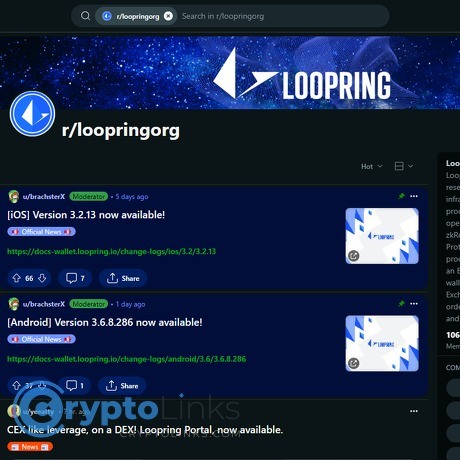
r/loopringorg
www.reddit.com
r/loopringorg Reddit review guide: everything you need to know (with FAQ)
Ever open r/loopringorg, scroll for two minutes, and think: “What should I actually pay attention to?” You’re not alone. Between price takes, rumor threads, and real updates about things like the Loopring Wallet shutdown, it’s easy to miss the signal.
In this guide, I’ll walk you through the subreddit like we’re browsing it together—what’s worth your time, what to skip, and how to use Reddit to actually learn, stay safe, and keep up with Loopring and LRC without burning hours.
Describe problems or pain
Here’s what I see most people struggle with when they land on r/loopringorg:
- Hype vs. helpful: The most upvoted posts aren’t always the most useful. A clever meme or a spicy price prediction can outrun a sober update on migrations or protocol changes.
- Old info that won’t die: Reddit’s algorithm will surface older “high karma” threads. If you don’t check timestamps, you can end up following advice that made sense months ago but is risky now.
- Rumor mills: Screenshots with red circles, “a friend at the team told me,” or “confirmed partnerships” without sources. Fun to read, dangerous to act on.
- Missed tools: Flairs, weekly help threads, and simple search tricks are overlooked. That’s where a lot of the best content hides.
- DM traps: Newcomers sometimes get hit with off-platform “support” messages. If someone asks for a seed phrase, that’s your cue to nuke and report.
Fast fact: Research from MIT (Vosoughi et al., 2018) found false news spreads faster and farther than true news on social platforms. That’s exactly why you need a filter on Reddit—especially during big events.
Real example scenarios I’ve seen play out:
- The “buy-now” blast: A price thread promises LRC is about to “rocket” on Monday. No sources, just urgency. Hundreds of comments later, nobody shares a verifiable link.
- The screenshot tease: A cropped image hints at an integration. No URL, no timestamp, just arrows and emojis. Two days later, a mod drops the official link and context—and the story is much less dramatic.
- Support in the wrong place: A wallet issue gets posted under “Discussion” instead of “Support,” and helpful replies get buried. The weekly help thread had the fix pinned for hours.
Promise solution
Here’s what I’m going to do for you:
- Show how r/loopringorg actually works (so you can find the gold fast).
- Point you to post types worth your attention and how to spot red flags.
- Share a simple verification routine that takes 60–90 seconds, not 30 minutes.
- Highlight where timely updates usually appear first—so you don’t get blindsided.
You’ll come away with a no-nonsense playbook you can reuse anytime there’s news—wallet shutdowns, protocol tweaks, L2 comparisons, you name it.
What you’ll learn
- How to use r/loopringorg efficiently: Sort, filter, and search so the best posts find you.
- How to avoid traps: Recognize unsourced claims, recycled rumors, and shill patterns.
- How to track real updates: Spot mod stickies, confirm with official links, and save threads that matter.
Who this is for
- New Reddit readers looking at Loopring for the first time
- Layer-2 curious users exploring zk-rollups and LRC
- Loopring holders who want signal over noise
- Anyone comparing ecosystems and hunting for credible community insights
Quick note on timing
Loopring Wallet is scheduled to shut down by the end of June 2025 according to Loopring’s own channels. Expect the subreddit to be the fastest place to find migration tips, timelines, and community-tested steps—usually linked back to official posts for confirmation.
Keep an eye on:
- Loopring on Medium for official announcements
- r/loopringorg for pinned threads and community troubleshooting
Why this matters: when big changes hit, timing and sources make the difference between a smooth migration and a panic click. Reddit can be your ally—if you know how to steer it.
Ready to see what r/loopringorg actually is (and isn’t) so you can read it like a pro and skip the noise? That’s exactly where we’re heading next—want the quick tour before we build the playbook?
What r/loopringorg is (and what it isn’t)
Think of r/loopringorg as the community town square for everything Loopring: protocol updates, ecosystem chatter, LRC talk, and hands-on support from real users. It’s community-run, not a trading signal group, and not the official help desk. When big news drops (like announcements on Loopring’s Medium), this is where links, context, and practical “what should I do?” conversations happen fast.
“Trust, but verify—especially when it involves your keys, your funds, and your peace of mind.”
What it is: a live pulse of sentiment, links to official posts and GitHub activity, user-tested tips, and honest skepticism. What it isn’t: financial advice, guaranteed alpha, or a place to hand over your seed phrase because a stranger “can help.”
Who hangs out here and why it matters
The mix is the magic—and the challenge. You’ll see:
- Long-time holders who know the protocol history, tokenomics debates, and where bodies are buried in old threads.
- New users sorting out wallets, transfers, and L2-to-L1 withdrawals (often sharing the exact steps that finally worked).
- Dev-watchers tracking GitHub repos and parsing what commits and releases might mean for the roadmap.
- Skeptics and traders who bring useful counterpoints—even when they’re spicy.
This blend keeps r/loopringorg grounded. Mods set rules, use flairs, and pin context so the best info doesn’t get buried. Read the room: a thread with battle-tested commentary plus sources beats a loud claim with zero links every time.
Post types you’ll see and how to read them
- Official links: Releases, Medium posts, docs, or exchange notices. Example: a thread linking to the Loopring Wallet announcement on Medium or a tagged release on GitHub. Action: check the domain, timestamp, and whether mods sticky it.
- Community analysis: Deep dives on zk-rollups vs competitors, adoption trends, or UX trade-offs. Action: reward posts that show evidence (charts, on-chain links, docs). A calm comment with Etherscan and commit links beats a thread with 100 adjectives.
- Support/help: Wallet quirks, transfer delays, token approvals gone sideways, gas settings. Action: look for solved tags, steps that include screenshots and exact settings, and mod-confirmed answers.
- Price/speculation: TA screenshots, sentiment polls, macro takes. Action: treat these as barometers, not beacons. Enjoy the discussion, but don’t treat upvotes like a Bloomberg terminal.
Flair cheat sheet (rough guide)
Flairs vary over time, but you’ll commonly see:
- News: Timely items worth a skim even if you’re busy.
- Discussion: Debates and think pieces—great for gauging community sentiment.
- Support: Troubleshooting and how-tos; search these before posting.
- Guide/Resource: Bookmarks for later—setup steps, migration checklists, security primers.
- Meme: Culture and morale. Fun, but not research.
Use flairs as your first filter: if time is short, hit News and Guide/Resource first, then browse Discussion for context.
Engagement tells: what deserves your attention
- Source-first comments: Look for threads that cite Medium, GitHub, docs, or reputable exchanges. If it affects your funds, links are non-negotiable.
- High-effort replies: Step-by-step fixes, on-chain tx links, and back-and-forth debate. You’ll often find the real signal two replies deep—where someone challenges a claim and the OP answers with receipts.
- Mod stickies: During big events, stickied context can save you hours. If it’s pinned, read it.
Quick reality check: upvotes can be misleading. A randomized experiment published in PNAS found that a single early upvote increased final ratings by about 25% due to herding effects. Translation for Reddit: don’t let the score do your thinking. (Source)
Red flags that should set off alarms
- Unsourced “guarantees”: Phrases like “100% confirmed” without links. Ask for the original post or ignore.
- Urgency plays: “Buy now,” “last chance,” or “airdrop ends in 30 mins—DM me.” No legit helper needs your DMs or your seed phrase. Ever.
- Impersonators: New accounts posing as mods/team. Check account age and history. Mods won’t ask for keys or private info.
- Screenshots with no links: Images can be edited; insist on the source URL. If there’s no link, there’s no action.
- Wallet-connect bait: “Claim” pages that request unlimited approvals or strange permissions. If you don’t understand the transaction, reject it.
What the Loopring subreddit isn’t (so you don’t get burned)
- It’s not official support: You’ll get great help, but final instructions should align with official docs or announcements.
- It’s not a signal group: You’ll see price talk, but it’s sentiment, not strategy.
- It’s not your custody solution: Never share seed phrases, private keys, or raw JSON keystores. Not with mods, not with “devs,” not with anyone.
Want to turn this subreddit into a research superpower instead of a noise machine? In the next section, I’ll show you the exact filters, sorts, and search operators I use to surface gold in seconds. How much time would you save if Top (Week), flairs, and a few search tricks did the heavy lifting for you?
How to actually use the subreddit like a pro
You don’t have time to chase rumor tornadoes. You want the signal, not the shouting. Here’s exactly how I turn r/loopringorg into a clean, fast research feed—so I can spot real updates, skip hype, and get help without scrolling for hours.
“In crypto, trust feels fast—verification saves money.”
Sorting, filtering, and search tricks
The default feed buries useful posts. A few clicks change everything:
- Sort the subreddit by “Top → Week” or “Top → Month”. This surfaces the most useful, sourced threads people actually bookmarked. It cuts noise dramatically.
- Use flairs to narrow the firehose. Hit the flair filter and stick to News, Support, or Guide/Resource when you’re researching. Save Discussion and Memes for later.
- Switch post sorts depending on the situation:
- New: during breaking news (e.g., wallet updates) to catch fresh links
- Rising: early traction posts that might become the day’s main thread
- Controversial: useful for spotting split opinions and edge cases
- Sort comments smartly: set to Top for vetted answers, New to watch a live situation evolve, or Old to trace the original context fast.
- Search on Reddit with intent: add quotes and operators to target context. Examples:
- wallet shutdown (Top, Month)
- flair_name:"News" LRC (News flair, newest first)
- "Medium" Loopring (to pull official links)
- Search via Google for better recall:
- site: queries: site:reddit.com/r/loopringorg “wallet”, site:reddit.com/r/loopringorg “migration”, site:reddit.com/r/loopringorg “update”
- Use Google’s date tools (Past week/month) to avoid stale threads.
- Save and follow threads that matter. Hit Save on key posts and toggle Follow for updates when you’re tracking a fix or announcement.
Quick context: larger, high-effort posts tend to bubble up in “Top” on a weekly or monthly view, which matches what community research has shown about engagement surfacing quality on Reddit. It’s not perfect—but it’s a better default than scrolling Hot like everyone else.
Finding real updates (and avoiding outdated info)
Big news moves fast. Here’s how I keep my feet on the ground:
- Check the timestamp first. If it’s older than a few days during active events, it might be outdated. Confirm with a fresher thread.
- Scan for mod stickies. Major announcements often get pinned, summarized, or linked by moderators. If there’s no sticky, look for a top comment from a mod linking official sources.
- Look for official links in the post or top comments: Medium (announcements), GitHub (dev changes), Docs, or the verified social account. No link? Treat it as opinion until proven otherwise.
- Cross-post clues: If a thread is cross-posted to other crypto subs or referenced by reputable accounts, that’s an extra signal it’s legit.
- Read the edit history. Many OPs add “Edit:” with clarifications or source updates. That’s often where the truth settles.
- Avoid screenshot-only “leaks.” Ask for the original URL. If none appears, I move on.
Real-world example approach: if you see a post about the Loopring Wallet timeline, sort by Top → Week, open the most upvoted thread, and look for a Medium link in the body or comments. If a newer thread contradicts it, I follow the newer one—but only if it also references official links.
When to ask vs. when to search
I use a simple rule: if it sounds like a common issue, I search first; if it’s specific to my setup, I ask. That saves everyone time and usually gets me answers faster.
- Search first for things like:
- “stuck withdrawal” / “LRC deposit pending”
- “gas too high” / “failed transfer”
- “wallet closure steps” / “migration guide”
- Ask when it’s case-specific: share exact context so helpers don’t guess.
- Device + OS, app version, region (if relevant)
- Exact error message (copy/paste), what you already tried
- Non-sensitive proof (e.g., truncated tx hash: 0x1234…abcd)
Posting with this level of detail increases the odds someone with the same setup spots the fix in minutes.
How to engage without getting ignored
- Lead with context. One sentence on your goal, then the facts. Busy readers reward clarity.
- Cite a source or two. Drop the link you’re reacting to (Medium, GitHub, doc). It shows you’ve done your homework.
- Be kind. Polite questions get more brainpower. People remember helpful users and answer them first next time.
- Use “Edit:” to update outcomes. If your issue is solved, say how. Future readers will thank you—and often mods will tag it for visibility.
- Follow up automatically. Leave a comment like “RemindMe! 48 hours” using RemindMeBot to circle back after an announcement.
Safety first: common traps and quick defenses
Scammers love urgency and DMs. I treat any unexpected message as hostile until proven innocent. Chainalysis’ 2024 Crypto Crime Report notes that scams remain one of the largest sources of illicit crypto revenue—so a little paranoia is healthy.
- Never share seed phrases, keys, or full tx screenshots with QR codes. No legit helper needs them. Ever.
- Assume “support” DMs are fake. Real help happens in public threads. If someone pushes you to Telegram/WhatsApp, that’s a tell.
- Check the URL letter by letter. Look out for lookalike domains (e.g., swapped letters). Bookmark official links from mod stickies.
- Report fast: hit Report → Spam/Scam on shady posts or users. Then block.
- Use 2FA and a hardware wallet for anything you can’t afford to lose. Emotion is the enemy of security; slow down when stakes are high.
When I feel that twinge of FOMO or fear, I re-read this line: “If it can’t survive 60 seconds of verification, it doesn’t deserve your money.”
One last power move before we talk trust signals
Build a mini “control panel” by saving a few searches and views: Top (Week), flair: News, and a Google site: query with past-month filter. Open that trio whenever you check in. It’s a simple ritual that keeps you informed while everyone else wades through noise.
Next up, I’m going to show you my personal BS detectors—how I grade sources, weigh comments, and spot screenshot traps in seconds. Want to see the exact checklist I use before I act on a claim?
Trust signals and BS detectors
I love the energy on r/loopringorg, but the fastest way to lose time (or money) is to trust the loudest comment instead of the best source. Social feeds reward speed; your wallet rewards accuracy. When a post makes your heart race—big partnership, urgent migration, new listing—that’s the moment to switch on your filters.
“Extraordinary claims require extraordinary evidence.” — Carl Sagan
Source-first mindset
My golden rule is simple: links or it didn’t happen. I prioritize posts that anchor to primary sources you can verify:
- Official announcements: Loopring Medium, GitHub org, docs and the main site.
- On-chain references: LRC contract on Etherscan, verified contract sources, proxy implementations, creator addresses.
- Exchange status pages/blogs: listings, suspensions, or wallet maintenance posts from the exchange itself.
- Reputable research: credible exchange research pages or well-cited explainers (never just a screenshot).
My “3-link rule” for anything that could affect funds: I want to see a primary source link, an official channel mirror (e.g., Medium + GitHub or site update), and at least one independent confirmation. If the post is only a cropped image or a claim like “source can’t be shared yet,” I treat it as rumor until proven otherwise.
Cross-checking claims
I run a quick triangle check. It takes two minutes and saves headaches:
- Timestamp sanity: Is the news recent? Are comments talking about it within the last few hours? Old announcements get recycled to farm karma.
- Channel mirror: If it’s major, it usually hits at least two official places (e.g., Medium post + site banner, or GitHub PR + docs change).
- Independent coverage: Not hype blogs—look for neutral summaries or exchange status notes.
- High-impact = wait: If it could cost you money (migrations, contract changes, “emergency” updates), wait for multiple confirmations.
Why bother? Large studies show sensational falsehoods travel faster than truth on social networks. One famous example: an MIT analysis of 126K stories found false news spread “significantly farther, faster, deeper, and more broadly” than true news on Twitter (Science, 2018). Different platform, same human psychology. Slow things down by 15 minutes and your odds improve dramatically.
Comment quality tells
Good threads feel different. Here’s what I watch for:
- Receipts included: URLs to commits, PR numbers, Etherscan addresses, or docs with matching language.
- Reproducible steps: “I replicated this by … here’s what I saw,” not just “I heard.”
- Healthy pushback: People disagree respectfully and share counter-links. Echo chambers rarely produce truth.
- Limits and uncertainty: Comments that say “I’m 70% sure; missing X confirmation” are usually more trustworthy than absolutes.
Moderator signals
Mods aren’t infallible, but their meta posts save time:
- Stickied megathreads: When big news hits, they consolidate context and updated answers on top of the sub.
- Flair discipline: News/Guide/Support flairs often reflect a quick triage; low-effort speculation is less likely to be flaired as a resource.
- Removal notes: If a post gets nuked for “unverified claim” or “phishing domain,” that’s a built-in warning label.
Screenshot skepticism
Screenshots are where most scams hide. I run a short checklist before I trust a single pixel:
- Ask for the original link: “Got a URL?” If none appears, assume it’s staged.
- Domain sniff test: Is it loopring.org or a lookalike like looprng.org? Tiny typos steal funds.
- UI inconsistencies: Fonts, spacing, or wording that doesn’t match official pages are dead giveaways.
- Shorteners and redirects: Don’t click. Toss the link into urlscan.io first. If a site is brand-new, be extra cautious.
- On-chain reality check: If an “airdrop” contract is shown, open it on Etherscan. Is the source verified? Who deployed it? Is it a fresh contract with zero reputation?
Example I’ve seen more than once: a “Loopring airdrop is live” image with a goo.gl link. No official mirror, brand-new domain, and a contract created hours ago by a random wallet. That’s a pass every time.
Account and pattern clues
- Brand-new accounts pushing sensational news, then going quiet, are red flags.
- Posting history full of giveaways, support “urgent help,” and off-platform DMs = pattern of extraction, not contribution.
- Language tells: “Guaranteed,” “last chance,” “connect wallet to verify”—classic pressure levers.
My fast BS filter you can copy
- If it’s huge news, I expect a link to Medium or GitHub. No link, no action.
- I search: site:reddit.com/r/loopringorg “keyword” and sort by New to see if multiple users are discussing it.
- I check mirrors on official channels within a few hours. Silence = skepticism.
- I run suspicious links through urlscan.io or save the post with links to archive.today/Wayback to track edits.
- For contracts, I verify on Etherscan: source code, creator, proxies, and comments from known auditors.
- I favor threads where people post receipts and accept pushback. Herd agreement without links is a trap.
- If a claim moves money or keys, I wait for two independent confirmations, minimum.
With those filters on, you can turn the subreddit into a real-time intel feed instead of a rumor mill. Now, about those questions that won’t stop showing up in the threads—what’s actually happening with Loopring, what the wallet timeline means, and how risky LRC really is—want the straight answers with sources you can check?
FAQ the subreddit keeps getting (answered simply)
Is Loopring shutting down?
Short answer: the Loopring Wallet is scheduled to shut down by the end of June 2025, per an official Medium announcement. That’s the wallet/app—not necessarily the end of the core protocol or the community.
What this means if you’re following r/loopringorg:
- Look for mod-sticked “migration” or “timeline” threads. These usually collect the official steps and deadlines.
- Expect recurring questions about backups, asset safety, and alternative wallets. Good replies cite official links and give step-by-step instructions.
- Watch for posts sharing the announcement and any follow-up clarifications from the team.
Helpful links you’ll see referenced:
- Official updates on Medium: Loopring on Medium (search for the wallet closure post)
- Community threads: r/loopringorg (sort by Top → Week/Month when big news breaks)
- Development breadcrumbs: Loopring GitHub (for repos and commit activity)
“In crypto, trust the timestamp, not the hype.”
Does Loopring have a future?
It depends on execution, developer activity, ecosystem interest, and the broader L2 landscape. On the subreddit you’ll see two useful signals:
- Source-backed posts linking to GitHub activity, official statements, or partner integrations.
- Community experiments and open-source contributions that show builders still care.
Market outlooks exist (for example, exchange “prediction” pages or explainers), but they’re opinions—not guarantees. Use them as context, not a roadmap. A common approach is to cross-check sentiment on Reddit with official repos and announcements:
- Official posts: Loopring on Medium
- Repo activity: Loopring GitHub
- Exchange overviews: Kraken Learn Center (search for Loopring content)
What are the risks of investing in LRC?
Everything you expect from crypto—and then some. The usual suspects show up in r/loopringorg threads after every market swing:
- Volatility: double-digit moves in short windows are common.
- Liquidity: spreads and depth vary across venues.
- Technology and roadmap: upgrades, forks, or product changes (like the wallet shutdown) can shift sentiment.
- Regulation: policies differ by country and can change suddenly.
- Cybersecurity: contract risk, phishing, and fake support DMs—never share seed phrases.
- Concentration: token distribution and treasury movements can impact price dynamics.
For a plain-English checklist, many readers point to third-party risk explainers like Wealthsimple’s help center. You can search their materials here: Wealthsimple Help Centre (Loopring search). Always size positions so you can sleep at night—that’s your real stop-loss.
What’s the Loopring prediction for 2025?
I see third-party ranges floating around r/loopringorg. Example: KoinX shows an approximate LRC range of $0.88–$1.08 for 2025. Treat this as a model-based opinion, not a forecast you can set your life to.
- Reference: KoinX — Loopring (LRC) Price Prediction
- Rule of thumb: if a number is screenshot-only without a link, request the source.
Pro tip: when price posts take off on Reddit, read the top comments. The best ones annotate assumptions (market cap, token emissions, ETH gas conditions) or call out missing variables. Empty moon/doom chants won’t help you.
Where should I watch for official news?
On r/loopringorg, credible announcements almost always arrive with links you can check:
- Loopring on Medium for formal announcements (e.g., wallet closure, migrations).
- Loopring GitHub for what’s actually being built.
- Loopring on X/Twitter for real-time snippets the subreddit often cross-posts.
- r/loopringorg mod stickies during big news—read these first.
How do I spot a market-moving post on the subreddit?
Here’s the pattern I’ve seen during real news:
- Mod sticky appears within minutes or hours, summarizing facts and linking to sources.
- Multiple cross-posts from related crypto subs or credible accounts.
- Time-stamped official links (Medium, GitHub, exchange notices) in the top comments.
- Healthy debate under the post—people ask tough questions and cite references.
Red flags:
- Unsourced “urgent” alerts, especially if they push you to DMs or to connect a wallet.
- Price takes without any on-chain metrics, partner confirmations, or official statements.
Remember: most regrets I hear from readers came from acting fast on low-quality info. Acting slow on trustworthy info ages much better.
Want a clean list of the official channels, research hubs, and trackers I pair with r/loopringorg—so you can verify claims in seconds, not hours? That’s exactly what I’m breaking down next.
Best complementary sources and how r/loopringorg fits with them
Here’s how I actually use r/loopringorg: as a fast, human-powered discussion layer on top of official updates and hard data. Reddit surfaces what’s happening right now; the sources below tell me what’s real, what’s risky, and what’s worth my attention.
Official channels you’ll often see linked
When a big Loopring story hits (think feature deprecations, audits, or the wallet timeline), the strongest threads in r/loopringorg almost always point back to official links. I build my checks around these:
- Medium (official announcements): Product changes, timelines, and migration guidance. If a claim isn’t reflected here (or clearly scheduled), I treat it as rumor until it is.
- GitHub (development activity): Releases, tags, and issues paint the “what’s actually shipping” picture. Watch for recent commits, version bumps, and release notes that match the chatter.
- Docs/Website: Pages for protocol architecture, endpoints, and support flows. A quietly updated doc often precedes broader comms.
- Social channels: Short-form confirmations or clarifications that get linked in the comments. I look for posts from verified/project accounts, not screenshots.
Example workflow: let’s say a thread claims “feature X is being phased out.” I’ll scan the comments for a link to Medium, then pop over to GitHub to see whether there’s a related PR or release tag. If those line up—and the docs reflect the new state—that’s my green light. If not, I bookmark the thread and wait for confirmation. This simple habit has saved me from acting on half-baked “heads-ups” more times than I can count.
Good “outside” reads to pair with Reddit
Reddit is where you feel the pulse; these sources add the context and the numbers.
- Exchange research pages: High-level explainers and market notes (for example, Kraken-style overviews) are useful primers to sanity-check narratives you see in the subreddit.
- Risk overviews: Pages like Wealthsimple’s LRC risk breakdown are handy reminders of volatility, liquidity, and regulatory risk—especially when threads get euphoric.
- L2 adoption and safety trackers: Tools that map ecosystem health beyond headlines:
- L2 ecosystem dashboards: Track network status, security assumptions, and upgrade notes to see whether sentiment matches fundamentals.
- TVL and volume aggregators: DeFi trackers show whether on-chain usage is rising or flat. Pair these with discussion threads about “new users” or “liquidity coming in.”
- Gas and fee trackers: Fee compression (or spikes) can explain user behavior and narrative shifts you see in comment sections.
- On-chain explorers: Etherscan and similar let you verify contract addresses, token transfers, and any “paused/upgrade” events people mention.
Pro insight: In market-moving moments, subreddits tend to over-index on screenshots. Ask for the original link every time. A direct Medium post or GitHub tag will tell you 10x more than a cropped image.
How I combine them without wasting time
When a thread pops off in r/loopringorg, I run a quick three-step pass:
- Source it: Look for an official link (Medium/GitHub/docs). No link? I mark it “unconfirmed.”
- Quant it: If the claim implies adoption or outflows, I check a TVL/volume dashboard or explorer for visible changes.
- Context it: Search the subreddit for prior discussions or mod stickies to avoid reacting to an old cycle.
Reddit’s strength is speed and diversity of viewpoints; pairing it with objective trackers cuts false alarms. Pew Research has repeatedly shown Reddit’s role as a real-time news discovery platform—use that speed, but anchor it to primary sources and data.
Dashboard picks that actually matter for Loopring watchers
- Daily activity and volume: If users are talking up a feature or migration, do transactions, deposits, or DEX volume reflect it?
- Liquidity presence: Are new pairs or pools seeing liquidity, or is it just talk?
- Upgrade cadence: Do GitHub releases align with what mods and top commenters are saying?
- Bridging and withdrawals: Noticing spikes can validate community reports about user moves or risk responses.
Security sanity checks before you click anything
- Domain discipline: Only interact with official domains you can type yourself. If a thread links you elsewhere, verify against docs or pinned posts.
- Contract confirmation: If a post mentions a contract, find it on a reputable explorer and compare it to known addresses. Never approve unlimited permissions to unknown contracts.
- Cold path for migrations: For any migration talk, wait for explicit guides on official channels. Treat any “one-click tool” in comments as untrusted until proven otherwise.
Bookmark-worthy: my living resource list
I maintain an updated collection of official links, trackers, dashboards, and explainers you can use alongside r/loopringorg to validate claims, check timelines, and follow any wallet-related migrations. Save this page and revisit it when big news hits:
Open my latest Loopring research stack
Use that list as your control panel while Reddit keeps you plugged into what the community is seeing in real time. Want a simple, no-mistakes workflow you can run in under a minute every time a new thread breaks? That’s exactly what I’m sharing next—ready for a five-step checklist you can screenshot and keep?
Should you spend time on r/loopringorg? My quick take
Yes—if you use it smartly. It’s one of the fastest places to catch Loopring chatter, community help, and links to official updates. The trade-off is speed vs. noise. That’s normal for open forums. Use a few simple filters and you’ll turn it into a reliable radar for what actually matters.
One quick reality check: fast-moving communities are great for discovery, but they can amplify rumors. Research on social platforms shows unverified claims spread farther and faster than truth (Science, 2018). Translation for Reddit use: click the source before you click “buy.”
A quick checklist to get value fast
- Sort smart: Switch to Top → Week or Top → Month to surface high-signal posts that others already vetted.
- Filter by flairs: Favor News and Guide/Resource for updates and how-tos; skim Support if you’re troubleshooting.
- Read the mod sticky first during any major announcement—especially wallet/migration updates. That’s where timelines and official links land.
- Cross-check links with the official channels: Loopring Medium and GitHub. If a claim involves funds or security, wait for confirmation in both.
- Treat price talk as entertainment. Use it for sentiment, not signals. No Reddit thread can predict your risk tolerance.
- Ignore DMs and requests for keys. Nobody legit needs your seed phrase—ever. Report suspicious messages.
- Search before you ask. You’ll often find a fresh thread with the exact fix or link you need.
Example: When big changes trend (like the wallet shutdown timelines), the top thread is usually a mod-pinned post linking to the official Medium announcement and FAQs. Start there, not on screenshot-only posts.
When big changes hit, avoid chaos with this mini-playbook
- Go straight to r/loopringorg: reddit.com/r/loopringorg
- Open the stickied “megathread.” Skim the first comment from mods for the summary, deadlines, and official links.
- Scan comments sorted by “New.” Look for distinguished mod comments and replies with source links (Medium, GitHub, docs).
- Save the thread (tap “Save”) and bookmark the official post for reference. Revisit after a few hours for updates.
- Confirm action items (migrations, deadlines) against the official Medium page before you move assets.
- Screenshot skepticism: If it’s only an image, ask for the original link. No link, no action.
Why this works: it reduces “first-heard bias.” People who verify against official sources make better decisions—unsurprising given how social feeds can distort urgency and accuracy (Pew Research, 2023).
Final thoughts and my take
Use r/loopringorg as a discussion layer on top of official news, not a replacement. It’s excellent for context, real-world troubleshooting, and early signals that something changed. Keep your guard up, ask for sources, and you’ll get real value without the drama.
If anything big changes—like confirmed migrations, extensions, or new timelines—I’ll update this guide here: cryptolinks.com.
CryptoLinks.com does not endorse, promote, or associate with subreddits that offer or imply unrealistic returns through potentially unethical practices. Our mission remains to guide the community toward safe, informed, and ethical participation in the cryptocurrency space. We urge our readers and the wider crypto community to remain vigilant, to conduct thorough research, and to always consider the broader implications of their investment choices.