XRP’s 2026 Takeover? Why CNBC Buzz Says It’s “Hotter Than Bitcoin” — And How I’d Ride the Wave Before It Peaks
Is XRP actually setting up for a real 2026 run… or is this just another round of “this time is different” with better lighting and louder clips?
Because right now, the vibe is familiar: XRP chatter is spilling out of crypto circles and into that CNBC-style mainstream buzz where phrases like
“XRP is hotter than Bitcoin”
get tossed around like they’re a measurable fact.
And look—I’m not here to hate on excitement. I’m here because hype can make you money or quietly set you up to become exit liquidity. The difference is whether you can separate:
- a real cycle (with confirmation and follow-through), from
- a story-driven spike (that fades the second the crowd gets fully in).
If you’re reading this, you probably want the same thing I want: a clean way to judge XRP’s upside without getting emotionally kidnapped by headlines, influencer charts, and fantasy price targets.
The pain right now: XRP hype is loud, but good decisions are quiet
Here’s what I’m seeing readers wrestle with the most when “XRP vs Bitcoin” starts trending again:
1) Mixed signals everywhere
One day the narrative is “XRP is about to flip everything.” The next day it’s “it’s centralized / it’s dead / it’s manipulated.” Most people don’t lose because they were “wrong”—they lose because they keep changing their thesis mid-trade.
2) Cherry-picked charts on social
You’ll see a perfectly zoomed-in chart that makes any coin look like the next mega-breakout. What you don’t see is the full context: higher timeframes, prior resistance, liquidity zones, or how XRP is behaving against BTC (which matters more than most people admit).
3) The “XRP to $1,000” trap
This one is pure emotional gasoline. Big number + strong community + a few confident voices = people stop doing math. The result is predictable: late entries, no exit plan, and a long hold through a brutal drawdown because selling feels like betraying the story.
4) Buying late because the story is irresistible
There’s research that explains why this happens. When something is getting constant attention, people buy it simply because it’s in front of them. That behavior shows up in markets again and again. One classic example: Barber & Odean’s work on attention-driven buying—the basic idea is that investors are more likely to buy what’s grabbing headlines and eyeballs, not necessarily what’s best-priced or best-timed.
In crypto, attention can be rocket fuel. It can also be a smoke machine.
Promise solution
Here’s what I’m going to do: I’ll show you the research-based framework I use (updated through Jan 7, 2026) to sanity-check the “XRP is hotter than Bitcoin” narrative.
Not in a vague, motivational way. In a practical way that helps you build a plan with:
- clear triggers (what needs to happen before you add risk),
- invalidation points (what proves you wrong, fast),
- profit-taking rules (so you don’t ride a winner all the way back down).
If XRP really is gearing up for a strong 2026, this helps you participate without doing the usual “buy late / cope early” routine.
What this article will answer (so you don’t waste time)
- Is XRP really “hotter than Bitcoin”?
And what would that mean in real terms—price action, strength, and behavior—not just vibes. - What would need to be true for XRP to outperform in 2026?
I’m talking catalysts you can actually verify, not slogans. - Could XRP realistically hit $1,000?
We’re going to treat this like adults and use math, not wishcasting. - How I’d approach risk (so I don’t get trapped)
Where people usually get caught buying tops, and what I do differently when the market turns euphoric.
The #1 mistake I keep seeing in XRP cycles
The most common XRP cycle mistake is painfully simple:
People buy “the story” after the move already happened.
It usually looks like this:
- XRP goes vertical (a fast candle that feels like “if I don’t buy now, I’ll miss it”).
- The narrative gets louder: “institutions,” “global payments,” “this time it’s different.”
- New buyers chase a breakout that’s already extended.
- A sharp pullback hits (because crypto does crypto things).
- Instead of exiting, they hold because there was never a plan—only a belief.
And this is the part nobody wants to hear when the timeline is screaming bullishness:
If you don’t plan exits before you enter, you’re not “investing.” You’re volunteering for the market’s mood swings.
I’m not saying XRP can’t run. I’m saying the crowd tends to show up at the worst moment—right when the chart looks most convincing and risk is actually the highest.
So what would I need to see—specifically—to believe XRP’s 2026 strength is real and not just a headline-powered spike? That’s where the actual reality check starts next.

My “research until today” reality check: what would actually drive XRP in 2026?
Whenever I see “XRP is taking over” headlines, I ask one boring question that saves me a lot of money:
What, specifically, would have to happen in the real world (and in market structure) for XRP to keep running?
Not vibes. Not “community strength.” Not a single green candle.
Here’s the checklist I use to decide whether an XRP move has real legs in 2026—or whether it’s just the same old cycle of attention chasing price.
- Market truth: Is XRP actually outperforming BTC in a sustainable way?
- Demand: Are people using XRP for something that creates repeat buying pressure (not just trading)?
- Liquidity & listings: Is it easier for bigger money to get in and out without slippage?
- Regulatory clarity: Does the legal backdrop reduce friction, or does it create new headline risk?
- Expectations vs. math: Are price targets grounded in supply and market cap reality?
If I can’t check at least a few of these boxes with actual evidence, I treat the rally as “tradable,” not “marry-able.”
Media heat vs. market truth: what “hotter than Bitcoin” should mean (and what it doesn’t)
When a network says something like “XRP is hotter than Bitcoin,” my first move is to translate that phrase into measurable signals.
What it should mean (if it’s real):
- Relative strength vs BTC: I want to see XRP/BTC in a clear uptrend—not just XRP pumping while BTC is flat for a day.
Sample check: If XRP is up 25% in a week but XRP/BTC is flat, that’s not “hotter,” that’s just “moving with the market.” - Spot-led volume (not just leverage): Big moves backed by strong spot volume tend to be healthier than moves driven mainly by perp casinos.
What I look for: rising spot volume on multiple exchanges, not one venue printing weird spikes. - Liquidity improving: Tighter spreads + deeper order books.
Why I care: if price rises while liquidity stays thin, you get those dramatic wick candles that punish late buyers. - Derivatives not overheating: Funding rates and open interest (OI) should expand in a way that matches real demand.
Red flag: OI exploding while price stalls = crowded trade. That’s when “hot” turns into “liquidated.” - Rallies that broaden: If XRP runs and other majors are also risk-on, it’s often a healthier environment. If XRP is the only thing pumping, I ask “why?”—because isolated pumps can be news spikes or squeezes.
What it doesn’t mean: trending on social, a celebrity mention, or a single “CNBC clip” that gets reposted 40,000 times.
And there’s actual research that backs up why I’m cautious here: studies in traditional markets have long shown that attention and headlines can push short-term flows, but they don’t automatically translate into durable returns. (If you want to look it up, check work like Tetlock (2007) on news sentiment and market behavior, and Da, Engelberg & Gao (2011) on attention effects.) Crypto is even more attention-driven, which is exactly why I demand stronger confirmation.
The catalyst bucket that matters most: adoption and real-world usage (not slogans)
“Partnership” is a word that has wrecked more crypto portfolios than any bear market.
I separate XRP adoption into two buckets:
- Headline adoption: announcements, MoUs, “exploring blockchain,” pilot programs, vague partnerships.
- Measurable usage: consistent transaction activity tied to real products, repeat usage, and clear economic reasons to use the asset.
What I’d need to see before I treat adoption as a real tailwind in 2026:
- Repeatable growth in usage metrics over multiple months/quarters (not a one-week spike).
Example: a payments corridor that keeps processing increasing volumes over time, not just a single “launch week.” - Sustained demand that isn’t purely speculative.
Translation: activity that continues even when price chops sideways. - Credible integrations where the incentives make sense.
My test: “If XRP’s price doubled tomorrow, would this integration still function?” If the answer is no, it’s fragile.
What I ignore: screenshots of “bank logos,” vague claims like “hundreds of institutions,” and anything that doesn’t come with a way to verify ongoing usage.
Regulation and legal clarity: why it still moves price (even when people pretend it doesn’t)
In 2026, legal clarity still matters because it changes the plumbing:
- Listings and liquidity: fewer legal question marks can mean broader access, more venues, and better market depth.
- Institutional participation: some pools of capital simply won’t touch assets with unresolved regulatory risk.
- Narrative fuel: clarity creates confidence, and confidence brings flows—sometimes irrationally fast.
But here’s the trap: markets love to front-run outcomes. Traders buy the expectation, then sell the moment the news becomes official. So I treat regulatory catalysts like this:
- Before the headline: I watch whether price is building structure (higher lows, clean breakouts) without needing constant news injections.
- On the headline: I watch for “pump then dump” behavior—big wick up, fast retrace, volume climax.
- After the headline: I watch whether the market can hold gains and keep making higher lows. That’s the real tell.
The $1,000 XRP question: quick math that kills bad expectations (but still leaves room for upside)
Let’s deal with the viral question directly, because it refuses to die.
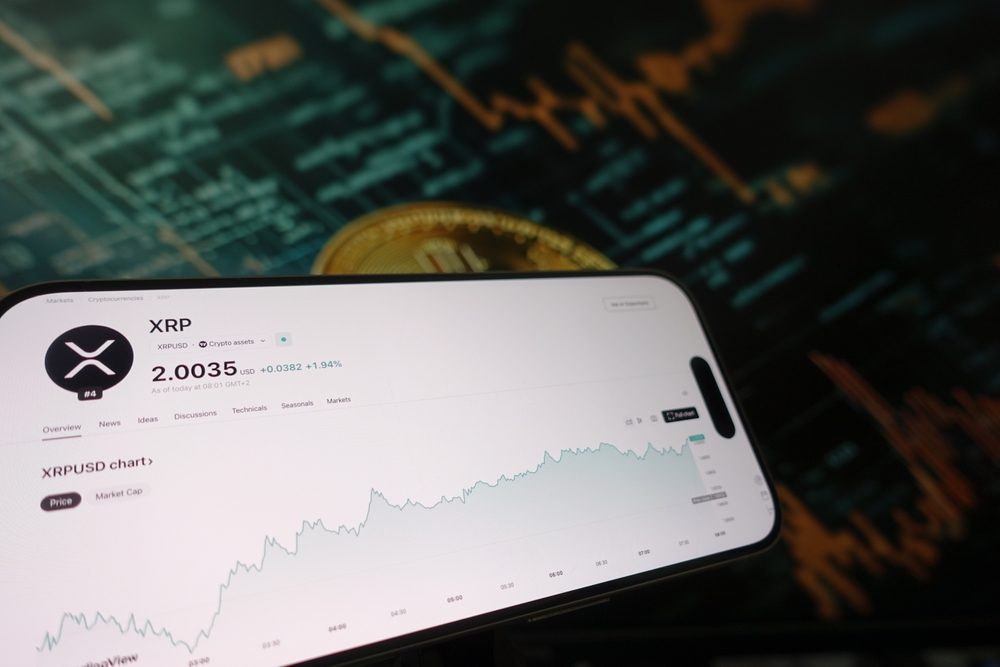
XRP has a circulating supply on the order of tens of billions of tokens (often cited around ~57B, though it changes over time). If you multiply that by $1,000, you’re talking about a market cap in the neighborhood of $57 trillion.
That’s why people point to the market-cap reality check (CoinLedger has made this exact point publicly): the number gets absurd fast.
More grounded “what would it take” scenarios:
- $10 XRP → roughly ~$570B market cap at ~57B circulating
That’s massive, but at least it lives on Planet Earth. - $25 XRP → roughly ~$1.4T
This requires a full-on mega-cycle plus sustained liquidity and demand. - $50 XRP → roughly ~$2.85T
Now you’re basically saying XRP becomes one of the most dominant assets in all of crypto—by a lot. - $100 XRP → roughly ~$5.7T
Possible in math, brutal in reality, and it would require a historic level of adoption + capital inflow.
My point isn’t “XRP can’t go up.” It’s that price targets should match the size of the claim you’re making. Supply matters. Liquidity matters. And demand has to be persistent, not just a month of hype.
My “don’t get played” indicators: signs the move is real vs. signs it’s just a spike
When XRP starts moving fast, I run a simple “is this sturdy?” scan. It’s not fancy—but it’s saved me from buying the top more times than I can count.
Signs it’s real (or at least healthier):
- Higher highs + higher lows on daily/weekly structure (not just a single breakout candle).
- Healthy pullbacks: retraces that hold key levels instead of instantly nuking back into the range.
- Spot volume leading, with derivatives behaving (no funding/OI “mania” signal).
- Cleaner candles: fewer violent wick rejections at obvious levels (those are often distribution fingerprints).
- Risk-on backdrop: majors participating, sentiment improving across the board, not just one coin doing a solo moon mission.
Signs it’s just a spike (high trap probability):
- Vertical move with no base, then constant wicks and fast retraces.
- OI surging while price stalls (crowding), or funding turning extreme.
- One-narrative market: every post sounds identical, everyone suddenly agrees, and price targets jump from “possible” to “guaranteed.”
If I see the “spike” signals, I don’t argue with it. I just change how I play it: smaller size, faster profit-taking, and zero emotional attachment.
Two voices worth monitoring (light mention, not a promo)
If I want a quick sentiment temperature check—what narratives are spreading, what retail is getting excited about, what chart levels people are fixating on—I’ll sometimes glance at these accounts:
I’m not using them as “signals.” I use them the same way I use CNBC clips: as a thermometer. If the narrative is getting too one-sided, that itself becomes data.
Now here’s the question that matters if XRP really does catch fire in 2026:
How do you ride the wave without becoming exit liquidity when the crowd finally shows up?
That’s exactly what I’m going to lay out next—my personal plan for entries, invalidation, and profit-taking so I’m not guessing when the candles start getting stupid.
How I’d ride an XRP wave without marrying the top
I don’t try to “predict” XRP tops. I treat XRP like what it is: a high-volatility asset that can trend hard, fake out harder, and punish anyone who confuses a good narrative with a good entry.
So my game plan is simple on purpose:
- Pick my time horizon (swing vs. longer-term hold).
- Define what would prove me right (the exact market behavior I want to see).
- Define what would prove me wrong (my invalidation).
- Plan exits before entries, because “I’ll decide later” is how people round-trip gains.
Before I put a dollar into XRP, I write one sentence:
My thesis is: “I’m buying XRP because ____ will likely happen, and I’m wrong if ____ happens first.”
That one sentence keeps me from holding through a full drawdown just because I got emotionally attached to a number.
My entry plan: scaling in beats guessing the perfect bottom
I almost never go all-in on XRP in one click. Not because I’m scared—because crypto loves violent wicks, and “perfect entries” usually only look perfect in hindsight.
Instead, I scale in using a starter → confirmation → continuation approach.
Here’s what that looks like in real life:
- Starter position (small): I take a small buy when XRP is near a level that makes sense (support zone, range low, or post-pullback area) and the market isn’t screaming “blow-off top.”
- Add on confirmation: I add only if XRP proves strength (break + hold, reclaim of a key moving average, or clean retest that holds).
- Add on continuation (optional): I add a final small piece if the trend is clearly underway and the pullbacks are healthy, not vertical.
If you want a clean, no-drama confirmation checklist, this is what I use:
- Break & retest: price breaks a resistance level, then comes back, holds it, and moves up again.
- Reclaim of key MAs: I like seeing XRP hold above commonly watched levels (example: 200-day for broader trend bias, and shorter-term MAs for momentum). I don’t worship moving averages, but crowds react to them.
- Relative strength vs BTC: I want XRP to stop bleeding against Bitcoin and start outperforming it on the XRP/BTC chart. If it can’t do that, a lot of “XRP is leading” talk is just noise.
- Spot-led behavior: I prefer moves that look organic (steady climbing, pullbacks that hold) over pure wick pumps that smell like leverage games.
A quick example (numbers just for illustration): say XRP is $1.00 and has been stuck under $1.10 for weeks. I might buy a starter at $1.00–$1.03 if structure looks stable, then add only if it breaks $1.10 and later holds $1.10 on a retest. If it never retests and just goes vertical, I won’t chase full size. I’d rather miss the first 10–20% than buy the candle that becomes someone else’s exit liquidity.
And yes—scaling in can slightly reduce returns if the move is perfectly clean. But it massively improves decision quality for actual humans. Even traditional research around staged entry (often discussed under dollar-cost averaging) shows it can reduce regret and timing risk, even if lump-sum wins more often on average. Vanguard has written about this tradeoff clearly: Dollar-cost averaging vs. lump sum.
Risk management that actually fits crypto (so one wick doesn’t end you)
XRP can move like a normal asset for weeks… then do something insane in 30 minutes.
So my risk rules are built around one truth: in crypto, liquidation cascades and wick hunts are a feature, not a bug. If I size too big or place my stop in the most obvious spot, I’m basically volunteering as a donation.
My personal risk framework:
- I cap loss per idea: usually 0.5% to 1% of my total portfolio on a swing trade. If I’m wrong, it’s a paper cut, not a trauma.
- I size from the stop, not from my feelings: if my stop needs to be wider (because XRP is whipping around), my position size gets smaller.
- I avoid obvious stop placement: I try not to put stops directly under the most obvious low where everyone else will put them. Crypto loves grabbing those.
- I don’t over-leverage: XRP can rip, but leverage turns normal volatility into forced mistakes. If I use leverage at all, it’s small enough that a wick doesn’t erase me.
When stops make sense: swing trades, breakout trades, anything where I’m expecting a specific structure to hold. If the structure breaks, I want out automatically.
When stops don’t always make sense: longer-term holds where the whole point is to survive noise. In that case I manage risk with position sizing (smaller) and a clear thesis-based invalidation (not “it went down 8% so I panicked”).
The crypto-specific check I always do before adding size:
- Funding rates: if funding is extremely positive, the crowd is leaning long and the market gets fragile.
- Open interest (OI): if OI is skyrocketing while price is grinding up, I assume a leverage flush is likely.
- Fast moves after crowded positioning: sharp pumps can reverse brutally when longs are stacked. I’d rather be late than be lunch.
My rule: If I wouldn’t be okay seeing XRP wick 10–20% against me in a day without panicking, my size is too big.
That one line has saved me from more bad decisions than any indicator ever has.
Profit-taking rules: how I lock wins while still letting a runner ride
Most people don’t lose money because they can’t buy. They lose money because they can’t sell.
So I sell in pieces. Always.
My “ladder” looks like this:
- First take-profit: I trim into strength when I’m up meaningfully (often around a prior resistance zone or after a strong impulse candle). This pays me for being right.
- Second take-profit: I trim again at the next major level (or if price goes parabolic and feels euphoric).
- Runner: I keep a smaller piece for the “what if this becomes the move” scenario—but I protect it with rules.
And here’s the part most people skip: after I take that first trim, I usually reduce risk. That can mean moving my stop up, or at minimum making sure a winning trade can’t turn into a big loser.
A simple example (again, just illustration):
- I buy 1000 XRP total, but in two or three entries.
- After a strong push, I sell 300–400 XRP into strength.
- If price keeps climbing, I sell another 300 XRP at the next major level.
- I keep 300–400 XRP as a runner, but if structure breaks (lower low on the timeframe I’m trading), I’m out.
This does two things:
- It stops me from becoming a “forever holder” by accident.
- It keeps me in the game if XRP turns into a monster trend.
The key mindset shift: I’m not trying to sell the exact top. I’m trying to avoid the ride down that wipes out months of gains in days.
Peak warnings: the signs I watch when a cycle is getting frothy
I don’t call tops—I watch for “conditions where tops happen.” When those stack up, I get more aggressive with profit-taking and I stop adding risk.
These are my biggest red flags:
- Mainstream “guaranteed target” talk: when confident price targets turn into a social identity, the risk/reward flips fast.
- $1,000 XRP talk goes truly mainstream: not niche crypto Twitter chatter—when it becomes a casual talking point everywhere, I assume we’re late-cycle in sentiment.
- Parabolic price + shallow pullbacks: healthy trends breathe; blow-offs don’t.
- Extreme funding + crowded longs: if longs are paying through the nose, the market often “solves” that by punishing them.
- Everyone stops asking “should I buy?” and starts asking “how high will it go?” That question is usually asked closest to the top, not the bottom.
One practical habit: if I catch myself checking the chart every five minutes because I feel like I’m “missing it,” I take that as a signal to either (1) stop adding risk or (2) trim. FOMO is not a strategy. It’s a symptom.

A simple way to stay profitable if XRP really runs in 2026
As of Jan 7, 2026, I can absolutely see how XRP could have real tailwinds—but I’m not building my plan around fantasies. The smartest money I know respects two things at the same time:
- Upside is real in crypto when narratives + liquidity + momentum line up.
- Math and risk still win, because hype doesn’t care about your entry price.
If you take only one next step from my approach, make it this:
Write your thesis, pick your invalidation, and plan your exits before the next big candle hits.
That’s how you ride an XRP wave without ending up married to the top—and paying for the honeymoon with your profits.