MiCA Deadline in 2 Weeks: Why USDT Faces EU Delistings, Why USDC Is Winning, and What July 1 Means for Stablecoin Wars
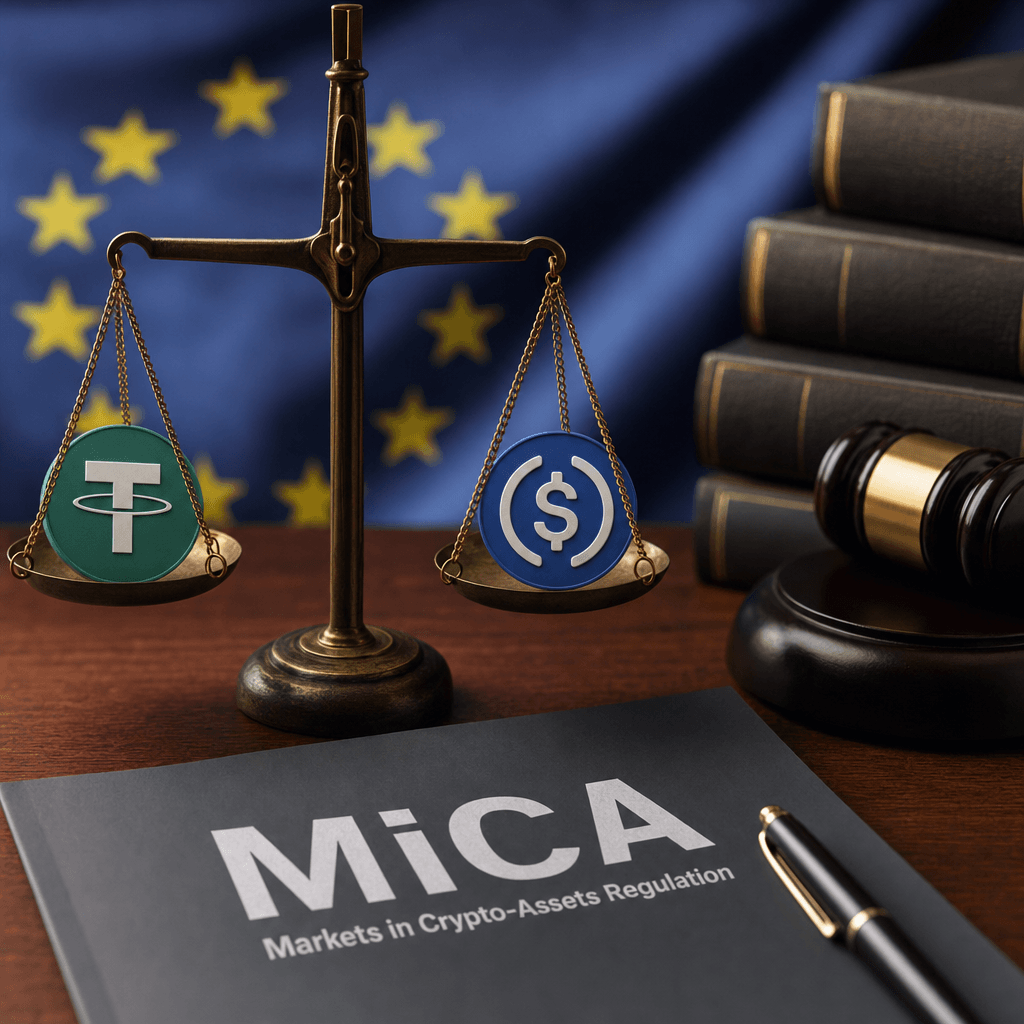
What happens if the stablecoin you use every day suddenly disappears from your EU exchange account?
That question sounds dramatic until you look at the calendar. The July 1 MiCA deadline is close enough that stablecoin risk is no longer just a legal topic. It is becoming a liquidity topic.
If you trade crypto in Europe, hold USDT on an exchange, use stablecoins for payments, or move funds between centralized exchanges and DeFi, this is the kind of rule change that can hit you in a very practical way: fewer pairs, wider spreads, blocked deposits, forced conversions, or a sudden need to use another stablecoin rail.
This is not panic content. I am looking at it the way I look at every major crypto shift on Cryptolinks.com: what changes for real users, what exchanges are likely to do, and where the liquidity may move before the headline fully lands.
The Problem: MiCA Is Turning Stablecoin Compliance Into a Liquidity Event
The big mistake is thinking this is only about “one coin getting delisted.” It is bigger than that.
MiCA, the EU’s Markets in Crypto-Assets regulation, is forcing EU-facing crypto platforms to make a hard choice: keep offering access to the world’s largest stablecoin market, or protect their own regulatory status under the new rulebook.
That choice is not theoretical anymore. When an exchange wants to operate in the EU as a regulated crypto-asset service provider, it has to care about what assets it lists, how those assets are offered, and whether stablecoins meet the standards expected under MiCA.
My simple read: MiCA turns stablecoin compliance into market access. If a stablecoin does not fit the EU rulebook, an exchange may still love the volume, but it may hate the license risk.
That is why USDT matters so much here. USDT is not just another token sitting in a wallet. It is one of crypto’s main trading rails. Traders use it as a quote currency. Funds use it for quick positioning. Freelancers use it for payments. Market makers use it to move liquidity across venues. DeFi users often use it as the bridge between exchange accounts and on-chain activity.
So if EU platforms restrict USDT access, even partially, the effect can show up in several places:
- Trading pairs: BTC/USDT, ETH/USDT, SOL/USDT, and altcoin pairs may lose depth or disappear for EU users.
- Spreads: If liquidity shifts to fewer compliant pairs, buying and selling can become more expensive.
- Transfers: Users who normally send USDT between exchanges may need a different route.
- Conversions: Platforms may keep “sell” or “convert” options open while stopping new purchases or deposits.
- User experience: The same exchange may look normal to a non-EU user while showing restrictions to an EU account.
That last point is important. A USDT restriction in Europe does not mean USDT stops existing globally. It means EU access can become fragmented. One exchange may remove certain pairs. Another may stop deposits. Another may allow withdrawal only. Another may migrate liquidity toward USDC, EURC, or euro-denominated pairs.
This is exactly how regulation becomes a market event. It does not need to destroy an asset to change behavior. It only needs to change where regulated platforms are comfortable offering it.
The Promise: I’ll Separate the Real Risk From the Noise
The noise around this topic is already loud. Some people will say “USDT is finished.” Others will say “nothing will happen.” I do not think either extreme helps traders.
The useful question is not whether USDT disappears from crypto. The useful question is:
What can EU users actually do with USDT on the platforms they use after the rules tighten?
That is where the real risk lives.
I am going to keep the focus practical. The issues I care about are simple:
- Is USDT actually being delisted, or only restricted for some EU users?
- Will exchanges remove trading pairs, stop deposits, limit withdrawals, or switch to convert-only support?
- Why does USDC appear to have the cleaner regulatory path in Europe?
- How much of this is about Tether, and how much is really about exchanges protecting their MiCA authorization?
- What should users check before July 1 instead of waiting for a last-minute notice?
There is a huge difference between a token being “dead” and a token being harder to access on regulated EU venues. Crypto Twitter often treats those as the same thing. They are not.
We have already seen this pattern before. When major exchanges prepare for new rules, they usually do not wait until the exact deadline to act. They send user notices, change product support, adjust stablecoin pairs, and sometimes limit activity by region. That is why I would not wait for July 1 to check my own exposure.
The risk is not only price risk. With stablecoins, the risk can be access risk. Can you trade it? Can you withdraw it? Can you deposit it? Can you use it as margin? Can you move it to another platform without getting trapped in a bad conversion rate?
Quick Setup: Why July 1 Matters
MiCA is the EU’s attempt to create a single crypto rulebook across member states. For stablecoins and crypto platforms, that means clearer rules, but also less room for “we will figure it out later.”
The official regulatory background is available through ESMA’s MiCA page, and anyone tracking exchange authorization status can also watch resources like CASP Tracker. These are not exciting pages for casual readers, but they matter because licenses now shape what products users can access.
In plain English, July 1 matters because EU crypto platforms are moving into a stricter phase where authorization, listings, custody, stablecoin support, and user protections all become harder to ignore.
For an exchange, this can create a very uncomfortable calculation:
- Keep USDT fully available and risk questions from regulators.
- Restrict USDT for EU users and risk losing volume.
- Migrate users toward compliant alternatives and risk user frustration.
- Wait too long and risk a messy last-minute liquidity rush.
This is why the July 1 deadline is not just a date for lawyers. It is a date that traders should treat like a market structure checkpoint.
If an exchange decides that a stablecoin creates regulatory pressure, the change may not look like one giant red warning banner. It may look like small product changes:
- USDT spot pairs removed for EU accounts
- USDT deposits paused while withdrawals stay open
- USDT trading allowed only through conversion tools
- USDT margin support removed from futures products
- New stablecoin pairs launched against USDC, EURC, or EUR
- Earn, staking, or yield products adjusted around stablecoin eligibility
That is the part many users miss. A delisting is not always one switch. It can be a slow narrowing of what you are allowed to do.
And when liquidity narrows, smart money usually reacts early.

Who Needs to Pay Attention Right Now
If you are in the EU and only hold Bitcoin in cold storage, this may not affect you much. But if stablecoins are part of your routine, I would pay close attention right now.
The groups most exposed are easy to spot:
- EU retail traders: If your favorite pairs are quoted in USDT, you need to check whether those pairs will still be available to your account.
- Market makers: Inventory planning matters. If liquidity rotates from USDT to USDC or euro pairs, spreads and routing can change fast.
- Crypto funds: Stablecoin policy is now part of operational risk, especially if fund mandates require regulated venues.
- Freelancers paid in stablecoins: A client sending USDT may not be useful if your EU exchange limits deposits or conversions.
- DeFi users: If you bridge from centralized exchanges into on-chain protocols, the exchange side of the route may become the weak point.
- Exchanges and brokers still waiting on authorization: Stablecoin support can become a regulatory pressure point during the approval process.
Here is a real-world style example. Imagine you are an EU trader holding USDT on Exchange A because you use it to buy altcoins quickly. If Exchange A removes several USDT pairs and pushes volume toward USDC, you may still technically “have” USDT, but your trading route is worse. You may need to convert first, pay a spread, move to another platform, or accept less liquidity.
Now imagine you are a freelancer in Spain paid in USDT every month. If your exchange stops USDT deposits for EU accounts, the problem is not whether Tether exists. The problem is that your normal cash-out process breaks.
That is why I would not frame this as a simple USDT versus USDC fan debate. This is about rails. It is about where liquidity is allowed to sit. It is about which stablecoins exchanges can support without putting their EU business at risk.
The key question now is the one every serious stablecoin user should be asking before July 1:
Why exactly is USDT under pressure in Europe, and why does USDC look like it is walking into the MiCA moment with a major advantage?

Why USDT Is in the MiCA Hot Seat
USDT is not under pressure because the token suddenly stopped moving on-chain. That is the wrong way to read this.
The real issue is permission to distribute inside the EU. MiCA is forcing regulated crypto venues to ask a very uncomfortable question: Can I keep offering this stablecoin to EU users without putting my own license, authorization path, or compliance position at risk?
Simple version: USDT can still exist globally, but EU-facing exchanges may decide they cannot keep offering it in the same way if it does not fit MiCA’s stablecoin rules.
That is why this story matters. It is not just “Tether versus Circle.” It is about who gets the cleanest access to exchange order books, euro ramps, institutional accounts, custody products, and regulated trading platforms in Europe.
Why Is Tether Not MiCA Compliant?
The clean answer is this: Tether has not secured the required EU authorization for USDT as a MiCA-compliant e-money token.
Under MiCA, a stablecoin that references one official currency, like USDT referencing the US dollar, is generally treated as an e-money token. For that token to be offered properly inside the EU regulatory perimeter, the issuer needs to meet specific conditions around authorization, reserve management, redemption rights, whitepaper requirements, governance, and supervision.
If you want the official starting point, ESMA’s MiCA page is the best reference to keep open: ESMA’s Markets in Crypto-Assets Regulation page. For a more readable market explanation, Scorechain also has a useful guide on what MiCA means for stablecoins: Scorechain’s EU stablecoin regulation guide.
Here is the key point I want readers to understand:
- This is not a blockchain failure. USDT can still move between wallets, across supported networks, and on non-EU venues.
- This is not the same as saying USDT has zero value. The market still uses USDT heavily worldwide.
- This is a regulatory access problem. EU-licensed or EU-authorizing platforms may decide that offering unauthorized stablecoins is too risky.
So when people ask, “Why is Tether not MiCA compliant?” I would not frame it as a sudden technical event. I would frame it as a structural mismatch between Tether’s current EU authorization position and MiCA’s rules for stablecoins admitted to trading or offered in the EU.
That distinction matters because traders often think in tokens, while regulators think in permissions.
Is Tether Delisted?
No, USDT is not globally “dead.” It has not disappeared from crypto. It is still one of the biggest liquidity assets in the world.
But for EU users, the better question is not “Is Tether delisted everywhere?” The better question is:
What exactly can I still do with USDT on my exchange account?
That is where the practical risk begins. A platform can restrict USDT in several different ways, and each one feels different for the user.
- Spot pair removal: BTC/USDT, ETH/USDT, SOL/USDT, or other USDT pairs disappear for EU users.
- Convert-only mode: You may be able to swap USDT into another asset, but not place normal limit orders on USDT books.
- Deposit restrictions: You may not be able to send USDT from your own wallet to the exchange.
- Withdrawal restrictions: You may be pushed to convert before moving funds out.
- Margin and futures changes: USDT may stop being accepted as collateral for certain products.
- Earn product removal: USDT savings, lending, or yield products can be disabled for EU residents.
This is why delisting headlines can be misleading. A trader in Asia, Latin America, or the Middle East may still see deep USDT books, while a user in the EU may see a completely different account interface.
That is also why I track exchange notices closely. Platform updates, like this MEXC notice, matter because the exact wording tells users whether an asset is fully removed, restricted by region, changed to convert-only, or affected in specific products.
For broader market analysis, ClearingPost has covered the USDT delisting pressure under MiCA here: ClearingPost’s MiCA stablecoin enforcement and USDT delisting analysis. Blockchain.News has also looked at the same pressure point in its coverage of the USDT delisting risk around MiCA deadlines.
My rule is simple: do not read “USDT supported” as one single status. Always check deposits, withdrawals, spot pairs, margin, futures, earn products, and conversion tools separately.
How Does MiCA Affect Crypto Exchanges?
MiCA changes the game for exchanges because it pushes them from the old crypto growth model into the licensed CASP model.
CASP stands for Crypto-Asset Service Provider. In normal language, that includes businesses offering services like custody, trading, exchange, order execution, transfers, and advice around crypto-assets.
Once a platform operates as a licensed or authorized CASP, it has more to lose. It has to think about conduct rules, custody standards, asset-listing controls, governance, complaints, conflicts of interest, user disclosures, and stablecoin eligibility.
That creates a simple business calculation:
If keeping USDT creates regulatory risk, an exchange may prefer to lose some USDT volume rather than risk its EU authorization.
This is why MiCA is not just a legal story. It becomes a market structure story.
Imagine an exchange with strong BTC/USDT and ETH/USDT order books. If EU users can no longer trade those pairs, the exchange has to reroute liquidity into BTC/USDC, ETH/USDC, BTC/EUR, ETH/EUR, or other compliant pairs. That means new market-maker agreements, new incentives, new user notices, new balances, new tax records, and possibly new spreads.
For readers who want to check the broader authorization landscape, I would keep an eye on tools like CASP Tracker and CASP List. I treat these as useful tracking tools, not as a replacement for official legal verification.
BeInCrypto’s coverage of the July MiCA deadline is also worth reading because it explains why EU trading platforms are under pressure to get authorized: BeInCrypto on the MiCA deadline for EU trading platforms. Spanish readers can also check the Spanish version here: BeInCrypto en Español on the MiCA deadline.

The Liquidity Problem: USDT Is Huge, So Any EU Restriction Matters
This is where the story gets serious.
USDT is not a small token sitting in the corner of the market. With a market value around the $175 billion area, depending on the day, it is one of crypto’s main settlement assets. It is used for trading pairs, transfers, OTC settlement, exchange liquidity, DeFi movement, futures collateral, and cross-border payments.
So even if USDT remains dominant globally, EU restrictions can still hurt users locally.
Here is what I would expect to show up first:
- Wider spreads: If liquidity moves from USDT pairs into USDC or EUR pairs too quickly, market depth may not be equal at first.
- Fewer trading pairs: Smaller altcoins often have stronger USDT markets than EUR or USDC markets.
- More conversion steps: A user may need to go from USDT to USDC, then USDC to an asset, or USDT to EUR, then EUR to an asset.
- More slippage: Thin books punish impatient traders.
- Transfer friction: Many users rely on USDT, especially on low-fee networks, for quick exchange-to-exchange transfers.
- Market-maker stress: Firms have to rebalance inventory, hedge across different venues, and manage quote currency risk.
For a casual holder, that may sound like small plumbing. For active traders, it is real money.
If you are buying €1,000 worth of Bitcoin once a month, a slightly worse conversion rate may only annoy you. If you are moving size, arbitraging, running a trading desk, or market-making across EU and non-EU venues, a few basis points can change the whole trade.
That is why I see MiCA as a liquidity event, not only a compliance event.
Why USDC Is Winning the MiCA Moment
USDC is not winning this moment only because of branding. It is winning because regulatory positioning has become distribution power.
Circle moved early. Its licensing announcement said Circle became the first global stablecoin issuer to achieve compliance with MiCA through an Electronic Money Institution license in France, covering both USDC and EURC: Circle’s BusinessWire licensing announcement.
Circle also explains its policy and regulatory positioning in its own report here: Circle’s State of the USDC Economy policy and regulatory outlook.
That matters because exchanges want assets they can list without waking up to a regulatory headache. If a platform has to choose between a stablecoin with clearer EU licensing comfort and one that may create MiCA risk, the business decision becomes obvious.
USDC’s advantage in Europe can show up in several ways:
- More exchange pairs: Platforms can migrate USDT pairs into USDC pairs.
- More institutional comfort: Funds and brokers often prefer assets with clearer regulatory treatment.
- Stronger euro integration: EURC may benefit if exchanges want cleaner euro-based settlement options.
- Better compliance messaging: Platforms can tell users why they are supporting a MiCA-aligned stablecoin.
- Lower listing anxiety: Compliance teams may be more comfortable approving USDC products for EU users.
I am not saying USDC is automatically better for every trader in every market. Globally, USDT still has enormous liquidity, especially across offshore exchanges and emerging-market flows.
But inside the EU, the competition is no longer just about who has the biggest market cap. It is about who can pass through the regulatory door with the least friction.
That is a very different stablecoin war.

The 75% Firm-Risk Angle: Why This Is Not Only About Tether
The scary number being discussed in market coverage is that a large share of EU-facing crypto firms may still have MiCA readiness or authorization exposure. Some reports frame the risk around roughly three quarters of firms still needing to solve authorization, transition, or compliance gaps.
I treat that number as a warning signal, not as a perfect census.
Still, the direction is what matters. July is not only a test for stablecoin issuers. It is also a test for:
- exchanges trying to secure or maintain CASP authorization;
- brokers serving EU retail users;
- custodians holding user assets;
- market makers supporting EU order books;
- smaller platforms that may not have the same legal budget as major exchanges;
- payment companies using stablecoins for settlement;
- DeFi access points connected to centralized exchanges.
This is where users can get blindsided. They may focus only on “USDT versus USDC,” while the bigger risk is that their platform changes service availability with little time to react.
A small exchange does not need to announce a dramatic collapse for users to feel pain. It only needs to say:
- USDT pairs are closing for EU users;
- certain stablecoin deposits are paused;
- margin products are restricted;
- new onboarding is limited;
- only withdrawals are supported after a certain date.
That is why I pay attention to authorization trackers, exchange notices, and regulatory updates together. No single source gives the full picture.
MiCA vs the GENIUS Act: Why Europe and the US Are Not Playing the Same Game
One mistake I see traders make is assuming stablecoin regulation is becoming the same everywhere. It is not.
Europe and the United States are moving toward stablecoin regulation, but they are not using the exact same model.
MiCA is built around EU authorization, EU-facing offers, admission to trading, issuer obligations, and the ability of regulated CASPs to support specific assets. In plain English, Europe asks:
Are you properly authorized for this market, and can EU-regulated platforms safely offer your token?
The US GENIUS Act discussion is different. It is closer to a conditional access and issuer-supervision model for payment stablecoins. The Industry Spread has a useful overview comparing the timing of MiCA and the GENIUS Act stablecoin deadlines here: The Industry Spread on MiCA and GENIUS Act stablecoin deadlines.
The practical difference is huge.
- Europe: stablecoin issuers need the right EU setup, and EU crypto platforms need to think carefully before offering non-authorized tokens.
- United States: the focus is more on whether issuers can meet the conditions of the US stablecoin framework.
- Global exchanges: one stablecoin may be acceptable in one region and restricted in another.
- Stablecoin companies: one legal structure may not be enough for every major market.
This is why Circle’s EU licensing move matters so much. It gives exchanges a clearer route for USDC and EURC inside Europe. Tether may remain massive globally, but without the same MiCA positioning, its EU exchange access becomes harder to defend.
Research Notes and Resources I’m Watching
I do not like turning market analysis into a wall of links, but I do like showing readers where the signal is coming from. For this MiCA stablecoin story, I am watching three buckets of information.
First, official and regulatory sources. ESMA’s MiCA page is the clean reference point for the regulation itself: ESMA MiCA resources. For market tracking, I also check CASP Tracker and CASP List.
Second, legal and market explainers. Scorechain’s guide helps explain how EU stablecoin regulation works in plain language: stablecoin regulation in the EU under MiCA. ClearingPost and Blockchain.News are useful for the USDT delisting angle: ClearingPost on MiCA enforcement and USDT and Blockchain.News on the USDT delisting risk.
Third, exchange and issuer signals. Exchange notices like MEXC’s update help show how platforms communicate restrictions to users. On the issuer side, Circle’s own materials are important because USDC and EURC are central to the MiCA stablecoin shift: Circle’s policy outlook and Circle’s MiCA licensing announcement.
I also read broader deadline coverage from BeInCrypto in both English and Spanish because it captures how this issue is being presented to different EU audiences: BeInCrypto English MiCA deadline coverage and BeInCrypto Spanish MiCA deadline coverage.
Here is the uncomfortable question I think every EU crypto user should ask now: if your exchange changed USDT support tomorrow morning, would you know exactly what to do first?
That is where the real damage is either avoided early — or paid for later through bad spreads, rushed conversions, and blocked options.
What EU Users, Traders, and Exchanges Should Do Before July 1
If I had USDT on an EU-facing exchange right now, I would not wait for a last-minute banner inside the app.
The risk is not that USDT suddenly stops existing. The risk is that your exchange changes what you can do with it while everyone else is trying to react at the same time.
Do not treat July 1 like a legal date only. Treat it like a liquidity planning deadline.
In crypto, the worst conversions usually happen when you are rushed, spreads are wider, support teams are overloaded, and the “easy” withdrawal route you always used is no longer available.
So my basic rule is simple: check the rails before you need the rails.
EU User Checklist: What I Would Check First
I would start inside my actual exchange account, not on X, Telegram, Reddit, or a screenshot from someone else’s dashboard.
Search the official help center and announcement page for words like MiCA, USDT, stablecoin, EEA, convert-only, withdrawal-only, and trading pair removal.
- Deposits: Can you still deposit USDT? If yes, on which networks? ERC-20, TRC-20, Solana, Arbitrum, Polygon, or something else?
- Withdrawals: Can you still withdraw USDT after July 1, or will withdrawals remain open only for a limited window?
- Spot pairs: Are BTC/USDT, ETH/USDT, SOL/USDT, XRP/USDT, and other major pairs still available for EU users?
- Convert function: If trading pairs disappear, can you still convert USDT to USDC, EURC, EUR, BTC, or ETH?
- Futures and margin: Is USDT still accepted as collateral or margin? This matters a lot if you trade perps or use leverage.
- Earn and lending products: Is your USDT locked in an earn product, staking-style product, lending product, or fixed-term yield account?
- Fees and spreads: What does it cost to move from USDT to USDC, EURC, or EUR? Do not only check the headline fee. Check the actual buy/sell spread.
- Tax records: Will swapping USDT into another stablecoin or fiat pair create a reportable event in your country?
Here is a real-world style example.
If I had €25,000 worth of USDT sitting on an EU exchange waiting to buy a BTC dip, I would not only ask, “Is USDT supported?” I would ask:
- Can I still trade BTC/USDT?
- If not, is BTC/USDC liquid enough for my order size?
- If I move to BTC/EUR, is the spread worse?
- Can I withdraw USDT if I do not like the conversion price?
- Will my trading bot break because the pair symbol disappears?
Another example: if a freelancer in Portugal gets paid 2,000 USDT per month on TRON, the key question is not only whether USDT exists. It is whether the exchange will still credit TRC-20 USDT deposits. If that route closes, the freelancer may need to ask clients to pay in USDC, EURC, EUR, or another supported rail.
I would also run a small test transaction before moving serious money. Send a small amount of USDC or EURC to the exchange. Withdraw a small amount. Confirm the network, fees, arrival time, and minimum limits. Stablecoin mistakes are boring until they cost you money.
One thing I would not ignore is tax documentation. In many EU countries, a stablecoin-to-stablecoin swap can still be treated as a disposal or at least needs to be recorded. Rules differ by country, so I would export CSV files, keep screenshots of conversion rates, save transaction IDs, and speak to a local tax professional if the amount is meaningful.
For official regulatory context, I would use serious sources like the ESMA MiCA page. For platform authorization tracking, I would cross-check tools such as CASP Tracker and CASP List. I would still confirm everything with the exchange directly, because product restrictions can be account-specific.
And yes, I would watch for phishing. Any major stablecoin deadline creates fake “urgent migration” emails, fake support accounts, fake wallet links, and fake conversion portals. If a link asks for your seed phrase, it is a scam. No real exchange needs your seed phrase to help with a MiCA change.
Exchange and Market Maker Checklist: Where the Stress May Show Up
If I were running an EU-facing exchange, I would not treat this as a tiny legal notice at the bottom of the website. I would treat it as a product migration, liquidity migration, customer support event, and risk-engine update all at once.
The pressure points are easy to underestimate.
- Pair migration: USDT pairs may need clean paths into USDC, EURC, EUR, or other supported assets.
- Order book depth: It is not enough to list BTC/USDC. The book needs real depth at useful order sizes.
- Maker incentives: Market makers may need fee rebates or incentives to seed new books before retail users arrive.
- API changes: Bots, funds, and professional traders need clear symbol updates, error codes, deprecation timelines, and sandbox testing.
- Collateral rules: If USDT stops being accepted as margin, liquidation engines, haircuts, and portfolio margin systems must be updated carefully.
- Custody operations: Wallet teams need to manage deposits, withdrawals, chain support, blocked networks, and reconciliation.
- User notices: “USDT will be restricted” is not enough. Users need exact dates for deposits, trading, conversions, withdrawals, and earn products.
- Support scripts: Customer support must explain what happens without giving bad tax advice or pushing users into rushed trades.
Here is the market maker version of the problem.
If an exchange has most of its ETH volume on ETH/USDT, it cannot simply open ETH/USDC and expect liquidity to teleport. A serious trader does not only look at the best bid and ask. They look at depth for €10,000, €100,000, €1 million, and larger orders. If the new book is thin, the trader either pays more, trades somewhere else, or breaks the order into smaller pieces.
That is where the stablecoin wars become very practical. The winner is not only the issuer with the best press release. The winner is the asset that exchanges can support cleanly, market makers can quote tightly, and users can move without thinking too much.
This is also why global regulators have spent so much time on stablecoin redemption, reserve quality, governance, and supervision. The FSB’s high-level recommendations for global stablecoin arrangements are not trading tips, but they explain the core issue well: when stablecoins become part of payment and trading rails, confidence and controls matter.
For exchanges, I would use a phased plan:
- Before restrictions: Announce exact timelines and affected products.
- Before pair removal: Seed replacement books and open conversion routes.
- During migration: Monitor spreads, failed deposits, withdrawal queues, and support tickets.
- After July 1: Publish a clear status page so users do not rely on rumors.
The best exchanges will make this feel boring. The worst ones will make users feel trapped.
What Happens to Stablecoin Wars After the MiCA Hammer Drops?
After July 1, I expect the stablecoin battle in Europe to look different from the global market.
USDT can remain dominant worldwide and still lose ground on regulated EU exchange rails. Those two things can be true at the same time.
USDC has a clear advantage because compliance is now part of distribution. Circle already positioned itself early in Europe, including its MiCA-related licensing announcement for USDC and EURC. That kind of positioning matters because exchanges want assets they can list without creating extra regulatory headaches.
But I would not call this only a USDT-versus-USDC story.
- USDT: Still has massive global liquidity, strong network effects, and deep usage outside the EU.
- USDC: Has a stronger compliance story for EU-facing platforms and institutions.
- EURC and euro-backed stablecoins: May get more attention if users want cleaner euro settlement and less USD dependency.
- EUR trading pairs: Could benefit if exchanges improve fiat rails, SEPA support, and euro liquidity.
The euro stablecoin angle is interesting, but I would stay realistic. A license alone does not create liquidity. Traders need tight spreads, fast transfers, good exchange support, DeFi integrations, and confidence that redemption works when markets are stressed.
The stablecoin that wins inside an exchange is usually the one that is easiest to list, easiest to settle, easiest to explain to auditors, and deep enough that traders do not feel punished for using it.
After July 1, I would watch five things closely:
- USDT market share on EU-facing centralized exchanges.
- USDC order book depth against BTC, ETH, SOL, and major altcoins.
- EUR and EURC pair spreads during volatile sessions.
- Deposit and withdrawal network support for compliant stablecoins.
- Whether professional volume moves to non-EU venues instead of switching pairs.
If USDC liquidity improves quickly, the switch will feel smooth for many EU users. If it does not, traders will notice right away.

The Big Risk: Users Move Offshore Instead of Moving to Compliant Stablecoins
This is the uncomfortable part.
If EU users feel boxed in, some will not move from USDT to USDC or EURC. They will move to offshore venues, decentralized platforms, OTC desks, or less transparent routes.
I am not recommending that. I am saying the incentive exists.
Professional traders follow liquidity. If the best price, deepest book, and fastest execution are outside the regulated EU perimeter, some capital will try to follow. That creates the opposite result regulators want: less visibility, less consumer protection, and more activity in harder-to-monitor places.
The risks for users can be serious:
- Counterparty risk: Offshore platforms may not offer the same legal protections.
- Withdrawal risk: A platform can be liquid until the day everyone wants to withdraw.
- Compliance risk: Dodging local rules can create future account, banking, or tax problems.
- Execution risk: Thin compliant books can push traders toward venues with better pricing but worse protection.
- Recordkeeping risk: Moving across more platforms makes tax reporting harder.
For regulators and compliant exchanges, the lesson is clear: do not only restrict. Make the compliant route usable.
That means fair conversion windows, strong USDC and EURC liquidity, low-friction euro rails, clear withdrawal options, good APIs, honest user notices, and proper transaction history exports.
If the compliant option feels slow, expensive, and confusing, users will look for another path. Crypto users are very good at finding another path.
Conclusion: My Take
My take is simple: USDT is not finished, but its EU exchange access is under real pressure.
USDC is not winning this moment because of hype alone. It is winning because regulation has become part of stablecoin distribution. Exchanges want assets they can support without putting their own authorization path at risk.
If I were an EU user, I would do five things before July 1:
- Check every exchange account where I hold USDT.
- Confirm deposits, withdrawals, spot pairs, margin, earn products, and conversion routes.
- Test a small withdrawal or conversion before moving serious money.
- Export transaction records and keep proof of rates, fees, and timestamps.
- Avoid waiting until the last day, when spreads and support delays can get ugly.
Do not let an exchange notice become your trading strategy.
The headline may land on July 1, but liquidity usually moves before the headline feels real.
This is not about panic. It is about being ready before everyone else realizes they should have checked their stablecoin rails earlier.