From Fiat to Blockchain: Understanding the Full Bitcoin Buying Journey

Bitcoin is often described as decentralized, permissionless, and trustless. These properties define its architecture at the protocol level. Yet for most users, the first interaction with Bitcoin does not happen on-chain, it happens through centralized infrastructure.
This entry point, commonly referred to as the “on-ramp,” plays a decisive role in shaping user experience, security awareness, and long-term behavior. Whether someone is buying their first fraction of Bitcoin or allocating capital as part of a broader strategy, the initial process determines how they understand custody, risk, and control.
On-ramps are not just transactional tools. They are environments where users encounter core concepts such as order execution, compliance requirements, wallet custody, and settlement mechanics. In many ways, they function as the educational bridge between traditional finance and decentralized systems.
Listen to this article:
Understanding this layer in depth is essential, particularly as Bitcoin adoption continues to expand across both retail and institutional segments.

The Fiat-to-Crypto Bridge: What Actually Happens Behind the Scenes
At a surface level, buying Bitcoin appears straightforward. A user deposits funds, places an order, and receives BTC. In reality, this process involves a coordinated interaction between banking infrastructure, compliance systems, and exchange-based liquidity.
When a user initiates a purchase, fiat currency must first pass through payment rails such as bank transfers or card networks. The exchange then verifies identity through KYC and AML checks, ensuring regulatory compliance before crediting the account. Only after this step can the user interact with the order book and execute a trade.
Looking closely at the Kraken bitcoin buying process reveals how these layers come together in practice. Liquidity pools ensure that buy orders can be matched efficiently, while matching engines determine execution priority and pricing. At the same time, custody systems temporarily hold purchased assets, and withdrawal workflows define how those assets can move onto the blockchain. Understanding how these elements interact gives users a clearer view of fees, execution timing, and the broader structure of exchange-based markets.
This intersection, where traditional finance meets decentralized networks, is where most of the complexity resides. It is also where trust is established.

Market Structure: Liquidity, Order Books, and Execution
Once funds are available on an exchange, users enter the market layer. This is where Bitcoin price discovery occurs through continuous interaction between buyers and sellers.
An order book reflects real-time demand and supply. Prices are not fixed; they emerge dynamically based on how market participants position their orders. When a user submits a market order, it executes immediately against existing liquidity. A limit order, by contrast, introduces patience into the process, waiting for the market to reach a specified price.
Liquidity becomes the defining factor in how efficient this process is. In highly liquid markets, large orders can be executed with minimal impact on price. In thinner markets, even moderate trades can shift pricing noticeably.
For more advanced participants, concepts such as spread, slippage, and depth become central. These are not just technical details, they directly influence the cost of acquiring Bitcoin and the predictability of execution.

Custody: The Question of Control
After a purchase is completed, the focus shifts to custody. This is one of the most important, and often misunderstood, elements of the Bitcoin ecosystem.
When Bitcoin is held on an exchange, the platform controls the private keys. This custodial model simplifies access and is convenient for trading, but it introduces reliance on a third party. If the exchange experiences operational issues, access to funds may be temporarily restricted.
Self-custody changes this dynamic entirely. By controlling private keys directly, users eliminate counterparty risk, but they also assume full responsibility for security. There is no recovery mechanism if keys are lost or compromised.
This trade-off between convenience and control defines much of the user journey. Beginners often start with custodial solutions and gradually transition toward self-custody as their understanding deepens.

Withdrawal and Settlement: Moving Onto the Blockchain
The moment Bitcoin is withdrawn from an exchange marks a fundamental shift. At this point, the user is no longer interacting with a centralized system but with the Bitcoin network itself.
Withdrawal involves initiating a transaction, passing security checks, and broadcasting it to the network. From there, miners validate and include the transaction in a block. Confirmation times vary depending on network activity and fee levels, introducing another layer of decision-making.
Fees are not fixed; they fluctuate based on demand for block space. During periods of congestion, users may need to pay higher fees to prioritize their transactions. This dynamic highlights the importance of timing and awareness when moving funds.
Once confirmed, the transaction becomes part of the immutable blockchain ledger. At that stage, ownership is fully defined by control of private keys rather than account balances on an exchange.
Security Across Layers
Security in Bitcoin is not confined to one point in the system. It exists across multiple layers, each with its own risks and safeguards.
At the exchange level, security depends on infrastructure, cold storage systems, withdrawal controls, and internal monitoring. At the account level, it depends on user practices such as password strength and two-factor authentication. At the wallet level, it involves secure key storage and backup strategies.
Human behavior remains one of the most critical variables. Phishing attacks, social engineering, and poor key management practices continue to be major sources of loss. Even the most secure systems cannot compensate for compromised credentials or careless handling of private keys.
This is why education is not optional. It is a core component of security.

Regulation and the Role of On-Ramps
Regulation is most visible at the edges of the Bitcoin ecosystem, particularly at on-ramps. Governments focus on exchanges because they serve as the primary control points where fiat currency is converted into digital assets. This intersection is where traditional financial rules can still be applied, making it the most practical place for oversight.
In the United Kingdom, the Financial Conduct Authority has issued guidance that emphasizes transparency, clear risk communication, and consumer protection in crypto-related services. These expectations extend beyond simple compliance, they shape how exchanges design their onboarding flows, how they present fee structures, and how they communicate volatility to users. Similar regulatory efforts are emerging globally, from the European Union’s MiCA framework to evolving guidance in the United States and Asia, each attempting to define how decentralized assets fit within centralized legal systems.
What makes this particularly complex is that regulation does not operate at the protocol level. Bitcoin itself remains unchanged and permissionless, but the environments surrounding it are increasingly structured. This creates a layered system where the core network remains decentralized, while access points become more formalized and monitored.
For users, this duality introduces both reassurance and friction. On one hand, regulated exchanges are more likely to follow security standards, maintain operational transparency, and offer recourse in case of disputes. On the other hand, compliance requirements such as identity verification, transaction monitoring, and withdrawal limits can slow down access and reduce privacy.
From an ecosystem perspective, regulation acts as both a stabilizing force and a constraint. It encourages institutional participation by reducing uncertainty, yet it also challenges one of Bitcoin’s original value propositions, open, permissionless access. The long-term trajectory will likely depend on how effectively regulators adapt their frameworks to accommodate decentralized technologies without undermining their core principles.
Payment Infrastructure and Banking Dependencies
Behind every Bitcoin purchase lies a financial infrastructure layer that most users rarely consider. Payment processors, correspondent banks, card networks, and settlement systems all work together to facilitate the movement of fiat currency into crypto markets.
When a user deposits funds onto an exchange, that transaction does not occur in isolation. It relies on established financial rails, SEPA transfers in Europe, ACH in the United States, or card networks like Visa and Mastercard. Each of these systems introduces its own processing times, fee structures, and regulatory requirements.
The efficiency of these rails has a direct impact on user experience. Faster payment methods enable near-instant access to markets, which can be critical in volatile conditions. Slower methods, while often cheaper, introduce delays that may affect execution timing and pricing. This trade-off between speed and cost is a recurring theme across the on-ramp experience.
Exchanges that invest in modern payment integrations, such as instant bank transfers or localized payment solutions, gain a meaningful advantage. They reduce friction at the point of entry, making it easier for users to move between fiat and crypto without unnecessary delays.
However, this entire system depends heavily on traditional banking relationships. Exchanges must maintain stable partnerships with financial institutions to process deposits and withdrawals. If these relationships are disrupted, whether due to regulatory pressure, risk concerns, or policy changes, user access can be affected almost immediately.
This dependency highlights one of the most interesting contradictions in the Bitcoin ecosystem. While the network itself operates independently of centralized institutions, the pathways into it still rely on them. Until alternative fiat on-ramps or decentralized payment systems mature further, this reliance is likely to remain a defining characteristic.
Beyond the First Purchase
For many users, buying Bitcoin is not an endpoint but an entry into a broader financial and technological landscape. The initial transaction introduces the basics, but long-term engagement often leads to more structured and intentional strategies.
One common approach is gradual accumulation. Rather than attempting to time the market, users allocate fixed amounts over regular intervals, smoothing out the impact of price volatility. This method reflects a shift from speculative behavior to disciplined participation, aligning more closely with long-term financial planning.
As familiarity grows, users often begin to refine how they interact with the market. This can include optimizing execution by choosing between market and limit orders, comparing liquidity across platforms, or managing exposure by spreading assets across multiple exchanges and wallets. These decisions, while subtle, can significantly influence outcomes over time.
There is also increasing interest in expanding Bitcoin’s utility beyond holding. Layer 2 technologies, particularly the Lightning Network, enable faster and more cost-efficient transactions by operating on top of the base blockchain. This opens the door to use cases such as microtransactions, real-time payments, and more dynamic financial interactions.
Each of these steps represents a deeper level of engagement. What begins as a simple purchase can evolve into a more comprehensive understanding of how decentralized systems function, and how they can be used in practical, everyday contexts.
Behavior, Risk, and Long-Term Thinking
Technology provides the foundation for Bitcoin, but human behavior ultimately shapes how it is used. Market dynamics are influenced not only by economic factors but also by psychology, how individuals respond to uncertainty, opportunity, and perceived risk.
Volatility is a defining feature of Bitcoin markets. Price movements can be rapid and sometimes unpredictable, driven by a combination of macroeconomic trends, regulatory developments, and shifts in market sentiment. For new participants, this environment can feel overwhelming.
Emotional responses often lead to inconsistent decision-making. Periods of rapid price increases can create urgency, pushing users to enter the market without a clear plan. Conversely, sharp declines may trigger fear-driven selling, even when long-term fundamentals remain unchanged.
Developing a disciplined approach requires stepping back from short-term noise and focusing on underlying objectives. This begins with clarity: understanding why Bitcoin is being acquired, what role it plays within a broader financial strategy, and how much risk is acceptable.
Long-term thinking introduces stability into an otherwise volatile environment. It shifts the focus from reacting to price movements toward building a coherent strategy that can withstand market cycles. This does not eliminate risk, but it makes it more manageable.
Education plays a central role here. The more users understand about market structure, custody, and macroeconomic influences, the less likely they are to rely on impulse or speculation. Over time, this knowledge becomes one of the most valuable assets a participant can have.
In this sense, success in the Bitcoin ecosystem is not determined solely by timing or technical expertise. It is shaped by the ability to combine understanding, discipline, and perspective, qualities that remain relevant regardless of how the technology evolves.
Where the On-Ramp Ecosystem Is Heading
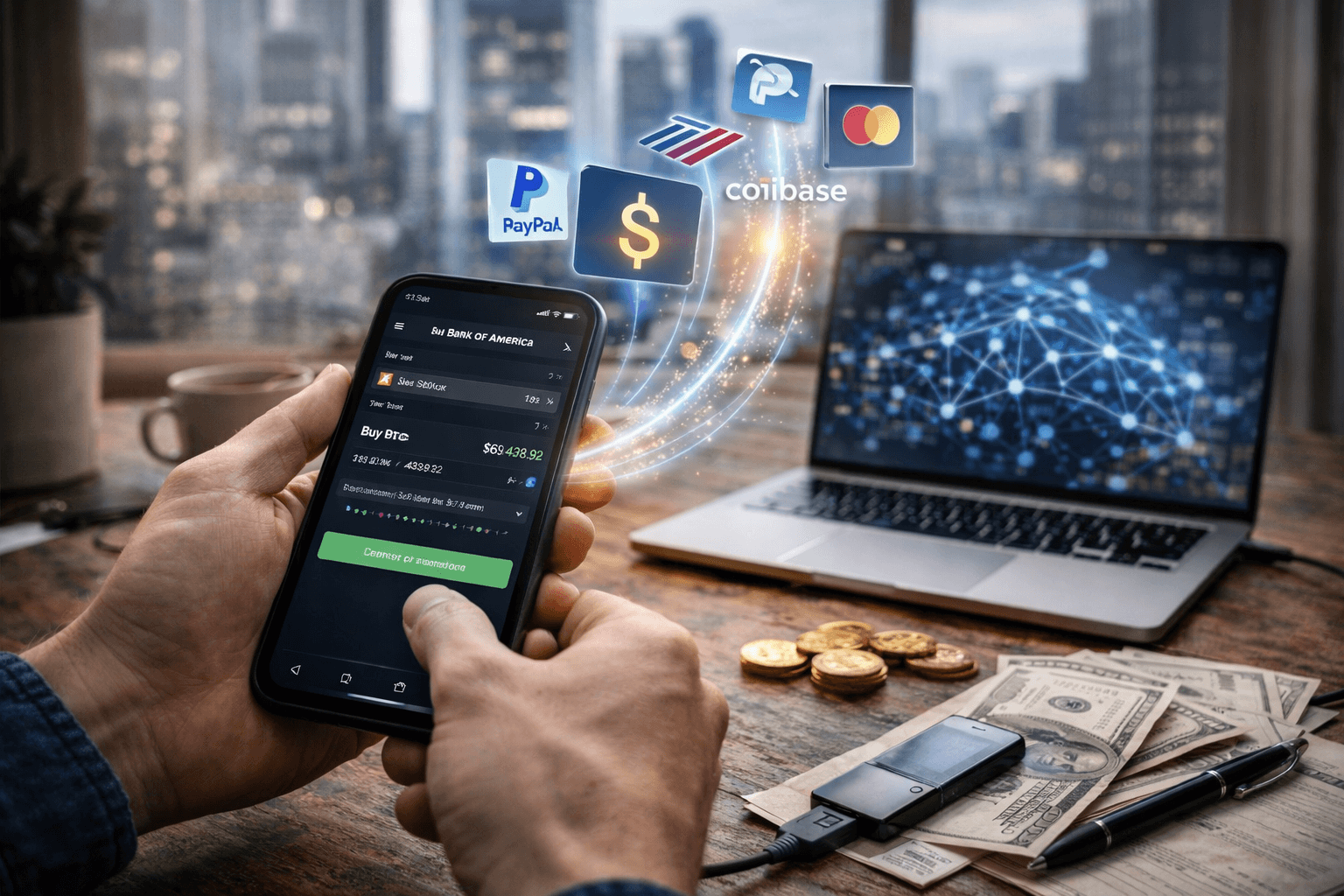
The evolution of Bitcoin on-ramps is increasingly shaped by convergence. What was once a fragmented experience, separate steps for funding, trading, and custody, is gradually becoming more unified and intuitive. Exchanges and fintech platforms are investing heavily in user interface design, reducing the cognitive load required to move from fiat to crypto while still exposing enough detail for more advanced users to make informed decisions.
At the same time, security infrastructure is becoming more sophisticated but less visible. Features like multi-layer authentication, behavioral monitoring, withdrawal whitelisting, and advanced custody segregation are now being embedded seamlessly into user flows. Instead of forcing users to actively configure every protection layer, platforms are beginning to implement security by default, which significantly lowers the barrier to safe participation.
Regulatory clarity is also playing a growing role in shaping how on-ramps operate. As frameworks mature across different jurisdictions, exchanges are adapting their models to align with compliance expectations without fully sacrificing usability. This is leading to more standardized onboarding processes, clearer disclosures, and better-defined operational practices. While this adds structure, it also contributes to long-term stability by reducing uncertainty for both users and institutions.
Perhaps the most important shift, however, is the gradual merging of traditional finance and decentralized systems. Payment providers, neobanks, and even legacy financial institutions are beginning to integrate crypto services directly into their offerings. This means that, over time, the distinction between “entering crypto” and “using financial services” may become less pronounced.
In parallel, alternative on-ramps are emerging. Peer-to-peer marketplaces, decentralized exchanges with fiat integrations, and stablecoin-based entry points are expanding the ways users can access Bitcoin. These models aim to reduce reliance on centralized intermediaries, although they often introduce additional complexity that requires a higher level of user understanding.
Looking ahead, on-ramps are likely to become more modular and globally adaptable. Users may interact with layered systems where identity, payments, trading, and custody can be configured independently rather than bundled into a single platform. This flexibility could reshape how individuals and institutions approach Bitcoin acquisition, making the process both more customizable and more resilient.
A System Defined by Its Entry Points
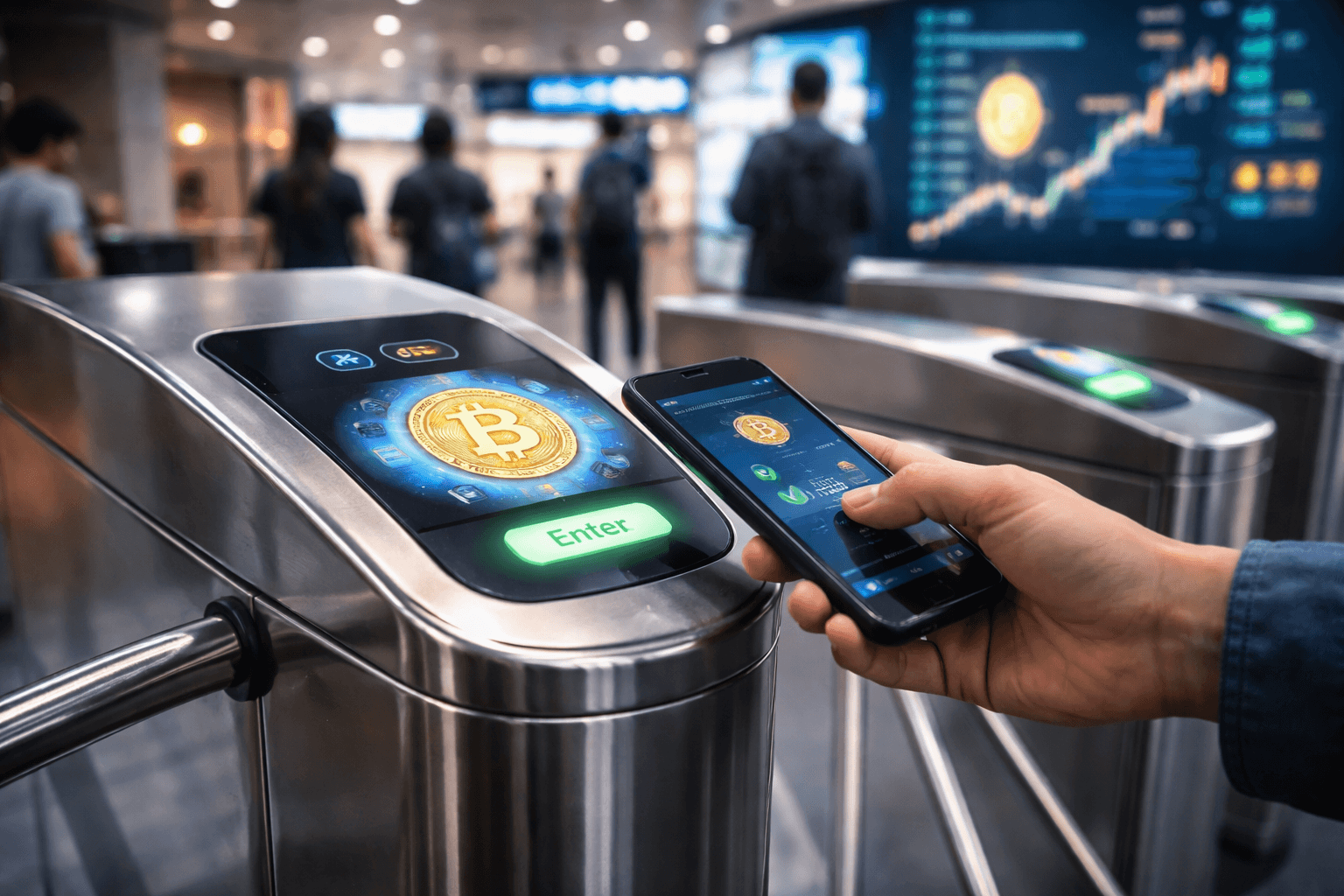
Bitcoin may be decentralized at its core, but the pathways into it tell a different story, one of structure, coordination, and continuous refinement. These entry points are not static gateways; they are evolving systems that reflect changes in technology, regulation, and user expectations.
The quality of an on-ramp influences far more than convenience. It shapes how users perceive risk, how quickly they build confidence, and whether they remain engaged over time. A poorly designed entry point can create confusion, introduce security vulnerabilities, or discourage participation altogether. A well-designed one, on the other hand, can serve as both a gateway and an educational environment, guiding users through increasingly complex layers of the ecosystem.
Understanding the full journey, from fiat deposit to blockchain settlement, reveals just how much coordination is required to support what appears to be a simple transaction. Each step, from payment processing to order execution to final settlement, represents a different layer of infrastructure working in sync.
More importantly, these entry points define the relationship between users and the system itself. They determine whether Bitcoin feels accessible or opaque, secure or risky, intuitive or overly technical. In many cases, the success of the broader ecosystem depends less on protocol-level innovation and more on how effectively these access layers are designed and maintained.
For those willing to engage more deeply, the on-ramp is not merely a starting point, it is a lens through which the entire system can be understood. It reveals how decentralized networks coexist with centralized services, how financial infrastructure is being reassembled, and how user behavior adapts to new forms of ownership and control.
Seen from this perspective, the journey into Bitcoin is not just about acquiring a digital asset. It is about participating in the gradual reconstruction of financial systems, where each layer, from interface to protocol, plays a role in shaping what comes next.