CLARITY Act Text Drops Next Week: What “Trillions in New Capital” Could Actually Mean for BTC + Altcoins

What if the next big crypto pump doesn’t start with a chart pattern… but with a PDF? And what if that PDF is the difference between “Wall Street can’t touch this” and “your advisor can finally buy it”?
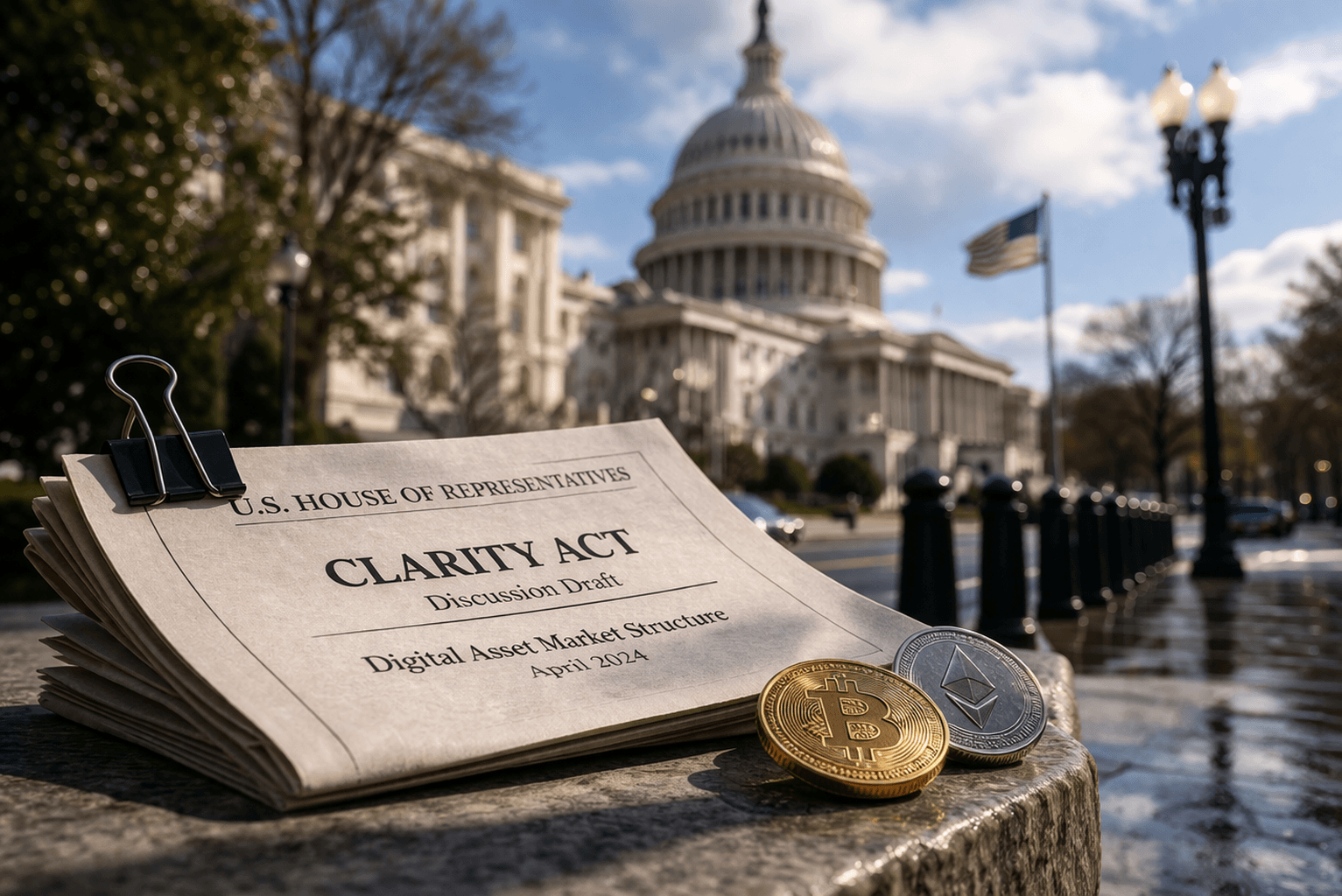
Sen. Cynthia Lummis just signaled something the market has been starving for: the actual CLARITY Act text could land next week. If that happens, this stops being another vague “regulation is coming” rumor and becomes a real, readable set of rules that lawyers, exchanges, banks, and investment committees can react to.
People are throwing around the phrase “trillions in new capital” like it’s guaranteed. I get the excitement. But I also know how this game works: the market front-runs headlines, then later reprices the fine print.
If the next leg of this cycle really kicks off in the US, it probably won’t be because traders “found a pattern” on a chart—it’ll be because a piece of legislation finally turns crypto from a compliance landmine into something big money is allowed to touch. Right now, that’s the core pain: the rules feel like they can change overnight, so institutions, banks, advisors, and public companies treat most of this market like it’s radioactive even when the demand is clearly there. That’s why the hint that the CLARITY Act text could drop next week matters so much: real language forces real decisions, and it’s the first time in a long time this space might get something close to a predictable lane instead of another headline-shaped rumor. People love throwing around “trillions in new capital” like it’s inevitable, but I’m watching for the part that actually unlocks it—clear definitions, clear authority, clear timelines—because that’s what turns “interesting asset” into “approved allocation,” and that’s where BTC and the right altcoins can stop being a debate and start being a default.
Listen to this article:
So let’s talk about the reality on the ground right now, why “text next week” is a big deal, and why this could be the closest thing we’ve had to a US green light in years—without pretending it’s already done.
The pain right now: crypto’s US rulebook is still a minefield
The biggest US problem isn’t “people don’t want crypto.” It’s that the rules can change by enforcement, and that turns crypto into a compliance nightmare for anyone managing real size.
In plain English: a lot of capital today is stuck in an “investable vs uninvestable” limbo. Not because the assets can’t perform—but because the legal risk is unpredictable.
Here’s what that looks like in real life:
- Institutions (pensions, endowments, insurers) can’t just allocate because a CIO “likes BTC.” They need a stable rulebook, approved custody, approved products, and a legal memo that doesn’t read like a coin flip.
- Banks don’t move until their regulators and internal risk teams are comfortable. Unclear boundaries = “no” by default.
- RIAs and broker platforms (the people who control everyday investor distribution) won’t broadly recommend or hold assets if the compliance department thinks the rules might shift mid-cycle.
- Public companies hate uncertainty. They can handle volatility. What they can’t handle is “this asset might be treated differently next quarter.”
Now zoom in. This uncertainty hits specific parts of the market hard:
1) Listings: exchanges avoid assets even when demand is obvious
When definitions are fuzzy, exchanges don’t just think “will users trade it?” They think: “Will we get punished for listing it?” That leads to conservative listings, sudden delistings, and a permanent cloud over long-tail alts.
2) DeFi teams: legal risk turns into front-end shutdowns
Even if a protocol’s code is unstoppable, the website people actually use often isn’t. US-facing front ends can get geofenced, features can be removed, and teams can go quiet—not because the tech failed, but because the legal surface area got too hot.
3) Stablecoin usage: yield, distribution, and compliance fears
Stablecoins are the plumbing of crypto. But in the US, the moment you mix stablecoins with things like yield, distribution, or “this looks like a product,” you enter a regulatory fog. That fog slows down everything built on top: lending, payments, onchain treasury management, and even exchange incentives.
4) Market structure: nobody knows who regulates what—and when
This is the quiet killer. If market participants can’t predict which agency has authority, what the compliance path is, and what the timelines look like, then the rational move is to under-allocate or stay out entirely.
If you’ve ever wondered why crypto can feel like it’s permanently one headline away from chaos, this is it.
And it’s not just “feelings.” Studies have repeatedly shown that regulatory uncertainty suppresses investment and risk-taking. For example, the NBER’s work on measuring economic policy uncertainty has long documented that uncertainty shocks can reduce investment and slow hiring across sectors. Crypto is basically that phenomenon on steroids: a high-volatility asset class living inside a low-tolerance compliance world.
Why “text next week” matters more than another rumor
A rumor is tradable for 12 hours. Actual bill text is tradable for months.
Here’s the difference:
- “A bill exists” is just a headline. Everyone projects their own bias onto it.
- “The text is here” means the market can finally price the specifics—and lobbyists can start fighting over actual sentences instead of vague talking points.
Once the text drops, you can expect a very fast shift in how this gets discussed:
- Definitions get dissected: what counts as a commodity vs a security vs something else?
- Exemptions get modeled: what activities are permitted, and under what conditions?
- Timelines become real: immediate effects vs transition periods vs future rulemaking.
- Agency authority gets mapped: who controls exchanges, brokers, spot markets, disclosures?
And this is where the “trillions” narrative either becomes credible… or gets exposed as wishful thinking.
Because big money doesn’t allocate to vibes. Big money allocates to permission.
The promise: a clear path for BTC, majors, DeFi, and stablecoins to scale in the US
Here’s what has people so fired up: if the CLARITY Act is written the way the market hopes, it could create something the US hasn’t had for crypto at scale—a predictable compliance lane.
Not “anything goes.” Not “crypto wins.” But something far more powerful for price over time: clear rules that let big players participate without feeling like they’re walking into a trap.
That could change the game for:
- BTC as a cleaner, easier institutional allocation if commodity-style treatment is reinforced.
- Major alts that could benefit from clearer spot market structure and exchange rules.
- DeFi rails if the law draws a workable line between decentralized protocols and intermediaries.
- Stablecoin products if the language makes issuance, distribution, and compliant yield less of a grey zone.
The key word is path. Even in the best-case scenario, capital doesn’t magically appear in one candle. But a real path is how you go from “crypto is a toy” to “crypto is a standard portfolio sleeve.”
The big question everyone’s really asking: is this the green light or just another false start?
This is the tension I’m watching:
The market wants a green light. But Washington loves detours.
Even if the text lands next week, a lot can still go sideways:
- Committee timelines can slip.g
- Amendments can water down the parts that actually matter.
- Agency turf wars can reshape enforcement power.
- Hot-button issues (especially anything touching stablecoins or yield) can slow momentum.
But I’ll say this plainly: “text imminent” is the closest thing to forward motion we’ve had in years. It’s a moment where the conversation can finally move from narrative to language—where winners and losers start to become visible.
So here’s the question you should be asking as soon as that text drops:Which exact rule changes would actually unlock institutional-sized capital… and which parts are just marketing?
Up next, I’m going to break down what the CLARITY Act is likely trying to change in human terms—and where that “trillions” claim could realistically come from (and what has to happen first).

What the CLARITY Act is trying to change (and why capital cares)
What the CLARITY Act is trying to change (and why capital cares)
When people say “the CLARITY Act could bring trillions into crypto,” they’re not talking about some magical money printer. They’re talking about something way more boring… and way more powerful:
Permission. Not hype. Not vibes. Permission.
Big capital already understands Bitcoin and onchain markets. What it doesn’t have is a clean, stable rulebook that risk committees can sign off on without waking up to a new enforcement theory six months later.
In plain English, this is what the market expects the CLARITY Act to try to fix:
- Clear definitions for what’s a security, what’s a commodity, and what falls into a “digital asset” lane with its own rules.
- Clear lines for regulators (who oversees spot markets, exchanges, brokers, and custody—and under what standards).
- A workable definition of “decentralized” so legit DeFi isn’t treated like an unlicensed broker-dealer just because code exists.
- Compliance paths that don’t kill the product (registrations, disclosures, safe harbors, timelines) so large firms can participate without feeling like they’re stepping onto a legal landmine.
Capital doesn’t “need” crypto to be perfect. It needs crypto to be knowable: predictable obligations, predictable enforcement boundaries, predictable product rules.
And yes—if that happens, the addressable market expands fast, because the people who manage huge pools of money aren’t allowed to buy “maybe-legal.”
“Trillions” explained: where that money could come from (and what has to happen first)
I always treat the word “trillions” like a sales page headline. Not because it’s impossible—because it’s undefined.
So let’s break it into realistic buckets and the conditions each bucket needs before it moves.
- Institutional allocators (pensions, endowments, insurance)These groups move slowly, but they move heavy. Typically, they need:
- Clear compliance classification (what they’re buying and why it’s allowed)
- Institution-grade custody and operational controls
- Approved products (spot products, funds, mandates) that fit their policy statements
Worth knowing: surveys have shown interest is already there. For example, Fidelity Digital Assets has repeatedly reported meaningful institutional adoption intent in its annual institutional research over the past few years—interest isn’t the blocker, process and permission are.
- Broker-dealers + RIAs (the “recommended money”)This is the channel that can turn crypto from “something you had to seek out” into “something you can buy like anything else.” But advisors need:
- Clear rules on what they can recommend
- Clear suitability/disclosure expectations
- Clean custody and reporting rails
Translation: a regulated framework doesn’t just unlock buying—it unlocks distribution.
- Banks (stablecoins, custody, settlement)Banks don’t move until their regulators and legal teams stop sweating. If the CLARITY Act (or companion rules) clarifies what banks can do with stablecoins, tokenized settlement, and custody, you’re looking at:
- More onchain dollars in compliant wrappers
- Faster settlement experiments that don’t get shut down in a week
- More “boring” financial plumbing migrating onchain
- Corporations (treasury, payments, accounting clarity)This part is underestimated. A lot of CFOs don’t hate crypto—they hate uncertainty. One real-world improvement already in motion: FASB’s fair-value accounting for crypto (ASU 2023-08) modernized how certain crypto assets can be reported, reducing some of the weirdness that used to punish corporate holders on paper.
The timing reality: even in a best-case scenario, capital doesn’t teleport in “one candle.” It comes in phases:
- Text becomes public → lawyers interpret it
- Products get designed → compliance teams sign off
- Risk committees approve → allocation caps start small
- Then size grows as volatility, custody, and rules feel stable
If you want a mental model: think quarters, not days.
DeFi “protected”: what that could mean in practice for users and builders
When traders hear “DeFi protections,” they imagine a free-for-all where every token pumps and every protocol gets a blessing.
That’s not how this will work.
What I’m watching for is whether the CLARITY Act draws a line between:
- Protocol code (software that runs as published)
- Financial intermediaries (entities that custody, route, solicit, or control user funds)
If lawmakers get this right, it can create a world where:
- A protocol can be recognized as sufficiently decentralized under a clear standard
- Builders know what actions do trigger intermediary obligations
- Enforcement stops feeling random and starts feeling rule-based
Reality check (the part nobody wants to say out loud): “protection” may apply to the protocol design and governance structure, not automatically to:
- Every front-end website that makes it easy to use
- Every team member who touches marketing or token distribution
- Every token that claims it’s “DeFi” because it has a liquidity pool
So yes, real DeFi could benefit massively. But “DeFi” as a label won’t be enough. The definition will matter more than the narrative.
Stablecoin yield “unlocked”: the most controversial catalyst (and why it matters for altcoins)
If you want to know where the political knives come out, watch stablecoin yield.
Here’s why it’s such a big deal: if regulated, yield-bearing stablecoin products can become a mainstream “cash alternative” for normal users and for corporate treasuries. That’s not just a stablecoin story—it’s an onchain liquidity story.
Because once stablecoin yield becomes easier to offer legally in the US (depending on final language), demand pressure shows up across:
- DeFi lending markets (borrow demand, supply demand, risk pricing)
- RWA protocols (tokenized T-bills, credit, cash-management rails)
- DEX liquidity venues (more stablecoins onchain = more trading depth)
- Infrastructure tokens that benefit from higher onchain activity (not automatically all of them—just the ones tied to real usage)
But this is also where lawmakers can slow everything down. Yield touches consumer protection, disclosures, marketing rules, and the fear of “unregulated banking.” It’s the easiest place to pile on amendments.
If you’re wondering why the market is so jumpy about the exact wording, this is a prime reason. One sentence can decide whether “yield” is treated like:
- a securities-style product,
- a banking-style product,
- or a permitted structure with strict disclosures.

BTC vs altcoins: who benefits first if the US finally draws clean lines?
I’m going to say this as clearly as I can: even in a very good bill, BTC is built to benefit first.
Not because Bitcoin is “better tech” than everything else. Because it’s the easiest asset for committees to approve when the question is: “Will this blow up my career?”
- BTCIf commodity treatment is reinforced and market structure rules reduce ambiguity, BTC becomes the cleanest institutional allocation. It’s the asset most likely to get the biggest “permission bump.”
- ETH + majorsThey benefit if the act makes it easier to offer spot liquidity, custody, and potentially staking-style services under clear rules. The key isn’t “will ETH win”—it’s whether the law makes major L1 exposure and services operationally simple for regulated firms.
- Exchange tokens / L2 tokens / DeFi governance tokensThis is where upside can be explosive, if decentralization is defined in a way that maps to how real networks operate. But it’s also where the bill’s language can hurt the most. These categories are extremely sensitive to:
- how “control” is measured,
- what disclosures are required,
- what trading venues are allowed to list without triggering securities exchange rules.
- Long-tail altsEven with clarity, I expect long-tail assets to face the toughest path: listing standards, disclosure requirements, and “what’s the real use?” questions don’t go away. A good bill doesn’t mean “everything pumps forever.” It means the market finally has lanes—and some projects won’t fit.
Will the CLARITY Act pass in 2026? My checklist for April (no guesswork)
I don’t try to predict Washington like it’s a price chart. I track checkpoints. Here’s what I’m watching through April because these are the signals that tend to matter more than headlines.
- Committee momentum by late AprilIf it doesn’t clear a key committee step (or at least schedule a serious markup) by late April, odds usually drop fast. Not to zero—but the calendar starts working against it.
- Markup date + amendment countOne or two clarifying amendments is normal. A flood of amendments is where “simple market structure bill” turns into “everything fight,” and that’s when timelines break.
- Stablecoin yield becoming the sticking pointIf you see multiple key lawmakers signaling discomfort specifically on yield or consumer-facing stablecoin products, that’s the most likely place the bill gets slowed or split.
- Public alignment from power centersI watch for supportive statements (or soft opposition) from committee chairs and influential senators. When the people who control scheduling start sounding cautious, that’s information.
How I map outcomes (so I don’t get emotionally attached):
- Base case: Text lands, markets pump the “clarity” narrative, committees grind, and we get a choppy risk-on/risk-off cycle tied to amendments and scheduling.
- Bull case: Definitions are clean, stablecoin language is workable, committee steps move quickly, and the market starts pricing “US onramps expand” instead of “US crackdown risk.”
- Bear case: Stablecoin yield turns toxic politically, amendments explode, agencies fight over turf, and we end up with delays that cool the rally (even if the long-term direction stays positive).
Quick context people forget: blockchain didn’t start in 2009 (it was outlined in 1991)
When people argue about whether crypto is “new” and needs special rules, I like to remind them: the core idea behind blockchain-style integrity is older than most of the arguments on TV.
The first widely cited outline of key blockchain-like mechanics dates back to 1991, when Stuart Haber and W. Scott Stornetta described a system for timestamping digital documents in a way that made them tamper-resistant—using a chain of records.
What’s new isn’t the concept of chained records.
What’s new is this: we now have trillions of dollars worth of value moving across versions of that idea, and governments are finally trying to write rules that don’t accidentally break it.
The 2026 tax reality check: regulation ≠ “no taxes”
I’ve seen a weird myth spreading again: “Once regulation is here, taxes get easier or go away.” No.
Crypto is still taxed in 2026. If anything, reporting is getting more standardized, which is exactly what institutions want.
The practical shift you’ll feel is that tax reporting rails keep getting more formal—especially as broker reporting frameworks mature (for many users, that means more comprehensive forms such as Form 1099-DA showing up via exchanges and brokers as implementation ramps). Cleaner paperwork is annoying for degens, but it’s a green light for serious money because it lowers compliance friction.
What I’m seeing on Crypto Twitter as of today (useful, but not gospel)
The “text next week” narrative is moving fast on CT, and I’m seeing the same links get passed around in DMs and group chats.
If you want to cross-check the sentiment trail yourself, here are the threads people keep citing:
- https://x.com/CryptoTice_/status/2038210680604500378
- https://x.com/CryptosR_Us/status/2037900016082206899
- https://x.com/skipper_xrp/status/2038522807299297505
- https://x.com/RipBullWinkle/status/2038360701685711023
- https://x.com/RipBullWinkle/status/2038345600404488420
- https://x.com/_Crypto_Barbie/status/2037951346582720574
- https://x.com/InvestWithD/status/2037973356675575831
My take: CT is great at spotting the story early… and terrible at pricing the details. The moment the actual text drops, the only thing that will matter is what the definitions and timelines really say.
So here’s the real question: when the text hits, what are the exact “pass/fail” lines that tell me whether this is a true green light… or a dressed-up stall?
That’s what I’m going to lay out next—because if you can read the bill like a checklist instead of a headline, you’ll stop getting whipped around by every rumor candle.

How I’d position and manage risk while we wait for the text (and the votes)
I’m treating this like a policy catalyst, not a magical switch that turns every chart into a straight line up.
Big legislation does two things to crypto markets:
- It changes what’s “allowed” (the long-term part).
- It creates headline volatility (the tradable part, and the part that can wreck you if you’re not ready).
Even in traditional markets, policy uncertainty moves capital behavior. The well-known “Economic Policy Uncertainty” research by Baker, Bloom, and Davis shows that when policy uncertainty rises, investment tends to cool and risk premia can rise—basically, money hesitates when rules are unclear. That’s not a crypto-only thing; it’s how big capital works. (If you want the original research hub: policyuncertainty.com.)
Crypto just compresses that effect into faster, sharper moves because it trades 24/7 and people front-run narratives.
So my approach is simple: I separate “core holdings I’m happy to own either way” from “policy trades that I’m willing to cut fast.”
Here’s the framework I’m using (not personal financial advice, just how I keep myself from getting headline-whipped):
- Bucket A — Core: stuff I’d still want to hold if the bill stalls and we chop for months. I keep this boring on purpose.
- Bucket B — Catalyst trades: assets that could re-rate hard if definitions and jurisdiction come out clean… but that I’m willing to reduce quickly if the text disappoints.
- Bucket C — Optionality: small, capped-risk bets (or just “watchlist only”) where upside is big but liquidity and wording risk are real.
And I keep dry powder. Not because I’m trying to time the exact bottom, but because legislative weeks tend to create sudden dumps and sudden pumps for no good reason other than positioning and liquidations.
A simple staged plan I like:
- Before text: stay heavier in liquid majors, lighter in thin alts, and don’t assume rumors are facts.
- 24–72 hours after text: let the market react, then act on what the language actually says (this is where most people get chopped up).
- After committee movement: if it’s real momentum, you’ll see it in scheduling, markups, and fewer “anonymous sources” posts.
- After passage (if it happens): shift mindset from “headline trade” to “implementation trade” (rulemaking, timelines, enforcement posture).
Risk rules I personally follow during policy events:
- No leverage I can’t sleep through. If a single wick can liquidate me, I’m gambling, not trading.
- Don’t marry illiquidity. If my exit depends on “someone else buying my bag,” I keep it tiny.
- Use limit orders. News candles can be brutal; spreads widen fast.
- Assume fake-outs. The first move is often the wrong move when everyone’s staring at the same headline.
My “pass/fail” signals the moment the text drops
When the text lands, I’m not reading it like a lawyer—I’m scanning it like a market structure checklist. I want to know whether it creates a clean compliance lane or just reshuffles uncertainty.
This is the quick “pass/fail” sheet I’ll be using:
1) Definitions (this is where the whole bill lives or dies)
- “Digital commodity”: Is it defined in a way that actually fits how major networks function today?
- “Investment contract”: Does it clarify boundaries, or does it keep the door open for endless interpretation?
- “Decentralized” / “sufficiently decentralized”: Is it measurable (distribution, control, upgrade keys, governance concentration), or hand-wavy?
What I’m watching for: any definition that basically says “decentralized if we feel like it” is a problem. Big firms don’t allocate into vibes.
2) Jurisdiction (who regulates what, and how disputes get settled)
- Do we get a clear split of authority, or overlapping turf that guarantees more enforcement-by-surprise?
- Is there a clean process for borderline assets (a path to classification, appeals, timelines)?
Pass signal: fewer gray zones, and a predictable process.
Fail signal: “everyone has power over everything.” That’s how you keep capital on the sidelines.
3) Compliance pathways (the “okay, how do we operate?” section)
- Are there practical registration routes for exchanges, brokers, custodians?
- Are disclosure requirements realistic for crypto (onchain transparency, token economics, admin key risk, treasury disclosures)?
- Are timelines survivable for existing platforms, or do we risk sudden delistings and forced shutdowns?
One thing history teaches here: when rules are clear and attainable, markets mature. You can see it in how liquidity and participation changed in equities after major market-structure reforms over the decades. Crypto is behind on this because the “rules” have been inconsistent.
4) Stablecoin yield language (the political tripwire)
- Is yield-bearing stablecoin activity clearly allowed under disclosures?
- Clearly restricted?
- Or kicked to a separate framework (which can slow everything down)?
Why this matters: this one area can decide whether the bill glides through or becomes an amendment magnet.
5) Safe harbors / transition periods (this is market-stability fuel)
- Do projects and platforms get time to comply without nuking liquidity overnight?
- Is there a realistic runway for new registrations, custody processes, and reporting systems?
Pass signal: clearly defined transition periods that reduce shock.
Fail signal: abrupt deadlines that force mass delistings and panic.

If it passes: what could realistically happen to BTC dominance, ETH, and high-quality DeFi
If the bill passes with strong definitions and workable compliance, I expect the market to reward what institutions can buy first. That doesn’t mean “only BTC wins,” but it does mean the order of operations matters.
Here’s the sequence I think is most realistic:
1) BTC + the most institution-ready majors lead
Not because they’re the most exciting, but because they’re the easiest to plug into existing compliance stacks: custody, risk committees, liquidity venues, approved counterparties. That’s where “big money” starts because it has the least career risk.
What that could do to dominance: BTC dominance often rises in “clean narrative” periods because allocators start with the asset that needs the least explanation. If the bill is a true clarity win, I’d expect an early phase where BTC holds up well even if alts pump later.
2) The investable set expands (quietly, then all at once)
After passage, the next real catalyst isn’t Twitter. It’s:
- new product filings,
- brokerage enablement,
- custody rollouts,
- clearer listing standards.
When those rails turn on, capital doesn’t “teleport,” but it does become allowed. And “allowed” is half the battle.
3) ETH + high-quality DeFi gets repriced if the wording truly protects legitimate decentralization
If the text creates a workable lane for decentralized protocols (and doesn’t accidentally criminalize front-ends and contributors), then the market can start valuing DeFi more like infrastructure and less like a legal question mark.
Real-world example of what I mean by “repriced”: markets tend to re-rate when uncertainty is removed. There’s a lot of academic event-study work showing that regulatory announcements can shift volatility and returns in crypto specifically (regulation headlines have repeatedly produced sharp, asymmetric moves). You don’t need the perfect paper to know it’s true—you’ve lived it—but the research generally supports the idea that “rule changes” are price events, not background noise.
Important counterpoint: passing a bill is not the finish line. After passage, you still have:
- agency rulemaking,
- interpretation fights,
- implementation timelines,
- court challenges (potentially).
So if it passes, I’m not assuming “up only.” I’m assuming phase shifts: euphoria, then digestion, then a longer trend if implementation stays constructive.
If it stalls: the plan B scenario (and why the market might still pump, then fade)
If the bill stalls, I’m expecting a very specific kind of pain: progress headlines that pump, followed by process reality that fades.
This is a common pattern in every market:
- Step 1: a “we’re close” narrative catches fire → prices lift.
- Step 2: timelines slip, amendments multiply, or key language becomes disputed → momentum dies.
- Step 3: attention moves on → the trade unwinds.
My plan B isn’t complicated:
- I reduce exposure to the most wording-sensitive tokens if the bill starts looking like a negotiation trap.
- I focus on liquidity (assets that don’t require perfect conditions to survive).
- I assume we revisit prior ranges if the market was pricing a near-term legislative win.
Practically, I’m watching for stall signals like:
- markup dates that keep sliding,
- public disagreement on the most controversial sections,
- an explosion of amendments (especially around stablecoins and consumer protection),
- language that reads like it was written to satisfy everyone (usually means it satisfies no one).
And if we do get a hype pump on “progress” while the substance looks weak, I treat that as a tactical rally, not a new foundation.
Final take
The text landing is a real moment. It’s not just another rumor cycle, because once words are on paper, markets can price specifics instead of vibes.
But “trillions instantly” is still a story that needs receipts. The receipts are the definitions, the jurisdiction split, the compliance lanes, the stablecoin yield treatment, and the transition timelines.
I’m positioning like an adult: staying liquid, separating core from catalyst trades, and waiting to see what the bill actually does before I let the narrative do my thinking.
If this really is the green light, the biggest winners won’t be the loudest accounts. They’ll be the people who stayed solvent, stayed flexible, and were ready to act when the details hit.