As of 26 June 2026: 50%+ of Bitcoin Is in Loss — Panic Signal or 2026 Survival Setup?

As of 26 June 2026: 50%+ of All Bitcoin Now in Loss as Macro and Tech Rout Hits Crypto — A Survival Guide for Holders
What should you do when over half of Bitcoin’s supply is sitting in unrealized loss, tech stocks are selling off, and rate fears are back in the market?
That is the question I want to answer clearly, without panic, without moonboy noise, and without pretending anyone can predict the next Bitcoin candle with perfect accuracy.
As of 26 June 2026, reports now point to around 10.83 million BTC held at an unrealized loss. In plain English, that means more than half of Bitcoin’s circulating supply is currently underwater based on estimated holder cost basis.
That is not a small market mood swing. That is a serious stress signal.
If you follow crypto market news, you already know how fast sentiment can flip. A few months of optimism can turn into fear when Bitcoin weakens, tech stocks sell off, rate worries return, and leveraged traders start getting punished.
But here is the key point: underwater does not automatically mean finished. It means the market is under pressure. It means holders are being tested. It means risk management matters more than loud predictions.

The Pain: Bitcoin Holders Are Underwater While the Macro Mood Gets Worse
There are normal Bitcoin pullbacks, and then there are the kind of market phases where almost everyone starts checking their portfolio too often.
This feels like the second one.
When more than half of Bitcoin’s supply is sitting in unrealized loss, the pressure is not only on charts. It is on people. Long-term holders start questioning their conviction. Newer buyers wonder if they entered too late. ETF buyers who wanted “clean Bitcoin exposure” suddenly get the full volatility experience. Altcoin traders feel it even harder because when BTC sneezes, smaller coins often get hit with a hammer.
The pain matters in three ways:
- Emotionally: red portfolios make people impatient, angry, and reactive.
- Financially: holders who need cash may be forced to sell at bad prices.
- Historically: heavy unrealized loss has often appeared near major stress points in Bitcoin cycles.
At the same time, the macro backdrop is not helping. Tech stocks are weakening, rate fears are back, and investors are less willing to pay up for risk. In that kind of market, Bitcoin can stop trading like a clean “digital gold” story and start trading like a high-liquidity risk asset.
In markets like this, the smartest question is not “Will Bitcoin survive?” The smarter question is “Can my portfolio survive long enough to benefit if Bitcoin recovers?”
Why “unrealized loss” feels different from a normal price drop
An unrealized loss does not mean every holder has sold. It means many holders bought their BTC above the current market price.
For example, if someone bought 0.5 BTC when Bitcoin was much higher and the market is now below their entry, that person has an unrealized loss. The loss becomes “realized” only if they sell. Until then, it is paper loss — but let’s be honest, it still feels real when you open the portfolio app.
This is why the metric matters. It tracks pressure before that pressure turns into action.
When a large share of supply is underwater, several things can happen:
- Weak hands may sell because they entered without a plan.
- Overleveraged traders may get forced out through liquidations.
- New buyers may wait because fear makes them demand lower prices.
- Long-term holders may stop selling if they still believe in the thesis.
- Market confidence may become fragile, where one bad macro headline triggers another wave of fear.
This is also where psychology starts to dominate. Behavioral finance research, including the work behind Daniel Kahneman’s Nobel-recognized research, shows that people usually feel losses more strongly than gains. Crypto makes that effect even sharper because prices move fast and everyone can see the chart 24/7.
So yes, unrealized loss is not the same as selling. But it can become selling if enough holders panic at the same time.

My promise: no hype, no doom, just a practical 2026 survival map
I am not here to tell you the bottom is guaranteed. I am also not here to scream that Bitcoin is dead because the market is ugly.
Both extremes are lazy.
What I care about is the practical middle: how to think clearly when Bitcoin holders are underwater, macro pressure is rising, and social media is full of people pretending they knew this would happen all along.
In a market like this, I would focus on three things:
- Signals: What is the market actually showing beneath the price?
- Risks: What could make the situation worse before it gets better?
- Positioning: How can a holder avoid emotional decisions and stay solvent?
That means no blind buying just because a scary metric flashed. It also means no panic selling just because the crowd is afraid.
The goal is simple: protect decision-making quality. Once emotions take over, even a good Bitcoin thesis can turn into bad trading.
Who needs to read this now
If you are holding Bitcoin in 2026, this market is probably testing you in some way.
This is especially important if you are one of these people:
- A long-term BTC holder who believes in Bitcoin but is tired of watching drawdowns.
- An ETF buyer who wanted Bitcoin exposure but did not expect this much volatility.
- A DCA investor wondering whether to keep buying, pause, or change the plan.
- An altcoin trader watching smaller coins fall faster than Bitcoin.
- A late-cycle buyer who entered during optimism and now feels trapped.
- A leveraged trader who needs to hear this clearly: this is not the market to play hero.
The question is not only “Should I hold or sell?” That is too simple.
The better questions are:
- Is my Bitcoin position too large for my real life?
- Do I need this money in the next 6 to 18 months?
- Am I using leverage because I have a plan, or because I want to recover losses fast?
- Am I holding BTC because I understand the thesis, or because I do not want to admit I bought too high?
- If Bitcoin drops again, do I know what I will do before it happens?
Those questions may feel uncomfortable, but they are useful. The market is already uncomfortable. Your plan should not be.
The first rule: separate a Bitcoin thesis problem from a portfolio problem
This is the biggest mistake I see holders make during rough markets: they confuse Bitcoin’s long-term investment case with their own portfolio design.
Those are not the same thing.
- A Bitcoin thesis problem means something is broken in the long-term reason for holding BTC — adoption, security, decentralization, liquidity, institutional demand, or the store-of-value argument.
- A portfolio problem means your position is too large, your time horizon is too short, your cash reserve is too small, or you used leverage when you should not have.
Bitcoin can still have a valid long-term case while your personal portfolio is badly sized for a 2026 risk-off market.
That is a hard truth, but it is also freeing. It means you do not have to turn every red candle into a philosophical debate about whether Bitcoin works. Sometimes the asset is volatile, the macro backdrop is hostile, and the real issue is that your exposure is too aggressive.
If someone has rent money in BTC, that is not a Bitcoin problem. That is a cash management problem.
If someone is 10x leveraged because they believe “Bitcoin always comes back,” that is not conviction. That is risk blindness.
If someone cannot sleep because their entire net worth moves with one asset, that may not mean Bitcoin is wrong. It may mean the position is too heavy.
So before asking, “Is Bitcoin finished?” I would ask something much more useful:
- Can I survive another leg lower without being forced to sell?
- Do I have enough cash outside crypto?
- Is my BTC position aligned with my time horizon?
- Do I know the difference between conviction and stubbornness?
- Would I make the same allocation today if I were starting fresh?
A strong asset at the wrong size can still create a terrible investor experience.
And that is where the real work starts. Because once the emotional pressure is clear, the next question becomes even bigger: does this 50%+ Bitcoin supply-in-loss signal look like late-stage capitulation, or is it warning that the bear-market reset still has more room to run?

What the Data Says: Bitcoin Supply in Loss, Capitulation Signals, Tech Stocks, and 2026 Predictions
When I see a headline saying more than half of Bitcoin’s supply is now sitting in unrealized loss, I do not read it as “buy immediately” or “sell everything.” I read it as a stress signal.
The market is telling me that a large part of recent Bitcoin ownership is now underwater, and that matters because underwater holders behave differently. Some freeze. Some panic. Some average down. Some sell the first bounce just to feel relief.
That is why this data point deserves attention. Not worship. Not fear. Attention.
The headline stat: about 10.83 million BTC reportedly held at a loss
The big number being reported is around 10.83 million BTC held at an unrealized loss. Reports from Spendnode, BitcoinKE, BitcoinWorld, and CoinTurk all point to the same basic story: based on cost-basis estimates, more than half of Bitcoin’s supply is now underwater.
In simple English, this means many coins last moved at a higher price than where Bitcoin is trading now. If BTC was bought or last transferred near $70,000, $80,000, or higher, and Bitcoin is now below that level, those coins show up as being “in loss.”
There is one important detail I always keep in mind: on-chain cost basis is an estimate. It is not a perfect copy of every private trade, exchange order, or OTC deal. If coins sit inside an exchange wallet, they can change hands many times without moving on-chain. Still, as a broad market signal, this metric is useful because it shows where pain is building.
My read: 10.83 million BTC in loss is not just a scary headline. It is a pressure gauge. It tells me a large group of holders now has a reason to doubt, reduce risk, or sell into relief rallies.
Why this metric gets attention during bear-market bottoms
Bitcoin supply in loss gets attention because it has often appeared near ugly market phases. Analysts watch it alongside realized price, supply in profit, long-term holder behavior, MVRV-style valuation signals, and capitulation metrics.
Glassnode’s Week Onchain research is useful here because it looks beyond price and focuses on holder behavior. CoinDesk also reported on a Bitcoin metric flashing again after historically appearing near bear-market bottoms, which is exactly why traders are paying attention now.
The key is not one single chart. I prefer to look at a cluster of signals:
- Supply in loss: how much BTC is underwater based on estimated cost basis.
- Supply in profit: whether profitable holders are still dominant or fading.
- Realized price: the average on-chain cost basis of the network.
- Long-term holder behavior: whether strong hands are accumulating, distributing, or staying still.
- Realized losses: whether holders are actually selling at a loss, not just sitting in one.
When many holders are underwater, two opposite forces can show up.
- Selling pressure can accelerate if holders panic, leverage breaks, or forced liquidations hit the market.
- Selling pressure can dry up if weak hands have already sold and long-term buyers start absorbing supply.
That is why this signal is powerful but dangerous if used alone. It can mean “capitulation is close.” It can also mean “the market is still fragile.”
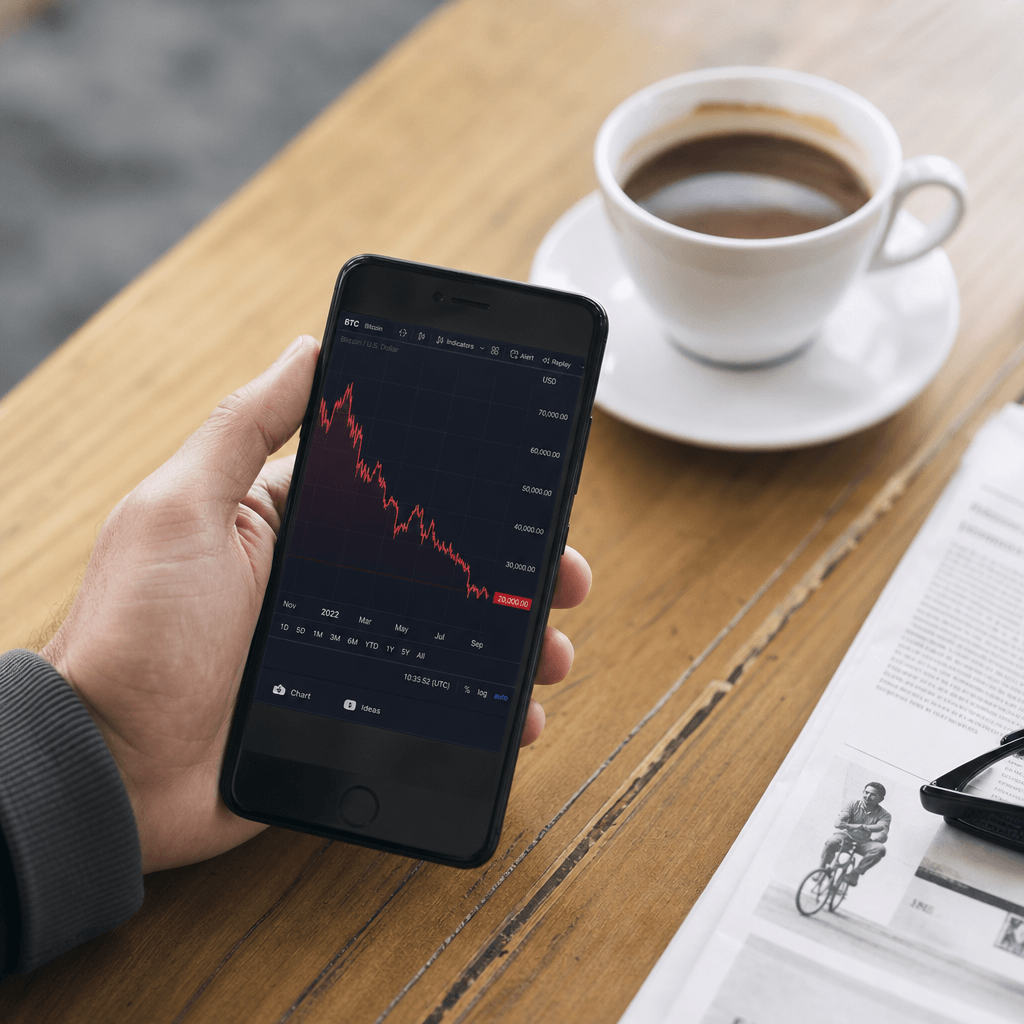
What history says usually happens after heavy unrealized losses
Bitcoin has been through this kind of pain before. The exact setup changes every cycle, but the human behavior is familiar.
- In 2015, Bitcoin was still recovering from the 2014 collapse and Mt. Gox damage. The market spent a long time looking dead before the next major expansion.
- In 2018, BTC fell from nearly $20,000 to the low $3,000s. Many holders were underwater for months, and every bounce felt like a trap until sellers finally ran out of energy.
- In March 2020, Bitcoin crashed hard with global markets, then recovered quickly as liquidity flooded back into the system.
- In 2022, Terra, Celsius, Three Arrows Capital, and FTX turned a normal bear market into a trust crisis. Recovery took time because balance sheets had to heal.
The lesson I take from those cycles is simple: deep unrealized losses often appear near major opportunity zones, but they do not guarantee an instant bottom.
That is why I like the way Galaxy’s research on Bitcoin’s four-year cycle and bottoming behavior frames the bigger question. The market does not bottom just because people feel pain. It bottoms when forced selling slows, liquidity improves, and buyers are willing to take risk again.
Bitcoin bottoms are usually zones, not timestamps. The chart can flash “cheap” before the market is emotionally ready to recover.
Has Bitcoin decoupled from the Nasdaq, or is crypto still trading like risk tech?
“Bitcoin decoupling” is one of the most abused ideas in crypto. One week of Bitcoin moving differently from tech stocks does not prove a new identity. I want to see persistent behavior across different market conditions.
The useful question is not whether Bitcoin is always digital gold or always risk tech. The better question is: what does Bitcoin behave like when liquidity gets tight?
Research from Gate on BTC’s rolling correlation with the Nasdaq from 2022 to 2026 highlights why this debate matters. Bitcoin can trade like a scarce monetary asset in some windows, especially when investors worry about currency debasement. But when markets go risk-off, Bitcoin often still trades like a high-liquidity risk asset.
That means large investors may treat BTC like something they can sell quickly when they need to reduce exposure. This is not an insult to Bitcoin. It is market plumbing.
- When liquidity is rising, Bitcoin can attract aggressive inflows and outperform traditional assets.
- When liquidity tightens, Bitcoin can get sold alongside tech, growth stocks, and other volatile assets.
- When volatility spikes, portfolio managers often cut risk first and ask philosophical questions later.
So has Bitcoin fully decoupled from the Nasdaq? I would not say that. I think Bitcoin’s long-term thesis is different from tech stocks, but its short-term trading behavior can still be heavily connected to risk appetite.

Why tech stock weakness and rate fears matter for BTC right now
Tech stock weakness matters because crypto does not trade in a vacuum. If big tech sells off, risk appetite usually drops across the board. A report from BeInCrypto on Bitcoin falling during a big tech selloff captures the kind of environment that can pressure BTC even when the long-term story still sounds strong.
Rate fears matter for Bitcoin because higher expected rates change investor behavior fast.
- Cash becomes more attractive: if investors can earn solid yield in safer assets, they demand more from volatile assets.
- Leverage gets more expensive: traders and funds reduce borrowed exposure when funding conditions tighten.
- The dollar can strengthen: a stronger dollar often pressures global liquidity and risk assets.
- Growth assets get repriced: tech stocks and crypto both suffer when investors become less willing to pay for future upside.
This is why I do not look at Bitcoin supply-in-loss data alone. If on-chain data is flashing stress while tech is selling off and rate fears are rising, I treat the market as fragile. A good on-chain signal can be delayed by bad macro conditions.
That is the uncomfortable truth many holders hate hearing: Bitcoin can be fundamentally strong and still trade badly if liquidity is moving against it.
What are analysts predicting for crypto in 2026?
Analysts are split, and that is exactly what I would expect in a market like this.
The bullish camp still sees strong 2026 upside for Bitcoin and the broader crypto market. The common arguments are institutional adoption, ETF access, post-halving supply dynamics, improving custody, and growing demand for crypto exposure through regulated products. VanEck’s mid-June 2026 Bitcoin ChainCheck is one example of the kind of institutional research I pay attention to because it looks at Bitcoin through flows, valuation, and market structure rather than pure hype.
For Ethereum, Solana, and other major networks, the optimistic case is usually built around ETFs, tokenization, stablecoins, DeFi activity, payments, and real network usage. That case is not dead. But timing matters.
Here is how I separate useful predictions from noise:
- Good prediction: “BTC can move higher if ETF inflows recover, rate pressure fades, and on-chain demand improves.”
- Weak prediction: “BTC must hit a certain price because the cycle says so.”
- Good prediction: “Altcoins can outperform if liquidity returns and Bitcoin dominance cools.”
- Weak prediction: “Every major coin will rally just because it fell a lot.”
I am not against price targets. I just do not let them replace process. A target without conditions is entertainment.
Will Bitcoin hit $200,000 in 2026?
Yes, Bitcoin can hit $200,000 in 2026. But I would treat $200,000 as a stretch target, not my base-case assumption in the middle of a risk-off setup.
If Bitcoin is trading near the levels discussed in recent reports, including the sub-$59,100 area referenced by CoinTurk, then $200,000 would require a huge move. That kind of rally does not usually happen on hope alone. It needs fuel.
For me to take a $200,000 Bitcoin target seriously in 2026, I would want to see several things line up:
- Rate pressure easing: markets need to believe the worst of the higher-for-longer fear is fading.
- ETF inflows improving: spot Bitcoin products need steady demand, not choppy panic flows.
- Tech stocks stabilizing: Nasdaq weakness cannot keep dragging risk appetite lower.
- Supply in profit rising again: more holders need to move back above cost basis.
- Long-term holders staying confident: old coins should not start flooding the market.
- Stablecoin liquidity expanding: fresh capital needs to be available inside crypto markets.
- Clear on-chain recovery: realized losses should cool, demand should improve, and accumulation should look healthier.
My rule: a price target is only useful if I can name the conditions that would make it possible and the signals that would prove it wrong.
Without those conditions, $200,000 is just a headline. With those conditions, it becomes a real scenario worth tracking.
The research stack I’m using for this read
I do not want to build a market view from one viral chart. For this 2026 Bitcoin setup, I am weighing several sources together.
- For the 10.83 million BTC loss-supply figure:Spendnode, BitcoinKE, BitcoinWorld, and CoinTurk.
- For on-chain behavior and market stress:Glassnode’s Week Onchain and CoinDesk’s coverage of bear-market bottom metrics.
- For cycle and institutional context:Galaxy’s Bitcoin cycle research and VanEck’s Bitcoin ChainCheck.
- For the Bitcoin versus tech-stock debate:Gate’s Nasdaq correlation analysis and BeInCrypto’s report on BTC reacting to big tech weakness.
The picture I get is not clean, and that is the point. Bitcoin is showing a classic stress signal, but macro is not giving holders an easy setup. History says this kind of pain can create opportunity. The current market says the opportunity may still punish anyone who gets careless.
So the real question becomes this: if half the Bitcoin network is underwater, tech is shaky, and price targets are all over the place, how would I position without letting fear or greed take the wheel?

The 2026 Survival Guide: How I Would Position When Half the Bitcoin Network Is Underwater
I treat this kind of market like a red-zone market, not a hero market.
The goal is not to call the perfect bottom. The goal is to stay solvent, stay calm, protect capital, and still have enough exposure if Bitcoin starts recovering.
My rule here is simple: I do not need to be the first buyer at the bottom. I need to avoid being the forced seller near it.
For long-term holders: reduce emotional risk before chasing upside
If you are a long-term Bitcoin holder and you feel sick every time the price moves, I would not start by asking, “Should I sell everything?” I would ask a better question:
“Is my position too large for my real life?”
Bitcoin can still have a strong long-term case while your personal allocation is badly sized. Those are two different issues.
Before I make any move, I would check four things:
- Time horizon: Do I need this money in 6 months, 12 months, or 5 years?
- Cash needs: Do I have enough cash for bills, taxes, emergencies, and family obligations?
- Position size: If BTC drops another 20% or 30%, can I still think clearly?
- Sleep test: Am I making decisions from a plan, or from stress?
This is not soft advice. It is serious risk management.
Classic behavioral research from Daniel Kahneman and Amos Tversky on prospect theory showed that losses usually hurt people more than equal-sized gains feel good. That matters in crypto because a portfolio that looks smart during a bull market can become emotionally impossible during a drawdown.
For example, if someone has a $100,000 portfolio with $70,000 in BTC and they cannot handle a further $15,000 drawdown, the issue is not whether Bitcoin is “dead.” The issue is that the position is too heavy for their nerves and cash flow.
In that case, I would rather see a holder reduce risk in a controlled way than panic sell after another ugly candle. Selling a small portion to restore discipline is not betrayal. It can be the move that keeps the rest of the plan alive.
For DCA investors: build rules before the market tests you
Dollar-cost averaging works best when it is boring.
If your DCA plan changes every time Bitcoin drops 5%, it is not really a plan. It is emotion with a calendar attached.
Here is the kind of DCA structure I would prefer in a market like this:
- Fixed schedule: Buy weekly, biweekly, or monthly. No guessing every day.
- Maximum allocation: Decide how much of your total portfolio can be in crypto before you pause.
- Extra-buy rules: If you want to add more during fear, define the price zones and amounts in advance.
- Cash reserve: Never use rent money, tax money, emergency savings, or borrowed money.
- Review dates: Check the plan monthly or quarterly, not every hour.
A simple sample plan could look like this:
- Buy $250 of BTC every Monday.
- Add an extra $250 only if BTC falls into a pre-planned lower price band.
- Stop buying if crypto grows above 15% of total net worth.
- Keep at least 6 months of living expenses outside crypto.
I like this because it removes drama.
Research from Vanguard has often found that lump-sum investing can beat cost averaging in rising markets, but that is not the only point. DCA’s real strength is behavioral. It stops you from making one giant emotional decision at exactly the wrong time.
But I would add one warning: DCA is not magic. If your reason for buying is gone, do not average down just because the price is lower. A cheaper bad idea is still a bad idea.
For traders: stop trying to catch every falling candle
This is the market where leverage destroys people who are technically “right” but early.
A trader can correctly believe Bitcoin is near a major opportunity zone and still get liquidated before the bounce arrives. That is the trap.
I would not try to catch every red candle. I would wait for confirmation, even if that means missing the exact low.
For me, confirmation would look like a mix of things such as:
- Price stops making lower lows on higher time frames.
- BTC reclaims an important level and holds it after a retest.
- Spot buying looks stronger than short-term futures speculation.
- Funding rates and open interest cool down instead of staying overheated.
- A trade has a clear invalidation level before entry.
The leverage math is brutal. A 10% move against a 5x position can wipe out half the position before fees, slippage, and bad execution. In crypto, a 10% move is not rare. It is a Tuesday.
This is why I would keep risk per trade small. Many professional traders risk around 0.5% to 1% of account equity per trade. That may sound boring, but boring keeps you alive.
There is also strong evidence that overtrading hurts performance. Brad Barber and Terrance Odean’s well-known paper, “Trading Is Hazardous to Your Wealth”, found that the most active retail traders often performed worse than less active investors. Crypto makes that weakness even more dangerous because the market never closes.
My trading rule in this setup would be:
If I cannot define my stop before I enter, I do not have a trade. I have a feeling.

For altcoin holders: Bitcoin pain usually hits smaller coins harder
When Bitcoin is under pressure, altcoins usually do not get a free pass.
Some quality projects can survive and recover. Many weak ones will not. This is where I would become very strict.
I would review every altcoin position with a cold checklist:
- Liquidity: Can I exit without crushing my own price?
- Token unlocks: Are large insider or investor unlocks coming soon?
- Revenue or usage: Is the network actually being used, or is it only a story?
- Developer activity: Is the project still building during the downturn?
- Cash runway: Does the team have enough funding to survive a long bear phase?
- Exchange risk: Is the token dependent on one or two thin markets?
- Personal thesis: Would I buy this today, or am I only holding because I am down?
That last question matters most.
If an altcoin is down 85%, it needs about a 567% gain just to return to its old price. If it is down 90%, it needs a 900% gain. That math is why “I’ll sell when I break even” can become a prison.
I would not hold every altcoin through a liquidity squeeze just because it once had a strong community on social media. In tighter markets, capital gets picky. Bitcoin gets tested first, Ethereum and large caps get tested next, and smaller coins often get tested the hardest.
My personal preference in a risk-off crypto market is simple: keep only the altcoin positions that still deserve capital today. Everything else should compete with cash and BTC, not with nostalgia.
The recovery checklist I would watch before turning bullish again
I would not turn bullish because of one chart, one influencer, or one big green candle.
I would want a cluster of signals. Not perfection. Just enough evidence that selling pressure is fading and real demand is returning.
- Supply in profit starts rising again: This would show that the market is repairing, not just bouncing for a day.
- Realized price zones are reclaimed: I want to see BTC regain important on-chain cost basis levels and hold them.
- Long-term holders stop distributing: Strong hands need to look patient again.
- ETF flows improve: Consistent inflows would tell me institutional demand is coming back.
- Stablecoin liquidity grows: More stablecoin supply can mean more dry powder for crypto markets.
- Funding and leverage reset: I prefer cleaner positioning over crowded long trades.
- Rate fear cools: If bond yields and rate expectations calm down, risk assets usually breathe better.
- Tech stocks find a base: If major tech names keep sliding, crypto may struggle to fully recover.
- Market breadth improves: I want to see strength beyond one BTC candle — ETH, SOL, and strong infrastructure names should confirm the move.
One signal can flash early and still be painful. A group of signals is harder to ignore.
That is why I would rather buy strength after a base forms than throw everything at the first bounce and hope it becomes a trend.
What I would not do in this market
Bad markets punish bad habits fast.
Here is what I would avoid:
- I would not go all-in just because one on-chain metric looks like past bottoms.
- I would not use heavy leverage in a market built for liquidations.
- I would not average down blindly on altcoins with weak liquidity or big unlocks.
- I would not use money I need soon to chase a possible recovery.
- I would not rely on one price target, including big numbers like $200,000.
- I would not ignore macro conditions while rates, tech stocks, and liquidity are moving against risk assets.
- I would not leave large funds exposed on platforms I do not trust or do not need to use.
- I would not let social media urgency replace my own plan.
I would also be extra careful with scams during panic. Fake recovery services, fake airdrops, wallet-draining links, and “guaranteed bottom” groups always get louder when people are stressed.
If I am moving coins, I double-check addresses. If I am using an exchange, I check withdrawal rules. If I am holding long term, I prefer proper custody over convenience.

My Bottom Line: Survive the Red Zone, Then Earn the Upside
Markets like this can create real opportunity, but only for people who survive them.
The winner is not always the person who buys the lowest candle. Often, it is the person who avoids leverage, keeps cash, sizes positions correctly, and still has the courage to act when the market finally improves.
My bottom line is this:
Do not let fear make the plan for you. Build the plan first, then let the market come to you.
If Bitcoin recovers, disciplined holders will still be there. If the market gets worse first, disciplined holders will not be forced into panic.
That is the whole game in the red zone: protect your capital, protect your mind, and stay ready for the turn.