ChatGPT + MoonPay Just Made Buying Bitcoin as Easy as Asking AI — Is This the Normie Onboarding Moment?
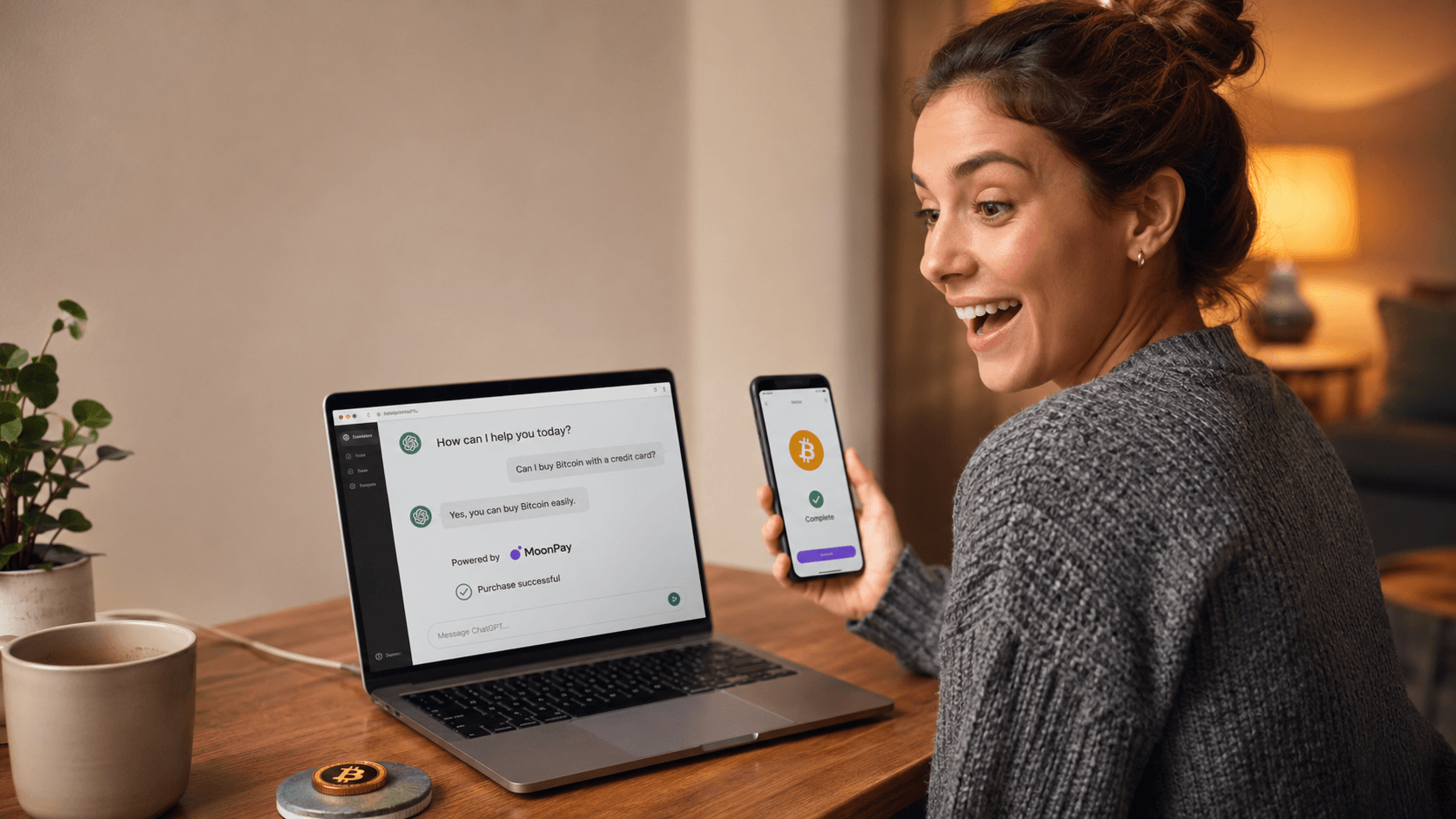
What if buying your first Bitcoin no longer felt like opening an exchange account, decoding wallet slang, and praying you do not send money to the wrong place?
That is why this ChatGPT + MoonPay news matters so much to me. I do not see it as just another crypto partnership headline. I see it as a possible shift in how normal people get introduced to Bitcoin.
For years, the crypto industry has acted like the answer to adoption was simple: “Just make better exchanges.” But that was never the full problem.
The real problem was that most beginners did not know what to do before they reached the exchange.
They had questions like:
- “What is Bitcoin actually?”
- “Do I need a wallet first?”
- “Is MoonPay safe?”
- “What happens after I buy BTC?”
- “Can I lose my Bitcoin if I click the wrong thing?”
- “How much should a beginner start with?”
Now imagine those questions being answered inside the same AI assistant millions of people already use to learn, compare, plan, and make decisions. That is the hook here.
Bitcoin buying may be moving from a crypto-native action to a normal internet action.

The Old Bitcoin Onboarding Problem Was Never Just “Where Do I Buy?”
Most beginners do not quit Bitcoin because they hate Bitcoin. They quit because the first steps feel like a test.
They search Google. They see ads. They compare exchanges. They read Reddit threads. They hear about self-custody. They see words like “seed phrase,” “gas fee,” “network confirmation,” “KYC,” “cold wallet,” and “withdrawal address.”
Then they realize one mistake can be permanent.
“I only wanted to buy $50 of Bitcoin. Why does this feel like I am configuring a bank, a password vault, and a NASA launch panel at the same time?”
That is the part crypto people often forget. If you have been around Bitcoin for years, you may think buying BTC is easy. But for a first-time user, the experience can feel loaded with pressure.
There are three big enemies in Bitcoin onboarding:
- Friction — too many steps, tabs, apps, checks, and decisions.
- Fear — users worry about scams, mistakes, volatility, and losing funds.
- Bad user experience — crypto still asks beginners to learn too much too fast.
This is not just a crypto opinion. General e-commerce research has shown for years that complicated checkout flows kill conversion. Baymard Institute’s cart abandonment research regularly shows that online shoppers abandon purchases at high rates when the process feels expensive, confusing, or annoying.
Now add Bitcoin’s irreversible transactions, identity checks, custody questions, and scam risk on top of that. Of course many beginners hesitate.
User-experience research from Nielsen Norman Group on cognitive load also backs up something I have seen again and again in crypto: when people must hold too many unfamiliar ideas in their head before taking action, they freeze.
And Bitcoin onboarding has been full of cognitive load.
For a beginner, “Where do I buy?” is only the surface question. The real questions are:
- “Can I trust this process?”
- “Will I understand what is happening?”
- “Will someone explain the risks before I click buy?”
- “Will I accidentally mess this up?”
That is why an AI-guided Bitcoin buying flow is more interesting than a new exchange button or another app redesign.

Promise Solution: From Confusing Exchange Pages to a Simple AI-Guided Buy Flow
The promise here is simple: instead of forcing beginners to start with a crypto exchange interface, they can start with a question.
That sounds small, but it changes everything.
A normal beginner does not think like this:
“I need to select a regulated fiat-to-crypto on-ramp, complete identity verification, decide between custodial and non-custodial storage, review spreads, and purchase BTC through a compliant payment processor.”
A normal beginner thinks like this:
“I want to buy a little Bitcoin. What is the safest way to start?”
That is where ChatGPT fits naturally.
If a user can ask ChatGPT about Bitcoin, understand the basics, ask follow-up questions, and then move into a MoonPay-powered buying flow, the first step becomes much less intimidating.
Instead of this old path:
- Search “best place to buy Bitcoin”
- Open five tabs
- Compare exchanges
- Get confused by fees
- Read scary wallet advice
- Abandon the process
The new path could look more like this:
- Ask ChatGPT what Bitcoin is
- Ask what risks matter before buying
- Ask how a small first purchase works
- Review the payment and fees through MoonPay’s rails
- Buy only after understanding the basics
That is a cleaner first step. Not perfect. Not magic. But cleaner.
And in crypto, cleaner onboarding is a big deal.
I have reviewed enough crypto platforms over the years to know that most beginner problems start before the transaction happens. People are not only looking for a buy button. They are looking for confidence.
ChatGPT may give them the missing bridge between curiosity and action.
Why This Feels Bigger Than a Normal Crypto App Update
A normal crypto app update mostly reaches people who already care about crypto.
This is different because ChatGPT is not a crypto exchange homepage. It is where people already go to ask questions.
They ask it about budgeting. They ask it about inflation. They ask it about investing terms. They ask it to compare products. They ask it to explain news. They ask it what something means before they make a decision.
That matters because Bitcoin adoption often starts with curiosity, not conviction.
Someone may not wake up thinking, “Today I will become a Bitcoiner.” But they may ask:
- “Why is Bitcoin going up?”
- “Is Bitcoin different from crypto?”
- “Can Bitcoin protect against inflation?”
- “What is the safest way to buy my first BTC?”
If the answer lives in the same environment as the action, the journey becomes shorter.
That is the big shift.
The old crypto model said: go learn crypto first, then come buy Bitcoin.
The new AI model may say: ask, understand, then buy when you are ready.
That is much closer to how everyday internet users behave.
Think about travel. People do not want to read airline manuals before booking a flight. They want to ask questions, compare options, understand the cost, and book. Think about food delivery. People do not want to understand restaurant logistics. They want to pick, pay, and track.
Bitcoin is different because it involves money, risk, and custody. So it should not be treated like ordering pizza. But the lesson still stands: the simpler the first step feels, the more people will actually take it.
That is why ChatGPT + MoonPay feels bigger than a normal “we added a feature” announcement.
It brings Bitcoin closer to where mainstream users already are.
The Main Hook: No More Wallet Hurdles, But Still Not Zero Responsibility
Here is where I want to be very clear: easier Bitcoin buying is good, but it does not remove personal responsibility.
If this flow helps people avoid the first wallet hurdle, that is a major onboarding win. A lot of beginners get stuck before they ever buy because they think they need to understand every custody model, every wallet type, and every security setup on day one.
They do not.
A beginner can start by understanding the basics and buying a small amount. Then they can learn more about wallets, self-custody, backups, and long-term storage as they grow.
But “easier” should never be confused with “risk-free.”
Before buying Bitcoin through any flow, users still need to understand:
- Custody: Where does the Bitcoin go after purchase?
- Fees: What are the payment fees, spread, network costs, or service charges?
- Volatility: Bitcoin can move hard in both directions.
- Scams: No real support agent, AI assistant, or wallet provider should ask for seed phrases or private keys.
- Privacy: Regulated payment flows may require identity checks depending on location and transaction type.
- Responsibility: Bitcoin is not a game token. It is real money with real consequences.
That is the balance I care about.
I like onboarding that feels simple. I do not like onboarding that makes users careless.
The best version of ChatGPT + MoonPay is not just “buy Bitcoin faster.” The best version is “understand Bitcoin better before you buy.”
If AI can slow down reckless clicks, explain key risks in plain English, and make the buying path less scary, then this could be one of the most important mainstream Bitcoin moments of 2026.
But the next question is the real one:
If ChatGPT becomes the new front door for Bitcoin, what exactly happens when a first-time buyer types, “How do I buy BTC?”

How ChatGPT + MoonPay Could Change the First-Time Bitcoin Buyer Journey
The first-time Bitcoin buyer does not usually start with a trading strategy.
They start with a very human question: “Is Bitcoin worth understanding, and how do I buy a small amount without messing it up?”
That is why the ChatGPT + MoonPay setup is interesting to me. It takes the beginner journey out of the cold exchange dashboard and puts it inside a conversation. Instead of forcing a new user to learn every crypto term before taking action, the flow can feel more like this:
- Ask ChatGPT: “What is Bitcoin?” or “Can I buy $50 of Bitcoin?”
- Get a plain-English explanation: what BTC is, why it moves in price, what the risks are, and what fees may apply.
- Choose to buy through MoonPay: using a supported payment method such as card or bank transfer, depending on region.
- Complete identity checks where required: because buying crypto through fiat rails usually involves compliance.
- Receive BTC through the supported flow: either to a wallet address, a partner-supported wallet, or another approved setup depending on how the integration works for the user.
That may sound simple, but simple is the point.
For years, crypto onboarding has asked beginners to behave like advanced users on day one. ChatGPT changes the first screen from a form into a conversation. MoonPay then handles the regulated on-ramp behind the scenes. If this works smoothly, buying Bitcoin becomes less like “sign up for a trading platform” and more like “ask, learn, check the cost, and decide.”
That matters because friction kills intent. The Baymard Institute’s checkout research has long shown how extra steps, unclear costs, and confusing flows lead people to abandon online purchases. A Bitcoin buy is not the same as buying shoes, of course, but the behavior lesson still applies: if the path feels confusing, people leave.
Crypto has an even bigger problem because the user is not only asking, “Can I complete this payment?” They are also asking, “Can I trust this? Am I about to lose money? What happens if I send it to the wrong place?”
What MoonPay Brings to the Table
MoonPay’s job here is not just to be a payment button. It is the crypto on-ramp layer.
In plain English, MoonPay helps turn normal money into crypto. That usually means handling things like:
- Card and bank payments where supported
- Identity checks such as KYC, depending on the user’s country and transaction size
- Payment processing and fraud controls
- Compliance requirements tied to regulated crypto purchases
- Bitcoin purchase execution at the quoted price and fee structure
- Delivery of BTC through the supported wallet or account flow
This is important because ChatGPT is not a crypto exchange. It is the friendly front end. MoonPay is the buying infrastructure.
Think of a beginner named Sarah. She has heard about Bitcoin for years, but every exchange she opens looks too busy. She asks ChatGPT, “Is it okay to buy $25 of Bitcoin just to learn?” A good AI-guided flow should not hype her up. It should explain volatility, show that $25 can go up or down, tell her to check fees, and then give her the option to continue through MoonPay if she still wants to buy.
That is a much healthier first experience than clicking a random ad, landing on a noisy exchange page, and trying to guess what “market order” means.
Still, I would not confuse easier access with zero responsibility. MoonPay can make payment and compliance smoother, but users still need to understand where the Bitcoin goes, what fee they are paying, and whether they control the wallet.

Why AI Could Become the New Crypto Front Door
The old crypto front door was Google search, exchange ads, YouTube videos, Telegram groups, and random friends saying, “Just buy some.” That created a messy learning path.
AI can clean up that first step because beginners can ask questions before they buy. And they can ask them in normal language.
“What is Bitcoin?”
“How much should I start with?”
“What are the risks?”
“What fees apply if I use MoonPay?”
“Should I move my BTC to my own wallet?”
“What happens if Bitcoin drops 30% after I buy?”
This is where AI becomes powerful. It can slow the user down before the payment screen. It can explain that Bitcoin is volatile. It can explain that no one can guarantee profit. It can explain the difference between owning BTC in a self-custody wallet and using a service-managed wallet.
That education layer is badly needed. The UK Financial Conduct Authority has repeatedly found in its cryptoasset consumer research that consumer understanding, risk awareness, and purchase motivation vary widely. In other words, many people buy crypto with incomplete knowledge.
A good ChatGPT + MoonPay flow could reduce blind buying. Not eliminate it. Reduce it.
Here is the kind of response I would want a beginner to see before buying:
User: “Should I buy $100 of Bitcoin today?”
Better AI flow: “I can explain how buying Bitcoin works, but I cannot tell you what to invest in. Bitcoin is volatile and you could lose money. If you still want to start, consider a small amount you can afford to risk, review MoonPay’s fees, check where the BTC will be sent, and make sure you understand wallet security before confirming.”
That is not boring. That is responsible onboarding.
The Trust Shift: People May Trust ChatGPT More Than Crypto Exchanges
This is the psychological part that many crypto people underestimate.
A lot of newcomers do not know which exchange to trust. They see logos, trading screens, bonus offers, and endless coins. It can feel like walking into a casino where every machine is flashing.
ChatGPT feels different. People already use it to explain schoolwork, write emails, compare products, summarize news, and answer personal questions. So if Bitcoin buying appears inside that same environment, the trust feeling changes.
The user may not think, “I am entering a crypto marketplace.”
They may think, “My AI assistant is helping me understand and buy Bitcoin.”
That is a huge shift.
The winner of first-time Bitcoin onboarding may not be the platform with the most trading pairs. It may be the platform that explains the first $50 purchase without making the user feel stupid.
But there is a danger here too. Trust can turn into over-trust. Human factors researchers often talk about automation bias, where people lean too heavily on machine suggestions because the system feels confident or helpful. In crypto, that can become expensive.
So I like the idea of AI as a guide, but not as a substitute for judgment. ChatGPT can explain. MoonPay can process the buy. The user still has to decide whether the purchase makes sense.

Resources and Market Signals I’m Watching
The reason this story is getting attention is not only the product angle. It is the market signal. When AI meets a fiat-to-crypto on-ramp, people instantly start thinking about mainstream adoption.
I saw the conversation spread across X through posts from Cointelegraph, BitcoinWorld, MSB Intel, Stealth News, Fluxor, Ajoobz, Token Metrics, and Crynet.
What caught my eye was not just the excitement. It was the common theme: AI could become the distribution layer for crypto buying.
That is bigger than one announcement. If users begin their financial research inside AI tools, then crypto companies will want to be where the questions start. Not only where the trade happens.
For Bitcoin, this could be especially powerful because BTC is already the first crypto most beginners search for. They may not know what DeFi is. They may not understand stablecoins. But they have heard of Bitcoin.
So when a beginner asks, “How do I buy Bitcoin safely?” and the answer can move from education to a regulated purchase flow, the gap between curiosity and ownership gets much smaller.
Quick Reader Questions: Who Has 1 Billion Bitcoin?
Nobody has 1 billion Bitcoin.
It is impossible because Bitcoin’s maximum supply is 21 million BTC. There will never be 1 billion real bitcoins under Bitcoin’s rules.
This question keeps showing up because beginners often confuse Bitcoin with other assets that have huge token supplies. Bitcoin is different. Its hard cap is one of the main reasons people care about it.
Satoshi Nakamoto is believed by many analysts to control around 1 million BTC, but that estimate is not confirmed. Those coins have also famously stayed untouched. Large exchanges and custodians may control big wallet balances too, but much of that Bitcoin belongs to customers, not the company itself.
So the clean answer is simple: no individual, company, miner, exchange, or government has 1 billion Bitcoin because 1 billion Bitcoin cannot exist.
Quick Reader Questions: Why Do Bitcoin Miners Solve Hashing Puzzles?
Bitcoin miners solve hashing puzzles because the network needs a fair, expensive, and verifiable way to decide who gets to add the next block of transactions.
Here is the simple version:
- Bitcoin transactions are grouped into blocks.
- Miners compete to find a valid hash for the next block.
- The winning hash must meet Bitcoin’s difficulty target.
- Finding it is hard and expensive.
- Checking it is easy for the rest of the network.
- The winning miner adds the block and earns bitcoin rewards and transaction fees.
This system is called proof of work.
The point is not to make miners do random work for fun. The point is security. The hashing puzzle makes it costly to cheat. If someone wanted to rewrite Bitcoin’s history or double-spend coins, they would need to redo a massive amount of proof of work and outrun the honest network.
That is what allows Bitcoin to work without a bank, payment company, or central authority approving every transaction.
Bitcoin mining turns electricity, hardware, and competition into a security wall around the transaction history.
And this is why beginner education matters so much. If ChatGPT can explain proof of work in plain English before someone buys their first BTC through MoonPay, that user is not just clicking a button. They are starting to understand what makes Bitcoin different.
So the buying flow may become simple, but the bigger question is sharper: if AI removes the first major friction point, what happens to Bitcoin adoption when millions of curious users can move from question to purchase in the same place?
What This Means for Bitcoin Mass Adoption in 2026
For me, the big adoption question in 2026 is no longer, “Have people heard of Bitcoin?” Most people have. The real question is, “Can they take the first step without feeling lost, pressured, or exposed?”
That is why this ChatGPT + MoonPay move matters. It attacks the gap between curiosity and action. A lot of people are already asking AI about inflation, savings, investing, and crypto. If that same conversation can lead into a simple Bitcoin buying flow, the distance between thinking about BTC and actually owning a small amount becomes much shorter.
The data already shows that awareness is high, but confidence is still uneven. Pew Research found that most Americans had heard of crypto, but many were not confident in its safety and reliability. In the UK, FCA research showed crypto ownership rising, but also made it clear that buyers still need better understanding of risk. And globally, Chainalysis adoption data keeps showing that crypto interest is not limited to one country or one type of user.
So yes, I see this as a serious adoption catalyst. Not because it magically solves every Bitcoin problem, but because it makes the first purchase feel normal.
The Bullish Case: AI Turns Curiosity Into Action
The bullish case is simple: people do not always need a 40-page Bitcoin education before buying their first $25 or $100 of BTC. They need a clear explanation, a warning about the risks, a transparent fee screen, and a buying path that does not feel like a technical exam.
Think about a regular user typing something like this:
“I want to buy a small amount of Bitcoin. What are the risks, what fees should I check, and how do I avoid making a mistake?”
That is a very different starting point from clicking a random ad, listening to an influencer, or rushing into an exchange app without knowing what any of the buttons mean.
There is also a basic consumer behavior lesson here. Baymard Institute’s checkout research has tracked for years how friction kills online purchases. Crypto has had one of the most friction-heavy “checkouts” on the internet. If AI removes confusion at the exact moment someone is interested, it can change conversion in a big way.
Here are real examples of where I think this becomes powerful:
- The cautious beginner asks whether buying $50 of Bitcoin makes sense and gets a risk-first explanation before seeing a buy option.
- The monthly saver asks about dollar-cost averaging and learns why small recurring buys may feel less stressful than trying to time the market.
- The inflation-worried user asks how Bitcoin compares with cash, gold, and stocks, then gets a clearer picture before making a decision.
- The total newcomer asks what happens after they buy BTC and learns the difference between holding through a service and moving coins to a personal wallet.
That last point is important. True mass adoption does not happen when people are forced to learn every technical detail upfront. It happens when the product is simple enough to start, while still teaching users what matters as they go.
The Risk Side: Fees, Custody, Privacy, and AI Mistakes Still Matter
I like easier access. I do not like blind access.
If buying Bitcoin becomes as easy as asking a question, then users also need to slow down for a few minutes before clicking “buy.” Convenience is powerful, but it can also turn into impulse buying if the user treats the process like ordering a pair of shoes.
These are the risks I would keep front and center:
- Fees: Card buys, spreads, network costs, and provider fees can reduce the actual amount of BTC received. A $100 purchase may not mean $100 worth of Bitcoin lands after all costs.
- Custody: Users must know where the Bitcoin goes. Is it being sent to their own wallet, or is it held through a service? That difference matters.
- Privacy: A regulated on-ramp usually means identity checks. This is not anonymous cash. Users should understand what data they are giving up.
- AI mistakes: AI can explain things well, but it can still be wrong, outdated, or too general. The final confirmation screen and provider terms matter more than a chat response.
- Volatility: Bitcoin can move hard in both directions. It has had multiple deep drawdowns in past cycles, so a beginner should never buy with money needed for rent, bills, or emergencies.
My rule is simple: if a tool makes buying easier, it should also make understanding easier. If it only makes clicking easier, that is not adoption — that is just faster speculation.
There is also the scam angle. If people get used to talking to AI before buying crypto, scammers will copy that behavior. Fake support bots, fake MoonPay pages, fake wallet prompts, and phishing links will likely follow any major onboarding trend. Beginners should never paste seed phrases, private keys, passwords, or 2FA codes into any chat window. Not for ChatGPT, not for support, not for anyone.
What I Would Tell a First-Time Buyer Before Clicking “Buy”
If someone close to me asked whether they should buy their first Bitcoin through an AI-guided flow, I would not start with price predictions. I would start with this checklist:
- Start small. Your first buy can be education. You do not need to impress anyone with the amount.
- Check the full cost. Look at the exchange rate, service fee, payment fee, and the final BTC amount before confirming.
- Know where the BTC is going. If it is going to a wallet, confirm the address carefully. If it is held through a service, understand the withdrawal rules.
- Use strong security. Turn on two-factor authentication, protect your email account, and use a unique password.
- Never share recovery phrases. A real service will not need your seed phrase. Anyone asking for it is a threat.
- Expect volatility. If a 20% or 30% drop would make you panic, your position may be too large.
- Do not borrow to buy BTC. Leverage and beginner psychology are a bad mix.
- Keep records. Depending on your country, crypto buys, sells, swaps, and withdrawals may have tax reporting rules.
My favorite beginner approach is boring on purpose: buy a small amount, learn how the process works, read the fee screen carefully, and then decide later whether Bitcoin deserves a bigger role in your financial life.
That is not as exciting as shouting a price target, but it is much healthier.
My Cryptolinks Take: This Is a Tipping Point, Not the Finish Line
My honest take is that ChatGPT + MoonPay could become one of the biggest Bitcoin onboarding moments of 2026 because it puts buying BTC inside a place where people already ask questions.
That is the key. Bitcoin is no longer sitting only inside exchange apps, trading screens, and crypto Twitter conversations. It is moving closer to everyday decision-making. Budget questions. Savings questions. “What should I do with $100?” questions. That is where mainstream adoption starts to feel real.
But I would not call this the finish line. Easy buying is only one layer. Real adoption still needs:
- Better education before and after the first purchase.
- Safer custody options that do not overwhelm beginners.
- Transparent fees that users can understand in plain language.
- Stronger scam protection around wallets, support flows, and phishing pages.
- Clearer regulation so users know what protections they do and do not have.
So I am bullish, but not careless. I think this can bring millions of curious users closer to Bitcoin. I also think the industry has a responsibility to make sure those users are not just onboarded quickly, but onboarded properly.
The best version of this future is not “AI tells everyone to buy Bitcoin.” The best version is this: AI helps people understand Bitcoin, shows the risks clearly, makes fees visible, and gives beginners a safer way to take their first small step.
If that is where this goes, then yes — this may be remembered as a real tipping point for Bitcoin mass adoption.