Pump.fun Burns $370M of $PUMP (36% of Supply) + Promises 50% Revenue Buybacks: Smart Tokenomics Reset or a Panic Button?
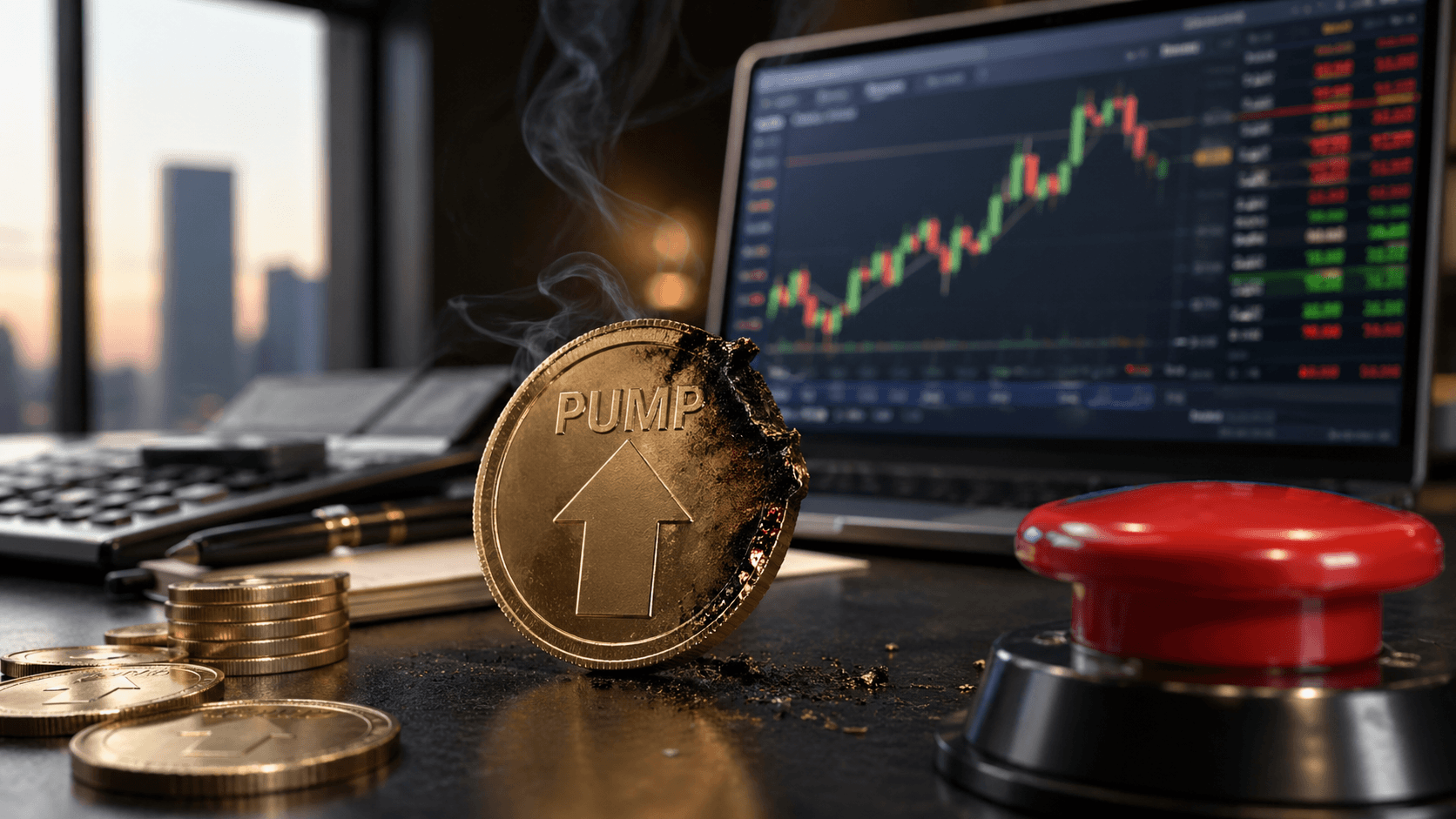
If a memecoin launchpad suddenly nukes 36% of its token supply and promises to spend half its revenue buying tokens back… is that a legit value-capture upgrade—or a shiny headline meant to stop the bleeding?
If you’re trading Solana memecoins, launching tokens, or holding $PUMP, this changes the math overnight. A reported $370M burn plus a pledge to commit 50% of next year’s revenue to buybacks is the kind of move that can flip sentiment fast… or backfire hard if the details don’t hold up.
I’m going to frame the real problem first—because most people are skeptical for good reasons. Then I’ll give you a simple way to judge whether this is real tokenomics progress or just a well-timed narrative.
The pain: memecoin launchpads are hype machines, but tokenomics usually lag behind
Memecoin launchpads are amazing at one thing: attention. They compress the whole cycle—idea → token → liquidity → chaos—into minutes.
But tokenomics? That’s usually where things get lazy.
In a lot of launchpad ecosystems, the platform token ends up as a souvenir instead of a real claim on value. Users pay fees, creators print money, volume flies… yet the token doesn’t clearly benefit unless the market is in a “buy anything” mood.
And when the market stops being generous, the same story repeats:
- Fees feel higher (or at least more painful).
- Users feel like they’re being farmed for volume.
- The platform token becomes a proxy for hype rather than platform fundamentals.
So when Pump.fun drops a burn headline and a buyback promise, you’re not wrong to raise an eyebrow. The default reaction in this corner of crypto is basically: “Okay… prove it.”
What traders and holders hate (and why it matters here)
I’ve watched enough “platform token” cycles to know what sets people off. It’s not just price going down—it’s the feeling that the game is rigged, vague, or endlessly extractive.
Here are the complaints I see over and over (and why they matter a lot when someone announces burns + buybacks):
- Endless emissions that quietly dilute everyone while marketing screams “community.”
- Unclear utility—the token exists, but nothing meaningful depends on it.
- Insiders dumping (or wallets that look suspiciously well-timed) that kills trust fast.
- “Buyback” promises with no enforcement—no schedule, no wallet transparency, no reporting cadence.
- Price depends on attention, not fundamentals—so the token trades like a meme while pretending to be a business asset.
And there’s a reason buyback announcements hit so hard psychologically: in traditional markets, buybacks are often treated as a signal that a business believes its equity is undervalued. Academic work like Ikenberry, Lakonishok & Vermaelen (1995) found long-run abnormal returns following open-market share repurchase announcements in US equities. Crypto isn’t stocks, but the signal effect is similar: “We’re committing cashflow to support the asset.”
The problem is crypto has trained people to ask the next question immediately: is it enforceable, verifiable, and sustainable?
What token creators hate (yes, even the ones printing money)
If you’re a creator launching tokens, you’re not just buying “a launch.” You’re buying distribution + momentum.
And here’s the part most people miss: the health of the platform token can affect creator outcomes even if creators don’t care about the token directly.
When a platform token is weak (or feels pointless), it usually leads to stuff creators hate:
- Attention leaks to the next shiny competitor with a better narrative.
- Launch quality drops because serious teams avoid unstable ecosystems.
- Marketing gets harder because “launching here” isn’t a flex anymore—it’s just a venue.
On the flip side, if the platform token starts acting like a real value-capture asset, the ecosystem often gets a second wind: more traders pay attention, more liquidity shows up, and launches can ride that wave.
That’s why this Pump.fun move matters beyond holders. If it works, it can change creator incentives. If it’s just a headline, it can make the whole platform feel more “casino” than “market.”
Promise solution: how I’ll help you judge whether this reset is legit
I don’t want you to get trapped in the usual crypto argument of “bullish!” vs “scam!” based on one screenshot. So here’s the simple checklist I’m using to judge whether this is a serious tokenomics reset or a panic button.
- (1) Supply shock reality
Is the reduction real, permanent, and reflected in circulating supply—or is it just optics? - (2) Buyback funding and enforcement
Is “50% of revenue” defined clearly, executed automatically (or at least consistently), and easy to audit? - (3) Who benefits first
Does this mostly reward short-term momentum traders, or does it build durable support for long-term holders and the platform? - (4) What could break
What happens if revenue drops, SOL memecoin volume cools off, or the team changes terms? - (5) What metrics to watch weekly
Which on-chain and platform signals will tell you quickly if the plan is real—or fading?
Now the big question: what exactly changed today—what does “$370M burned” actually mean in practice, and what does “50% of revenue” mean once you look past the headline?
Because that’s where the entire story flips from “this is smart” to “this is marketing.”
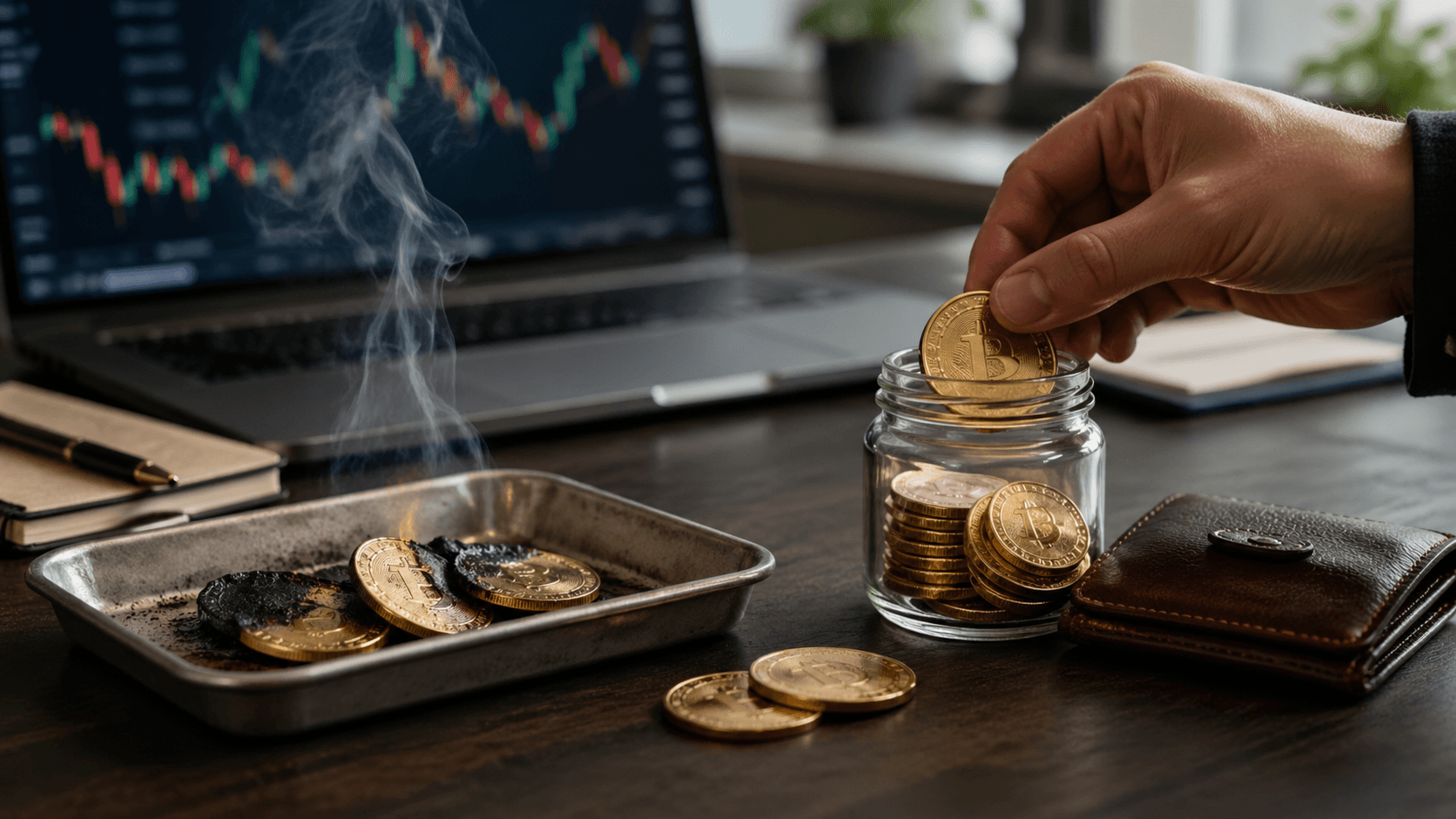
What happened today (29 Apr 2026): the burn + the buyback commitment, in plain English
Today’s Pump.fun update did two things that instantly change how people model $PUMP:
- A reported $370M worth of $PUMP was burned — presented as 36% of supply.
- Pump.fun also said it plans to allocate 50% of the next year’s revenue to $PUMP buybacks.
If you want the primary sources first, start here:
And here are the early writeups that capture how the market interpreted it (useful for cross-checking details, not as “truth”):
- Crypto Briefing coverage
- FXStreet coverage
- Invezz coverage
- OurCryptoTalk coverage
- Cryptowisser coverage
- Coinpaper coverage
- Phemex coverage
And if you want a quick read on sentiment from commentators:
Now the translation into normal human language:
- Burn = tokens are sent to an irrecoverable address (or otherwise verifiably removed), meaning they can’t be sold later. It’s a supply reduction.
- Buyback = the project uses money it earns to purchase tokens on the open market (or OTC). What happens next matters a lot: those tokens can be burned, locked, held, or re-used for incentives.
The burn is a one-time “math change.” The buyback plan is a “policy change.” The burn is easy to announce. The buybacks are where credibility is won or lost.
The burn: what it does instantly (and what it doesn’t)
A burn this big creates an immediate float shock. If 36% of supply is truly removed from circulation, the market suddenly has fewer tokens available at any price level. That’s why burn headlines often trigger fast moves: fewer tokens + the same crowd = higher bid pressure in the short run.
But I want to be super clear about what the burn doesn’t do:
- It doesn’t automatically create demand.
- It doesn’t guarantee a higher fully diluted value if future emissions (or unlocks) re-expand supply.
- It doesn’t fix weak utility by itself.
A useful way to think about burns is the same way finance people think about share count reductions: supply down can help per-unit metrics, but only if the underlying “business engine” is real. In traditional markets, large-scale research on buybacks shows they can support valuations and signal confidence, but long-term outcomes still depend on cashflow quality and governance (a quick example: the well-known “buyback anomaly” literature finds repurchase announcements often outperform, but the persistence depends on fundamentals and execution discipline).
Crypto burns have a similar problem: markets love the headline, then quickly ask, “Cool… and what’s the next source of consistent buying?” If the answer is “nothing,” the burn can end up being a one-week story.
The key question I’m asking right now is simple:
Is this burn the start of a repeating policy (deflation mechanics), or a one-time reset meant to change the conversation?
The buyback pledge: why “50% of revenue” sounds huge—and the fine print people should look for
“50% of next year’s revenue” sounds massive because it implies a direct line from platform activity to token support. It’s the kind of phrase that makes traders instantly start building price targets in their heads.
But in crypto, buyback promises live or die on the definitions. Here’s the fine print I’m looking for before I treat this like real value capture:
- What counts as “revenue”?
- Gross fees collected by the platform? Or net profit after costs, incentives, refunds, partnerships, and overhead?
- If it’s gross, 50% is bigger. If it’s net, it might be smaller but more sustainable.
- What’s the buyback schedule?
- Daily buys tend to reduce “announcement games” and make it easier to audit.
- Monthly buys can become a predictable “front-run the buyback day” event.
- Where will buybacks happen?
- On-chain swaps are easiest to verify but can create visible MEV/front-running patterns if not handled carefully.
- OTC avoids slippage but reduces transparency unless they publish receipts and counterparties (most don’t).
- CEX buys can be real, but on-chain users can’t easily verify without strong reporting.
- What happens to bought tokens?
- Burned = actually reduces supply (most “deflationary”).
- Locked = reduces float temporarily (but can come back).
- Held in treasury = can be supportive, but it’s also a future overhang if the treasury ever sells.
- Recycled as incentives = could be smart growth spending… or a fancy way to re-emit supply.
- Who controls the buyback wallet(s)?
- Single-sig = fastest execution, weakest trust.
- Multi-sig with named signers + a posted policy = slower but far more credible.
- What reporting exists?
- If they want this to stick, I want a simple recurring transparency post: revenue basis, amount allocated, transactions, and what happened to the tokens.
Here’s why I’m picky: “Buybacks” can mean anything from consistent market purchases to a vague intention that gets paused the moment conditions change. In every market—stocks included—buybacks only become a real narrative when the policy is repeatable and verifiable.
Tokenomics reset vs desperation: how I’m thinking about the motive
I’m seeing two plausible stories here, and I’m not married to either one yet.
The tokenomics reset case
- They’re trying to turn $PUMP from a “platform souvenir” into a value-capture asset.
- Burning a big chunk of supply forces a new baseline: fewer tokens, more sensitivity to consistent buying.
- The “50% revenue” line is basically them saying: if the platform wins, token holders win.
The desperation case
- They needed a narrative shift fast—price action, sentiment fatigue, competition pressure, user churn, regulatory noise… pick your catalyst.
- “Burn + buybacks” is the cleanest headline in crypto because it’s easy to explain and hard to emotionally ignore.
- If the details stay fuzzy, the market will eventually treat it like a marketing cycle, not a policy change.
The uncomfortable truth is that both can be true at the same time: a project can feel pressure and still choose a genuinely shareholder-like (holder-like) value plan. The difference is execution quality and how transparent they’re willing to be when nobody’s clapping anymore.
“People also ask” (the questions I keep seeing, answered straight)
What is Pump.fun and what is $PUMP used for?
Pump.fun is a Solana memecoin launchpad ecosystem. $PUMP is the platform token at the center of this policy shift—today’s burn and buyback commitment are meant to tie platform performance more directly to the token’s supply and market support.
Why did Pump.fun burn 36% of the $PUMP supply?
A burn that large is usually done to create an immediate supply reduction and reset token optics. The bullish interpretation is “commitment + cleaner token structure.” The bearish interpretation is “they needed a shock headline.”
How do token burns affect price and market cap?
Burns reduce supply. Price can move up quickly because available float shrinks. But market cap = price × circulating supply, and markets adjust expectations fast—if demand doesn’t follow, price can mean-revert even with a smaller supply.
What does a revenue buyback program mean in crypto?
It means the platform claims it will use revenue to buy tokens on the market. If those tokens are burned or permanently retired, it’s closer to a “deflation policy.” If they’re held or re-issued, it’s closer to “treasury management” or “incentive funding.”
Are buybacks bullish or just marketing?
They’re bullish when they are mechanical (clear formula), frequent (predictable cadence), and auditable (anyone can verify). They’re marketing when they’re discretionary, hard to measure, or quietly paused.
How can I verify the burn and buybacks on-chain?
At minimum, you should be able to identify: the burn transaction(s), the burn address, supply before/after, and the wallet(s) that execute buybacks. If users have to guess, trust won’t scale.
Could this change fees, launch mechanics, or creator incentives on Pump.fun?
If buybacks are funded by platform revenue, then there’s an implied incentive to increase and stabilize revenue. That can be good (more activity) or messy (pressure to optimize for volume over quality). Watch how they talk about fees and incentives over the next few updates.
What are the biggest risks?
Centralization of execution, unclear accounting (“revenue” games), incentives that encourage fake volume, and legal/regulatory uncertainty around platform-funded buybacks.
Is $PUMP now deflationary?
The burn was deflationary once. Whether it’s structurally deflationary depends on the buyback mechanics (and whether bought tokens are burned/retired), plus any future emissions/unlocks.
What should I watch next week/month to know if it’s working?
Two things: (1) proof of execution (wallets, cadence, amounts), and (2) whether buybacks behave like a policy, not an event.
How this changes memecoin launches on Pump.fun (the part most people miss)
This is the sneaky part: if buybacks are funded by platform activity, then Pump.fun is effectively telling the market:
More launches + more trading activity = more buybacks = more structural bid for $PUMP.
That message can reshape launch behavior in real time, because narratives attract liquidity.
Here are a few real-world ways this could play out:
- Creators start using it as marketing copy. Expect to see “launching on Pump.fun supports $PUMP buybacks” as a meta-angle—whether or not it truly does.
- Liquidity follows the storyline. When traders believe platform volume feeds buybacks, they’re more likely to rotate attention back to that venue. That tends to help new launches… at least while the story feels fresh.
- It can incentivize volume-chasing. If the market thinks “volume = buybacks,” some actors will try to manufacture volume. This is why transparency and anti-wash mechanisms matter more than ever.
This is where a smart team wins: they can harness the narrative without letting it turn into a “wash-farm to force buybacks” game.
Who wins and who loses from this move (holders, traders, creators, the team)
I always map these announcements by incentives, because incentives predict behavior better than hype does.
- Long-term holders
Win if revenue is real, buybacks are consistent, and the execution is transparent. Lose if “50% of revenue” ends up being a flexible phrase with lots of exclusions. - Short-term traders
Win from volatility and narrative momentum (burn headlines are rocket fuel). Lose if the details disappoint, or if on-chain flows show buybacks aren’t happening the way people assumed. - Creators
Win if this brings a second wave of attention and liquidity to launches. Lose if the platform starts tweaking fees or rules in ways that make launching less attractive just to protect buyback optics. - The team / platform
Wins from renewed attention and potentially stronger token price reflexivity. Loses credibility permanently if wallets are opaque, execution is inconsistent, or the policy changes mid-stream without clear communication.
The “trust layer”: what proof I’d want to see on-chain
If Pump.fun wants this to be believed by regular users (not just insiders), the proof needs to be simple and repeatable.
Here’s my personal checklist of what I want to verify (and what I want them to make easy):
- Burn transaction(s) clearly linked from an official post
- Supply before/after with a simple explanation of what “36%” refers to (circulating vs total)
- Buyback wallet(s) publicly identified
- Recurring on-chain swaps that match the stated cadence
- What happens to purchased tokens: burned, locked, or held
- A transparency cadence: weekly is ideal at the start (because trust is built early or not at all)
If they do this right, they don’t need to argue with anyone on X. The chain becomes the argument.
Comparable playbooks: what this looks like vs other buyback/burn stories in crypto
I’m not treating this like a history lecture. I’m treating it like a pattern match.
When buybacks/burns actually work, they usually share three traits:
- Predictable revenue (not just a good month)
- Transparent execution (easy for outsiders to verify)
- Clear token utility (so demand has a reason to exist beyond the buyback itself)
When they fail, it’s usually because of:
- Unclear definitions (“revenue” becomes a moving target)
- Discretionary pauses (buybacks happen when convenient, stop when inconvenient)
- Incentives that encourage fake volume (the market learns to game the mechanism)
So yes, the burn is dramatic. But the real story is whether buybacks become a boring, verifiable routine.
If you had to bet on one thing: do you think we’ll see consistent on-chain buybacks within the next 7 days… or a flood of vague “we’re working on it” updates?
Because that one answer decides whether this move ages like a real tokenomics upgrade—or just another perfectly timed headline.

What I’m watching next: the “this is real” checklist for $PUMP
A huge burn and a big buyback promise can light a fire under price fast. But the only thing I care about after the headline is this:
Does $PUMP turn into a token with repeatable, verifiable value capture… or does this fade the moment attention moves on?
So here’s my “this is real” checklist. It’s not complicated. It’s just the stuff that’s hardest to fake for long.
- Consistency: do buybacks actually happen on a schedule, even on boring days?
- Transparency: can regular users verify them without reading tea leaves?
- Platform growth: do launches, trading activity, and fees trend up in a way that plausibly funds the program?
- Governance/control clarity: who holds the keys, and what stops “we’ll resume later” from becoming “we never resumed”?
If those four boxes get checked for a month, the story changes. If they don’t, then it was just a very expensive marketing candle.
7-day and 30-day metrics that matter more than the headline
I’m treating the next week like a verification period, and the next month like a behavior test. This is what I’m tracking (and what I’d track even if I didn’t own a single token):
- Confirmed circulating supply post-burnI want to see the supply number reconcile across the places people actually use: explorers, trackers, and major market data sites.Real-world check: pull the mint address on a Solana explorer like Solscan, confirm supply, then compare it to what analytics sites report. If those disagree for days, that’s a friction point for credibility (and for price discovery).
- Buyback frequency and size (and whether it matches the “revenue” story)I’m not impressed by one giant swap. I’m impressed by a pattern.What I’m looking for: recurring purchases that are easy to identify (same wallet set, consistent timing) and a plausible relationship to platform activity. If they say “50% of revenue” and buybacks show up randomly, that’s not a program—it’s discretion.
- Platform volume / fees trendBuybacks don’t come from vibes. They come from cash flow (or from a treasury that eventually runs out).What I’m looking for: fee-generating activity that stays elevated after the initial hype week. A lot of crypto “resets” look great for 72 hours, then reality returns. This is where the promise either becomes self-funding… or starts depending on spin.
- User growth that isn’t just touristsI’m watching:
- New launches per day (not just one spike)
- Active wallets (do they stick around?)
- Repeat creators (are serious launchers coming back?)
If the platform gets a real second wind, you’ll see it in retention, not just sign-ups.
- Token distribution changes (concentration)This one matters more than people admit. If buybacks (or post-hype trading) end up funneling supply into fewer and fewer wallets, risk goes up even if price goes up.My rule: I’m fine with whales existing. I’m not fine with the ecosystem becoming dependent on a few wallets behaving nicely.
- $PUMP price action vs the broader Solana memecoin marketWhen everything is ripping, it’s easy to confuse “market beta” with “tokenomics improvement.”What I’m looking for: relative strength when the rest of the memecoin complex cools off. If $PUMP can’t hold attention on neutral days, the burn/buyback narrative may not have real legs yet.
- Any clarification that tightens the definition of “revenue” and how buybacks are handledI’m waiting for specifics that reduce wiggle room, like:
- Is “revenue” gross fees or net after costs?
- Are bought tokens burned, locked, or reused?
- Is there a fixed cadence (daily/weekly) and a public reporting page?
The tighter the language, the harder it is to quietly change the deal later.
One more thing, because it matters: in traditional markets, there’s a reason buybacks move prices. A lot of event-study research on equity repurchases shows buyback announcements often coincide with positive abnormal returns (a classic reference is Ikenberry, Lakonishok & Vermaelen (1995)). Crypto isn’t stocks, obviously—but the psychological mechanism is similar: traders respond to credible ongoing demand. The keyword is credible.
Practical takeaways for three reader types (holder / trader / creator)
I’ll keep this practical, because everybody reading this has a different reason for caring.
If you hold $PUMP:
- Don’t “diamond hands” a press release. Wait for a visible buyback pattern you can verify on-chain.
- My minimum confirmation: at least a couple of weeks of consistent execution plus one clear update that tightens the definitions (revenue, cadence, and what happens to repurchased tokens).
- Red flag: buybacks happening only when price is already pumping, or only right after public pressure. That’s support theater, not policy.
If you trade $PUMP:
- Expect volatility clusters. Big burns tend to create “event gravity” where price overreacts, pulls back, then reacts again to follow-up details.
- Know what invalidates the trend: silence about execution, wallets that can’t be tied to the program, or a sudden “pause” with no timeline.
- Watch the boring days. If $PUMP holds up when Solana memecoin chatter cools off, that’s a stronger signal than any green candle during peak hype.
If you launch memecoins:
- Don’t confuse attention with liquidity. A “buyback narrative” can bring eyeballs, but you still need real buyers and a community that doesn’t disappear in 24 hours.
- Timing matters. Launching right into peak platform hype can work—unless you’re the fifth copycat that day. If you’re serious, you may get a better outcome by waiting until the second wave (when tourists leave and real users remain).
- Watch whether quality improves. If the platform’s renewed narrative attracts better creators and steadier traders, you’ll feel it in smoother price action and less “thin air” liquidity.
The risks nobody likes to talk about (but you should)
Even if you love the burn and the buyback idea, there are risks here that don’t go away just because price is green.
- Execution risk (the “pause button” problem)Anything not enforced by transparent rules can be delayed, resized, or quietly reinterpreted. The market usually doesn’t punish that immediately—it punishes it when sentiment flips.
- Centralization of controlIf a small set of wallets controls the program, you’re trusting humans to behave consistently under stress. That’s not automatically bad—but it’s a risk you should price in.
- Revenue accounting games“50% of revenue” sounds objective until you realize how many ways “revenue” can be defined. Gross vs net. One product line vs all. Excluding promotions. Including one-offs. The more flexible it is, the less weight the promise carries.
- Incentives that encourage fake volumeIf buybacks are tied to activity, some actors will try to manufacture activity. Washy behavior can make numbers look great while user quality gets worse. I’m watching for growth that looks organic: retention, repeat creators, and consistent fee generation.
- Legal/regulatory uncertainty around platform-funded buybacksPrograms that look like “we use platform revenue to support the token” can attract attention in the wrong way depending on jurisdiction and structure. Even without enforcement action, the fear of it can change how exchanges, partners, or market makers behave.
Where I land
This move is big. A supply shock like this can change the trading math overnight, and a serious buyback commitment can turn a platform token from a souvenir into something closer to a value-capture asset.
But I’m not marrying the narrative.
I’m treating this as promising, not proven.
Here’s what would change my mind in either direction:
- I get more bullish if:
- buybacks show up on a predictable cadence,
- the “revenue” definition gets tightened publicly,
- bought tokens are handled in a clearly disclosed way (burn/lock/treasury),
- and platform usage holds up past the initial hype window.
- I turn skeptical fast if:
- execution becomes discretionary and irregular,
- reporting is vague (“trust us, we did it”),
- on-chain evidence is hard to follow,
- or activity spikes look manufactured rather than retained.
The headline already happened. Now it’s about behavior. And behavior is the one thing the market eventually forces everyone to prove.