Bitcoin Giveaways Skyrocket 300%: What It Says About Retail Confidence in Early 2026

Why does it feel like every other post right now is screaming “FREE BTC” — while your timeline is also full of people whispering “crash incoming”?
My feed just flipped into “FREE BTC” mode overnight, and that’s never random: in the past 48 hours, Bitcoin giveaway posts have jumped roughly 300% across the usual channels, right as early‑2026 confidence feels shaky—prices are noisy, predictions are loud, and a lot of people are looking for “easy upside” instead of making a clean buy-and-hold decision. That’s exactly when scammers feast, because nothing pulls clicks like the promise of free sats, and nothing empties wallets faster than one rushed tap on a fake promo link or a “send first, get more back” trick. I’m going to break this surge down into what it actually signals about retail mood (bullish interest, bearish desperation, or just spam), and give you a quick, repeatable way to sort legit promos from wallet-draining traps in seconds—without needing to trust vibes, influencers, or screenshots.
Listen to this article:
In the last 48 hours, I’ve watched “Bitcoin giveaway” content explode across the usual channels. And when that happens, it’s rarely just harmless hype. It’s a real-time signal about retail mood… and a perfect hunting season for scammers.
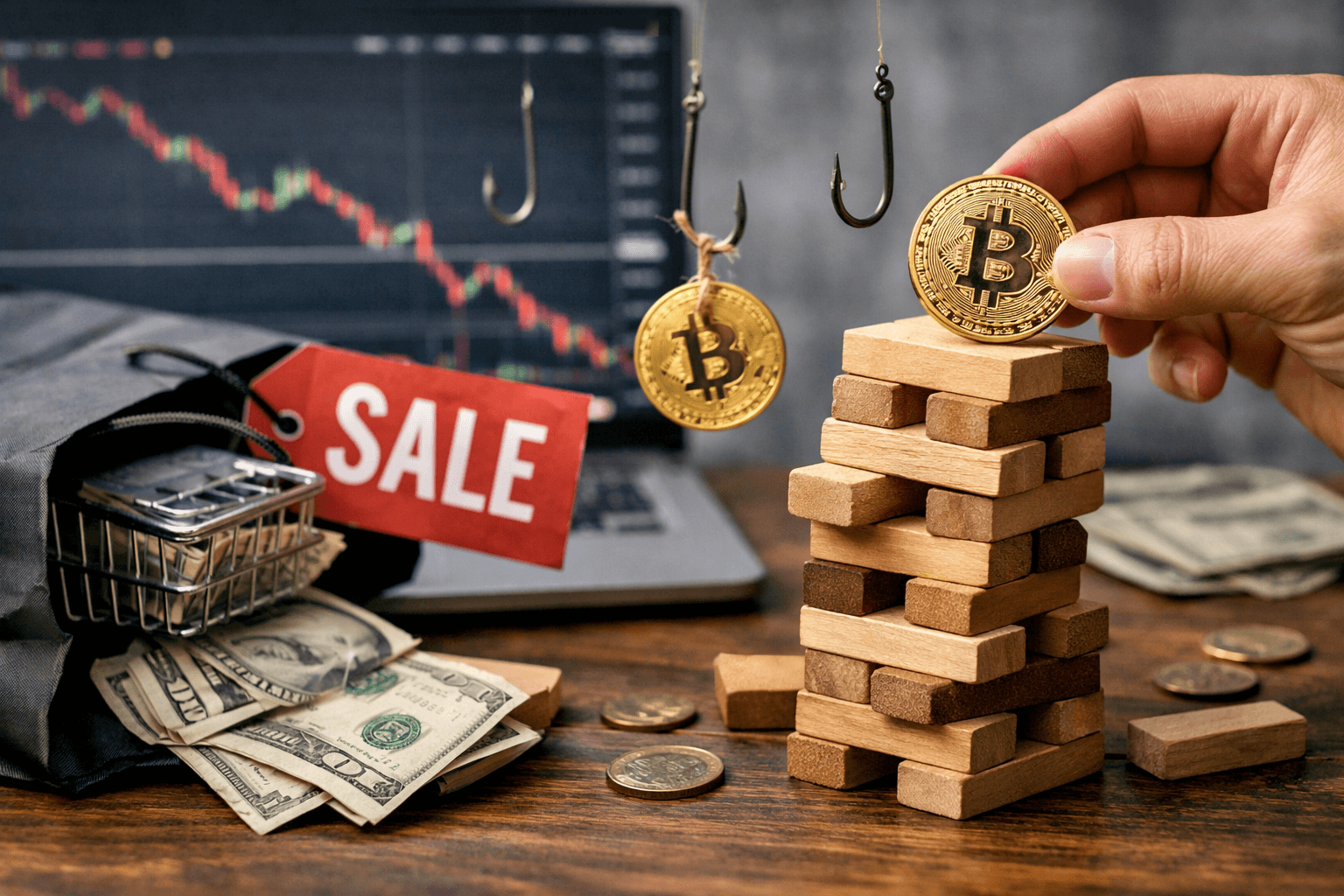
The pain right now: retail feels shaky, and “free BTC” is the easiest bait
Here’s the plain truth: when confidence is strong, people simply buy and hold. When confidence gets mixed, people start hunting for “low-risk upside.”
That’s when you see a wave of:
- Giveaways (“retweet + follow for free BTC”)
- Airdrops (often with “connect wallet” hooks)
- Rebates and bonuses (exchanges, casinos, affiliates)
- Referral rewards (“invite 3 friends, get paid”)
- Raffles (“enter to win 0.1 BTC”)
And that lines up perfectly with the early-2026 vibe:
- A post-ATH hangover (people remember the highs, but don’t trust the next move)
- Choppy price action (enough volatility to keep attention, not enough clarity to feel safe)
- Louder crash predictions (the “it’s over” crowd gets bold in sideways markets)
- Attention sliding from long-term plans to quick wins (because boredom + uncertainty is a dangerous combo)
The problem? Most “giveaways” you’ll see fall into one of these buckets:
- Real marketing promos… but with strict rules, limited regions, and conditions people don’t read
- Scam funnels designed to steal seed phrases, drain wallets, or harvest KYC info
This isn’t paranoia — it’s pattern recognition. Even regulators have been blunt about how “free money” bait works in crypto. The U.S. FTC has repeatedly warned that crypto-related scams often start with promises of easy money and social engineering, not “hacking.” You can skim their consumer updates here: FTC cryptocurrency scam resources.
And on the on-chain side, blockchain analytics firms have documented how scam campaigns come in waves, often tied to market headlines and retail attention spikes. (If you follow these reports, the “giveaway” theme shows up constantly.) For reference: Chainalysis reports.
Promise: what you’ll get from this (besides fear)
I’m not here to yell “scam!” at everything and call it a day. I want you to leave with two useful things:
- A practical framework to judge whether this giveaway surge is bullish, bearish, or just noise
- A fast checklist mindset to avoid getting burned when the next “free BTC” link hits your feed
And I’m not going to “guess” based on vibes. I’m going to look at repeatable patterns:
- Where these giveaways appear
- What they ask you to do (retweet vs “send BTC first” vs “connect wallet”)
- What retail is reacting to (engagement behavior tells you a lot)
- What this usually means historically when attention rises faster than conviction
What I mean by “300% in 48 hours” (so we’re not just repeating hype)
I’m not claiming some perfect scientific measurement here, because social data is messy and easily gamed. But I do track a simple, consistent set of signals every day, and the jump has been obvious.
When I say “300% in 48 hours”, I’m referring to the count of unique giveaway-style posts I detected across:
- X (Twitter) posts with high engagement containing terms like “BTC giveaway”, “free sats”, and the classic scam phrasing “send 0.01 get 0.02 back”
- Telegram-forwarded promo posts (the same screenshots and “CEO giveaway” claims bouncing between channels)
- Promo trackers and bonus aggregators I keep an eye on (where legitimate promos and shady ones often get mixed together)
To be extra clear: I’m counting unique posts/campaigns, not total impressions. Impressions can be faked. Engagement can be bought. A “300% spike” in impressions is meaningless if half of it is botnets yelling into the void.
Limitations you should keep in mind:
- Social metrics can be botted (especially on giveaway posts because fake engagement makes them look “trusted”)
- Screenshots get recycled (the same “giveaway proof” image can circulate for months)
- Scammers spam in waves (they test what works, then scale it fast)
So no — this is not me pretending we have flawless statistics. This is signal-reading, the same way you’d read sentiment from sudden meme bursts or copy-paste narratives.
The big question people are really asking (and it’s a fair one)
“Is this bullish because new users are coming in… or is it a red flag because retail is getting desperate?”
My honest answer: it can be both at the same time.
In crypto, “growth + fear” often show up together in these awkward phases where attention is high but trust is thin. You’ll see newcomers chasing small wins, and at the same time you’ll see veterans getting cautious because the mood feels… twitchy.
Here’s what I want you to think about before you scroll: if this 300% spike is real attention (not just spam), who is it attracting — and what are they being asked to do?
Because once you see what’s actually driving these campaigns (legit promos vs engagement farming vs coordinated scam waves), the whole “free BTC” trend starts to look less like generosity… and more like a thermometer for retail confidence.
Next question: what’s really causing the surge in early 2026 — and how do you separate the “normal marketing” from the wallet-draining traps in under 10 seconds?
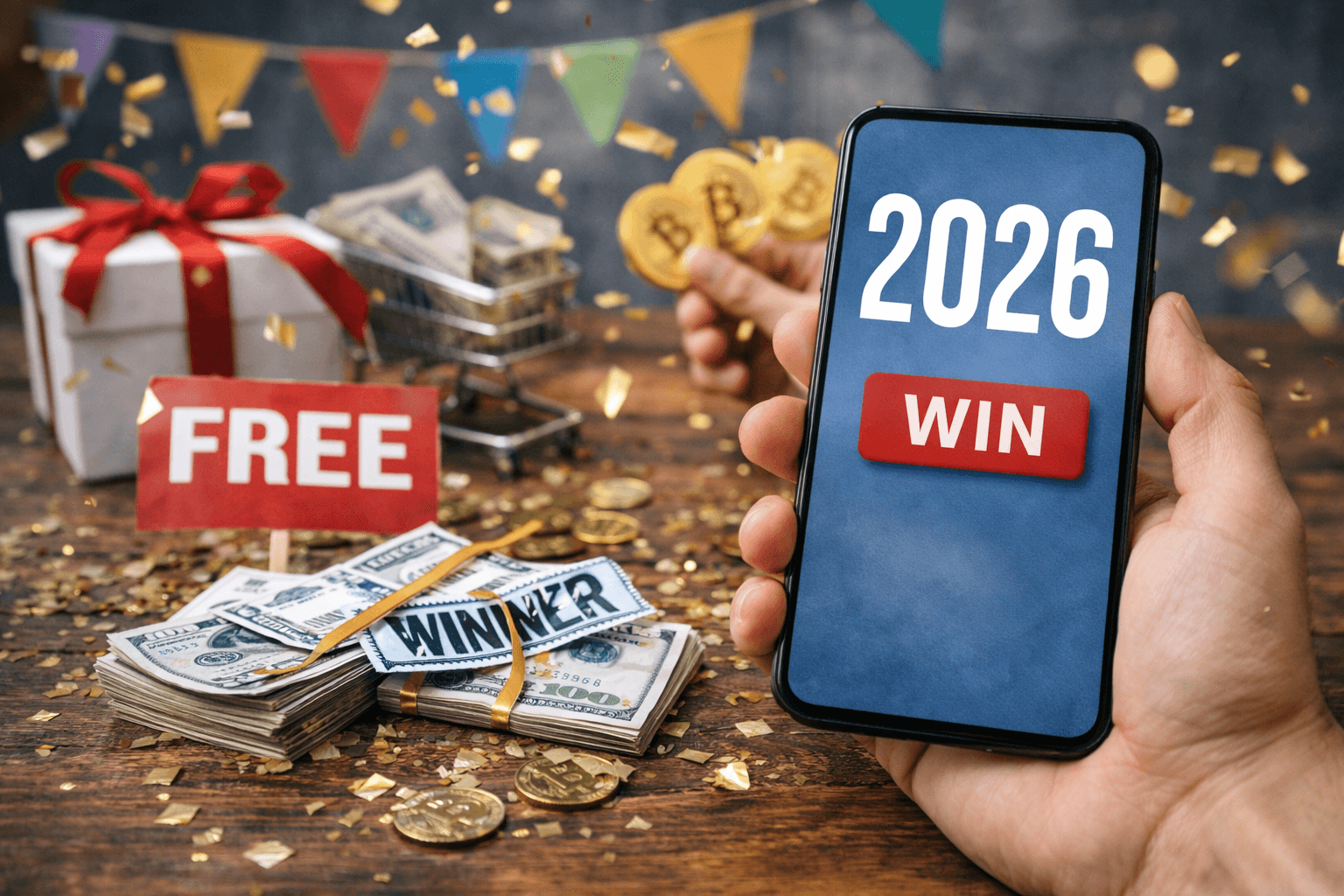
What’s driving the giveaway explosion in early 2026 (the realistic reasons)
I’ve reviewed crypto platforms long enough to notice a simple pattern: when retail deposits slow down, promos get louder. And right now, “free BTC” is the loudest hook on the internet.
Here are the realistic forces behind the early‑2026 Bitcoin giveaway wave (including the legit stuff and the ugly stuff).
- 1) A marketing arms race (because organic retail deposits aren’t as easy)
Exchanges, casinos, and affiliate networks all compete for the same thing: fresh money and new signups. When markets feel choppy, people hesitate to wire funds or buy spot—so platforms crank up bonuses, raffles, rebates, VIP “drops,” and referral ladders to force momentum.This isn’t conspiracy, it’s basic acquisition math. If your cost-per-user rises, you either (a) spend more on ads or (b) turn every user into an ad via “share this giveaway.” Early 2026 feels like a lot of (b). - 2) Creator economy pressure (giveaways still “print” engagement)
If you’ve ever watched a mid-sized X account try to grow fast, you already know the playbook: comment/retweet/follow + “I’ll pick 10 winners.” It spikes impressions instantly—even if the audience quality is garbage.That’s why you’ll see crypto creators (and “AI trading” accounts) mixing charts, hype, and giveaways in the same week. It’s not always malicious. It’s often just a shortcut to visibility. - 3) Scam waves adapt to whatever narrative is hot
Scammers are not creative—they’re fast. They copy the headline of the week (ETF chatter, big price targets, meme coin pumps) and wrap it in the oldest trick online: “send a little, get more back.”This is also why “giveaway spikes” come in bursts. Chainalysis’ annual crypto crime research has consistently pointed out that scams follow attention and distribution—when hype increases, scammers scale their infrastructure to match it. Public agencies echo the same theme: the FBI’s IC3 reports have repeatedly highlighted crypto as a high-loss area driven heavily by impersonation and social engineering. - 4) “Micro-hope” behavior (small wins feel safer than big buys)
When people don’t feel confident buying size, they hunt for tiny upside: free sats, quests, raffle entries, rebates, “spin wheels,” and cashback. It scratches the “I’m still in the game” itch without committing capital the same way a spot buy does.That’s the psychological fuel behind a lot of this: uncertainty + boredom + FOMO is a dangerous combo.
What this signals about retail sentiment (the part most people miss)
Most takes I see are too shallow: “Giveaways are bullish because new users are coming.” Sometimes. But the bigger tell is why users engage.
Here’s what I read from a sudden surge in Bitcoin giveaways:
- Attention is high, but conviction is low.
Lots of watchers. Not enough confident buyers. That’s why “free BTC” spreads—because it feels like upside without risk (even when it’s actually higher risk). - “Free BTC” acts like a thermometer for risk appetite.
When retail is comfortable, they buy dips and talk about storage, DCA, and time horizons.
When retail is shaky, they ask: “Are we crashing?” “What’s the next 10x?” and “Is this giveaway real?” - A lot of people are underexposed (or broke from volatility).
After choppy moves, some wallets are down, some traders are tired, and some newcomers don’t want to buy at “scary prices.” Giveaways become the low-friction entry point.
Two retail mindsets show up clearly in my inbox:
- Confident retail: “Which wallet is safest?” “How do I reduce leverage?” “Is this a good long-term DCA level?”
- Shaky retail: “Are we about to dump?” “What coin will boom?” “Is this free BTC legit?”
How I’d separate legit promos from scams (fast, practical checks)
If you remember nothing else, remember this:
Any “giveaway” that asks you to send BTC/ETH first is a scam. Always.
Here are my quick checks—the same mental checklist I use before I even consider clicking:
- The “never send first” rule
“Send 0.01 BTC and receive 0.02 BTC back” is not a promo. It’s a donation to a thief. - Wallet-drainer red flags
If a “claim” site asks you to connect wallet, sign weird approvals, or “verify eligibility” with a transaction—assume it’s a drain attempt until proven otherwise.- Urgent countdown timers (“Offer ends in 03:00”) are a classic pressure trick.
- Fake “gas fee refunds” and fake “airdrop validators” are common wrappers around malicious approvals.
- Identity traps (impersonation is doing most of the damage)
The most dangerous giveaways don’t look like scams—they look like support.- Fake support accounts that DM you after you comment
- Fake KYC forms (“Submit to receive reward”)
- PDF “airdrop claim instructions” (yes, still)
- Telegram impersonators who copy names, avatars, and pinned messages
- Legit promo pattern
Real promos are usually boring and have friction:- Clear terms, public T&Cs, and region restrictions
- Official domain that matches the company’s real site
- No seed phrase ever, no “validation phrase,” no remote access
- Requirements like KYC, trading volume, or quest tasks (annoying, but normal)
If a promo feels “too clean” and “too generous” with zero rules, that’s not generosity—that’s bait.
Where the 2026 giveaway wave is showing up (and why that matters)
When I track how a giveaway spreads, I’m not just looking for scammers—I’m reading how retail is behaving.
- X is the ignition point
Fast virality, easy engagement, and a massive audience that will retweet anything that looks like free money. - Telegram/Discord is the conversion layer
This is where people get pulled into DMs, “support chat,” and private groups. It’s also where impersonation works best because users expect direct help there. - Clone sites are the extraction layer
The final step is almost always a domain that looks right at a glance. Same logos. Same language. Different URL. One “connect wallet” click later, it’s game over.
Why this matters for sentiment: when the wave is mostly X spam + DM funnels, it’s attention harvesting. When it’s community-led campaigns with clear terms on official domains, it’s closer to organic onboarding.
Quick snapshot examples (resources I’m watching)
Here are a few examples of the kind of giveaway chatter and promo-style posts circulating right now. I’m linking these so you can see the pattern yourself; this is not an endorsement. Verify sources, and never connect your wallet to random links.
- https://x.com/0xarkle/status/2025524527451824333
- https://x.com/saphskins/status/2025497174889365599
- https://x.com/SuppercapTV/status/2025719439937724749
- https://x.com/casetnetwork/status/2025099825298170286
- https://x.com/Rt1Mind/status/2025618541568016895
- https://x.com/tobi7b/status/2025378196623860152
- https://x.com/CasinoRewardsgg/status/2025695404319265246
- https://x.com/the_bigshark3/status/2025720679753273443
- https://x.com/CasinoRewardsgg/status/2025337668775653767
- https://x.com/BitcoinTeacher_/status/2025227424187777280
- https://x.com/gemsmorro/status/2025143079146082333
- https://x.com/nice_investment/status/2025166773931376723
- https://x.com/nice_investment/status/2025469596334223653
- https://x.com/ChartSage_agent/status/2025169023189516729
- https://x.com/WiseOldManAI/status/2025194028506009980
As you scan those, notice the repeated structure: big promise, simple “steps,” high urgency, and a comment section full of people asking where to click. That comment section is where the next layer often starts—DMs, impersonators, and clone links.

The “reader questions” section (answer what people actually came for)
The “reader questions” section (answer what people actually came for)
“Are we expecting a crypto crash?” (what this giveaway spike suggests)
A surge in Bitcoin giveaway posts doesn’t predict price by itself. What it does signal is uncertainty: people want upside, but they don’t want to commit.
- If retail is cautious while bigger money stays steady, you usually get chop: sharp moves both ways, lots of fakeouts.
- If macro fear spikes and leverage is crowded, that’s when you can get a faster drop—because weak hands are already nervous.
My takeaway: don’t trade based on giveaway noise. Use it like weather, not like a GPS.
“What is the prediction for Bitcoin in 2026?” (how to read big price calls responsibly)
You’ll see public forecasts that don’t even live on the same planet: bold “$150K+” calls on one side, and “back under $65K” fear on the other. Both can exist at the same time because Bitcoin is a liquidity-driven asset and sentiment flips fast.
When you read any 2026 BTC prediction, sanity-check it like this:
- Timeframe: Is this a 3-month call or a 12-month thesis?
- Assumptions: Rates, liquidity, ETF flows, global risk appetite—what has to be true for their number to happen?
- Incentives: Are they selling a course, a token, a newsletter, or an exchange link under the post?
If someone can’t explain the assumptions, they’re not forecasting—they’re performing.
“Which crypto will boom in 2026?” (and why this article won’t shill)
Whenever I see “which coin will boom” searches surge, it usually means retail is hunting for a faster horse than BTC. That’s not automatically wrong—but it’s when people get sloppy and fall for fake giveaways, fake presales, and “guaranteed” returns.
Instead of giving you a random list of picks, here’s the safer framework I use when I look at any coin getting hyped in 2026:
- Real usage: Are users actually doing something on-chain that isn’t just farming incentives?
- Revenue/fees: Is there sustainable economic activity, or is it all emissions?
- Supply dynamics: Unlock schedules, inflation, and who controls distribution.
- Regulatory overhang: One headline can freeze liquidity for months.
- Developer traction: Are serious teams building, shipping, and retaining users?
If you want names, sure—people commonly throw around things like SOL, XRP, SUI and whatever’s hottest that week—but the framework protects you when the narrative changes overnight.
Now the real question: if this giveaway wave is a mix of aggressive marketing and opportunistic fraud, how do you use it as a sentiment signal without becoming exit liquidity—or a victim?
In the next section, I’ll show you exactly what I’m doing with this trend as someone who reviews crypto platforms for a living—and the simple safety checklist I’d want my own friends to copy/paste before they click anything.
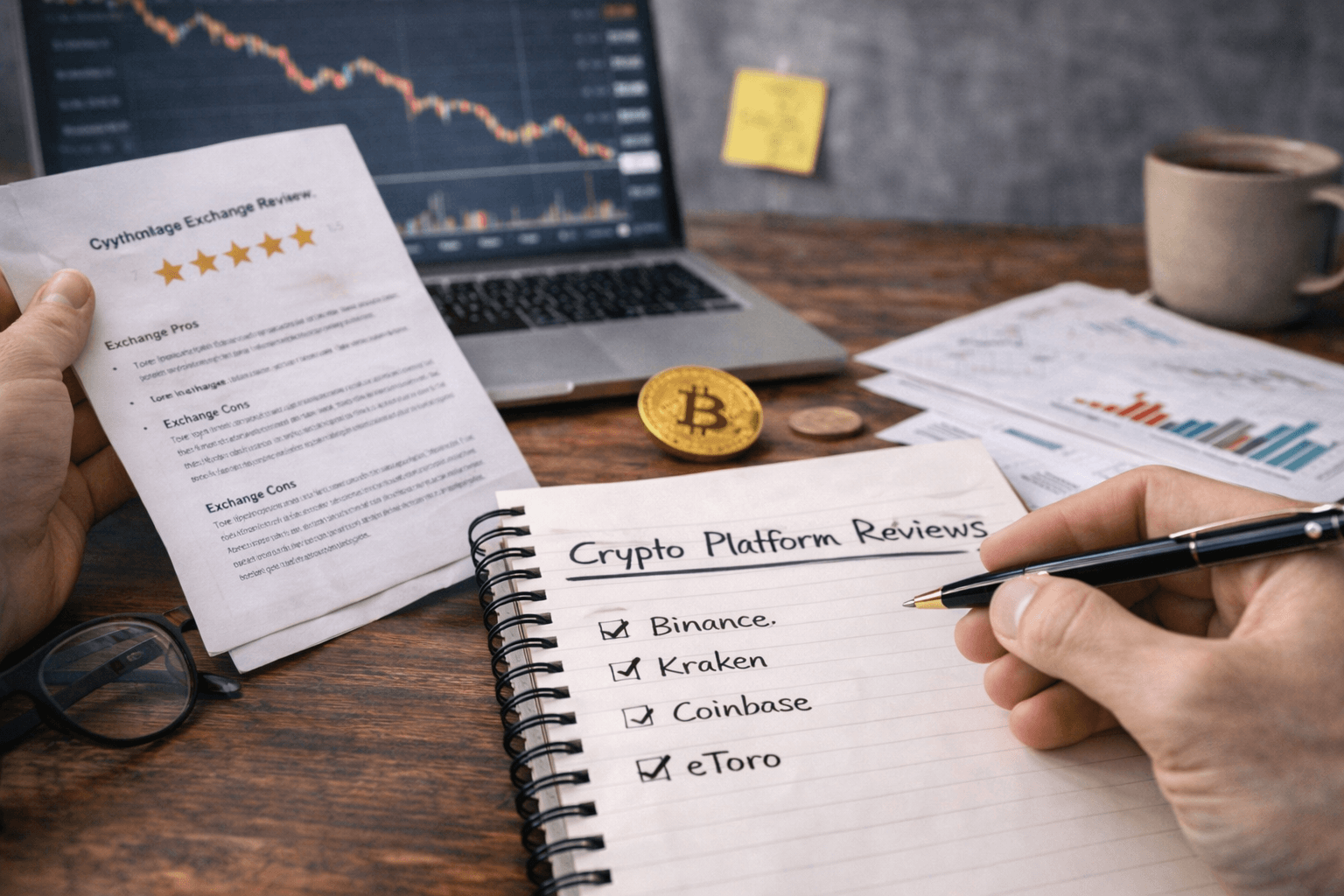
What to do with this signal (and how I’m playing it as a site owner who reviews crypto platforms)
When I see “free BTC” posts triple in two days, I don’t treat it like a treasure hunt. I treat it like a sentiment alert:
Retail attention is high… and confidence is fragile.
That mix usually creates the same behavior loop:
- Newer users show up because the timeline is loud again.
- Older users who got chopped up in recent volatility want “something safe” (which is exactly why giveaways work).
- Marketing teams push harder because conversions are harder.
- Scammers follow the noise because the odds are better when people are excited and distracted.
From my side (running Cryptolinks and reviewing platforms), sudden promo waves tell me one big thing: customer acquisition is getting aggressive. That can be totally normal in a competitive market… but it also means you should expect more spam, more fake “support,” more cloned sites, and more pressure tactics.
If you’re wondering, “Is that bullish or bearish?”—my honest answer is: it’s neither by itself. It’s a sign the crowd is watching closely, but not fully committing. That tends to line up with choppy markets where headlines move people more than fundamentals.
And yes, scams really do scale with attention. If you want a grounded reality check, read the consumer-side reporting:
- FBI IC3 tracks crypto-related fraud reports and shows how fast social engineering keeps growing year after year.
- The U.S. FTC has repeated data spotlights showing that social platforms are a major contact point for fraud (which matches what I see every time giveaway spam spikes).
- Chainalysis crypto crime reports regularly document how scam flows adapt to whatever narrative is hot—giveaways are basically a “skin” scammers can put on any week.
So here’s how I personally “play” this signal depending on your style.
If you’re long-term: this is mostly a security moment. Tighten your setup, ignore the bait, stick to your plan.
If you’re active: this is a discipline moment. Promo blasts often show up when platforms and affiliates want action. That can tempt you into impulse trades and random deposits. I’d rather treat it as a reminder to check real risk gauges (funding/leverage, liquidation heat, and whether price is being pushed around on thin liquidity).
The key point I don’t want you to miss: scams rise both when newcomers pile inand when bored, underperforming traders need “a win.” That’s exactly the emotional cocktail giveaways target.
My simple safety checklist (copy/paste friendly)
If you copy one thing from this article, copy this. I use this exact checklist when I’m vetting promos and reporting sketchy campaigns:
- Never send funds to “receive more back.” If the promo requires a transfer first, you’re not “verifying.” You’re donating.
- Never share seed phrases (or recovery words, ever) and never share “verification” codes from SMS/email/2FA with anyone.
- Don’t connect your wallet to claim pages you haven’t verified through multiple trusted paths.
- Use a burner wallet for claims/quests—separate from your main holdings. Keep your real stack out of range.
- Verify official accounts by cross-checking:
- the platform’s official website footer/social links
- pinned posts
- multiple channels (site + app + announcements)
- domain spelling (watch for tiny letter swaps)
One extra habit that saves people constantly: when a link looks legit, I still open a fresh tab and manually type the known domain (or use a bookmark I’ve had for months). Giveaway posts love to funnel you into a near-perfect clone that only exists to capture logins, approvals, or seed phrases.
My rule: if a promo makes you rush, it’s not for you. Real companies don’t need a 3-minute countdown to give you $12 in sats.
What would make this giveaway trend turn bullish (instead of just sketchy noise)
I’d start taking the “giveaway season” as a healthier signal if I saw these shifts:
- Less “send-to-receive” garbage, and more promos that look like normal business:
- clear rules
- public terms
- real brand accounts
- no weird wallet connections
- Real onboarding that turns into real buying:
- sign-ups that translate into spot activity (not just promo hunters)
- steady DCA behavior
- more people asking boring questions like “best way to store BTC?” instead of “how do I claim free sats?”
- On-chain activity rising without matching scam chatter:
- more normal transfers and usage
- fewer brand-impersonation waves
- fewer reports of drained wallets tied to the same rotating set of domains
To keep it simple: bullish is when giveaways become a side dish—a small incentive inside a bigger story of adoption. Bearish (or at least unhealthy) is when giveaways become the main event.
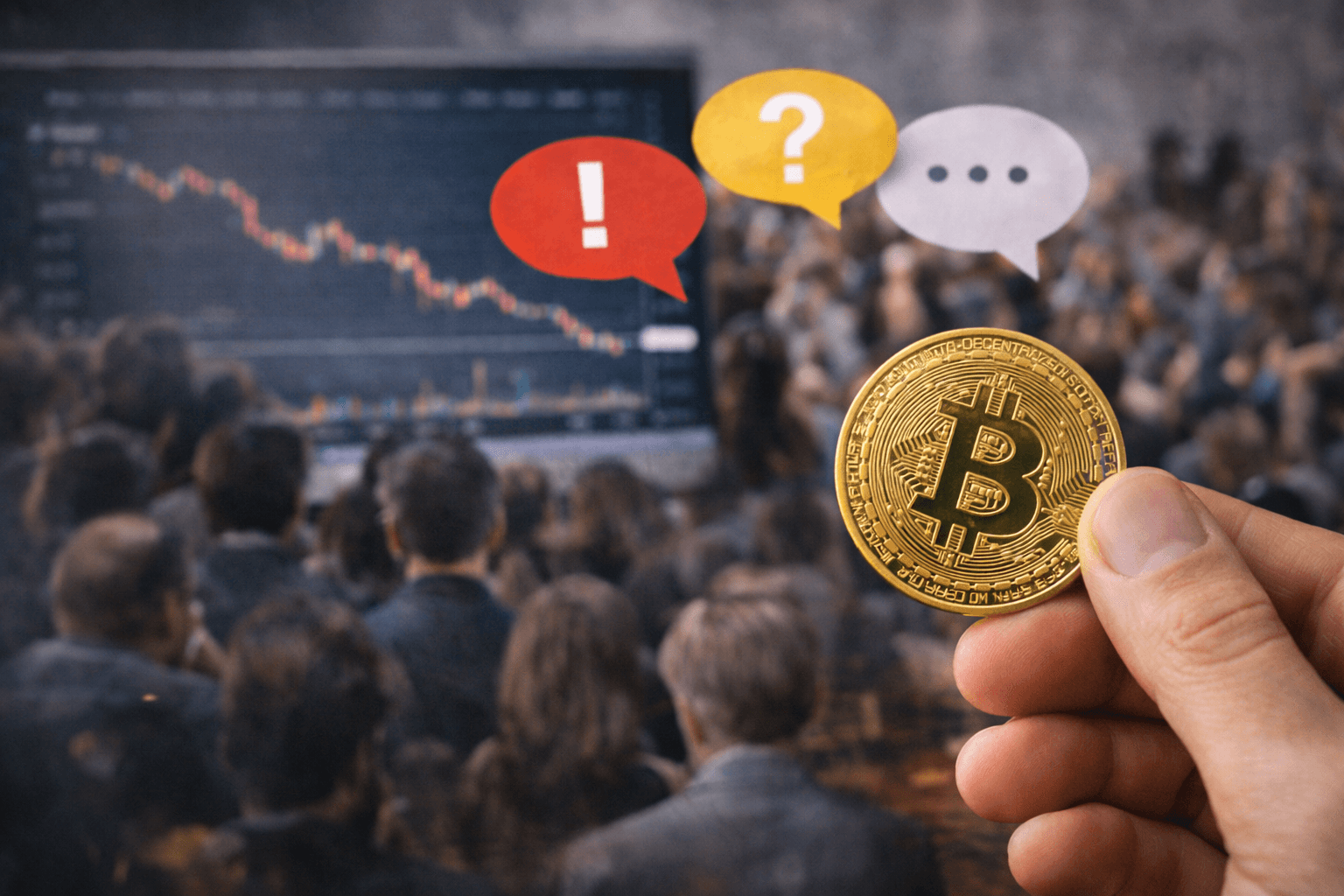
Free BTC isn’t the story. Attention + uncertainty is.
My takeaway from a 300% surge in giveaway chatter is not “free money season.” It’s attention + uncertainty season.
That can happen in strong markets, weak markets, and sideways markets—because it’s about people, not candles. People want upside, but they don’t fully trust the moment. So they reach for what feels like a risk-free option… and that’s exactly where the traps are.
Use giveaways as a mood indicator, not an investing strategy. Stay a little paranoid with wallet safety, and don’t let a loud timeline drag you into rushed decisions.
If you want the safer route, I keep my vetted platform reviews organized on Cryptolinks—wallets, exchanges, casinos, and tools—so you’re not relying on random posts when things get noisy. You can browse from here:
I’ll keep tracking how this early-2026 retail mood evolves. If the giveaway wave cleans up and turns into real onboarding, that’s interesting. If it keeps tilting toward cloned sites and fake “support,” that’s a warning light—and I’ll keep calling it out.